Castor oil is the most popular pick, and for good reason: it's thick, coating, and its main compound (ricinoleic acid) has some legitimate biological activity related to hair follicle pathways. But if you want the most evidence-backed option for actually stimulating eyebrow growth, rosemary oil is pulling ahead. A 2023 clinical study found rosemary oil comparable to 2% minoxidil for scalp hair density, and while that research was on the scalp, the follicle biology applies to brows too. The practical answer: use rosemary oil (diluted in a carrier like castor or jojoba oil) as your primary growth driver, and lean on castor oil for its conditioning and coating properties. Combined, they cover both stimulation and retention.
Best Oil to Grow Eyebrows: Castor, Rosemary, and More

James Whitmore
30 Apr 2026
The best oils for eyebrow growth, broken down

Castor oil: the crowd favorite with honest caveats
Castor oil dominates the conversation around eyebrow growth, and it has been used in naturopathic and beauty practice for decades. Its main active component is ricinoleic acid, which makes up roughly 85–95% of the oil and drives most of its pharmacologic properties. Researchers have proposed that ricinoleic acid may inhibit prostaglandin D2 synthase (PTGDS), an enzyme associated with hair loss, and that it can activate prostaglandin EP3 receptors, which plays into hair follicle signaling pathways. That's a plausible mechanism on paper.
Here's the honest part: there are no controlled human studies proving castor oil directly causes eyebrow or hair regrowth. The PMC literature flags this clearly. What castor oil does well is moisturize the brow area, reduce breakage of existing hairs, and coat fine brow hairs so they look slightly fuller. That's still genuinely useful when your brows are sparse or recovering from over-tweezing, but you shouldn't expect it to resurrect completely dormant follicles on its own. but you shouldn't expect castor oil to resurrect completely dormant follicles on its own, which is a similar question to can shea butter grow eyebrows. Think of castor oil as a supportive base rather than the active engine.
Rosemary oil: the best-evidenced essential oil for growth
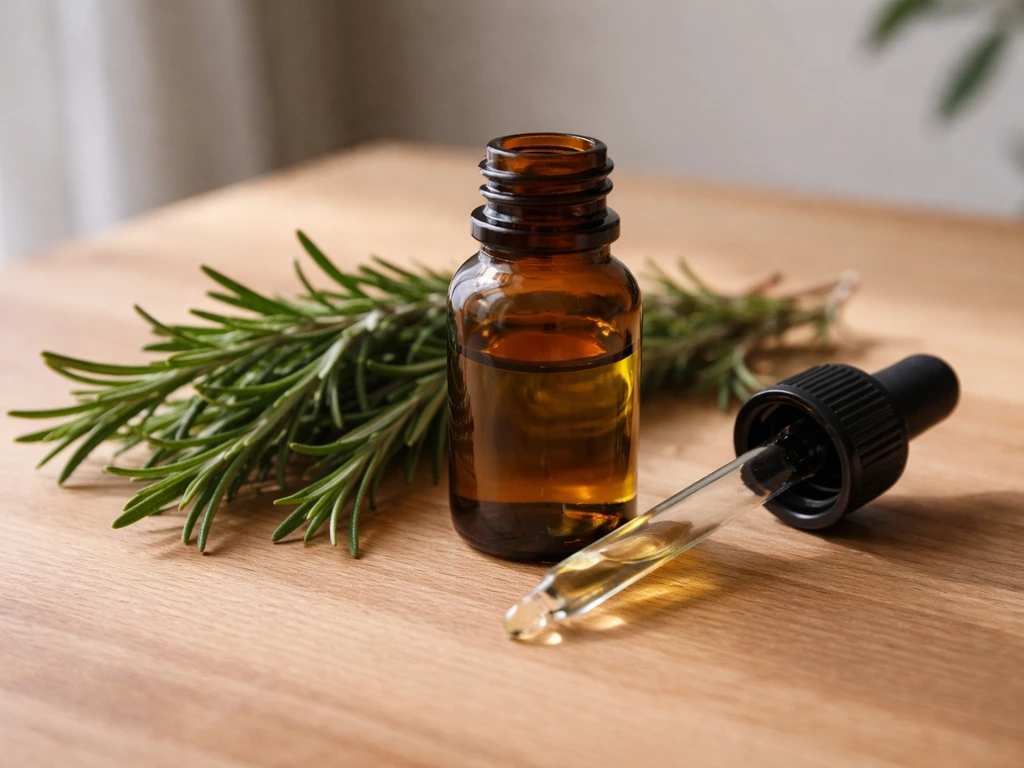
Rosemary oil (Rosmarinus officinalis) is where the stronger evidence sits. It's thought to work primarily by improving microcirculation to the follicle and inhibiting 5-alpha-reductase, the enzyme that converts testosterone into DHT (a key driver of follicle miniaturization). The 2023 comparison with minoxidil showed comparable hair count increases at the 6-month mark, which is a genuinely impressive result for a plant-based ingredient. Rosemary oil must always be diluted before applying near the brows, typically at a 2–3% concentration in a carrier oil. That works out to about 3–4 drops of rosemary essential oil per teaspoon of carrier oil. Never apply it straight: it can cause irritation and, critically, should never get into your eyes.
Carrier oils: jojoba, argan, and why the base matters
Carrier oils don't grow brows on their own, but they're not just filler. Jojoba oil is structurally similar to your skin's natural sebum, so it absorbs well and doesn't clog follicles, making it an ideal carrier for rosemary oil in the brow area. If you want the closest thing to a brow-growth ingredient in a jojoba-based routine, treat jojoba as the carrier that helps other oils sit well on the skin, not as a standalone growth treatment Jojoba oil. Argan oil is rich in vitamin E and oleic acid, which support skin barrier health and reduce inflammation around the follicle. Fractionated coconut oil is another clean, lightweight option. The carrier you choose affects how irritating or comedogenic the blend is near the delicate brow and eye area, so lighter oils like jojoba tend to be the safest bet for daily use.
Essential oils: which ones actually help, which to avoid
Not every essential oil that people tout for hair growth is safe or effective around eyebrows. The brow area sits dangerously close to your eyes, so any oil that causes mucous membrane irritation becomes a real problem. Here's a quick breakdown:
| Essential Oil | Evidence for Growth | Safety Near Brows | Verdict |
|---|---|---|---|
| Rosemary oil | Strongest (comparable to 2% minoxidil in scalp studies) | Safe when diluted to 2–3% in carrier | Best choice |
| Peppermint oil | Promising in animal studies (may increase follicle depth) | Moderate risk: can irritate eyes, dilute carefully to 1–2% | Use with caution |
| Lavender oil | Limited but some anti-inflammatory benefit | Relatively safe diluted; avoid direct eye contact | Reasonable secondary option |
| Tea tree oil | Antimicrobial only, no growth evidence | High irritation risk near eyes | Avoid near brows |
| Clove or cinnamon oil | No hair growth evidence | Very high irritation/burn risk | Do not use |
| Cedarwood oil | Weak anecdotal evidence only | Moderate risk; patch test essential | Low priority |
The rule for all essential oils near brows: always dilute, always patch test on your inner arm 24 hours before applying to your face, and keep the application precise. A thin eyeliner brush or a clean spoolie works better than your fingertip for keeping oil out of your eyes.
Does vegetable oil (or olive oil, coconut oil) actually help brows grow?
This comes up a lot, and the answer is: probably not directly. Plain vegetable oil (the kind in your kitchen) contains fatty acids like linoleic and oleic acid that can soften and condition brow hairs and the surrounding skin, but there's no evidence it stimulates follicle activity. The same applies to standard olive oil and unrefined coconut oil. These oils can help with hair breakage and the general health of existing brow hairs, which indirectly makes brows look a bit fuller over time. But if your goal is actual growth of new hairs or reactivation of follicles that have slowed down, plain vegetable oils are the wrong tool.
That said, if you're in the phase of recovering from heavy waxing or tweezing damage, applying a light nourishing oil to the brow area keeps the skin around the follicle healthy while you wait for regrowth. In that context, any gentle oil has some supportive value. Just don't mistake "my skin feels better" for "my follicles are being stimulated."
How to actually use oils to grow thicker, fuller brows

The routine that works
Consistency beats quantity here. Applying a large amount of oil once a week does far less than a small, precise application every night before bed. Here's the routine I'd actually recommend:
- Make your blend: 3–4 drops of rosemary essential oil per teaspoon of castor oil or jojoba oil. Mix in a small dark glass bottle to protect the rosemary oil from light degradation.
- Cleanse your face first so there's no makeup or sunscreen creating a barrier over the brow area.
- Dip a clean spoolie brush or an eyeliner brush into the blend and apply a small amount directly along the brow line, working in the direction of hair growth.
- Massage gently with a fingertip for 30–60 seconds. This isn't just for absorption: the massage itself may improve local blood circulation to the follicle.
- Leave it on overnight. No need to wash it off before bed.
- Apply once daily, or at minimum 5 nights per week. Rinse off in the morning with your normal cleanser.
- Patch test before your first use: apply a small amount to your inner arm, wait 24 hours, check for redness or irritation.
Realistic timeline: what to expect and when
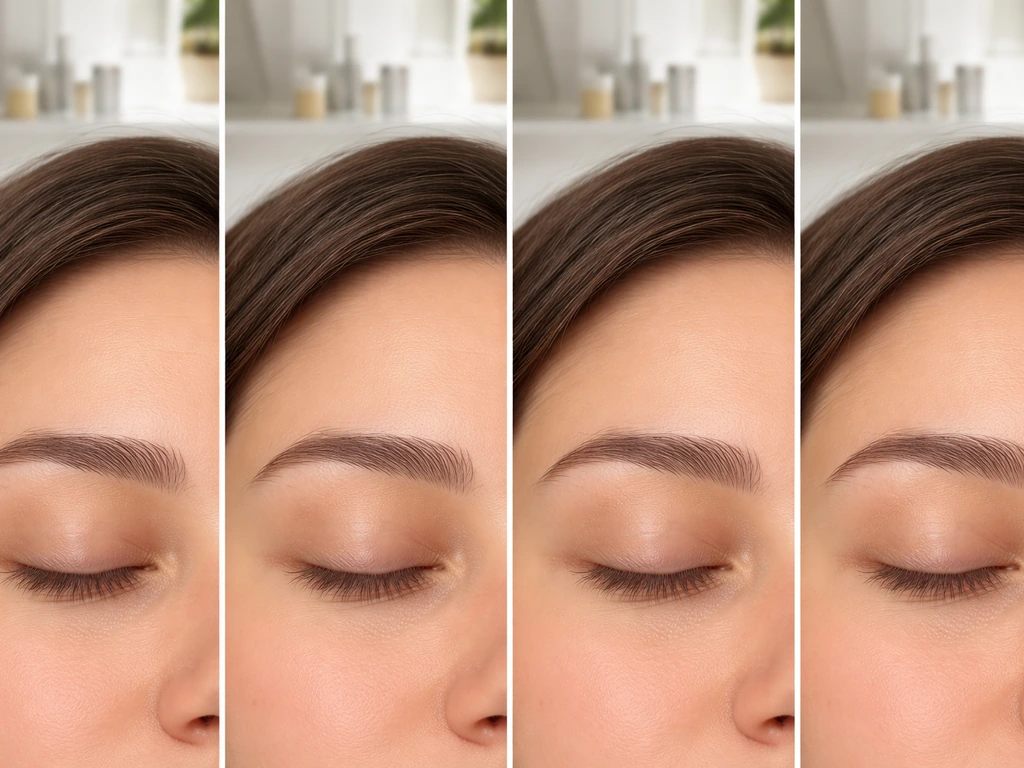
The eyebrow hair growth cycle runs in three phases: anagen (active growth), catagen (transition), and telogen (resting/shedding). At any given time, most brow hairs are in the resting phase, which is why eyebrows grow slowly compared to scalp hair. Realistically, here's what to expect with consistent nightly use of a rosemary-castor oil blend:
| Timeframe | What You May Notice |
|---|---|
| Weeks 1–4 | Skin around brows feels more conditioned; existing hairs may look slightly glossier or fuller due to coating effect |
| Months 1–2 | Some fine new hairs may start appearing, particularly in areas that were over-tweezed |
| Months 2–4 | More noticeable density improvements if follicles are still active; this is the key assessment window |
| Months 4–6 | Meaningful fullness improvement is possible; if no change by now, follicle damage may be more significant |
Three to four months is the honest minimum before judging whether oils are working for you. Anyone promising results in two weeks is selling you something. Age, genetics, the extent of previous waxing or tweezing damage, and underlying health conditions all affect how quickly (or whether) follicles respond.
What works for both eyebrows and eyelashes
If you're trying to improve both brows and lashes at the same time, castor oil is the safest crossover option. It's gentle enough to use along the lash line (applied carefully with a clean mascara wand or cotton swab), and it provides the same conditioning and coating benefits for lashes as it does for brows. Some people use it directly on the lash line at night. Rosemary oil, while excellent for brows, carries more risk near the actual lash line and eyelid because of proximity to the eye's mucous membranes. If you want to use rosemary oil for eyelashes, keep the dilution very low (1% max) and apply only to the outer base of the lashes, not the inner lash line.
For lashes specifically, there's also a prescription option worth knowing about: bimatoprost (sold as Latisse) is FDA-approved for eyelash growth and has solid clinical evidence behind it. For Latisse (bimatoprost ophthalmic solution 0.03%), the FDA-approved indication is treatment of hypotrichosis of the eyelashes by increasing their growth, including length, thickness, and darkness bimatoprost (sold as Latisse) is FDA-approved for eyelash growth. It's not approved for brows, but some dermatologists use it off-label in that context. That's a conversation worth having if you're dealing with serious lash loss.
When oils aren't enough: stronger options and when to get help
Minoxidil for eyebrows
If you've been consistent with oils for four to six months and haven't seen meaningful change, minoxidil is the next logical step. Originally developed for scalp hair loss, minoxidil (typically 2–5% solution or foam) is used off-label for eyebrow growth and has a reasonable body of evidence supporting it in that context. It works by prolonging the anagen (growth) phase of the hair cycle and improving blood flow to follicles. A small 2021 study found that 2% minoxidil applied twice daily led to significant eyebrow hair count and density improvements compared to placebo over 16 weeks. A randomized, double-blind, placebo-controlled split-face study found that 2% minoxidil lotion produced significantly better eyebrow hypotrichosis outcomes than placebo after 16 weeks 2% minoxidil lotion lotion applied twice daily led to significant eyebrow hair count and density improvements compared to placebo over 16 weeks. The key risks: skin irritation, and the possibility of unwanted facial hair growth if the product spreads beyond the brow area. Apply precisely, use minimal amounts, and wash hands immediately after.
When to see a dermatologist
Some eyebrow thinning has nothing to do with how much you tweeze or what oil you use. Thyroid disorders (both hypothyroidism and hyperthyroidism) commonly cause brow thinning, especially at the outer third of the brow. Alopecia areata, nutritional deficiencies (particularly iron and biotin), and certain medications can all cause eyebrow loss that oils simply cannot reverse. If your brows have been thinning without a clear cause, or if you notice patchiness spreading, hair loss in other areas, or associated symptoms like fatigue or skin changes, see a dermatologist or your GP before spending more time and money on topical oils. A blood panel can rule out systemic causes quickly.
Other options a dermatologist might discuss include platelet-rich plasma (PRP) injections, which have emerging evidence for eyebrow regrowth, and microblading or powder brow tattoos as cosmetic solutions if follicle activity is permanently reduced. These aren't replacements for addressing the root cause, but they're real options worth knowing about when you've exhausted the topical route.
Your practical next-step plan
To pull it all together: start with a rosemary-in-castor-oil blend applied nightly to clean brows. If you are trying to answer whether can hair growth oil grow eyebrows, the most evidence-backed option in this category is rosemary oil for stimulation, while castor oil mainly helps condition and protect existing brow hairs. Give it a genuine three to four months before assessing. If you see improvement, keep going. If you see nothing by month four or five, move to 2% minoxidil (and consider a dermatology consult to rule out systemic causes). If your brow thinning came from over-tweezing or waxing, follicles are likely still viable and oils plus patience genuinely do work. If it came from nowhere with no obvious cause, get checked before assuming a topical fix is the answer.
FAQ
Can I use rosemary oil on my eyebrows if I have sensitive skin or eczema?
You can try, but start with a lower dilution (around 1% in a carrier) and patch test at least 24 hours before facial use. Stop if you get burning, swelling, or worsening redness, because brow skin near the eyes can flare faster than other areas.
How do I apply rosemary-castor oil so it does not irritate my eyes?
Use a spoolie or a thin angled brush, apply a very small amount to the brow hair, and avoid the skin margin near the inner corner of the eye. If any oil migrates, gently wipe with a clean, dry cotton pad, and wash hands immediately after application.
Should I apply oil to clean brows or after moisturizer?
Apply to clean, dry skin so you control what contacts the brow area. If you use moisturizer, do it after the oil has fully absorbed, otherwise you can dilute the active blend and increase the chance of migration toward the eye.
Is castor oil safe to use directly at full strength on brows and lashes?
Many people tolerate it, but “direct” application still carries a risk of irritation or clogged pores for some. If you notice itching or acne-like bumps along the brow, switch to a diluted version (for example, 1 part castor to 1 to 2 parts jojoba) and consider spacing applications to every other night.
How often should I use eyebrow oil, and is nightly use necessary?
Nightly is the easiest way to be consistent, but if you get irritation, reduce to 3 to 4 nights per week. More oil is not better, and using a thin, precise layer matters more than soaking the brows.
Will rosemary oil work faster if I combine it with castor oil and other growth oils?
Not usually. Adding more essential oils increases irritation risk without proven extra benefit. If you combine, keep the rosemary dilution in the 1% to 3% range and stick to one or two carriers to reduce unpredictability.
What should I do if my brows look worse after starting oil?
Temporary shedding or increased patchiness can happen if the product irritates the area. Reassess: pause use, check for redness or dryness, then restart at a lower dilution or with castor-only conditioning until the skin calms.
How can I tell the difference between “thicker-looking” brows and true new hair growth?
Conditioning can make existing hairs look fuller within weeks, while true growth changes are slower and usually show as new shorter hairs or increased density over time. If you see no density change by about 4 months, it is less likely to be a growth response.
Can eyebrow oil help regrow brows after microblading or tattooing?
Microblading does not change follicle activity, so oils mainly condition existing hairs and support skin health, they do not remove the cosmetic pigment. If you notice thinning after the procedure or during healing, focus on gentler skin care and consider a dermatologist if loss persists.
Are there any ingredients I should avoid in eyebrow oils near the eyes?
Avoid undiluted essential oils, strong fragrance blends, and high-alcohol products that can dry and sting the brow area. Also be cautious with oils that are highly comedogenic for you, since they can trigger bumps that interfere with a smooth application.
When should I consider minoxidil instead of continuing oils?
If you have been consistent for 4 to 6 months and see little or no increase in density, minoxidil is a reasonable next step described in the article. If you also have patchy loss, fatigue, or other unusual symptoms, get checked first because systemic causes can make topical efforts ineffective.
Next Article
Does Vitamin E Oil Help Eyebrows Grow? Safe Routine & Timeline
Find out if vitamin E oil helps eyebrow growth, plus a safe routine, timelines, and what works better.