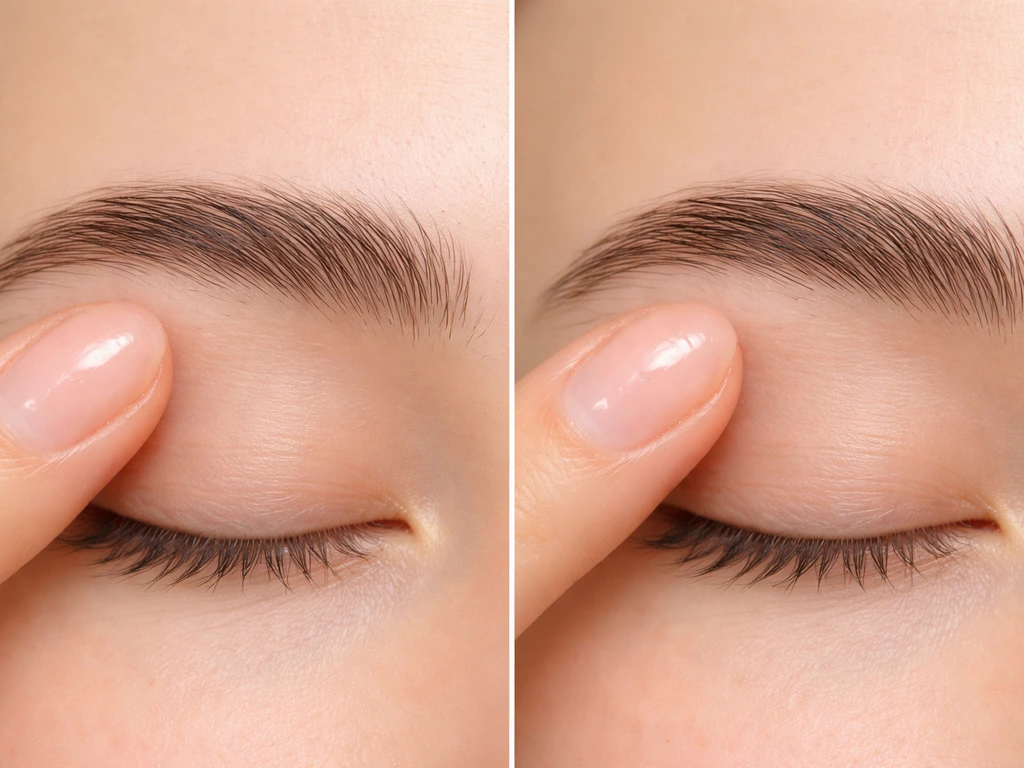
Yes, Rogaine (minoxidil) can grow eyebrows, and there are actual randomized controlled trials to back that up, not just anecdotes. Studies using 1% and 2% topical minoxidil in people with eyebrow hypotrichosis (medically thin brows) showed meaningful improvements in eyebrow hair count and diameter by week 16. That said, it's an off-label use, results vary quite a bit from person to person, and applying anything minoxidil-based near your eyes requires some real care. Here's what you need to know before you start.
Will Rogaine Grow Eyebrows? What to Expect and How to Use

James Whitmore
15 May 2026

How Rogaine actually works on brow hair
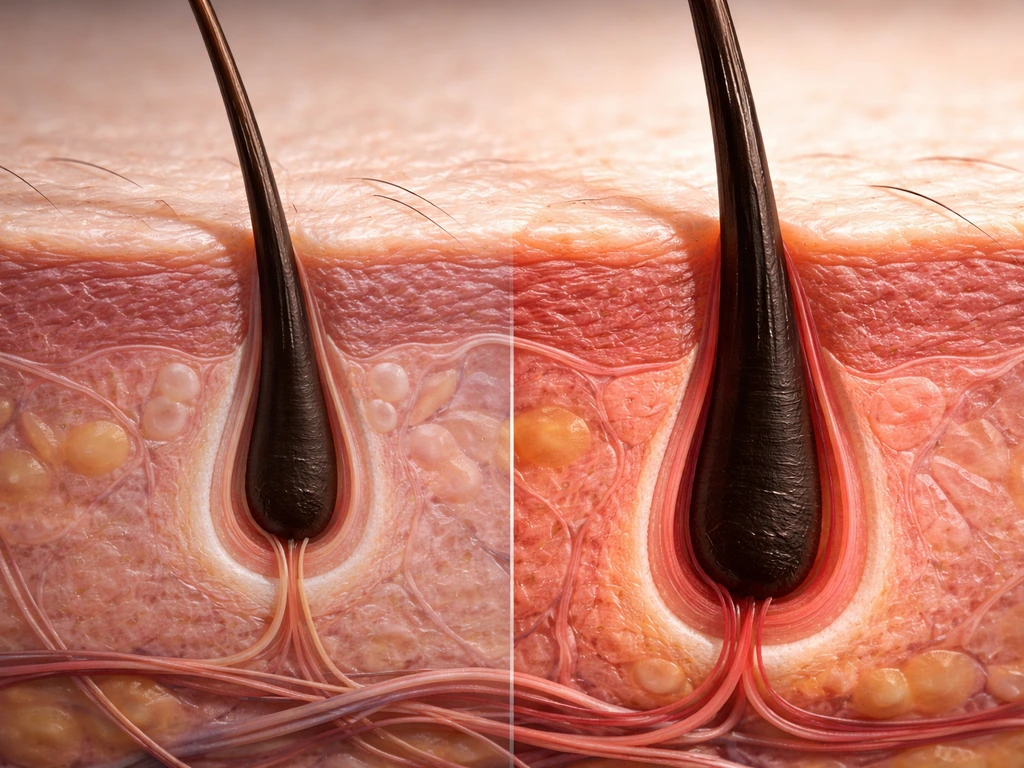
Minoxidil's main job at the follicle level is to push hair out of its resting phase (telogen) and into its active growth phase (anagen). It also appears to prolong anagen and increase the size of the follicle itself, which is why hair can come back thicker, not just longer. At the cellular level, minoxidil gets metabolized inside hair follicles by an enzyme called sulfotransferase, converting into minoxidil sulfate, which is the active form that actually does the work on specialized cells in the hair follicle's dermal papilla.
This matters for eyebrows because the same follicle biology that governs scalp hair governs brow hair. If your follicles are dormant or miniaturized (shrunken from overplucking, stress, or age), minoxidil may be able to wake them back up. The key word is 'may': minoxidil cannot restore follicles that are permanently destroyed. If you've been over-tweezing for 20 years and the follicles are truly gone, no topical is going to bring them back. But if they're just sleeping, minoxidil has a real shot.
What to realistically expect: timeline and results
The honest timeline is this: you probably won't see much in the first month. Research and clinical experience with minoxidil put early signs of change at around 8 weeks, with maximum effects closer to 4 months. The RCTs on eyebrow hypotrichosis ran for 16 weeks (about 4 months) before measuring results, and that's roughly when you'd expect to make a fair judgment call on whether it's working for you. If you see zero new growth by the 4-month mark, that's a signal to stop and talk to a doctor rather than keep applying indefinitely.
You might also experience a temporary increase in shedding in the first few weeks. This isn't a sign it's failing. It reflects the hair cycle shifting, pushing out old telogen hairs to make room for new anagen growth. It's unsettling but normal. Just don't panic and quit at week 3.
How much regrowth you get depends on several things: your age, how long your brows have been sparse, what caused the thinning, and how consistent you are with application. Younger skin with recently damaged brows (say, from a few years of heavy tweezing) tends to respond better than older skin with decades of follicle dormancy. Underlying causes like thyroid issues, nutrient deficiencies, or alopecia areata also affect what's possible, which is why addressing the root cause alongside any topical treatment matters.
How to use Rogaine on your eyebrows safely
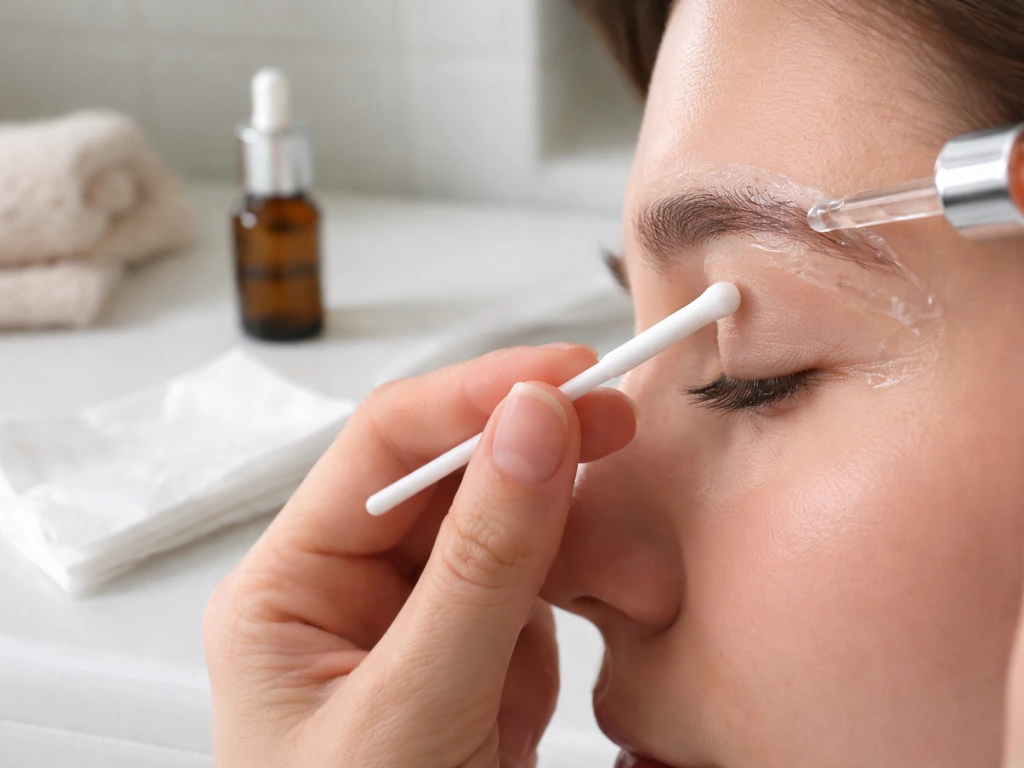
Rogaine is FDA-approved for the scalp only, so using it on your brows is off-label. That doesn't mean it's unsafe, but it does mean you need to be especially careful about how and where you apply it. The biggest concern is keeping it away from your eyes. Here's a practical step-by-step approach:
- Choose the right concentration: 2% minoxidil is the version studied specifically for eyebrow hypotrichosis and is the safer starting point for brow use. The 5% formula is stronger and associated with more side effects, including unwanted facial hair growth.
- Apply to dry skin: Make sure your brow area is clean and dry before applying. Wet skin increases absorption and can spread the product more easily toward your eyes.
- Use a minimal amount: A tiny drop, applied with a cotton swab or the tip of your finger, is enough for each brow. You're not doing a scalp treatment. Less is genuinely more here.
- Apply along the brow, not below it: Keep product on the brow itself, working in the direction of hair growth. Avoid the eyelid and the area directly above your eye.
- Let it dry fully before touching your face: Minoxidil in liquid form can transfer. Wait at least 4 hours before bed if applying in the evening, or use it in the morning and let it dry before you'd normally touch your face.
- Wash your hands immediately and thoroughly after applying: This prevents accidental transfer to your eyes or other parts of your face.
- If you get any in your eyes, rinse immediately with large amounts of cool tap water: That's straight from the product labeling, and it's important to take seriously.
- Apply once daily, not twice: For the brow area, once daily is typically what the eyebrow studies used. You don't need to follow scalp dosing instructions here.
- Be consistent for at least 16 weeks before judging results: Stopping early is the most common reason people don't see improvement.
Side effects and risks to know before you start
Applying minoxidil near the brow area carries specific risks that are worth being upfront about. Skin irritation and dryness are the most common local reactions, and the delicate skin around the eye is more sensitive than your scalp. If you notice persistent redness, itching, or flaking, scale back or stop.
Unwanted facial hair growth is a real possibility. Minoxidil doesn't know you only want it to work on your brows. If the product migrates or you're applying too much, you may notice fine hair showing up on your forehead or temples. The official Rogaine labeling actually lists this as a reason to stop use and consult a doctor. Women tend to report this side effect more than men.
Systemic side effects are less likely with small amounts applied to the brow area compared with full scalp use, but they're not impossible. Stop use and contact a doctor if you experience chest pain, a rapid heartbeat, dizziness, or swelling in your hands or feet. These are listed explicitly on Rogaine labeling as warning signs.
One thing people don't always think about: if you stop using minoxidil after getting results, those results don't necessarily stick around permanently. Some people also ask whether red light therapy can grow eyebrows, but the evidence is still not as established as minoxidil can red light therapy grow eyebrows. Hair stimulated by minoxidil can revert if you discontinue before follicles have fully matured. This is true for scalp hair and likely applies to brows as well. Plan for a maintenance phase if it works for you.
| Side Effect | How Common | What to Do |
|---|---|---|
| Skin irritation or dryness | Common | Reduce frequency or switch to 2%; stop if severe |
| Unwanted facial hair | More common in women | Stop use; consult a doctor |
| Eye irritation (if product contacts eyes) | Possible with improper application | Rinse immediately with cool water; seek care if persists |
| Initial shedding | Common early on | Normal; continue for at least 8 weeks before reassessing |
| Chest pain, rapid heartbeat, swelling | Rare but serious | Stop immediately and contact a doctor |
Alternatives and extra support for sparse brows
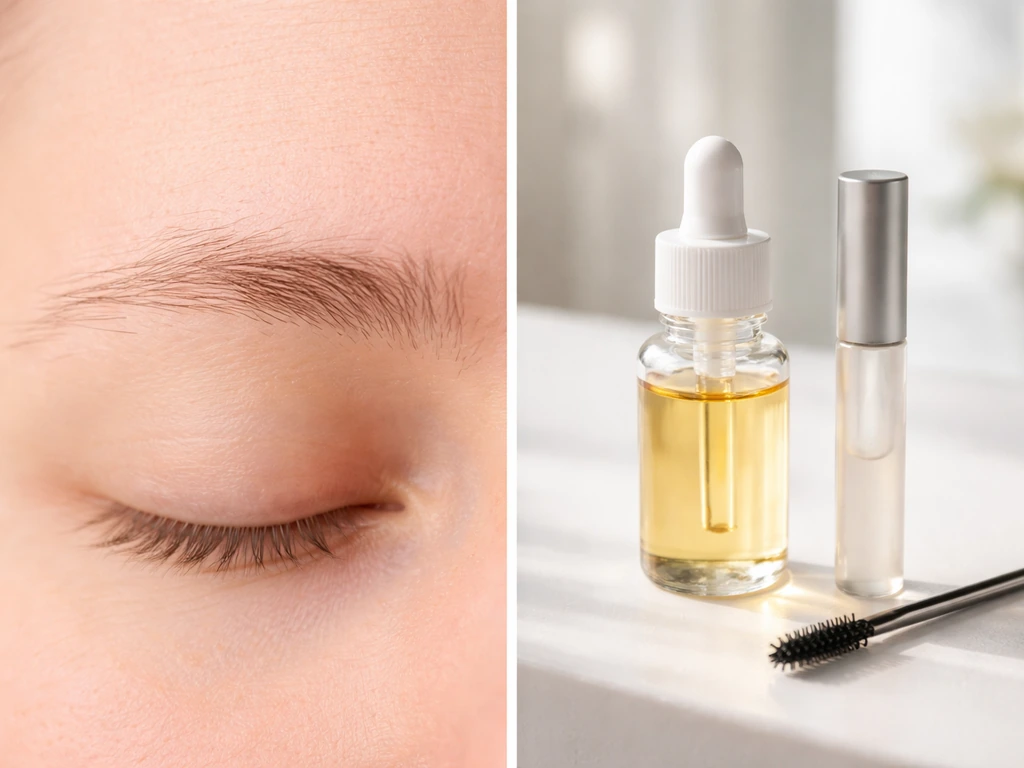
Minoxidil has the strongest clinical evidence for eyebrow regrowth among topical options, but it's not your only tool. Does Nutrafol help eyebrows grow? Evidence is limited compared with minoxidil, but it may support hair health if your thinning is related to nutrition or hormones Minoxidil has the strongest clinical evidence for eyebrow regrowth among topical options. Depending on why your brows are sparse and how much risk you're comfortable taking, there are a few other directions worth considering.
Castor oil
Castor oil is the most popular home remedy for brows, and it's genuinely gentle and low-risk. The evidence that it directly stimulates hair follicles is thin compared with minoxidil's clinical trial data, but it's a good conditioning agent and won't harm the delicate brow area. It's a reasonable add-on or a first step if you want to try something before going the minoxidil route. Apply a small amount with a clean spoolie before bed and rinse in the morning.
Rosemary oil
Rosemary oil has some interesting scalp hair research behind it, including one small study that compared it favorably to 2% minoxidil for scalp hair loss over 6 months. Whether that translates to brow regrowth specifically hasn't been studied the same way, but it's another low-risk option worth trying. Dilute it in a carrier oil (like jojoba or castor oil) before applying it near the brow area, since undiluted essential oils can irritate skin.
Brow growth serums
There's a whole category of over-the-counter brow serums formulated with peptides, biotin, and other conditioning ingredients designed specifically for the brow and lash area. Products like RevitaBrow fall into this category. They're generally safer to use near the eyes than minoxidil and may help improve the condition and appearance of existing brow hairs, though they're unlikely to produce the same degree of new growth as minoxidil in cases of significant hypotrichosis. They're a smart choice if your brows are just thinning or need conditioning rather than full regrowth.
Prescription options
Latisse (bimatoprost) is the only FDA-approved treatment for hypotrichosis of the eyelashes and has been studied for eyebrows too. A 2023 RCT comparing topical minoxidil 2% against bimatoprost 0.01% and 0.03% found both improved eyebrow hair count and diameter at 16 weeks, so these are legitimate alternatives worth discussing with a dermatologist. Biotin supplements come up often in conversations about hair growth, but the honest answer is that biotin only makes a meaningful difference if you're genuinely deficient, which most people aren't.
Regrowth after shaving, waxing, overplucking, and trimming
If you shaved or trimmed your eyebrows and they're growing back on their own timeline, Rogaine probably isn't necessary. Shaving doesn't damage the follicle at all. Hair shaved to the skin will grow back on its natural cycle, typically within 6 to 8 weeks for most of the brow, though it may not look fully restored for a few months as different hairs cycle in at different rates.
Waxing and tweezing are a different story if you've done it repeatedly over years. Repeated mechanical removal can miniaturize follicles over time, slowing or stopping regrowth. If you've overtweezed for years and the hairs just aren't coming back like they used to, that's the scenario where minoxidil is actually worth considering. Give the follicles a fair chance first: stop all tweezing and waxing for 3 to 4 months and see what naturally grows in before adding minoxidil to the mix. What comes in naturally tells you a lot about what you're working with.
The important distinction: minoxidil works by stimulating dormant follicles. If a follicle is damaged but not destroyed, it has a real chance. If it's been permanently destroyed by aggressive removal or scarring, no topical treatment will restore it. A dermatologist can help assess this if you're unsure.
Your next steps: what to try first and when to reassess
If your brows are sparse from overplucking or natural thinning and you want to try Rogaine, start with 2% minoxidil applied once daily with a cotton swab, keep it well away from your eyelids, and commit to a 16-week trial. Take photos every 4 weeks in the same lighting. Photos are the best way to track subtle changes you'd otherwise miss day-to-day.
If you're hesitant about minoxidil or your brows are only mildly sparse, start with a brow conditioning routine using castor oil or a peptide-based brow serum for 8 to 12 weeks first. You might get enough improvement without needing to step up to minoxidil at all.
If you've used minoxidil consistently for 4 months and see no improvement, don't keep going on your own. Stop and consult a dermatologist. There may be an underlying cause (thyroid dysfunction, nutritional deficiency, alopecia areata) that needs to be addressed directly, and a professional can assess your follicle health and suggest stronger or more targeted treatments. No topical product is a substitute for figuring out why the hair stopped growing in the first place.
FAQ
How should I apply Rogaine to eyebrows to reduce the risk of it getting into my eyes?
Use a cotton swab or a micro applicator to place a thin layer only along the brow hairline, keep it well away from the eyelid margin, and let it fully dry before touching the area. Avoid applying right after washing when skin is very fresh or tender, since irritation can make you more likely to rub it toward your eyes.
Will Rogaine make my brows darker or just longer?
Minoxidil often improves both density and hair diameter, which can make brows look fuller and sometimes darker as thicker hairs become more prominent. Some people first notice cosmetic changes from longer regrowth before true density catches up, so early “look” improvements do not always predict final density.
What does the “shedding” mean for eyebrows, and when should I worry?
A short period of increased shedding can happen as the hair cycle shifts. If shedding is accompanied by severe burning, swelling, or crusting, that suggests irritation rather than normal cycling, and you should stop and switch to a safer alternative or get medical advice.
If I stop Rogaine after it works, how long will my eyebrow improvements last?
For many people, regrown hairs can gradually thin out over time after stopping because new hairs may not remain in the long-term growing phase without continued stimulation. Practically, plan on maintenance or a transition strategy, and take baseline photos so you can see how quickly you lose gains.
Is it better to use 5% minoxidil or the 2% approach for brows?
The article guidance focuses on 2% once daily because higher strength increases the chance of irritation and migration to the eye area. If you are tempted to use 5%, discuss it with a dermatologist first, especially if you have sensitive skin or previously reacted to minoxidil.
Can I use Rogaine with brow makeup, sunscreen, or skincare acids like retinoids?
To minimize irritation, apply minoxidil to clean, dry skin, let it dry completely, then wait before using other products. If you use retinoids, exfoliating acids, or multiple actives, separate them by at least several hours and watch for redness or flaking, since mixing can increase dermatitis around the eyes.
Do I need to stop other eyebrow products like castor oil or peptide serums if I start Rogaine?
You do not necessarily need to stop them, but layering many products increases the chance of irritation. Keep it simple during the first 2 to 4 weeks, then add a conditioning product only if your skin stays comfortable, and avoid applying multiple leave-on products at the exact same time.
How can I tell whether my thinning is from overplucking versus something medical?
A clue is whether hairs are entirely absent in patches versus diffusely sparse, and whether you also have shedding elsewhere, scalp symptoms, or abrupt changes. If eyebrow thinning came on quickly, comes with other hair loss, or involves skin changes, it is worth seeing a clinician because treating an underlying cause may be more effective than relying on minoxidil alone.
Is there a way to track progress besides photos every 4 weeks?
Yes, you can standardize photos by using the same distance, same brow position, and the same expression, and you can also lightly comb the brows the same direction each time. Additionally, track itching, dryness, or unwanted facial hair, since side effects can determine whether you should adjust dose or stop.
What should I do if I get unwanted hair on my forehead or temples?
First stop and reassess your application technique, use less product, and ensure it is confined to the brow area. If the unwanted hair is persistent or bothersome, discontinue and consult a dermatologist, since they may recommend an alternative approach with lower migration risk.
When is it appropriate to see a dermatologist instead of continuing the trial?
If you see no improvement by around 4 months or if you experience persistent irritation, allergy-like symptoms, or any warning signs such as rapid heartbeat, dizziness, chest pain, or swelling, stop and seek medical advice. Also seek help sooner if thinning is accompanied by other autoimmune or systemic symptoms.
Citations
A randomized, double-blind, placebo-controlled split-face study in eyebrow hypotrichosis reported that topical minoxidil lotion (2%) was evaluated for eyebrow enhancement versus placebo over 16 weeks.
https://db.cngb.org/data_resources/literature/24471459
A 2023 randomized controlled trial in eyebrow hypotrichosis reported comparisons among topical minoxidil 2% versus bimatoprost 0.01% and 0.03% over 16 weeks, including changes in eyebrow diameter and eyebrow hair count at week 16.
https://link.springer.com/article/10.1007/s00403-023-02679-2
Rogaine/minoxidil topical product labeling emphasizes accidental eye contact instructions: “In case of accidental contact, rinse eyes with large amounts of cool tap water.”
https://www.accessdata.fda.gov/drugsatfda_docs/label/2006/021812s000LBL.pdf
Rogaine/minoxidil topical labeling includes safety warnings that it is for external use and not for use on other body areas; labeling states “do not apply on other parts of the body” and “avoid contact with the eyes.”
https://www.accessdata.fda.gov/drugsatfda_docs/label/2015/020834Orig1s014lbl.pdf
MedlinePlus patient information for minoxidil topical instructs: “Apply minoxidil to dry hair and scalp only” and to “keep it away from your eyes and sensitive skin.”
https://medlineplus.gov/druginfo/meds/a689003.html
Mechanism of minoxidil at hair-follicle level includes shortening the telogen phase to promote transition into anagen, and topical minoxidil is metabolized in hair follicles by sulfotransferase to minoxidil sulfate.
https://www.ncbi.nlm.nih.gov/books/NBK482378/
A review in British Journal of Dermatology describes that (in animal studies) topical minoxidil shortens telogen and that it probably has a similar action in humans; it may also prolong anagen and increase hair follicle size.
https://academic.oup.com/bjd/article/150/2/186/6670029
Early mechanistic work summarized that minoxidil’s probable site of action is on specialized mesenchymal cells of the hair follicle dermal papilla.
https://pubmed.ncbi.nlm.nih.gov/3319729/
StatPearls notes that initial outcomes of minoxidil become apparent after approximately 8 weeks, with maximum effects around 4 months.
https://www.ncbi.nlm.nih.gov/books/NBK482378/
A general clinical expectation summarized by MedlinePlus-style patient guidance is that minoxidil must be applied consistently and that if no new hair growth is seen after 4 months, the product should be stopped and contact a care team.
https://my.clevelandclinic.org/health/drugs/18238-minoxidil-topical-solution-or-foam
Rogaine labeling includes practical “judgment” timelines for hair regrowth decisions in patient instructions (e.g., “in case of accidental contact” and ongoing use directions); for outcomes, clinical trials commonly use multi-month windows (label supports using as directed and seeking care if serious adverse effects occur).
https://www.accessdata.fda.gov/drugsatfda_docs/label/2006/021812s000LBL.pdf
MedlinePlus states not to apply minoxidil to other body areas and not to let it get into eyes/nose/mouth; it further instructs to wash hands thoroughly after applying (important for avoiding transfer to the face/eyes).
https://medlineplus.gov/druginfo/meds/a689003.html
DailyMed for minoxidil topical solution 2% includes “limit the application … only to the scalp” and “in case of accidental contact, rinse eyes with large amounts of cool tap water.”
https://dailymed.nlm.nih.gov/dailymed/getFile.cfm?setid=66189825-30a3-48b0-844f-645a0c16773a&type=pdf
DailyMed for minoxidil topical solution 5% states to avoid contact with the eyes and includes instructions for accidental eye contact (cool tap water rinse).
https://dailymed.nlm.nih.gov/dailymed/getFile.cfm?setid=a05bc954-d369-4eb6-8a7d-d68955af874f&type=pdf
Rogaine labeling explicitly warns that unwanted facial hair growth can occur (“some people have experienced … unwanted facial hair growth occurs”).
https://www.accessdata.fda.gov/drugsatfda_docs/label/2006/021812s000LBL.pdf
A randomized controlled trial in female pattern hair loss found 5% topical minoxidil caused higher rates of local irritation and hypertrichosis compared with 2% and placebo.
https://pubmed.ncbi.nlm.nih.gov/15034503/
Hypertrichosis/facial hair findings have been analyzed in women using topical minoxidil: a PubMed report discusses hypertrichosis being reported more frequently in females and summarizes data from placebo-controlled trials.
https://pubmed.ncbi.nlm.nih.gov/12702063/
Rogaine labeling includes “Stop use and ask a doctor if … chest pain, rapid heartbeat, faintness, or dizziness occurs” and if “your hands or feet swell” or other serious systemic symptoms occur.
https://www.accessdata.fda.gov/drugsatfda_docs/label/2015/020834Orig1s014lbl.pdf
Rogaine labeling includes “Stop use and ask a doctor if … unwanted facial hair growth occurs.”
https://www.accessdata.fda.gov/drugsatfda_docs/label/2006/021812s000LBL.pdf
The StatPearls mechanism section states minoxidil promotes telogen-to-anagen transition; at the follicle level, this implies it can help follicles that are miniaturized/dormant resume growth, but it cannot restore follicles that are destroyed.
https://www.ncbi.nlm.nih.gov/books/NBK482378/
Regarding regrowth timeline, StatPearls states initial outcomes around ~8 weeks and maximum effects around ~4 months for minoxidil.
https://www.ncbi.nlm.nih.gov/books/NBK482378/
Minoxidil shedding/initial increase expectations are often described as an initial shift in hair cycle; for general minoxidil, an evidence-based expectation is that changes can begin after weeks and may include early increased shedding before regrowth (examples summarized by patient-information sources).
https://www.healthline.com/health/shedding-minoxidil
A trial-focused evidence base for eyebrow hypotrichosis exists but is limited in number; for example, RCT evidence includes minoxidil 1% lotion versus placebo with significant improvements in eyebrow diameter/hair count at week 16 (EBSCOhost record).
https://openurl.ebsco.com/contentitem/gcd%3A123538850?id=ebsco%3Agcd%3A123538850&sid=ebsco%3Aplink%3Acrawler
Direct product-direction evidence relevant to alternatives/face transfer: minoxidil labels/MedlinePlus instruct not to apply to other body areas and to keep away from eyes/sensitive skin—this constrains safe transfer of any liquid/serum-style alternative too, especially around the eye.
https://medlineplus.gov/druginfo/meds/a689003.html
One common alternative discussed in consumer dermatology coverage is castor oil, rosemary oil, and peptide/brow serums; however, the biomedical evidence for these specifically regrowing eyebrows is often weaker/indirect compared with minoxidil’s published RCTs (notably minoxidil has at least eyebrow hypotrichosis trials).
https://www.healthline.com/health/rogaine-for-eyebrows
A reputable clinical-source caution: Healthline’s discussion highlights that while minoxidil has studies for eyebrow hypotrichosis, it is off-label and not originally designed for the brow/eyelid area, and it emphasizes risk from applying close to eyes.
https://www.healthline.com/health/rogaine-for-eyebrows
Frequently asked scenario: Minoxidil must be continued for maintenance; if you stop before newly stimulated hairs fully mature, regrowth may not be maintained (general minoxidil maintenance principle discussed by clinical sources).
https://www.healthline.com/health/rogaine-for-eyebrows
Cleveland Clinic states to stop using topical minoxidil and contact a care team if you do not see new hair growth after 4 months.
https://my.clevelandclinic.org/health/drugs/18238-minoxidil-topical-solution-or-foam
Next Article
Does Coconut Oil Help Grow Eyebrows? A How-To Guide
Learn if coconut oil helps eyebrow growth, plus a step-by-step routine, timelines, safety tips, and better options.