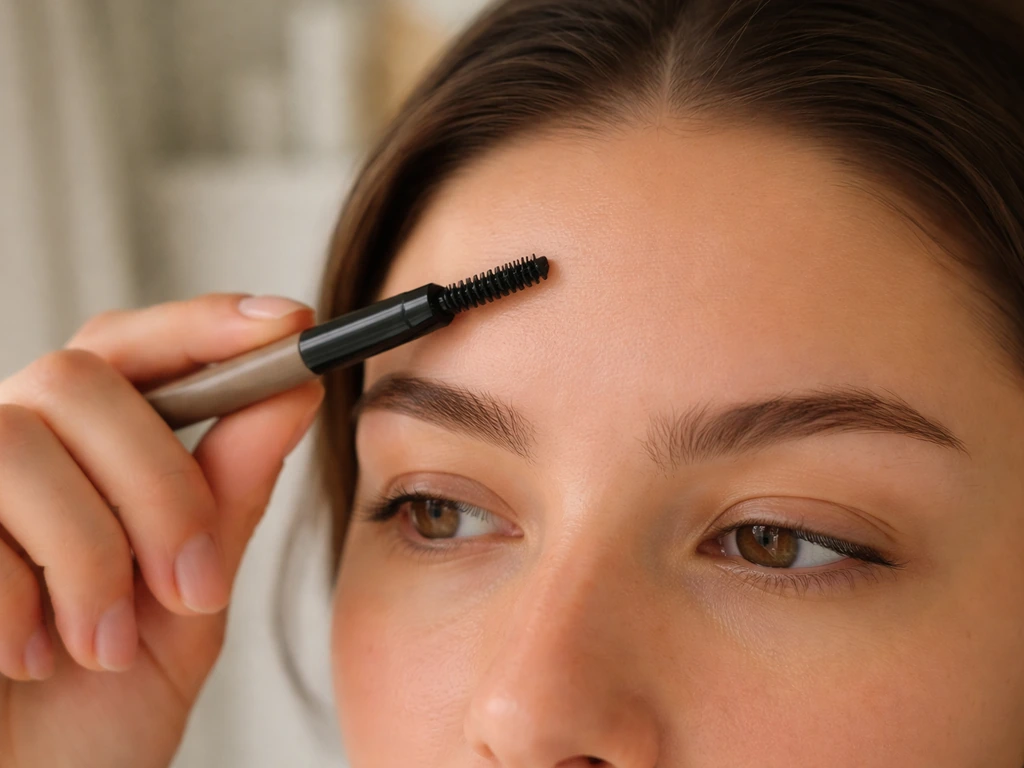
One eyebrow almost always grows a little faster or fuller than the other, and in most cases it comes down to a combination of natural hair-cycle timing, small differences in how you groom each side, and the physical habits you repeat every day without thinking about them. If you are also wondering why men's eyebrows grow long, the same hair growth cycle and individual follicle patterns play a big role in how full or uneven brows look natural hair-cycle timing. It's rarely a medical problem. But if the difference is new, getting worse, or comes with itching, redness, or patchy bare spots, that's worth paying attention to.
Why Does One Eyebrow Grow Faster Than the Other? Causes and Fixes
James Whitmore
10 Jul 2026
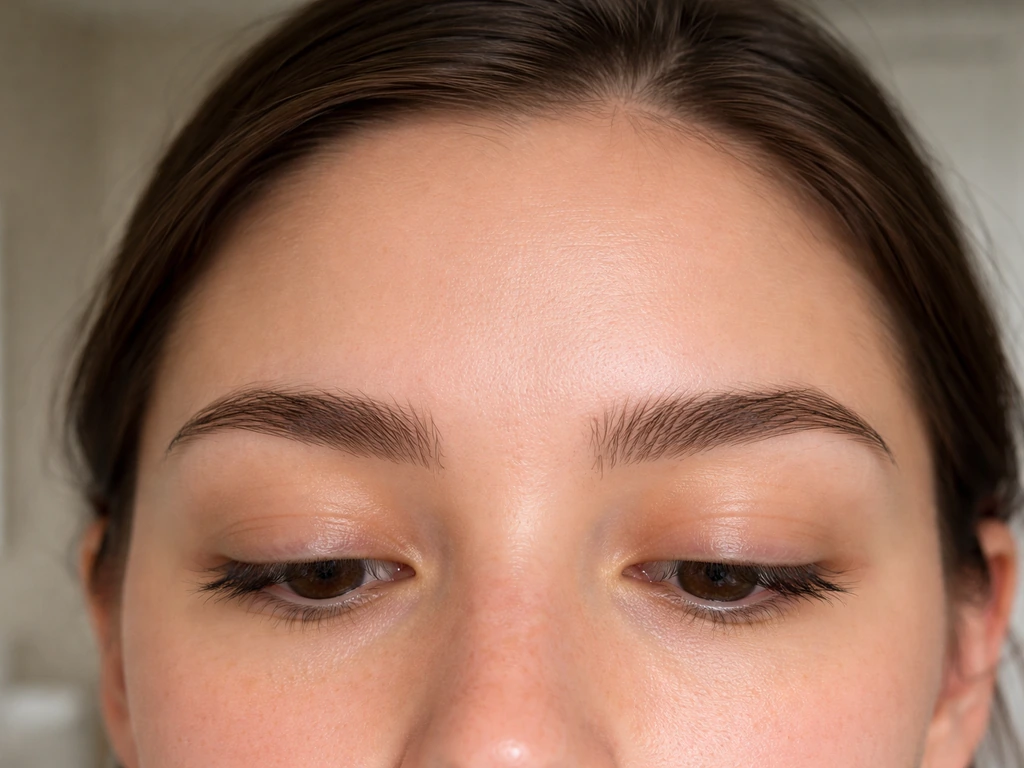
Why eyebrow asymmetry is almost always normal
Eyebrow hairs don't all grow at the same time. Like every other hair on your body, they cycle through three phases: anagen (active growth), catagen (transition), and telogen (rest). The eyebrow's anagen phase lasts only about 28 days, compared to years for scalp hair. After that, hairs rest in the follicle for roughly two to three months before a new hair pushes them out. The full eyebrow cycle runs somewhere between three and four months from start to finish.
Because of that short anagen window, your brow hairs are almost never in the same phase at the same time across both brows. One side might have more hairs actively growing on a given week while the other side has more hairs resting. Over time that evens out, but at any snapshot in time, a small difference in density or length between your left and right brow is just the cycle doing its thing. Add in the fact that most people are dominant on one side (which affects grooming pressure, how they apply makeup, and even how they rest their face), and you have a very ordinary explanation for a very common frustration.
The real reasons one brow gets ahead of the other
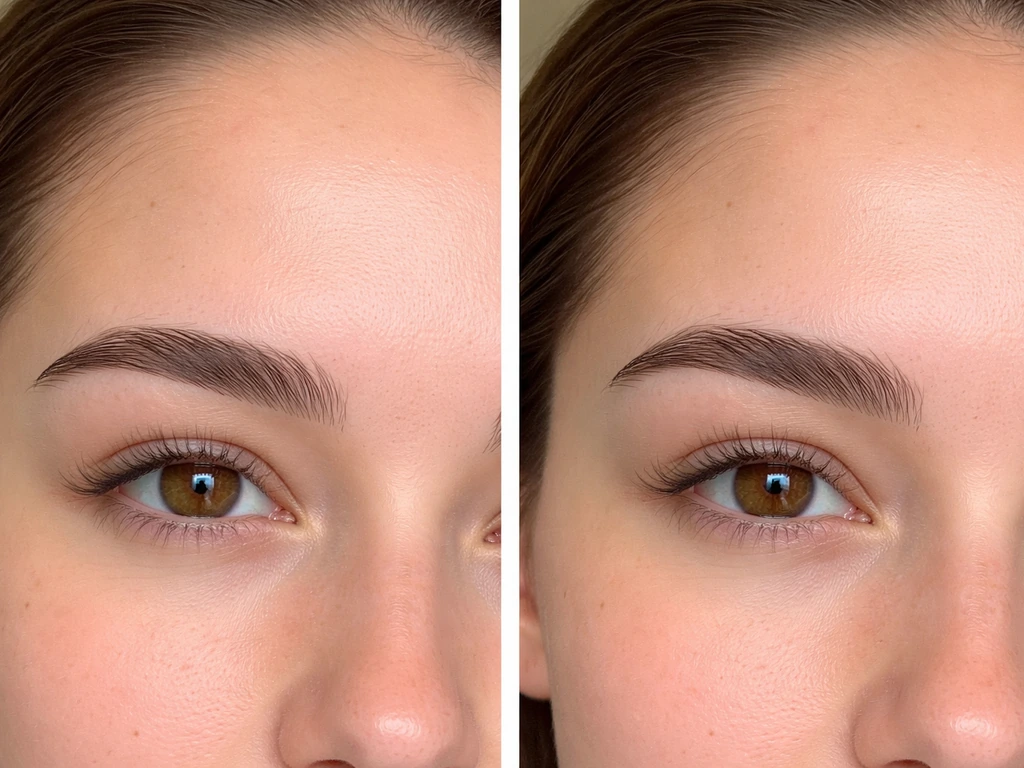
Grooming differences
This is the most common culprit. If you tweeze, wax, thread, or shave one side more aggressively or more often than the other, you're interrupting the hair cycle on that side more frequently. Repeated removal over months or years can eventually weaken follicles and slow regrowth noticeably. Even small differences matter: taking two extra hairs from one arch each session adds up over a year. Most people don't realize they're doing it asymmetrically until they put a ruler to their brows or look at photos taken a few months apart.
Sleep position and face pressure
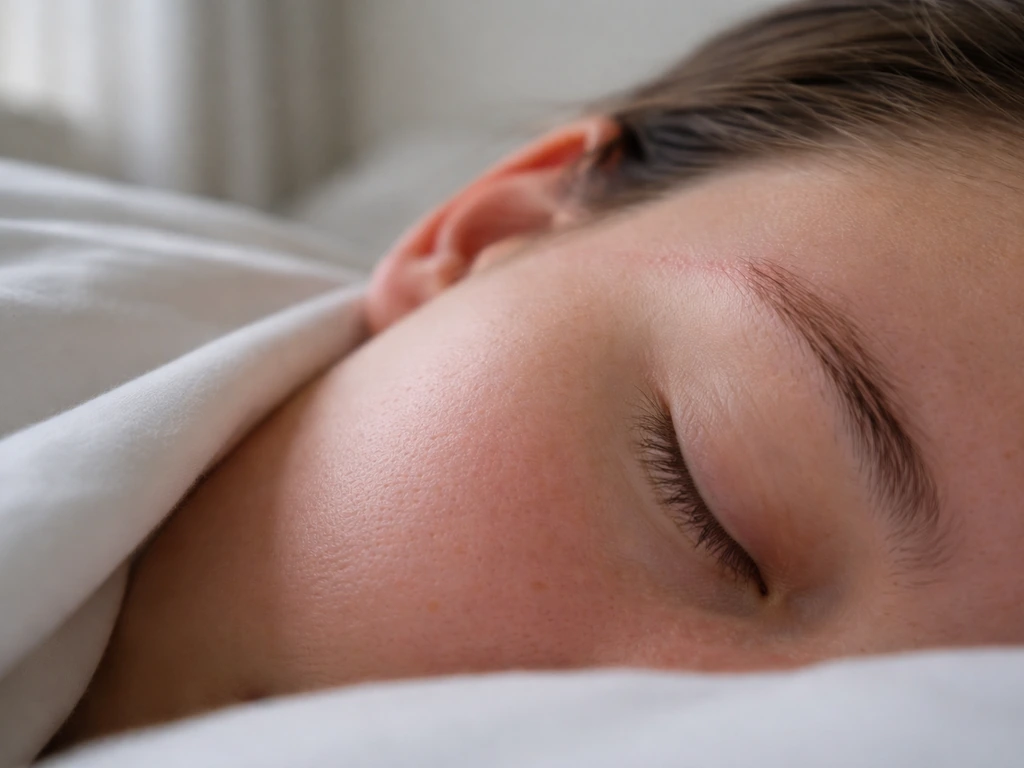
If you consistently sleep on the same side of your face, that brow gets nightly friction and pressure against a pillow. This is a low-grade version of traction-related hair stress. It won't cause dramatic hair loss on its own, but it can contribute to slightly slower regrowth or a thinner look on one side compared to the other. Side-sleepers who notice the slower brow is always on their dominant sleeping side should treat this as a likely contributor.
Skin irritation and contact reactions
Cosmetic procedures that touch only one brow area, or products applied unevenly, can create localized inflammation that slows growth. Eyebrow tinting, brow lamination, and certain makeup removers all involve active chemicals. Tinting products often contain para-phenylenediamine (PPD), which is a well-documented contact allergen. Brow lamination uses thioglycolate compounds, the same chemistry as a perm, which can irritate skin and affect the follicle environment if overused. You don't need a full-blown allergic rash to have enough low-level irritation to affect one brow's growth cycle.
Habitual touching and rubbing

A lot of people rub one brow when they're thinking, stress-pick at it, or rest their face on one hand while working at a desk. These habits create chronic low-level mechanical trauma to the follicles on that side. If you notice your slower-growing brow is always on the side of your dominant hand, this is worth considering.
Genetics and natural asymmetry
Some people simply have genetically different follicle density or hair thickness on each side of their face. Hair follicle size, cycle length, and density are all heritable traits. If your asymmetry has been consistent your whole life and runs in your family, you're not dealing with a fixable trigger, you're dealing with your baseline. That doesn't mean you can't improve it, but the expectation should be "minimize the gap" rather than "make them identical."
How to figure out what's actually causing yours
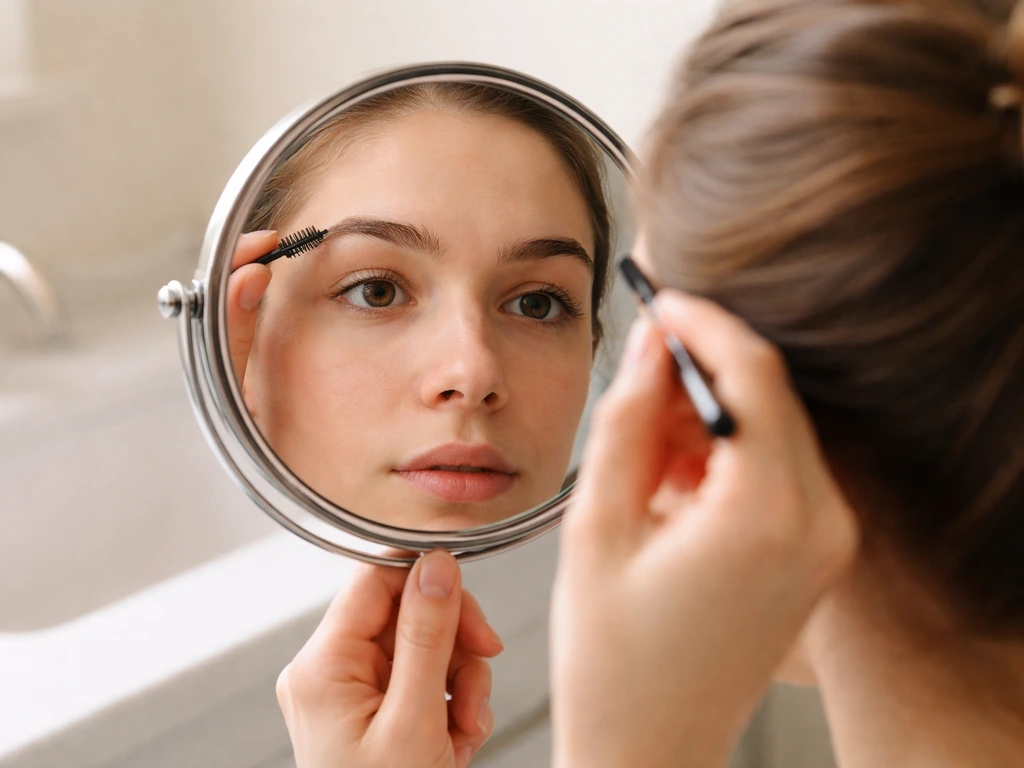
Running through a quick mental checklist is usually enough to point you in the right direction. Ask yourself these questions honestly:
- When did I last groom each brow, and do I always clean up one side more than the other? If yes, uneven grooming is your likely cause.
- Has there been a cosmetic procedure on or near one brow in the past three to four months (tinting, lamination, tattooing, Botox near the brow)? Chemical and physical trauma takes a full cycle to show up as a growth difference.
- Is the slower brow patchy and bare in spots, or just generally shorter/thinner overall? Patchy and bare suggests something disrupting follicles specifically (over-plucking damage, contact dermatitis, or a condition like alopecia areata). Uniformly shorter just means the hairs on that side are at a different cycle stage.
- Which side do I sleep on, and which side do I rest my hand on at a desk? Chronic friction and pressure affect the same side, consistently.
- Is this new and getting worse, or has it been roughly the same my whole life? Stable lifelong asymmetry is almost always genetic. A change in the past few months needs more investigation.
- Is there any itching, scaling, redness, or flaking skin around the slower brow? Any of those symptoms point toward a skin or inflammatory cause rather than a simple cycle difference.
- Do I have a family history of patchy hair loss or thyroid issues? Both are relevant if you're seeing true thinning or loss rather than just a growth timing difference.
If the answers point to grooming habits and sleep position with no skin symptoms and no recent changes, you're almost certainly dealing with a normal, fixable situation. If you've got itching, noticeable patches, or a difference that's progressing over weeks, keep reading to the medical section below.
What to do right now to start balancing things out
The first step is simple but genuinely hard for most people: stop grooming the slower-growing brow entirely until it catches up. Every time you tweeze even one hair from that side, you're potentially sending a follicle back into a rest phase. Give it a clean break of at least eight to twelve weeks before reassessing.
- Put down the tweezers for the thinner brow. Fill in with pencil or powder if you need to look symmetrical in the meantime.
- Switch to sleeping on your back, or try a silk pillowcase to reduce friction if you can't break the side-sleeping habit.
- Audit every product that touches your brow area. Remove anything with a known irritant or allergen history, especially recent additions to your routine.
- Stop rubbing, touching, or picking at the brow. Put a clear brow gel on it if that gives you a tactile reminder to leave it alone.
- If you've had a recent chemical brow treatment, give the skin a full four to six weeks to recover before any further procedures.
- Keep the skin around the brow clean and moisturized but not overloaded with products. A calm follicle environment helps.
These steps won't produce visible results overnight. But stopping the trigger is the single most important thing you can do, because applying any growth oil or serum on top of an ongoing irritant is largely pointless.
Growth options that actually move the needle
Castor oil and rosemary oil
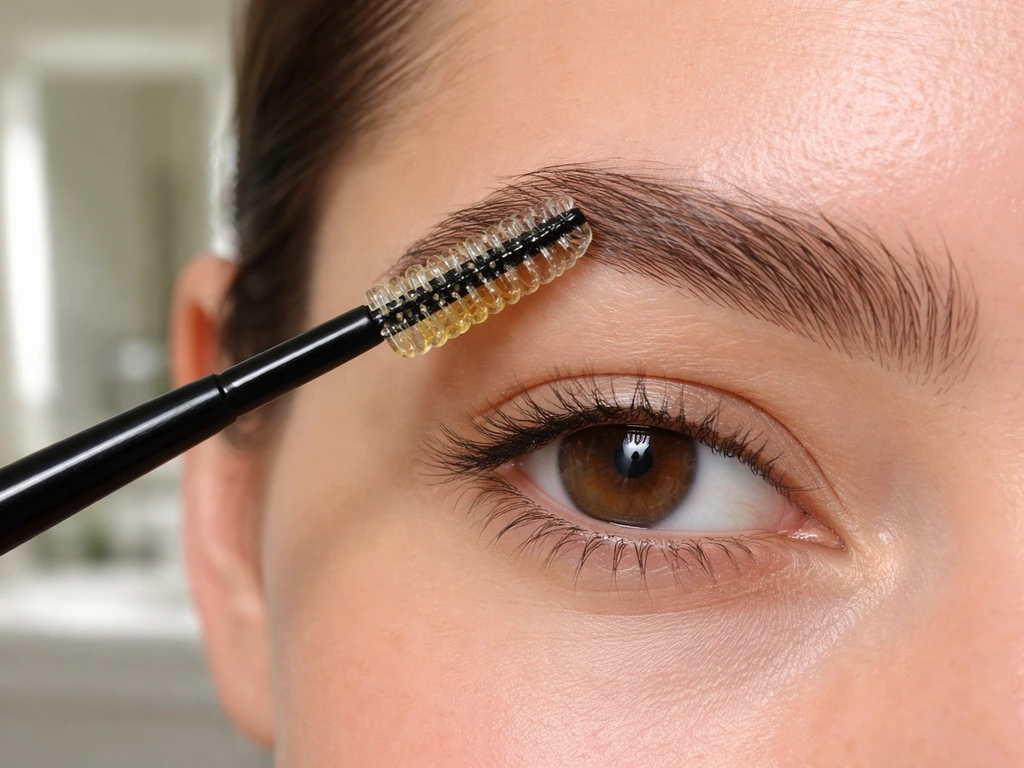
These are the most popular home remedies, and they're worth trying as a low-risk starting point. Neither has the clinical evidence behind it that minoxidil does, but both have plausible mechanisms and a strong anecdotal track record in the brow community. Castor oil coats and conditions the existing hairs (which can make them look thicker) and may help maintain a healthy follicle environment. Rosemary oil has shown some promising small-study results for hair growth, likely through increased circulation to the area.
To use either one: apply a tiny amount to a clean spoolie or fingertip and work it into the brow, focusing on the thinner side. Do this nightly, let it absorb for at least 20 to 30 minutes before bed (or leave overnight), and wash off in the morning. The key is consistency over weeks, not days. Don't expect transformation in two weeks. If after two full hair cycles (six to eight months) you see no change, move on to something stronger.
Minoxidil and other actives
Topical minoxidil is the most evidence-backed option for stimulating eyebrow hair growth. If you’re dealing with very sparse or missing brow hair, the same checklist and options can help you figure out what to do next eyebrow hair growth. Research comparing minoxidil 2% to other actives like bimatoprost for eyebrow hypotrichosis shows real, measurable improvements in density and thickness with consistent use. A small amount of 2% minoxidil applied to the thinner brow once daily is a reasonable approach for someone whose brow hasn't responded to basic care after several months.
A few things to know before you start. Minoxidil near the face carries some specific risks that scalp use doesn't. EMA scientific conclusions on topical minoxidil report safety concerns including hypertrichosis in infants after skin contact with applied minoxidil blank" rel="noopener noreferrer">small risk of unwanted hair growth. The skin around the brow and eye area is thinner and more sensitive, and there's a small risk of unwanted hair growth in adjacent areas if the product spreads. Use a cotton swab or the tip of your finger to apply it precisely, only on the brow itself, and wash your hands immediately after. The AAD notes minoxidil regrowth generally takes about six to twelve months to become clearly visible, so don't quit after six weeks. Also: don't use minoxidil if you're pregnant or breastfeeding, and if you notice any irritation, redness, or swelling, stop and check with a dermatologist.
| Option | Evidence Level | How to Use | Realistic Timeline | Main Cautions |
|---|---|---|---|---|
| Castor oil | Anecdotal/low | Spoolie, nightly on thin brow | 4–6 months to notice difference | Can clog follicles if applied too heavily |
| Rosemary oil | Preliminary/mixed | Diluted with carrier oil, nightly | 4–6 months minimum | Patch test first, can irritate sensitive skin |
| Minoxidil 2% | Strongest clinical evidence | Small amount once daily, precise application | 6–12 months for visible density change | Unwanted hair spread, irritation, not safe in pregnancy |
| Bimatoprost (prescription) | Clinical trial evidence | Prescribed by dermatologist | Several months | Requires prescription, potential skin/eye side effects |
Realistic timelines: how long before the slower brow actually catches up
Because eyebrow anagen only lasts about 28 days and the full cycle runs three to four months, you need to think in quarters, not weeks. One small study tracking regrowth after shaving a brow found full regrowth took around six months. If your asymmetry is due to over-grooming, you're looking at a similar window, sometimes longer if the follicles were stressed repeatedly over years.
Here's a rough framework for setting realistic expectations:
| Cause | How Soon You See Change | Full Catch-Up Time |
|---|---|---|
| Grooming habit correction (stop tweezing) | First new hairs in 4–6 weeks | 3–6 months for noticeable balance |
| Post-chemical treatment irritation | Improvement after 4–6 weeks of rest | One to two full cycles (3–6 months) |
| Castor/rosemary oil added | Subtle within 2–3 months | 4–6 months for meaningful change |
| Minoxidil 2% started | Faint new growth at 3–4 months | 6–12 months for visible density |
| Scarring from repeated trauma | May not fully recover | Depends on follicle damage extent |
The hardest part is staying consistent when you don't see results in the first month. That's not a sign that nothing's working, it's just the biology of a 28-day anagen phase. Take a photo of both brows today as your baseline, then compare at the three-month mark. You'll often see more progress than you felt was happening.
When to stop DIY-ing and see a dermatologist
Most brow asymmetry is boring and benign. But there are situations where getting a professional involved early genuinely matters, because some causes of eyebrow thinning or loss won't respond to any oil or serum, and treating the underlying condition is the only way to get regrowth.
See a dermatologist if you notice any of the following:
- The asymmetry appeared suddenly (over days or a week) rather than gradually over months
- You have clearly bare patches within the brow, not just overall thinning or shorter hairs on one side
- There's persistent itching, redness, scaling, or flaking on or around the brow
- You've noticed thinning in the outer third of one or both brows alongside fatigue, cold intolerance, or weight changes (these are classic thyroid flags)
- The difference keeps getting worse despite stopping all grooming on that side
- You also have patchy lash loss or hair loss elsewhere on your scalp or body
- Your skin feels thickened, scarred, or the brow area looks smooth and shiny where hair used to grow
Conditions like alopecia areata, atopic eczema, contact dermatitis, and thyroid disorders can all cause one-sided or asymmetric eyebrow loss. Alopecia areata in particular can start as a single patchy brow and progress, and the AAD emphasizes that earlier treatment improves outcomes. A dermatologist can examine your brow with dermoscopy, order blood tests to rule out thyroid or autoimmune issues, and if needed take a small biopsy to distinguish non-scarring from scarring hair loss. Non-scarring causes are usually treatable and often reversible; scarring madarosis is more likely to be permanent. That distinction is something only a clinician can make accurately.
Treatment for medically-caused asymmetry might include topical corticosteroids, prescription minoxidil, or other targeted therapies depending on the diagnosis. There's no over-the-counter shortcut for those situations, and waiting a year before seeing a doctor when a condition like alopecia areata is progressing can mean missing a window where treatment is more effective.
If you've been dealing with a broader issue of sparse, slow-growing brows on both sides, the biology of why eyebrows grow so slowly in general is worth understanding separately. And if the thinner brow only grows in the front two-thirds while the tail stays bare, that's a different pattern that has its own set of common causes and solutions.
FAQ
How can I tell if the asymmetry is normal cycling versus an irritation or allergy problem?
Yes, but look for “flare” signals. If the slower brow has itch, redness, scaling, burning, or patchy gaps that are expanding over weeks, that points more toward irritation or a medical cause than normal cycling.
What timeline should I use to judge whether my fixes are working?
Take a series of photos in the same lighting, same distance, and same brow position. Compare at 8 to 12 weeks and again at 3 to 4 months, because eyebrow follicles can be out of sync for months, even when you stop the trigger.
Will stopping grooming the slower brow immediately improve it, or does it take time for follicles to “reset”?
If you tweeze or wax the thinner side less, you may still see regrowth slow down temporarily at first because follicles can be stuck in a rest phase. The practical rule is to stop grooming the slower side fully for 8 to 12 weeks, then assess before restarting any shaping.
Can I keep shaping my brows while trying to regrow the slower-growing side?
Avoid “double dosing” where you apply growth products and then remove hairs again. If you want cleaner comparison, pause tweaking for at least 8 to 12 weeks and only do minimal, careful grooming on the faster side so you do not re-irritate the slower one.
What are the most common mistakes people make when using minoxidil around the eyes?
If you do decide to use minoxidil, apply only to the brow skin, let it fully dry, and wash hands right after. If you get it into the lash line or eyelid skin repeatedly, you increase the chance of irritation and of hair growth in nearby areas.
Does it matter where the thinning is happening on the brow (front vs tail)?
If you have a visible gap mainly at the front third versus the tail, treat it differently. Front loss is often more affected by friction, makeup habits, or contact irritation, while tail-sparing can also reflect long-term follicle differences, so a one-size plan may underperform.
Can makeup removal or skincare actually cause one-brow thinning?
If you are on a cycle of frequent makeup removal, particularly with rubbing, switch to gentle, non-stinging removal and avoid leaving tint or lamination residue longer than directed. Uneven product contact can create localized slowing even when your overall routine seems unchanged.
My brows changed suddenly, does that make my situation less likely to be normal?
New asymmetry after a procedure, new brow products, or a short window of increased grooming is more suspicious for a contact reaction or follicle stress. If it has been stable for years, genetics and hair-cycle timing are likelier.
When should I stop experimenting at home and see a dermatologist?
Yes. If the cause is an autoimmune or inflammatory issue (for example, alopecia areata), home remedies may not stop progression and could delay effective treatment. A clinician can also distinguish non-scarring versus scarring loss, which changes expectations.
If I try castor oil or rosemary oil, how do I know when to switch strategies?
Using oils and serums can be reasonable, but do not treat it as a substitute for diagnosing a progressive patch or widespread irritation. If you try a low-risk option, set a stop point, such as no improvement after two full eyebrow hair cycles (6 to 8 months).
Next Article
Why Do Eyebrows Grow So Slow? Causes, Timelines, Fixes
Learn why eyebrows grow slowly, timelines, common causes, and safe routines, plus when to seek treatment.