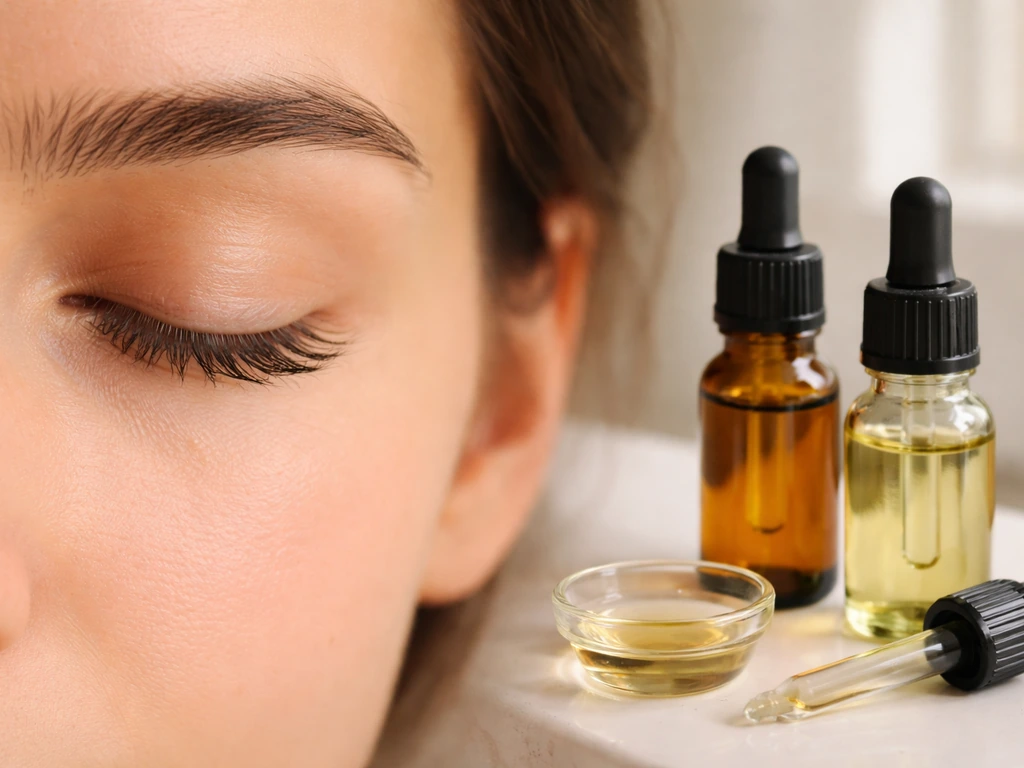
Yes, rosemary oil can support eyebrow growth, but with an important caveat: it works best when your follicles are still active and the main problem is poor circulation, inflammation, or breakage, not dormant or permanently damaged follicles. The strongest human evidence comes from a 6-month randomized trial comparing rosemary oil to minoxidil 2% for androgenetic alopecia, where both produced comparable hair count improvements on the scalp. That's not an eyebrow study, but it tells us rosemary oil has a real, measurable effect on hair follicle activity, not just a conditioning effect on existing strands.
Does Rosemary Oil Grow Eyebrows? What to Expect and How to Use It

James Whitmore
6 May 2026
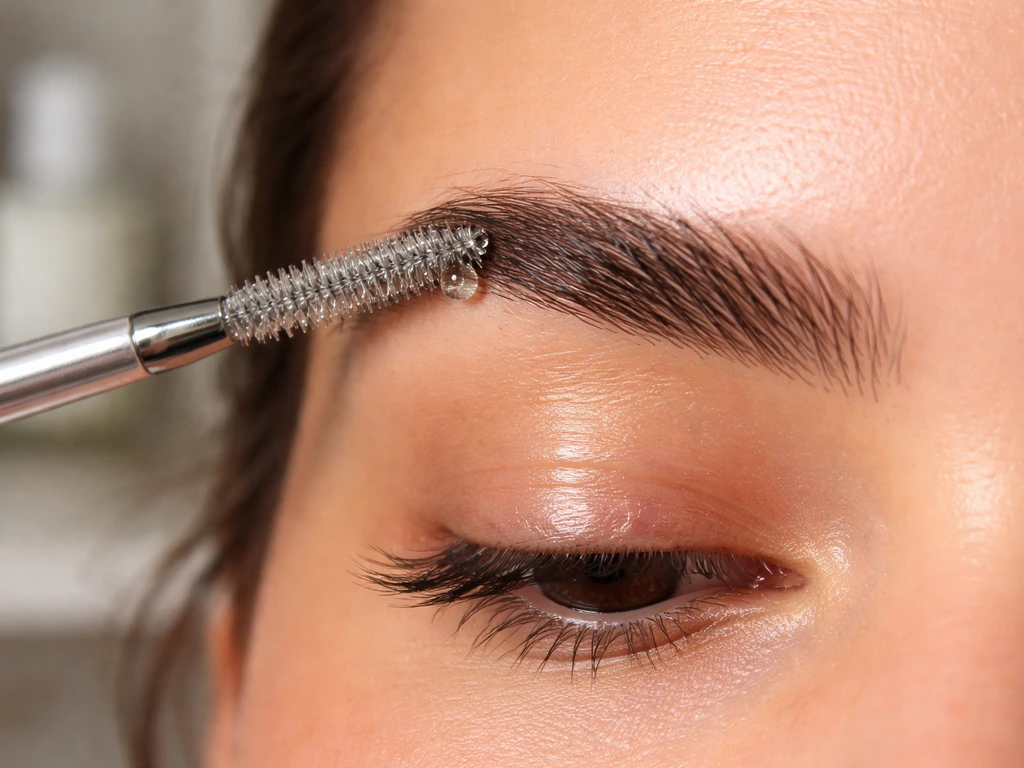
How eyebrow hair actually grows (and why this matters for oils)
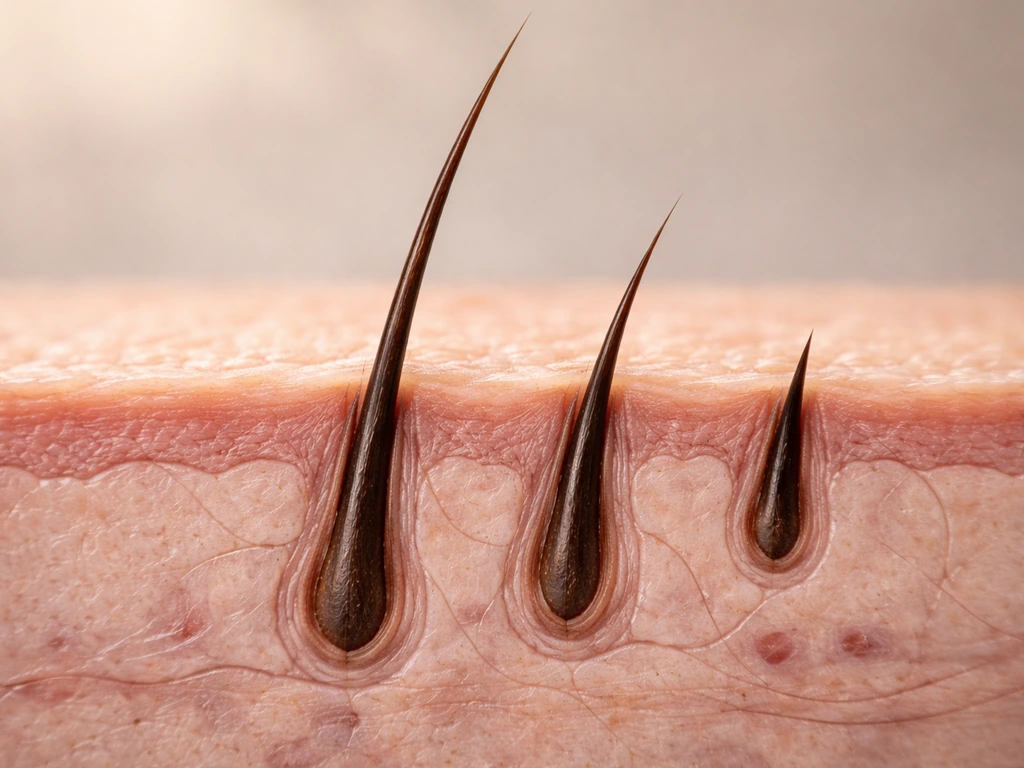
Eyebrow hairs go through the same three-phase cycle as scalp hair: anagen (active growth), catagen (transition), and telogen (rest/shedding). The big difference is the ratio. Scalp hair spends roughly 90% of its time in anagen, growing for years before resting. Eyebrow hair is nearly the opposite: about a 1:9 anagen-to-telogen ratio, meaning at any given moment, most of your brow hairs are resting, not actively growing. The anagen phase for eyebrows lasts only about 2 to 3 months, and the full cycle takes roughly 4 to 6 months to complete.
This biology explains two things. First, why eyebrows look thin so quickly after overplucking or waxing, since most follicles weren't growing to begin with. Second, why any oil or topical treatment needs consistent, long-term use to show results: you're essentially waiting for the next anagen window to open for each follicle, and that can take months. An oil that encourages more follicles to enter or stay in anagen longer would visibly thicken brows over time, which is the mechanism researchers think rosemary oil may be tapping into.
Where oils can genuinely help: reducing scalp inflammation and oxidative stress around the follicle, improving local circulation, conditioning the hair shaft to reduce breakage, and keeping the skin around the brow healthy enough not to interfere with growth. Where they fall short: if a follicle is truly dormant because of scarring from years of aggressive plucking, autoimmune conditions like alopecia areata, or hormonal changes, no topical oil is going to reliably restart it.
What the evidence actually says about rosemary oil and hair growth
The most cited study is the 2015 randomized comparative trial pitting rosemary oil lotion (standardized to 3.7 mg of 1,8-cineole per mL) against 2% minoxidil for androgenetic alopecia over 6 months. Both groups showed statistically significant hair count increases by month 6. Rosemary oil was not inferior to minoxidil and actually caused less scalp itching at the 3-month mark. That's genuinely promising, and it's stronger than most natural ingredient data gets.
A 2024 double-blind, three-arm clinical trial on PMC tested rosemary-lavender and rosemary-castor oil blends against a coconut oil placebo over 90 days and found improvements in hair growth rate and density in the rosemary-containing groups. A related double-blind, three-arm, placebo-controlled trial in the PMC literature evaluated rosemary-lavender and rosemary-castor blends versus coconut oil placebo over 90 days and reported improvements in hair growth rate and density for the rosemary-containing groups a 90-day double-blind, three-arm clinical trial found improvements in hair growth rate and density in rosemary-containing groups. Again, these are scalp studies, not eyebrow studies. But the mechanism being tested, specifically rosemary's anti-inflammatory and androgen-modulating properties, applies to follicles anywhere on the body.
The active compounds driving these effects are carnosic acid and rosmarinic acid. Multiple studies confirm their antioxidant and anti-inflammatory activity through DPPH/ABTS radical-scavenging assays, and research in human keratinocytes shows rosemary oil inhibits matrix metalloproteinases (MMPs), enzymes that can break down the follicle's structural environment. Carnosic acid has also been shown to modulate androgen receptor pathways, which is relevant if your brow thinning has a hormonal component.
Realistic expectation: rosemary oil is unlikely to produce the dramatic regrowth you'd see from prescription-strength treatments or from a healthy young follicle that was just temporarily overplucked. What it can realistically do is modestly improve hair density over 3 to 6 months of consistent use, reduce breakage by conditioning the hair shaft, and calm any low-level inflammation that might be suppressing follicle activity. If you're dealing with acute brow thinning from recent overplucking or a stressful period, the effect could be more noticeable.
How to use rosemary oil on your eyebrows safely
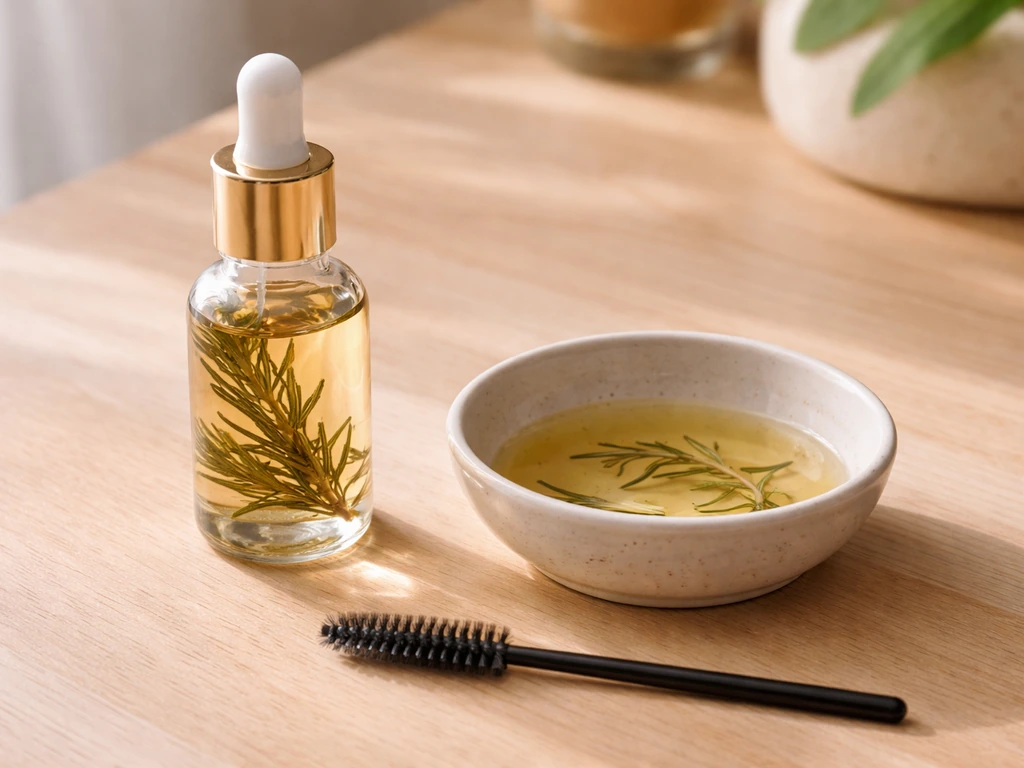
The single most important rule: never apply undiluted (neat) rosemary essential oil directly to your skin, and absolutely not near your eyes. PubChem lists hazard statements for peppermint oil, including H319 (serious eye irritation) and H317 (may cause allergic skin reaction), which is why essential oils should be kept away from the eye area. PubChem's hazard classification for rosemary oil includes H319 (causes serious eye irritation) and H317 (may cause allergic skin reaction). Plant Therapy's safety data sheets for rosemary 1,8-cineole specifically flag serious eye damage risk. The FDA echoes this, noting that the eye area is particularly delicate and that natural doesn't automatically mean safe. A diluted application applied carefully to the brow bone, kept well away from the lash line and eye itself, is the only way to use this.
Dilution and carrier oil
Dilute rosemary essential oil to 1 to 2% in a carrier oil before applying it to your brows. For reference, a 1% dilution is roughly 1 drop of essential oil per teaspoon (5 mL) of carrier oil. Good carrier options include castor oil (which has its own conditioning properties for brows), jojoba oil (closely mimics skin sebum and absorbs well), or coconut oil. Castor oil is a popular pairing because it's thick enough to stay on the brow without running, but if you find it too heavy, jojoba is a cleaner alternative. Castor oil can be a good carrier for many brow oils, but it will not help if your follicles are permanently damaged or dormant due to scarring shea butter.
Patch test first, every time with a new bottle
Apply a small amount of your diluted blend to the inside of your wrist or elbow and wait 24 hours before putting it anywhere near your face. Essential oil quality and composition can vary significantly between brands and even batches, so doing this once when you first start is not enough: repeat it when you open a new bottle. If you notice any redness, itching, or swelling during the patch test, don't use it.
Application routine
- Mix 1 to 2 drops of rosemary essential oil into approximately 5 mL (one teaspoon) of your chosen carrier oil to achieve a 1 to 2% dilution.
- Use a clean spoolie brush or a cotton swab to apply the blend directly onto the brow hairs and skin underneath, following the direction of hair growth.
- Keep the application to the brow area only. Do not drag downward toward the eyelid or lash line.
- Leave it on overnight if possible, or for at least 30 minutes before rinsing. The longer contact time gives the active compounds more opportunity to penetrate the follicle.
- Apply once daily, ideally in the evening. More frequent application doesn't speed results and increases the chance of skin sensitization.
- Wash hands thoroughly before and after application.
How long before you see results, and what to watch for
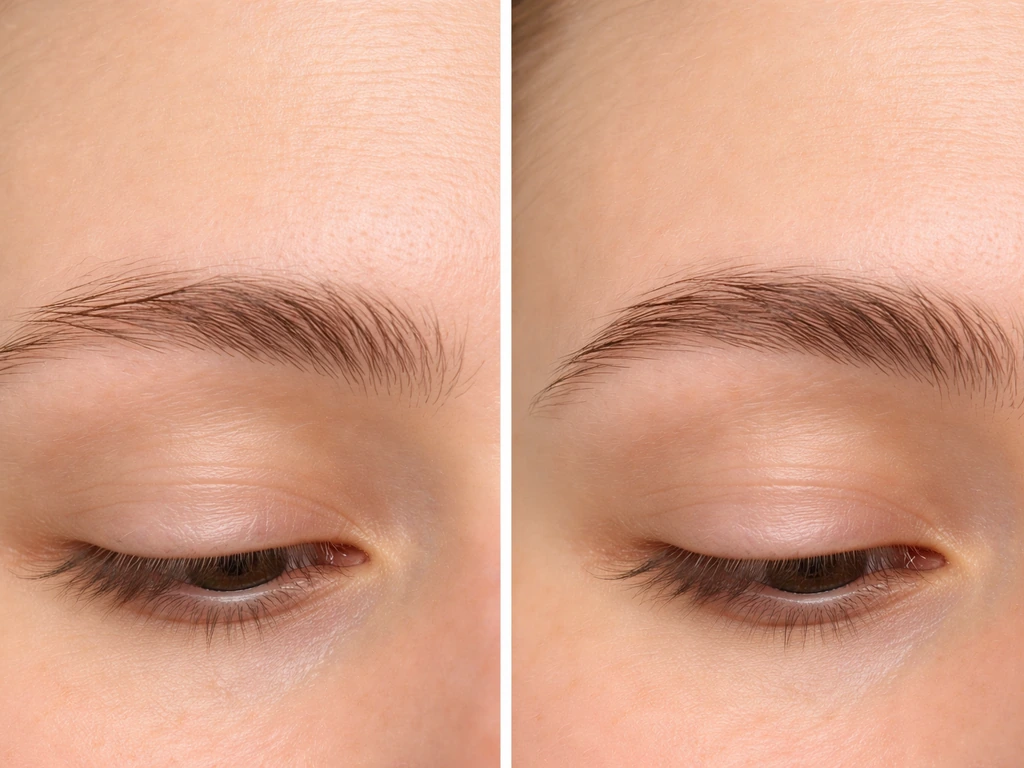
Given the eyebrow hair cycle of roughly 4 to 6 months end to end, you should commit to at least 3 months of daily use before drawing conclusions. Most people who see results from rosemary oil report noticing thicker-looking brows and less shedding around the 8 to 12 week mark, with more obvious density changes closer to 4 to 6 months. If you've seen no change whatsoever after 3 months of consistent daily use, it's worth reassessing whether rosemary oil is the right tool for your specific type of brow thinning.
Positive signs of progress include: new fine hairs appearing in previously sparse areas (especially at the tails of the brows), existing hairs feeling less brittle and breaking less at the tips, and the overall brow looking slightly denser even without new growth (this is often reduced shedding, which counts). Early signs that something is wrong include persistent redness, itching, or flaking in the brow area, a stinging sensation after application, or small bumps forming on the skin. If any of these appear, stop using it immediately and give your skin a week to recover before deciding whether to try again at a lower concentration or switch to a different approach.
What to try alongside rosemary oil, or instead of it
Rosemary oil is a reasonable starting point, but it's not the most evidence-backed option for eyebrow regrowth specifically. If you are specifically wondering can wild growth oil grow eyebrows, the same rule applies: results depend on your brow-thinning cause and the oil must be used consistently for months rosemary oil. If you want the best oil to grow eyebrows, rosemary oil is a good starting point, but minoxidil has the strongest eyebrow-specific clinical results. Here's how the main alternatives compare, so you can build a strategy that fits your situation.
| Option | Evidence for Eyebrows | Best For | Key Consideration |
|---|---|---|---|
| Rosemary oil (diluted) | Indirect: strong scalp trial data, no dedicated eyebrow RCT | Mild thinning, hormonal/inflammatory causes, general conditioning | Must dilute; keep away from eyes; 3-6 month commitment |
| Castor oil | Anecdotal only; no published eyebrow RCTs | Conditioning, reducing breakage, keeping brow hairs healthier | Works as a carrier for rosemary; very safe but evidence is thin |
| Minoxidil 2% topical | Best eyebrow-specific evidence: 51% showed enhancement vs 23% placebo in a split-face RCT | Significant thinning, androgenetic causes, when natural options haven't worked | FDA-approved for scalp only; apply carefully; requires ongoing use |
| Bimatoprost (prescription) | Randomized controlled trial vs minoxidil for eyebrow hypotrichosis | Diagnosed eyebrow hypotrichosis, medical-grade regrowth needed | Prescription only; discuss with a dermatologist |
| Jojoba oil (carrier only) | No direct growth evidence; good skin compatibility | Sensitive skin, diluting rosemary or other actives | Best used as a carrier, not a standalone growth treatment |
Minoxidil deserves a direct mention here. It has the strongest eyebrow-specific clinical data of any topical: a split-face study found 51% of participants showed enhancement with minoxidil 2% versus 23% with placebo. The Mayo Clinic notes that results typically appear after several months of use and stop when you discontinue. If you've tried rosemary oil and castor oil for 3 to 6 months without meaningful change, minoxidil 2% applied carefully to the brow area (avoiding the eye) is worth discussing with a dermatologist. It's not a natural remedy, but it works on a well-understood mechanism.
Matching your approach to the cause of your brow thinning
The cause of your sparse brows matters more than any ingredient. Overplucking, waxing, and threading cause trauma that can slow or temporarily stop regrowth, especially if done aggressively over many years. Cleveland Clinic guidance emphasizes patience and stopping further trauma as the primary steps here: your follicles may simply need time and a healthier local environment, which is exactly where rosemary oil can contribute. If you're in active recovery from overplucking, stop all brow manipulation, give the area 4 to 6 months, and use a gentle oil routine during that time.
If thinning came on suddenly, is patchy, or is accompanied by skin changes, it could point to alopecia areata (an immune-mediated condition), telogen effluvium from illness or stress, or thyroid issues. No topical oil is going to resolve an autoimmune or systemic cause: those need a proper diagnosis and often prescription treatment. If you are wondering whether can hair growth oil grow eyebrows, it usually depends on whether the follicles are still active and not blocked by an untreated underlying condition reverse an autoimmune or systemic cause. If your brows have been thinning gradually without a clear mechanical cause, see a dermatologist before spending months on a DIY oil routine that's unlikely to address the root problem. Oils like rosemary and castor are genuinely useful tools, but they work best when the underlying issue is fixable and the follicles are still viable.
FAQ
Can I use rosemary essential oil to grow my eyebrows, or only rosemary oil blends?
Yes, but only if it is diluted and used carefully. Essential “rosemary oil” products must be diluted to about 1 to 2% in a carrier oil, and never applied to the lash line or inside the eyelids. If the product is labeled as an extract (not an essential oil), check the ingredient list and concentration, because some “oils” can be much stronger or include solvents that change irritation risk near the eyes.
How often should I apply rosemary oil to my brows for best results?
Do not speed up results by applying more or more often. For most people, daily use is enough, and increasing frequency or concentration mainly increases the chance of irritation, which can worsen shedding. If you get redness or bumps, pause until the skin fully calms, then restart at a lower dilution (for example, 0.5 to 1%) or switch carriers.
What if my brow thinning is from years of overplucking or scarring?
Using it on already-damaged or scarred follicles usually will not “restart” growth. If you have visible scarring, long-term overplucking gaps that have been stable for years, or smooth skin where hair used to be, rosemary oil may only condition any remaining hairs and reduce breakage, not rebuild follicles. In that situation, a dermatologist can assess whether the issue is scarring, traction, autoimmune, or something else.
What should I do if my brows get irritated from rosemary oil?
Stop and treat irritation first. Persistent stinging, swelling, significant flaking, or worsening redness means your skin barrier may be rejecting the product. Give it about a week to recover, then either restart at a lower dilution, switch to a different carrier, or discontinue if symptoms recur on re-trial.
How will I know it is working, and when should I expect to see changes?
New fine hairs and less shedding are good signs, but you still need a realistic timeline. Because eyebrow follicles cycle slowly, improvements usually show up around 8 to 12 weeks (often as reduced breakage and shedding), with clearer density changes nearer 4 to 6 months. If you see zero change after 3 months of consistent, non-irritating use, it is reasonable to reassess your cause of thinning.
Can I use rosemary oil together with castor oil or other brow products?
Yes, you can combine rosemary oil with other brow-support steps, but avoid layering multiple irritating actives at the same time. Keep it simple: use rosemary in a diluted carrier, do not apply acids, retinoids, or strong exfoliants on the brow area during the initial trial, and remove makeup gently. If you use minoxidil later, do not mix it in the same bottle as essential oil.
Do I really need to patch test rosemary oil if I have sensitive skin?
Patch testing matters more for eyebrow use than many people realize. Even if you reacted to other essential oils before, you should still patch test any new rosemary product because compositions vary by brand and batch. If you have a history of eczema or fragrance sensitivity, consider testing for 48 hours and start at the lowest dilution.
Is rosemary oil still worth trying if my eyebrows started thinning suddenly or in patches?
Rosemary oil will not address sudden or patchy thinning caused by an autoimmune or systemic trigger. If thinning is fast, patchy, or comes with eyebrow skin changes (like smooth bald patches, itch, or scaling), it can signal conditions such as alopecia areata, telogen effluvium, or thyroid issues. In those cases, you should see a dermatologist instead of relying on a DIY topical routine for months.
How close to my eye can I apply rosemary oil safely?
Make sure you are applying to the correct area: the brow hair follicle and brow skin, not the lashes. A safe approach is to apply a tiny amount to the brow bone or the area where the brow normally grows, using a clean cotton swab or fingertip, and keep it well away from the lash line. If it migrates toward the eyes, irritation risk increases.
Which carrier oil is best with rosemary oil, castor or jojoba?
Carrier choice can affect comfort and tolerance. Castor oil is thick and tends to stay in place, but some people find it heavy or prone to causing residue or acne-like bumps. Jojoba is lighter and skin-absorbing, which can reduce greasiness and irritation for some users. Choose the carrier that lets you apply consistently without skin flare-ups.
Next Article
Best Oil to Grow Eyebrows: Castor, Rosemary, and More
Find the best oils to grow fuller eyebrows and eyelashes, how to apply safely, timelines, and when to switch for results