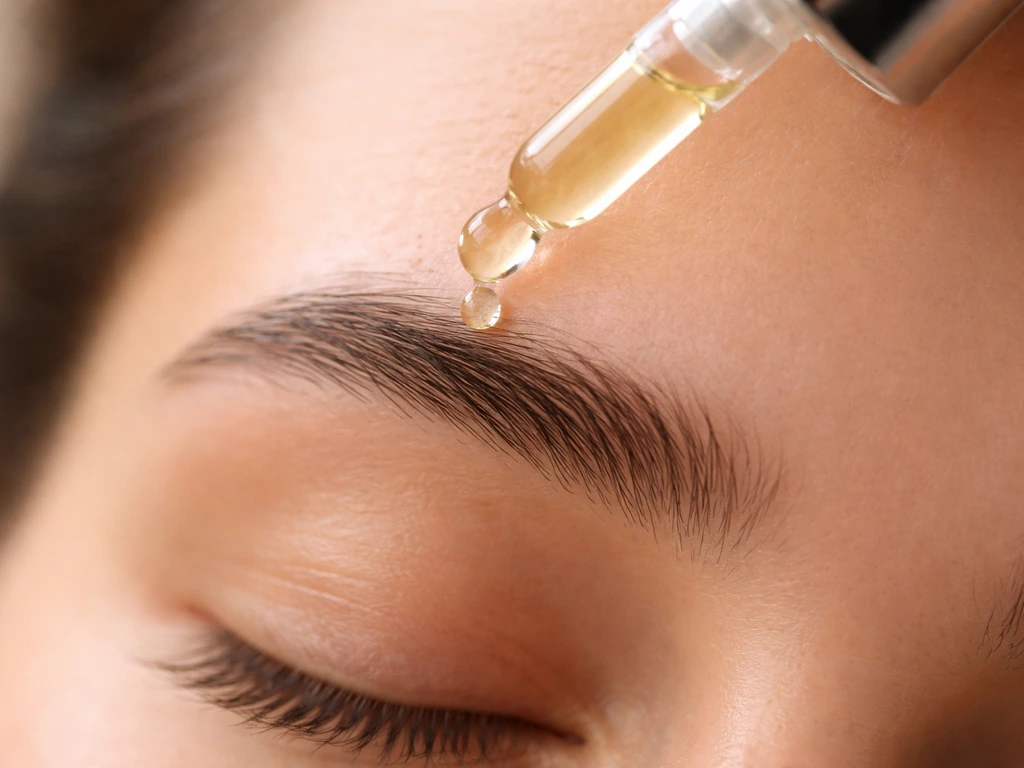
Castor oil typically takes 3 to 4 months of consistent daily use before you notice a meaningful difference in eyebrow fullness. Some people spot early changes, like brows looking shinier and slightly more conditioned, within the first 2 to 4 weeks, but that's not the same as new growth. Real, visible regrowth tied to the hair cycle takes longer, and if your brows are sparse due to years of over-plucking or a medical condition, you're looking at the longer end of that range.
How Long Does Castor Oil Take to Grow Eyebrows

James Whitmore
21 May 2026
Realistic timeline for eyebrow growth with castor oil
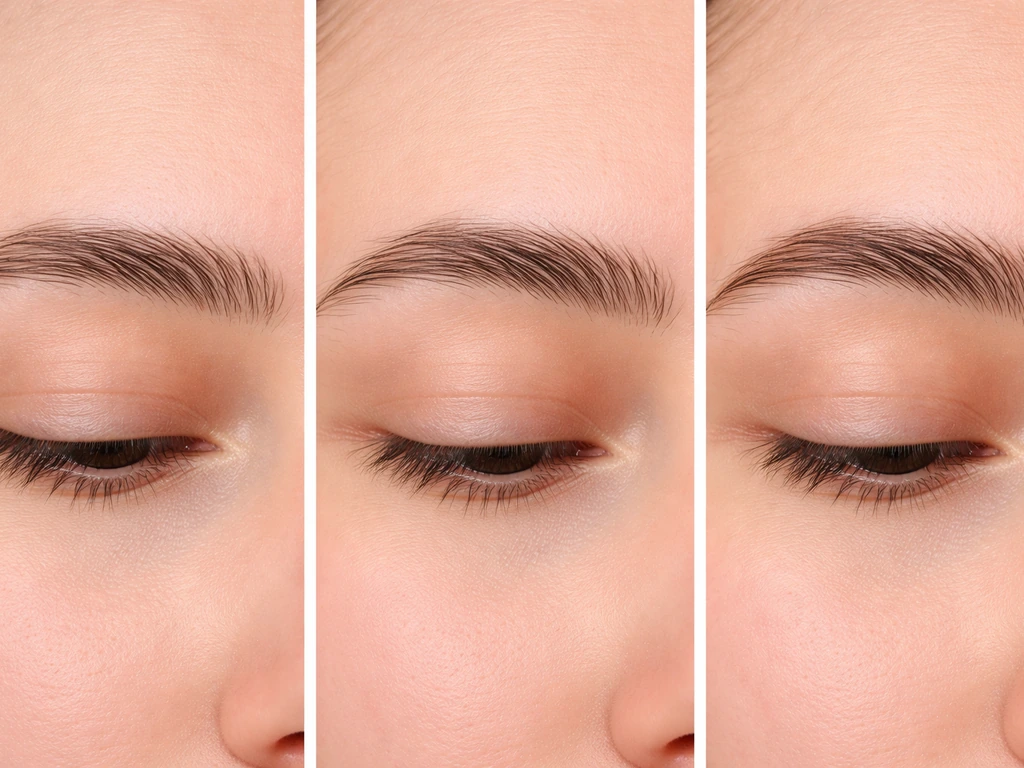
Before diving into weeks and months, there's something worth knowing: there are currently no clinical studies proving that castor oil directly stimulates new eyebrow hair growth. That's not a reason to dismiss it entirely, but it does shape how you should interpret any timeline. What castor oil genuinely does is coat and condition existing hairs, which can make brows look thicker, darker, and more defined. Any true regrowth you experience is your hair cycle doing its job, and castor oil may support that process rather than drive it independently.
With that honest foundation in place, here's how the timeline usually plays out for most people:
| Time Point | What You're Likely to Notice |
|---|---|
| Weeks 1–2 | Brows look slightly more conditioned and defined. Existing hairs appear darker or more visible due to the oil coating them. No new growth yet. |
| Weeks 3–4 | Some people notice fine, short hairs beginning to appear in patches that were very sparse. This depends heavily on whether follicles are still active. |
| Months 2–3 | If follicles are healthy and hair loss was caused by something reversible (like over-plucking), you may start seeing more consistent new growth filling gaps. |
| Months 3–4 | This is the window where fuller-looking brows become realistic for most people. Hairs have had time to complete a portion of a growth cycle. |
| Months 4–6+ | If you're dealing with chronic thinning, age-related loss, or damage from long-term over-plucking, meaningful fullness may take this long or require adding a stronger option. |
For comparison, even prescription-grade treatments like bimatoprost (a prostaglandin analog used medically for eyebrow hypotrichosis) don't show significant improvements until 6 to 7 months in clinical trials. That context helps set realistic expectations: if a medical-grade option takes that long, a conditioning oil working through gentler, less-proven mechanisms isn't going to produce full brows in a few weeks.
What influences how fast castor oil works for your brows
Not everyone using castor oil starts from the same place, and that matters enormously for your timeline. These are the factors that will most affect how quickly you see results.
Why your brows are sparse in the first place
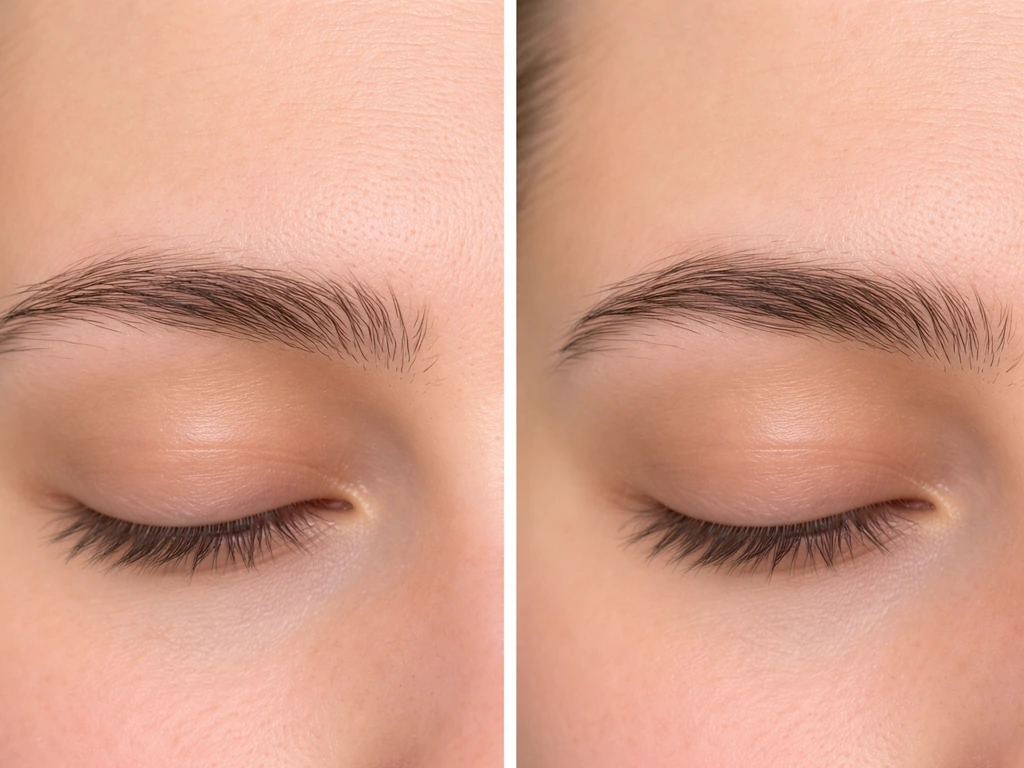
This is the single biggest variable. If your brows are thin from years of over-plucking, the follicles may still be intact but dormant. Those can potentially be nudged back into activity over a few months. If your thinning is from alopecia areata, hormonal changes, thyroid issues, or nutritional deficiencies, castor oil alone won't address the root cause. Conditions like alopecia areata have specific etiologies that require targeted treatment, and topical home remedies won't reverse a systemic or autoimmune process. In those cases, a dermatologist is a necessary step, not an optional one.
How long the hairs have been missing
If you shaved or waxed your brows recently, you're in a much better position than someone who hasn't had full brows in a decade. Recently disturbed follicles are more likely to respond. Follicles that have been repeatedly traumatized over many years through aggressive plucking can eventually stop producing hair altogether. Castor oil cannot reverse follicle scarring or permanent damage.
Your consistency and application method
Applying castor oil twice a week instead of nightly will slow your timeline considerably. Eyebrow hair follows a growth cycle (anagen, catagen, and telogen phases), and that cycle in the brow area is already shorter than scalp hair. Missing applications means you're not consistently providing whatever supportive benefit castor oil offers during the active growth window. Inconsistency is one of the most common reasons people report no results after a couple of months.
Age and overall health
Hair growth naturally slows with age. Younger people tend to see faster results from any supportive treatment. Nutritional status, stress levels, and hormonal balance also affect how quickly hair cycles turn over. If you're dealing with chronic stress, low iron, or thyroid dysfunction, your timeline will be longer regardless of what you apply topically.
Skin reactions and tolerability
Castor oil can cause allergic contact dermatitis in some people, and reactions near the eye area are a real concern. Published case reports document true allergic reactions to castor oil in cosmetic products, and the Cleveland Clinic specifically notes it can cause skin irritation, rash, and allergic reactions on the face. If your skin is reacting, the inflammation itself will work against any growth benefit. Irritation near the brow area is also uncomfortable enough that most people stop using the oil, breaking the consistency that results depend on.
How to apply castor oil correctly
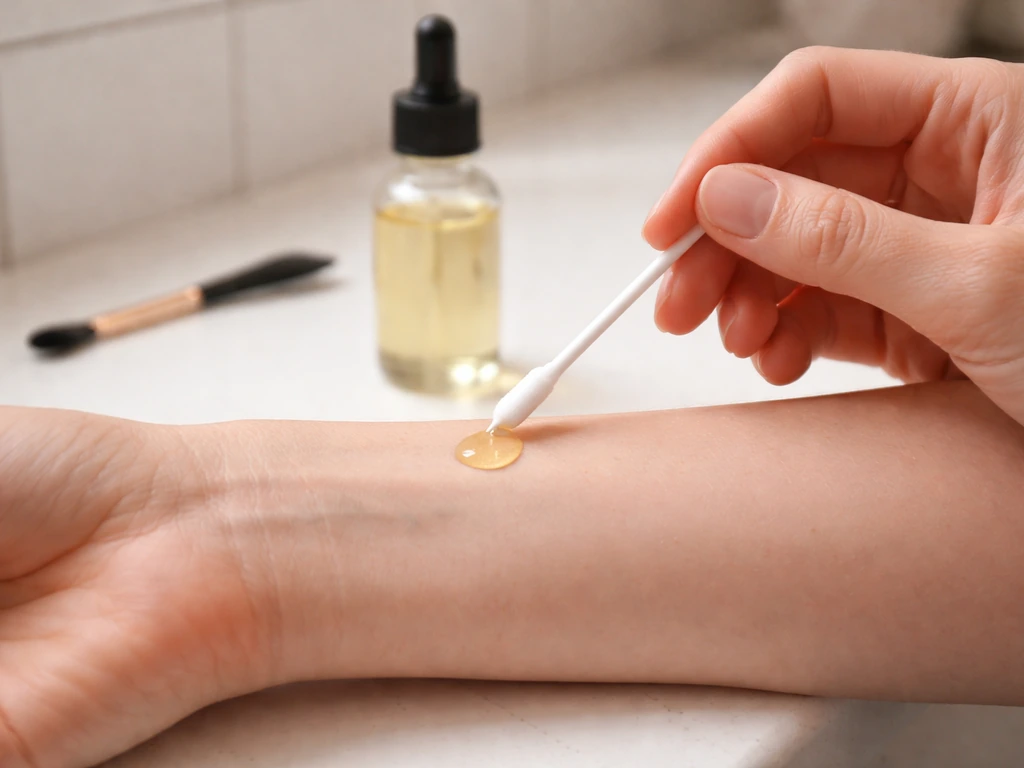
Getting the application right matters more than people think. Here's how to do it properly.
- Patch test first: apply a small amount of castor oil to the inside of your wrist or behind your ear and wait 24 hours before using it near your brows. Castor oil is used in many cosmetics, but allergic reactions do happen, and the eye-adjacent area is especially sensitive.
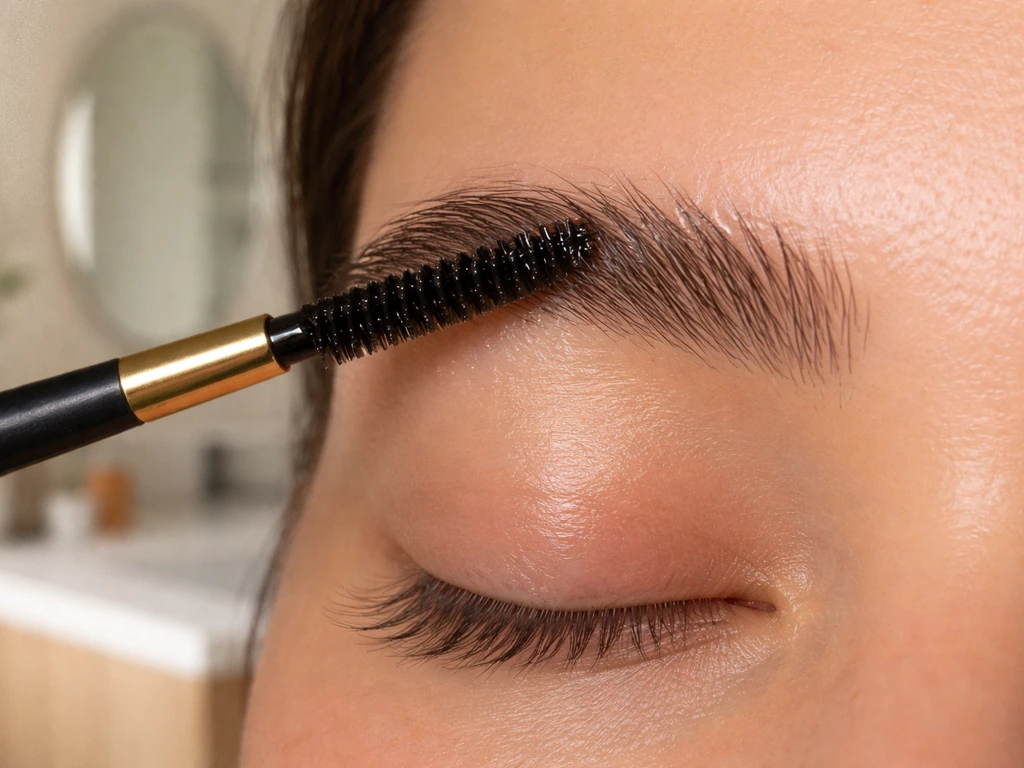
- Use a clean spoolie or a small brush, not your fingers. Fingers introduce bacteria and make it hard to control how much oil you apply. A clean mascara wand works perfectly.
- Apply a thin layer to the brow hair and skin underneath at night, about 30 minutes before bed or just before sleep. You don't need much: a tiny amount picked up on the spoolie tip is enough for both brows.
- Focus on sparse areas and the brow line. Use light strokes following the direction of hair growth rather than rubbing back and forth.
- Use it nightly or at least 5 nights per week for the first 3 months. Consistency is what separates people who see results from those who don't.
- Do not apply a thick, heavy layer. Excessive castor oil near the eye area can migrate and cause irritation, and heavy oil buildup on skin can potentially contribute to clogged pores or milia (small keratin cysts) along the brow line. Thin applications are safer and work just as well.
- Wash off in the morning with your regular cleanser. You don't need to leave residue on the skin during the day.
Cold-pressed, hexane-free castor oil is the cleanest option and what most dermatologists suggest if you're going to use it at all. Jamaican black castor oil (JBCO) is also popular and some people prefer it, though both are essentially unrefined or minimally processed castor oil with no established difference in effectiveness.
What to look for week by week
Tracking progress makes it much easier to stay consistent and know when something isn't working. Here's what to realistically watch for, and when.
Weeks 1 through 4: the conditioning phase
During the first month, most of what you're seeing is the oil's conditioning effect. Existing hairs look darker, more defined, and lie flatter. This is real and useful even if it isn't new growth. Take a photo on day one in good lighting, then compare at the 4-week mark. Subtle changes are easier to spot in photos than in a mirror because you're not seeing your face every day with fresh eyes.
Weeks 4 through 8: early growth signals
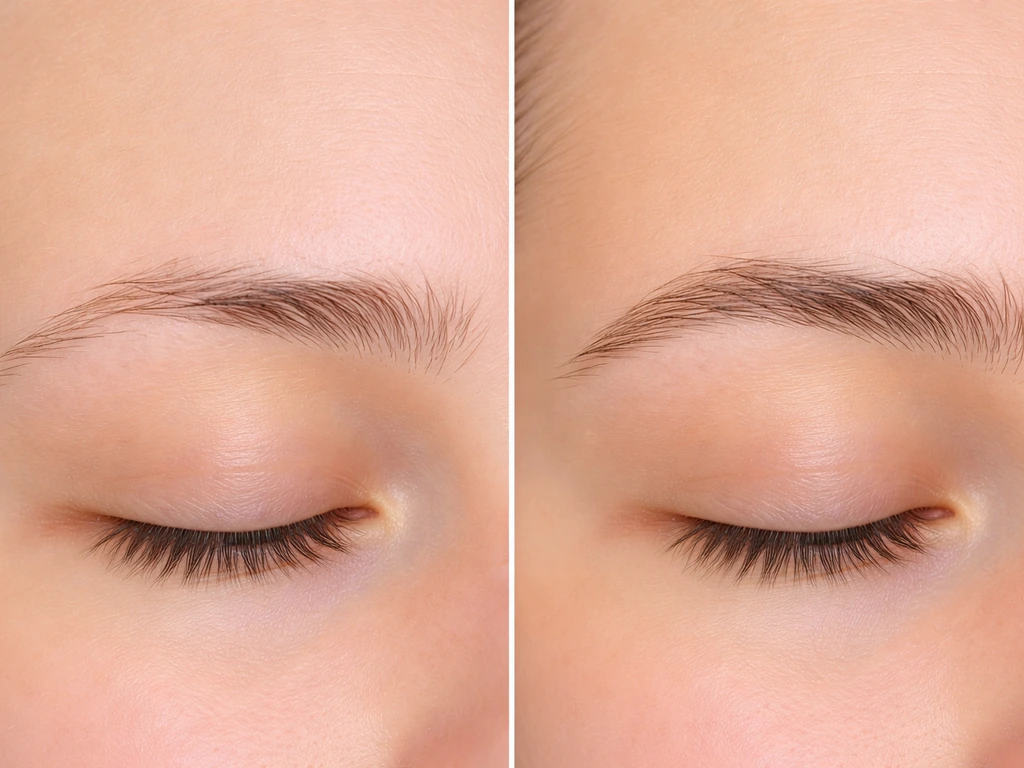
By the 6 to 8 week mark, if your follicles are active, you may start seeing very fine, short hairs in the outer third of the brow or in gaps that were previously bare. These hairs are often pale or thin at first. That's normal. They'll darken and thicken as they mature. If you see this, it's a good sign to keep going.
Months 2 through 4: the real progress window
This is the phase where consistent users typically see the most noticeable improvement. Brows start to look visibly fuller, gaps become smaller, and the overall shape improves. Compare photos every 4 weeks. If you're seeing steady improvement, even if slow, continue your routine. Hair growth is not linear, so some weeks will feel like stalling before a visible change.
Month 4 onward: maintenance and plateaus
After 4 months, most of the recoverable growth from castor oil alone has likely occurred. Results can plateau at this point. You can shift to applying every other night for maintenance rather than nightly if brows have reached a satisfying state. If you haven't seen progress by month 4, it's a clear signal to reassess your strategy.
What to do if you're not seeing progress
If you've been applying castor oil nightly for 8 to 12 weeks and your photos show no change at all, here are the things to check before giving up or escalating.
- Check your consistency honestly: missed applications are the most common reason for stalled results. If you're averaging 3 nights a week, that's likely not enough.
- Look for irritation signs: redness, itching, or small bumps along the brow line suggest your skin may be reacting to the oil. If that's happening, stop using it and let the area settle before trying again or switching products.
- Consider whether the cause of your sparse brows has been addressed: if you have an untreated thyroid condition, nutritional deficiency, or autoimmune hair loss, no topical oil will overcome those drivers. A blood panel and a dermatology consult are worth doing if you haven't already.
- Assess whether the follicles in the sparse areas are still active: if brows have been over-plucked for 10 or more years, some follicles may be permanently damaged. Castor oil can't restore those.
- Try combining castor oil with gentle exfoliation of the brow area 1 to 2 times per week using a soft washcloth or mild exfoliant. This removes dead skin buildup that might be blocking follicles and improves absorption.
- Make sure you're not over-applying: heavy, greasy buildup can clog follicle openings and actually impede growth rather than support it.
When to consider other options or add-ons
Castor oil is a low-risk starting point, but it's not the only option, and for some people it won't be enough. If you're at the 3 to 4 month mark with little to show for it, here's what's worth considering.
Rosemary oil
Rosemary oil has more direct research support for promoting hair growth than castor oil does. Small studies have compared it favorably to minoxidil for scalp hair, though differences took about 6 months to emerge and evidence is still limited. Small studies summarized by Allure suggest rosemary oil may resemble minoxidil only over longer timepoints, with differences sometimes emerging around 6 months, though evidence remains limited. It works differently from castor oil, primarily through improving circulation to follicles and showing some anti-inflammatory properties. Some people use both together, applying a rosemary-infused oil to the brow area. If castor oil alone isn't doing enough after 2 to 3 months, swapping in or adding rosemary oil is a reasonable next step. If you are specifically wondering how long rosemary oil takes for eyebrow regrowth, timing tends to be on the order of months, not weeks how long does rosemary oil take to grow eyebrows.
Minoxidil
Topical minoxidil is the most evidence-backed over-the-counter option for hair regrowth. It's used off-label for eyebrows and is one of the alternatives listed in dermatology consensus documents for conditions like alopecia areata when first-line treatments haven't worked. If your brow loss is significant, persistent, or has a medical cause, a dermatologist may recommend a low-concentration minoxidil applied to the brow area. Results still take months, similar to scalp use, but the mechanism (extending the anagen growth phase) is better established than castor oil's proposed effects.
See a dermatologist for persistent or unexplained loss
If your brows have been thinning progressively and you haven't had a cause identified, a dermatologist visit is genuinely the most useful next step, not a product switch. Conditions like alopecia areata, frontal fibrosing alopecia, or hormonal causes each have specific treatments. For alopecia areata affecting brows, topical anti-inflammatory treatments can produce regrowth within roughly 3 to 6 months, and medical options like bimatoprost have shown results by 6 to 7 months in trials. Those outcomes are significantly better than what unproven home remedies can offer in the same conditions.
Other oils worth knowing about
Coconut oil and olive oil are frequently mentioned alongside castor oil for eyebrow care, and they share the same basic limitation: conditioning benefits are real, but direct evidence for stimulating new growth is minimal. Coconut oil is often compared to castor oil for eyebrows, but it is unlikely to outperform it for true regrowth. If you've tried castor oil without results, switching to another conditioning oil is unlikely to change the outcome. Rosemary oil and clinically supported options are a more logical escalation path.
The bottom line is this: start castor oil today if you want to try it, be consistent every night, and give it a genuine 3 to 4 months before judging results. Take photos at the start, track weekly, and don't expect miracles before the 6 to 8 week mark. If progress stalls or you see signs of irritation, adjust early rather than waiting. And if your brow thinning has a medical root cause, a dermatologist will do more for you in 3 months than any oil applied alone.
FAQ
Should I apply castor oil to clean skin or can I use it over moisturizer?
Use it on clean, dry skin when you can. Oils and lotions can trap residue and increase the chance of irritation right around the eye, which can break consistency. If you use other products, let them fully absorb first, then apply castor oil with a light coating.
How much castor oil should I use per eyebrow, and does more oil work faster?
More is not better. A thin, even layer is enough to coat existing hairs. Over-applying can clog pores, increase irritation risk, and make it more likely you will stop using it, which slows results.
Is it okay to leave castor oil on overnight, and will it harm my eyes?
Overnight use is common, but keep it off the eyelid margin. If it migrates toward the eye, you may get watering, redness, or inflammation. Consider applying earlier in the evening, use less, and stop if you notice any eye irritation.
What should I do if my eyebrows look darker but the hairs are not getting longer or fuller?
That usually means you are getting conditioning without active regrowth yet. Keep tracking with photos every 4 weeks, give it the full 3 to 4 month window, and avoid extra trauma like waxing or tweezing during that period.
Can I use castor oil if I wear makeup or brow products daily?
Yes, but aim for a routine that reduces friction. Apply castor oil at night, wash it off in the morning, and limit harsh brow clearing during the trial. If your makeup remover stings or makes the area red, switch to a gentler cleanser to protect the follicles.
Will castor oil work if I pluck or tweeze my eyebrows while trying to grow them?
It will likely delay results. Repeated plucking can remove hairs before they mature and can turn dormant follicles fully inactive. If you want the best chance, avoid tweezing and only shape minimally while you are testing the routine.
How long should I wait before concluding castor oil is not working?
If you see no change at the 6 to 8 week mark (even in the form of finer new hairs or improved fullness), reassess your method. If there is still no visible progress by month 4 with consistent use and no irritation, it is reasonable to consider escalation or a cause check.
What are early signs that I might be allergic or getting contact dermatitis?
Early signs include itching, burning, redness, swelling, or rash along the brow area or near the eye. If symptoms appear, stop immediately, wash the area gently, and do not “push through” the irritation because inflammation can sabotage any supportive effect.
Does age, stress, or diet change the timeline for eyebrow growth with castor oil?
Yes. Slower hair cycling from low iron, thyroid issues, poor nutrition, or high chronic stress can extend the timeline regardless of the oil. If you have fatigue, heavy periods, unexpected weight change, or known thyroid problems, it is worth addressing underlying drivers rather than only adjusting product use.
Can castor oil help with eyebrow loss from alopecia areata or thyroid problems?
Castor oil alone typically will not address those root causes. If brow loss is patchy, rapidly changing, or associated with autoimmune or thyroid symptoms, a dermatologist is the most effective next step, since targeted treatment can produce regrowth over months rather than relying on a conditioning-only approach.
How should I track progress so I do not misjudge results?
Take a standardized photo each 4 weeks using the same lighting, distance, and brow positioning. Include a day-one photo and compare side-by-side. Mirror checks can miss subtle changes because your face looks different day to day.
If castor oil helps, do I need to keep using it to maintain results?
Often, yes. Once you reach a satisfactory level, switching to every other night can help maintenance, but stopping completely may allow the conditioning benefit to fade. If you notice thinning returning, resume regular use or consider an evidence-backed option with guidance.
Next Article
Does Vitamin E Oil Help Eyebrows Grow? Safe Routine & Timeline
Find out if vitamin E oil helps eyebrow growth, plus a safe routine, timelines, and what works better.