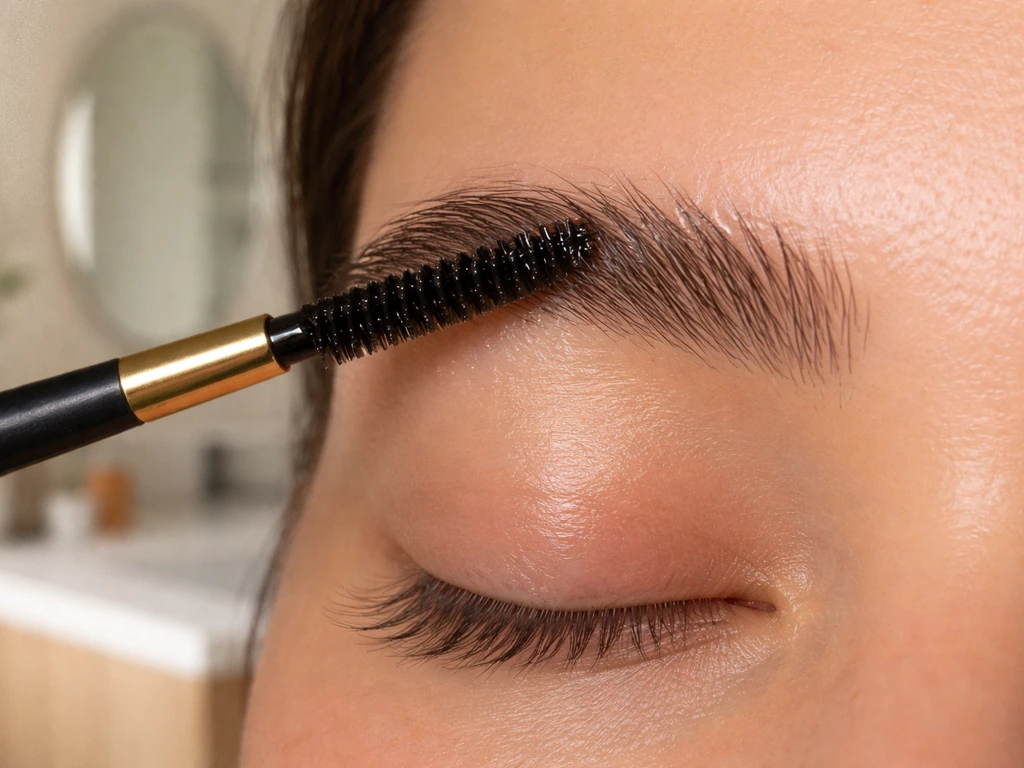
Vaseline will not make your eyebrows grow. There are no clinical trials showing that petroleum jelly activates hair follicles or speeds up the eyebrow growth cycle in any meaningful way. What it does do is condition the hairs you already have, protect the delicate skin around the brow, and reduce breakage that can make sparse brows look even thinner. That's a real, measurable benefit, just not the one most people searching this question are hoping for. If your goal is actual regrowth after overplucking, waxing, or thinning due to age, Vaseline can support the process as part of a routine, but it won't be the thing that brings your brows back.
How Long Does It Take for Vaseline to Grow Eyebrows, Guide

James Whitmore
26 Jul 2026
Who Vaseline might actually help
The honest answer is that Vaseline is most useful for people whose sparse brows are partly a cosmetic or mechanical problem rather than a follicle problem. If you've overplucked for years and your hairs are dry, brittle, and prone to snapping, or if the skin around your brows is dry and flaky and creating a rough-looking brow line, petroleum jelly can genuinely improve how things look and feel while you wait for regrowth. Similarly, if you shaved or waxed recently and want to protect the regrowth phase, Vaseline's occlusive layer can shield emerging hairs from friction and dryness.
Here's a breakdown of the common reasons brows thin or slow down, and how relevant Vaseline actually is for each one:
| Cause of Sparse Brows | Is Vaseline Helpful? | What You Actually Need |
|---|---|---|
| Overplucking / repeated waxing | Mildly — conditions hairs, protects skin | Time, patience, possibly castor or rosemary oil |
| Shaving (brows fully removed) | Yes for protection during regrowth | Time (4–6 months for full regrowth) |
| Age-related thinning (40s+) | Cosmetically, yes | Dermatology consult, possible minoxidil |
| Naturally slow or thin growth | Cosmetically, yes | Consistent routine with proven oils or minoxidil |
| Medical cause (thyroid, alopecia areata) | No — not relevant | Prompt specialist evaluation and treatment |
| Post-damage or scarring | May help skin, not follicles | Dermatology assessment |
If your brows are thinning rapidly, patchy, or simply not coming back after several months of home care, that last row matters. Conditions like hypothyroidism (which classically causes the outer third of the brow to thin, sometimes called Hertoghe sign), alopecia areata, and frontal fibrosing alopecia need medical attention, not a conditioning routine.
How eyebrow hair growth actually works
Understanding the biology here saves a lot of frustration. Unlike scalp hair, which grows roughly half an inch per month with a long anagen (active growth) phase lasting years, eyebrow follicles have a much shorter anagen phase, typically around 4 to 11 weeks, or roughly 1 to 3 months. After that active phase, the follicle enters a resting phase before cycling again. This is why eyebrows grow to a set length and stop, and it's also why regrowth after removal takes longer than most people expect.
After you shave or wax your brows, the timeline generally looks like this: you'll see stubble within about 2 weeks, noticeable coverage by 6 to 8 weeks, and something approaching your normal brow shape by 3 to 4 months. Full density, especially if follicles were stressed by years of plucking, can take 6 months or more. Clinical trials testing real follicle-active treatments like topical minoxidil set their outcome measurements at 8 to 16 weeks minimum, with full results assessed at around 6 months. That's your baseline for realistic expectations.
What can slow regrowth down
- Age: follicle activity naturally declines after your 40s, and hormone shifts (especially estrogen drops around menopause) reduce hair density
- Chronic overplucking: repeated trauma to the follicle over many years can cause permanent damage or scarring in some cases
- Nutritional deficiencies: low iron, zinc, biotin, or protein intake can impair hair cycling
- High stress: elevated cortisol can push follicles into the resting phase early
- Underlying medical conditions: thyroid disorders, autoimmune conditions, and some medications suppress follicle activity
- Scarring from injuries, burns, or certain skin infections: can permanently close follicular openings
What Vaseline is actually doing to your brows
Petrolatum (the active ingredient in Vaseline) is one of the most effective occlusive moisturizers ever studied. It works by forming a physical barrier on the skin surface that can reduce transepidermal water loss by up to roughly 99%, trapping moisture in the outer layer of skin and keeping the tissue supple. In dermatology, it's a gold-standard ingredient for barrier repair, wound care, and protecting raw or sensitive skin. That's genuinely useful around your brows.
But occlusion is a surface-level effect. It doesn't penetrate the dermis where follicles live, doesn't alter the hormonal or cellular signals that control the anagen phase, and doesn't increase blood supply to follicles the way some active ingredients might. In fact, petrolatum is commonly used as the inert control or vehicle in clinical trials precisely because researchers consider it biologically inactive on hair follicles. When a study shows a treatment performs better than petrolatum, it's essentially showing it works better than a placebo conditioning agent.
What you'll notice if you apply Vaseline to your brows consistently is that the hairs look shinier and more groomed, the skin underneath feels less dry and irritated, and individual hairs may seem less prone to breaking or splitting from mechanical stress. Those are real improvements. They just don't add up to growth.
Realistic timeframes when using Vaseline as a conditioning aid
If you decide to use Vaseline as part of your eyebrow routine, here's what to watch for and when. In the first 1 to 2 weeks, you may notice the skin around your brows feels less tight or flaky, and existing hairs look smoother. By weeks 3 to 4, any hairs that were borderline brittle may seem less likely to snap when you brush them. What you won't see in this window is new hair growth that wasn't already on its way, because the regrowth happening at 3 to 4 weeks after a wax or shave is driven by your follicles cycling, not by anything Vaseline initiated.
The honest benchmark: if brows are going to fill back in, you'll start seeing meaningful coverage at 6 to 8 weeks, with a realistic endpoint around 3 to 6 months depending on individual factors. Vaseline can make the hairs that arrive look and feel healthier. It won't compress that timeline. If you're tracking progress, compare photos taken in the same lighting every 4 weeks rather than checking daily, that's the only way to see changes that happen this gradually.
How to use Vaseline on your brows (a simple, safe routine)
If you want to incorporate Vaseline into your brow care, keep the application minimal and intentional. A heavy coat applied carelessly can migrate into your eyes, clog pores along the brow bone, or just feel greasy and unpleasant. Here's what works better:
- Cleanse your face first. Applying Vaseline over makeup residue, sunscreen, or dry skin flakes traps debris against the skin. A gentle cleanser and a pat-dry with a clean towel is enough.
- Use a clean, dedicated applicator. A clean fingertip works fine, but a small clean spoolie or a cotton swab reduces the risk of transferring bacteria from your hands to the brow area. Dip it into the Vaseline rather than scooping directly from the jar each time.
- Apply a small, pea-sized amount. You want a thin layer, not a thick coat. Warm it slightly between your fingers first so it spreads easily.
- Work it through the brow hairs in the direction of growth. Use a clean spoolie to distribute it evenly and comb hairs into place at the same time.
- Apply at night before bed. This gives the occlusive layer time to work without interfering with makeup or SPF during the day, and the product won't migrate into your eyes while you're active.
- Do a patch test before your first application. Apply a small amount to the inside of your wrist or behind your ear and wait 24 hours to check for any redness or irritation.
- Reassess at 4 to 6 weeks. If the skin around your brows feels less irritated and hairs look healthier, it's doing its job. If you're seeing breakouts along the brow line, discontinue and switch to a non-comedogenic oil.
Safety warnings you shouldn't skip
Vaseline has an excellent safety profile for most people, but there are a few specific situations where you need to be careful. Because you're applying it close to your eyes, the risk of accidental eye contact is real. Getting petrolatum directly in the eye can cause irritation, it won't cause serious damage in most cases, but it's uncomfortable and can blur vision temporarily. If this happens, rinse thoroughly with clean water.
- Avoid applying Vaseline to broken, inflamed, or infected skin. The occlusive layer can trap bacteria and worsen an infection or inflamed follicle (folliculitis).
- Don't apply it inside or around the nostrils. Chronic intranasal use of petrolatum has been linked in case reports to a rare but serious condition called exogenous lipoid pneumonia from accidental inhalation. This is specifically relevant because some people apply it to the underbrow and upper nose bridge.
- If you have acne-prone skin along your brow line or forehead, be cautious. While petrolatum is considered non-comedogenic by many dermatologists, some people with oily or acne-prone skin do experience breakouts with heavy occlusive products in that area.
- Do a patch test every time you open a new jar, especially if you buy a different brand or formulation — some petroleum jelly products contain added fragrance or other ingredients.
- If you experience redness, itching, or persistent irritation after using Vaseline on your brows, stop using it and consult a dermatologist before continuing.
Vaseline vs. natural oils vs. medical options: what works better and when
This is where it's worth being direct. If your goal is actual eyebrow regrowth, not just conditioning, you'll get further with other options. Here's how the common choices compare honestly, based on the available evidence:
| Option | Mechanism | Evidence Level | Expected Timeline for Results | Best For |
|---|---|---|---|---|
| Vaseline (petroleum jelly) | Occlusive barrier, conditioning | No follicle-growth evidence | Cosmetic improvement in 2–4 weeks; no regrowth effect | Protecting and conditioning existing brows, supporting regrowth phase |
| Castor oil (ricinoleic acid) | Proposed anti-inflammatory, conditioning | Anecdotal/limited human trials | 3–4 months of consistent nightly use to assess | People wanting a natural oil with more regrowth potential than Vaseline |
| Coconut oil | Penetrates hair shaft, reduces protein loss | Good evidence for conditioning; no follicle-growth RCTs | 2–4 weeks for conditioning; not proven for regrowth | Dry, brittle brows prone to breakage |
| Olive oil | Moisturizing, antioxidant (oleuropein) | Limited for brows specifically | Similar to coconut oil; conditioning timeframe | General moisture support, combination with other treatments |
| Rosemary oil | May improve circulation; comparable to 2% minoxidil in one scalp RCT | One strong scalp RCT; no eyebrow-specific RCTs | 6 months for scalp data; extrapolation uncertain | People wanting a botanical with the strongest relative evidence |
| Topical minoxidil (1–2%) | Vasodilator, extends anagen phase | Multiple RCTs for eyebrow hypotrichosis | Visible change at 8–16 weeks; full results ~4–6 months | Moderate to significant thinning, medical-level results needed |
| Bimatoprost (off-label) | Prostaglandin analogue, extends growth phase | RCT and case series evidence | 12–16 weeks; ongoing use required | Severe hypotrichosis; requires dermatologist prescription |
Castor oil comes up frequently as the go-to natural alternative to Vaseline for growth, and it does have a more plausible biological rationale. Ricinoleic acid, its primary fatty acid, has documented anti-inflammatory properties that may create a more favorable environment for follicle activity, though high-quality randomized trials in humans are still limited. If you want to explore how castor oil compares on timelines, the guide on how long castor oil takes to grow eyebrows covers this in detail. Similarly, if you're deciding between lighter oils for a daily conditioning routine, the comparisons in guides on coconut oil and olive oil for eyebrow growth lay out the differences clearly. For a specific timeline on using olive oil, see how long does olive oil take to grow eyebrows for typical expectations. For specifics on timelines, see our guide on how long coconut oil takes to grow eyebrows.
Rosemary oil sits in an interesting middle ground. The one randomized trial comparing it to 2% minoxidil for scalp androgenetic alopecia found similar results at 6 months, but that study was on scalp hair, not eyebrow follicles. Eyebrow follicles respond differently to growth signals than scalp follicles do, so extrapolating directly is a stretch. Still, rosemary oil has a better evidence base than most botanicals. If you want to dig into what the data actually says for brows, the guide on how long rosemary oil takes to grow eyebrows is worth reading.
Topical minoxidil is the only option on the list with multiple randomized controlled trials specifically for eyebrow hypotrichosis. Randomized controlled trials have demonstrated that 1–2% topical minoxidil increases eyebrow hair counts versus placebo (see Topical minoxidil effectiveness in enhancing facial aesthetics: A systematic review and meta‑analysis, PMC) Topical minoxidil effectiveness in enhancing facial aesthetics: A systematic review and meta‑analysis — PMC. It's used off-label (it's FDA-approved for scalp hair loss, not eyebrows), typically at 1 to 2% concentration applied once or twice daily. Visible changes generally appear at 8 to 16 weeks with fuller results at 4 to 6 months. Side effects include local redness, scaling, and the risk of unwanted hair growth in adjacent areas if the product spreads. It's not a home remedy to start without a dermatologist's input, but for significant or long-standing thinning, it's the most evidence-backed tool available short of a prescription.
When to stop waiting and see a specialist
Most mild brow thinning from cosmetic causes will show meaningful improvement within 3 to 6 months of consistent care. If you're past that window and not seeing progress, or if any of the following are present, it's time to see a dermatologist rather than trying another oil:
- Rapid or sudden brow loss that happened without a cosmetic cause you can identify
- Patchy or asymmetric loss that looks different from typical overplucking patterns
- Complete loss of the outer third of both brows (this can indicate hypothyroidism)
- Associated scalp hair loss, redness, scaling, or skin texture changes along the brow line
- Smooth skin where brows used to be with no visible follicle openings (a possible sign of scarring alopecia like frontal fibrosing alopecia)
- No visible regrowth after 4 to 6 months of a consistent routine
- Any systemic symptoms alongside brow loss: fatigue, weight changes, cold intolerance, joint pain
These are red flags for conditions that don't respond to conditioning routines and can worsen without proper treatment. A dermatologist can assess whether a biopsy, blood work (thyroid panel, ferritin, zinc, full blood count), or a prescription treatment is appropriate. Getting there early matters for conditions like frontal fibrosing alopecia, where earlier intervention may preserve more follicles.
The bottom line on Vaseline for eyebrow growth
Vaseline is a legitimate skincare tool that genuinely improves the condition of brow hairs and the skin beneath them. It's cheap, widely available, and safe for most people when used correctly. But it's a conditioner, not a growth agent, and treating it like one leads to months of disappointment. If you're in the early stages of regrowing brows after waxing or shaving, using Vaseline at night while your follicles do their natural thing is a reasonable, low-risk choice. If you want to actively accelerate or stimulate growth, start with castor or rosemary oil and give it 3 to 4 months, or talk to a dermatologist about minoxidil. And if your brows aren't coming back on their own after several months, that's not a home remedy problem, that's a conversation with a specialist.
FAQ
Quick answer: Can Vaseline (petroleum jelly) make eyebrows grow and how long would that take?
No—Vaseline does not stimulate hair follicles to produce new eyebrow hairs. It is an occlusive moisturizer that conditions existing hairs and skin, which can make brows look smoother and healthier within days to a few weeks, but it will not speed up the follicle growth cycle. True, measurable hair‑count increases from follicle‑active treatments generally take months (commonly 8–16 weeks to see changes and up to 4–6 months for fuller effects).
How do eyebrow hair growth cycles work and what are typical regrowth timelines after shaving, waxing or overplucking?
Eyebrow follicles have a short anagen (active growth) phase—usually weeks to a few months—so regrowth after shaving, waxing or excessive plucking is slower than many expect. Small fine regrowth can appear within several weeks, but visible, thicker hair return often takes 2–3 months or longer depending on the follicle’s phase, previous damage, and individual factors. If follicles were destroyed (scarring), regrowth may not occur without medical treatments.
What exactly does Vaseline do to eyebrow skin and hairs?
Vaseline (white petrolatum) is a highly effective occlusive agent. It traps moisture in the skin, reduces transepidermal water loss, softens the skin and smooths the hair shaft. The cosmetic effects: brows can look shinier, less frizzy, and break less. These are conditioning/appearance benefits—not stimulation of follicle activity or new hair formation.
Is there clinical evidence that Vaseline causes brow hair to grow?
No high‑quality clinical trials show petrolatum stimulates hair follicle growth. In dermatology petrolatum is often used as an inert occlusive control or vehicle in studies, not as an active growth agent. Claims that Vaseline causes new eyebrow growth are unsupported by robust evidence.
What realistic effects and timelines should I expect if I apply Vaseline to my eyebrows?
Realistic expectations: improved skin hydration and smoother‑looking hairs within days. Less hair breakage and a slightly fuller appearance may be noticeable after several weeks of consistent use because existing hairs are better preserved. Expect no true increase in hair count—visible follicular regrowth from a follicle‑active treatment would usually need 2–4 months to start showing and more complete results by 4–6 months.
What are signs that my brows are actually regrowing versus just looking conditioned?
Signs of true regrowth: new short fine hairs (vellus) emerging from the skin, increased hair density on close inspection, and gradual length/thickness increases over months. Conditioning effects are surface changes: increased shine, less frizz, and fewer broken tips without new visible hair shafts from follicular openings.
Next Article
How Long Does Castor Oil Take to Grow Eyebrows
Realistic timelines for eyebrow regrowth with castor oil, what affects results, and how long to stick before adjusting.