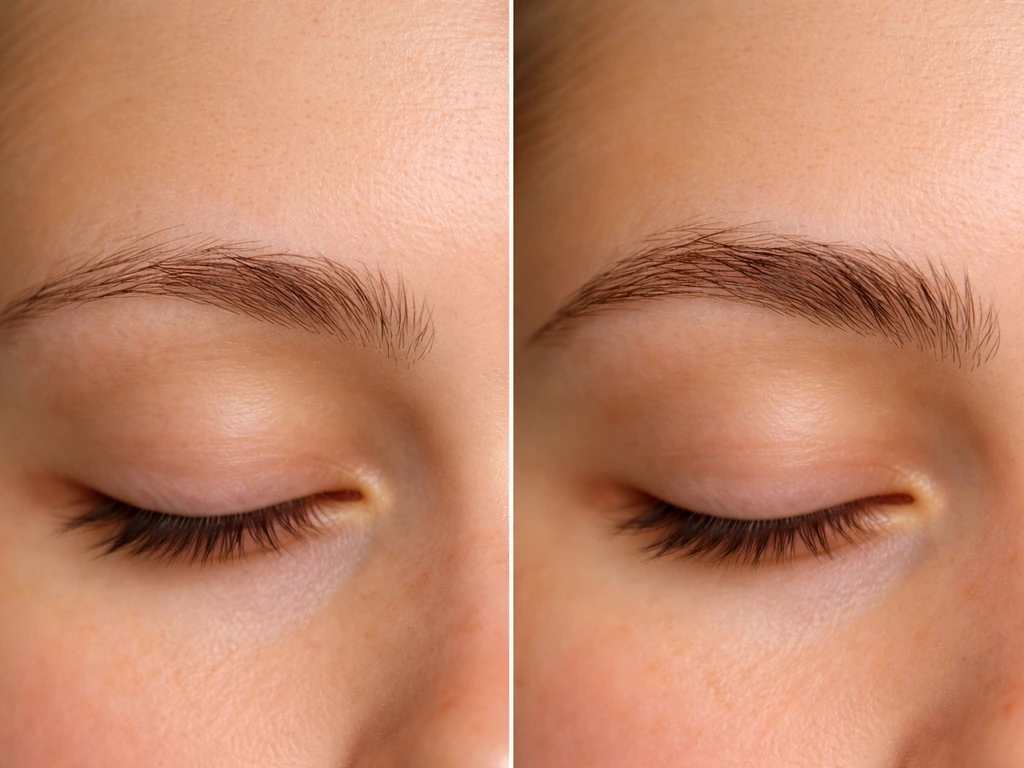
Yes, eyebrows can grow back after years of plucking, but the honest answer is that it depends on how much damage has been done to the follicles. If your follicles are still alive (even just dormant), you can expect meaningful regrowth within 3 to 12 months with the right approach. If years of repeated trauma have caused scarring, some areas may not fill back in on their own, and you'll need to weigh medical options. Most people who come to this question land somewhere in the middle: patchier than they'd like, slower than they hoped, but definitely improvable.
How to Grow Eyebrows Back After Years of Plucking: A Realistic Guide
James Whitmore
12 Jul 2026
Who can realistically expect regrowth, and how much?
If you plucked aggressively through the 90s and 2000s chasing thin arches, you're far from alone, and you're also not necessarily stuck with sparse brows forever. The good news is that many people who've over-plucked for years still have viable follicles, they're just dormant, or cycling so slowly the hairs look invisible. The less encouraging news is that truly long-term, repeated mechanical trauma to the same follicle can eventually lead to scarring (cicatricial change), which means permanent loss in that specific spot. Think of it like repeatedly yanking a plant out by the roots versus just trimming it, at some point the roots stop regenerating.
The most realistic outcome for most people is partial-to-significant regrowth, not a full overnight transformation. You're very likely to see improvement if you've been plucking for years but can still feel fine hairs in sparse areas, your skin doesn't look visibly scarred or pitted, and you're under 50 with no underlying hormonal issues. Your regrowth may be more limited if you've plucked the same spots for 15 or 20-plus years, you're post-menopausal, or your skin shows the smooth, follicle-free texture that often signals scarring. Even then, the areas that look most bare are often worth addressing with a dermatologist before writing them off entirely.
It's also worth ruling out other reasons your brows may be thinning before attributing everything to plucking. Thyroid dysfunction, hormonal shifts around menopause, and nutritional deficiencies can all slow or suppress eyebrow growth independently of any mechanical damage. For targeted advice, see our guide on how to grow eyebrows with thyroid disease which covers treatment timing, safe topical choices, and coordinating care with your physician. If your brows are thinning in ways that go beyond your plucking pattern, especially the outer third, which is a classic sign of hypothyroidism, that's a conversation to have with your doctor alongside your regrowth efforts.
Why over-plucking slows or stops eyebrow growth
Eyebrow hair goes through the same three-phase cycle as scalp hair: anagen (active growth), catagen (transition), and telogen (rest/shedding). The key difference is duration. Scalp hair spends years in anagen. Eyebrow hair's anagen phase lasts only about 6 to 10 weeks, meaning the full hair cycle, from growth to shedding, wraps up in roughly 3 to 4 months. That short cycle is why eyebrow hairs stay so short and why regrowth, when it happens, can become visible within weeks but takes months to look full.
When you pluck a hair, you're pulling it out by the root from an active or resting follicle. Once in a while, that's fine, the follicle simply re-enters anagen and grows a new hair. But when you do this to the same follicle repeatedly over years, the repeated trauma causes something called follicle miniaturization: the follicle progressively shrinks, produces finer and shorter hairs, and eventually may stop producing a visible hair altogether. In the most serious cases, the surrounding tissue becomes fibrotic (scarred). A skin biopsy of a long-term over-plucked area can show features like trichomalacia (distorted, deformed hair shafts), increased follicles stuck in catagen or telogen, perifollicular hemorrhage, and eventually fibrosis with outright loss of follicular structures. Dermatopathology reviews describe trichomalacia, increased catagen/telogen counts, follicular hemorrhage and eventual loss of follicular structures in longstanding traumatic or trichotillomania-related alopecia (Histopathology of alopecia: a clinicopathological approach to diagnosis, Wiley) Histopathology of alopecia: a clinicopathological approach to diagnosis (Wiley). That's the histological story behind why areas you've plucked for 20 years may simply not respond the way a spot you've plucked for 2 years will.
The critical question, and unfortunately one you can't fully answer at home, is whether the follicle damage in your brows is non-scarring (reversible with the right stimulus) or cicatricial (permanent). Non-scarring follicles can often be coaxed back into activity with time, topicals, and nutrition. Scarred follicles cannot regenerate on their own, and that's when hair transplantation or permanent cosmetic options enter the picture.
Realistic regrowth timeline: what to expect month by month
One of the most frustrating things about eyebrow regrowth is that it happens slowly enough that you can't see it day to day, but the milestones are real and predictable if you know what to look for. Here's what the research and practical experience suggest at each stage.
| Timeframe | What's Happening Biologically | What You'll Realistically See |
|---|---|---|
| Weeks 1–4 | Dormant follicles begin re-entering anagen; no visible surface change yet | Nothing visible, possibly slight fuzz; don't panic |
| 1–3 months | Anagen phase active; fine, short hairs emerge; density looks patchy | Sparse new hairs appearing, often lighter/finer than expected |
| 3–6 months | Full growth cycle completing; hairs gain length and pigment | Noticeable filling-in; shape becomes clearer; major progress window |
| 6–12 months | Second and third cycles completing; density approaching maximum | Near-maximum natural density for your follicles; shape refinable |
| 12+ months | Plateau; any remaining bare spots likely reflect permanent follicle loss | Assess remaining gaps — medical or cosmetic options now relevant |
A small but often-cited 1999 shaving study found that most subjects regrew eyebrows to baseline within about 4 months, with slower responders reaching baseline by 6 months. That study used shaving, a much less damaging method than repeated plucking, so for someone with years of plucking history, it's sensible to stretch those timelines. Expect visible improvement by 3 months, meaningful density by 6, and your final result somewhere between 9 and 12 months. If there's been no visible change whatsoever after 4 to 6 months of consistent effort, it's time to see a dermatologist.
First things first: stop plucking and protect the area
This sounds obvious, but it's genuinely the single most important step, and the hardest for a lot of people. Even one misguided pluck at a stray hair in an area you're trying to regrow sets that follicle back by weeks. The first rule of eyebrow recovery is: put the tweezers away. Not 'pluck a little less.' Away.
Here's what to do in the first two weeks specifically to stop sabotaging your recovery:
- Stop all plucking, threading, waxing, and any other mechanical hair removal in the brow area entirely. Threading, while sometimes thought of as gentler than waxing, still removes hairs from the root and causes the same follicle trauma when done repeatedly.
- If you must manage very obvious stray hairs, trim them with small scissors rather than pulling them out — trimming does not affect the follicle at all.
- Avoid harsh exfoliants, retinoids, and chemical peels directly over the brow area. These can irritate the skin and disrupt the microenvironment the follicle needs to re-enter anagen.
- Don't apply heavy waterproof makeup or heavy-coverage concealers and then scrub them off aggressively. The tugging and friction does matter.
- Resist the urge to 'clean up' new growth that looks irregular — that patchy, uneven stubble phase is exactly what progress looks like.
Your step-by-step at-home regimen to restart growth
Once you've committed to no more plucking, a consistent daily routine does genuinely move the needle, especially in that first 3 to 6 month window when dormant follicles are most responsive. Here's the order I'd prioritize.
Step 1: Keep the brow area clean and barrier-protected
Use a gentle, non-comedogenic facial cleanser on the brow area twice daily. Clogged follicular openings and chronic low-grade skin irritation both work against you here. After cleansing, apply a light, fragrance-free moisturizer or a thin layer of petroleum jelly (plain Vaseline works well) to protect the skin barrier. Healthy skin around the follicle supports healthy follicle function, this step is unsexy but matters.
Step 2: Apply your topical growth agent consistently
This is where you choose between the OTC options (castor oil, rosemary oil) and the prescription-strength options (minoxidil, bimatoprost). For step-by-step tips tailored to regrowing brows after threading, see how to grow eyebrows after threading. Details on each are below. Whichever you use, apply it to clean, dry skin at night and give it time to absorb before bed. Consistency beats intensity here, applying something every single night for 3 months beats applying something twice a day for 3 weeks.
Step 3: Gentle brow massage
A 1 to 2 minute daily gentle massage along the brow line improves local circulation and may help move topicals into the follicle. Use your ring finger (least pressure) and make small circular motions. This is a low-cost habit with plausible biological rationale, increased blood flow to the follicle supports anagen, and the evidence in scalp massage studies is encouraging enough to be worth doing.
Step 4: Address nutrition and any deficiencies
More on this below, but iron, vitamin D, zinc, and biotin all play roles in hair growth. If you're deficient in any of these, no topical is going to fully compensate. Getting bloodwork done early in your regrowth effort is one of the highest-value things you can do.
Step 5: Protect during styling
As new hairs come in, they'll be fine, short, and easily damaged. Avoid brow gels with heavy hold that require scrubbing to remove. If you use brow pencil or powder, apply lightly and remove with a gentle micellar water rather than rubbing. Keep heat (hairdryer, straightener) away from the brow area.
OTC and natural topical options: what the evidence actually shows
Castor oil
Castor oil is probably the most widely recommended natural remedy for eyebrow regrowth, and the honest assessment is that the evidence base is thin. There are no well-designed controlled human trials showing castor oil increases eyebrow follicle counts or density. What we do know is that castor oil is rich in ricinoleic acid, which has anti-inflammatory properties and forms a protective coating on the hair shaft, meaning it may improve the appearance and texture of existing hairs rather than growing new ones. It's also a thick emollient that helps protect the skin barrier around the follicle. That's not nothing, but it's not a growth stimulant with clinical backing.
If you want to use it: apply a small amount (one to two drops) to a clean mascara wand or fingertip and comb through brows at night. Use cold-pressed, hexane-free castor oil to reduce the risk of irritation. Crucially, keep it away from your actual eyes, castor oil can cause significant ocular irritation and even lipid keratopathy if it migrates onto the cornea. This is genuinely a safety concern, not a trivial caveat.
Rosemary oil
Rosemary oil has more interesting science behind it than castor oil, though still with important caveats. A 6-month randomized controlled trial comparing rosemary oil to 2% minoxidil for scalp androgenetic alopecia (male pattern hair loss) found similar hair-count improvements in both groups. That's genuinely compelling for scalp use. The jump from scalp androgenetic alopecia to eyebrow regrowth after plucking is a significant one, though, different anatomy, different hair cycle, different cause. So rosemary oil's eyebrow evidence is extrapolated rather than direct.
The bigger safety consideration for eyebrow use is that rosemary is a concentrated essential oil. Applying it undiluted near the eye is a recipe for contact dermatitis and potential ocular surface irritation. Reports recommend caution when applying concentrated essential oils around the eyelids and eyebrows because they can cause allergic contact dermatitis, periocular irritation, and ocular surface injury (Complementary and Alternative Treatments for Alopecia: A Comprehensive Review - PMC) Reports recommend caution when applying concentrated essential oils around the eyelids and eyebrows because they can cause allergic contact dermatitis, periocular irritation, and ocular surface injury (Complementary and Alternative Treatments for Alopecia: A Comprehensive Review - PMC).. Always dilute it in a carrier oil (like jojoba or argan) at no more than 2 to 3% concentration (about 3 to 4 drops per teaspoon of carrier oil), and apply carefully to the brow ridge only. Don't let it migrate toward the lash line. If you notice redness, stinging, or itching, discontinue immediately.
Prescription topicals with the strongest evidence
Minoxidil
Minoxidil is the best-supported option for eyebrow regrowth with actual randomized controlled trial data behind it. A 2014 randomized, double-blind, placebo-controlled split-face study found that topical minoxidil 2% lotion applied twice daily to one eyebrow produced statistically significant improvement in photographic global assessment, eyebrow diameter, and hair count versus placebo at 16 weeks. That's the kind of evidence castor oil doesn't have. A systematic review and meta-analysis of topical minoxidil for facial and eyebrow hair has confirmed measurable increases in hair diameter and count versus placebo, with tolerable local adverse effects.
Mechanistically, minoxidil prolongs the anagen phase and improves follicle blood flow, which is exactly what a dormant, under-stimulated follicle after years of plucking needs. For eyebrow use, the typical approach dermatologists use is a small amount of 2% minoxidil liquid applied once or twice daily to the brows with a cotton swab or fingertip. The 5% foam or liquid used on the scalp is generally too strong for eyebrow skin and increases the risk of unwanted facial hair growth from product spreading. Keep application precisely on the brow ridge.
Side effects to know: local irritation, redness, and itching are the most common. Because you're applying near the eye, be careful about product migrating to the orbital area. Systemic absorption from small topical brow doses is very low but minoxidil is technically not FDA-approved for eyebrow use, it's prescribed off-label for this purpose, so you'll need a dermatologist visit. Expect results to become visible at 8 to 16 weeks, with continued improvement up to 6 months.
Bimatoprost
Bimatoprost is a prostaglandin analog, the active ingredient in Latisse, and it works by acting on prostaglandin receptors to lengthen the anagen phase and increase hair shaft thickness. It has randomized controlled trial evidence specifically for eyebrow hypotrichosis. Multiple trials of bimatoprost 0.03% applied to the eyebrow area showed increased hair growth and diameter versus vehicle over several months of use.
The important regulatory note: Latisse is FDA-approved for eyelash hypotrichosis, applied to the upper eyelid margin. Eyebrow use is off-label. That doesn't mean it doesn't work, the RCT evidence clearly supports it, but it does mean you need a prescribing clinician, and you should be aware of the risk profile. The most significant safety concerns with bimatoprost are periorbital hyperpigmentation (darkening of the skin around the eye area), conjunctival hyperemia (red eyes), ocular irritation, and rare cases of iris hyperpigmentation when the solution contacts the eye directly. For eyebrow application, that last risk is lower than for eyelid application, but it's still worth keeping the product precisely on the brow ridge and away from the eye itself.
Head-to-head data comparing minoxidil and bimatoprost for eyebrows are limited, and the studies that exist use different metrics and concentrations, making direct comparison difficult. Both show meaningful benefit over placebo. Many dermatologists start with minoxidil 2% given its longer track record and lower cost before considering bimatoprost.
| Agent | Evidence Level | How It Works | Typical Application | Key Side Effects | Prescription Needed? |
|---|---|---|---|---|---|
| Castor oil | Anecdotal / no human RCTs | Emollient, anti-inflammatory; may condition existing hairs | 1–2 drops nightly via clean wand | Ocular irritation if it migrates to eye | No |
| Rosemary oil (diluted) | RCT for scalp AGA only; extrapolated to brows | Antioxidant; possible anagen prolongation | 2–3% dilution in carrier oil, nightly | Contact dermatitis, ocular irritation | No |
| Minoxidil 2% liquid | RCT-backed for eyebrow hypotrichosis | Prolongs anagen, improves follicle blood flow | Small amount 1–2x daily via cotton swab | Local irritation, redness, facial hair spread | Yes (off-label) |
| Bimatoprost 0.03% | RCT-backed for eyebrow hypotrichosis | Prostaglandin analog; lengthens anagen, thickens shafts | One drop nightly to brow ridge | Periorbital hyperpigmentation, red eyes, ocular irritation | Yes (off-label) |
In-office treatments worth knowing about
If topicals alone aren't producing the results you want after 6 months, or if a dermatologist confirms significant follicle damage, there are several in-office options that can help. Microneedling over the brow area creates micro-injuries that stimulate growth factors and may improve topical absorption, it's increasingly used in combination with minoxidil for hair loss. Platelet-rich plasma (PRP) injections into the brow area deliver concentrated growth factors directly to follicles and have small but growing trial evidence for brow regrowth, though standardization across providers is an issue. Low-level laser therapy (LLLT) devices cleared for scalp hair loss are sometimes used off-label for brows, again with modest evidence.
For truly permanent follicle loss with visible bare patches that haven't responded to anything, eyebrow hair transplantation is the most definitive option. It uses donor hairs (typically from the scalp) transplanted into the brow area under local anesthesia. Results are natural-looking when done well, but it's expensive (typically $3,000 to $8,000), requires downtime, and the transplanted hairs will grow at scalp speed, meaning they'll need periodic trimming because they don't know they're supposed to be short eyebrow hairs.
Microblading and cosmetic tattooing are popular interim or permanent cosmetic solutions. Microblading uses a hand tool to deposit pigment in hair-stroke patterns and lasts 1 to 3 years before fading. It doesn't affect follicle function either way, so it can absolutely be done while you're also working on regrowth. Permanent tattooing fades less naturally and carries more risk of looking dated as brow trends shift. Neither is a substitute for regrowing actual hair, but both can be psychologically valuable while you're waiting out the regrowth timeline.
Filling in your brows while you wait
The regrowth process takes months, and you don't have to go barefaced while you wait. The key is to choose makeup application and removal methods that don't further stress the follicles. Brow pencils with fine tips (think Anastasia Beverly Hills Brow Wiz or similar micro-precision pencils) let you mimic individual hair strokes rather than drawing a block-colour line. Brow powders applied with an angled brush give softer definition and are less likely to disturb new growth. Tinted brow gels can define what you have while the fine new hairs come in.
When removing brow makeup, use a gentle oil-based micellar water on a soft cotton pad with light, downward strokes, never rub or drag. If you're growing in the tail of your brow, resisting the urge to draw your shape smaller than it's becoming is part of the psychological game here. Let your natural shape reclaim itself, even if it means looking a bit thicker than you're used to for a while.
Nutrition, bloodwork, and supplements that actually matter
Hair follicles are metabolically active structures that depend on adequate nutrition to cycle properly. If you're deficient in certain nutrients, it can significantly impair regrowth even when you're doing everything else right. The four most clinically relevant ones for hair and eyebrow loss are iron (specifically ferritin), vitamin D, zinc, and biotin.
Iron (ferritin)
Systematic reviews and meta-analyses consistently show lower mean serum ferritin levels in women with nonscarring alopecia compared to controls. The threshold matters: many dermatologists use ferritin 30 ng/mL or below as a meaningful deficiency in the context of hair loss, and some target 40 to 70 ng/mL for active regrowth. This is one of the first blood tests I'd ask for. Iron supplementation when ferritin is low has plausible benefit for hair regrowth, though randomized trials specifically linking iron repletion to eyebrow regrowth are limited. If you menstruate or follow a vegetarian or vegan diet, low ferritin is very common and very worth addressing. Don't supplement iron without confirmed bloodwork, excess iron is genuinely harmful.
Vitamin D
Lower 25-hydroxyvitamin D levels have been associated with nonscarring alopecia in multiple studies and meta-analyses. Vitamin D receptors are expressed in hair follicles and appear to play a role in anagen initiation. If your level is below 30 ng/mL (deficient) or even in the 30 to 40 ng/mL range (insufficient), supplementing to a healthy level (ideally 50 to 70 ng/mL) is reasonable and broadly beneficial. Standard doses of 1,000 to 2,000 IU daily are appropriate for maintenance in most adults; higher doses should be guided by bloodwork and a clinician.
Biotin
Biotin is the most heavily marketed hair supplement, and the evidence for it is the most nuanced. True biotin deficiency causes hair loss and sparse brows, and supplementing in deficient individuals does restore growth. The catch: genuine biotin deficiency is rare in people eating a varied diet. For most people, taking extra biotin when they're already sufficient does not appear to produce additional hair growth. A daily biotin supplement in the range of 2,500 to 5,000 mcg is unlikely to cause harm (it's water-soluble), but set expectations appropriately. Worth noting: high-dose biotin supplementation can interfere with several common lab tests including thyroid panels and troponin, tell your doctor and lab if you're taking it.
Zinc
Zinc plays a role in hair follicle structure and the hair growth cycle. Low zinc has been associated with various forms of alopecia. It's worth testing if you have reason to suspect deficiency (vegan diet, malabsorption, prolonged stress). Supplementing at 25 to 40 mg of elemental zinc daily is a reasonable short-term strategy if levels are confirmed low; don't go above 40 mg daily long-term without guidance as excess zinc impairs copper absorption.
| Nutrient | Why It Matters for Brows | How to Check | Supplement Dose (if deficient) | Notes |
|---|---|---|---|---|
| Ferritin (iron) | Low ferritin linked to nonscarring alopecia in meta-analyses | Serum ferritin blood test | Guided by levels and clinician; 18–65 mg elemental iron common | Don't supplement without confirmed deficiency |
| Vitamin D | Follicle receptors linked to anagen initiation; lower levels in alopecia studies | 25-OH vitamin D blood test | 1,000–2,000 IU daily for maintenance; higher if deficient | Confirm levels before high-dose supplementation |
| Biotin | Deficiency causes hair and brow loss; excess rarely helps | Biotin blood level (rarely needed) | 2,500–5,000 mcg daily if diet is lacking | Interferes with thyroid and cardiac lab tests at high doses |
| Zinc | Structural role in follicle; low levels seen in alopecia | Serum zinc blood test | 25–40 mg elemental zinc if confirmed low | Excess zinc depletes copper — don't overdo it |
When to rule out other causes of thinning brows
Over-plucking is a common cause of sparse brows, but it's not the only one, and mixing up the cause leads to treating the wrong problem. Hypothyroidism classically causes thinning or complete loss of the outer third of the eyebrow, and this can happen even in people who don't pluck at all. Will eyebrows grow back after hypothyroidism? Learn about typical recovery timelines and treatment options for hypothyroidism-related brow thinning. If your brows thin out significantly toward the tail and you have other symptoms like fatigue, weight changes, cold intolerance, or dry skin, TSH and thyroid antibody testing is worth requesting. Similarly, menopause and perimenopause bring hormonal shifts that reduce hair follicle activity across the body including the brows, if your brows started thinning around the same time as other perimenopausal symptoms, that's not a coincidence. For practical tips on how to grow eyebrows after menopause, see our detailed guide.
Trichotillomania, a body-focused repetitive behavior involving compulsive hair pulling, can look a lot like over-plucking from the outside but has a fundamentally different driver and requires a different treatment approach entirely. If the urge to pull is compulsive rather than cosmetic, that's important to address with a mental health professional alongside any hair regrowth strategy. For practical steps and treatments on how to grow back eyebrows after trichotillomania, see our detailed guide. Chemotherapy-related brow loss is another scenario where the regrowth process and timeline differ significantly from mechanical damage, and hormonal or autoimmune factors may continue to influence recovery even after treatment ends. For more on recovery after cancer treatment, see will eyebrows grow back after chemo.
The bottom line: if your brows don't respond to 3 to 4 months of consistent effort, or if the pattern of loss doesn't match your plucking history, see a dermatologist. A clinical exam, and sometimes a small biopsy, can distinguish between reversible follicle dormancy and scarring alopecia, and a basic metabolic and hormonal workup can identify any systemic contributors. This isn't a case where waiting longer without investigation is the right move.
Long-term maintenance: keeping what you grow
Once you've put in the months of work to regrow your brows, the maintenance strategy is simpler but just as important. The core principle: never pluck to the same point you were at before. When you do shape your brows, and you can, after they've filled in, use a professional brow stylist who respects your natural shape and only removes hairs clearly outside your ideal arch. Request that they trim rather than remove hairs wherever possible. If threading is your preferred removal method, know that it carries the same follicle-trauma risk as plucking when done repeatedly in the same areas over years.
Maintain your nutritional baseline, don't stop the dietary habits or supplement protocol that addressed any deficiencies you found. If you used minoxidil to get your brows back, understand that stopping it typically means some of the gains reverse over time, similar to scalp minoxidil use. That's a conversation to have with your dermatologist about whether ongoing low-dose maintenance use makes sense for you.
Finally, photograph your brows every 4 weeks throughout the regrowth process. Progress is genuinely hard to see in real time, but comparing a photo from month 1 to month 6 is almost always motivating. Consistency with a simple, science-backed routine, combined with actually stopping the plucking, is what moves the needle here. The biology works in your favor when you stop working against it.
FAQ
What is a realistic timeline for eyebrow regrowth after years of plucking? What should I expect at 1–3 months, 3–6 months, and 6–12+ months?
Expect slow progress because eyebrow follicles have a short anagen (growth) phase (~6–10 weeks). Typical pattern if follicles are intact: 1–3 months: fine short vellus hairs become visible; patchiness likely persists. 3–6 months: many hairs will thicken and darken; noticeable filling in but uneven density remains. 6–12+ months: continued maturation of shaft diameter and density; near‑baseline for non‑scarring cases may occur by 9–12 months, but complete restoration can take longer and some areas may never fully recover if follicles are damaged. If there’s no visible regrowth by 6 months despite consistent care, evaluate for follicle damage or other causes.
Why can long‑term over‑plucking cause slow or permanent eyebrow hair loss?
Repeated plucking/pulling injures hair follicles. Early on this produces reversible changes (more hairs in catagen/telogen, thinned shafts). With chronic trauma, follicles can become atrophic and fibrosis (scarring) can develop, destroying follicular structures. Once follicles are lost or replaced by scar tissue, spontaneous regrowth is unlikely and hair restoration requires medical or surgical intervention.
What is the prioritized, step‑by‑step at‑home regimen to restart eyebrow growth?
1) Stop all plucking, waxing, threading and tweezing immediately — this is the single most important step. 2) Gentle care: avoid harsh cleansers, exfoliation, chemical peels near brows; use a gentle cleanser and moisturiser. 3) Nutrition & labs: get basic screening if unexplained or longstanding loss — CBC with ferritin, TSH, and 25‑hydroxyvitamin D. Correct deficiencies (iron, vitamin D) under clinician guidance. 4) Topical options (evidence‑based first): consider topical minoxidil 1–2% (applied carefully to brow skin once or twice daily) or bimatoprost 0.01–0.03% (off‑label for brows; often 0.03% gives stronger effect but more side effects). Use cotton swab/nozzle to limit contact with eyes. 5) Adjuncts with limited evidence: castor oil or rosemary oil — can be tried cautiously but evidence is limited and irritation risk exists. 6) Be consistent for at least 4–6 months before judging effectiveness; minimize product migration into eyes and stop if irritation occurs. 7) Track progress with photos every 4–8 weeks.
How should I use topical minoxidil or bimatoprost for eyebrows safely and what results can I expect?
Minoxidil: evidence supports 2% applied to eyebrow area producing increased hair count and diameter by ~16 weeks in trials. Use a small amount with a cotton swab once or twice daily, avoiding the eye surface; expect visible improvement in 2–4 months and more by 4–6 months. Side effects: local irritation, unwanted vellus growth in nearby skin. Bimatoprost: RCTs show efficacy for eyebrow/eyelash hypotrichosis; often used once nightly with a microbrush. Bimatoprost is FDA‑approved for eyelashes (Latisse) and used off‑label for brows; effects appear over months. Side effects: periorbital hyperpigmentation, conjunctival redness, ocular irritation; rare risk of permanent iris color change when used on eyelids. Stop and consult if you develop pigment changes or eye symptoms. If pregnant or breastfeeding, avoid prostaglandin analogs and consult your clinician.
Do natural remedies like castor oil or rosemary oil work for eyebrow regrowth?
High‑quality evidence for castor oil improving eyebrow hair count is lacking. Rosemary oil has some scalp hair data (one RCT comparing to 2% minoxidil on scalp) but no robust eyebrow trials. Essential/botanical oils can cause allergic contact dermatitis and ocular irritation when used around the eyes. They may be tried as low‑risk adjuncts if you tolerate them, but do not rely on them as primary therapy and always patch‑test and avoid direct eye contact.
When should I consider medical/in‑office treatments to speed regrowth, and what are the options with pros and cons?
If you have minimal improvement after 4–6 months of consistent at‑home measures or if clinical exam suggests follicular loss/scarring, see a dermatologist. In‑office options: - Prescription topical minoxidil or bimatoprost: stronger formulations and supervision; good first‑line medical steps. - Microneedling (with/without topical agents): can stimulate follicles and enhance topical penetration; multiple sessions needed. - Platelet‑rich plasma (PRP): some evidence for hair‑growth stimulation; variable response. - Low‑level laser therapy: modest evidence for scalp; limited eyebrow data but low risk. - Surgical eyebrow hair transplant: best for stable, long‑standing or scarring loss with absent follicles; durable but invasive and requires experienced surgeon. - Cosmetic tattooing/microblading: immediate cosmetic camouflage — microblading is semi‑permanent, good for filling gaps but does not restore hair; consider as interim or long‑term cosmetic option. Choose based on degree of follicle loss, scarring, patient goals, cost, and tolerance for procedures.
Next Article
Will Eyebrows Grow Back After Chemo? Timeline, Tips
Will eyebrows grow back after chemo? Get realistic timelines, regrowth tips, and care for brows and eyelashes.