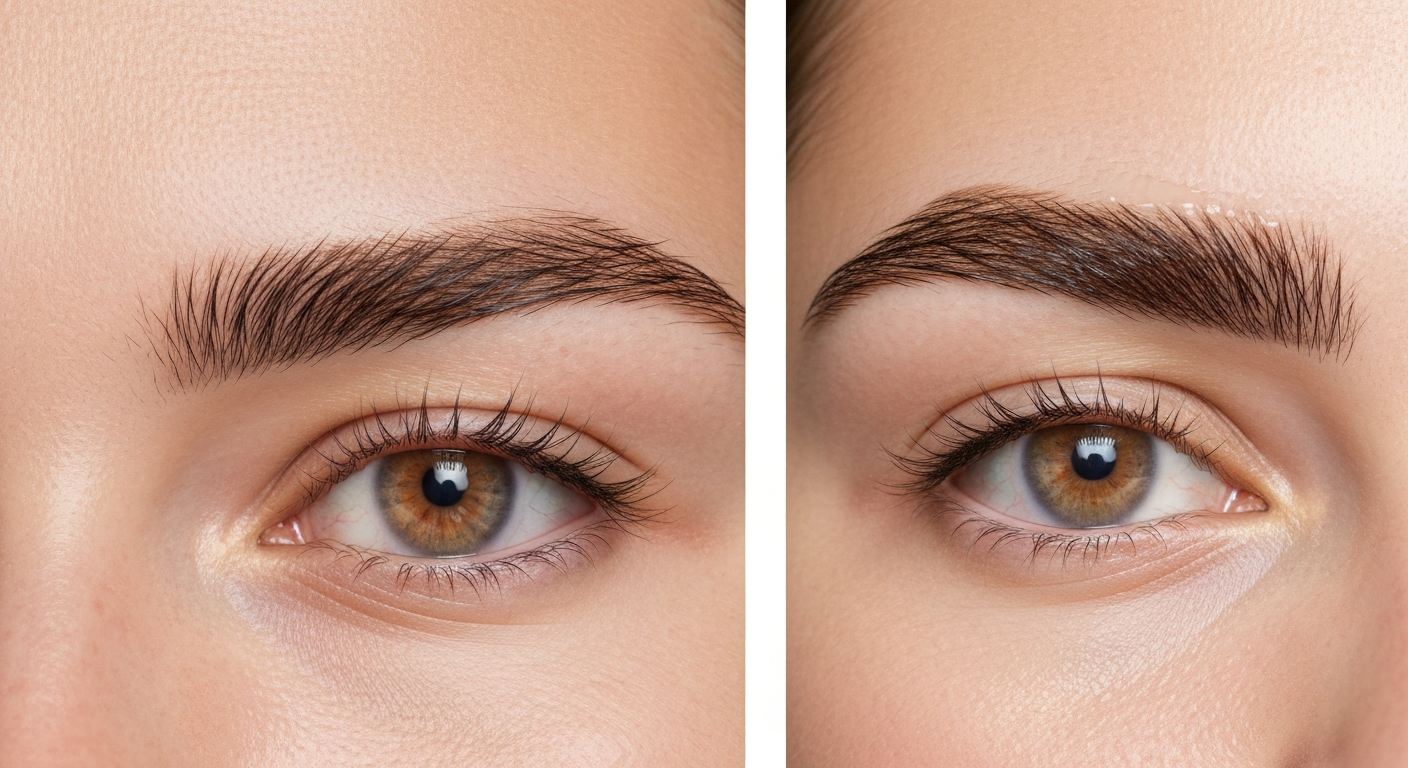
You can make eyebrow hairs sit upwards right now using a spoolie, a strong-hold brow gel, or the soap-brow technique, that part takes about 60 seconds. Getting them to grow back upwards after years of over-plucking, waxing, or scarring damage is a different challenge entirely and takes a realistic 3–6 months of consistent topical treatment. This guide covers both: the immediate fixes you can do today and the longer-term strategies, from direction-training routines to clinical options like brow lamination, PRP, and minoxidil, so you can decide what actually matches your situation.
How to Make Eyebrows Grow Upwards: Styling & Regrowth Plan
James Whitmore
24 Jul 2026
Who this guide is for
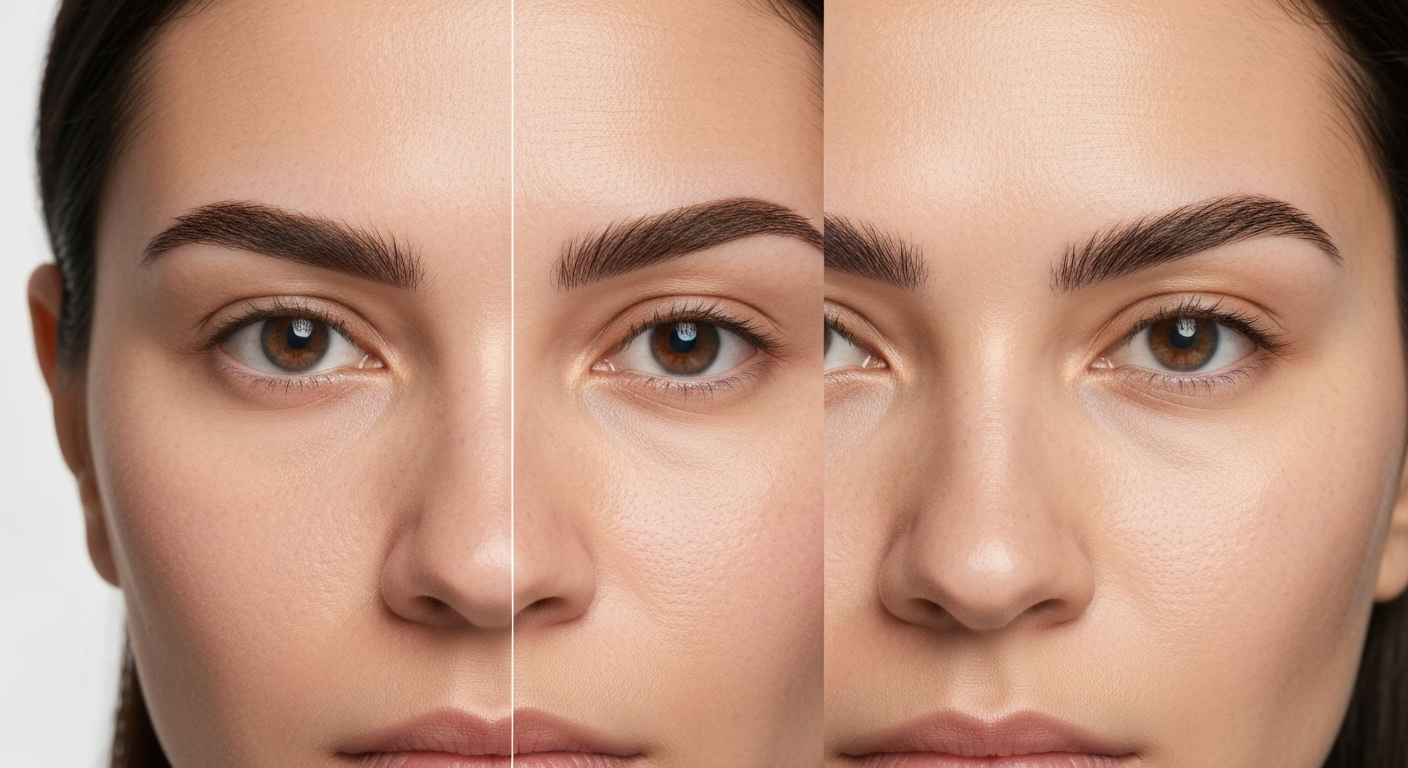
If your brow hairs naturally grow downward, straight out, or refuse to stay upright after styling, you're in the right place. The same applies if you're recovering from years of aggressive grooming and your hairs are now growing back at odd angles or not growing back at all. Some readers have brows that looked fine at 25 and are noticeably flatter and sparser now, that's a different problem than someone whose hairs have always grown in the wrong direction, and the solutions differ. I'll flag which approaches match which scenario throughout.
Why eyebrow hairs grow the 'wrong' way
Hair direction is determined at the follicle level. Each follicle is embedded in the skin at a specific angle, and the hair shaft exits and grows in the direction that angle points, there's no conscious override happening at the skin surface. The medial brow hairs (near the center of your face, close to the glabella) naturally have a near-vertical orientation, which is why that part of your brow looks upswept. Moving outward toward the tail, hairs become more horizontal. That anatomical pattern is what you're working with or working against, depending on your brow shape goals.
Here's where things go wrong. Genetics sets the base template for your follicle angles, so if your family has flat or downward-growing brows, that's a real factor, not just perception. Beyond genetics, several other causes are well documented.
- Repeated grooming (plucking, waxing, threading): pulling hairs repeatedly applies traction to the follicle. Early on this is reversible, but years of traction can permanently distort follicle orientation or trigger scarring that prevents normal regrowth.
- Aging and miniaturization: follicles can shrink and weaken with age, producing finer, shorter hairs that lie flat rather than standing upright. This is different from true hair loss but feels like the same problem.
- Scarring from trauma or inflammation: a scar in the brow area changes the connective tissue structure around follicles, altering angle and sometimes killing follicles entirely.
- Autoimmune conditions: alopecia areata, frontal fibrosing alopecia, and related conditions can cause patchy or full brow loss and may change regrowth patterns. These need a dermatologist's input, not just topical oils.
- Trichotillomania: compulsive hair-pulling creates a combined dermatologic and behavioral challenge. Follicle damage from repeated pulling can become permanent, and the behavioral component requires specific support beyond any topical treatment.
- Short anagen phase: brow hairs only spend roughly 2–3 months in their active growth phase before cycling out, compared to scalp hair's multi-year anagen. This is why brow hairs cap out at a certain length and why regrowth after loss takes months, not weeks.
Growth rate itself gives you a practical benchmark. Brow hairs grow at roughly 0.12–0.16 mm per day, about half the rate of scalp hair. That works out to approximately 3.6–4.8 mm per month. If a hair was plucked at the root, a fully mature replacement takes the better part of a full growth cycle, expect 2–3 months before you even see the new hair behaving the way you want it to.
Immediate fixes: styling your brows upright today
These methods don't change follicle biology, but they reliably get your brows looking upright for a full day. Think of them as the foundation of a brow routine regardless of whatever regrowth work you're doing in parallel.
The spoolie technique
A clean spoolie brush is your starting point every time. Use short, upward-and-outward strokes, starting from the inner corner. Brush the medial hairs nearly straight up, then gradually angle slightly outward as you move toward the tail. This lifts lying hairs into the upward orientation they naturally resist. On its own without a setting product, the lift lasts maybe 10–20 minutes. It's the prep step, not the hold step.
Brow gels: what to look for and how to use them
A clear or tinted brow gel applied immediately after spoolie-brushing locks hairs into the upright position. The active technology here is film-forming polymers: ingredients like PVP (polyvinylpyrrolidone), VP/VA copolymer, or polyvinyl alcohol coat the hair shaft and create a flexible film that holds the shaped position until you wash it off. Look for a gel that specifies strong or extreme hold rather than light or flexible hold if your hairs are particularly resistant. Apply the gel brush in the same upward-and-outward stroke direction immediately after spoolie-lifting, don't wait for the hairs to settle back down. A second pass can add more hold but can also flake if the formula isn't designed for layering, so test with your specific product.
Soap brows: the strongest at-home hold
The soap-brow technique has real staying power for flat or unruly hairs, and it's been a professional makeup-artist workaround for years. The principle: a glycerin-based bar soap or dedicated soap-brow product applied with a lightly damp spoolie creates a waxy, flexible hold that can last hours and looks similar to freshly laminated brows. For the DIY version, lightly dampen your spoolie, swipe across a clear glycerin soap bar, then immediately brush brows upward with firm strokes. Let it set for about 30 seconds before touching again. The effect wears off with humidity, sweating, or washing, so it's not a once-and-done for the week, but for events or photos, it's genuinely strong. Dedicated formulated soap-brow products tend to apply more evenly and are worth the modest cost if you use this daily.
Strategic trimming
If individual hairs are long enough to flop over despite good hold products, trimming is the practical fix. Brush hairs upward first, then trim only the tips extending beyond your desired brow line, never trim brows flat against the skin. Use small, straight-edge brow scissors rather than cuticle scissors, and cut across the tip of the hair, not at an angle that creates blunt, obvious ends. Trimming doesn't change direction but removes the weight that causes long hairs to fall over. Don't over-trim: this is a common mistake that creates sparse-looking gaps over time.
Quick reference: when to use each method
| Method | Hold Duration | Best For | Limitation |
|---|---|---|---|
| Spoolie only | 10–20 minutes | Quick reshaping before applying a product | No lasting hold on its own |
| Clear brow gel (film-forming polymer) | Full day (until washed) | Daily wear, natural-looking upward lift | May flake if layered heavily |
| Soap brows (glycerin soap/dedicated product) | 4–8+ hours | Strong hold, lamination-like finish, events | Humidity and sweat reduce hold |
| Strategic trimming | Until hair regrows | Long hairs flopping despite product hold | Irreversible until regrowth; don't over-trim |
Direction-training: can you permanently retrain how brows grow?
I want to be honest here because this topic attracts a lot of overselling. Daily mechanical brushing in the desired direction is widely recommended in cosmetology circles, and it does contribute to hairs spending more time in the upward position, which can make the styled result easier to achieve over weeks of consistency. But there is no strong clinical evidence that brushing alone durably changes the biological angle of follicle growth. That angle is set by the follicle's position in the dermis and the surrounding connective tissue structure. Brushing the outside of the hair doesn't remodel that architecture.
What can genuinely change hair orientation at a structural level is chemical reshaping, modifying the disulfide bonds in the hair's keratin. That's the chemistry behind permanent waves and, relevantly, brow lamination. Daily brushing is still worth doing as part of your routine because it maintains the habit, keeps hairs conditioned, and makes styling easier, just don't expect it to replace a lamination result on its own.
Daily brushing routine
- After cleansing your face morning and evening, take a clean spoolie.
- Brush each brow upward and slightly outward with 10–15 firm strokes.
- Apply a light conditioning oil (castor or rosemary — more on those below) to the spoolie and do a final pass to moisturize hair shafts.
- In the morning, follow immediately with your hold product of choice.
- Evening: leave the oil on as an overnight treatment, no hold product needed.
Consistency over 6–8 weeks is the minimum meaningful trial period for any directional habit. Don't assess results at 2 weeks.
Adhesive/tape mechanical training
Some brow specialists recommend applying a small strip of medical-grade skin tape or cosmetic brow tape over brushed-upward hairs at night to hold them in the lifted position for several hours. The rationale is increased time spent in the desired position, similar to the habit-loop logic of daily brushing. There's no clinical trial data behind this, but it's low-risk if you use non-irritating tape formulated for skin (standard paper medical tape works well), avoid the eyelid, and remove it gently in the morning. Anyone with sensitive or reactive skin should skip this method or test on the inner arm first.
At-home topicals for regrowth: what the evidence actually says
If your problem isn't just direction but also density, hairs that grew back thin or didn't fully come back after heavy grooming or aging, topical regrowth treatments become relevant. Here's an honest breakdown of the main options, ranked roughly by evidence strength.
Minoxidil (off-label, strongest evidence for regrowth)
Topical minoxidil is the most evidence-backed at-home option for eyebrow regrowth. A randomized, double-blind, split-face study using a 2% minoxidil solution showed clinically measurable increases in eyebrow density by 8–16 weeks, with continued improvement beyond that. The application used in such studies is typically 1 drop of 2% solution twice daily applied with a fingertip or cotton tip to the brow area, allowing it to dry completely. Don't apply near the eyes or on broken skin, and wash hands immediately after application.
Important safety notes: minoxidil is not recommended during pregnancy or breastfeeding. It's sold over the counter for scalp use but is technically off-label for brows, so having a conversation with a dermatologist before starting is worthwhile, especially if you have cardiovascular conditions. Side effects at low concentrations are mainly local: skin irritation, contact dermatitis, and occasionally a small amount of unwanted hair growth in areas adjacent to the application site. Oral minoxidil requires a prescription and carries more systemic risk (tachycardia, fluid retention), stick to topical for brows unless a physician has specifically advised otherwise.
Bimatoprost (prescription only)
Bimatoprost at 0.01%–0.03% concentration has multicenter, double-masked randomized trial evidence showing improvement in eyebrow density and darkness with daily topical application. See the multicenter, double‑masked randomized controlled trial “Bimatoprost 0.03% for the Treatment of Eyebrow Hypotrichosis (multicenter, double‑masked RCT, PMC)” for trial details and outcomes. It's the active ingredient in Latisse, which is FDA-approved for eyelash hypotrichosis but not specifically approved for brows. That means you'll need a prescription and a willing prescriber. Adverse effects in periocular use include local hyperpigmentation and conjunctival effects, the proximity to the eye makes correct placement important. This is a dermatologist or ophthalmologist conversation, not a DIY call.
Rosemary oil (promising, limited direct eyebrow data)
Rosemary oil has genuine supporting data from scalp hair studies, notably a comparison to 2% minoxidil for scalp androgenetic alopecia that found comparable results at 6 months. Direct eyebrow-specific trials are lacking, but the mechanism (improved microcirculation, possible DHT-blocking activity from rosmarinic acid) is biologically plausible. Practically: dilute rosemary essential oil to roughly 2–3% in a carrier like jojoba or almond oil (about 2–3 drops per teaspoon of carrier), apply to brows nightly with a spoolie or fingertip, and leave on overnight. Do a patch test first, some people get contact dermatitis from rosemary oil at higher concentrations. Expect a minimum 3-month trial to see any meaningful difference.
Castor oil (popular, evidence is largely anecdotal)
Castor oil is the most searched brow growth remedy by a significant margin, and I've used it consistently myself. The honest position: there's no controlled clinical trial specifically demonstrating that castor oil grows eyebrow hair. The proposed mechanism involves ricinoleic acid (the primary fatty acid), which may have anti-inflammatory and prostaglandin-modulating properties at the follicle, but that mechanism hasn't been directly tested in brow tissue. What castor oil genuinely does is coat and condition existing brow hairs, making them look thicker, darker, and more defined, that optical improvement is real and immediate. Apply a small amount nightly with a clean spoolie to clean, dry brows. Cold-pressed, hexane-free castor oil is the formulation to look for. The main practical issue is it's thick and can migrate toward the eyes; apply sparingly and at least 30 minutes before sleeping.
Peptide serums (reasonable supporting logic, early evidence)
Peptide-based brow serums typically contain signal peptides (like biotinoyl tripeptide-1 or myristoyl pentapeptide-17) that in cell culture studies and small cosmetic clinical trials stimulate hair keratinocyte activity. The evidence base is weaker than minoxidil's but stronger than castor oil's. These serums are a reasonable middle-ground choice if you want something evidence-adjacent without the side effect profile of minoxidil. Apply with the built-in brush applicator to clean brows morning and evening, as directed on the specific product. Look for serums that list the active peptide concentration (ideally included at or above 0.0001%–0.001% for biotinoyl tripeptide-1 as shown in cosmetic trial literature). Give it a full 12 weeks before judging results.
| Treatment | Evidence Level | Typical Regimen | Realistic Timeline | Key Safety Note |
|---|---|---|---|---|
| Minoxidil 2% topical | Strongest (RCT data for brows) | 1 drop twice daily, fingertip/cotton tip | 8–16 weeks for measurable change | Avoid in pregnancy; wash hands after use |
| Bimatoprost 0.03% | Strong (multicenter RCT) | Once daily, prescription required | 2–4 months | Prescription only; periocular hyperpigmentation risk |
| Rosemary oil (2–3% dilution) | Moderate (scalp RCT; brow data indirect) | Nightly in carrier oil, spoolie application | 3–6 months | Patch test first; dilute properly |
| Peptide serums | Early/cosmetic (cell + small clinical studies) | Morning and evening, applicator brush | 8–12 weeks minimum | Generally well tolerated; check for sensitizers |
| Castor oil | Weak (no brow-specific RCT) | Nightly, small amount with spoolie | 3+ months (optical benefit sooner) | Thick texture; keep away from eyes |
Adjunct therapies: microneedling and LED light
Microneedling with serums
Microneedling (dermarolling) creates controlled micro-channels in the skin that can significantly increase absorption of topical actives applied immediately afterward, studies on scalp hair show that combining minoxidil with microneedling outperforms minoxidil alone. For brows, the same principle applies: a 0.25–0.5 mm dermaroller or dermastamp applied to the brow area before your minoxidil or peptide serum application can enhance penetration. Use a stamp-style tool rather than a roller for brow precision, the surface area is small and a roller is hard to control without hitting the eyelid. Use once weekly at most, clean the device before and after use with 70% isopropyl alcohol, and avoid microneedling on any area with active inflammation, infection, or acne. Don't apply bimatoprost immediately after microneedling given its periocular risk profile; this combination is best discussed with a dermatologist.
LED and red light therapy
Low-level laser and red LED therapy (typically 630–670 nm wavelength) has a small but growing evidence base for stimulating hair follicle activity via photobiomodulation. The mechanism involves mitochondrial activation in follicle cells. Scalp hair devices have the most data; brow-specific studies are thin. That said, the devices are generally safe when used as directed (keep light away from direct eye exposure, which requires either protective glasses or devices designed to avoid the orbital area). If you're already using an LED face mask for skin concerns, the brow area may benefit incidentally. Purpose-built scalp devices can be positioned over brows for 10–20 minute sessions, 3–5 times per week. Treat this as an adjunct to a topical regimen, not a standalone solution.
Professional treatment options
Brow lamination
Brow lamination is the professional version of the soap-brow effect, but with a chemical mechanism that actually reshapes the keratin in each hair shaft. The process involves a softening step (using a reducing agent that breaks disulfide bonds) and a neutralizing step (that re-sets those bonds in the new upward position). The result holds for roughly 6–8 weeks before growing out, with upkeep appointments needed to maintain the look. For anyone whose primary problem is directional (hairs that won't stay upright despite styling) rather than a density problem, lamination offers the most dramatic non-surgical solution. The catch: lamination products carry real irritant and sensitizer risks, which is why patch testing and professional application are strongly recommended. An example MSDS titled "Mono Step Lamination, Material Safety Data Sheet (BrowXenna)" lists eye-damage and skin-sensitizer hazards and includes first-aid, handling, and patch-test recommendations blank" rel="noopener noreferrer">Mono Step Lamination — Material Safety Data Sheet (BrowXenna). Eye-adjacent contact with the chemicals can cause irritation or injury. If you're considering at-home lamination kits, understand that salon-grade products are classified as hazardous and formulated for trained professionals, there's genuine risk of eye and skin damage from misapplication.
Microblading and microshading
Microblading deposits pigment into the superficial dermis using a manual blade tool to create hair-stroke-like marks. Microshading uses a similar technique with a softer, powdery finish. Neither creates real hair or changes how existing hair grows, they create the visual impression of denser, more defined brows. Pigment longevity varies considerably: typically 12–18 months before significant fading, though some clients need touch-ups sooner. Complications documented in the medical literature include poor cosmetic outcomes, infection, hypersensitivity reactions, granuloma formation, and significant difficulty with pigment removal (which may require multiple laser sessions). Choosing a licensed, experienced technician and requesting a patch test for pigment allergy reduces risk. Darker skin tones carry higher risk of pigment discoloration over time. This is a good option when brow hair is genuinely too sparse to style, but it's not reversible in the conventional sense.
PRP (platelet-rich plasma)
PRP involves drawing a small amount of your own blood, centrifuging it to concentrate growth factors, and injecting that plasma into the brow area. The growth factors in platelets (including PDGF, TGF-beta, and VEGF) have plausible follicle-stimulating effects, and there's encouraging early data for scalp alopecia and some brow alopecia cases. It's performed in dermatology clinics and med spas, requires multiple sessions (typically 3 initial treatments spaced 4 weeks apart), and costs vary widely by location. PRP is a reasonable option when standard topicals haven't produced adequate results, particularly for follicle populations that are weakened but not yet scarred to the point of no return. It's not appropriate for active scalp/skin infections or patients on blood thinners.
Hair transplant
Eyebrow hair transplantation is the most invasive and permanent option, reserved for cases of significant permanent hair loss (scarring alopecia, congenital absence, or severe traction damage). Individual scalp hairs are transplanted into the brow area with careful attention to angle and direction, this is genuinely skilled surgical work, and the transplanted follicles must be oriented to produce upward-growing hairs rather than the downward-growing pattern natural to the donor scalp area. Transplanted hairs may need regular trimming since they retain scalp growth rates. This is a dermatologic surgery or plastic surgery consultation, not a cosmetic clinic procedure.
| Treatment | Mechanism | Longevity | Addresses Direction? | Addresses Density? | Candidacy Notes |
|---|---|---|---|---|---|
| Brow lamination | Chemical keratin reshaping | 6–8 weeks | Yes | No | Existing hair must be sufficient; patch test required |
| Microblading/microshading | Pigment deposits in dermis | 12–18 months | Visually only | Visually only | Any brow density; allergy patch test; licensed tech required |
| PRP injections | Growth factor delivery to follicles | 6–12 months (maintenance) | No | Yes (weakened follicles) | Not for active infection or anticoagulant use |
| Hair transplant | Follicle relocation with angular precision | Permanent (lifelong trimming needed) | Yes (surgically set) | Yes | Severe/permanent loss; surgical candidacy assessment needed |
Step-by-step routines and product formulation guidance
Daily morning styling routine
- Cleanse face normally and pat dry.
- Take a clean spoolie. Brush brow hairs upward and slightly outward with firm, deliberate strokes — start medially (near the nose) and work outward.
- Immediately apply a strong-hold clear or tinted brow gel using its built-in brush. Stroke in the same upward-outward direction. Let set for 20–30 seconds before touching.
- Optional: if hold is insufficient, dampen a second spoolie lightly, swipe across a clear glycerin soap or dedicated soap-brow product, and apply a second layer with the same strokes while the gel is still slightly tacky.
- If individual hairs are still flopping despite hold products, use a trimming session (once every 2–3 weeks maximum) to remove overlong tips after brushing upward.
Evening regrowth routine (topical treatment)
- Remove all makeup and cleanse face. Brows should be completely clean and dry before applying any topical.
- If using minoxidil 2% solution: apply 1 drop per brow using a fingertip or cotton-tip applicator. Spread evenly across the brow zone. Allow to dry completely (approximately 4 minutes). Wash hands thoroughly immediately after.
- If using a peptide serum: apply with built-in applicator to each brow using light, pressing strokes. Allow to absorb for 2–3 minutes.
- If using rosemary oil (2–3% in carrier oil): load a clean spoolie with a small amount and brush through brows. This can be layered over a dried serum or used on its own.
- Optionally finish with a thin layer of castor oil brushed through brows — do this last since its thick texture will limit absorption of anything applied over it.
- Avoid touching brows again after treatment. Use a silk or satin pillowcase to reduce friction-induced disruption.
Weekly microneedling addition (if using)
- Choose one evening per week as your microneedling night.
- Cleanse face and brow area thoroughly.
- Sanitize a 0.25–0.5 mm dermastamp with 70% isopropyl alcohol and allow to dry.
- Stamp gently across the brow zone — 10–15 stamps per brow, applying light even pressure. Do not use in areas of active irritation or broken skin.
- Wait 5–10 minutes, then apply your topical of choice (minoxidil or peptide serum) as normal. Absorption will be notably higher after microneedling.
- Do not microneedle and apply lamination products on the same day.
- Replace dermastamp heads every 8–10 uses or when pins feel less sharp.
Post-lamination care routine
- For the first 24–48 hours after lamination, keep brows completely dry — no cleansers, water splashing, or steam exposure.
- Avoid sleeping face-down or rubbing brows for at least 48 hours.
- From day 3 onward, apply a nourishing brow conditioner (look for panthenol, biotin, or glycerin-based formulas — not heavy oils that disrupt the chemical set).
- A light nightly conditioning oil can be reintroduced from week 2, applied sparingly with a spoolie.
- Avoid strong cleansers or exfoliants directly on the brow zone; these break down the lamination chemistry faster.
- Plan touch-up appointments at 6 weeks if you want continuous results.
Formulation guidance: what to look for on ingredient labels
- Brow gels: look for VP/VA copolymer, PVP, or polyvinyl alcohol as hold agents; glycerin as a conditioning humectant; avoid high-alcohol formulas on already-fragile brow hairs.
- Peptide serums: biotinoyl tripeptide-1 and myristoyl pentapeptide-17 are the most commonly included and have the most supporting literature; acetyl tetrapeptide-3 also appears in several studied formulas.
- Carrier oils for rosemary or castor oil: jojoba, sweet almond, or argan oils are lightweight and non-comedogenic; avoid coconut oil near the eye area for most skin types due to pore-clogging potential.
- Minoxidil formulations: 2% is appropriate for brow use; 5% is not necessary and increases side-effect risk in a periocular area; solution form absorbs faster and more evenly than foam for small, precise application areas.
- Conditioning treatments post-lamination: panthenol (pro-vitamin B5), glycerin, hydrolyzed keratin, and ceramides support hair shaft integrity after chemical treatment without disrupting the bond-set.
Realistic timelines for every approach
| Goal | Method | Realistic Timeline | Maintenance Frequency |
|---|---|---|---|
| Upright brows today | Spoolie + brow gel or soap brows | Immediate (minutes) | Daily |
| Easier styling over time | Daily brushing habit | 4–8 weeks to notice easier compliance | Daily indefinitely |
| Chemically held upright direction | Brow lamination | Results at appointment | Every 6–8 weeks |
| Improved density and growth | Minoxidil 2% topical | 8–16 weeks measurable; full result at 6 months | Twice daily ongoing |
| Improved density via natural topical | Rosemary oil + peptide serum | 3–6 months | Daily ongoing |
| Density via professional treatment | PRP injections (3-session series) | 3–6 months post-series | Booster sessions every 6–12 months |
| Permanent density restoration | Hair transplant | 6–12 months post-surgery for full result | Periodic trimming |
| Visual density without regrowth | Microblading/microshading | Immediate at appointment | Touch-up every 12–18 months |
Safety cautions and when to see a professional
A few clear lines worth keeping in mind. First, always patch test any new topical, including natural oils, on the inner forearm 24 hours before applying near your eyes. Rosemary oil at full concentration, for example, is a documented contact sensitizer in some people. Second, the periocular zone (skin near and around your eyes) is anatomically sensitive; products intended for scalp use, like 5% minoxidil foam, are not appropriate here because absorption rates and tissue sensitivity differ significantly.
See a dermatologist if: your brow loss is patchy and sudden (possible alopecia areata), you notice redness or scaling around the brow follicles (possible frontal fibrosing alopecia or other scarring condition), your brows haven't responded to 4–6 months of consistent topical treatment, or you're experiencing hair loss elsewhere on your body concurrently. Scarring alopecias treated early have a much better outcome than ones caught late, don't wait a year on castor oil if something looks medically wrong.
If hair-pulling is contributing to your brow loss, the topical regrowth conversation is secondary to the behavioral one. A therapist experienced in habit reversal therapy (HRT) is the most evidence-supported first step for trichotillomania, and a combined approach with dermatologic care typically produces the best outcomes.
DIY vs professional: a decision framework
Here's how I'd frame the decision. Start with daily styling (spoolie, gel, or soap brows) no matter what, this is zero-risk, zero-cost, and effective immediately. Add a topical regrowth treatment (minoxidil or a peptide serum) if your issue involves density loss, and commit to it for a minimum of 3 months before reassessing. Move to professional options when: DIY styling isn't holding well enough for your lifestyle (lamination), when topicals at 4–6 months haven't produced adequate regrowth (PRP, dermatologist consultation), or when you want a permanent cosmetic solution (microblading, transplant). The fact that hairs naturally want to grow downward or sideways for some people doesn't mean you're stuck, it just means the solution needs to match the actual problem, whether that's a biology issue, a direction issue, or a density issue. Readers who are also dealing with hairs growing straight out or persistently downward rather than upward will find those scenarios covered in more detail in related guides on this site. For step-by-step direction-training methods and when to choose mechanical versus chemical options, see the guide on how to make eyebrow hair grow in a different direction. For step-by-step regrowth tactics specifically for stubborn non-growing brows, see the guide how to grow eyebrows that won't grow. For a step-by-step approach to how to fix eyebrows that grow down, see our dedicated guide.
FAQ
Why do my eyebrow hairs grow or sit in the 'wrong' direction (upwards, downwards, straight out) or fail to grow back after grooming?
Hair direction is set by the angle and orientation of the hair follicle in skin. Variation is normal: medial brows tend to be more vertical, lateral tails more horizontal. Causes of misdirected or absent growth include genetics, aging (miniaturization), repeated grooming/traction (plucking/waxing), scarring or inflammatory diseases (alopecia areata, frontal fibrosing alopecia), trichotillomania, and prior trauma. Early traction damage can be reversible; long-standing scarring or autoimmune loss may be permanent without medical treatment. (Sources: clinical reviews and dermatology guidance.)
What’s the difference between temporary styling fixes and permanent direction change or regrowth?
Temporary styling (spoolie, gels, soap‑brows, trimming) changes hair position for hours–days and must be repeated. Chemical/physical procedures (brow lamination, professional chemical ‘setting’) temporarily reset hair orientation for several weeks until hair grows out. Biological regrowth (topical agents, microneedling, PRP, bimatoprost, minoxidil) aims to increase follicle activity and hair density over weeks–months; microblading/micropigmentation creates a cosmetic illusion, not real hair. Permanent restoration for scarring alopecia may require transplant or medical management. Choose based on goal: same‑day look vs altering growth vs replacing missing hair.
Immediate styling methods to make brows sit upward — step‑by‑step routine and product types
1) Clean brows; remove oils. 2) Brush hairs upward with a spoolie. 3) Apply clear or tinted brow gel (film‑forming polymers: PVP, VP/VA, polyvinyl alcohol) top to tails; press hairs upward with spoolie. 4) For stronger hold: use the 'soap‑brows' method — dampen spoolie, rub on glycerin‑based clean bar soap or a dedicated soap‑brow product, brush brows up and shape; seal with clear gel if desired. 5) Trim any excessively long downward hairs by carefully snipping vertical tips to maintain the upward silhouette. Products: clear/tinted brow gels, soap‑brows bars or paste, strong-hold spoolie gels, small grooming scissors. These fixes last until washed or heavy moisture; avoid applying too close to the eye or using open sharp instruments without care.
How can I 'train' brow hairs to grow upward? Is spoolie training effective?
Daily mechanical brushing (spoolie) can help maintain an upward styling habit but high‑quality evidence that brushing alone permanently reorients follicle angle is lacking; most support is anecdotal or professional. Brushing + gel daily improves the maintained appearance and may encourage consistent shedding/growth cycles to favor the styled look, but expect any real change to be slow and limited. For longer-lasting reorientation, consider professional lamination (chemical reshaping) instead.
What is brow lamination and how long does it last? Safety considerations?
Brow lamination is a salon chemical treatment that temporarily restructures hair keratin bonds (similar concept to a perm) using a reducing/softening product followed by a neutralizer to set hairs in a new orientation. Typical results last about 4–8 weeks (commonly 6–8 weeks) until hairs grow out. Safety: products can irritate eyes/skin; patch testing and professional application are recommended. Avoid if you have active eyelid dermatitis, recent eye surgery, infections, or very sensitive skin. Follow post‑treatment aftercare (avoid steam, heavy sweating for 24–48 hours as advised by your technician).
What professional procedures can help when styling/regrowth aren’t enough?
Options and what they do: - Brow lamination: temporary direction reset (weeks). - Microblading/micropigmentation: cosmetic pigment mimicking hairs (months–years); not hair growth and has pigment-related risks. - PRP (platelet‑rich plasma): injections to stimulate follicles; some evidence for hair density improvement in brows, requires multiple sessions. - Hair transplant (follicular unit transplant): surgical relocation of hair follicles to brow area — durable but invasive and requires skilled surgeon. Choose based on cause, skin type, expectations. All require licensed practitioners and sterile technique; microblading has documented complications (infection, pigment reactions).
Next Article
How to Fix Eyebrows That Grow Down: Lift, Train & Treat
How to fix eyebrows that grow down: step-by-step grooming, styling, products, treatments, timelines & safety.