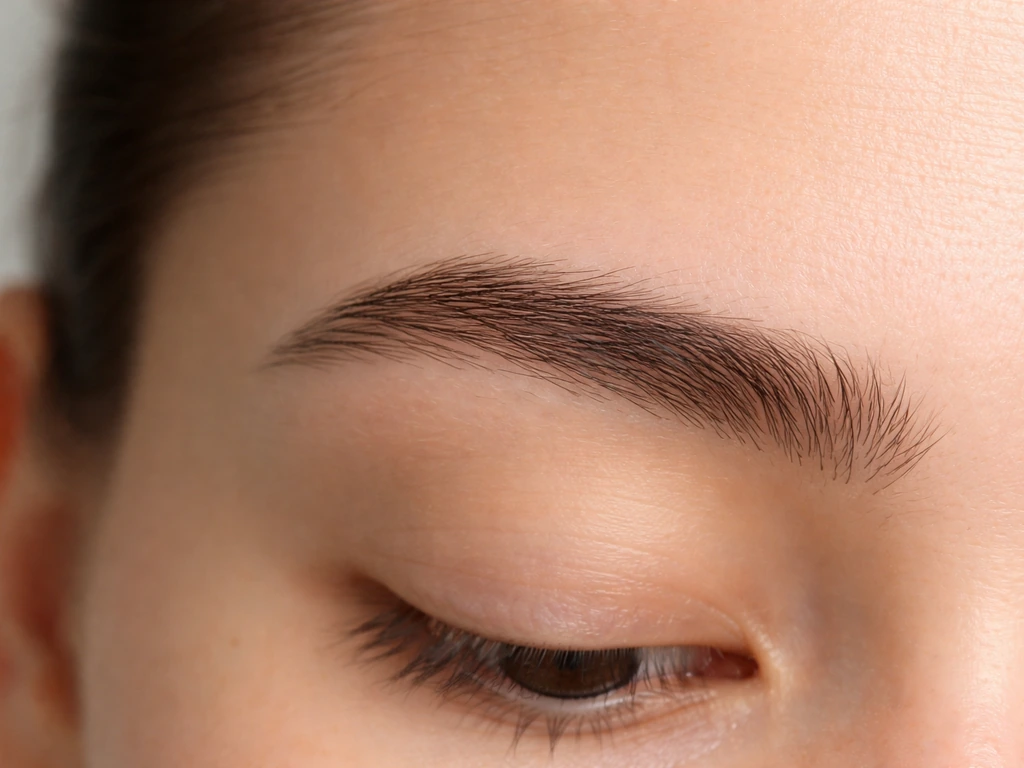
Most newborns are born with visible eyebrow hair already in place, but it can be so fine and lightly pigmented that it barely shows up in photos or in-person. True, defined eyebrows typically become noticeably fuller and darker somewhere between 1 and 3 months of age, with most babies sporting clearly visible brows by the 3 to 4 month mark. If your newborn looks like they skipped the eyebrow step entirely, that is almost always completely normal.
When Do Newborns Grow Eyebrows? Timeline and What’s Normal

James Whitmore
3 May 2026
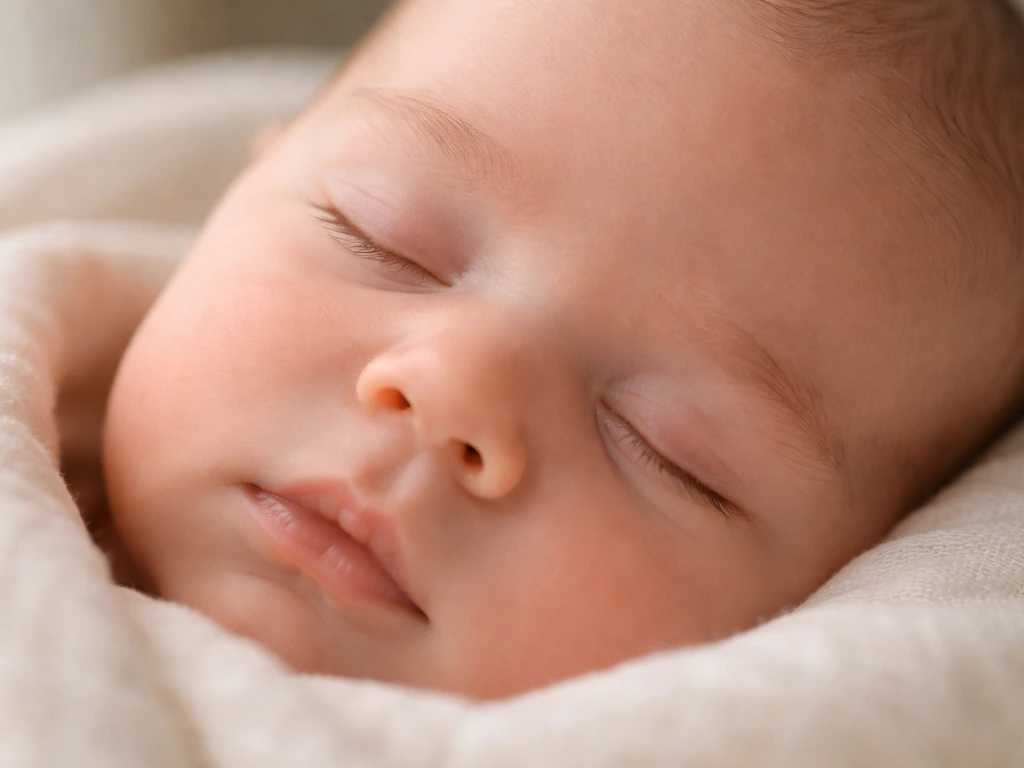
Eyebrow development timeline from birth to 6 months
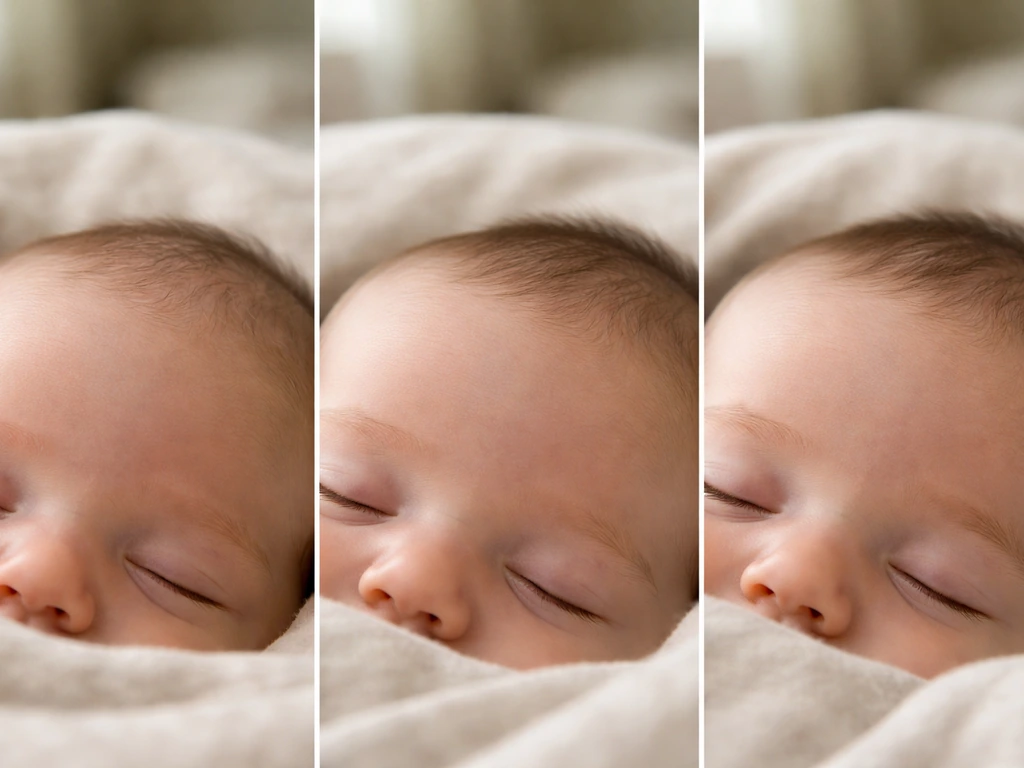
Eyebrow follicles form in the womb during the second trimester, which means the hardware is already built before your baby arrives. What changes after birth is the type and visibility of the hair growing from those follicles. Here is what to expect, month by month.
| Age | What's happening | What you'll see |
|---|---|---|
| Birth to 2 weeks | Lanugo (the soft fetal hair) begins shedding; vellus and early terminal hair cycles start | Faint, wispy brows or what looks like bare skin above the eyes |
| 2 weeks to 6 weeks | Lanugo fully sheds; pigmented terminal hair starts growing in earnest | Slightly more visible brow hairs, still sparse and light for many babies |
| 6 weeks to 3 months | Terminal hair growth accelerates; the eyebrow hair cycle (completed in about 4 months) is fully underway | Brows become noticeably more defined; color may deepen |
| 3 to 4 months | Hair density increases; individual follicles cycling through anagen (growth), catagen (transition), and telogen (rest) | Most babies have clearly visible eyebrows by now |
| 4 to 6 months | Continued thickening and pigmentation; brow shape becomes more distinct | Brows look like miniature versions of what they will be long-term |
One important thing to understand about eyebrow hair specifically: the full eyebrow hair cycle takes about 4 months to complete, compared to 3 to 4 years for scalp hair. That faster turnover is actually why brow density can shift noticeably over just a few months in infancy, and also why adult brows respond more quickly to growth strategies than scalp hair does. For newborns, it means you can expect real visible progress within weeks, not a year-long wait.
Why newborn eyebrows often look absent or patchy at first
There are a few totally normal reasons a newborn's eyebrows can look sparse, uneven, or practically invisible in those first weeks.
- Lanugo shedding: Babies are born covered in lanugo, a fine, unpigmented fetal hair. As it sheds, it takes any early eyebrow coverage with it, leaving what looks like a brow-free zone for a few weeks.
- Low pigmentation: Newborn hair is often lighter in color than it will eventually be, especially in fair-skinned babies. Light brow hairs on light skin are nearly invisible even when they are actually there.
- Hair cycle timing: Because brow follicles are still syncing up their anagen (growth) phases, not all follicles are producing hair at the same time early on. This creates a naturally patchy look that evens out over weeks.
- Genetics: Some babies are simply born with sparser brow follicle density. This does not mean something is wrong; it often just reflects family traits.
- Prematurity: Premature babies may have more lanugo present at birth and a longer timeline before terminal eyebrow hair fills in, since their development is still catching up.
In short: faint or uneven brows in a newborn are the rule, not the exception. Expect the real transformation to happen between weeks 4 and 12.
What's normal vs. when to call the pediatrician
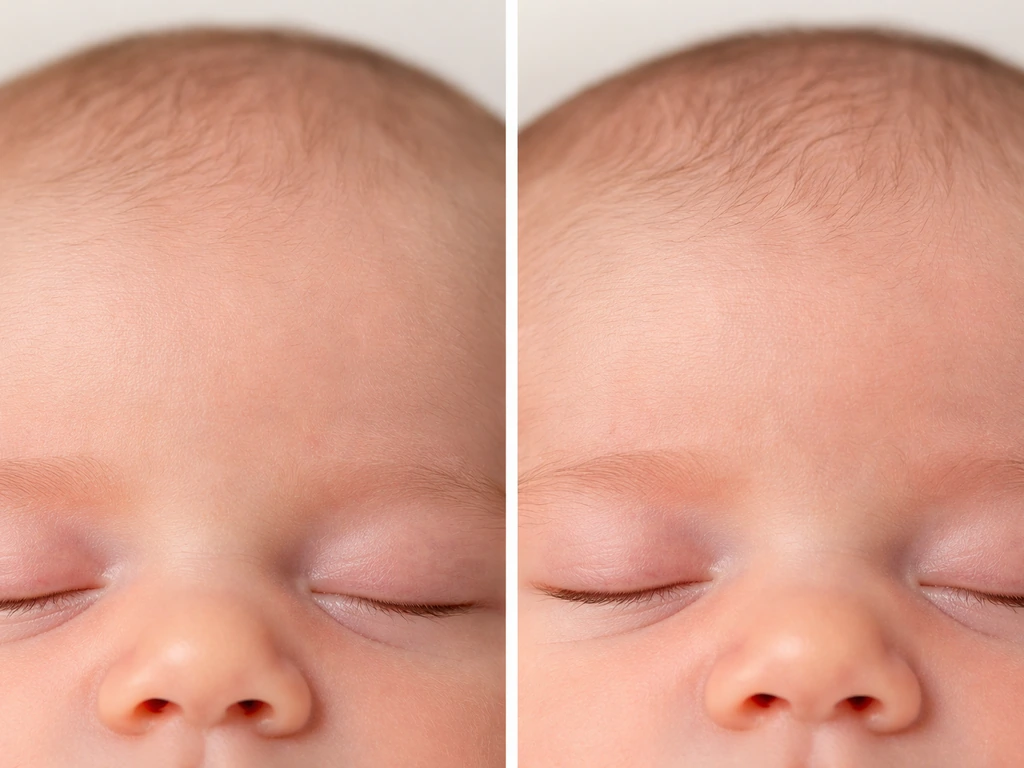
The vast majority of newborn brow sparseness is a waiting game, but there are a handful of signs worth flagging to a doctor. Here is how to tell the difference.
Normal and nothing to worry about
- Light, barely visible brow hairs in the first 4 to 8 weeks
- Gradual filling in between months 1 and 4
- Slight asymmetry in brow density (one side a bit fuller than the other)
- Yellowish, flaky patches on or near the eyebrows before 3 months, especially if the baby seems unbothered (this is very likely infantile seborrheic dermatitis, covered below)
Signs worth a pediatrician call
- Completely smooth, bald patches on the brows with no hair whatsoever by 4 months, especially if the patches are sharply defined and circular (this can be consistent with alopecia areata, where the immune system attacks hair follicles)
- Scaling, redness, or crusting that is spreading, not improving by 6 to 12 months, or causing obvious irritation to the baby
- Hair loss appearing on the eyebrows alongside other areas like eyelashes or scalp in a progressive pattern
- Total absence of eyebrow hair from birth combined with absent scalp hair (this may point to a rare genetic condition called hypotrichosis, which warrants specialist evaluation)
- Patchy hair loss with broken hairs and scalp involvement that does not respond to gentle washing (tinea capitis, or scalp ringworm, can look similar to cradle cap but requires oral antifungal treatment, not just topical care)
- Any brow area that looks inflamed, swollen, or infected rather than just dry or flaky
Alopecia areata in infants is rare but real. A dermatologist can use a tool called trichoscopy to distinguish it from other causes of patchy eyebrow loss without needing invasive testing. A peer-reviewed PMC review on pediatric hypotrichosis notes that absent hair from birth is generally associated with hypotrichosis syndromes/genetic forms and describes patterns where eyebrows can be absent or very sparse from birth patchy eyebrow loss. If your gut says something looks off beyond normal sparseness, trust it and get a professional look.
Cradle cap on the eyebrows: what it looks like and what to do
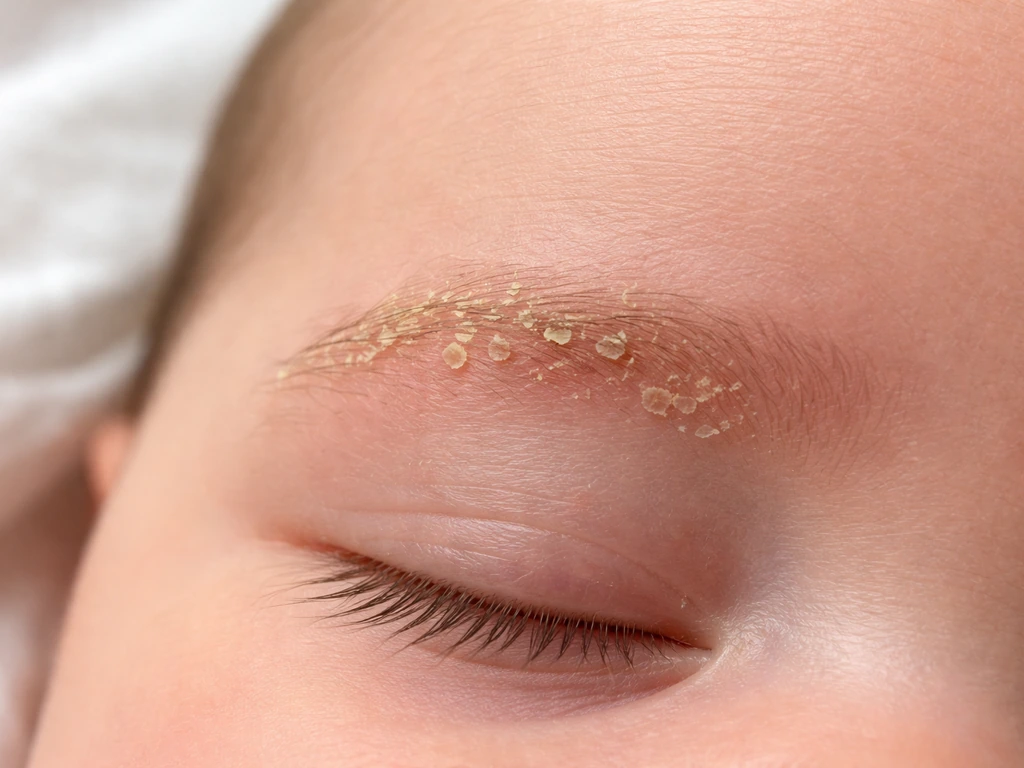
Infantile seborrheic dermatitis (cradle cap) typically shows up before 3 months and can affect not just the scalp but also the eyebrows, eyelids, forehead, and ears. It looks like yellowish or white scaly patches, sometimes with a little redness underneath. It is not contagious, usually is not itchy or uncomfortable for the baby, and most cases clear up on their own by 6 to 12 months.
For eyebrow cradle cap specifically, the recommended approach is simple: gently wash the area with a mild baby shampoo during bath time, then use a soft baby brush to gently loosen flakes. Do not pick at scales with your fingernails. If the flaking is persistent or spreading significantly, your pediatrician may suggest a mild antifungal product like low-concentration ketoconazole shampoo. The important thing is not to confuse cradle cap with a sign of poor eyebrow growth. The follicles are fine; the skin surface just needs some gentle attention.
How to safely care for newborn eyebrows
The honest answer is: very little active care is needed, and less is more when it comes to a newborn's face.
- Keep it clean and gentle: Wash your baby's face daily with plain warm water or a fragrance-free baby wash. This keeps the brow area clean without irritating delicate skin.
- Soft brush for cradle cap only: If you see flaky buildup on the brows, a soft baby brush during bath time is the right tool. Use light pressure and work with the direction of hair growth.
- Skip any oils, serums, or growth products: This is non-negotiable. Minoxidil is contraindicated in people under 18 and has been flagged by health regulators for abnormal hair growth risks when babies are accidentally exposed. Castor oil, rosemary oil, and similar products used by adults for eyebrow growth are not tested for safety in infants and have no place on a baby's face. The follicles do not need stimulation at this age; they just need time.
- No trimming, tweezing, or shaping: Infant skin around the brow is extremely sensitive and there is no safe or necessary reason to groom a newborn's eyebrows beyond gentle cleansing.
- Avoid olive oil near the face: Some parents reach for olive oil for cradle cap, but research and guidance from pediatric sources suggests it may not be beneficial for baby's delicate skin barrier and is best avoided.
Factors that affect when brows come in
Not every baby follows the exact same schedule, and several real variables can shift the timeline a few weeks in either direction.
- Genetics: Family history is the biggest driver. If both parents had sparse, slowly developing brows as infants, expect the same in their baby. Follicle density is largely inherited.
- Prematurity: Premature babies have more lanugo at birth and a longer adjustment period before terminal hair fully replaces it. Their effective "start date" for eyebrow development is closer to their corrected age than their birth age, so parents should calibrate expectations accordingly.
- Skin conditions: Seborrheic dermatitis does not prevent brow growth, but severe inflammation around the follicles, if left untreated, can temporarily affect the local environment. This is another reason to address persistent cradle cap rather than ignore it.
- Hair color and pigmentation: Lighter-haired babies may appear to have no brows well into month 3 simply because the hairs are nearly transparent. A closer look in good lighting often reveals hair is there; it is just hard to see.
- Underlying health conditions: Rare genetic syndromes involving hypotrichosis can affect brow density from birth. These typically come with other signs and are identified through pediatric or dermatological evaluation rather than parents noticing sparse brows alone.
- Hormonal shifts after birth: The transition from the womb environment to independent life triggers a wave of hormonal changes that affect all hair cycling, including eyebrow follicles. This is one reason lanugo sheds and terminal hair shifts timing in the early weeks.
Tracking growth and setting realistic expectations
If you want to track your baby's eyebrow development without driving yourself (or your pediatrician) a little bit crazy, take a simple weekly photo in the same lighting. Use natural daylight near a window and keep the angle consistent. After a month of photos, the progression is usually obvious in a way that day-to-day observation can miss entirely.
Here is a realistic expectations framework: by 6 weeks, you should start to see something; by 3 months, most babies have clearly defined brows; by 6 months, the shape and density that shows up is a preview of what their brows will look like longer-term. If you hit 4 months and see no meaningful progress at all, that is a reasonable point to bring it up at a well-child visit, not as an emergency, but as a documented observation.
One thing worth keeping in mind: eyebrow density and shape continue to evolve throughout childhood and adolescence. Hormonal changes at puberty, for example, have a significant effect on brow thickness. What a baby or toddler's brows look like is not a fixed indicator of what they will have as an adult. The same biology that drives adult brow growth (the anagen, catagen, and telogen cycle that also underlies topics like what makes eyebrows grow and how brow hair responds to targeted ingredients) is active from the start, just calibrated to an infant's developmental pace.
Bottom line: patience is the only tool you need for most newborns. Keep the skin clean, watch for the warning signs outlined above, and let the follicles do their job. Once your baby’s brows are stable, you can also learn evidence-based tips on how to grow lashes and eyebrows safely. The brows are coming. If you are curious about how eyebrows grow over time, the normal timeline from birth can help set expectations how does eyebrows grow.
FAQ
Is it normal if my newborn’s eyebrows are almost invisible at birth?
Yes, some newborns have brows that look lighter or patchy right after birth, but they usually fill in as the hair cycle advances. If there is no change by around 4 months, bring it up at a routine well-child visit so the pediatrician can document it and check for causes like dermatitis or rare hair-pattern conditions.
Why are my baby’s eyebrows thinner on one side?
It can happen, and it is often related to uneven hair visibility rather than true hair loss. A quick clue is whether the skin looks healthy, with no scaling or redness. If one side becomes scaly, crusty, or noticeably irritated, think cradle cap or another skin issue and discuss it with your pediatrician.
Can I use coconut oil, Vaseline, or brow-growth products to make newborn eyebrows grow faster?
Avoid using oils, adult hair serums, or over-the-counter hair-growth products on a newborn’s face. The skin barrier is still developing, and some products can irritate or cause contact dermatitis. For suspected cradle cap, only use the gentle washing and soft brushing approach described, and follow your clinician’s guidance if an antifungal is recommended.
Is it okay to remove the flakes from cradle cap near the eyebrows?
Do not pick, scrape, or comb off flakes aggressively. Picking can irritate the skin and can make the area look more uneven temporarily. If flakes are present, loosen them gently in bath time with a soft brush after washing.
How can I tell if sparse-looking brows are actually related to cradle cap?
Yes. If your baby has cradle cap features on the face (yellowish or white scaly patches, sometimes with mild redness), it may look like delayed brow growth even though follicles are present. Treating the skin gently often improves the look even before hair density changes.
Will my baby’s eyebrow shape at 3 months predict what they’ll look like later?
Hormonal shifts and normal hair cycling mean brows can change over months, even beyond infancy. Puberty can further thicken or alter eyebrow hair, so do not assume that toddler or early childhood brow appearance will stay the same into adulthood.
What’s the best way to monitor eyebrow growth without overchecking?
You can track progress, but keep your expectations realistic. Weekly photos in the same lighting and angle help, however, day-to-day differences from expression, sleep, and grooming can be misleading. By about 6 weeks you should notice some change, and by 3 to 6 months the brows typically look clearly more defined.
When should patchy eyebrow loss be considered abnormal?
It depends on the pattern. Red flags to seek medical advice include clear, well-defined patchy hair loss, eyebrow loss that is expanding quickly, associated eyelid skin changes that look unhealthy, or any signs that the area is painful or very inflamed. If you notice these beyond typical faint newborn brows, request an exam rather than waiting.
How often should I wash my baby’s eyebrows if they look flaky or sparse?
Washing more often is not usually the answer. For eyebrow cradle cap, use mild baby shampoo during bath time and gentle brushing, then stop. Over-washing or using harsh scrubs can irritate the skin surface, which may temporarily worsen how brows look.
My baby is 4 months old and brows look the same, should I worry?
If at 4 months there is no meaningful visible progress, it is reasonable to bring it up at a scheduled well-child visit. It is not typically an emergency, but documenting it helps the clinician decide whether to observe, treat skin issues, or rule out rarer causes.
Next Article
What Makes Eyebrows Grow and How to Regrow Them
Understand eyebrow hair growth cycles, fix patchy brows from plucking or irritation, and follow natural and minoxidil st