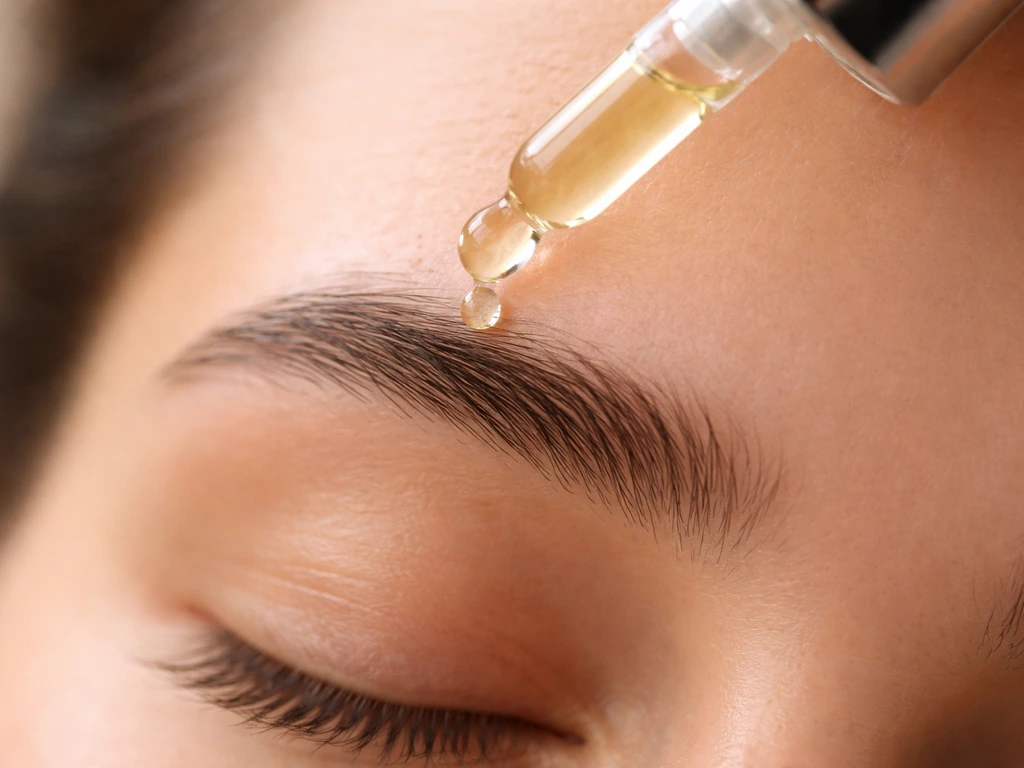
Yes, a derma roller can help grow eyebrows, but with real caveats. Microneedling creates a controlled wound-healing response that releases growth factors and increases blood flow to hair follicles, and there is solid clinical evidence this works for scalp hair, particularly when combined with a topical like minoxidil. Eyebrow-specific trials are fewer and smaller, but the biology is the same, and at-home rollers used correctly are a reasonable option for sparse or over-plucked brows. The honest expectation: you are likely to see modest improvement in density and possibly some new growth over 3 to 6 months, not a dramatic overnight transformation. Whether that is enough depends on why your brows are thin in the first place.
Can Derma Roller Grow Eyebrows? Evidence, Protocols & Risks

James Whitmore
23 Jul 2026
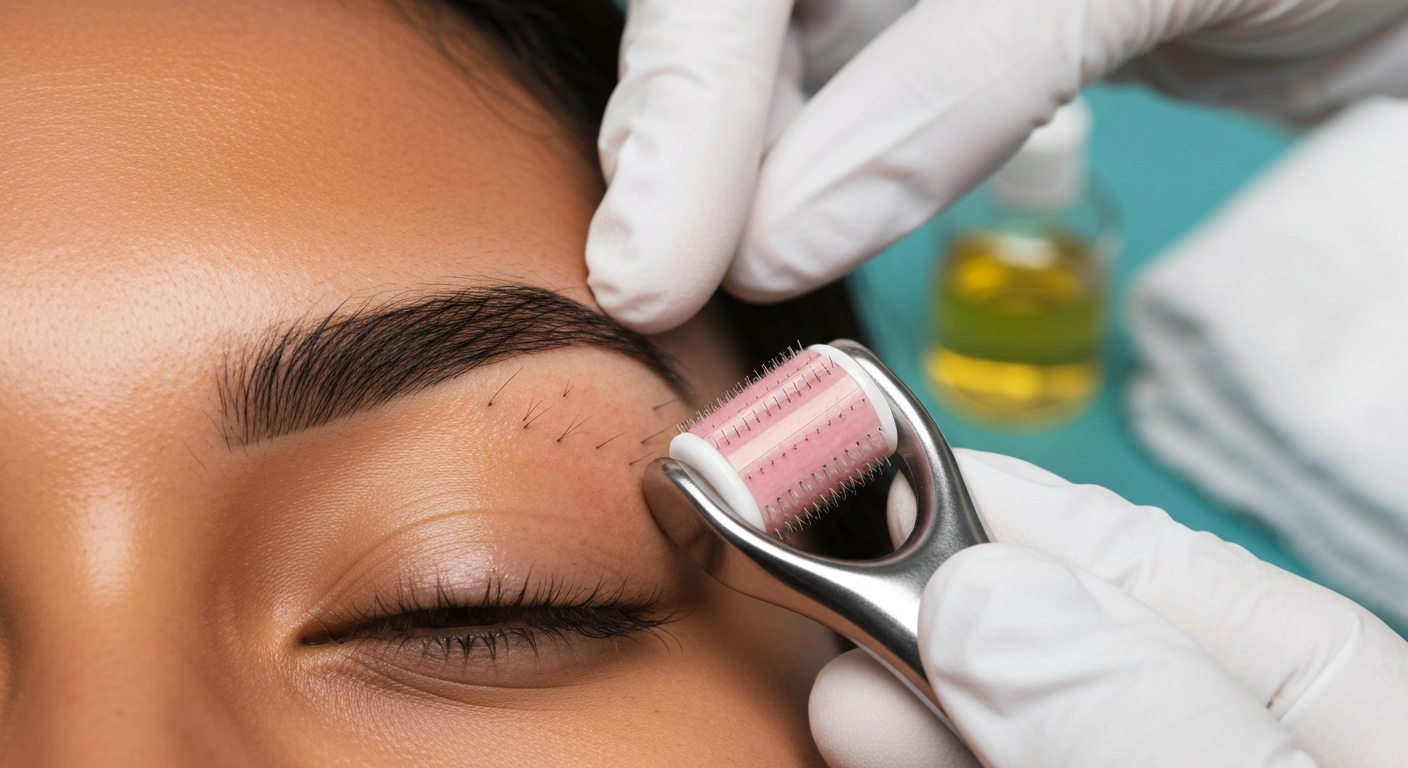
Quick verdict: can a derma roller grow eyebrows?
Probably yes, especially when paired with a proven topical. Derma rolling alone is not a slam-dunk, peer-reviewed solution for eyebrows the way bimatoprost or topical minoxidil are, but it is a reasonable adjunct tool with a plausible mechanism and a decent safety record when used carefully. If your brows are thin from over-plucking, aging, stress, or mild hypotrichosis, a 0.25–0.5 mm roller used once or twice a week alongside a growth serum is worth a consistent 3-to-6 month trial. If you have scarring alopecia, a thyroid condition, or significant hair loss at the brow margin, you need a dermatologist first.
How microneedling may stimulate eyebrow hair growth
When you roll tiny needles over skin, you are creating thousands of micro-injuries. That sounds counterproductive, but the controlled wound-healing response that follows is exactly what makes microneedling interesting for hair. The cascade releases growth factors including vascular endothelial growth factor (VEGF), platelet-derived growth factor (PDGF), keratinocyte growth factor (KGF), and insulin-like growth factor 1 (IGF-1). These signaling molecules promote new blood vessel formation and activate dermal papilla cells, which are the cells at the base of your hair follicle that determine whether a hair grows and how thick it gets.
There is also strong preclinical evidence that microneedling activates the Wnt/beta-catenin signaling pathway. This pathway plays a key role in hair follicle cycling, specifically the transition from the resting phase (telogen) into the active growth phase (anagen). In plain terms, derma rolling may nudge dormant follicles back into gear. For eyebrows, where the anagen phase is naturally very short, roughly 4 to 8 weeks compared to years on the scalp, this kind of signaling nudge could make a meaningful difference to how many hairs are actively growing at any one time.
A secondary benefit is permeability. Microneedling temporarily increases the skin's ability to absorb topical products, so whatever serum you apply immediately after rolling gets deeper, faster. This is partly why the combination of microneedling plus minoxidil outperforms minoxidil alone in clinical trials.
What the clinical evidence actually shows
Most of the hard data comes from scalp hair loss studies, not eyebrow-specific trials. A 2023 meta-analysis published in Archives of Dermatology Research found that combining microneedling with topical minoxidil for androgenetic alopecia produced a statistically significant increase in total hair count compared to minoxidil alone, with a standardized mean difference of 1.76 (95% CI: 1.26 to 2.26). That is a clinically meaningful effect size. A 2022 systematic review similarly concluded that microneedling is supported by multiple small trials for scalp hair loss, with the strongest evidence coming from combination therapy rather than microneedling used by itself. A 2022 systematic review (PMC) of microneedling for hair disorders concluded that multiple small trials support its use for scalp hair loss, most robust evidence is for microneedling combined with topical agents like minoxidil, while highlighting methodological heterogeneity and limited high-quality data for microneedling as monotherapy.
For eyebrows specifically, the picture is less clear. There are no large randomized controlled trials using microneedling alone for eyebrow hypotrichosis. Reviews note that most clinical evidence for follicle stimulation via microneedling comes from scalp studies, and the results cannot be directly extrapolated to brows without eyebrow-specific data. That said, the biological mechanism is the same, and periorbital microneedling studies do confirm that the technique is tolerable and produces measurable dermal changes in the area around the eye, even if those trials measure skin quality rather than hair count.
By contrast, pharmaceutical options like bimatoprost and topical minoxidil do have direct eyebrow evidence. Multiple randomized controlled trials, including split-face and parallel-group designs, have compared minoxidil and bimatoprost directly for eyebrow hypotrichosis, showing both are effective with acceptable tolerability. Bimatoprost is FDA-approved for eyelash hypotrichosis (Latisse, 0.03%) and used off-label for eyebrows in clinical practice. A pooled meta-analysis of prostaglandin analogs showed statistically significant improvement in hair length and density versus placebo (p less than 0.001). Derma rolling does not have that level of eyebrow-specific evidence yet, which is worth being honest about.
What people actually experience at home
The anecdotal picture is genuinely encouraging, even if it is not clinical proof. People who use a 0.25–0.5 mm roller on sparse brows consistently for several months and pair it with minoxidil or a growth serum report noticeably more baby hairs, improved thickness in previously bare patches, and faster regrowth after shaping. I have personally used a 0.3 mm derma roller on my own tail-of-brow area, which is always the first part to thin, combined with topical minoxidil 2% applied right after rolling. By month three I could see clear baby hairs in areas that had been bare for over a year. That is not a clinical trial, but it lines up with what the mechanism predicts.
The most common frustration people report is inconsistency, starting strong for a few weeks and then stopping when results are not immediate. Eyebrow hair has a short growth cycle, so you are not going to see a hair go from nothing to full length in three weeks. The improvement tends to show up gradually: more hairs in the active growth phase at once, which creates a fuller look over time rather than sudden regrowth in empty spots.
Realistic timelines and what to expect
This is the section where I ask you to manage your expectations, not to discourage you but because unrealistic timelines are the main reason people quit before the protocol has a chance to work. Eyebrow anagen is short (around 4 to 8 weeks), but a full follicle cycle from stimulation to visible hair takes longer because follicles need time to move from telogen into anagen after you start treatment. Most people who see results report them between 8 and 16 weeks of consistent use. Significant density improvement is realistically a 4 to 6 month project. If you see nothing at all after 5 to 6 months of correct, consistent use, it is time to see a dermatologist.
| Timeframe | What you might notice |
|---|---|
| Weeks 1–4 | Skin may look slightly pink after rolling; no visible hair change yet |
| Weeks 4–8 | Possible early vellus (fine, light) hairs in sparse areas |
| Weeks 8–16 | More hairs entering active growth; slight improvement in fill |
| Months 4–6 | Noticeable density improvement if protocol is consistent |
| Beyond 6 months | Continued gradual improvement or plateau; reassess approach |
A safe at-home derma roller protocol for eyebrows
The eyebrow area is delicate and close to your eyes, so technique and hygiene matter more here than anywhere else on your face. Here is a practical protocol based on the dermatology literature and clinical guidance on needle length and use frequency.
Needle length
Use 0.25 mm to 0.5 mm for the brow area. This is the most important specification. Anything above 0.5 mm on the face without professional guidance risks going too deep into the dermis, causing unnecessary trauma, and increasing complication risk near the eye. A 0.25 mm roller is enough to enhance serum absorption and trigger a mild wound-healing response. If your skin tolerates it well after 6 weeks, you can try 0.3 mm or 0.5 mm. Do not use the 1.0 mm or 1.5 mm scalp rollers on your brow area.
Frequency
Once or twice per week is the right range for home use. The skin and follicles need recovery time between sessions. Daily rolling does not accelerate results and increases inflammation and irritation. Stick to two sessions per week maximum, separated by at least 3 days.
Hygiene
This step is non-negotiable. Derma rollers create micro-punctures that are direct entry points for bacteria. Before each session: wash your hands thoroughly, cleanse the brow area with a gentle cleanser, and soak your roller in 70% isopropyl alcohol for 5 to 10 minutes, then let it air dry on a clean surface. After each session, soak the roller again and store it in its case. Replace the roller after about 10 to 15 uses, or sooner if you notice bent or dull needles. Never share a roller.
Technique
Work on clean, dry skin. Roll gently across the brow in three directions: horizontal (along the brow), vertical (up and down through the brow), and diagonal. Use light pressure, the roller should glide without dragging. Keep the motion controlled and avoid rolling directly onto the eyelid. Two to four passes per direction is sufficient. The brow area is small, so the whole process takes under two minutes per side.
Post-care
Apply your chosen serum or topical (minoxidil, growth serum, or a carrier oil) immediately after rolling while the micro-channels are open. Avoid anything with alcohol, strong acids, or fragrance right after needling as these will sting and irritate. For the first hour or two post-roll, keep the area clean and avoid touching it. Mild redness is normal and should resolve within a few hours. If you experience persistent swelling, pustules, or crusting, stop and consult a dermatologist.
Combining derma rolling with serums and prescriptions
Microneedling is at its most useful as a delivery vehicle and a synergist for proven topicals. Here is how the main options stack up when paired with rolling.
Minoxidil
This is the strongest combination. The 2023 meta-analysis showing a standardized mean difference of 1.76 in hair count for microneedling plus minoxidil versus minoxidil alone is the best evidence we have for any microneedling combination. For eyebrows, topical minoxidil 2% solution or foam applied immediately after rolling is a practical approach. Multiple eyebrow-specific RCTs have confirmed minoxidil works directly on eyebrow hypotrichosis, so you are pairing a proven ingredient with a delivery-boosting technique. A systematic review titled "Topical minoxidil effectiveness in enhancing facial aesthetics: A systematic review and meta-analysis" reports multiple controlled eyebrow studies showing efficacy and acceptable local tolerability of topical minoxidil formulations. Apply a small amount to the brow area post-roll and let it dry before applying anything else. Avoid getting minoxidil into the eye.
Bimatoprost
Bimatoprost is a prostaglandin analog that works by a completely different mechanism than microneedling: it extends the anagen (growth) phase of hair follicles and is FDA-approved for eyelash growth (Latisse). It has strong eyebrow-specific evidence from RCTs and is used off-label for brows by dermatologists. Combining it with a derma roller is theoretically plausible since rolling would enhance penetration, but there are no trials specifically studying this combination for eyebrows, and the eye-proximity risk with a prescription drug applied post-needling warrants caution. If bimatoprost is something you are considering, that is a dermatologist conversation, not a DIY protocol. The evidence for bimatoprost on its own for eyebrow growth is compelling and worth reading up on separately. Can bimatoprost grow eyebrows summarizes the clinical trial evidence and practical use of bimatoprost for eyebrow regrowth.
Topical retinoids (retinol and tretinoin)
Retinoids are sometimes used alongside minoxidil on the scalp to enhance absorption and potentially modulate follicular signaling through the Wnt/beta-catenin pathway. Preclinical evidence supports this adjunctive role, but there are no high-quality randomized trials showing retinoids alone reliably grow eyebrow hair. Do not apply tretinoin or strong retinol immediately after derma rolling; the combination is likely to cause significant irritation. If you're wondering whether tretinoin can make eyebrows grow, see our dedicated discussion on does tretinoin make eyebrows grow for more detail on the evidence and safe use. If you want to use a retinoid as part of your brow routine, apply it on separate evenings from rolling, not on the same session. For more detail, see our guide Does retinol help eyebrows grow.
What about Bio-Oil and topical retinoids for brow growth?
These two come up regularly in brow growth searches, so it is worth being direct. Bio-Oil is formulated for scar improvement and skin conditioning, not hair growth. Its ingredients (PurCellin Oil, vitamins A and E, plant extracts) may support skin health around the brow area, but no peer-reviewed clinical trials have demonstrated that Bio-Oil causes eyebrow regrowth. Using it as a post-roll moisturizer is unlikely to cause harm, but you should not count on it as the active ingredient driving hair growth. It is a supportive skin-care product, not a follicle stimulant.
Retinoids (retinol as an over-the-counter option, tretinoin as a prescription) have a more interesting biological case. They increase skin cell turnover, improve penetration of other actives, and have been shown in preclinical work to activate Wnt/beta-catenin signaling. The realistic assessment for eyebrows: retinoids may improve the skin environment around follicles and enhance minoxidil absorption when used carefully, but do not expect retinol or tretinoin alone to visibly thicken your brows. The evidence for retinoids as direct hair-growth agents is preliminary and mostly preclinical. Both retinol and tretinoin can cause dryness and irritation in the delicate brow area, especially if you are also rolling, so introduce them slowly and on non-rolling nights.
Risks, contraindications, and when to stop
Microneedling near the eye is one of the higher-risk at-home applications of this technique. Case reports in the dermatology literature document complications from unsupervised microneedling including infection, granulomatous inflammatory reactions, scarring, and pigmentary changes. These are rare with proper technique and hygiene, but they are not theoretical. Proximity to the eye adds the risk of accidental needle contact or product migration into the eye, particularly with prescription topicals applied post-roll.
- Active skin infections, eczema, or psoriasis in the brow area: do not roll
- Open wounds, recent cuts, or post-procedure skin (laser, chemical peel): wait until fully healed
- History of keloid scarring: microneedling can worsen scarring, avoid without medical supervision
- Blood thinners or clotting disorders: increased bleeding risk, consult your doctor
- Isotretinoin use: avoid microneedling during treatment and for 6 months after
- Suspected scarring alopecia (frontal fibrosing alopecia, lichen planopilaris): see a dermatologist before attempting any home treatment
At-home derma rolling vs. professional microneedling: which to choose
For most people with sparse or over-plucked brows who are generally healthy, an at-home 0.25–0.5 mm roller is a reasonable starting point. It is lower cost, easier to maintain consistently, and the risk profile at those shallow depths is manageable with good hygiene. Professional microneedling with a dermatologist or aesthetician uses longer needles (often 0.5 mm or more), automated devices with precise depth control, and sometimes combination treatments with PRP (platelet-rich plasma) or prescription topicals. The professional route is the right choice if your brow loss is significant, has a medical cause, has not responded to 6 months of home treatment, or if you have any of the contraindications above.
| Factor | At-home derma roller | Professional microneedling |
|---|---|---|
| Needle depth | 0.25–0.5 mm (face-safe) | 0.5–2.5 mm with precision control |
| Cost | Low (device: $15–$50) | Higher per session ($150–$400+) |
| Evidence level | Indirect (scalp + mechanism data) | Same evidence base, better technique control |
| Best for | Mild thinning, adjunct to topicals | Moderate-to-significant loss, medical causes |
| Risk profile | Low with good hygiene | Low with professional oversight |
| Combination options | DIY minoxidil, growth serums | PRP, prescription topicals, guided protocol |
A practical decision framework: what to try first
If your brows are sparse from over-plucking, shaving, or gradual thinning and you have no medical history that raises flags, here is a sensible starting order. Begin with the basics: rule out nutritional deficiencies (iron, biotin, vitamin D) and thyroid issues if thinning has been unexplained. Then start a consistent protocol with a 0.25–0.3 mm roller twice a week paired with topical minoxidil 2% applied immediately after rolling. Give it a genuine 4 to 6 months. If you see partial improvement but want more, that is the point at which a dermatologist conversation about bimatoprost or professional microneedling makes sense. If you see no change at all by month 5, skip the home experiment and go straight to professional evaluation.
On the forehead side of the brow, if you are dealing with thinning at the brow margins or along the hairline, the same principles apply but the skin is slightly more robust than the periorbital zone. If you’re wondering whether a derma roller can grow hair on the forehead, the same principles apply: start shallow, prioritize proven topicals, and use microneedling as an amplifier rather than a sole treatment can a derma roller grow hair on the forehead. The key is always to start shallow, go slowly, and prioritize a proven topical as the active agent, with microneedling as the amplifier rather than the sole treatment.
How derma rolling compares to other brow growth options
It helps to see microneedling in context alongside the other options people search for. No single approach wins for everyone, and the best protocol often combines two or more.
| Option | Evidence for eyebrows | Mechanism | Best combined with | Key risk or limitation |
|---|---|---|---|---|
| Derma roller (0.25–0.5 mm) | Indirect (scalp RCTs, mechanistic data) | Growth factors, Wnt/β-catenin activation, enhanced absorption | Minoxidil, growth serums | Infection risk if hygiene poor; eye proximity |
| Topical minoxidil 2% | Direct eyebrow RCTs, systematic reviews | Prolongs anagen, increases blood flow | Derma rolling | Irritation; avoid eye contact |
| Bimatoprost (Latisse) | Strong eyebrow-specific RCTs, FDA-approved for lashes | Extends anagen via prostaglandin pathway | Used alone or with dermatologist guidance | Prescription only; possible iris pigmentation risk |
| Topical retinoids (retinol/tretinoin) | Preclinical only for hair; no strong eyebrow RCTs | Skin permeability, possible Wnt modulation | Minoxidil (absorption aid) | Irritation; avoid same night as rolling |
| Bio-Oil | No clinical trial evidence for hair regrowth | Skin conditioning only | As post-roll moisturizer only | Not a proven follicle stimulant |
| Castor oil / rosemary oil | Very limited; mostly observational | Possible scalp circulation effects | As carrier or supplement to proven actives | Results modest; no large RCTs |
The bottom line: derma rolling is a legitimate supporting tool, not a standalone miracle. Paired with topical minoxidil and applied consistently over several months, it gives you a well-supported, accessible protocol for improving sparse or thinning eyebrows. For faster, more reliable results, especially with significant loss, pharmaceutical options like bimatoprost have stronger direct evidence and are worth discussing with a dermatologist. Being realistic about timelines, rigorous about hygiene, and honest with yourself about what the evidence does and does not support is what separates a protocol that works from one that just takes up drawer space.
FAQ
Can a derma roller (microneedling) grow eyebrows?
Short answer: Possibly — microneedling can help stimulate eyebrow hair growth for some people, especially when combined with proven topical agents (like minoxidil). Evidence for microneedling alone on eyebrows is limited: most quality trials show benefit when microneedling is added to a topical drug for scalp hair loss, and eyebrow‑specific randomized data are sparse. Expect modest improvement rather than guaranteed full regrowth.
How does microneedling theoretically stimulate hair growth?
Mechanism: microneedling creates controlled microinjuries that trigger wound‑healing signals (VEGF, PDGF, KGF, IGF‑1), increase dermal blood flow, and activate signaling pathways such as Wnt/β‑catenin. These changes can wake dormant follicles, enhance follicle environment, and improve topical drug uptake — mechanisms supported by preclinical studies and clinical reviews.
What results and timeline should I realistically expect?
Most users see early signs only after several months. Because eyebrow follicles have a short anagen (growth) phase, visible thickening or new fine hairs may appear in 8–16 weeks but more noticeable density changes typically require 3–6 months of consistent treatment. Results vary by cause (over‑plucking vs scarring vs medical loss) and are often better when microneedling is combined with an active topical agent.
What is a safe at‑home derma roller protocol for eyebrows?
At‑home protocol (conservative): - Needle length: 0.25–0.5 mm for at‑home eyebrow work (0.5 mm used with caution). - Frequency: every 7–14 days for 0.5 mm; 2–3 times/week for 0.25 mm. - Hygiene: use a medical‑grade device from a reputable maker, disinfect before/after with 70% isopropyl alcohol, wash skin with gentle cleanser, avoid sharing. - Technique: use light, short passes (no heavy pressure), 4–6 passes total across the brow area. - Post‑care: apply a gentle, non‑irritating moisturizer or thin layer of an approved topical (see combining section), avoid makeup for 24 hours, sun protection. Stop if heavy bleeding, severe pain, signs of infection, or persistent redness occur.
Which needle lengths are safe at home vs professional?
Home: 0.25 mm and 0.5 mm are commonly used at home (0.25 mm safer and mainly for enhancing product absorption; 0.5 mm should be used cautiously). Professional: 0.75–2.5 mm depths are used only by trained practitioners and can reach deeper dermal layers for stronger effects but carry higher risk and require sterile technique and medical oversight.
Can I use microneedling on the forehead or near the eye?
Microneedling can be performed on the forehead and periorbital skin, but caution is essential near the eye. Use shorter needles (0.25–0.5 mm) at home and avoid direct treatment on the eyelid margin. Professional treatments can treat periorbital areas using appropriate safety protocols. Never use devices that cause deep penetration close to the eyeball.
Next Article
Does Vitamin E Oil Help Eyebrows Grow? Safe Routine & Timeline
Find out if vitamin E oil helps eyebrow growth, plus a safe routine, timelines, and what works better.