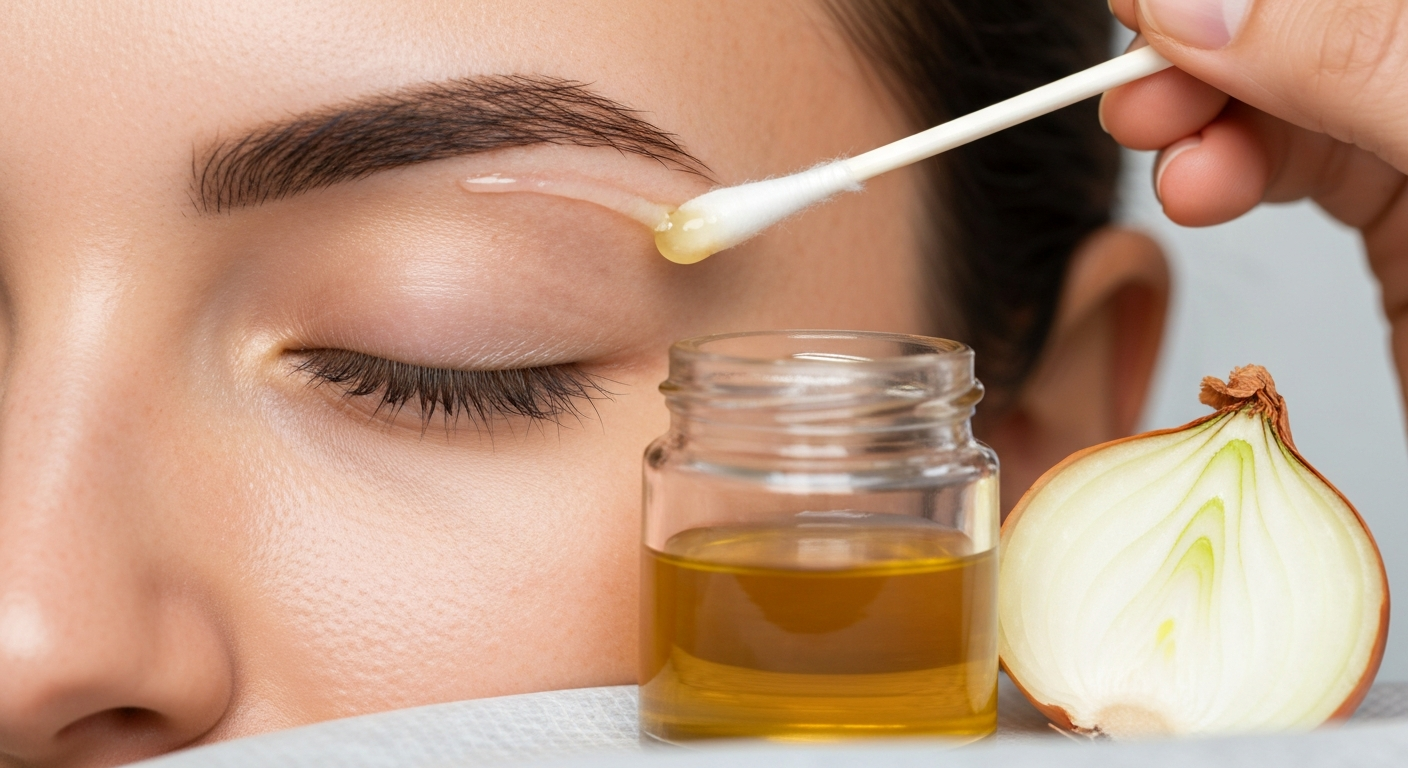
Amla oil can support the conditions your eyebrow follicles need to grow, but it cannot force hair out of a follicle on its own. There are no randomized controlled trials testing topical amla oil specifically on eyebrows, so the honest answer is: plausible but unproven as a standalone regrowth treatment. What the science does show is that compounds in Phyllanthus emblica (the Indian gooseberry that amla comes from) stimulate dermal papilla cell proliferation in the lab, may inhibit 5-alpha-reductase, and upregulate growth factors like IGF-1 and VEGF. That biology is relevant to hair growth. Whether those effects translate meaningfully to sparse or overplucked eyebrows in a plain oil application is a much harder question to answer, and anyone promising you otherwise is working ahead of the evidence.
Can Amla Oil Grow Eyebrows? Realistic Guide & Timeline

How eyebrow hair actually grows
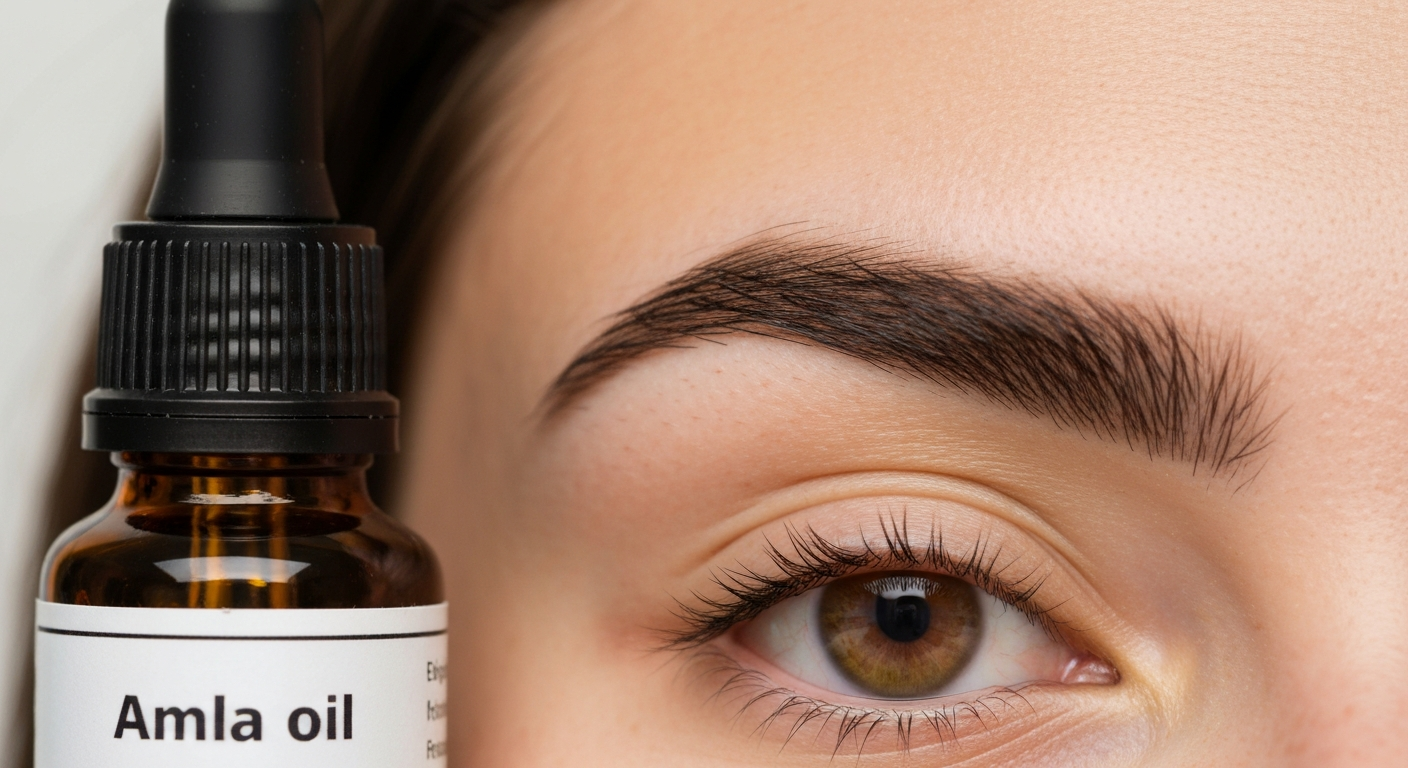
Before you commit to any oil or serum, understanding why eyebrow regrowth is so slow (and so variable) saves a lot of frustration. Hair follicles cycle through three phases: anagen (active growth), catagen (transition), and telogen (resting/shedding). Eyebrow follicles have a dramatically shorter anagen phase than scalp follicles, roughly 6 to 12 weeks, compared to 2 to 6 years on your scalp. That's why your eyebrows don't grow to your shoulders. It also means the growth window any topical can act within is much narrower.
After shaving, most people see decent regrowth within 4 to 6 weeks because the follicles were never damaged. After waxing or threading, the timeline is similar, 4 to 8 weeks for full return in most cases. Overplucking is the tricky one. Repeatedly pulling hair from the root over years can progressively miniaturize follicles and slow the anagen phase. If you've been heavy-handed with tweezers for a decade, some follicles may be in a prolonged resting state, and a few may have lost the ability to regenerate consistently. Realistic timeline for visible improvement with any home remedy: 3 to 4 months of consistent use, minimum, not the two weeks some product marketing implies.
Who actually benefits from eyebrow treatments
Not all sparse brows have the same cause, and that matters for what you try. Overplucking is the most common culprit among people who land on this page, and it's generally the most reversible. Hormonal shifts, thyroid dysfunction, postpartum changes, perimenopause, are another frequent driver, and those won't improve with oil alone until the underlying issue is addressed. Nutritional deficiencies (iron, biotin, zinc, protein) can thin brows noticeably and are correctable through diet or supplementation. Alopecia areata, an autoimmune condition, causes patchy loss and needs dermatology-level care, not a home oil routine.
See a dermatologist if your brow loss is sudden, patchy, asymmetric, or accompanied by other symptoms like fatigue, weight changes, or scalp hair loss. Also get checked if you've been consistent with home remedies for four or more months and seen no improvement at all. Those are the cases where something systemic is usually going on, and no topical will fix a thyroid problem or autoimmune flare.
What amla oil actually is
Amla oil comes from the fruit of Phyllanthus emblica, also called Emblica officinalis or Indian gooseberry, a tree native to India and Southeast Asia with a long history in Ayurvedic medicine. True cold-pressed amla oil is extracted by pressing the dried fruit or seeds at low temperature, preserving heat-sensitive compounds including vitamin C, polyphenols, and fatty acids. Most commercial 'amla oils' are not pure cold-pressed extracts, they're typically a base oil (sesame or coconut being most common) infused with amla fruit or powder, which gives you a diluted version of the active constituents. That distinction matters because the concentration of active compounds varies enormously between products.
The bioactive profile of Phyllanthus emblica is genuinely impressive. It contains some of the highest concentrations of vitamin C found in any plant, along with tannins including emblicanin A and B, gallic acid, ellagic acid, and various flavonoids, all potent antioxidants. The lipid fraction provides palmitic, stearic, oleic, and linoleic fatty acids, which act as occlusive agents and carriers. Plausibly, these compounds could support hair follicle health by reducing oxidative stress at the follicle, providing substrate for follicle cell function, and the fatty acids may help with scalp barrier function. The 5-alpha-reductase inhibition observed in some preclinical models is particularly interesting for people with androgenetic thinning, because that enzyme converts testosterone to DHT, which miniaturizes follicles.
What the research actually says
The most compelling data point is a 2011 in vitro study showing Phyllanthus emblica fruit extract stimulated human dermal papilla cell proliferation up to about 2.7-fold at 500 µg/mL in a dose-dependent manner. Dermal papilla cells sit at the base of the follicle and are essentially the engine of hair growth, stimulating their proliferation is a genuinely relevant mechanism, not a stretch. Preclinical reports also document upregulation of IGF-1 and VEGF (growth and vascularization signals) and 5-alpha-reductase inhibition in cell and animal models.
Where the evidence gets thin is the jump to human eyebrows. Animal topical studies (rabbit and sheep models) showed hair growth effects, but the translational uncertainty is high. Human clinical trials involving amla have largely used oral supplements or multi-ingredient serums where amla is one of several actives, you can't isolate its contribution. One randomized controlled trial tested an oral amla product for female androgenetic alopecia and showed positive results, but oral delivery is pharmacologically very different from rubbing oil on your brows. Research using transfersome-loaded Phyllanthus emblica extract showed better follicular delivery than plain topical application, which hints that a plain oil may not penetrate follicles as efficiently as a well-formulated serum. The honest summary: the biological mechanisms are credible, the cell-level evidence is real, but there is no RCT confirming that applying amla oil to human eyebrows produces meaningful, measurable regrowth. The systematic review Pathophysiology, conventional treatments, and evidence‑based herbal remedies of hair loss with a systematic review of controlled clinical trials (review) does not list any randomized controlled trials of topical pure Phyllanthus emblica (amla) oil applied to eyebrows for regrowth.
How amla oil stacks up against other options
If you're weighing amla against other popular home remedies and medical treatments, a direct comparison helps set realistic expectations. Every natural option on this list has a different evidence profile, and none of them matches what topical minoxidil delivers in controlled trials.
| Option | Evidence Level | Mechanism | Eyebrow-Specific Trials | Realistic Expectation |
|---|---|---|---|---|
| Amla oil | Preclinical (in vitro, animal) | DP cell proliferation, antioxidant, possible 5-AR inhibition | None | Modest support for follicle health; regrowth unproven |
| Castor oil | Anecdotal only | Ricinoleic acid (anti-inflammatory); occlusive carrier | None | Good moisturizer; no proven regrowth effect |
| Rosemary oil | 1 small human RCT (scalp) | Inhibits 5-AR, improves scalp circulation | None (scalp data only) | Promising on scalp; eyebrow transfer unconfirmed |
| Onion juice | 1 small RCT (scalp, alopecia areata only) | Quercetin antioxidant, possible catalase boost | None | Evidence very narrow; likely not helpful for typical overplucking |
| Garlic | Very limited preclinical | Allicin antimicrobial/antioxidant | None | Insufficient evidence; irritation risk is high |
| Batana oil | No clinical evidence | Fatty acids, tocopherols (occlusive) | None | No published support for regrowth |
| Topical minoxidil (2%) | Multiple RCTs, split-face studies | Prolongs anagen, opens K-ATP channels | Yes — eyebrow-specific RCTs exist | Modest but measurable eyebrow improvement in trials |
| Bimatoprost 0.03% | RCTs (off-label for brows) | Prostaglandin analogue, extends anagen | Yes — eyebrow hypotrichosis trials exist | Demonstrated efficacy; requires prescription |
Minoxidil is the clear evidence leader for eyebrow regrowth. Bimatoprost sits alongside it as a prescription option with real trial data. Among the home remedies, rosemary oil has the most credible mechanism and the only comparative human scalp trial (matching 2% minoxidil at 6 months), though that data is from scalp follicles, eyebrow follicle biology is different enough that you can't directly transfer the results. blank" rel="noopener noreferrer">Rosemary oil vs minoxidil 2% for the treatment of androgenetic alopecia: a randomized comparative trial (Panahi et al., 2015) found rosemary oil matched 2% minoxidil on scalp hair outcomes at 6 months. Castor oil is the most popular home remedy and the least supported by science; it works as an occlusive and makes brows look thicker and darker temporarily, but there's no evidence it restores follicle activity. For another popular DIY approach, see our guide on how to grow eyebrows with onion. If you’re comparing home remedies, you might also search 'does garlic grow eyebrows' to see what the limited evidence says about garlic as an eyebrow treatment. Onion juice has narrowly applicable trial data (autoimmune alopecia areata on the scalp), you can read more about that distinction in the onion juice eyebrow guide. Batana oil, like castor oil, lacks any published trial data specifically for hair regrowth, though it's rich in fatty acids and tocopherols that may condition the hair shaft. If you're wondering will batana oil grow eyebrows, there are no published trials supporting its effectiveness for hair regrowth, so any claims remain anecdotal. Other home remedies, for example, rubbing onion on brows, have very limited evidence and are not supported by clinical trials.
My personal approach: if your primary goal is cosmetic thickening and you want a natural option, amla oil combined with rosemary oil in a light carrier is a reasonable starting point. If you have significant hair loss or nothing is working after four months, skip the natural remedies escalation and talk to a dermatologist about minoxidil. Mixing approaches, applying amla or rosemary oil on non-minoxidil nights, is something I've done without issues, but always introduce one variable at a time so you know what's working.
How to apply amla oil to eyebrows: step by step
Application method matters more than most people realize. The follicular opening is roughly 50–100 micrometers, and getting an active into the follicle rather than just sitting on the skin surface depends on massage, oil viscosity, and consistency. Here's the routine I'd recommend for nightly use:
- Remove all makeup and cleanse your face thoroughly before applying anything to the brow area. Residual wax, powder, or skincare product creates a barrier.
- Choose a cold-pressed amla oil or a high-quality amla-infused oil (sesame or coconut base). If you can find a standardized extract in a serum vehicle, that tends to deliver actives more effectively than a plain infused oil.
- Dispense a very small amount — literally one to two drops per brow. More is not better. Excess oil can clog follicles or migrate toward the eyes.
- Using the tip of a clean spoolie brush, a glass rod, or a clean fingertip, apply the oil directly along the brow line following the direction of hair growth.
- Massage gently in small circular motions for 1 to 2 minutes per brow. This improves micro-circulation and follicular penetration. Don't rub hard — the skin near the eye is thin and sensitive.
- Leave on overnight. There is no benefit to rinsing immediately; the longer contact time matters for any passive absorption.
- In the morning, rinse with lukewarm water or your regular cleanser. Do not let oil residue build up day after day without cleansing, as this can cause comedones or irritation.
- Repeat every night, or at minimum 5 nights per week. Consistency over 3 to 4 months is what produces visible results — sporadic use over 2 weeks will show you nothing.
DIY combinations worth trying
A simple blend I've used and found easy to make: combine 4 parts cold-pressed amla oil with 1 part rosemary essential oil (diluted to about 2% in a carrier, so roughly 2 drops of rosemary EO per teaspoon of carrier). Store in a small dark glass dropper bottle. The rosemary provides the 5-alpha-reductase inhibition angle; amla adds the antioxidant and potential DP-stimulating benefit. You can also add a drop of castor oil for viscosity, it helps the blend stay in place on the brow rather than running. Keep the blend away from your eyes, and label the bottle so you remember what's in it.
Patch test first, here's how to do it properly
Amla oil is generally well tolerated, but the high tannin content can cause contact irritation in some people, and any carrier oil can trigger a reaction if you have a sensitivity. Skipping the patch test because 'it's just oil' is a mistake I've seen go badly for people with reactive skin, especially near the eyes where any swelling or redness is both uncomfortable and very visible.
- Apply a small amount (about the size of a pea) of the amla oil or blend to the inner bend of your elbow or behind one ear.
- Leave it on for 24 hours without washing that area.
- Check at 24 hours and again at 48 hours for redness, swelling, itching, small bumps, or a burning sensation.
- If there is no reaction at 48 hours, the product is likely safe to apply to your brow area.
- Even after passing the arm/ear test, apply a tiny amount to one brow only on your first night — the eye area is more sensitive and reactive than the inner arm.
- Wait 24 hours and assess before applying to both brows.
If you notice redness, stinging, or swelling around the brow after application, stop use immediately and rinse the area with cool water and a mild cleanser. A brief application of a cool compress helps reduce inflammation. Don't reintroduce the product without reformulating or switching to a lower-concentration option. If swelling extends toward the eye or you experience eye irritation, treat it as an urgent concern and contact a doctor or pharmacist the same day. Severe reactions to amla oil are uncommon, but the proximity to the eyes means any irritant reaction deserves prompt attention rather than a wait-and-see approach.
Picking a quality product: what to look for
The amla oil market is crowded and inconsistent. Labels that say 'amla oil' can range from a bottle of pure cold-pressed Phyllanthus emblica seed oil to a heavily diluted infusion with questionable amla content. Here's what to check before buying:
- Look for 'cold-pressed' on the label. Heat extraction degrades vitamin C and polyphenols, which are the primary actives.
- Check the INCI (ingredient) list. Phyllanthus emblica should appear near the top, not buried after 12 other ingredients.
- Avoid products with fragrance, alcohol, or strong preservatives if you're applying near the eye area — these add unnecessary irritation risk.
- Dark glass packaging matters. Amla oil oxidizes quickly in clear plastic; a dark amber bottle with a tight seal extends active compound stability.
- If the product doesn't list the amla concentration or standardization, it's likely a low-dose infusion. A standardized extract (often noted as standardized for tannins or gallic acid) gives you more consistent dosing.
- Amla oil should have a naturally earthy, slightly astringent smell. If it smells rancid or has no smell at all, question the quality.
Realistic timeline and when to reassess
Given that eyebrow anagen lasts roughly 6 to 12 weeks, you need to allow at least two full growth cycles, about 3 to 4 months of consistent nightly application, before drawing any conclusions. I'd frame it this way: at 6 weeks, you might notice your existing hairs look slightly healthier or darker, which is often the carrier oil effect more than follicle activation. At 10 to 12 weeks, look for new baby hairs along the brow border or in sparse patches. At 16 weeks, do a proper before-and-after comparison using photos taken in the same lighting conditions. If you see genuine filling-in of sparse areas, that's a positive signal worth continuing. If you see nothing at 4 months of consistent use, amla oil alone is not going to get you there.
Age, genetics, and the extent of follicle damage all affect your ceiling. Someone in their 20s recovering from two years of overplucking will typically see better response than someone in their 50s with decades of follicle miniaturization. If you're in the latter group, the step up to minoxidil (2% solution, applied with a clean eyeliner brush along the brow) is worth a conversation with your dermatologist. It has the strongest eyebrow-specific evidence of any readily available treatment, and it can be combined with a conditioning oil routine on alternate nights. Just don't apply both at the same time, let the minoxidil dry and absorb fully before adding any oil layer.
Safety concerns and when to involve a doctor
Topical amla oil near the eyes carries a few specific risks worth naming clearly. The tannin content, while beneficial in follicle biology, can be drying or irritating to sensitive skin over time, especially with daily application. If you notice persistent dryness or flaking around the brow, reduce frequency to every other night. People with known nut or seed oil allergies should be cautious with amla seed oil specifically, and always cross-check the carrier oil (sesame and coconut are both common allergens). Amla oil should never be applied directly into the eye; if accidental contact occurs, rinse thoroughly with clean water.
For most people with overplucking-related or cosmetically thin brows, a dermatologist visit isn't necessary to try amla oil. But make that appointment if: your brow loss is sudden or recent and you haven't changed any habits; you have other symptoms like fatigue, hair loss elsewhere, or skin changes; you've tried consistent home treatment for four-plus months with zero improvement; or you want to explore prescription-strength options like bimatoprost or minoxidil with medical supervision. Natural remedies are a reasonable first step, they're not a substitute for medical evaluation when something more is going on.
FAQ
Short answer: can topical amla oil grow eyebrows meaningfully?
Evidence summary: There are no randomized controlled trials testing pure topical amla (Phyllanthus emblica) oil on human eyebrows. Preclinical cell and animal studies show emblica extracts can stimulate dermal papilla cell proliferation and modulate growth factors — biologically plausible mechanisms — but human eyebrow data are lacking. Realistic take: topical amla oil may support eyebrow hair health (conditioning, reduced breakage, occlusive support) and could modestly help follicles already capable of regrowing hair, but it should not be expected to produce predictable, large regrowth where follicles are scarred, destroyed, or absent. For evidence‑based medical regrowth, topical minoxidil or prostaglandin analogues (bimatoprost) have controlled‑trial support for eyebrow hypotrichosis.
How do eyebrow hair growth biology and timelines work (after shaving, plucking, waxing)?
Key biology: eyebrow follicles have a much shorter anagen (growth) phase than scalp follicles — roughly 6–12 weeks (about 2–3 months) — which limits maximum hair length and means visible regrowth can be relatively quick but short. Typical timelines: - After shaving: hairs regrow from follicles on their normal schedule; you may see stubble within days and more noticeable length within 4–8 weeks, with full cycle normalization by 2–3 months. - After plucking/waxing: if follicles were traumatized but not destroyed, regrowth often begins within weeks and visible recovery over 6–12 weeks. Repeated chronic overplucking can eventually miniaturize or scar follicles, slowing or preventing recovery. - If follicles are scarred or surgically removed, topical measures cannot restore them; hair restoration procedures (transplant) or cosmetic camouflage are options.
What exactly is 'amla oil' and what are its active components?
Definition and composition: 'Amla oil' typically refers to an oil preparation containing extracts or lipids from Phyllanthus emblica (Indian gooseberry) fruit/seeds, often in a carrier oil (coconut, sesame, or other vegetable oils) and sometimes heated with herbs. Phytochemicals in emblica include high vitamin C, polyphenols/tannins (emblicanin A/B, gallic and ellagic acid), flavonoids, and fatty acids (palmitic, stearic, oleic, linoleic) in the lipid fraction. These compounds can be antioxidant, anti‑inflammatory, and may influence growth factor signalling in preclinical models; however, the specific activity depends on extraction method, concentration, and vehicle.
What are the plausible mechanisms by which amla oil could support eyebrow hair health?
Plausible mechanisms from preclinical data: - Antioxidant and anti‑inflammatory effects may reduce oxidative stress around follicles. - Polyphenols and emblica constituents have stimulated dermal papilla cell proliferation in vitro and upregulated growth factors (IGF‑1, VEGF) in some models, which could promote anagen entry. - Some reports show 5α‑reductase inhibition in preclinical assays, a mechanism relevant to androgen‑driven miniaturization (more relevant to scalp). - As an oil vehicle, amla oil provides emollience and occlusion, reducing breakage and improving cosmetic fullness. Limitation: these mechanisms are plausible but derived mainly from cell/animal studies or multi‑ingredient products; they are not proof of clinical eyebrow regrowth with simple topical amla oil.
What does the clinical research say about amla for hair vs other evidence‑based eyebrow options?
Research snapshot: - Amla: human data are limited and mostly involve oral supplements or multi‑ingredient topical serums; no eyebrow RCTs of pure topical amla oil exist. Preclinical and small clinical multi‑ingredient studies suggest potential but not definitive single‑ingredient effects. - Evidence‑based medical options: topical minoxidil (1–2% for brows) has randomized controlled data showing modest eyebrow enhancement. Bimatoprost (prostaglandin analogue) has double‑blind trial support for eyebrow hypotrichosis (off‑label but evidence‑supported). - Other home remedies: onion juice showed benefit in a small scalp alopecia areata trial (not directly transferable to eyebrow thinning causes). Castor oil and many traditional oils (including batana oil) lack high‑quality controlled human trials for eyebrow regrowth and are primarily supported by anecdote. - Comparative take: amla is plausible and safe for many users, but for predictable, measurable regrowth in cases of clinical hypotrichosis, minoxidil or bimatoprost have stronger clinical evidence.
How does amla compare with other popular home remedies (onion juice, garlic, batana oil) and common products (castor oil, rosemary oil)?
Comparisons: - Onion/garlic juice: small RCT evidence for scalp alopecia areata (onion juice); pungency and irritation limit tolerability around eyes; not commonly tested on eyebrows. - Castor oil: widely used anecdotally; lacks controlled human trials for eyebrow or scalp regrowth. May condition hairs but not proven to stimulate follicles. - Rosemary oil: has a randomized scalp trial versus 2% minoxidil showing benefit for androgenetic alopecia on the scalp; eyebrow transferability is uncertain, and proximity to eyes raises safety concerns if not formulated/used carefully. - Batana oil: traditional use with anecdotal reports; lacks rigorous clinical evidence for eyebrow regrowth. - Amla oil: preclinical mechanistic support and inclusion in some multi‑ingredient products; less clinical evidence than minoxidil/bimatoprost but possibly comparable to other home remedies in plausibility. Safety around the eyes and formulation quality are key considerations for all these options.
Can Onion Juice Grow Eyebrows? Evidence, Safety & How-To
Can onion juice grow eyebrows? Evidence-based answer, safe DIY recipes, timelines, and alternative solutions.