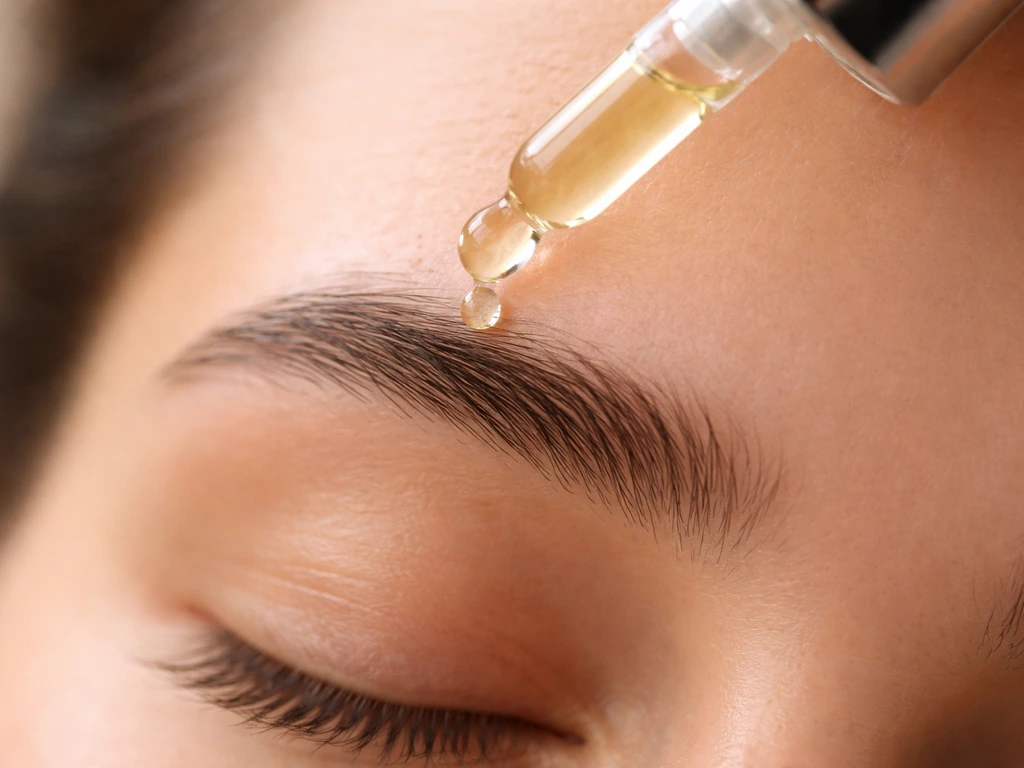
Hyaluronic acid will not directly stimulate new eyebrow hair growth. It has no proven ability to push follicles into an active growth phase or increase eyebrow density on its own. What it does do, genuinely and reliably, is hydrate the skin under your brows, condition existing hair shafts so they look fuller and break less easily, and create a healthier skin environment that supports whatever growth your follicles are already capable of. Think of it as supportive care, not a growth treatment.
Does Hyaluronic Acid Help Eyebrows Grow? Science & How to Use

James Whitmore
27 Jul 2026
Quick verdict: does hyaluronic acid help eyebrows grow?
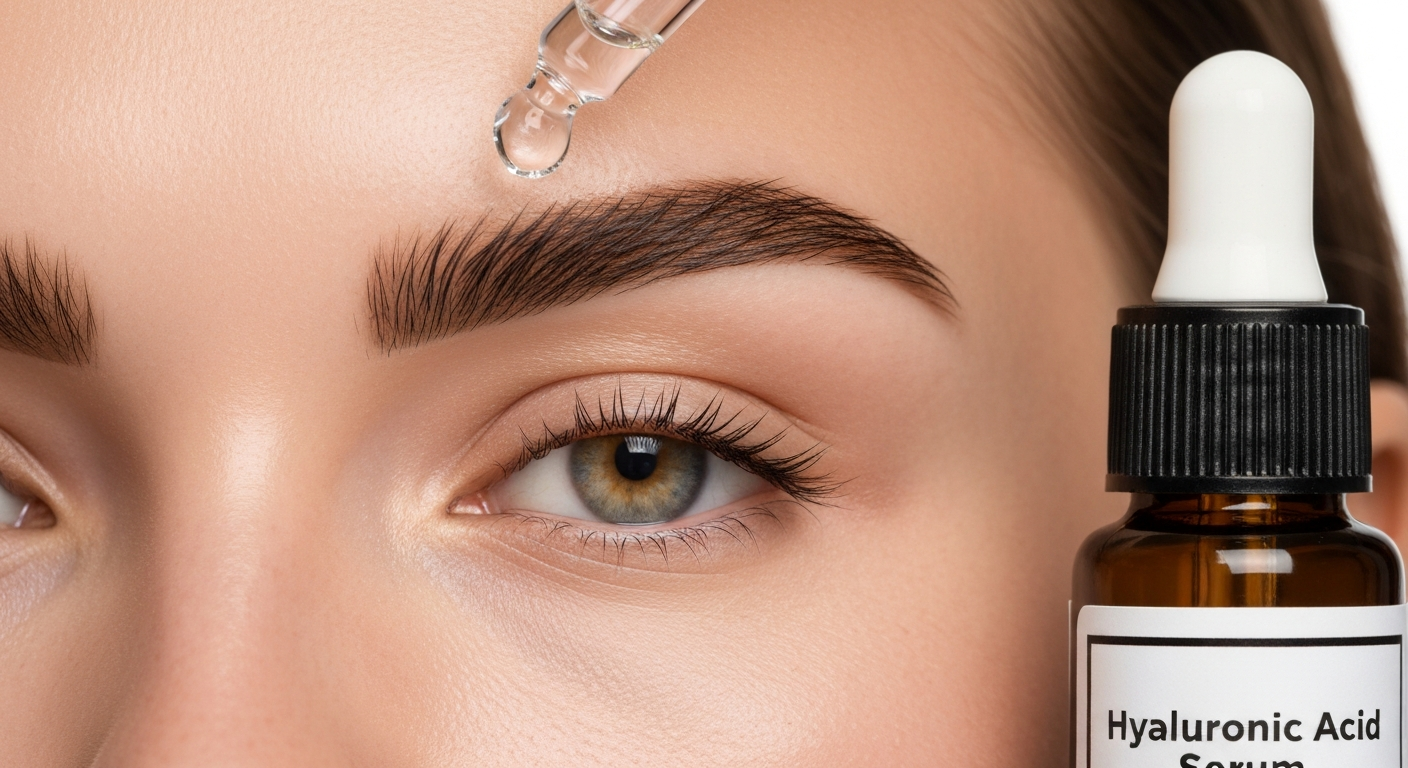
The honest answer is: indirectly, at best. There are no published randomized controlled trials testing topical hyaluronic acid specifically on eyebrow growth in humans. What the research does show is that HA can influence follicle biology in cell culture and animal models, and that injectable forms have been studied for scalp hair improvement. But an over-the-counter HA serum dabbed on your brow bone is a long way from those conditions. If you are hoping HA will be the ingredient that finally fills in your sparse brows, you will probably be disappointed. If you are using it to keep the skin in good condition while you also use a growth-supporting ingredient like rosemary oil or minoxidil, that is a sensible and defensible strategy.
How eyebrow hair actually grows
Eyebrow hairs cycle through three phases: anagen (active growth), catagen (transition), and telogen (rest and shedding). Eyebrow anagen phases are notably short compared to scalp hair, typically lasting only 4 to 6 weeks, which is why eyebrow hairs stay short and why recovery after over-plucking or waxing is measured in months, not weeks. A full eyebrow regeneration cycle can take roughly 4 to 6 months, and in people with follicle damage from years of aggressive hair removal, some hairs simply may not grow back at all.
The dermal papilla sits at the base of each follicle and is the command centre for hair growth. It receives signals from blood supply, hormones, growth factors, and the surrounding extracellular matrix. Factors that suppress growth include nutritional deficiencies (particularly iron, biotin, and protein), thyroid dysfunction, hormonal changes, chronic stress, and physical trauma to the follicle. Age matters too: follicles gradually miniaturize over time, producing finer, shorter hairs. Understanding this biology matters because it tells you what interventions can realistically work. Anything that genuinely promotes eyebrow growth needs to act on the follicle itself, either by extending the anagen phase, improving dermal papilla signalling, or protecting follicles from damage.
What hyaluronic acid actually does to skin
Hyaluronic acid (HA) is a glycosaminoglycan naturally present in skin, connective tissue, and the extracellular matrix surrounding hair follicles. Its standout property is water retention: a single gram of HA can hold up to 1,000 times its weight in water. Topically applied HA works primarily as a humectant, drawing moisture from the environment and deeper skin layers to the surface, which plumps the skin and temporarily reduces the appearance of fine lines. Sodium hyaluronate, the salt form commonly used in skincare, has a smaller molecular size and penetrates the upper layers of the epidermis more easily than high-molecular-weight HA, which mostly sits on the surface.
Here is where a critical distinction matters: hydrating the skin is not the same as stimulating hair follicles. If you're wondering does moisturizer help eyebrows grow, the short answer is similar: moisturizers hydrate the skin but don't directly stimulate follicle growth. The skin under and around your brows benefits from hydration just like any other facial skin, and dry, flaky, or irritated brow skin is not an ideal environment for healthy hair. But the mechanism by which HA improves skin hydration is entirely separate from the signalling pathways that control whether a follicle is in anagen or telogen. HA does not switch on hair growth the way minoxidil or bimatoprost can.
What the research actually shows
There is some genuinely interesting preclinical science here, and it is worth being precise about what it means and what it does not.
- A controlled in-vitro study found that a non-crosslinked HA preparation increased proliferation and metabolic activity of human follicle dermal papilla cells (HFDPCs). This is cell-culture evidence, not human clinical evidence, but it does suggest HA can interact with the cells that drive hair growth.
- Preclinical mouse studies showed medium-molecular-weight HA promoted hair follicle regeneration through CD44/AKT signalling and Wnt/beta-catenin activation, which are real growth-related pathways. But mice are not humans, and topical application to skin is not the same as the controlled conditions in these experiments.
- Ex-vivo human hair follicle experiments in glycosaminoglycan (GAG) hydrogels, which include hyaluronan, demonstrated sustained follicle growth in organ culture models. This tells us the extracellular matrix environment, including HA, matters to follicle function.
- Injectable HA (mesotherapy) has been studied clinically for scalp androgenetic alopecia, with small studies reporting increases in terminal hair count and shaft diameter. Injected HA delivers the molecule directly to the dermal papilla environment in a way topical products cannot replicate.
- No published randomized controlled trials through July 2026 have tested a topical leave-on HA product specifically for eyebrow growth in humans.
The pattern is consistent: the more directly HA is delivered to follicle tissue (injectable versus topical), and the more controlled the model (in vitro versus real human skin), the more promising the results look. Hyaluronic‑acid‑based microneedle and hydrogel delivery systems are being actively researched as transdermal/intradermal carriers for hair‑regenerative payloads (e.g., growth factors, drugs) Hyaluronic‑acid‑based microneedle and hydrogel delivery systems are being actively researched as transdermal/intradermal carriers for hair‑regenerative payloads (e.g., growth factors, drugs).. An over-the-counter serum applied to the brow surface is at the furthest end of that spectrum from the promising data. It would be misleading to take the mouse and cell-culture studies and conclude that applying a HA serum will grow your eyebrows back.
What you will likely notice if you use HA on your brows
Even without direct growth stimulation, applying HA to the brow area does offer real, noticeable benefits. I have used a low-molecular-weight HA serum under and around my brow area for several months, and the improvements in skin texture and hair appearance are genuine, even if they are not growth.
- Existing brow hairs look thicker and more defined because HA coats the hair shaft, smoothing the cuticle and adding a subtle sheen.
- Brow hairs break less easily when the surrounding skin and the hair shaft itself are well-hydrated, which means you retain more of what you have.
- The skin under your brows stays softer and less flaky, which matters if you have dry or sensitive skin that tends to get irritated by other brow products.
- A well-hydrated skin barrier may be more receptive to growth-supporting ingredients you layer on top, since dry or compromised skin can limit ingredient absorption.
- The overall appearance of the brow area looks healthier, which can make sparse brows look slightly less sparse even without new hairs.
These are cosmetic and conditioning benefits, and they are worth having. But they are not the same as growing new hairs, and you should calibrate your expectations accordingly. If your goal is genuine density improvement, HA alone will not get you there.
How to apply hyaluronic acid to your eyebrows
Application is straightforward, but a few specifics make a difference in how well HA actually performs on skin.
- Cleanse your face first. Apply HA to clean skin free of makeup, SPF, or heavy residue that could block absorption.
- Apply to damp skin. This is important: HA needs moisture to work as a humectant. Pat your face with water or a hydrating toner first, then apply the HA serum while the skin is still slightly damp. On dry skin in a dry environment, HA can actually pull moisture from deeper skin layers, which is the opposite of what you want.
- Use a small amount. A pea-sized drop of serum is more than enough for the whole brow area. Use a clean fingertip or a clean cotton swab to apply it along and just under the brow line.
- Pat gently, do not rub. The skin at the brow and periocular area is thin. Press the product in with light tapping motions rather than dragging it across the skin.
- Follow with a moisturizer. Applying a moisturizer or facial oil on top seals in the HA and prevents evaporation. This step is not optional if you want the hydration to last.
- Apply once or twice daily. Morning and evening use is fine. In the morning, allow it to absorb before applying any brow makeup or SPF.
In terms of product concentration, the Cosmetic Ingredient Review safety assessment cites typical cosmetic use at or below 2% HA. Most well-formulated serums sit in a range that is effective without causing any issues. You do not need to chase the highest concentration available; a product with a blend of molecular weights (both high and low) tends to perform better on skin texture and feel than single-weight formulations.
Safety, patch testing, and eye area precautions
Hyaluronic acid has a strong safety record. The CIR Expert Panel considers HA and its salts (sodium hyaluronate, potassium hyaluronate) safe for cosmetic topical use. Allergic reactions directly caused by HA are rare, and when periocular contact dermatitis is reported, it is typically traced to a preservative or another excipient in the formula rather than to HA itself. That said, the brow and eye area deserves more care than, say, your forearm. TFOS Lifestyle: Impact of cosmetics on the ocular surface (review) notes that periocular cosmetics can migrate into the eye and cause ocular surface or eyelid reactions, and recommends periocular safety/tolerance testing including patch and repeated-open application tests.
- Patch test first. Apply a small amount to the inner wrist or behind the ear for 24 to 48 hours before using it near your eyes. This is a quick step that catches reactions to excipients you might not expect.
- Check the full ingredient list. Fragrances, certain preservatives (like certain parabens or methylisothiazolinone), and stabilising agents are the more likely sensitizers in periocular reactions. Opt for fragrance-free formulas for the brow area.
- Keep product away from the eye itself. HA is used in ophthalmic eye drops and is safe in the eye, but the full cosmetic serum formula (with its preservatives and other ingredients) is not formulated for direct ocular contact. Apply to the brow bone and brow hairs, not to the lash line or lid margin.
- Avoid contamination. Always use clean fingers or a fresh cotton swab. Dipping fingers into a serum bottle repeatedly introduces bacteria, which matters especially near the eye area.
- Note that injected HA in the periocular region carries completely different risks (including vascular occlusion and localized temporary hair loss in rare cases from compromised blood supply), but these risks do not apply to topical cosmetic products.
How to combine HA with other brow growth ingredients
Where HA genuinely earns its place in a brow care routine is as a supporting player alongside ingredients that have stronger evidence for growth. Layering order and timing matter more than people realize, and getting it right prevents irritation and improves how well each ingredient actually works.
Layering order and timing
The general rule is thinnest to thickest, water-based before oil-based. Apply your HA serum first on damp skin, wait 60 to 90 seconds for it to absorb, then follow with a growth-supporting oil (castor oil, rosemary oil, or rosehip oil) on top. The oil layer seals in the moisture HA attracted and creates the occlusive barrier that makes hydration last. Do not apply a thick oil first and then try to put HA on top of it; the HA will not absorb properly through an oil layer.
Using HA with minoxidil
Minoxidil has the strongest human clinical evidence for eyebrow use: a randomized, double-blind, placebo-controlled split-face trial of 2% minoxidil lotion showed genuine benefit for eyebrow density. If you are using minoxidil on your brows, apply it first on dry, clean skin and let it fully dry (at least 4 hours, or use it at night and apply HA in the morning). Applying HA to damp skin before minoxidil, or mixing the two together, can alter minoxidil's absorption and potentially increase irritation. Keep them in separate application windows.
Using HA with active ingredients like retinol or acids
If you use any exfoliating acids (AHAs, BHAs) or retinol on your face, avoid applying them directly to the brow area as a growth strategy; they do not promote hair growth and can cause irritation on already-thin periocular skin. If they are part of your wider skincare routine and you are also applying HA to brows, apply the HA after the actives have fully absorbed and keep the actives away from the brow line itself.
How HA compares to other common brow remedies
People often reach for HA alongside or instead of several other popular options. Here is how they stack up honestly.
| Ingredient/Product | Growth evidence | Realistic benefit for brows | Safety notes |
|---|---|---|---|
| Hyaluronic acid | No human RCTs for eyebrow growth; in-vitro and animal data only | Hydration, hair conditioning, better skin environment | Well tolerated; patch test for excipients near eyes |
| Rosemary oil | Human RCTs for scalp AGA; no eyebrow-specific RCTs | May support follicle signalling; evidence strongest on scalp | Can cause irritation if undiluted; dilute in carrier oil |
| Castor oil | Largely anecdotal; no RCTs | Coats and conditions hair shafts; makes brows appear thicker | Generally safe; thick texture can clog pores for some |
| Lavender oil | Positive mouse studies; no human eyebrow RCTs | Potential mild growth support; preclinical evidence promising | Dilute before use; sensitization risk in some people |
| Rosehip oil | Mouse model data; no human eyebrow RCTs | Skin conditioning; fatty acids support skin barrier | Well tolerated; lightweight carrier suitable for brow area |
| Basic moisturizer | No growth evidence | Keeps brow skin healthy; prevents dryness-related breakage | Check for fragrance and comedogenic ingredients |
| Minoxidil 2% | Randomized controlled trial for eyebrow density | Meaningful density improvement with consistent use | Possible local irritation; requires ongoing use |
| Bimatoprost 0.03% | RCT evidence for lashes; prospective studies for brows | Strongest clinical evidence for periocular hair growth | Prescription; possible pigmentation changes, eye pressure |
| Toothpaste | No evidence; potentially harmful | None for hair growth | Can cause chemical irritation or burns; avoid entirely |
The comparison makes the situation clear. Hyaluronic acid sits in the middle of the table: safe, genuinely useful for skin and hair conditioning, but not a growth driver. Rosemary oil, covered more fully in its own dedicated topic, has better mechanistic evidence even if it lacks eyebrow-specific RCTs. Lavender oil and rosehip oil are similarly interesting but similarly unproven for eyebrows specifically. The toothpaste question comes up more often than it should; there is no mechanism by which toothpaste could promote hair growth, and it carries a real risk of skin irritation and burns, so it should simply be avoided. If you’re wondering "does toothpaste help your eyebrows grow", the short answer is no: toothpaste won’t promote hair growth and can cause irritation or chemical burns on the delicate brow skin. If you are looking for the strongest possible evidence-based intervention for sparse brows, bimatoprost and topical minoxidil are where the human clinical data actually lives, and both are worth discussing with a dermatologist.
Better-supported growth options and when to see a doctor
If your brows are sparse because of a medical cause (thyroid dysfunction, alopecia areata, nutritional deficiency, or medication side effects) no topical ingredient will address the underlying problem. Before investing heavily in serums and oils, it is worth getting bloodwork done if you have noticed a significant change in brow density that is not explained by hair removal history. A dermatologist or trichologist can identify whether your follicles are dormant and potentially recoverable versus genuinely miniaturized or scarred.
For people with otherwise healthy follicles who are recovering from over-plucking, waxing, or shaving, realistic expectations are important. Full regrowth typically takes 4 to 6 months, and in some cases up to a year. During that period, the most effective topical approach is to use minoxidil if you want clinical-grade support, keep the area hydrated and healthy (which is where HA earns its role), and avoid anything that damages the follicle further. Consistent gentle care over months, not dramatic treatments over days, is what actually moves the needle.
My own approach, after testing a lot of options over more than a year: I use a HA serum on the brow area every morning as part of my regular skincare, followed by a light rosehip oil at night. It keeps the skin in good shape and makes existing hairs look their best. For anyone wanting more active growth support, I would add a well-diluted rosemary oil blend to the evening routine and reassess after 3 months. If there is no meaningful improvement by month 4, that is when I would have the conversation with a dermatologist about minoxidil or bimatoprost. HA stays in the routine either way because the skin benefits are real, even if the growth benefits are not.
FAQ
Does hyaluronic acid help eyebrows grow?
Short answer: No strong clinical evidence that topical hyaluronic acid (HA) stimulates new eyebrow hair growth. HA is a humectant and conditioning agent that hydrates skin and hair shafts, which can improve appearance and reduce breakage, but randomized controlled trials showing topical HA induces follicular anagen or increases eyebrow counts in humans are lacking.
How could hyaluronic acid theoretically affect hair follicles?
Mechanistically, HA interacts with the extracellular matrix and cell receptors (e.g., CD44) and has been shown in cell culture and animal studies to influence dermal papilla cell activity and regenerative pathways (Wnt/β‑catenin, AKT). These preclinical findings provide biological plausibility but do not replace human clinical proof for eyebrow regrowth.
Is there any clinical research supporting HA for eyebrow regrowth?
No published randomized controlled trials or eyebrow‑specific topical clinical trials exist as of mid‑2026. Some clinical reports study injectable HA for scalp hair and show improvements, and microneedle/HA delivery systems are under investigation, but these do not demonstrate that over‑the‑counter topical HA serums reliably regrow eyebrow hairs.
Can topical HA improve how sparse eyebrows look even if it doesn’t grow new hairs?
Yes. Topical HA hydrates the skin and coats hair shafts, which can reduce dryness and hair brittleness, make hairs appear smoother and shinier, and minimize breakage—so brows may look fuller or healthier even without new follicle activation.
How should I use hyaluronic acid safely around my eyebrows and eyes?
Use a product formulated for periocular or facial use, patch‑test first on inner forearm or behind the ear, and apply sparingly to the brow area avoiding direct contact with the eye surface. Choose preservative‑free or ophthalmic‑safe formulations if using very close to lashes/eye margin. If you develop redness, itching, or eye irritation, stop and consult a clinician.
What concentration or molecular weight of HA should I use for brows?
There’s no proven concentration for stimulating growth. For skin/hair conditioning, manufacturers use variable concentrations (often ≤2%) and blends of low and high molecular‑weight HA for hydration and film‑forming. Select a reputable brand, and prioritize plain sodium hyaluronate/HA without irritating additives for the eyebrow area.
Next Article
Does Vitamin E Oil Help Eyebrows Grow? Safe Routine & Timeline
Find out if vitamin E oil helps eyebrow growth, plus a safe routine, timelines, and what works better.