Moisturizer alone won't stimulate eyebrow hair growth in any clinically meaningful way. It can improve the condition of the skin around your brows, reduce flaking, and create a healthier surface environment, but there is no high-quality clinical trial showing that applying a standard face moisturizer to your brow area causes dormant follicles to enter anagen (the active growth phase) or increases eyebrow hair count. If your brows are sparse due to over-plucking, shaving, or slow natural regrowth, the ingredients that actually have research behind them are things like minoxidil, bimatoprost, and to a more limited degree certain carrier oils. Moisturizer supports the process; it doesn't drive it.
Does Moisturizer Help Eyebrows Grow? Science Tips & Timeline

James Whitmore
29 Jul 2026
Quick takeaways if your brows are sparse, over-plucked, shaved, or recovering
- Moisturizing the brow area keeps skin healthy and may reduce inflammation that could impede follicle function, but it won't regrow significantly thinned brows on its own.
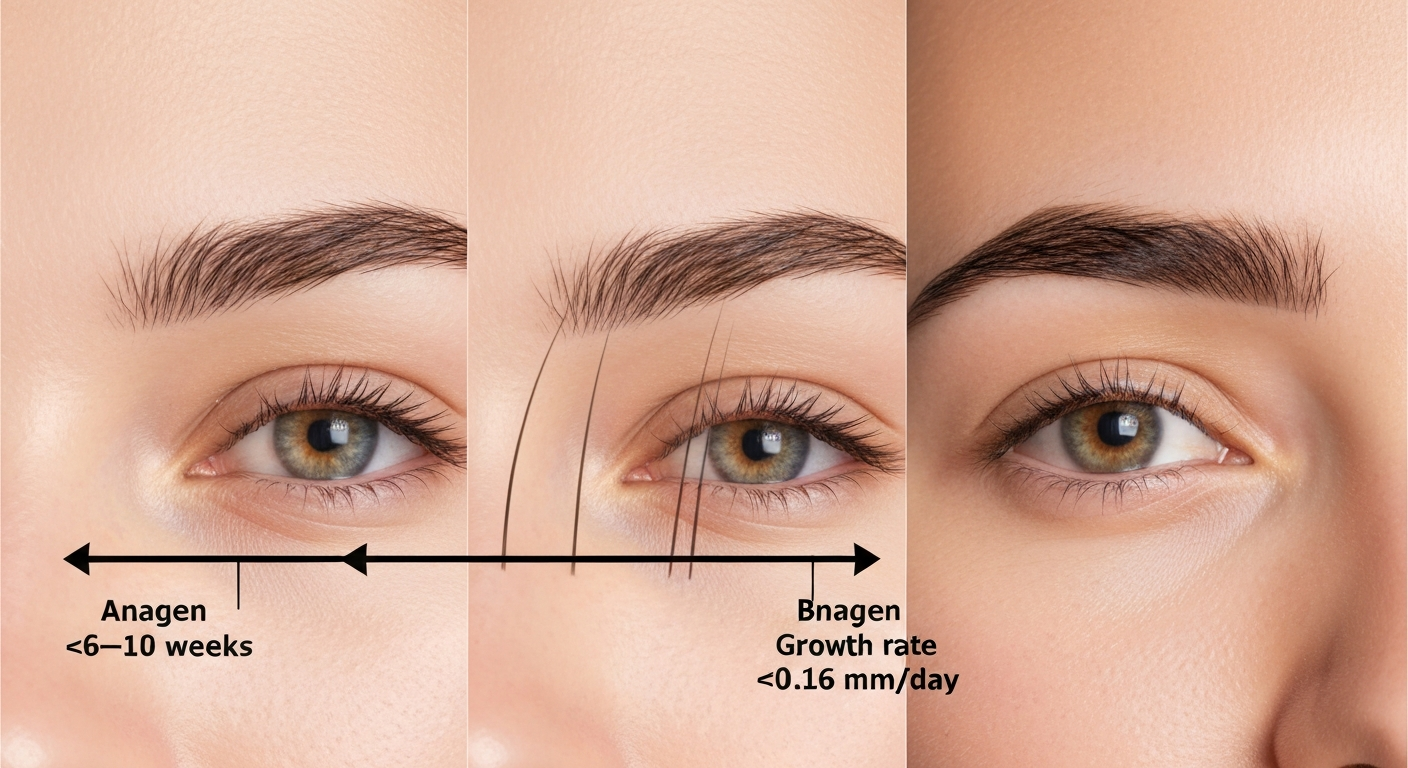
- Eyebrow follicles have a short anagen phase of roughly 6–10 weeks and a linear growth rate of about 0.16 mm/day, so visible regrowth takes weeks to a few months — not days.
- Over-plucked or shaved brows can recover, but repeated trauma over years can permanently damage follicles, capping how much density returns.
- If you want a product-driven boost, low-dose topical minoxidil 2% has the strongest clinical evidence for eyebrow regrowth; castor oil and certain plant oils have plausible mechanisms but much weaker human trial data.
- Toothpaste, egg whites, and similar home remedies have no credible evidence of promoting eyebrow growth and can cause irritation or contact dermatitis near the delicate periocular skin.
- Medical causes of eyebrow thinning (alopecia areata, frontal fibrosing alopecia, thyroid dysfunction) won't respond to moisturizer or oils — see a dermatologist.
How eyebrow hair actually grows
Every hair follicle on your body cycles through three main phases: anagen (active growth), catagen (transition), and telogen (rest/shedding). What makes eyebrow follicles so different from scalp follicles is how short their anagen phase is. Scalp hair can stay in anagen for 3–7 years, which is why head hair gets long. Eyebrow follicles typically spend only about 6–10 weeks in anagen before cycling into rest. That short window, combined with a growth rate of roughly 0.16 mm per day (about half the scalp's 0.34–0.36 mm/day), is why eyebrows have a natural length limit and why regrowth after damage is measured in months rather than weeks.
Several factors influence how well your follicles cycle: genetics set your baseline density and anagen duration; hormones (particularly androgens and thyroid hormones) regulate the cycle; local blood supply delivers the nutrients follicles need; and the extracellular matrix surrounding each follicle, including molecules like hyaluronic acid, plays a role in follicle cell behavior. Age gradually shortens anagen phases and reduces follicle density, which is why brow thinning is common in your 40s and beyond. Knowing this biology matters because it tells you which interventions can actually move the needle and which ones are wishful thinking.
Common reasons eyebrows thin or stop growing
Over-plucking is the most common culprit for people reading this. Repeated mechanical removal of hairs stresses the follicle, and while occasional plucking is fine, years of aggressive plucking can cause follicular miniaturization or, in severe cases, permanent scarring around the follicle opening. Shaving, by contrast, doesn't damage the follicle below the skin surface, so brows typically regrow to their previous state after shaving. Traction from tight headbands, brow lamination done too frequently, or threading performed too aggressively shares characteristics with both: it can range from temporary to permanently damaging depending on frequency and force.
Medical causes deserve more attention than they typically get. Hypothyroidism is a classic and underdiagnosed reason for thinning brows, particularly loss of the outer third. Alopecia areata can target eyebrow follicles specifically. Frontal fibrosing alopecia, a progressive scarring form of hair loss more common in post-menopausal women, often starts with eyebrow thinning before affecting the hairline. Nutritional deficiencies (iron, biotin, zinc, protein) can also impair the hair cycle. None of these will respond to moisturizer or oils, and diagnosing them early matters because scarring alopecias cause permanent loss if untreated. If your brows have been thinning gradually without an obvious cause, a dermatologist visit is worth it.
Realistic expectations for eyebrow regrowth
I want to be direct about timelines because the internet is full of "7-day brow transformation" claims that set people up for disappointment. At a growth rate of 0.16 mm/day, even a follicle that enters anagen immediately after you start treatment will take roughly 60–90 days before the hair is even a few millimeters long and visible above the skin. A realistic timeline for noticeable improvement with an effective treatment (like minoxidil) is 3–4 months minimum, with full assessment at 4–6 months. Moisturizer or carrier oils used alone might take even longer to show any subtle benefit, if they show one at all.
What's realistically possible also depends on your starting point. If your follicles are intact and the thinning is from a correctable cause (temporary over-plucking, shaving, a resolved nutritional deficiency), there's good potential for meaningful regrowth. If you've been aggressively plucking for 20+ years or have a scarring condition, some follicles may simply be gone, and no topical product will resurrect them. Being honest with yourself about which situation you're in saves time, money, and frustration.
Can moisturizers help eyebrow growth? What they actually do (and don't do)
The most accurate framing is that moisturizers create a supportive environment rather than stimulating follicles directly. A moisturizer with humectants like hyaluronic acid draws water into the skin, strengthening the skin barrier around brow follicles. Good skin hydration can reduce local inflammation, which matters because chronic skin inflammation is known to disrupt the hair cycle and accelerate telogen. Emollients soften the keratin of existing brow hairs, making them less brittle and prone to breakage. So while a moisturizer won't cause a dormant follicle to start growing, dry, irritated, or inflamed periocular skin probably isn't helping your brows either.
Where moisturizers get interesting is in their active ingredients. Hyaluronic acid, a common moisturizer ingredient, has shown some influence on hair follicle cell proliferation and extracellular matrix interactions in preclinical models, specifically through hyaluronan-related proteins like HAPLN1. But the jump from in-vitro and animal data to "apply HA moisturizer and grow thicker brows" is a large one, and that clinical evidence simply doesn't exist yet. Similarly, moisturizer-type products containing plant oils (rosehip, lavender, jojoba) contribute beneficial fatty acids and antioxidants to the skin environment, but their direct anagen-stimulating effects in human eyebrow follicles are not well established.
The bottom line: use moisturizer as a supporting player, not the star. If you're committed to a brow-growth routine, a gentle, non-comedogenic moisturizer applied to the brow area will keep the skin in good shape, reduce irritation from other treatments, and help existing hairs stay healthier. Just don't expect it to be the thing that changes your brow density.
What the research actually shows: evidence quality, ingredient by ingredient
Minoxidil
This is where the evidence is strongest. A randomized, double-blind, split-face trial using 2% topical minoxidil lotion applied twice daily for 16 weeks found statistically significant improvement in eyebrow hair count and photographic scores versus a vehicle control. A 2023 randomized comparative trial (n=60) directly compared topical minoxidil 2% against bimatoprost 0.01% and 0.03% for eyebrow hypotrichosis and reported clinically measurable regrowth with active agents and acceptable safety. A systematic review and meta-analysis of topical agents for facial hair enhancement pooled RCTs and smaller trials, concluding that low-dose topical minoxidil and some prostaglandin analogs can be effective for facial and eyebrow hair augmentation with generally limited local side effects. That's a meaningful body of evidence, especially compared to everything else on this list.
One important practical note: minoxidil is not FDA-labeled for eyebrow use. It's off-label, and applying a liquid solution near the eyes carries real runoff risk. FDA labeling for topical minoxidil explicitly instructs users to rinse eyes if accidental contact occurs and lists local irritation and unwanted facial hair among adverse effects. There are even rare case reports of retinal artery occlusion temporally associated with topical minoxidil near the eyes, though these are individual case reports and causation isn't established. Formulation researchers have been working on thermosensitive, low-runoff minoxidil gels specifically designed for the periocular area to address this concern. If you try minoxidil on your brows, use a small amount, apply with a cotton swab rather than a dropper, and keep it away from your eyes.
Bimatoprost and prostaglandin analogs
Bimatoprost (Latisse) has FDA approval for eyelash hypotrichosis and has shown benefit for eyebrows in smaller trials and case series, including the 2023 comparative trial mentioned above. Prostaglandin analogs extend anagen and increase follicle size. The evidence for eyelash effects is robust; eyebrow evidence is smaller in scale but positive. Adverse effects reported with periocular prostaglandins include conjunctival redness, eyelid pigmentation changes, and local irritation. Eyebrow use is off-label and requires a prescription.
Castor oil
Castor oil is probably the most talked-about brow remedy outside of medical treatments, and I've tried it myself. The active component, ricinoleic acid, has demonstrated anti-inflammatory properties and creates a fatty-acid-rich environment that may support follicle health, but there are no large, well-controlled randomized clinical trials showing castor oil reliably increases eyebrow hair count in humans. The evidence is preclinical and anecdotal. It's also worth noting that while castor oil generally has a favorable safety profile, it can cause contact reactions in some people, so do a small patch test before applying it near your eyes. My honest assessment: it probably won't hurt, may help a small amount via skin conditioning, but don't make it your primary strategy.
Hyaluronic acid
The preclinical data for hyaluronic acid is genuinely interesting. Studies on HAPLN1 (hyaluronan and proteoglycan link protein 1) suggest HA-related molecules can influence hair follicle cell proliferation and extracellular matrix behavior in vitro and in animal models. But no high-quality clinical trial has shown that applying a topical HA moisturizer or serum to skin reliably stimulates human eyebrow follicle anagen initiation. HA is a proven humectant and skin-hydration ingredient, and those benefits are real. The growth-stimulating angle is mechanistically plausible but clinically unproven. For more detail on this ingredient specifically, the hyaluronic acid and eyebrow growth topic is worth exploring separately.
Lavender oil
Topical lavender oil increased hair follicle number and size in a C57BL/6 mouse model over 4 weeks, which is legitimately interesting preclinical data. However, mouse hair follicle biology is a poor proxy for human eyebrow follicle biology, and there's no human clinical trial showing lavender oil grows or thickens eyebrows. For a focused review, see Does lavender oil help eyebrows grow (internal resource ID 837d299c-8485-4ecb-9078-e1834c8bc52b). It's a gentle, generally well-tolerated oil that may contribute to skin-barrier support, but calling it a brow-growth treatment based on current evidence is a stretch.
Rosehip oil
Rosehip oil is rich in linoleic acid, vitamin A precursors, and antioxidants, all of which are beneficial for skin health. These properties support the skin environment around follicles and may reduce oxidative stress that can impair hair cycling. However, there is no eyebrow-specific clinical trial data for rosehip oil. Its case for brow growth is entirely mechanistic at this point.
Toothpaste and other home remedies
Toothpaste has no credible mechanism for promoting eyebrow growth. It contains ingredients like fluoride, detergents, and abrasives designed for dental enamel, not periocular skin. Applying toothpaste near your eyes is a real irritation risk, and the skin around brows is thin and sensitive. The same skepticism applies to egg whites, onion juice applied to the brow area, and similar remedies. While small scalp trials have looked at onion juice for alopecia areata, applying it near the eyes carries a significant risk of contact dermatitis and ocular discomfort. Topical ‘home remedies’ such as onion juice have limited clinical trial evidence for eyebrow regrowth and can cause allergic contact dermatitis, irritation, or ocular discomfort when used periocularly (see Topical Alternatives for Hair Loss: Beyond the Conventional) Topical Alternatives for Hair Loss: Beyond the Conventional (review noting onion trials and dermatitis risks). These aren't just ineffective, some are actively risky in this location.
Ingredient comparison: eyebrow growth potential at a glance
| Ingredient | Proposed Effect on Brows | Evidence Strength | Safety Note |
|---|---|---|---|
| Minoxidil 2% (topical) | Extends anagen, increases hair count and density | Strong: multiple RCTs and meta-analysis | Off-label for brows; ocular runoff risk; use with care near eyes |
| Bimatoprost (prostaglandin) | Extends anagen, increases follicle size | Moderate: FDA-approved for lashes; smaller trials for brows | Off-label for brows; pigmentation changes, eye redness possible |
| Castor oil (ricinoleic acid) | Anti-inflammatory; skin/follicle conditioning | Weak: preclinical and anecdotal only; no brow-specific RCT | Generally tolerated; contact reactions possible; patch test recommended |
| Hyaluronic acid | Skin hydration; possible follicle matrix support | Weak: preclinical only; no clinical brow-growth trial | Very safe; minimal irritation risk; no known ocular concerns at cosmetic doses |
| Lavender oil | Possible follicle stimulation (preclinical) | Very weak: mouse model only; no human brow trial | Generally gentle; dilute before use; avoid direct eye contact |
| Rosehip oil | Antioxidant/skin-barrier support | Very weak: no brow-specific clinical data | Well tolerated; patch test if sensitive skin |
A practical routine for supporting eyebrow regrowth
If you're starting from scratch after shaving or recovering from over-plucking, here's the approach I'd recommend based on the evidence. Think of it as a tiered strategy: first, stop the damage; second, optimize the environment; third, add an active treatment if needed.
- Stop plucking, waxing, or threading entirely for at least 3–4 months so follicles that aren't permanently damaged can complete a full cycle.
- Cleanse gently — avoid harsh soaps or exfoliants on the brow area, which can disrupt the skin barrier and cause micro-inflammation.
- Apply a light, non-comedogenic moisturizer (with or without hyaluronic acid) to the brow area daily to keep skin hydrated and reduce any dryness-related inflammation.
- If you want a dedicated oil, castor oil or a blend with rosehip or jojoba applied with a clean spoolie once daily at night is low-risk and gives you something active to do while waiting.
- Assess at 8 weeks: if you're seeing some new growth, continue the same routine. If there's no visible change, consider consulting a dermatologist about off-label topical minoxidil 2% or bimatoprost.
- If using minoxidil, apply a small amount with a cotton swab to the brow area only, once or twice daily, keeping well away from the eyes. Expect to wait 3–4 months before evaluating results.
- Reassess at 4–6 months. If there's no improvement despite consistent treatment, a dermatologist can investigate medical causes and discuss prescription options.
When to see a dermatologist instead of self-treating
A few situations call for a professional evaluation rather than more product experimenting. If your brow loss is patchy and came on relatively quickly, alopecia areata is possible and responds to intralesional corticosteroid injections rather than topical oils. If you're losing the outer third of your brows progressively and have noticed any hairline recession, frontal fibrosing alopecia should be ruled out, because it's a scarring condition and early treatment matters. If you have fatigue, cold intolerance, or other systemic symptoms alongside brow thinning, get your thyroid checked. And if you've been consistent with a topical routine for 4–6 months and seen no response at all, that's a reasonable threshold to stop experimenting solo and get a diagnosis.
Simple moisturizers and carrier oils are fine to keep using as a supportive layer in any routine, but they should never be the reason you delay addressing a medical cause. The skin around your eyes and brows is delicate, and some conditions worsen with time. Getting the right diagnosis first makes everything else more effective.
FAQ
Short answer: does moisturizer help eyebrows grow?
No — plain moisturizers improve skin health and reduce dryness but there is no strong clinical evidence that moisturizers alone trigger eyebrow follicles to enter active growth (anagen) or increase eyebrow hair count. Moisturizers can create a healthier skin environment that may support existing follicles, but they are not a proven hair‑regrowth treatment.
How do eyebrow hairs grow and what are realistic expectations for regrowth?
Eyebrow follicles have a short anagen (growth) phase—typically about 6–10 weeks—so brows grow much more slowly and to a shorter terminal length than scalp hair. Typical linear growth is ≈0.16 mm/day. Because of these physiology limits, visible regrowth after damage (plucking, shaving, mild trauma) often takes weeks to a few months; full cosmetic density may not return if follicles were permanently destroyed (scarring). These timelines and limits are supported by dermatology reviews and hair‑cycle literature (see sources).
Can a moisturizer indirectly help eyebrow regrowth? If so, how?
Indirectly, yes — by improving skin hydration, reducing surface irritation or inflammation, and protecting the brow skin barrier, moisturizers can support follicle health and a favorable microenvironment for regrowth. They may reduce breakage of short hairs and make existing hairs appear healthier. However, moisturizers do not reliably change follicle cycling or meaningfully increase hair count by themselves—high‑quality clinical evidence for follicle activation from moisturizers is lacking.
What about specific ingredients people ask about: hyaluronic acid (HA)?
Hyaluronic acid is an excellent humectant that improves skin hydration and can benefit the epidermis. Preclinical studies suggest HA‑related molecules can affect follicle cells in vitro, but there are no robust clinical trials showing topical HA alone stimulates eyebrow anagen or reliably increases brow density. HA is safe and useful for skin hydration, but expect cosmetic skin benefits rather than true hair‑regrowth effects (limited/weak evidence).
Lavender oil: does it make brows grow?
Evidence is limited and mostly preclinical. Mouse studies showed lavender oil increased hair growth in that animal model, but human eyebrow data are lacking. Lavender oil can be irritating or allergenic for some people, especially near the eyes. Consider the weak, preclinical nature of the evidence and use caution to avoid ocular exposure.
Rosehip oil and other botanical oils — useful or not?
Rosehip oil contains fatty acids and antioxidants that can improve skin condition and reduce dryness; clinical evidence for directly increasing eyebrow hair count is minimal. Botanical oils may improve the appearance of existing hairs and skin but are not proven follicle‑activating agents. They are generally safe but can cause contact sensitivity in some users.
Next Article
Does Hyaluronic Acid Help Eyebrows Grow? Science & How to Use
HA hydrates brows but doesn't cause growth; safer, better options: castor oil, rosemary, or topical minoxidil.