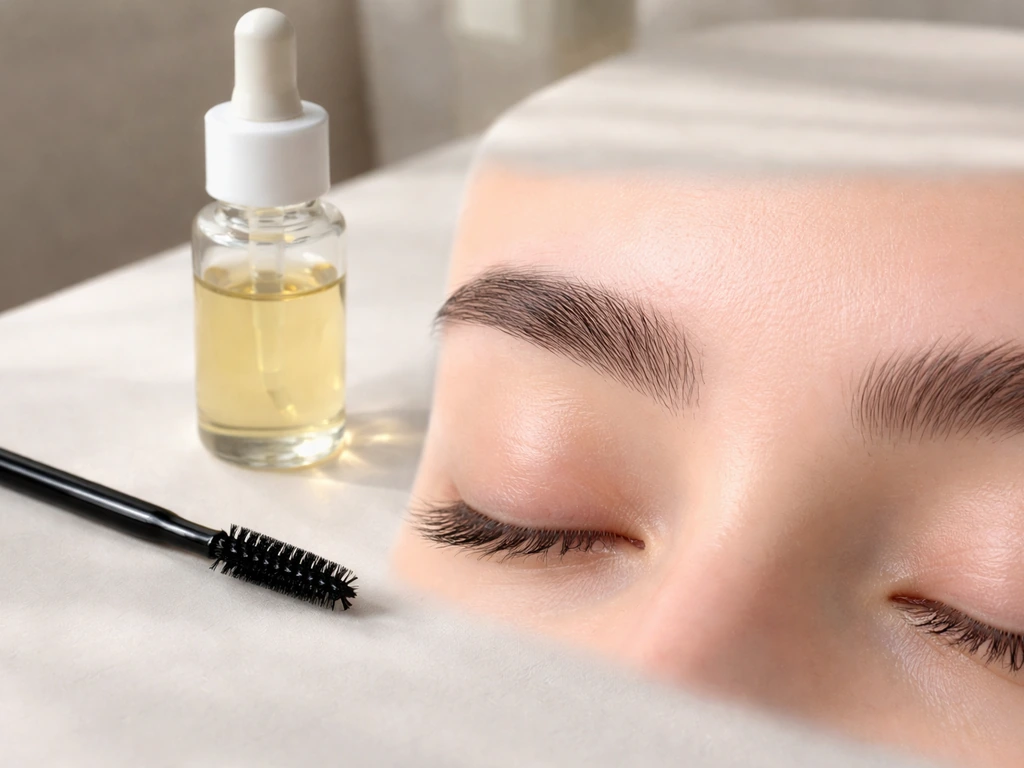
You cannot grow visible eyebrow hair in 1 day. Eyebrow follicles produce roughly 0.16 mm of new shaft length every 24 hours, which is less than the width of two human hairs side by side. That kind of change is invisible to the naked eye and makes absolutely no cosmetic difference. If you need fuller brows today, for an event, a photo, or just your own confidence, the honest answer is that makeup and cosmetic services are your only real same-day options. The good news is that those options have gotten genuinely impressive, and if you also start a growth-supporting routine now, you will see meaningful improvement over the coming weeks and months.
How to Grow Eyebrows in 1 Day: Fast Fixes & Realistic Plan
James Whitmore
13 Jul 2026
Can eyebrows really grow in 1 day? The evidence-based verdict
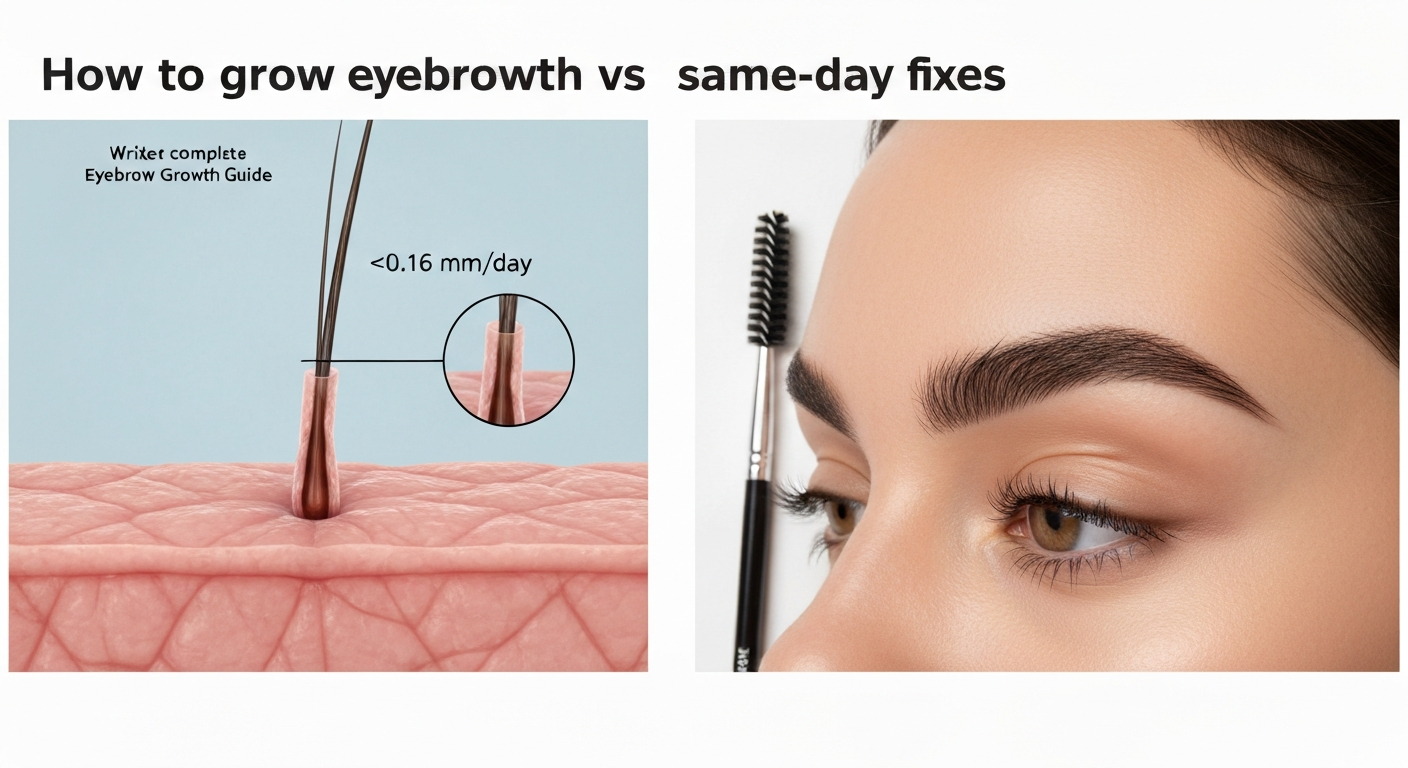
The short claim you'll see everywhere, 'grow your brows overnight with castor oil' or 'eyebrow growth in 24 hours', is biologically inaccurate. I understand why people search for it and want it to be true; I've been there myself. But the biology simply doesn't support it. Studies measuring hair growth rates place eyebrow hair at approximately 0.16 mm per day, compared to scalp hair at roughly 0.34 to 0.36 mm per day. Eyebrows grow more slowly because their anagen (active growth) phase is shorter, typically lasting just 2 to 3 months versus years for scalp hair. In one 24-hour period, even if everything is working perfectly, a follicle adds less than a fifth of a millimeter to an existing shaft, nothing you can see, and certainly nothing that fills a gap.
The misleading claims usually hinge on one of three things: before-and-after photos that compare different lighting or makeup, testimonials about products that also contain tinting pigments or fibers (so they literally color your skin), or misrepresenting what 'growth' means. Stimulating circulation with a scalp massage or applying an oil doesn't cause a follicle to skip biological stages and produce a visible hair by morning. Any product marketed to 'grow brows in a day' is either relying on a topical tint or making a claim that isn't supported by clinical evidence.
How eyebrow hair actually grows (and why overnight results aren't possible)
Eyebrow follicles cycle through three phases just like scalp follicles, but on a compressed timeline. The anagen phase, when the hair is actively growing, lasts roughly 2 to 3 months for brows. The catagen (transitional) phase lasts about 2 to 3 weeks, and the telogen (resting) phase, when the old hair sits in place before shedding, lasts another 2 to 3 months. The total cycle is around 4 to 6 months, and because anagen is so short, eyebrow hairs never grow very long before cycling out.
What this means practically: if you shaved or waxed your brows, the follicles that were in anagen will start producing a new shaft, but that shaft has to travel from the base of the follicle to the skin surface and then elongate into a visible hair. At 0.16 mm per day, reaching even 1 mm of visible length takes about a week. At the time of shaving, many follicles are also in catagen or telogen, meaning they won't even begin pushing out new hairs for several more weeks. This is why post-wax regrowth feels so patchy and frustrating, you're waiting for follicles to restart at different times.
There's also the question of follicle damage. Repeated plucking over years can temporarily (and occasionally permanently) disrupt follicle function. Plucking pulls the hair from the root, and while most follicles recover, repeated trauma can shorten anagen cycles and reduce hair diameter over time. If your brows have been sparse for years after overplucking, you may be dealing with follicles that need months of undisturbed recovery, not a 24-hour fix.
Realistic timeline: what to expect at each stage
One of the most useful things I can do here is give you honest checkpoints. Knowing what to realistically expect at each stage makes it much easier to pick the right strategy for your situation.
| Timeframe | What's biologically happening | Visible change you can expect |
|---|---|---|
| 1 hour | No follicle activity change; any new growth is nanoscale | None — any change is from makeup, tinting, or lighting |
| 1 day | Approximately 0.16 mm added to growing shafts | None visible to the naked eye |
| 2–3 days | ~0.3–0.5 mm of new length on active shafts; telogen follicles still dormant | Possibly a faint stub if brows were shaved to skin level; no density change |
| 1 week | ~1–1.1 mm of new length; some staggered follicles beginning anagen | Early stubble on shaved brows; no visible regrowth after plucking |
| 10 days | ~1.6 mm of growth; more follicles recruiting into anagen | Faint hairs visible on shaved brows; very early fuzz after waxing |
| 1 month | ~4–5 mm of new shaft length from active follicles; patchy but noticeable | Real, visible regrowth — still thin and patchy but measurable improvement |
| 3–4 months | Many follicles completing first new anagen cycle; topical treatments showing effect | Meaningful density gain, especially with treatment support |
| 6+ months | Full anagen cycle completed; maximum benefit from treatment if started early | Significant visible improvement in thickness and fullness |
The 10-day and 1-month markers are meaningful waypoints. If you're working through a recovery plan after shaving, waxing, or overplucking, checking progress at those points keeps expectations grounded. For deeper context on what to expect around those windows, the guides on growing eyebrows in 10 days and growing eyebrows in a month on this site go into more granular recovery detail. For a focused, step-by-step plan, see how to grow eyebrows in 10 days. For very short timelines, see our quick guide on how to grow eyebrows fast in 2 days for targeted same-week tips.
What to do today: same-day makeup fixes (step-by-step)
If you need presentable brows right now, makeup is your most accessible, safest, and most reversible option. The technique matters as much as the product. Here's how to use the main product types effectively.
Step-by-step application guide
- Prep: clean and moisturize the brow area. Oils or residue cause products to slide. Let moisturizer fully absorb before applying anything.
- Set your shape: use a clean spoolie to brush hairs upward and outward. This reveals your natural fullness and shows exactly where you need to fill.
- Outline lightly: use a pencil or fine-tip brow pen one to two shades lighter than your hair color. Sketch the lower edge and outer tail first — these define the shape. Use tiny hair-like strokes, not a solid line.
- Fill the body: layer a brow powder or pomade over the pencil outline using an angled brush. Powder gives a softer, more natural finish; pomade gives more coverage for very sparse areas.
- Blend and diffuse: use a clean spoolie to brush through the product immediately after applying. This removes harsh lines and integrates the pigment with real hairs.
- Highlight the arch: a small amount of concealer or a light highlighter pencil just below the arch sharpens the shape and makes brows look more defined without adding more pigment.
- Set with a tinted or clear brow gel: this locks everything in place and adds a finishing layer of color. For sparse brows, a fiber-infused tinted gel adds extra visual density.
- Check in natural light: artificial bathroom lighting hides mistakes. Step to a window to make sure both sides are balanced and nothing looks drawn-on.
Comparing the main makeup product types
| Product type | Best for | Finish | Longevity (daily wear) | Skill level needed |
|---|---|---|---|---|
| Brow pencil / micro-pen | Hair-stroke mimicry, natural look | Defined, realistic | 6–8 hours with setting spray | Moderate |
| Brow powder / shadow | Soft fill, everyday wear, beginners | Natural, diffused | 6–8 hours | Low |
| Pomade / wax | Sparse or overplucked brows needing coverage | Bold, polished | 8–12 hours; smudge-resistant | Moderate to high |
| Tinted brow gel | Setting shape, adding color layer, quick touch-ups | Natural to defined | 4–6 hours | Low |
| Concealer (brow carving) | Sharpening edges, not filling | Crisp outline | Varies by formula | Low to moderate |
| Fiber-infused brow products | Very sparse brows needing visible 'hair' texture | Textured, bold | 6–8 hours; avoid humidity | Low |
One practical note: color-matching matters enormously. Most people choose a shade that's too dark. If you're a brunette, go ash brown rather than dark brown. If you're fair-haired or blonde, taupe reads far more naturally than blonde pencils, which can look yellow. When in doubt, go lighter, you can always layer. For another relevant comparison, see how to grow eyebrows in a month.
Quick cosmetic services for immediate visible results
Beyond at-home makeup, a few in-salon or professional services can create a noticeably fuller or more defined brow appearance the same day. Each one has real tradeoffs worth knowing before you book.
Eyebrow tinting
Professional brow tinting uses oxidative dye (similar to hair color) applied to the brow area for 10 to 15 minutes. It darkens existing hairs and stains the skin beneath them, creating the illusion of denser brows immediately after the appointment. Results typically last 2 to 4 weeks on the hair and 1 to 2 weeks on skin. The main risk is allergic contact dermatitis: many tinting formulas contain para-phenylenediamine (PPD), a known sensitizer. The TFOS Lifestyle review 'Impact of cosmetics on the ocular surface' discusses ocular risks from dyes and notes that henna and PPD-containing 'black henna' products are documented sensitizers TFOS Lifestyle: Impact of cosmetics on the ocular surface (review; discusses dyes, henna, PPD risks). Always request a patch test 24 to 48 hours before any tinting service. Periocular skin is thin and sensitive, a reaction here can be severe and requires prompt medical attention. Cost typically ranges from $15 to $40 at a brow bar.
Henna brows
Henna brows use plant-based dye and are often marketed as a natural, safer alternative to chemical tinting. Pure henna carries a lower allergy risk than oxidative dyes, but 'black henna' products frequently contain added PPD and have a well-documented history of causing severe sensitization reactions. If you go the henna route, ask specifically what's in the product and request a patch test. Genuine henna stains the skin longer than professional tints, sometimes 1 to 2 weeks, and tends to create a softer, warmer tone. Results on the hair itself last a similar 2 to 4 weeks. Cost is similar to standard tinting.
Tinted brow gels (retail and salon)
Retail tinted brow gels (Boy Brow by Glossier, Benefit's Gimme Brow, Refy Brow Sculpt, etc.) are not the same as professional tints, they wash off at the end of the day. But some salons offer a 'brow tint and shape' treatment that combines professional tinting with shaping for a polished, immediately visible result. These are low-commitment, reversible, and when done well they're genuinely impressive for sparse or light-colored brows. If you want to preview the look before committing to a professional tint, a quality retail tinted gel gives you a rough idea.
Semi-permanent and same-week procedures
If you want a longer-lasting solution and don't mind a brief healing period, semi-permanent options are worth understanding properly. These are not truly same-day in terms of final appearance, but they're worth considering as part of a near-term plan.
Microblading and microshading
Microblading uses a hand tool with micro-needles to deposit pigment just under the skin surface in fine, hair-like strokes. Microshading (powder brows) uses a stippling or digital machine technique to create a softer, filled-in effect. Both provide an immediate visual improvement in brow shape and density right after the appointment, but the true result emerges after healing. For the first 7 to 14 days, the pigment looks significantly darker and more intense than the healed result, this is normal and catches many first-timers off guard. By weeks 3 to 4, the color softens by 30 to 50% and the final shape becomes clear. A touch-up appointment at 6 to 8 weeks is standard to fill gaps and refine color.
Longevity depends on skin type, technique, and aftercare. In practice, microblading typically lasts 1 to 2 years before significant fading, while powder/microshading tends to hold slightly longer at 2 to 3 years. Oily skin fades pigment faster. Medical literature documents real risks including allergic reactions, granulomatous inflammation, infection, scarring, and pigment migration. Choosing an experienced, licensed technician and understanding that removal (typically laser) is difficult and carries its own complication risks is essential. A study titled 'Complications of tattoos and permanent makeup: overview and analysis of 308 cases (Journal of Cosmetic Dermatology)' found inflammatory, infectious, and pigment-related complications from tattoos and permanent cosmetics and noted that removal (eg, laser) can itself cause complications. Cost ranges widely but typically $300 to $800 for the initial procedure plus a touch-up fee.
Brow extensions
Brow extensions attach individual synthetic or human hair fibers to existing brow hairs using a bonding adhesive, similar to eyelash extensions. Results are immediate and natural-looking. The downside is durability: brow extensions typically last 1 to 2 weeks with careful aftercare (avoiding oil-based products and excessive moisture near the brow). They're a good option for a specific event but aren't a practical long-term solution. Allergy to the adhesive is the main safety concern; request a patch test before the full application. Cost typically ranges from $50 to $150.
Brow lamination
Brow lamination uses a chemical straightening process to uniformly lift and set brow hairs in an upward, fluffy direction. It doesn't add color or density, but by setting hairs in an optimal direction it can make existing brows look noticeably fuller and more defined. The effect lasts 4 to 8 weeks. It works best on people who already have a reasonable number of hairs but whose brows grow in different directions. It doesn't help if there's significant sparseness, for that you still need tinting, filling products, or actual growth. Overprocessing is a risk: the chemicals can damage the hair shaft if left on too long, making brows brittle. Cost typically runs $50 to $100.
| Procedure | Result timing | Longevity | Best for | Main risks | Approximate cost |
|---|---|---|---|---|---|
| Microblading | Immediate (healed result: 3–4 weeks) | 1–2 years | Missing or very sparse brows | Infection, scarring, allergic reaction, pigment migration | $300–$800 |
| Microshading (powder brows) | Immediate (healed result: 3–4 weeks) | 2–3 years | Oily skin, softer look preference | Same as microblading | $300–$800 |
| Brow extensions | Immediate | 1–2 weeks | Events, temporary density | Adhesive allergy | $50–$150 |
| Brow lamination | Immediate (no color added) | 4–8 weeks | Unruly or directionally sparse brows | Chemical damage if overprocessed | $50–$100 |
| Professional tinting | Same day | 2–4 weeks | Light or fair brows | Allergic contact dermatitis (PPD) | $15–$40 |
| Henna tinting | Same day | 2–4 weeks (longer on skin) | Those avoiding oxidative dyes | PPD if black henna; patch test required | $20–$50 |
At-home instant camouflage tools beyond standard makeup
A few at-home product categories sit between everyday makeup and professional treatments, they give more coverage than a standard pencil but don't require a salon visit.
Brow fibers
Fiber-based brow products (like Anastasia Beverly Hills Brow Freeze with fibers, or dedicated brow fiber kits) deposit tiny strands of material onto the skin and existing hairs, creating the appearance of additional individual hairs. They work best when there are some real hairs to grip. On completely bare skin they tend to look obviously fake and shed easily. Apply using a spoolie or the included brush, then seal with a brow gel. Avoid these in high humidity or rain, they migrate.
Colored hair and scalp concealers
Products originally designed to cover scalp show-through (like Toppik Hair Building Fibers or similar) can also be dabbed onto sparse brow areas for a matte, skin-toned fill. These are especially useful for covering large bare patches that pencils struggle to fill naturally. Apply sparingly with a small brush or cotton swab, blend well, and seal with a setting spray. The texture can look slightly chalky up close, so blending is everything.
Stick fillers and brow stamps
Solid brow stick fillers (like the e.l.f. No Budge Brow Pencil or NYX Micro Brow Pencil) are essentially mechanical pencils with a very fine tip. Brow stamps use a shaped sponge pre-loaded with pigment that you press onto the brow area, fast and beginner-friendly, but shape customization is limited. Both are safe, widely available, and inexpensive. Apply the stamp or stick, then blend edges with a spoolie and define with concealer.
Adhesives and temporary brow patches
Temporary brow stickers (pre-shaped adhesive brow patches) are a niche but legitimate option for events when you want a quick, consistent shape without any makeup skill. They look most natural on people with no existing brow hairs (nothing poking through). Quality varies dramatically, low-quality stickers look obviously artificial in person. Test the adhesive on your inner arm before applying near your eye area. Never use craft or industrial adhesives near the eyes; only use products specifically formulated for cosmetic periocular use.
What the science actually says about growth ingredients and treatments
This is where I want to be really direct about the evidence, because there's a lot of noise in this space. Not all ingredients are created equal, and the gap between 'biologically plausible' and 'clinically proven' is wide.
Minoxidil (1% and 2% topical)
Topical minoxidil has the strongest OTC evidence base for eyebrow growth. A randomized, double-blind, placebo-controlled split-face trial published in the Journal of Dermatology (2014) found statistically significant increases in eyebrow hair count and thickness with 2% minoxidil lotion compared to placebo, with assessments at 16 weeks. A separate prospective randomized trial of 1% minoxidil lotion also demonstrated superiority over placebo at week 16. A 2023 comparative study evaluated both minoxidil 2% and bimatoprost 0.01% and 0.03% for eyebrow hypotrichosis, supporting that both agents can improve parameters, but on a weeks-to-months timeline.
Practically: apply a small amount (1 to 2 drops) to the brow area once or twice daily using a cotton swab or fingertip, avoiding direct eye contact. You're looking at a minimum of 12 to 16 weeks before meaningful visible change. If you stop using it, gains tend to reverse over several months, so it requires ongoing commitment. Side effects can include scalp-like irritation, dryness, or in rare cases, unwanted facial hair growth if the product migrates. Not recommended during pregnancy.
Bimatoprost (Latisse, 0.03%), prescription only
Bimatoprost is an FDA-approved prostaglandin analog used to increase eyelash length, thickness, and darkness. Off-label use on eyebrows has been studied in controlled trials, with results showing increased eyebrow fullness over trial periods ranging from 4 to 7 months. The FDA prescribing information for Latisse documents statistically significant improvements at weeks 8 to 16 and notes that the solution can produce hair growth wherever it repeatedly contacts skin, which is both the mechanism and a risk (unwanted periocular hair growth if application isn't precise). Documented side effects include periocular hyperpigmentation (skin darkening), iris color change with repeated eye exposure, and local irritation. This is a prescription product; use only under physician guidance.
Rosemary oil
Rosemary oil has real clinical data behind it, but the context matters: the landmark randomized trial comparing rosemary oil to 2% minoxidil was conducted on scalp androgenetic alopecia over 6 months, not eyebrows. The results were comparable to minoxidil for that specific condition. There is no equivalent controlled trial for eyebrow application. The biological plausibility (improved circulation, mild anti-inflammatory and DHT-related effects) is reasonable, but the timeline even on scalp is 6 months. If you apply it to brows, dilute it in a carrier oil (jojoba, argan) at 2 to 3%, apply nightly with a clean spoolie, and don't expect to see anything before 3 to 4 months. It's low-risk and low-cost, which makes it worth trying alongside other strategies, just not as a standalone rapid fix.
Castor oil
Castor oil is the most popular folk remedy for eyebrow growth and one of the most overhyped. Systematic reviews and clinical summaries find no high-quality controlled evidence that castor oil activates dormant follicles or meaningfully accelerates eyebrow regrowth. What castor oil can do is condition existing hair shafts (ricinoleic acid has some documented anti-inflammatory properties), reduce mechanical breakage, and improve the appearance of fine or dry brows. Those are real but modest benefits. It won't fill gaps or trigger regrowth after plucking. Use it as a conditioning treatment if you like the ritual, but pair it with an evidence-supported treatment if actual regrowth is your goal.
Biotin
Biotin (vitamin B7) supplementation is heavily marketed for hair growth, but a systematic review published in MDPI found insufficient evidence to recommend it for hair growth in individuals who are not biotin-deficient. If you eat a varied diet, you're almost certainly not deficient. There's no credible clinical evidence that adding extra biotin above adequate levels accelerates eyebrow growth. If you suspect a deficiency (rare but possible in people with certain metabolic conditions or prolonged antibiotic use), a blood test through your doctor is the way to confirm it, not a supplement you bought at a pharmacy.
Peptides (copper peptides, GHK-Cu, biomimetic peptides)
Copper tripeptide GHK-Cu and other biomimetic peptides show biological plausibility for hair growth support, GHK-Cu in particular has roles in tissue repair and has shown small signals for scalp hair density in limited combination trials. However, large-scale standalone RCT evidence for eyebrow-specific regrowth is limited. When benefits appear in studies, they show up on multi-week to multi-month timelines. Peptide-containing serums are generally low-risk and often combined with other supportive ingredients. Worth considering as part of a serum routine, but don't expect accelerated results beyond what the biology supports.
| Ingredient / treatment | Evidence quality for eyebrows | Realistic timeline to see effect | Prescription required? | Key safety notes |
|---|---|---|---|---|
| Minoxidil 2% topical | Strong (multiple RCTs) | 12–16 weeks | No (OTC) | Avoid eye contact; gains reverse if stopped; avoid in pregnancy |
| Minoxidil 1% topical | Moderate (RCT evidence) | 12–16 weeks | No (OTC) | Same as above |
| Bimatoprost 0.03% (Latisse) | Moderate for eyebrows (off-label RCTs) | 8–16+ weeks | Yes | Iris color change, skin hyperpigmentation, precise application required |
| Rosemary oil (diluted) | Low-moderate (scalp AGA data only) | 4–6+ months if effective | No | Dilute to 2–3%; patch test; no standalone eyebrow RCTs |
| Castor oil | Weak (no RCTs for follicle activation) | Unlikely to regrow; conditions shafts | No | Low risk; may cause contact dermatitis in sensitive individuals |
| Biotin supplementation | Insufficient (only helps if deficient) | N/A unless deficient | No | High doses interfere with thyroid and troponin lab tests |
| Peptide serums (GHK-Cu) | Preliminary / limited RCT data | Months if effective | No | Generally low-risk; watch for formulation-specific sensitivities |
Your 'what to do today' action plan (and the first month)
Here's how I'd structure it if I were starting from scratch today, sparse brows, need to look presentable, and want real improvement over the coming weeks.
Day 1 (today)
- Use makeup to fill and define immediately. Pick the technique from the step-by-step section above that matches your skill level. For most people, powder plus a fine pencil is the most forgiving combination.
- If you have an event in the next few days and want a longer-lasting color base, book a professional tinting appointment (remember the patch test — book 48 hours in advance if possible).
- Stop plucking or waxing entirely from this point forward. Let every hair you have grow undisturbed.
- If you're committed to a growth treatment, start minoxidil 1% or 2% on clean, dry brow skin tonight. Apply sparingly with a cotton swab to the brow area only, once daily. Set a 12-week reminder.
Week 1 to 2
- Continue daily makeup application; experiment with technique to improve consistency.
- Apply your chosen treatment (minoxidil or rosemary oil) nightly after cleansing.
- Add a gentle exfoliation of the brow area (soft washcloth, no harsh scrubs) 2 to 3 times per week to clear any product buildup around follicle openings.
- Eat well: protein, iron, zinc, and omega-3 fatty acids are the nutrients most consistently linked to hair follicle function. You don't need supplements if your diet is varied; you need consistency.
Weeks 3 to 4
- If new hairs are visibly emerging, resist the urge to shape them until at least the 3-month mark. Plucking now resets individual follicle timelines.
- Consider whether a semi-permanent service like lamination or professional tinting makes sense at this stage as a cosmetic bridge while growth continues.
- Reassess your growth treatment consistency — are you applying it daily? The most common reason topical minoxidil underperforms is inconsistent application.
Month 2 to 3
This is when you'll start seeing the first meaningful biological progress if you've been consistent. Individual hairs that were in telogen when you started will have cycled into anagen. Don't expect full density at 8 weeks, expect early, patchy regrowth that confirms things are moving in the right direction. If you started minoxidil, the 12 to 16 week mark is when the clinical studies show statistically significant benefit, so this is when a real assessment makes sense. The deeper guide on growing eyebrows in a month on this site covers the month-by-month progression in more detail.
Post-shave and post-wax recovery: follicle care and what not to do
Shaving removes hair at the skin surface and leaves follicles completely intact, full regrowth is expected and typically begins appearing within 5 to 10 days. Shaved brows often come back with a blunt tip (giving an illusion of coarser hair) because the tapered tip was removed, but the hair itself isn't coarser. Waxing removes the hair from the root, so the follicle has to generate a new shaft from scratch. Expect 2 to 4 weeks before any visible regrowth and several more weeks before coverage improves meaningfully.
In the first week after waxing, the follicle opening can be temporarily more vulnerable. Keep the area clean, avoid heavy occlusive products directly on the waxed skin for 24 to 48 hours, and don't apply growth treatments on broken or irritated skin. Once the skin is fully healed (typically within a few days), you can resume or begin treatment application.
Repeated plucking over years is a different situation from a single wax. If your brows have been sparse for a long time after years of overplucking, you may have some follicles in a prolonged dormant state. In that case, a consistent 3 to 4 month trial with minoxidil (with physician input if you want to add bimatoprost) is the most evidence-supported approach. Patience is genuinely required here, it's not a fun answer, but the 2-day and 3-day growth guides on this site also cover the early stages of this kind of recovery more specifically. For a practical step-by-step plan, see our guide on how to grow eyebrows in 3 days.
When to see a dermatologist
Most eyebrow sparseness is cosmetic, the result of overplucking, waxing, or genetics, and doesn't need medical evaluation. But some situations do warrant a visit to a dermatologist or your primary care physician.
- Sudden or patchy eyebrow loss that wasn't caused by cosmetic procedures (can indicate alopecia areata, thyroid dysfunction, or other systemic conditions)
- Loss of the outer third of the eyebrow specifically, which is a classic sign of hypothyroidism
- No visible regrowth after 4 to 6 months following a single waxing or shaving incident (may suggest follicle damage or scarring)
- Signs of infection at a cosmetic procedure site: increasing redness, swelling, warmth, discharge, or fever
- Granulomatous reaction or nodule formation after microblading or tattooing (requires specialist evaluation for removal and management)
- Significant skin irritation, rash, or swelling after tinting or henna that doesn't resolve within 24 to 48 hours
- Eyebrow loss accompanied by other hair loss (scalp, eyelashes, body hair) or systemic symptoms like fatigue or weight changes
Alopecia areata can affect brows just as it affects the scalp, and it's more common than many people realize. If you suspect something beyond cosmetic damage, don't self-treat with growth serums and wait six months, get an evaluation. Treatment options for pathological eyebrow loss (including topical or intralesional steroids, JAK inhibitors for alopecia areata, and others) are different from cosmetic regrowth strategies and require a diagnosis first.
Choosing the right approach for your situation
The right strategy depends entirely on your timeline and the root cause of your sparse brows. Here's a quick decision framework.
- Need full brows today for an event: use makeup (pencil plus powder plus tinted gel) or book a same-day tinting service if patch-test timing allows. Brow extensions are an option if you have time to visit a salon.
- Need a longer-lasting cosmetic solution for the next few weeks: professional tinting or henna (patch test required), lamination if you have enough existing hair, or microblading/powder brows if you want a multi-year solution and are comfortable with the procedure.
- Want real biological regrowth after overplucking or waxing: stop all hair removal, start minoxidil 1–2% daily, and set realistic expectations for 12+ weeks. Add rosemary oil or peptides as adjuncts if you want, but don't rely on them alone.
- Have sparse brows with no clear cosmetic cause or sudden recent loss: see a dermatologist before starting any treatment.
One thing I want to emphasize: the frustration of sparse brows is real, and the market is full of products that exploit that frustration with unrealistic claims. The biology of eyebrow growth is straightforward and, honestly, a little unforgiving on short timelines. But the combination of good makeup technique today and a consistent treatment routine starting now does produce real results. You just have to match your expectations to what your follicles can actually do.
FAQ
Can eyebrows realistically 'grow' in 1 day (or 1 hour)?
No. Human eyebrow hairs grow slowly — roughly ~0.1–0.2 mm per day on average — so any biologically new, visible length or density gained in 1 hour or 1 day is effectively zero. Meaningful regrowth (measurable length or increased density) requires weeks to months because eyebrow hair cycles (anagen, catagen, telogen) limit how fast shafts emerge and thicken.
Why do some products or ads claim 'grow brows in 24 hours' or overnight?
These claims usually refer to immediate appearance fixes (tinting, makeup, lotions that swell or thicken shafts) or use marketing language that confuses shaft conditioning with true follicle‑driven growth. There is no high‑quality evidence that any topical can produce new, clinically noticeable eyebrow hair within a single day.
What safe same‑day cosmetic solutions reliably make brows look fuller immediately?
Same‑day, low‑risk options: eyebrow makeup (pencils, powders, pomades), tinted brow gels, fiber brow mascaras, temporary brow stencils, professional tinting and henna, brow lamination (rearranges existing hairs), and brow extensions (individual glued hairs). Pros: immediate, reversible (mostly). Cons: need skill/maintenance, potential smudging, and dye/allergy risks for tint/henna.
What quick professional procedures give immediate thicker brows and what are their pros/cons?
Microblading/microshading (semi‑permanent tattooing): immediate, natural shape and fullness for months–years; cons include cost, healing time, risk of infection, allergic/granulomatous reactions, and touch‑ups. Brow lamination: immediate fuller shape by setting hairs; cons include potential hair damage and short lifespan (4–8 weeks). Tinting/henna: immediate darkening and apparent density; cons include allergy (PPD risk) and variable longevity.
How soon can I expect visible change: 1 hour, 1 day, 2–3 days, 1 week, 10 days, 1 month?
1 hour: only cosmetic adjustments (makeup, tint, lamination, extensions) will change appearance. 1 day: still only appearance fixes; biological growth negligible. 2–3 days: no meaningful new shaft length; small reduction in breakage or improved appearance if conditioning started. 1 week: possible reduction in breakage when care routines begin; new hairs still generally too short to notice. 10 days: beginnings of very fine emerging hairs for some people but usually not visibly thicker. 1 month: early, modest improvement may be visible with effective medical/topical treatments (minoxidil, bimatoprost) or when regrowth after shaving/waxing enters active phase, but substantial fullness usually needs 2–3+ months.
What ingredients and treatments have evidence for eyebrow regrowth, and what timelines/safety notes apply?
Minoxidil (topical 1–2%): multiple RCTs show eyebrow count/thickness improvements — benefits typically seen at ~12–16 weeks; common side effects include local irritation and unwanted hair growth where product contacts skin. Bimatoprost (Latisse) ophthalmic solution: evidence supports eyelash growth and some eyebrow benefits over months (typically several months); risks include periocular hyperpigmentation and local irritation. Peptide topicals (eg, GHK‑Cu): biological plausibility and limited data suggest possible multi‑week to multi‑month benefits, but large eyebrow‑specific RCTs are limited. Rosemary oil: scalp data show benefits at months for AGA; no strong eyebrow same‑day evidence. Castor oil: little robust clinical evidence for follicle activation; may condition hair and reduce breakage. Biotin: helps only if you have a deficiency; no clear benefit in people with normal biotin levels. Overall: meaningful gains require weeks to months; monitor for irritation/allergic reactions and avoid off‑label use without guidance.
Next Article
How to Grow Eyebrows Fast in 2 Days and 2 Weeks Naturally
Get thicker-looking brows in 48 hours naturally and support regrowth in 2 weeks with safe home steps and timelines.