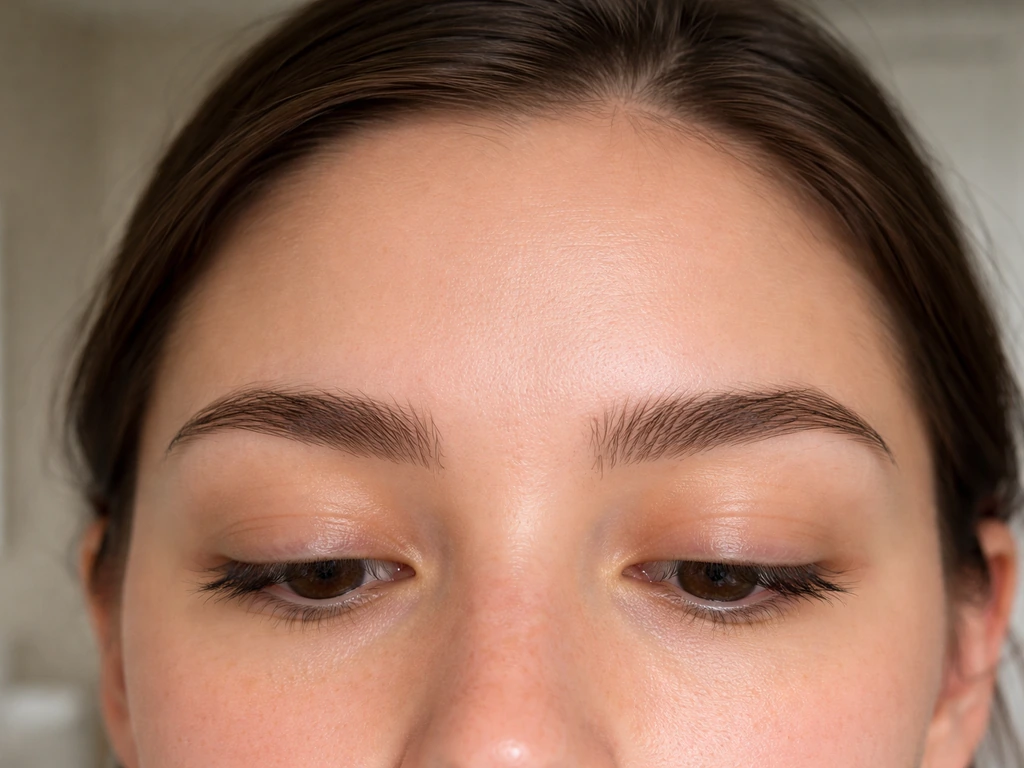
If you have no eyebrows right now, the most important thing to know is this: in most cases, growth is possible, but it takes longer than you expect and the right approach depends entirely on why you lost them in the first place. Overplucked brows can often recover with patience and a few targeted topicals over 3 to 6 months. Medically caused loss, from thyroid disease, alopecia areata, or chemotherapy, usually needs a dermatologist in the picture. Either way, there are concrete steps you can take today and a realistic roadmap to follow.
I Have No Eyebrows: How Can I Grow Them Back Safely, Fast, Realistic Plan
James Whitmore
5 Aug 2026
Start here: what to do right now
Before diving into causes and timelines, here are the immediate actions that make the biggest difference in the first days and weeks. These do not require a prescription and will not interfere with anything a doctor might recommend later.
- Stop all tweezing, threading, waxing, and shaving completely. Every time you remove a hair, even a tiny one, you reset that follicle's clock. The single most effective thing you can do today is simply stop removing hair.
- Apply a light, fragrance-free moisturizer or petroleum jelly to the brow area nightly. Dry, irritated skin creates friction and inflammation that slows follicle recovery.
- Start applying castor oil or rosemary oil to the brow area each night using a clean mascara wand or cotton swab. The evidence for these is not as strong as for prescription treatments, but they are low-risk, affordable, and consistent use over 8 to 12 weeks gives you a fair test.
- Audit your diet this week. Low ferritin (stored iron), low vitamin D, and low zinc are genuinely common triggers for hair loss that most people do not know about. If you have not had bloodwork recently, this is a good time to ask your doctor for a panel.
- Take a clear, well-lit photo of both brows today and every four weeks after. Progress in brow regrowth is slow and subtle enough that you will miss it without before-and-after photos.
- If you have no obvious explanation for the loss (meaning you have not been aggressively grooming and you are not recovering from a known illness), book a dermatology appointment now rather than waiting. Scarring causes require early intervention.
How eyebrow hair actually grows (and why it is slower than you think)
Every hair follicle cycles through three phases: anagen (active growth), catagen (transition), and telogen (resting/shedding). The critical difference between scalp hair and eyebrow hair is the length of the anagen phase. Scalp follicles stay in active growth for 2 to 6 years, which is why your hair can get long. Eyebrow follicles have a much shorter anagen phase, typically measured in weeks to a few months, not years. That is why brow hairs stop growing at a certain length and why regrowth after loss is inherently slower in terms of visible density. You are waiting for more follicles to cycle into anagen simultaneously, and the window each one spends growing is short. For more about factors that make men's eyebrow hairs grow longer, see why do men's eyebrows grow long.
On top of that, eyebrow follicles have a higher proportion of hairs in the telogen (resting) phase at any given time compared to scalp follicles. This means even healthy brows have a significant share of follicles doing nothing visible on the surface at any moment. When people ask why eyebrows grow so slow, this biology is the core answer: shorter growth phases, more resting follicles, and lower overall density than the scalp create a situation where regrowth is measurable in months, not days or weeks.
Why you lost your eyebrows in the first place
Identifying the cause is not just academic. It directly determines which treatments will work and which ones are a waste of your time. Here are the most common reasons people end up with no brows.
Over-grooming: plucking, waxing, threading, and shaving
This is probably the most common cause among people who find this article. Years of tweezing, especially pulling hairs before they reach full growth, can gradually thin follicles through repeated trauma. In early stages, follicles recover once you stop. In more aggressive or long-term cases, some follicles can develop permanent scarring. Shaving technically removes hair at the surface without disturbing the follicle, so recovery after shaving is faster than after plucking, typically 4 to 8 weeks for the hair to reappear, though the shape and direction may look uneven during the grow-out phase.
Medical causes: thyroid, alopecia areata, and more
Hypothyroidism is famous for causing loss of the outer third of the eyebrows, the part closest to the temples. It is one of the reasons a dermatologist or GP will almost always test thyroid-stimulating hormone (TSH) when someone presents with unexplained brow loss. Alopecia areata is an autoimmune condition where the immune system attacks hair follicles and can affect brows independently of the scalp. Frontal fibrosing alopecia is a scarring form that specifically targets the hairline and eyebrows, and it requires early medical intervention because scarring is irreversible. Chemotherapy drugs cause anagen effluvium, pushing growing hairs into a sudden shed, but follicles are generally preserved and regrowth typically begins within weeks to months of treatment ending. Trichotillomania (compulsive hair pulling) physically removes hairs and over time can damage follicles similarly to aggressive grooming.
Nutrition, genetics, and aging
Low ferritin is one of the most underdiagnosed contributors to hair loss in general. Your hair follicles need iron to produce keratin, and when stores are depleted, the body deprioritizes hair growth. Vitamin D and zinc deficiencies show up similarly. Genetics determine your baseline brow density, and some people simply have naturally sparse follicle distribution in the brow area from the start. Aging causes a gradual reduction in follicle activity across the face and body. Eyebrows thin with age in the same way scalp hair does, just more quietly.
Realistic timelines: what to expect and when
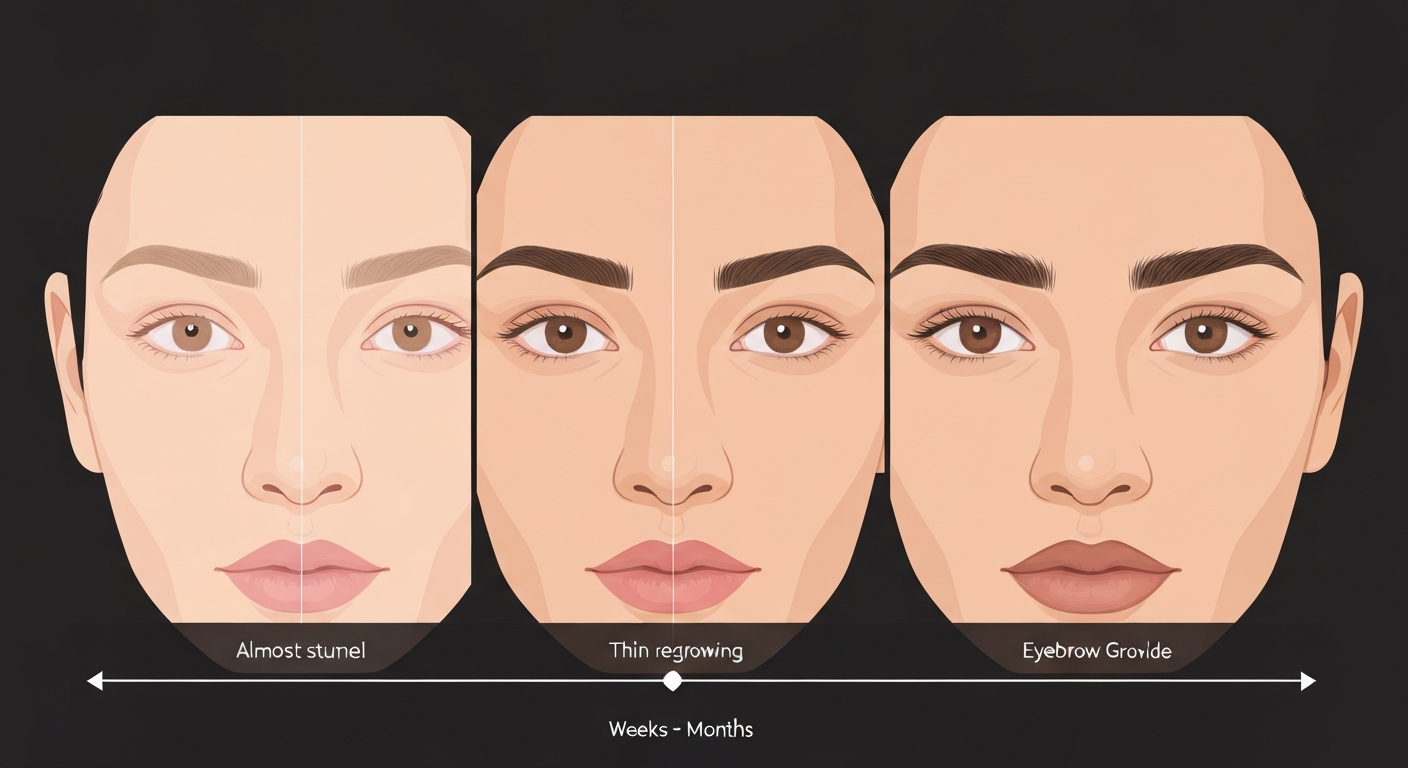
I want to be direct here because timelines are where most people get disappointed. Brow regrowth does not happen fast, and the timeline varies considerably depending on the cause. Here is an honest breakdown.
| Cause | 4–8 weeks | 3 months | 6 months | 12+ months |
|---|---|---|---|---|
| Shaving (no follicle damage) | Hair visibly re-emerges, patchy | Close to pre-shave density | Full recovery expected | N/A for most cases |
| Over-plucking (mild/moderate) | Fine vellus hairs may appear | Noticeable regrowth, still thin | Significant improvement, some gaps | Near-full recovery if follicles intact |
| Over-plucking (long-term/severe) | Little to no visible change | Patchy fine hairs | Partial recovery, some permanent thinning | Plateau likely; topicals and/or procedures may help |
| Alopecia areata | Variable; may see spontaneous regrowth or none | Some patches fill in without treatment; others persist | Varies widely; treatment improves odds | Remission possible; recurrence also common |
| Hypothyroidism (treated) | Minimal visible change | Early regrowth as thyroid levels stabilize | Meaningful recovery common once levels normalized | May reach full regrowth with sustained TSH control |
| Post-chemotherapy | Regrowth begins within weeks of last cycle | Noticeable brow hair returning | Most patients see substantial recovery | Usually full or near-full recovery |
| Frontal fibrosing alopecia | No regrowth in scarred areas | Stable with treatment; no new loss (goal) | Same | Regrowth not expected in scarred zones; halt progression |
| Nutritional deficiency (corrected) | No visible change yet | Early signs of recovery if deficiency resolved | Moderate improvement | Full recovery possible if deficiency was the sole cause |
The honest summary: if you have been over-grooming for years and have just stopped, give yourself a minimum of 3 to 4 months before drawing any conclusions. At 6 months without grooming and with consistent use of a topical treatment, you will have a clear picture of how much your follicles can recover on their own. If you are not where you want to be at that point, it is time to escalate to medical options.
Why one brow is growing back faster (or only halfway)
Asymmetric regrowth is extremely common and, frankly, frustrating. For a deeper explanation, see why does one eyebrow grow faster than the other. There are a few reasons it happens. First, most people have a dominant hand they use for grooming, which often means one brow gets plucked more aggressively and more frequently than the other. Repeated trauma on one side causes more follicle damage, and that brow regrows more slowly. Second, if you have a habit of resting your face on one side, sleeping with pressure on one brow, or rubbing one side of your face more, the friction from that pressure disrupts the follicle environment and can slow growth on that side.
Partial growth, where hair fills in the inner two-thirds but stops, is a different pattern and often points to either a specific grooming habit (the outer tail gets plucked more) or to an underlying medical cause. Hypothyroidism classically causes loss of the outer third of the brow precisely because follicles in that area appear to be more sensitive to thyroid hormone fluctuations. If your brows only grow halfway and you have not been grooming the outer portion, a thyroid test is worth getting. For a detailed explanation, see why do my eyebrows only grow halfway. The question of why brows only grow partway or why one side consistently lags is worth paying attention to rather than just accepting as normal.
Clinically supported topical treatments
Minoxidil
Topical minoxidil is the most evidence-backed over-the-counter option for eyebrow regrowth. A randomized, double-blind, split-face trial published by Lee et al. in 2014 found that 2% topical minoxidil applied twice daily was superior to placebo over 16 weeks, producing measurable increases in hair count and density. A more recent meta-analysis of topical minoxidil for facial hair, including the brow area, confirmed small but real increases in non-vellus hair counts, though the researchers noted that trial quality varies. How it works: minoxidil is a vasodilator that prolongs the anagen (growth) phase of the hair cycle, likely by opening potassium channels in follicle cells and increasing blood flow to the area. It does not create new follicles, it works with the ones you have.
Bimatoprost
Bimatoprost is a prostaglandin analog best known as the active ingredient in Latisse, which is FDA-approved for eyelash hypotrichosis. For eyebrows, it is used off-label, but there is legitimate clinical data behind it. A randomized controlled trial comparing topical minoxidil 2% versus bimatoprost 0.01% and 0.03% found that bimatoprost 0.03% produced the most favorable response over 16 weeks. Bimatoprost works by extending the anagen phase and possibly increasing the number of hairs in the growth phase simultaneously. The key cautions are periocular: the FDA label for the eyelash product documents potential side effects including eyelid skin darkening, conjunctival redness, eye itching, and in rare cases, iris pigmentation changes with repeated eye exposure. For brow use specifically, these risks are lower than for lash application, but they are real enough that application technique matters.
Topical corticosteroids
For brow loss caused by inflammatory or autoimmune conditions, particularly alopecia areata or contact dermatitis affecting the brow, topical corticosteroids prescribed by a dermatologist can calm the immune response enough to allow follicles to re-enter growth phase. These are not appropriate for cosmetic thinning from grooming, but for inflammatory causes, they are often a first step before escalating to injections or systemic treatments.
Natural topicals: castor oil and rosemary oil
I want to be honest about the evidence here. Castor oil has almost no controlled clinical data specifically for eyebrow regrowth. What it does do well is moisturize the skin around the follicle, reduce inflammation from dryness, and coat existing hairs to make them appear slightly thicker. Rosemary oil has better data: a small but genuine randomized trial found rosemary oil comparable to 2% minoxidil for scalp hair loss over 6 months. That is scalp data, not brow-specific, but it supports the idea that rosemary oil has a biologically plausible mechanism (likely via mild vasodilation and anti-inflammatory effects). I use both, honestly, because the risk is essentially zero and consistent nightly application is easy to maintain. Just do not expect either to substitute for minoxidil if your loss is significant.
How to use minoxidil and bimatoprost safely
Minoxidil application steps
- Use 2% minoxidil solution or foam (the 5% formulation is used off-label for brows and may cause more irritation; start with 2%).
- Apply twice daily, morning and evening, to clean, dry skin. Let the brow area air dry after washing before applying.
- Use a clean cotton swab, the cap applicator if included, or a clean fingertip. Apply a thin layer directly along the brow, keeping the product as close to the skin as possible rather than coating the hairs.
- Avoid getting the product in your eyes. If it runs, blot immediately with a dry tissue. Wash hands thoroughly after application.
- Let it dry for at least 4 hours before applying makeup or moisturizer over the area.
- Commit to at least 16 weeks of consistent use before evaluating results. Missing applications regularly will blunt outcomes.
- If you stop using minoxidil, hairs grown in response to it will gradually shed over a few months. Maintenance use is required to keep the benefit.
Bimatoprost application steps
- Bimatoprost for brow use requires a prescription in most countries. Ask your dermatologist specifically about the 0.03% concentration based on the trial data.
- Apply once daily, typically in the evening, to clean, dry skin along the upper border of the brow.
- Use a sterile applicator (the type included with Latisse, or a fresh disposable eyeliner brush) to draw a thin line along the brow line. Do not apply to the lower brow border near the eye.
- Use one applicator per brow and discard. Never apply the same applicator tip to both brows, as this is a cross-contamination risk.
- Blot any excess product that has run toward the eye immediately with a dry tissue. The periocular pigmentation side effect is linked to skin contact outside the intended area.
- Do not apply to the lower lid or lash line when using for brow purposes.
- If you notice redness in the eyes, eyelid darkening, or eye irritation that persists, stop use and consult your prescribing doctor.
Important precautions for both treatments
- Oral minoxidil at low doses (typically 0.25 mg to 2.5 mg daily) is used off-label by dermatologists for hair disorders including eyebrow regrowth. It carries systemic side effects including fluid retention, lower limb swelling, and elevated heart rate. This is not an OTC option and requires cardiovascular screening. Anyone with heart disease should not use it without specialist approval.
- Topical minoxidil at brow doses is generally low-risk for systemic absorption, but sensitive skin, eczema on the brow area, or open irritation should be flagged to a doctor before use.
- Bimatoprost and other prostaglandin analogs carry a documented risk of iris pigmentation change with direct and repeated eye exposure. This is rare with careful brow application but should be discussed with your prescriber.
- Neither treatment is studied or recommended during pregnancy. Consult a doctor before use if pregnant or breastfeeding.
When to see a dermatologist and what they can offer
See a dermatologist if: your brow loss is sudden or progressing quickly, you have no grooming-related explanation for the loss, you notice associated symptoms like scalp hair loss or skin changes, or you have been without brows for more than 6 months with no visible improvement despite stopping grooming and using topicals. Earlier is always better, especially if there is any chance of a scarring process, because once follicles are scarred, no topical or injection will regrow hair in that area.
Tests a dermatologist may order
A standard workup for unexplained eyebrow hair loss typically includes TSH (thyroid-stimulating hormone) and free T4 to rule out thyroid disease, a complete blood count plus ferritin and iron studies to assess for anemia and iron deficiency, vitamin D levels, zinc levels, and depending on the clinical picture, an ANA (antinuclear antibody) screen for autoimmune conditions, syphilis serology, or specific hormonal panels. This is not an exhaustive list; the dermatologist will direct additional testing based on your history, skin exam, and whether a biopsy seems warranted for suspected scarring alopecia.
Intralesional steroid injections for alopecia areata
For alopecia areata affecting the eyebrows, intralesional triamcinolone injections are a first-line treatment. The dermatologist injects a diluted corticosteroid (typically triamcinolone at around 2.5 mg/mL for the brow area, which is lower than scalp concentrations to reduce the risk of atrophy) directly into the affected skin every 4 to 6 weeks. The injections suppress the local immune attack on follicles and allow regrowth. Possible side effects include temporary skin thinning (atrophy), small visible blood vessels (telangiectasia), and local pigmentation changes. Most patients need a series of treatments rather than a single session.
Platelet-rich plasma (PRP)
PRP involves drawing your blood, centrifuging it to concentrate the platelet-rich fraction, and injecting that into the scalp or brow area. The theory is that growth factors in platelets stimulate follicle activity. The published evidence for PRP in eyebrow restoration specifically is limited and inconsistent. Systematic reviews note highly variable protocols across clinics (different platelet concentrations, injection intervals, and preparation methods) and modest or inconsistent results compared to controls. I would not start with PRP. It can be a reasonable option as a complement to other treatments, but the evidence base is not strong enough to justify it as a first or sole intervention, and it is not cheap.
Eyebrow transplant
Follicular unit extraction (FUE) eyebrow transplantation is a well-established surgical option for permanent eyebrow loss, most commonly from scarring alopecias, post-injury scarring, or very long-term over-grooming damage. Follicular unit extraction (FUE) eyebrow transplantation is an established reconstructive option for permanent eyebrow loss; candidate selection requires inactive disease, donor-site suitability, and counseling on graft take, survival, and the need for trimming and maintenance, with recovery and visible maturation occurring over months (Hair transplant for eyebrow restoration (review, PMC)). The surgeon harvests individual follicular units from the back of the scalp and implants them into the brow area. Key points to understand before pursuing this: the disease or cause of loss must be stable (a transplant into actively inflamed or progressing alopecia areata is inappropriate), donor site suitability matters, and the transplanted hairs will grow at scalp rate, meaning they will need regular trimming since they do not have the eyebrow's naturally shorter anagen phase. Graft survival and final results are visible over 8 to 12 months post-procedure. This is a last resort for most people, not a shortcut, and it requires detailed consultation with a surgeon experienced specifically in facial transplantation.
JAK inhibitors for severe alopecia areata
Baricitinib (brand name Olumiant) is an oral JAK inhibitor that is FDA-approved for adults with severe alopecia areata. The phase-3 BRAVE-AA trials included eyebrow and eyelash regrowth as secondary endpoints, and results showed that eyebrow and eyelash recovery accompanied scalp regrowth in responding patients, typically accruing over 36 to 52 weeks. This is a systemic immunosuppressant with a significant safety monitoring requirement, including infection screening and regular labs. It is not appropriate for cosmetic brow thinning and is specifically indicated for severe, refractory alopecia areata under specialist supervision.
Supplements and nutrition: what actually helps
If your labs come back showing a deficiency, correcting it is non-negotiable and is likely to produce visible improvement on its own over 3 to 6 months. Supplementing iron, vitamin D, or zinc when you are genuinely deficient is therapeutic, not just supportive. However, if your levels are normal, taking additional supplements is unlikely to accelerate growth beyond your genetic baseline. Biotin is heavily marketed for hair growth but has no solid evidence of benefit in people without a biotin deficiency (which is rare). A well-rounded diet with adequate protein, healthy fats, and the micronutrients above is your foundation. No supplement will outperform that foundation or substitute for addressing an underlying medical cause.
Cosmetic options while you wait
The regrowth process takes months, and there is no reason to go without brows in the meantime. Brow pencils, pomades, and powder products are excellent for filling in gaps and can be used daily without affecting follicle recovery. For people who want a longer-term cosmetic solution, microblading (semi-permanent tattooing) or powder brow treatments done by a skilled technician can look very natural and last 1 to 2 years with a touch-up. The important caveat: microblading involves small skin incisions, so if you are pursuing topical treatments or there is any active inflammation in the brow area, wait until the skin is fully settled before getting it done. Eyebrow wigs (adhesive prosthetic brows) are a less common but practical option for people undergoing chemotherapy or with alopecia universalis who want a fully removable solution.
Putting it all together: a practical plan
Week one: stop all grooming, start nightly castor or rosemary oil, take a baseline photo, and book a blood panel if you do not have a clear grooming-related cause. Weeks 2 through 4: add 2% topical minoxidil twice daily if you are comfortable self-treating, or wait to discuss it with your GP or dermatologist. Clinicians note that oral minoxidil requires caution, monitoring blood pressure and symptoms of edema or tachycardia, and sometimes co‑prescribing diuretics at higher doses, per Minoxidil, StatPearls (NCBI Bookshelf) Minoxidil — StatPearls (NCBI Bookshelf). Month 3: reassess with photos. Visible improvement means continue the current plan. No change means consider adding bimatoprost (via prescription) or escalating to a dermatologist appointment. Month 6: if you are still seeing minimal growth and the cause is unclear, a dermatology referral is the right call. At 12 months with no meaningful recovery, the conversation shifts to more interventional options like injections, PRP, or transplant depending on what the underlying diagnosis is. The biology of eyebrow growth means this is a long game, but most people with intact follicles see meaningful improvement when they stay consistent and realistic about the timeline.
FAQ
I have no eyebrows — what should I do first today to start regrowth?
Start gentle care immediately: stop plucking/waxing/shaving, avoid harsh cleansers or aggressive exfoliation of the brow area, and use a gentle non‑comedogenic moisturizer. Begin a photo log (weekly) to track change. If you want an evidence‑based topical option right away and have no contraindications, discuss topical minoxidil (typically 2% twice daily) or topical bimatoprost with your clinician — both have clinical trial data for eyebrow hypotrichosis but require proper application and monitoring for local irritation.
Which treatments have the best evidence for eyebrow regrowth and how strong is that evidence?
Highest‑quality evidence exists for: - Topical minoxidil (several randomized trials and meta‑analyses): modest but measurable increases in eyebrow hair; mainly local irritation. - Topical bimatoprost (small RCTs): often larger effects than minoxidil in trials; periocular pigmentation and irritation are reported. For alopecia areata specifically, oral JAK inhibitors (e.g., baricitinib) have high‑quality trial evidence for scalp and adnexal hair in severe cases. Lower‑quality or mixed evidence: low‑dose oral minoxidil (case series, reviews) and PRP (variable protocols, inconsistent results). Surgical eyebrow transplantation (FUE) is an established reconstructive option for stable, permanent loss. Overall, expect modest benefits for topicals; systemic or procedural therapies are used for specific diagnoses or resistant cases.
How should I apply topical minoxidil or bimatoprost safely to my brows?
Use a product and concentration advised by your clinician. Typical approaches used in studies: - Minoxidil 2% lotion: apply a small amount to the brow region twice daily, avoiding eye contact; wash hands after. - Bimatoprost 0.01–0.03% (off‑label for brows): apply once daily with a clean cotton swab to the brow margins, avoiding the eye surface. Monitor for local irritation, periocular hyperpigmentation, itching, or excessive hair growth outside the target area. If eyelid swelling, eye irritation, or vision changes occur, stop and seek medical advice.
What about castor oil, rosemary oil, or other natural remedies — do they work?
Evidence is limited and mostly anecdotal. Small studies suggest rosemary oil may help scalp hair comparably to minoxidil in some trials, but eyebrow‑specific, high‑quality data are lacking. Castor oil has no robust clinical trial support for eyebrow regrowth. These remedies are low risk for many people but can cause contact dermatitis or eye irritation. They may be tried as adjuncts but should not replace evidence‑based treatments when a medical cause is suspected.
What supplements or nutrition changes can help eyebrow growth?
Correct underlying deficiencies rather than taking random supplements. Commonly checked and treatable issues: iron deficiency (ferritin), hypothyroidism, vitamin D and zinc. If tests show deficiency, replace per medical guidance. Biotin is popular but helps only in true biotin deficiency (rare). Avoid high‑dose supplements without testing and clinician oversight.
How long will it take for eyebrows to grow back?
Timeline varies by cause and treatment: - Telogen/anagen recovery after stopping plucking or chemotherapy: initial vellus regrowth may appear in 6–12 weeks; noticeable thickening typically in 3–6 months. - Topical minoxidil/bimatoprost: measurable changes in trials often reported by 8–16 weeks, with more improvement at 4–6 months. - Systemic therapies (JAK inhibitors) or intralesional steroids for alopecia areata: responses usually take months (trial endpoints often 24–36 weeks). - Surgical transplant: visible maturation occurs over several months, with final appearance up to 9–12 months. Brow follicles have a short anagen phase, so full terminal length remains shorter than scalp hair.
Next Article
Why Does One Eyebrow Grow Faster Than the Other? Causes and Fixes
Learn why one eyebrow grows faster than the other, how to self-check causes, and practical fixes and timelines.