Vaseline won't grow new eyebrow hairs in 3 days. That's the honest answer. What it can do is condition existing hairs, reduce breakage, and make sparse brows look noticeably fuller and healthier within 72 hours by sealing in moisture and taming wiry or dry strands. If you just shaved, over-tweezed, or waxed and your brows look patchy right now, a consistent Vaseline routine paired with the right add-ons gives you the best possible look while true regrowth gets underway, which takes weeks to months, not days.
How to Grow Eyebrows in 3 Days With Vaseline: Realistic Steps

James Whitmore
15 Jun 2026
Reality check: can eyebrows actually grow in 3 days?
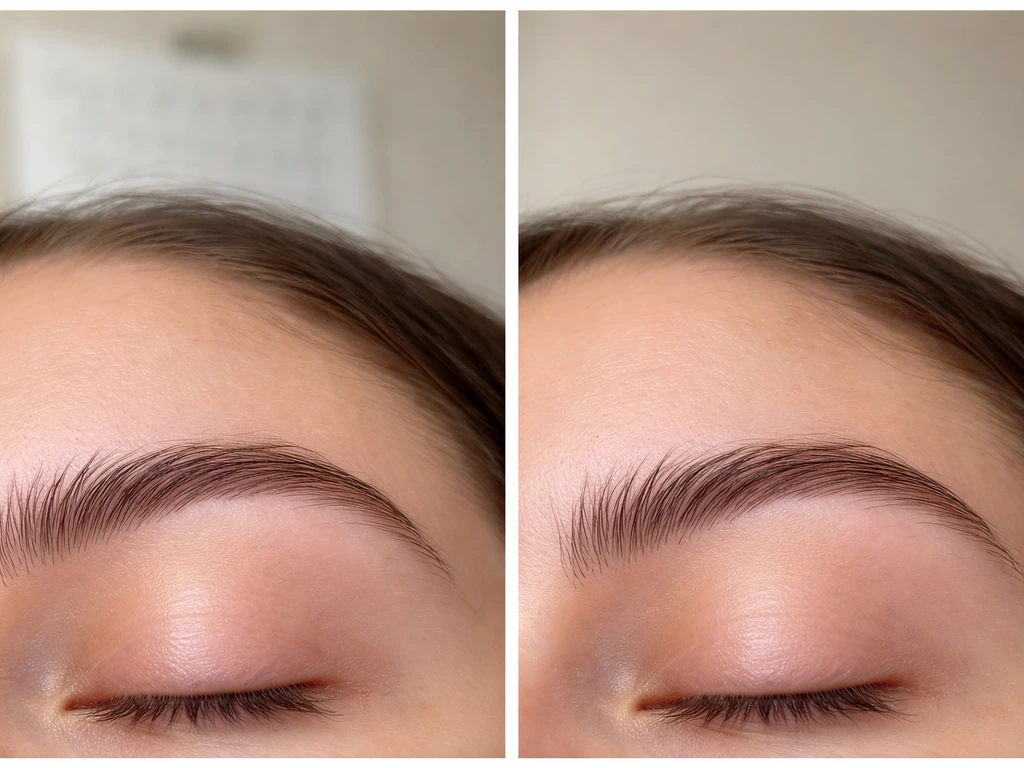
No, not in any meaningful way. Eyebrow hairs grow during a phase called anagen, which lasts roughly 2 to 3 months for brow hair. After that, hairs enter a brief transition (catagen, about 2 to 3 weeks) and then a resting phase ([telogen, another 2 to 3 months](https://bionumbers. hms.
harvard. edu/bionumber. aspx? id=114255)) before shedding and starting the cycle again.
StatPearls (NCBI Bookshelf) describes the human hair growth cycle as divided into anagen (growth), catagen (transition), and telogen (rest, or shedding) phases [hair growth cycle as anagen, catagen, and telogen](https://www. ncbi. nlm. nih.
gov/books/NBK499948/). That entire cycle means visible regrowth after shaving or plucking takes a minimum of a few weeks just to see stubble, and full density can take 3 to 4 months to return, sometimes longer depending on your age, genetics, and how damaged the follicles are.
In 3 days, your follicles are doing essentially nothing new. Any product, Vaseline included, that claims to trigger visible hair growth in 72 hours is overstating what's biologically possible. The reason people swear by the '3-day Vaseline trick' is that conditioning the existing hairs and the skin beneath them genuinely does improve how brows look, and that's a real and worthwhile benefit. Just go in with clear eyes about what you're actually achieving.
Why your brows look sparse and when they'll come back
If you shaved or waxed recently, the hair shaft is gone but the follicle is intact. Shaving doesn't damage the follicle at all, so regrowth is purely a timing issue, usually noticeable stubble within 1 to 2 weeks and decent coverage by 6 to 8 weeks. Waxing and threading pull from the root, so it takes longer, typically 4 to 6 weeks before you see real fuzz coming through, and full brow density can take 3 to 4 months.
Over-tweezing is a slightly different situation. Repeatedly pulling hairs from the same follicle over years can eventually cause traction-related damage that slows or stops regrowth. If you've been plucking the same sparse spots for a decade and they're still not filling in, that's a follicle health issue, not a timing issue, and no amount of Vaseline will fix it. That's when you need a different conversation, which I'll cover at the end of this article.
One thing that catches people off guard: brows can look worse before they look better. When new hairs first emerge, they're short, stiff, and uneven. The overall shape looks messier than the clean, plucked version you're used to. That's normal and temporary. Stick with it.
What Vaseline actually does for your brows (and what it can't)
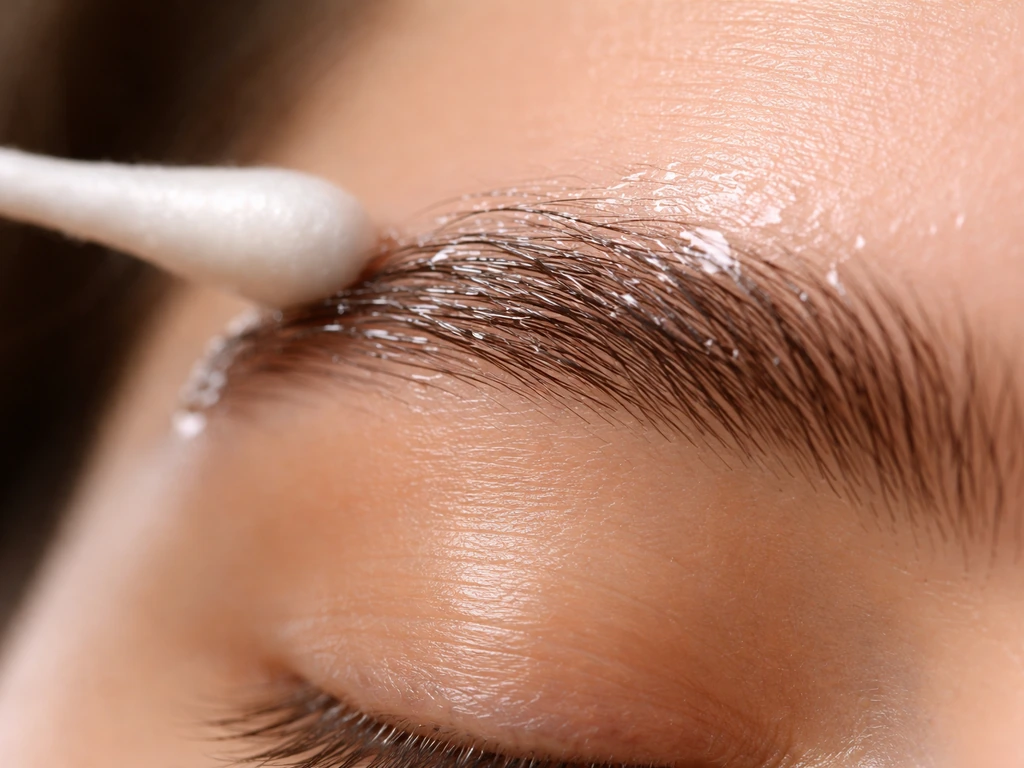
Vaseline is 100% petrolatum, an occlusive ingredient that forms a physical barrier over skin and hair. It doesn't penetrate the hair shaft or the follicle. What it does is lock moisture in, prevent water loss from the skin around the brow, and coat the hair shaft so individual hairs lie flatter, reflect more light, and look thicker and more defined. Dry, brittle brow hairs break off easily, and Vaseline prevents that, meaning you keep more of what you have.
It also soothes the skin underneath. If you've recently waxed and your brow area is irritated or flaky, petrolatum is one of the most gentle, effective barrier protectants available. It's non-comedogenic in the brow area for most people (though it can clog pores near the hairline or forehead in acne-prone individuals, more on that below), and it's fragrance-free with very low allergy potential.
What it cannot do: stimulate follicles, increase blood circulation to the papilla, deliver growth-promoting nutrients, or trigger new hair production. It has no active ingredients. If Vaseline is the only thing in your routine, you're managing the appearance of what's already there, not accelerating regrowth.
Your 3-day Vaseline eyebrow routine, day by day
This is a twice-daily routine: once in the morning as a grooming step, and once at night as a conditioning treatment. The morning application is light and functional. The night application is where the real conditioning happens. Stick to this for all 3 days and your brows should look visibly healthier, more defined, and fuller by day 3.
Day 1
Morning: Wash your face as normal and pat dry. Using a clean fingertip or a small, clean spoolie brush, pick up the tiniest amount of Vaseline, roughly the size of a grain of rice for both brows combined. Apply it by brushing through the brow hairs in the direction of growth, from the inner corner outward. This grooms the hairs into place and seals in moisture right after cleansing. You should see a subtle, healthy sheen, not a greasy blob. If it looks wet or heavy, you've used too much. Blot gently with a tissue.
Night: Remove all makeup and cleanse your face thoroughly. Pat dry, then apply a slightly larger amount of Vaseline, still small, two grains of rice total, directly to each brow using your fingertip. This time, gently massage it in using small circular motions for about 30 seconds per brow. This mild massage improves local circulation slightly and helps the petrolatum coat each hair shaft fully. Leave it on overnight. Do not apply to the eyelid or directly near the lash line.
Day 2
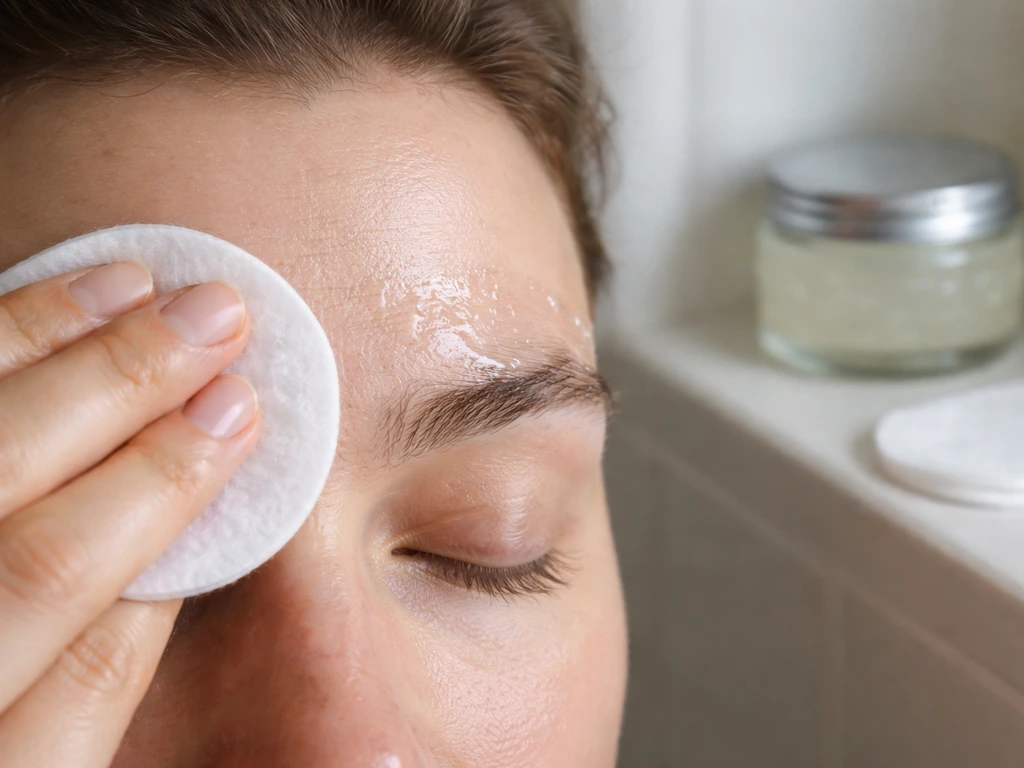
Morning: Rinse your face as usual. You'll likely notice some Vaseline is still on your brows from the night before, which is fine. Cleanse normally, then reapply a grain-of-rice-sized amount and brush through with a spoolie. Look at your brows in good lighting. You should already notice the hairs look more hydrated, less wiry, and slightly more defined.
Night: Repeat the same nighttime application from Day 1. If your skin under the brow area felt at all congested or bumpy after Day 1, reduce the amount and avoid getting product on the skin itself, focusing the Vaseline on the hair shafts only.
Day 3
Morning and night: Same routine. By now, the hairs should be noticeably more conditioned and the brows should hold their shape better throughout the day. If your brows are sparse from recent waxing or plucking, the hairs you do have will look their best right now. This is the cosmetic ceiling of the 3-day routine. Maintaining it long-term (weeks and months) is what creates the conditioning environment that supports healthy brow growth going forward.
Add castor oil or rosemary oil if you want more than Vaseline alone
If your goal is true regrowth rather than just conditioning, Vaseline needs a partner ingredient. The two most credible options for brow growth are castor oil and rosemary oil, and both can be layered into your nighttime routine easily. If you want to go beyond Vaseline alone, castor oil is one of the most commonly used options people ask about for eyebrow regrowth castor oil and rosemary oil.
Castor oil contains ricinoleic acid, a fatty acid that has shown some ability to support scalp hair retention, though direct clinical evidence for eyebrow regrowth is limited. It's thick, nourishing, and coats the hair shaft well. To use it, apply a tiny amount (half a grain of rice per brow) with a clean spoolie before your Vaseline application at night. The castor oil goes on first, then a thin layer of Vaseline over the top to seal it in. This combination is something I've personally used during brow-recovery periods and the hairs genuinely look healthier within a week or two.
Rosemary oil has more direct evidence behind it. A 2015 randomized controlled trial found that 2% rosemary oil performed comparably to 2% minoxidil for scalp hair regrowth after 6 months. The mechanism is thought to involve improved circulation to the follicle. For brows, the evidence is extrapolated rather than direct, but it's a reasonable add-on. Use 1 to 2 drops of diluted rosemary essential oil (mixed into a carrier like jojoba or the castor oil itself) applied to the brow area at night, then follow with Vaseline. Never apply undiluted essential oil directly to the skin.
If you want to explore the castor oil approach in more depth, that's a whole routine worth understanding on its own, including the right type of castor oil to use and how long to commit before expecting results.
| Ingredient | What it does | Realistic timeline | Best use |
|---|---|---|---|
| Vaseline (petrolatum) | Seals moisture, conditions hair shaft, reduces breakage | Visible cosmetic improvement in 3 days | Twice daily, every day |
| Castor oil | Nourishes follicle area, may support retention | Weeks to months for growth impact | Nighttime, under Vaseline |
| Rosemary oil (diluted) | May improve follicle circulation, some growth evidence | 4 to 6 months for meaningful regrowth | Nighttime, diluted in carrier oil |
| Minoxidil (topical) | Clinically proven to extend anagen and stimulate follicles | 3 to 6 months for visible density | With dermatologist guidance |
Safety, patch testing, and what to avoid
Vaseline is one of the safest topical ingredients available, but that doesn't mean you skip patch testing, especially when adding castor oil or rosemary oil to the mix. Before your Day 1 nighttime routine, dab a small amount of whichever product you're using on the inside of your wrist or behind your ear. Wait 24 hours. If you see redness, swelling, or itching, don't use it near your brows or eyes.
The brow area sits right above the orbital bone and next to the upper eyelid, so anything you apply here has a real risk of migrating into the eye, especially overnight. Keep Vaseline applications to the brow hairs and the immediate skin beneath them. Do not apply close to the lash line or directly on the eyelid, and use a gentle hand. If you wake up with blurred vision or eye irritation, rinse thoroughly with clean water.
Acne-prone skin is worth watching. While petrolatum is technically non-comedogenic in most clinical contexts, applying a heavy occlusive to a pore-dense area like the forehead and brow can still trigger congestion for some people. If you notice small bumps or whiteheads forming along the brow or above it within a few days, reduce the amount you're using or switch to applying only on the hair strands and not the skin.
- Always patch test castor oil and diluted rosemary oil before applying near the eye area
- Use a grain-of-rice amount or less, applying too much makes skin congested and looks greasy
- Never apply undiluted essential oils directly to skin near the brow or eye
- Avoid DIY ingredient combinations you can't verify (lemon juice, raw onion, and similar abrasive home remedies can irritate or damage the follicle area)
- If you've had a recent wax and your skin is still red or broken, let the skin fully heal before starting any oil routine
- Stop immediately and rinse if you experience burning, stinging, or eye irritation
When Vaseline isn't enough and what to do next
If you've been consistent with a conditioning routine for 2 to 3 months and you're still not seeing meaningful regrowth, it's time to consider options with actual clinical evidence behind them. Topical minoxidil (typically 2% or 5%) is the most evidence-backed over-the-counter option for hair follicle stimulation. It works by prolonging the anagen phase and widening hair follicles, leading to thicker, more numerous hairs over time. Studies on scalp hair are robust; evidence for eyebrows specifically is smaller but growing, and some dermatologists prescribe it off-label for brow thinning.
Minoxidil is not something to start casually. It can cause skin irritation, and in rare cases systemic effects if overused. Applying it near the eyes carries real risk. If you're considering it for your brows, talk to a dermatologist first. They can assess whether your thinning is from mechanical damage (tweezing, traction), hormonal changes, thyroid issues, nutritional deficiency, or a skin condition like alopecia areata, each of which has a different treatment path.
See a dermatologist if any of the following apply to you: your brows have been thinning gradually without obvious cause, you have a personal or family history of autoimmune conditions, you notice thinning along with hair loss elsewhere on your body, your brow skin looks inflamed or scaly, or your brows simply haven't recovered after 4 to 6 months of consistent home care. A dermatologist can rule out conditions like frontal fibrosing alopecia, hypothyroidism, or nutritional deficiencies, all of which require targeted treatment, not just topical oils.
For most people reading this who shaved or over-tweezed and are frustrated right now, the realistic path is: use Vaseline to maximize the look of what you have today, add castor oil or rosemary oil at night to support the follicle environment over the coming weeks, and give it 3 to 4 months before drawing conclusions about whether regrowth is happening. If you want a castor-oil-free approach, you can still use a conditioning routine and consider rosemary oil or other evidence-backed options castor oil-free approach. Genetics, age, and prior follicle damage all influence your ceiling, but most healthy follicles do come back. It just takes longer than 3 days.
FAQ
Can I use Vaseline from lash line to eyebrow tail to speed things up?
No. Keep it limited to the brow hairs and the small area of skin immediately beneath them. Applying it on or too close to the eyelid and lash line raises the risk of migration into the eye while you sleep.
Is it better to apply Vaseline right after tweezing, waxing, or shaving?
You can use it right away if your skin is not broken, bleeding, or severely irritated. If you have redness, burning, or active bumps, pause and let the area calm first, then resume with a thinner amount focused on hair shafts only.
How do I know if I’m using too much Vaseline?
If your brows look wet, heavy, or you see product pooling on the skin, you used too much. Use about a grain-of-rice amount for both brows in the morning, and about two grains total at night, then blot or wipe excess gently.
Will Vaseline make my eyebrow hair grow darker or thicker faster?
Vaseline does not change hair color or create new follicles. What it can do in 3 days is make existing hairs lie flatter and look more defined and fuller by reducing dryness and breakage.
Should I wash my brows off completely in the morning?
No. It’s okay if some residue remains from the night application. Just cleanse normally, then reapply a small amount and brush through, instead of scrubbing hard to remove everything.
Is it safe to use Vaseline and rosemary oil together?
Yes, as long as the rosemary essential oil is diluted and you patch test first. Apply rosemary oil in the nighttime step before Vaseline, but never apply undiluted essential oil directly to the brow skin.
Where should I patch test when adding castor oil or rosemary oil?
Patch test behind your ear or on the inside of your wrist 24 hours before using it near your brows. If you get redness, swelling, itching, or irritation, don’t use it around your eyes.
What if I get small bumps or whiteheads after starting Vaseline?
Reduce the amount and apply only to the hair strands, not the surrounding pore-dense skin. If bumps persist, stop the routine and consider an alternative approach, since occlusion can trigger congestion in some people.
Can I use Vaseline on bald patches from over-tweezing to regrow them in months?
Possibly, but only if the follicles are still alive. If the same spots have been sparse for years, it may be traction or follicle damage, and Vaseline alone likely won’t fix it. In that case, consider a dermatologist assessment.
Will Vaseline delay shedding or stop new hairs from growing normally?
It should not stop the natural cycle. Vaseline mainly creates a barrier and improves conditioning, it does not block shedding or permanently alter hair cycle biology.
Can I use eyebrow growth serums instead of oils with Vaseline?
You can, but be careful with proximity to the eyes and with ingredient strength. If a serum contains known irritants, patch test first and do not apply anything directly on the eyelid or lash line.
When should I switch from a 3-day cosmetic routine to a growth-focused plan?
If your goal is real regrowth, treat the 3 days as an appearance upgrade and then continue for weeks. If you don’t see any meaningful improvement after 4 to 6 months of consistent care, it’s time to switch strategies and consider dermatologist guidance.
Next Article
Will Castor Oil Grow Eyebrows? Guide, Timeline, and How To
Can castor oil grow eyebrows and eyelashes? Learn timeline, how to apply safely, and limits vs evidence-based options.