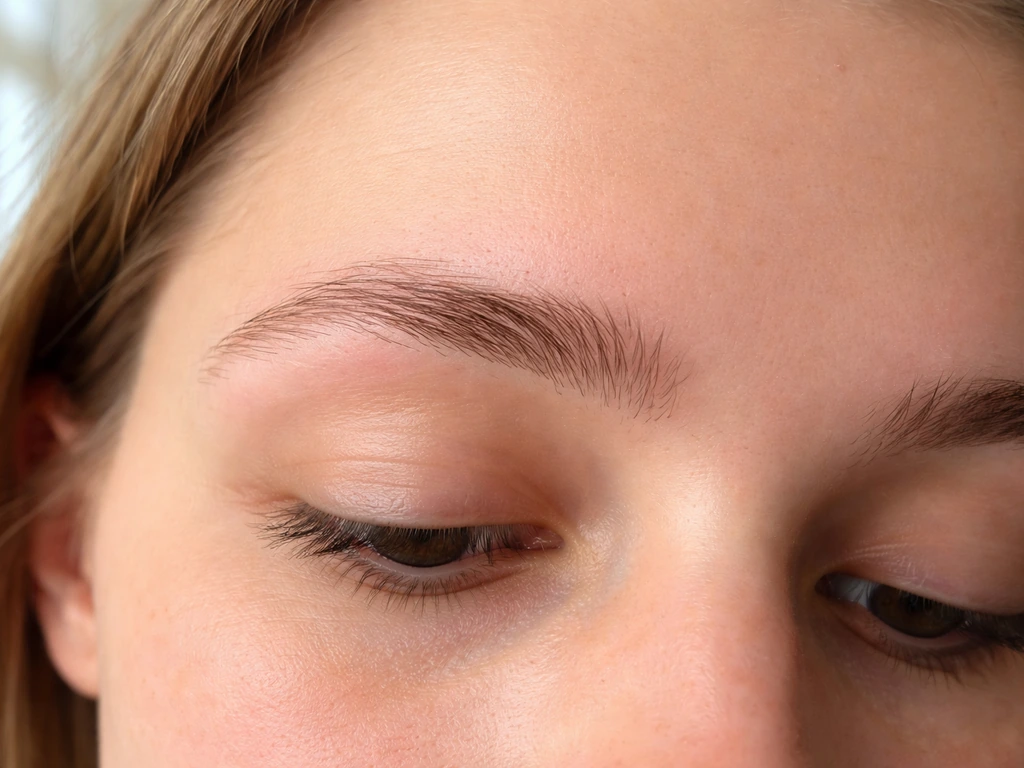
Yes, in most situations you should let your eyebrows grow out, at least temporarily. Whether you've shaved them, over-plucked them into thin lines, had a bad wax, or noticed patchiness after a piercing, giving your follicles an uninterrupted growth window is almost always the right first move. The honest caveat: regrowth takes longer than most people expect (think 2 to 4 months for noticeable change, not a week), and in a small number of cases involving scarring or repeated follicle trauma, full regrowth may not happen on its own. This guide walks you through exactly when to grow out, when to act differently, and how to take care of your brows in the meantime.
Should I Let My Eyebrows Grow Out? A Practical Guide
James Whitmore
14 Jul 2026
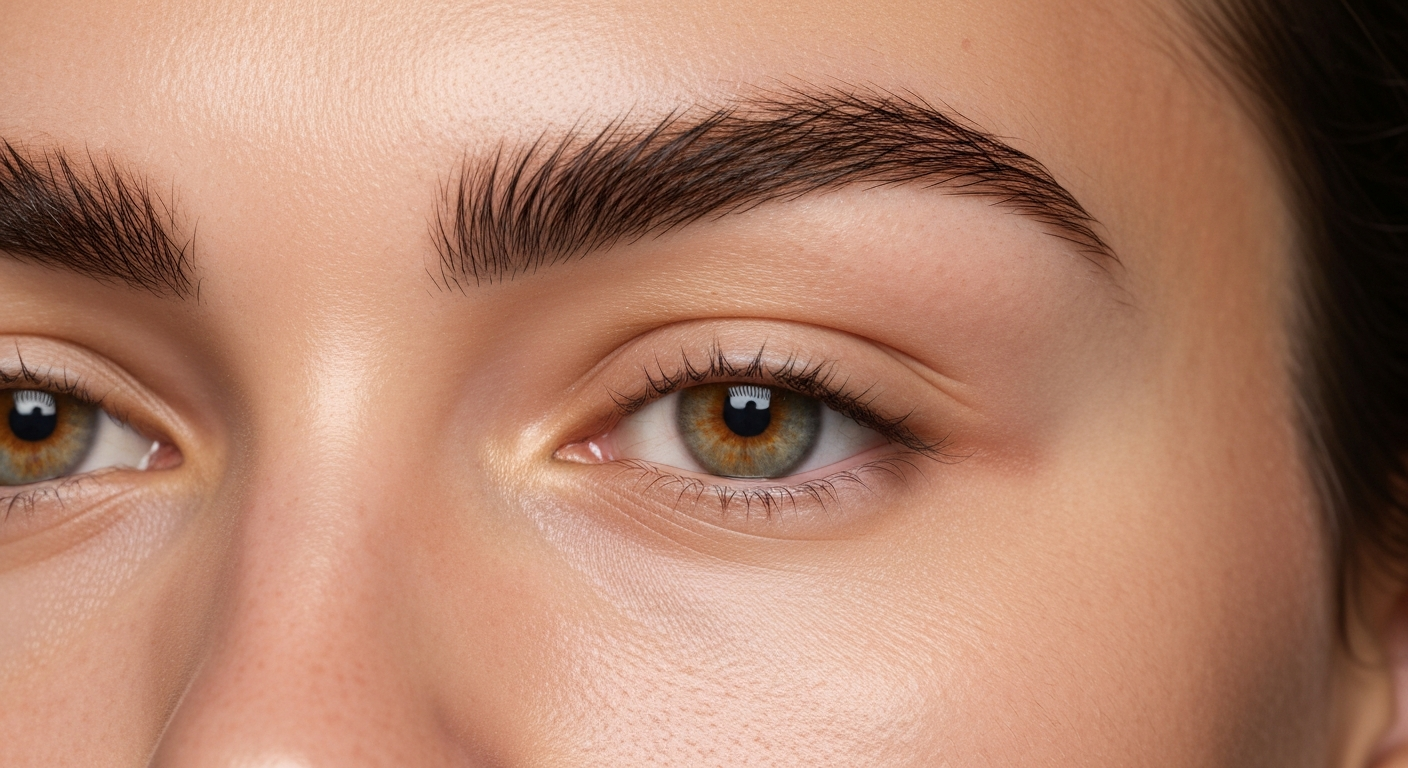
Quick answer: yes, no, or wait?
The right answer depends on why your brows look the way they do right now. Here's a fast framework to orient you before we go deeper.
| Your situation | Should you grow them out? | What to do next |
|---|---|---|
| Shaved or trimmed too short | Yes — follicles are intact | Stop shaving, wait 6–10 weeks for visible regrowth |
| Over-plucked over months or years | Yes — but be patient | Pause all tweezing for 3–4 months minimum |
| Had a standard wax recently | Yes — give it at least 6–8 weeks | Avoid re-waxing too soon; moisturize the area |
| Had a bad wax with skin trauma or burns | Yes, but monitor for scarring | See a dermatologist if redness or scarring persists beyond 2 weeks |
| Piercing in or near the brow | Yes — remove inflammation first | Treat any infection; expect slower regrowth near the piercing site |
| Naturally sparse or thinning with no clear cause | Yes, plus consider growth support | Try rosemary or minoxidil; see a derm if thinning is progressive |
| Prepping for a professional wax | Yes — grow out 6–8 weeks first | Fuller growth gives the esthetician more to work with for shaping |
If your situation involves progressive thinning you can't explain, brows that aren't coming back after 6 months, or visible scarring on the skin, skip to the section on signs of incomplete regrowth below. That's where the calculus changes.
How eyebrow hair actually grows (and why it takes so long)
Eyebrow hairs have a much shorter active growth phase than scalp hair, and that single fact explains almost every timeline frustration you'll encounter. Scalp hair stays in the growth phase (called anagen) for 2 to 8 years, which is why it can grow past your shoulders. Eyebrow hair anagen lasts only about 2 to 3 months. After that, hairs enter a brief transitional phase (catagen, roughly 2 to 3 weeks) and then a resting phase (telogen, another 2 to 3 months) before shedding and starting over. The measured linear growth rate for eyebrow hair is roughly 0.16 mm per day, compared to about 0.35 mm per day for scalp hair. That's why shaving your brows and then waiting a week barely produces stubble, while shaving your head shows visible growth quickly.
What affects how fast your individual brows come back? A few key factors: your age (follicle cycling slows with age), your genetics (thicker or finer native brows are largely inherited), your overall nutrition (deficiencies in biotin, iron, zinc, or protein can stall all hair growth), your hormones (thyroid disorders are a classic cause of thinning outer brows), and the health of the follicle itself. A follicle that has been repeatedly plucked over years may have sustained enough mechanical damage that it cycles more slowly or stops cycling entirely. Skin conditions, certain medications, and inflammatory conditions can also disrupt the cycle at the follicle level.
One important reassurance: shaving does not change your hair's intrinsic growth rate or follicle health. The myth that shaving makes hair grow back thicker or faster is just that. The follicle doesn't know what happened above the skin surface. What shaving does do is create a blunt tip instead of the natural tapered end, which makes regrowth look darker and coarser for a while until that tip grows out. The follicle itself is fine.
Regrowth timelines by cause
Different causes of brow loss come with very different timelines, and being honest with yourself about which camp you're in will save you a lot of frustration.
After shaving
Shaving is the most follicle-friendly way to remove brow hair because it only removes the shaft, leaving the follicle completely undisturbed. Stubble typically appears within 1 to 2 weeks, and a reasonable amount of visible growth returns within 4 to 6 weeks. Full density usually takes 2 to 3 months, depending on where those follicles were in their cycle when you shaved. Some follicles were already in telogen (resting), meaning they won't produce new growth until they cycle back into anagen regardless of when you stopped shaving.
After over-plucking
This is the most common source of frustration I hear about, and the timeline can feel brutal if you've been aggressively plucking for years. For occasional or recent over-plucking with no follicle damage, expect initial fuzz within 4 to 6 weeks and meaningful density by 3 to 4 months. If you've been plucking the same hairs repeatedly over many years, chronic mechanical trauma can cause traction alopecia, meaning the follicle has been physically damaged by repeated pulling. In these cases, some hairs may never fully return. Dermatologists typically recommend stopping all plucking and reassessing at the 4 to 6 month mark before drawing any permanent conclusions.
After waxing
Standard waxing removes hair from the root but doesn't destroy the follicle under normal conditions. The regrowth timeline is similar to plucking: expect early regrowth in 3 to 6 weeks and fuller density by 2 to 4 months. Because waxing removes hair at the root rather than the surface, the regrowth tip is tapered and natural-looking (unlike shaving). If you're curious about the detailed mechanics of wax regrowth, a dedicated explainer on whether eyebrows grow back after waxing covers this thoroughly, including how repeated waxing over years compares to occasional waxing.
After a bad wax
A wax that burns or lifts the skin is a different situation entirely. If the wax was too hot or applied incorrectly and caused a superficial skin injury, you're dealing with both a healing skin wound and disrupted follicles. Mild burns typically resolve in 1 to 2 weeks and don't cause permanent follicle damage. More serious burns or skin trauma can potentially destroy follicular units in the affected area, leading to patchy or absent regrowth. The full recovery window for a bad wax situation can stretch to 6 months before you know what you're actually working with. A dedicated breakdown of how long regrowth takes after a bad wax is worth reading if this is your situation, as the variables (severity, skin type, aftercare) really matter here.
After a brow piercing
Brow piercings sit in a tricky category. The piercing itself doesn't typically damage follicles if placed carefully, but the ongoing inflammatory response, risk of infection (including cellulitis or abscess), and the way the jewelry moves through tissue can all create secondary effects on nearby hair follicles. If you've removed a brow piercing and notice sparse hair in the former piercing track, it's often due to localized scar tissue rather than follicle destruction, and some regrowth is possible once the inflammation fully resolves. For anyone dealing with this specifically, the question of whether eyebrow hair grows back after a piercing addresses the nuances of soft tissue versus follicle involvement in detail. If you're specifically worried about piercings and regrowth, see the detailed section titled "does eyebrow hair grow back after a piercing" for a full explanation of soft-tissue versus follicle involvement and expected timelines.
Warning signs that regrowth may not be coming
Most eyebrow loss from mechanical removal (plucking, waxing, shaving) is reversible. But there are real situations where regrowth is partial or absent, and catching them early matters because some underlying causes are treatable if addressed soon enough.
- No visible regrowth after 4 to 6 months of leaving brows completely untouched
- Visible smooth scarring or shiny skin texture where hair used to grow (scarring alopecia cannot regrow hair without intervention)
- Thinning of the outer third of the brow with no history of plucking or waxing (classic early sign of thyroid dysfunction or frontal fibrosing alopecia)
- Progressive thinning that continues despite no mechanical removal
- Hair loss accompanied by itching, redness, or skin changes in the brow area
- Follicle-level damage visible as small pitted scars after a severe burn or deep trauma
Frontal fibrosing alopecia (FFA) deserves a specific mention because it's more common than most people realize and frequently shows up first as eyebrow thinning. It's a scarring form of alopecia that destroys follicles if left untreated. Early dermatology referral is essential because treatments (anti-inflammatory and anti-androgenic medications) can slow or halt progression, but they cannot restore hairs already lost to scarring. If your thinning is gradual, unprovoked, and worsening, please don't wait 6 months and hope for the best. Get it looked at.
Severe waxing burns, full-thickness skin injuries, or burns from other sources can destroy follicular units permanently by replacing them with scar tissue. A case report titled "FUE as the first surgical option for hair reconstruction on scalp and facial skin grafts – case report (includes eyebrow reconstruction after burns)" documents that full‑thickness burns and other severe trauma to brow skin can destroy follicular units and may require surgical restoration such as transplant. In these cases, surgical options like follicular unit extraction (FUE) transplant to the brow area can reconstruct hair-bearing skin, but that's a later-stage decision. First, give the area time to fully heal and then consult a dermatologist or plastic surgeon to assess what's actually there.
Should I let my eyebrows grow out? A scenario-by-scenario decision flowchart
Think of this as a walk-through of the most common decisions people face. Find your starting point and follow the logic.
Scenario 1: I want to reset my brow shape
Yes, grow them out. You cannot reshape something you don't have material to work with. Stop all plucking and tweezing completely for at least 8 to 12 weeks. This is uncomfortable because you'll see strays popping up everywhere, but resist the urge to clean them up. After the grow-out period, either visit a skilled brow esthetician who can assess your natural growth pattern and create a new map, or learn your natural arch and clean lines on your own. Shaping into freshly grown brows gives you far more control over the outcome than trying to reroute a shape from sparse, over-tweezed starting material.
Scenario 2: I want to repair damage from over-plucking, a bad wax, or a piercing
Yes, grow them out, but also support the process actively. Stop all mechanical removal and start a consistent care routine (covered in the next section). Add a growth-supportive treatment if you want to give follicles the best environment possible. Set a 3 to 4 month checkpoint in your calendar. At that point, if you're seeing meaningful regrowth, keep going. If not, that's when a dermatologist visit makes sense to rule out follicle damage or an underlying cause.
Scenario 3: I'm prepping for a professional wax appointment
Yes, and this is one of the clearest-cut cases. Estheticians need at least 6 to 8 weeks of growth to have enough hair to work with for proper shaping. If you show up too soon after the previous wax, they'll either turn you away or have to work with insufficient material and create an uneven result. The question of how long you should let eyebrows grow before waxing goes into specifics on length requirements and timing, but the short version is: more growth gives the professional more options, and you'll get a better result.
Scenario 4: I want naturally fuller brows from a sparse baseline
Yes, stop removing anything that isn't clearly outside your desired brow area. Pair that with a consistent growth-support regimen. Accept that genetics sets a ceiling for your natural density, but most people haven't hit that ceiling because years of over-grooming have suppressed what their follicles could actually produce.
Daily care while growing your brows out
Growing brows out isn't a completely passive process. There are things you can do every day that either help or actively hinder regrowth. Here's a practical routine.
Cleanse gently
The brow area needs to stay clean but not stripped. Heavy, occluding skincare products or aggressive exfoliants applied directly over active follicles can clog pores or irritate the follicle opening. Use a gentle, non-comedogenic cleanser on your face and keep it away from the brow area if you're using any leave-on growth treatments. Pat dry rather than rubbing, which can catch and break fragile new hairs.
Moisturize the skin underneath
Dry, flaky skin around the brow follicle can impede growth and cause new hairs to become ingrown. A light, non-comedogenic moisturizer applied to the brow area keeps the skin environment healthy. Avoid heavy, fragrant products that can irritate periocular skin.
Protect from UV
UV damage to the skin affects follicle health over time. If you're out in the sun, a broad-spectrum SPF on the face and brow area is a good habit regardless of what you're doing for regrowth.
What to avoid
- Picking at or scratching new growth (it's tempting when short hairs feel itchy)
- Heavy, pore-blocking makeup products left on overnight in the brow area
- Abrasive scrubs or chemical exfoliants directly over actively growing follicles
- Tight headbands or accessories that create traction across the brow line
- Tweezing 'just a few' strays during the grow-out period (it derails your progress and makes it impossible to assess true regrowth)
Evidence-based growth support: what actually works
I want to be direct here: there is a huge gap between what the beauty industry markets for brow growth and what clinical evidence actually supports. Here's an honest breakdown.
Minoxidil (strongest evidence)
Topical minoxidil has the most robust evidence for improving eyebrow hair count and appearance of anything in this category. Multiple randomized controlled trials have tested 1% to 2% topical formulations on eyebrows over 12 to 16 week periods, and the results consistently show improvement over vehicle (placebo) in hair count and thickness. A randomized controlled trial, Comparative study of topical minoxidil 2% versus topical bimatoprost in eyebrow hypotrichosis (randomized controlled trial), found 2% minoxidil improved eyebrow hair measures over a 12–16 week period, supporting its off‑label use. One RCT found 2% minoxidil comparable to topical bimatoprost (a prescription prostaglandin) for eyebrow hypotrichosis. The mechanism involves extending the anagen (growth) phase and enlarging miniaturized follicles.
Important caveats you need to know before trying it: minoxidil is not FDA-approved for eyebrow use and is applied off-label. Official product labeling (including Rogaine) restricts use to the scalp and warns about potential local irritation and rare systemic effects (particularly vasodilatory effects in people with cardiovascular conditions). Absorption through brow skin is low but measurable. Applying it near the eyes carries real risk of ocular irritation or inadvertent eye contact. If you try it, use a cotton swab, apply a tiny amount, and keep it well away from your eye line. Discontinue immediately if you experience eye irritation, redness, or periocular dermatitis. Pregnant and breastfeeding people should avoid it entirely. The effect is also maintenance-dependent: improvements diminish when you stop using it.
Rosemary oil (promising but limited)
One well-cited randomized trial on scalp androgenetic alopecia found rosemary oil performed comparably to 2% minoxidil in hair count improvements over 6 months. That's genuinely encouraging. However, that study was on the scalp, not eyebrows, and there are no equivalent RCTs on eyebrow-specific regrowth for rosemary oil. The theoretical mechanism involves improved circulation and anti-inflammatory effects. I've personally used diluted rosemary oil (a few drops in a carrier oil) on my brow area during a grow-out period and found it a low-risk addition to the routine. The evidence for scalp use is solid enough to make it worth trying, but go in with realistic expectations: it's not a substitute for the actual follicle health work, and it won't produce the same density improvements as minoxidil in a clinical setting.
Castor oil (limited clinical evidence)
Castor oil is probably the most popular brow growth remedy you'll find, and the honest answer is that clinical evidence for it actually stimulating new follicle growth is weak to absent. Systematic reviews of hair oils including castor oil conclude that while it may condition the hair shaft and improve the cosmetic appearance of existing hairs, there is no rigorous RCT evidence showing it promotes new follicular growth. It's safe and inexpensive, and using it as a conditioning treatment is fine. Just don't expect it to regrow brows that need genuine follicle stimulation. If you're using it and enjoying the effect, keep at it, but pair it with something better-evidenced if regrowth is the primary goal.
| Treatment | Evidence level | What to expect | Key cautions |
|---|---|---|---|
| Topical minoxidil 2% | Strongest: multiple RCTs | Improved hair count and thickness in 12–16 weeks; must continue to maintain | Off-label use; avoid eye contact; not for pregnancy; cardiovascular caution |
| Rosemary oil | Moderate: 1 RCT (scalp); no eyebrow-specific RCT | Possible modest improvement; low risk; may take 3–6 months | Dilute before use; patch test first; evidence is extrapolated from scalp data |
| Castor oil | Weak: no RCT for follicle growth | Conditions existing hair; unlikely to stimulate new growth | Safe; low risk of harm; don't substitute for better-evidenced options |
| Leaving brows untouched | Strong (clinical consensus) | Allows natural regrowth cycle to complete; often sufficient for mechanical causes | Requires patience; does not address underlying medical causes of loss |
Gentle grooming while you wait
The urge to tidy things up during a grow-out period is completely understandable. The trick is distinguishing between grooming that helps versus grooming that undermines your progress.
Brushing
Brushing your brows upward and outward daily with a clean spoolie is one of the most useful habits during a grow-out. It trains hairs to lie in the direction you want them, which dramatically improves the appearance of scraggly regrowth. It also gently stimulates the skin surface. Do this morning and night.
Trimming
Once hairs start getting longer, some will extend beyond your brow line or stick up awkwardly. Carefully trimming the tips (brush upward, then snip only what extends past your natural upper brow line) is perfectly fine and doesn't compromise regrowth. Just trim the shaft, not the follicle.
Minimal shaping
If you're 6 to 8 weeks into a grow-out and some hairs are very clearly outside any future brow shape you'd want (for example, a long stray well below the brow bone), you can remove those. The rule I use: if you genuinely couldn't incorporate a hair into any reasonable future shape, it's safe to tweeze. If you're unsure, leave it. The cost of leaving one unnecessary hair is zero. The cost of removing a hair that was part of your eventual shape is weeks of regrowth.
Makeup camouflage while your brows grow in
You don't have to look half-finished while waiting for your brows to come in. Makeup can bridge the gap beautifully if used correctly, and it won't interfere with regrowth as long as you're removing it thoroughly every night.
Brow pencils and micro-blading pens
A fine-tipped brow pencil (or a micro-blade pen with a hair-stroke tip) is your most versatile tool for filling gaps during a grow-out. Choose a shade that matches the lighter end of your natural brow color. Use light, feathery strokes in the direction of hair growth to mimic individual hairs. The goal is to blend new growth and pencil marks together so neither looks artificial. Hard, drawn-on lines will actually emphasize the gap between real and drawn hair.
Brow powders
Powder is ideal for the body of sparse brows because it creates soft, diffused density rather than defined lines. Apply with an angled brush using light, layered strokes. Powder works particularly well during the early grow-out phase when you have a lot of short, uneven hairs that would look choppy if you tried to pencil over them.
Pomades
Pomades (waxy, pigmented formulas) offer the most precise control and longest wear. They're best for people who have a reasonably defined brow shape already and just need to fill and define, rather than someone rebuilding from almost nothing. Apply with a very fine angled brush and build in thin layers.
Tinted brow gels
Tinted gels do double duty: they add color and hold brow hairs in place simultaneously. During a grow-out when you have a mix of short new hairs and longer existing ones pointing in every direction, a tinted gel brushed through upward can unify the look and add color to patchy areas. Clear gels are great for brushing fine new growth into shape without adding color if your existing hairs already have enough pigment.
Concealer for gaps and shape correction
A precise concealer application around the brow border can sharpen edges and make a grow-out look intentional rather than messy. Use a small flat brush and apply concealer just underneath the lower brow edge and at the tail. This is also useful for hiding skin discoloration or redness from a recent wax. Avoid applying concealer directly over the follicle area in the center of the brow, where it can settle into the hair and look chalky.
One important safety note
Whatever products you apply in the brow area, keep them away from your actual eye. The periocular skin (the area around the eye) is sensitive, and products applied to the brow area can migrate. Ophthalmology literature specifically flags the risk of topical cosmetics causing allergic periocular dermatitis, conjunctival exposure, and direct ocular irritation. Remove all brow products thoroughly with a gentle eye-safe makeup remover every single night.
When to see a dermatologist or brow professional
A dermatologist is the right call if: regrowth hasn't appeared after 4 to 6 months of leaving brows alone; you notice progressive thinning that isn't linked to mechanical removal; the thinning involves the outer third of your brow specifically; you have visible skin changes (scaling, redness, pitting) in the brow area; or you've had a significant skin injury (burn, infection) and aren't sure whether follicle damage is permanent. Conditions like frontal fibrosing alopecia and thyroid-related hair loss are treatable, but treatment is more effective the earlier it starts.
A professional brow artist (esthetician or brow specialist) is worth seeing after your grow-out period if you want expert help mapping a new shape. They can assess your natural growth pattern and facial structure in a way that's genuinely hard to replicate at home. Just make sure you're coming in with enough growth for them to work with, that 6 to 8 week minimum applies here too.
If natural regrowth isn't enough: longer-term alternatives
For people who've done everything right and still have significant sparse areas, there are further options worth knowing about. Eyebrow tinting can make existing fine or light hairs much more visible, creating the appearance of fuller brows without adding actual density. Microblading (semi-permanent pigment deposited in hair-stroke patterns) can create very convincing fullness for 1 to 3 years, though it requires a skilled technician and carries its own care considerations. For permanent solutions where follicle damage is confirmed, eyebrow hair transplant using FUE techniques can reconstruct hair-bearing areas, including in cases of scarring alopecia or post-burn reconstruction. These are specialist procedures with real recovery times and costs, but they exist and work for the right candidates.
The bottom line: for the vast majority of people asking whether to let their eyebrows grow out, the answer is yes, and patience is the main ingredient. Give yourself a real grow-out window of 3 to 4 months, support the process with your daily care habits, fill in the gaps with makeup in the meantime, and reassess with fresh eyes (and possibly a professional) once you actually have something to work with.
FAQ
Core question: Should I let my eyebrows grow out?
Short answer: Yes in most cases — but with exceptions. Let brows grow out if you want to reset shape, repair recent overplucking/shaving/waxing, or prepare for a new shaping or professional service. Don’t rely on simple regrowth when there is obvious scarring, long‑standing traction/trauma, or signs of a medical hair‑loss condition — those situations need evaluation and possibly alternative solutions.
Decision framework — when to definitely let them grow out
Let them grow out if any of the following apply: recent overplucking or shaving (weeks–months of regrowth expected), a bad or aggressive wax with intact skin (no full‑thickness burn/scar), you want to ‘reset’ your natural shape before reshaping, or you plan microblading/tinting that benefits from more natural hair. Expect to wait weeks–months for visible change.
Decision framework — when NOT to rely on natural regrowth alone
Do not expect full spontaneous regrowth if you have: visible scarring or skin loss at the brow, long history of repetitive plucking/traction (years) suggesting traction alopecia, progressive thinning or patchy loss that might represent a disease (e.g., frontal fibrosing alopecia), or severe waxing burns/infection that destroyed skin. See a dermatologist or brow reconstruction specialist in these cases.
Biology: how fast do eyebrow hairs grow and why does that matter?
Eyebrow hair has a short anagen (growth) phase—about 2–3 months—so brows grow in on a weeks‑to‑months timescale, not days. Measured linear growth for eyebrow/eyelash hair is roughly 0.15–0.2 mm/day. Because cycles are short, you’ll often see initial regrowth in a few weeks and substantial visible improvement in ~2–4 months; individual variation can extend this to ~6 months.
Regrowth timelines by cause (realistic expectations)
- Routine plucking/shaving: first hairs often in 2–6 weeks; noticeable fullness by 2–4 months. - Single bad wax (no skin loss): hairs begin in weeks; most regrowth by 2–4 months. - Repeated/plucking for months–years: slower, partial regrowth possible over 3–6+ months; risk of permanent loss increases with duration. - Traumatic skin injury/scarring or full‑thickness burns: little to no regrowth without surgical restoration. - Medical/autoimmune causes (e.g., frontal fibrosing alopecia): progressive loss—early dermatology referral needed; regrowth may not occur without treatment.
Signs that regrowth may be incomplete or permanent
Warning signs: smooth, shiny skin where follicles should be (scar), absence of tiny 'peach fuzz' hairs after many months, persistent patchy loss or spreading thinning, persistent skin discoloration/texture change after injury, or a history of chronic traction/plucking for years. If you see these, seek dermatology assessment.
Next Article
Bad Eyebrow Wax: How Long to Grow Back and What to Do
Bad eyebrow wax: regrowth timelines by damage severity, what to do now, and steps to regrow safely fast.