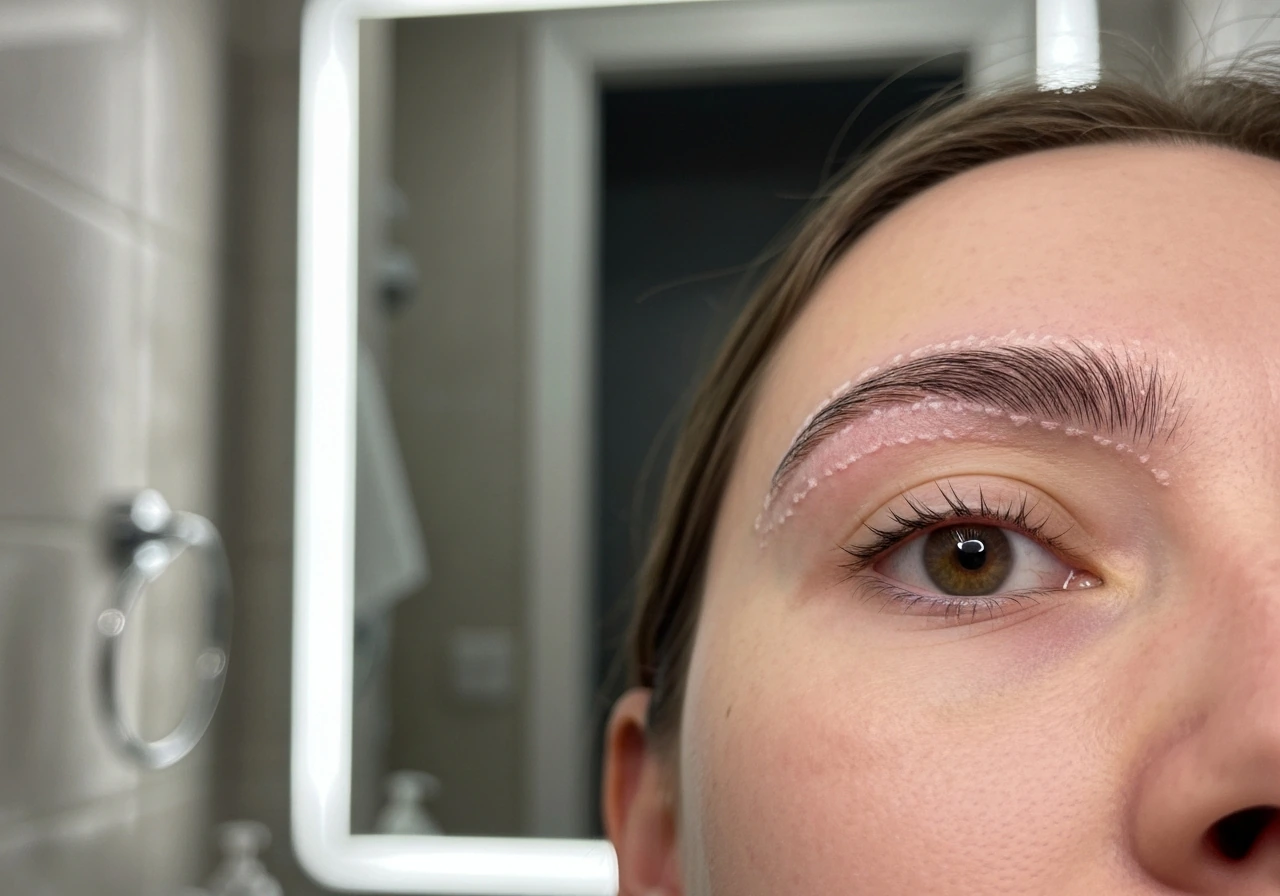
Whether eyebrows grow back after a scar depends almost entirely on one thing: whether the hair follicles beneath that scar are still alive. Superficial scars that only damaged the surface skin often do allow regrowth, sometimes within a few months. Deep, full-thickness injuries that destroyed the dermis and the follicle structures beneath it typically do not allow spontaneous regrowth, because there is nothing left to grow from. The encouraging news is that 'no spontaneous regrowth' does not mean 'no options. For a focused discussion, see our guide on whether a scar on the eyebrow will regrow hair. ' Between topical treatments, procedural stimulation, and surgical hair grafting, there is a meaningful toolkit available depending on what your scar looks like and how long ago it formed.
Do eyebrows grow back after scar: Timelines & treatments
Who this guide is for and how to use it
If you have a scar running through one or both eyebrows, from a cut, burn, surgery, over-plucking damage, or a cosmetic procedure like microblading gone wrong, this article is written for you. It walks through the biology of why some scars allow regrowth and others do not, gives you a clear-eyed look at timelines, and then lays out every evidence-graded option from kitchen-cupboard remedies to follicular transplant surgery. I have organized it so you can jump to the section most relevant to where you are right now: freshly injured, a few months in, or staring at a bald patch that has not changed in years. By the end, you will have a decision pathway and a checklist of next steps you can act on today.
How eyebrow hair grows: cycles, follicles, and what 'regrowth' actually means
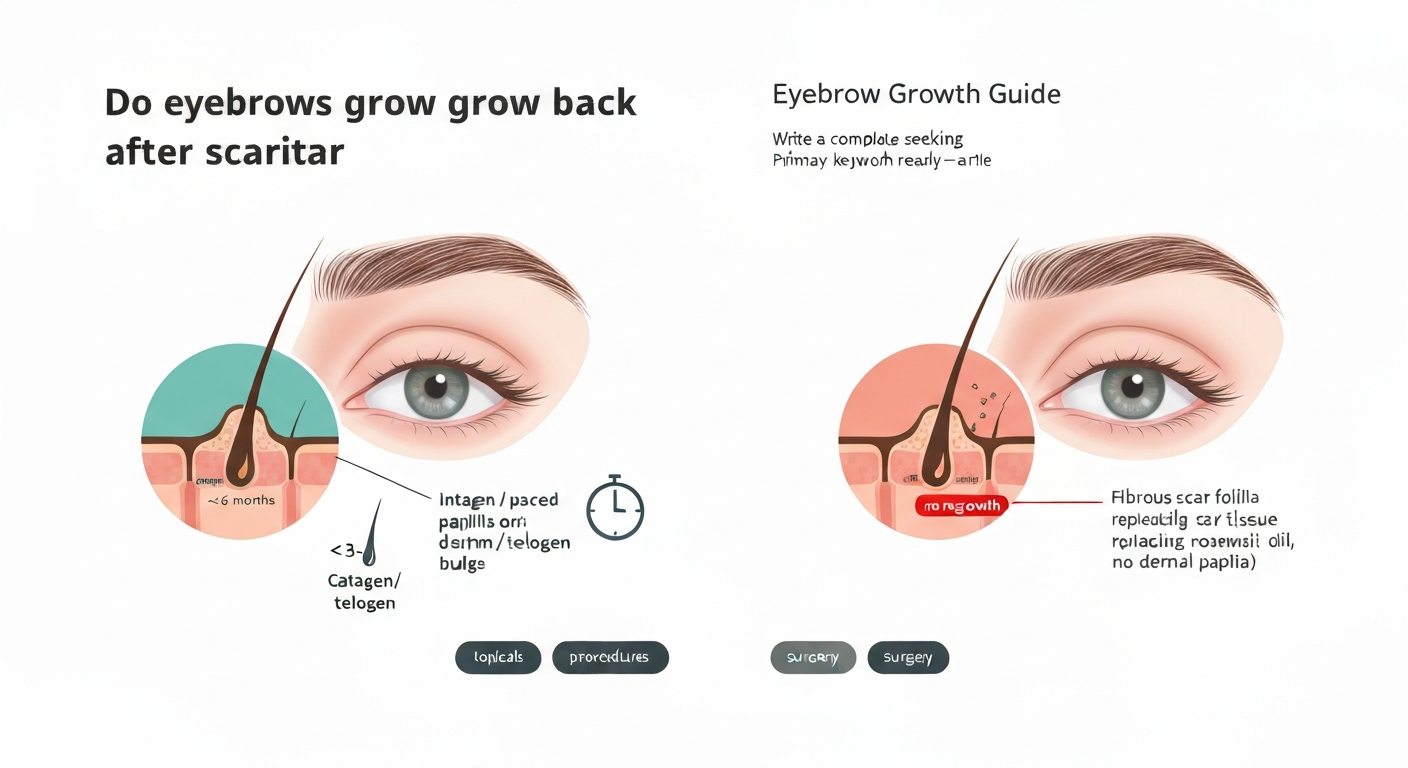
Every hair on your body grows in a repeating cycle with three main phases. Anagen is the active growth phase. Catagen is a short transitional phase where the follicle shrinks. Telogen is the resting phase before the old hair sheds and the cycle restarts. For scalp hair, anagen lasts two to eight years, which is why scalp hair gets long. For eyebrow hair, anagen lasts only about two to three months, catagen about two to three weeks, and telogen roughly two to three months. That puts the full eyebrow cycle at around four months, which is relevant for setting realistic timelines.
At the base of each follicle sits a structure called the dermal papilla (DP), a cluster of signalling cells that essentially instructs the follicle to grow. Wrapped around the DP and running up the follicle wall is a region called the bulge, which contains the follicular stem cells. When both the dermal papilla and the bulge stem cell niche are intact, a follicle can re-enter anagen and produce a new hair. When these structures are damaged or destroyed, the follicle loses its ability to regenerate. This is the biological crux of the scar-regrowth question.
The word 'regrowth' in the context of scarring can mean two different things. It can mean spontaneous regrowth, where surviving follicles resume cycling on their own once the wound heals. Or it can mean induced regrowth, where treatments stimulate partially compromised follicles that have gone dormant but are not fully destroyed. Understanding which category you are in changes your strategy significantly.
How scarring damages hair follicles: the mechanisms
Skin heals in overlapping phases: hemostasis (clotting), inflammation (days), proliferation (weeks to months), and remodeling, which begins around three weeks after injury and can continue for up to twelve months or even two years in deeper wounds. During the remodeling phase, the body lays down collagen to rebuild the damaged area. This is useful for structural repair, but collagen is not selective. It can fill in the space where follicular structures once sat, permanently replacing them with fibrous tissue.
When a wound is shallow, meaning it only affects the epidermis and the very top of the dermis, follicular stem cells in the bulge region often survive. The skin re-epithelializes over the wound, and follicles can restart their cycle. When a wound goes deep enough to destroy the dermis and the appendages within it, those follicles are simply gone. Histologically, this end-stage replacement of follicular epithelium with fibrous connective tissue is considered irreversible. What you see clinically is an absence of follicular openings in the scarred patch, which a dermatologist can confirm with a dermoscope.
Scar types and what each one means for regrowth
Not all scars behave the same way. The type of scar you have is probably the single most important predictor of whether eyebrow hair can return. Here is how each type breaks down.
Superficial and epidermal scars
These are the best-case scenario. A superficial scar only injured the epidermis or the very uppermost dermis. Follicles in this zone are deep enough that their stem cells and dermal papillae were largely spared. Regrowth here is genuinely possible and often happens on its own within one to two full hair cycles, so roughly three to six months. You might notice fine, slightly lighter hairs coming through the scar first. These often darken and thicken as cycles progress.
Atrophic scars
Atrophic scars are depressed or sunken, often the result of acne, chickenpox, or a wound that healed with too little collagen. The skin over an atrophic scar is thin and the underlying tissue is reduced. Follicle fate here is variable. Some atrophic scars retain partial follicular structures and can support regrowth, especially if hair loss is patchy rather than complete. Others represent deeper tissue loss where follicles are genuinely absent. Dermoscopy is particularly useful here to check for follicular openings.
Hypertrophic and keloid scars
These scars involve an overproduction of collagen, creating raised, firm tissue. Hypertrophic scars stay within the wound boundary; keloids grow beyond it. Both represent significant dermal disruption. Hair follicles within these scars are almost always non-functional because the excess fibrous tissue displaces or compresses follicular structures. Spontaneous regrowth within hypertrophic or keloid scar tissue is unlikely. These also require careful treatment selection because aggressive interventions like microneedling or steroid injections must be approached with protocols specific to keloid-prone tissue.
| Scar Type | Follicle Status | Spontaneous Regrowth Likely? | Best First Step |
|---|---|---|---|
| Superficial/epidermal | Mostly intact | Yes, within 3–6 months | Wait and observe, gentle massage |
| Atrophic | Variable (partial to absent) | Possible if follicular openings present | Dermoscopy assessment, topical treatments |
| Hypertrophic | Compressed/disrupted | Unlikely | Scar softening first, then procedural options |
| Keloid | Absent or non-functional | Very unlikely | Dermatologist referral; surgical options after stabilization |
Timelines and signs that regrowth is or is not happening
The first thing to understand is that patience is not optional here. Because the eyebrow cycle takes about four months end-to-end, you genuinely cannot assess whether a follicle is capable of regrowing until at least one full cycle has passed after the wound has closed. Judging at six weeks is too early.
Here is a rough timeline of what to watch for. In weeks one through four, the wound is still healing. Do not try to assess regrowth potential yet. In weeks four through twelve, once the surface is fully closed and the skin is no longer raw, you may begin to see fine vellus hairs emerging at the scar edges, which is a positive sign. By months three to six, any follicles that survived the injury and are capable of producing hair should be showing some activity. If you see absolutely nothing by month six in a wound that has fully healed, the probability of spontaneous regrowth drops significantly.
- Positive signs: fine hairs appearing at scar edges, follicular openings visible under magnification, skin over scar softening and becoming more pliable
- Concerning signs: completely smooth, shiny scar surface with no follicular pores, no hair activity after 6 months of healed skin, raised or thickened scar tissue
- Reassuring but neutral: slight redness or pink coloration in a new scar is normal and does not predict follicle status either way
- Seek dermoscopy if: you have patchy loss and cannot tell whether the bald area is scarring alopecia or another cause
A dermatologist can use dermoscopy (also called trichoscopy) to look for follicular openings within the scar. The presence of follicular ostia is a strong indicator that living follicles remain. Their absence, combined with white structureless areas and perifollicular fibrosis on dermoscopy, points strongly to established cicatricial alopecia. High-frequency ultrasound (20 MHz or higher) can add further detail by imaging the follicle density and detecting dermal fibrosis. If clinical uncertainty persists, a punch biopsy with both horizontal and vertical sections can give a definitive histologic answer.
Natural and home strategies: what the evidence actually says
I want to be upfront here: natural remedies occupy a space where the emotional appeal is high and the clinical evidence is often thin. That does not mean they are useless, but it does mean you should treat them as supportive measures, not primary treatments, especially for deeper scars. For a practical, down-to-earth guide on how to grow hair on eyebrow scar naturally that summarizes gentle home techniques and when to seek medical care, see our dedicated resource on how to grow hair on eyebrow scar naturally.
Massage
Gentle massage of a healed scar helps break down superficial fibrosis, improves local circulation, and increases tissue pliability. For scars that still have viable follicles, improved vascularity may support follicle cycling. Use clean fingertips and a small amount of oil, applying light circular pressure for one to two minutes daily. Do not massage open wounds, inflamed tissue, or keloid-prone scars without medical guidance.
Castor oil
Castor oil (Ricinus communis) is probably the most popular home remedy for eyebrow regrowth, and I understand the appeal. It is thick, moisturizing, and easy to apply. However, systematic reviews and major clinical resources note that the evidence for castor oil promoting human hair regrowth is anecdotal or preclinical. There are no robust randomized controlled trials demonstrating reliable regrowth in humans. That said, castor oil is a reasonable emollient for scar massage and unlikely to cause harm in closed, healed wounds. Use it as a vehicle for massage rather than expecting it to independently resurrect follicles.
Rosemary oil
Rosemary oil has slightly more clinical traction. A 2015 randomized trial found rosemary oil performed comparably to 2% minoxidil for androgenetic alopecia on the scalp at six months. That is notable, though it is worth flagging that the comparison group was 2% minoxidil (the weaker formulation), and the study was in scalp androgenetic alopecia, not eyebrow scar tissue. Extrapolating to scar regrowth is a stretch. Still, diluted rosemary oil (roughly two to three drops in a carrier like jojoba or castor oil) applied to the brow area is a reasonable low-risk addition to a home routine for scars with surviving follicles.
Nutrition and supplements
Hair growth requires building blocks, and deficiencies in certain nutrients can suppress follicle cycling. Biotin, iron (especially ferritin in women), zinc, vitamin D, and protein are the most commonly implicated in diffuse hair loss. If you are deficient in any of these, correcting that deficiency supports hair health system-wide, including at eyebrow follicles. However, supplementing above normal levels when you are not deficient does not accelerate growth. Get a blood panel before loading up on supplements. The evidence for specific supplements driving regrowth in scar tissue specifically is very limited.
Topical and non-procedural medical options
Minoxidil (off-label)
Topical minoxidil is the best-evidenced non-prescription pharmacological option for eyebrow hypotrichosis. It is not FDA-approved for eyebrows, but off-label use is well-established and clinician-supported. Minoxidil works by prolonging anagen and promoting follicle cycling. Randomized trials have shown it improves eyebrow hair density in non-scarring causes. For scar tissue, its effectiveness depends entirely on whether viable follicles are present. Applying minoxidil to a patch of fibrotic tissue with no follicles will not produce hair. For scars with surviving follicles, a 2% or 5% solution applied once daily to the brow region is a reasonable trial, but use it carefully around the eye area and discuss with a dermatologist first. Results, if they occur, typically take three to four months to become visible.
Topical prostaglandin analogs (bimatoprost, latanoprost)
Bimatoprost is FDA-approved for eyelash hypotrichosis and has randomized trial evidence for improving eyebrow density in non-scarring conditions as well. Like minoxidil, prostaglandin analogs require viable follicles to work. They extend anagen and increase follicle size. A comparative trial of 2% minoxidil versus bimatoprost for eyebrow hypotrichosis showed both treatments improved density, with bimatoprost performing comparably. These are prescription agents with potential side effects including periorbital skin darkening and iris pigmentation changes, so medical supervision is essential.
Silicone gel and sheets
Topical silicone (gel or adhesive sheets) has strong randomized controlled trial and meta-analytic evidence for reducing scar height, redness, and stiffness in hypertrophic and postoperative scars. This is genuinely useful for improving scar quality and pliability, which in turn creates a more favorable tissue environment for any follicles on the scar margin. However, there is no evidence that silicone directly restores hair in a scarred area. Think of it as a scar preparation tool rather than a regrowth treatment.
Onion extract (Allium cepa)
Onion extract gels are heavily marketed for scar treatment and are sometimes mentioned alongside hair regrowth claims. Meta-analyses of randomized trials have consistently found no clear benefit of onion extract over standard emollient or other topical care for scar improvement. There is no meaningful evidence for hair regrowth either. I would skip this one and put that money toward something better-evidenced.
In-office treatments and procedures
Microneedling
Microneedling creates controlled micro-injuries in the dermis that stimulate collagen remodeling and, importantly, can trigger growth factor release that may activate dormant follicles. For atrophic scars with surviving follicular structures, microneedling is a reasonable procedural option. It is sometimes combined with topical minoxidil or PRP to enhance penetration and effect. It is not appropriate for active infection, open wounds, keloid-prone skin, or very thin scar tissue. Sessions are typically spaced four to six weeks apart, and three to six sessions are usually recommended before assessing results.
Platelet-rich plasma (PRP)
PRP involves drawing a small amount of your own blood, centrifuging it to concentrate the growth factor-rich platelet fraction, and injecting it into the target area. The growth factors in PRP, including PDGF and VEGF, can stimulate dermal papilla activity and follicle cycling. PRP has growing evidence for androgenetic alopecia and has been used in scar alopecia cases, though high-quality randomized trials specifically for eyebrow scar regrowth are limited. It is most likely to help when some follicular architecture remains within or around the scar. Multiple sessions (typically three to four, spaced monthly) are standard, with maintenance sessions thereafter.
Corticosteroid injections
Intralesional corticosteroid injections (typically triamcinolone acetonide) are primarily used to reduce active inflammation and flatten hypertrophic or keloid scars. In some inflammatory scarring alopecias, reducing the inflammatory component can allow surviving follicles to resume activity. However, repeat or high-dose corticosteroid injections carry risks including dermal atrophy, hypopigmentation, and telangiectasia, which are particularly significant in the thin skin of the eyebrow region. This treatment needs to be managed by a dermatologist.
Silicone injections and fillers
Silicone injections (liquid injectable silicone) have been used to lift atrophic scars and improve contour. They do not restore hair follicles but can improve the cosmetic appearance of a depressed scar. Filler injections (hyaluronic acid) can similarly lift a depressed brow scar area temporarily. These are cosmetic adjuncts, not regrowth treatments, and carry their own risks including granuloma formation with permanent silicone. Always consult a board-certified provider.
Surgical options: when home and topical treatments are not enough
Scar revision
Surgical scar revision excises the existing scar tissue and re-closes the wound, ideally under better tension and with more precise technique than the original injury allowed. A well-planned revision can transform a wide, hypertrophic scar into a narrower, flatter one that is more amenable to subsequent hair transplantation. Revision is typically considered after the original scar has matured fully, commonly twelve to eighteen months post-injury for facial scars, when the tissue is pale, soft, flat, and pliable. Many surgical groups advise waiting for scar stability, commonly 6–12 months and often up to 12–18 months for facial or scalp scars, before elective hair or transplant procedures (Surgical Management of Scarring Alopecia (IntechOpen review)).
Follicular unit extraction (FUE) and eyebrow hair grafting
Eyebrow hair transplantation using FUE is the most reliable option for restoring hair in a fully scarred area with no viable follicles. Individual follicular units are harvested from a donor site (usually the scalp behind the ear or the nape, or sometimes leg hair for finer texture) and implanted into the scarred brow area. FUE for eyebrows is technically demanding because the angle, direction, and density of eyebrow hairs are very specific. Candidacy depends on scar tissue quality: the tissue needs adequate blood supply and thickness to sustain the grafts. Dense, avascular keloid tissue is a poor graft bed. Results are generally good in well-selected candidates, though transplanted scalp hairs may continue to grow at a scalp rate and require trimming. Most surgeons advise waiting until the scar has been stable for at least twelve months, and many prefer eighteen months or longer, before attempting grafting.
How microblading and cosmetic tattooing interact with scar tissue
Microblading and permanent cosmetic tattooing can be effective tools for camouflaging eyebrow scars while waiting for regrowth or as a long-term solution when hair restoration is not possible. However, their relationship with the underlying tissue is more complicated than many people realize. Microblading involves creating small cuts in the skin to deposit pigment, which means it introduces additional trauma to an area that has already been injured. On recently healed scar tissue, this can trigger further inflammation or affect pigment retention unpredictably: scar tissue tends to hold pigment less evenly than normal skin, often resulting in patchy or faded results. If you are considering future FUE hair transplantation, tattooing can complicate the process by making it harder for the surgeon to plan graft placement and visualize the natural architecture.
Microblading does not stimulate or inhibit follicle regrowth in any meaningful way. The trauma is too superficial to destroy remaining follicles, but it does not activate them either. If you are in the waiting phase (under twelve months post-injury) and still have hope for natural regrowth, I would hold off on microblading and let the biological process play out first. If regrowth has plateaued and you want cosmetic coverage in the interim, microblading on a fully healed stable scar, by an artist experienced with scar tissue, is a reasonable choice. Just go in with realistic expectations about pigment retention and plan for touch-ups. Powder brow tattooing (rather than hairstrokes) can sometimes perform more consistently on scar tissue because it covers the area rather than relying on precise linear strokes in tissue that may not hold them cleanly.
Decision pathways by scenario
New scar: injury within the last 4 weeks
Your priority right now is proper wound care and protecting the healing tissue. Keep the wound clean, follow any medical instructions given for wound closure, and do not apply oils, serums, or treatment products to an open or freshly closed wound. Do not start minoxidil, microneedling, or any other active treatment. The only thing you are doing in this phase is letting the wound heal cleanly. Revisit the question of follicle viability at the three-month mark.
Healing scar: 1–6 months post-injury
Once the surface is fully closed and there is no active inflammation, you can begin gentle scar massage with a light oil such as jojoba, rosemary diluted in carrier oil, or castor oil. Silicone gel applied to the scar surface daily is appropriate from around week four to six and can help improve pliability. Focus on scar quality during this phase: a softer, flatter scar is a better environment for any follicles that are still present. Watch for early hair signs at the scar margins. Do not start minoxidil until the skin is fully stable and you have ideally checked with a dermatologist about follicle viability.
Old scar with no hair: 6+ months and no regrowth
At this point, self-assessment has limits. Book an appointment with a dermatologist for trichoscopy. The result will tell you whether follicular openings are present (there is something to work with) or absent (follicles have been replaced by fibrosis). If follicles are present but dormant, a trial of topical minoxidil 2% to 5% for at least four to six months is a reasonable next step, possibly alongside PRP sessions. If follicles are absent, the conversation shifts to FUE hair transplantation or cosmetic tattooing, and you need a referral to a hair restoration surgeon.
Partial regrowth: some hairs present but the scar is still patchy
This is actually an encouraging scenario because surviving follicles are clearly present and active. Start or continue topical minoxidil (discuss with a dermatologist), add regular gentle massage, and optimize nutrition. Consider a PRP series to stimulate the dormant follicles adjacent to the ones already growing. Give any treatment regimen a minimum of four to six months before assessing whether it is working. If density plateaus and you want more coverage, targeted FUE to fill in the gaps rather than transplant the whole area is an option.
Which specialist do you need, and when
A general dermatologist is your first stop for trichoscopy assessment, a diagnosis of scar type, and prescriptions for minoxidil or prostaglandin analogs if indicated. Bring photographs of the scar at different time points if you have them, a description of the original injury or procedure, and any products you have already tried. Ask specifically whether the pattern suggests cicatricial alopecia and whether a biopsy is warranted.
A hair restoration surgeon (typically a dermatologist or plastic surgeon with subspecialty training in hair transplantation) is the right referral when trichoscopy or biopsy confirms absent follicles and you are interested in FUE. They will assess scar tissue quality, graft donor availability, and whether the scar bed can support transplantation. Many prefer to see you only after the scar has been stable for twelve to eighteen months.
A plastic surgeon or facial plastic surgeon is appropriate when scar revision (excision and re-closure) is being considered before hair transplantation, or when the cosmetic deformity of the scar itself (not just the hair loss) needs to be addressed. They can also manage keloid or hypertrophic scars with combined surgical and non-surgical protocols.
Tracking progress and knowing when to change course
Set a checkpoint system for yourself rather than assessing daily (which leads to frustration and false conclusions). The minimum meaningful assessment window for most eyebrow treatments is four months, because that is one full hair cycle. For topical minoxidil or prostaglandin analogs, allow four to six months of consistent daily use before deciding whether the treatment is working. For PRP or microneedling series, assess two to three months after the final session.
Photograph your brows in the same lighting, at the same angle, once a month. This makes progress much easier to see than daily inspection in a mirror. If after a full treatment trial of four to six months there is no measurable change in hair count or scar quality, that is the signal to escalate to the next level of care, whether that means getting a biopsy, a referral for PRP, or a consultation with a hair restoration surgeon.
Safety cautions and when to hold off on treatment
- Never apply any topical treatment, oil, or active ingredient to an open wound or actively infected skin. Wait until the wound surface is fully closed and healed.
- Minoxidil is not safe during pregnancy or breastfeeding. If you are pregnant or planning to become pregnant, discuss all hair loss treatments with your doctor before starting.
- Prostaglandin analogs (bimatoprost, latanoprost) require prescription and medical supervision due to potential eye-related side effects, including iris darkening.
- Repeated corticosteroid injections in thin facial skin can cause irreversible dermal atrophy and hypopigmentation. This risk is higher in darker skin tones.
- Microneedling on active infection, rosacea flares, or on raised keloid tissue can worsen the scar or spread infection. Always treat on stable, healed skin.
- Aggressive massage or traction on a fresh or hypertrophic scar can stimulate excessive collagen deposition and worsen the scar. Keep pressure light.
- Certain essential oils (tea tree, peppermint, undiluted rosemary) are irritating near the eye and should always be diluted before application near the brow.
- If the scar becomes red, warm, swollen, or begins to discharge fluid after you start a treatment, stop the treatment and seek medical review for possible infection or allergic reaction.
Setting realistic expectations
I want to be honest with you about what is and is not achievable, because false hope is genuinely unhelpful. If the follicles in your scar are gone, no topical product will bring them back. That is not pessimism, it is the biology of irreversible cicatricial alopecia. What is genuinely possible is cosmetic restoration through FUE hair grafting, which can produce natural-looking results in well-selected candidates, or cosmetic tattooing, which can be beautifully executed by a skilled artist and is far less invasive. For scars with surviving follicles, meaningful improvement is realistic with the right treatments and enough time, but 'complete' restoration to pre-scar density is not guaranteed and may require multiple interventions over twelve or more months.
The emotional side of this matters too. Eyebrows are a defining feature of facial expression and identity, and having a scar through one or both brows can feel really significant. It is reasonable to feel frustrated, especially when progress is slow or unclear. Give yourself structured checkpoints rather than constant monitoring, build a plan with a dermatologist or surgeon so you feel agency over the process, and remember that the cosmetic tools available today, from skilled microblading artists to hair transplant surgeons, are genuinely good. Most people with eyebrow scars can reach a place they feel confident about, even if the path takes longer than they hoped.
Your practical next steps checklist
Today (immediate actions)
- Photograph the scar area in good natural light. This is your baseline.
- Assess the wound status: is the skin fully closed? If not, focus only on clean wound care.
- If fully healed, begin once-daily gentle massage (one to two minutes) with a light carrier oil.
- Start silicone gel on the scar surface if the wound has been closed for at least four weeks.
- Book an appointment with a dermatologist for trichoscopy if the scar is six months old or more with no signs of regrowth.
Months 1–3
- Continue daily massage and silicone gel consistently.
- Get a blood panel including ferritin, vitamin D, zinc, and thyroid function to rule out deficiencies.
- If your dermatologist confirms viable follicles, discuss starting topical minoxidil 2% under their guidance.
- Add diluted rosemary oil to your massage routine if the skin tolerates it well.
- Photograph monthly and compare to your baseline.
Months 3–12
- If minoxidil has been running for four to six months, assess results with your dermatologist.
- If there is partial improvement but you want more density, discuss a PRP series (typically three to four sessions).
- If there is no follicular activity and trichoscopy confirms fibrosis, request a referral to a hair restoration surgeon for FUE consultation.
- If the scar itself (not just the hair loss) is still raised or thick at twelve months, consider a plastic surgery consult for scar revision before any hair transplantation.
- Decide whether cosmetic tattooing (microblading or powder brows) is something you want as a bridge or permanent solution, and if so, consult with an artist experienced in scar tissue work.
Specialist types and further resources to explore
For ongoing learning and referrals, the four specialist types most relevant to eyebrow scar regrowth are: a dermatologist with trichology interest for diagnosis and topical medical treatments; a hair restoration surgeon (often a dermatologist or plastic surgeon with ABHRS certification) for FUE consultation; a board-certified plastic or facial plastic surgeon for scar revision or keloid management; and a patch testing or allergy clinic if you have concerns about reactions to topical products before committing to a long-term regimen. If you are exploring the natural side of regrowth for scars with surviving follicles, pairing the home strategies above with medical monitoring gives you the best chance of an accurate picture of what is working.
FAQ
Do eyebrows grow back after a scar?
It depends. If the injury spared the hair follicle or its stem cell niche (partial‑thickness injury), regrowth is possible. If the scar is cicatricial (full‑thickness destruction of follicles replaced by fibrous tissue) spontaneous regrowth is unlikely. Clinical signs (see later) and noninvasive tests help decide which situation you have.
How does eyebrow hair growth work and how does scarring interfere?
Eyebrow follicles have a short hair cycle (complete cycle ≈4 months). The dermal papilla and the follicular stem cell niche (bulge) signal growth. Scarring can damage or obliterate those structures. If the dermal papilla or bulge stem cells are destroyed and replaced by fibrosis, follicles cannot re‑initiate hair production.
What types of scars affect eyebrow regrowth and what is the prognosis for each?
- Superficial (epidermal/upper dermal): often spares follicular units → good chance of regrowth. - Atrophic/depressed scar: variable—if follicles survive in deeper dermis, partial regrowth possible. - Hypertrophic/keloid scar: follicles may be compressed but sometimes present; regrowth possible but unpredictable and may require scar treatment first. - Cicatricial (scarring) alopecia/full‑thickness replacement by fibrosis: follicles absent → spontaneous regrowth unlikely; surgical restoration or transplantation usually required.
What clinical signs and timelines suggest regrowth is likely or unlikely?
Signs regrowth likely: visible mini hairs, follicular ostia (tiny pore-like openings) present, gradual reappearance over weeks–months. Timelines: eyebrow follicles cycle in months, so early regrowth can appear within 1–4 months after injury if follicles survive; meaningful density improvement can take 3–12 months. Signs regrowth unlikely: complete smooth shiny pale scar, loss of follicular openings, no hair after several cycles (6–12 months) — consider advanced assessment.
How should I assess a new (recent) eyebrow scar at home and when should I wait before intervening?
For fresh wounds: prioritize wound care and infection prevention. Keep clean, follow suturing/closure advice, avoid aggressive massage or topical agents until re‑epithelialization (usually 1–3 weeks). Scar remodeling takes months; wait at least 3–6 months (often 6–12 months) before cosmetic procedures or hair transplantation to allow scar maturation and accurate assessment of follicle viability.
Which home or natural strategies might help, and what is the evidence?
- Gentle massage after the wound is closed and scar is healed (usually once epithelized, and only after inflammation subsides): may improve pliability but evidence for hair regrowth is weak. - Oils (castor, rosemary): anecdotal or limited scalp evidence (rosemary showed benefit in one scalp study); no reliable RCT evidence these restore hair in scarred eyebrow areas. - Nutrition: ensure adequate protein, iron, vitamin D and general nutritional support—important for hair health but not a cure for destroyed follicles. Overall, evidence for strict hair regrowth in scar tissue from home remedies is limited or anecdotal.
Do Eyebrows Grow Back After Microblading? Timeline, Signs, and Help
Know if brows regrow after microblading, typical shedding timeline, normal vs problem signs, and what to do now.