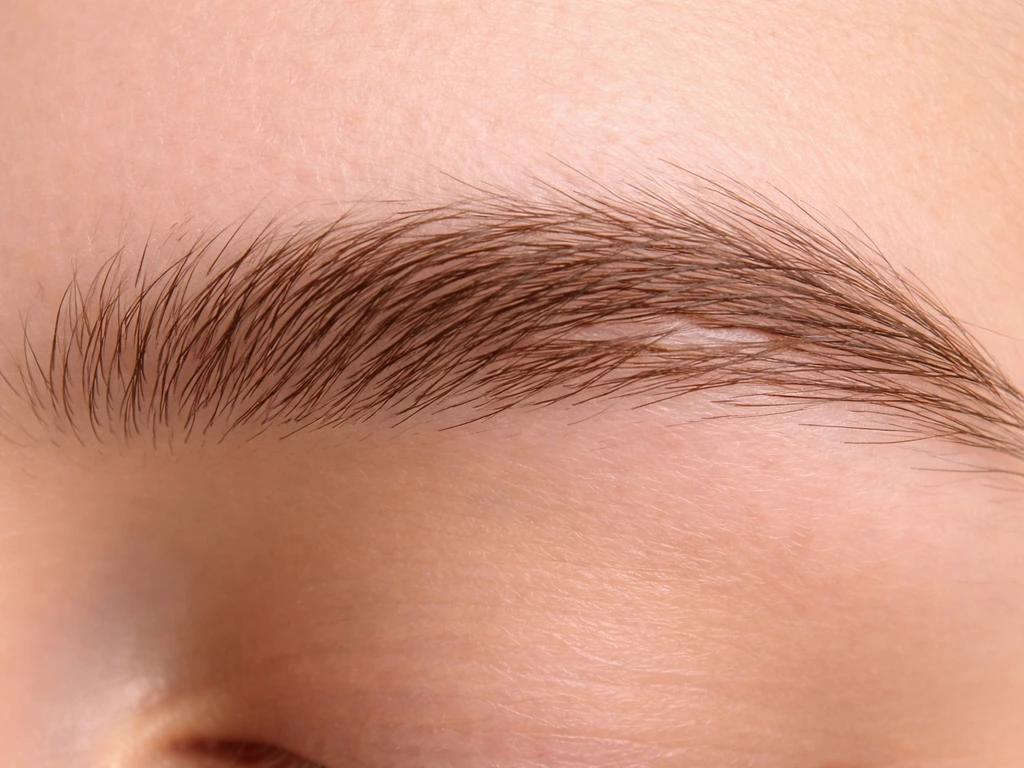
Yes, your eyebrows will grow back after cutting them. Whether you trimmed them too short with scissors or accidentally shaved part of a brow, the hair will return because cutting only removes the hair shaft above the skin, it leaves the follicle completely intact underneath. With an undamaged follicle, regrowth is not a question of if, it's a question of when. For most people, that means visible stubble within two to four weeks and a fuller look within two to six months, depending on how much was removed.
If You Cut Your Eyebrows, Will They Grow Back?
James Whitmore
14 May 2026
What "cutting" actually means for your follicles
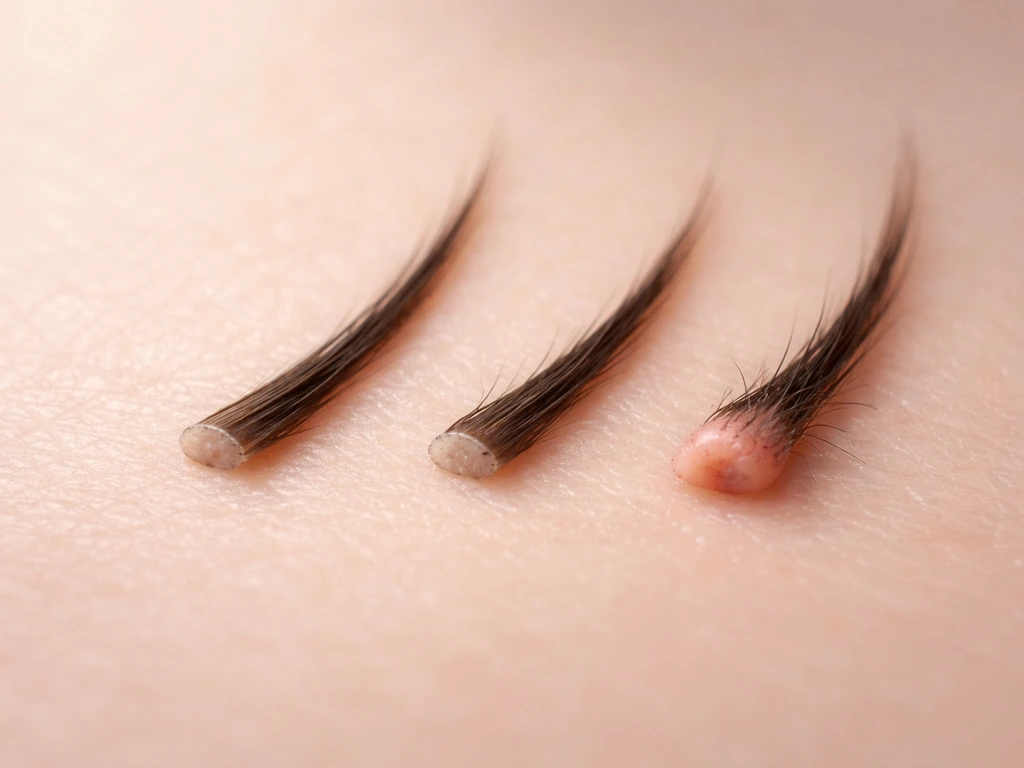
This is the most important thing to understand, because it determines everything about your regrowth outcome. When you cut eyebrow hair with scissors or shave it at the skin surface, you are only removing the visible hair strand. The follicle, the living structure rooted beneath your skin that produces the hair, is completely untouched. That follicle will keep cycling through its growth phases and push a new hair up, just as it always has.
The situations where regrowth becomes genuinely uncertain are very different from trimming or shaving. Repeated aggressive plucking over years can cause inflammation and scarring around the follicle. Burns, deep abrasions, or injuries that destroy the tissue where the follicle lives can cause permanent loss. If you are wondering do burnt eyebrows grow back, the answer depends on whether the burn destroyed the follicle tissue. Autoimmune conditions like alopecia areata, where the immune system attacks the follicle itself, are another category entirely. Scarring conditions, where fibrosis actually replaces the hair bulb, are the only scenarios where hair may not return. None of that applies to a trim gone wrong or an accidental shave.
One thing cutting does not do: make hair grow back thicker or faster. That is a persistent myth. Shaving creates a blunt tip that feels stubbly and may look darker against the skin at first, but the actual hair strand, its texture, color, and growth rate, is unchanged. The follicle does not know or care what happened above the skin.
Realistic timelines: what to actually expect
Eyebrow hair has a shorter growth cycle than scalp hair. The active growth phase (anagen) for eyebrow follicles lasts roughly 28 days, compared to years on your scalp. After that, follicles rest before cycling again, which is part of why eyebrows stay a consistent length naturally and also why full regrowth takes longer than you might hope.
| Situation | First Visible Regrowth | Fuller Appearance | Back to Normal |
|---|---|---|---|
| Trimmed too short with scissors | 1–2 weeks | 4–8 weeks | 6–10 weeks |
| Partial shave (one section of brow) | 2–3 weeks | 6–10 weeks | 3–4 months |
| Full brow shaved off | 2–4 weeks | 2–4 months | Up to 6 months |
| Repeated trauma (years of over-plucking) | Variable | Variable | May be incomplete |
A single study cited by Medical News Today found that eyebrows can take up to six months to fully grow back after shaving, which tracks with what most people experience when they've removed a lot of hair at once. If you just trimmed a brow too short, you are looking at a much shorter wait, often just a few weeks before things look normal again. Age and individual genetics play a real role here too, younger skin with healthy circulation tends to cycle faster than older skin.
What to do right now (the first few days matter)

The immediate priority is simple: do not make things worse. Here is what to focus on in the first week.
- Leave the area alone. Resist the urge to keep trimming or shaping. Every time you touch it you risk removing more hair or irritating the skin.
- Keep the skin clean and moisturized. Dry, flaky skin around a freshly shaved follicle can slow the initial growth phase. A gentle, fragrance-free moisturizer works fine.
- Avoid harsh exfoliants, retinoids, or acid-based skincare directly on the brow area for at least a week. These can irritate the follicle openings.
- Do not wax, thread, or pluck the area while you are trying to grow things back. That removes hair at the root and extends your timeline.
- Protect the area from sun exposure if the skin is sensitive or slightly irritated after shaving — a little SPF goes a long way.
Home remedies that can actually help (and what to expect honestly)
Castor oil and rosemary oil are the two most commonly recommended home remedies for eyebrow regrowth, and both have some basis for optimism, but neither is a magic fix, and the science on topical oils specifically for eyebrows is not robust. I want to be straight with you about that.
Castor oil
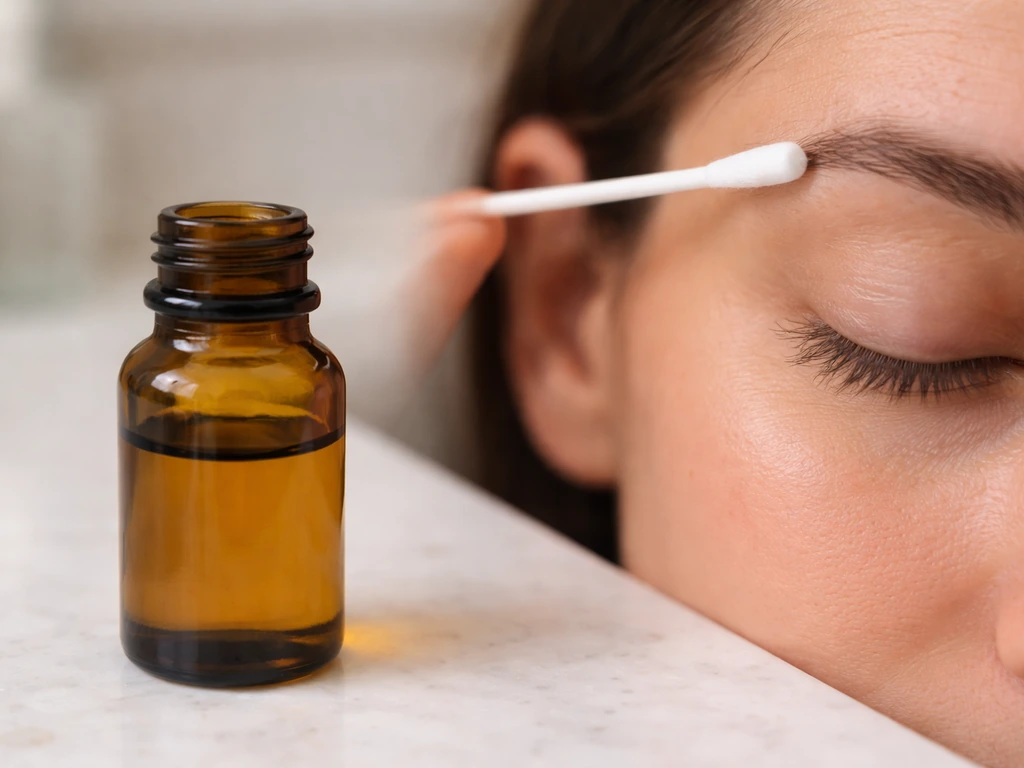
Castor oil is rich in ricinoleic acid and has long been used as a hair growth remedy. There is no large clinical trial proving it regrows eyebrow hair, but it is deeply moisturizing, poses almost no risk, and many people report that their brows feel and look healthier with consistent use. Apply a small amount with a clean spoolie or cotton swab to the brow area before bed, and rinse it off in the morning. Give it at least six to eight weeks of consistent nightly use before judging results. If you dye your eyebrows, the hair still needs time to cycle, so growth will depend on your normal regrowth timeline if you dye your eyebrows does it grow out. If your skin is prone to milia or clogged pores, be careful not to apply it too close to the eye area.
Rosemary oil
Rosemary oil has better supporting research than castor oil, a 2015 study comparing it to minoxidil 2% for scalp hair loss found comparable results at six months. For eyebrows specifically, the research is still limited, but the mechanism (improving circulation and having anti-inflammatory properties) makes it a reasonable addition. Always dilute rosemary essential oil in a carrier oil before applying it to skin, about 2 to 3 drops per teaspoon of carrier oil (like jojoba or castor) is a standard dilution. Apply lightly to the brow, leave it on overnight, and wash off in the morning.
Nutrition also matters more than most people realize. Hair follicles are metabolically active and need protein, biotin, iron, zinc, and vitamins D and B12 to function well. If your diet is lacking any of these, a basic multivitamin or a targeted hair supplement (look for biotin, iron, and zinc together) can support the growth cycle from the inside out. This is especially worth considering if you have noticed overall hair thinning anywhere, not just the brows.
When to consider medical options like minoxidil
If your brows were already sparse before the cut, or if you have been waiting three to four months and are not seeing meaningful regrowth, it is worth thinking about evidence-backed medical options. Topical minoxidil is the most accessible of these. It is FDA-approved for scalp hair loss and is used off-label for eyebrow thinning, but dermatologists do recommend it in this context.
For eyebrows, a low concentration like 2% minoxidil solution (not 5%, which can irritate the thin skin near the eyes) is typically used once daily, a very small amount applied carefully to the brow area with a cotton swab. Results take time: expect to wait three to six months before seeing a noticeable difference, and full results can take closer to a year. The catch is that minoxidil only works while you are using it. If you stop, any gained growth tends to revert. That is a commitment worth considering before you start.
blank" rel="noopener noreferrer">Prostaglandin analogs like bimatoprost (originally developed as a glaucoma eye drop) have also been studied specifically for eyebrow thinning, with clinical trials using bimatoprost 0.03% showing real promise for hypotrichosis. PubMed indexes a clinical investigation testing blank" rel="noopener noreferrer">bimatoprost 0.03% for eyebrow hypotrichosis, using that specific concentration in the study. This is a prescription-only route and something to discuss with a dermatologist rather than a DIY option. It is not something you need for a simple trim-related setback, but if sparse brows are a long-standing concern, it is worth knowing about.
A quick note on safety: never apply any solution close to your eyes without understanding the risks. Minoxidil can cause irritation, redness, and unwanted facial hair if it migrates. Use it precisely and sparingly.
Managing your brows while you wait (and when to see a doctor)
The waiting period is genuinely frustrating, but there are practical ways to manage how your brows look in the meantime. A good brow pencil or pomade in a shade that matches your natural hair can fill gaps convincingly. Brow gels with fibers add volume to thinning areas. If one brow is significantly shorter than the other, a light trim to the longer brow (not the short one) can create a better visual balance while both grow out. Microblading and tinting are options some people consider, but I would personally wait until you have regrowth to work with before committing to either.
As for when to actually see a dermatologist: if you have been waiting more than four to six months after a cut or shave and see no new growth at all, that is worth investigating. It could indicate an underlying condition, a thyroid issue, alopecia areata, nutritional deficiency, or a skin condition like eczema or psoriasis affecting the follicle. Similarly, if you notice any signs of irritation, infection, redness, or patchy loss that extends beyond where you cut, do not wait. A dermatologist can use trichoscopy (a dermoscopic view of the follicle) to identify whether the follicles are alive and what might be preventing growth, which is far more useful than guessing. The same applies if you have noticed generalized thinning of your brows over time unrelated to cutting, that is a different issue from a scissors accident and deserves a proper evaluation.
If you are dealing with a specific variant of eyebrow loss, such as a deliberate eyebrow slit that you want to grow back, a burn or singe injury, or brows thinned from over-bleaching, the core biology is similar but the timelines and care steps can differ slightly. If your brows were thinned from over-bleaching, you may be wondering, do bleached eyebrows grow back and how long that usually takes. If you singed your eyebrows, the good news is that many mild burns still allow regrowth, while deeper injuries may not singed eyebrows. Cuts and shaves are the most straightforward scenario precisely because the follicle is never involved. Give your brows time, support the process with good skin care and nutrition, and the hair will come back. While dog eyebrow hair can also shed or thin, regrowth depends on the cause and may require a vet’s guidance dog eyebrow hair regrowth. If you are wondering whether the unibrow will grow back after shaving or trimming, the same follicle rules apply. If you are wondering does eyebrow slits grow back, the answer is usually yes, as long as the follicle tissue is not destroyed.
FAQ
If I shave my eyebrows with a razor, will the results be the same as trimming with scissors?
Usually yes, as long as you are only removing the hair at the skin surface. The follicle remains intact, so regrowth should follow a similar timeline, but shaved brows can look darker at first because the new tips come in blunt and close to the skin.
How can I tell whether my eyebrow follicles were actually damaged?
Look for more than just regrowth delay. If you develop persistent redness, crusting, open sores, or smooth, shiny bald patches that do not sprout any stubble by about 4 to 6 months, that suggests more than a simple cut and is a reason to see a dermatologist.
Will my brows grow back uneven if I cut one side more than the other?
Yes, it is common. Different rates of cycling and slight technique differences mean one brow may show stubble sooner, and the “matching” stage can take a few extra weeks to a couple of months. Use filling products on the faster-growing side sparingly to avoid a visible mismatch.
Can I speed regrowth by shaving or cutting again so the hairs “come through” faster?
No. Cutting or shaving repeatedly only removes hair that is already regrowing, it does not shorten the follicle’s growth cycle. Frequent re-cutting can also increase irritation and make timing look worse.
Do eyebrow regrowth timelines change if I use oil or minoxidil right after cutting?
They can change how your skin feels and how consistently the hair grows, but they do not override the biology of the cycle. For minoxidil, you should expect results to start around 3 to 6 months and you must keep using it, for oils like castor or diluted rosemary, plan for at least 6 to 8 weeks before judging.
Is biotin or a “hair growth” supplement enough if I do not eat well?
It can help if you are deficient, but it is not guaranteed for everyone. A practical approach is to prioritize iron and zinc if your diet is low, consider checking labs if you have heavy shedding elsewhere, and avoid mega-dosing biotin because it can interfere with some blood tests.
Can I safely dye or bleach my eyebrows while they are growing back from a cut?
Better to wait. Hair dye or bleaching can increase irritation and dryness on already-sensitive regrowing skin, and it may cause uneven color before the hair is long enough. If you do dye, follow your usual schedule but avoid doing it during the first weeks when stubble is emerging.
Will waxing or threading my eyebrows after a cut affect regrowth?
It can. Waxing and threading can remove hairs from the root level, which can delay what you would otherwise see after a simple trim or shave. If regrowth is your goal, wait until you have a visible length you can shape without repeatedly pulling.
What should I do if my skin gets irritated from rosemary oil or castor oil?
Stop and switch to gentle care. Oils can clog pores or irritate the thin facial area near the eye, so discontinue if you notice burning, swelling, or persistent bumps. If you try again later, apply less and keep it farther from the lash line.
If I start minoxidil for eyebrow thinning, how do I avoid unwanted facial hair or irritation?
Apply a very small amount precisely to the brow area, let it dry completely, and wash hands after application. Avoid getting it too close to the eye or eyelid margin, and do not use higher strength than your dermatologist recommends, especially since thin periocular skin is more sensitive.
When is it worth seeing a dermatologist even if the issue started from a cut or shave?
Go sooner if there is patchy loss that expands beyond the cut area, signs of infection, or scarring-type changes. Also seek care if there is absolutely no stubble at around 4 to 6 months, because it can point to conditions like alopecia areata, thyroid issues, or follicle-damaging skin disease.
Next Article
Does Eyebrow Slits Grow Back? Timeline, Results, Care Tips
Learn if eyebrow slits grow back, typical timelines, what affects regrowth, aftercare tips, and safe products to support