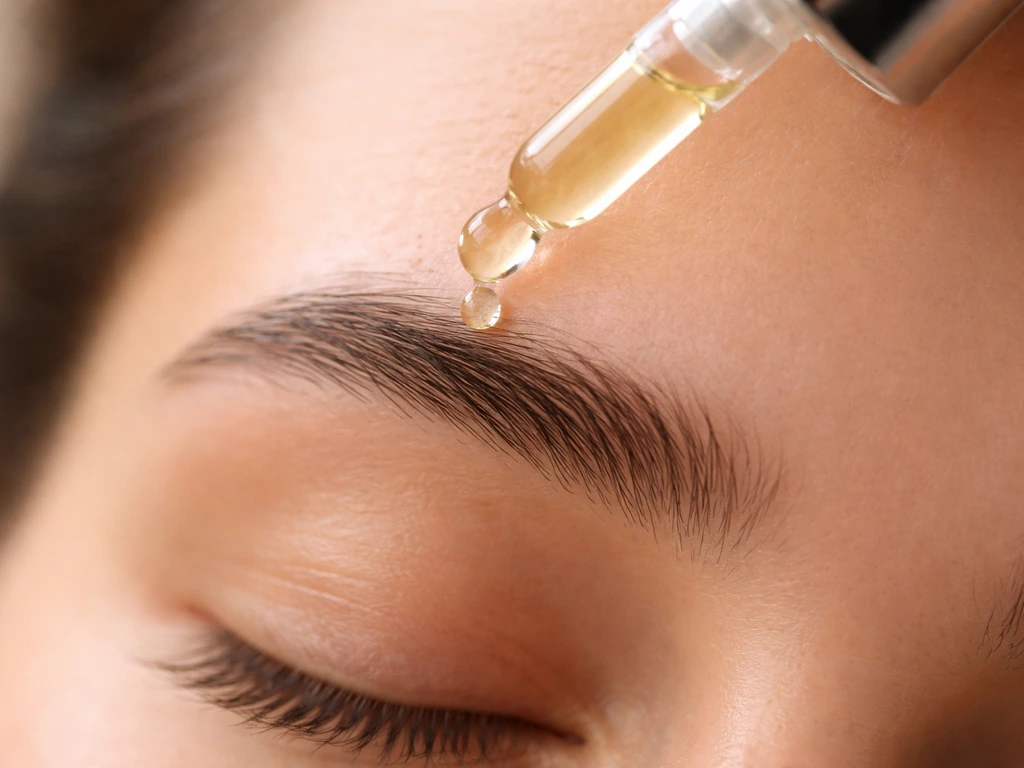
No, not everyone grows a unibrow. It's a normal genetic variation that affects roughly 12% of people, meaning the hair follicles between the two eyebrows are active enough to produce visible hair across the bridge of the nose. Most people simply don't have those follicles programmed to grow there. If you're wondering whether you can encourage center-brow hair to connect or thicken, the honest answer is: maybe, depending on your follicle situation, but it takes patience and realistic expectations. If you're also asking how to actually change what grows between your brows, see why growing a unibrow can be limited by existing follicles and growth cycles how to actually encourage center-brow hair.
Does Everyone Grow a Unibrow? Causes and Growth Tips
James Whitmore
8 Jun 2026
Does everyone grow a unibrow? The biology and variation
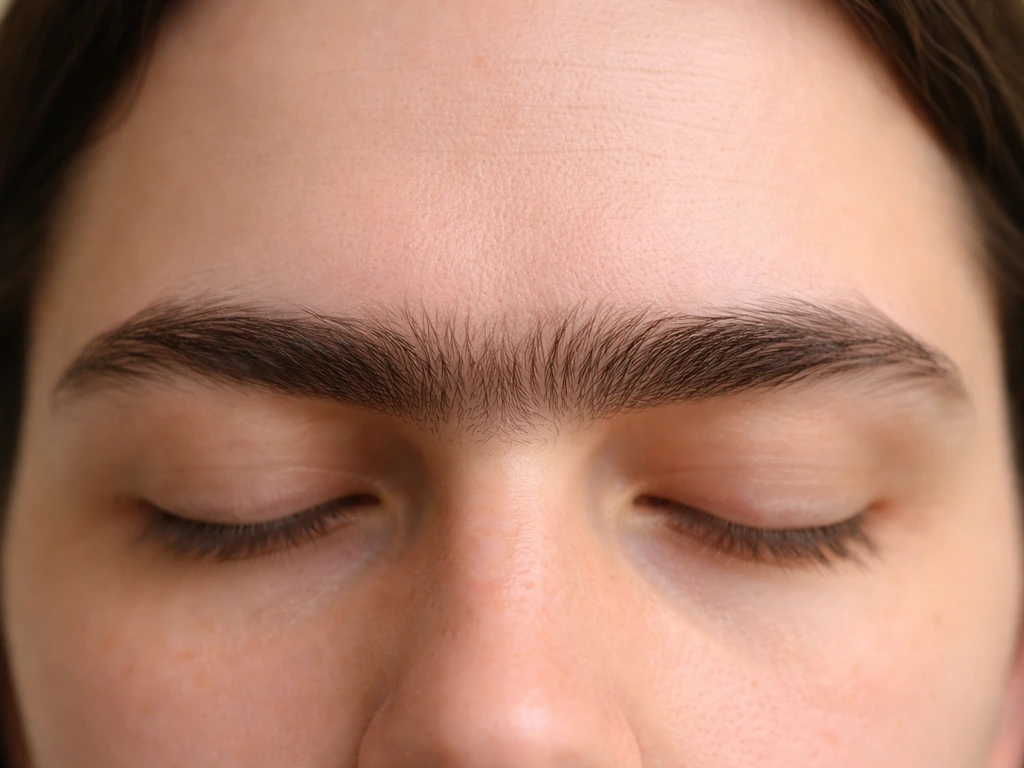
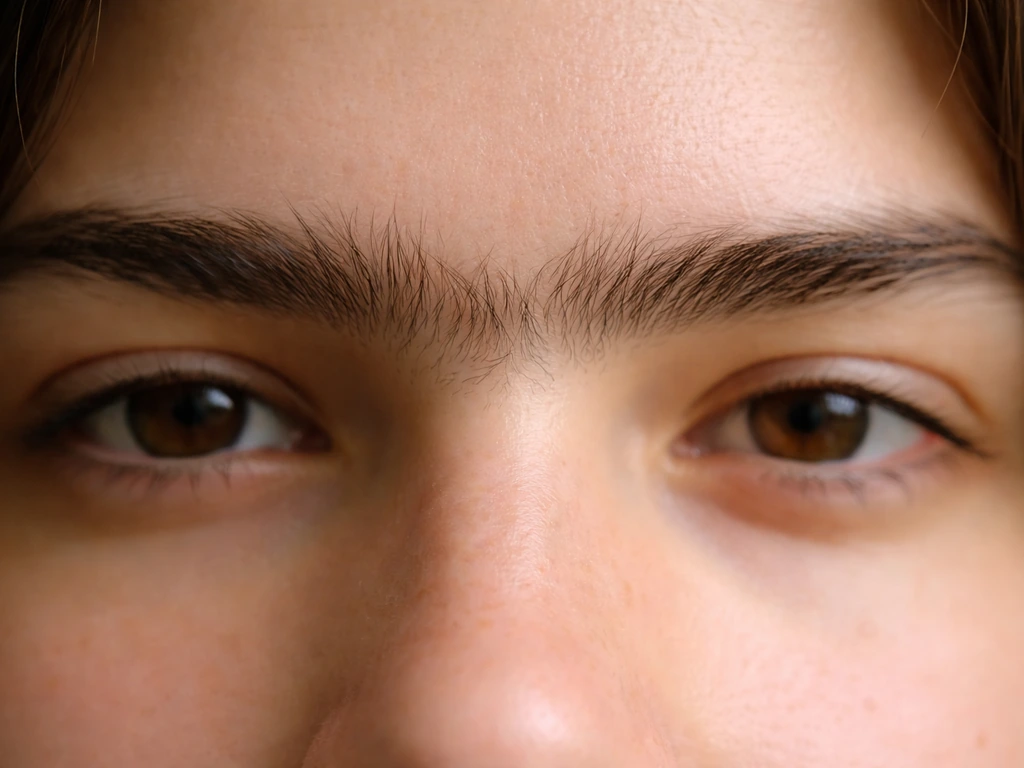
A unibrow, medically called synophrys, is defined as the fusion of eyebrows above the bridge of the nose. A 2017 epidemiological study found synophrys in about 11.87% of the general population, which is common enough to be considered a normal human variation, but clearly not something everyone has. So if your brows naturally connect in the center, you're in a minority but you're biologically normal.
Whether or not you develop center-brow hair comes down almost entirely to where your hair follicles were programmed to sit during fetal development. Research on human hair follicle development shows that follicle placement in facial regions, including the eyebrow area, is determined by developmental gene expression patterns before you're even born. If you don't have follicles in the glabella (the skin between your brows), no amount of topical treatment will create new ones from scratch.
Genetics and ethnicity play a big role here. Synophrys is more common in people of Middle Eastern, South Asian, and Mediterranean descent, though it shows up across all ethnic groups. It's also worth knowing that a unibrow can be more or less visible depending on your age. During and after puberty, androgens (hormones like testosterone) stimulate thicker, darker terminal hair growth across the body, including between the brows. This is why many people notice a unibrow developing or becoming more prominent in their teens, and why it tends to stick around in adulthood.
What actually causes a unibrow to form
The direct cause is simply having active hair follicles in the space between your two eyebrows. But a few factors influence how noticeable it becomes:
- Genetics: The primary driver. If your parents or close relatives have a unibrow, your odds are higher. The follicle positioning and activity level you inherit determines whether hair grows in the center region at all.
- Hormones: Androgens (testosterone in particular) increase hair follicle activity and promote coarser, darker hair. This is why synophrys often becomes more visible during puberty and can increase with age in men.
- Ethnicity: People with naturally denser or darker body and facial hair tend to have more visible center-brow hair, even if the follicle count is similar to others.
- Grooming history: If you've been regularly removing center-brow hair through waxing, threading, or tweezing, you may have temporarily suppressed the appearance, but the underlying follicles (if they exist) remain. Frequent plucking can actually damage follicles over time and slow regrowth.
- Age: Hormonal shifts in middle age and beyond can affect hair thickness and distribution, sometimes making previously subtle center-brow hair more noticeable.
Can you actually grow a unibrow on purpose?
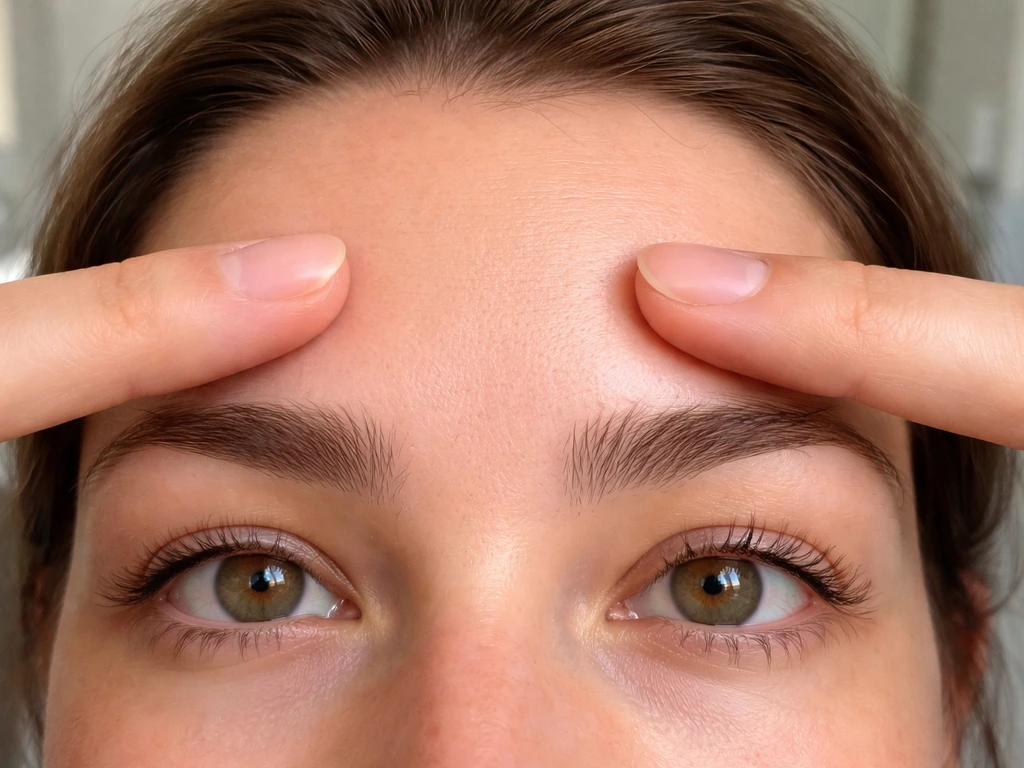
This is where it gets nuanced. If you already have dormant or fine vellus hair between your brows, you may be able to thicken or darken it. If you have zero follicles in that space, you're working against developmental biology and no topical product will change that. The realistic starting point for most people who want to encourage a unibrow is: stop removing center hair and give existing follicles a chance to cycle into their active growth phase.
Eyebrows have an unusually short anagen (active growth) phase compared to scalp hair. StatPearls also describes the hair follicle growth cycle in three phases, anagen, catagen, and telogen, with about 85, 90% of follicles in anagen at any given time an unusually short anagen (active growth) phase compared to scalp hair. The ratio of anagen to telogen (resting) phase in eyebrow follicles is roughly 1:9, meaning at any given time most of your eyebrow follicles are resting rather than actively growing. This is why eyebrow hair grows slowly and reaches a shorter maximum length than scalp hair. It also means that if you've been regularly removing center-brow hair, it can take months to see what your natural baseline actually looks like.
Step one: just stop removing it
If you've been waxing, threading, or tweezing between your brows, the first and most important step is simply to stop. Waxing results typically last 3 to 4 weeks before regrowth appears. Threading removes hair at the root similarly to waxing. Neither method permanently removes hair (unless follicle damage has occurred from repeated aggressive removal), so stopping gives existing follicles a chance to enter their next anagen phase. Frequent plucking can damage hair follicles and slow regrowth, so the longer you've been aggressively removing center-brow hair, the longer it may take to see what actually grows there naturally.
Minoxidil: the most evidence-backed option
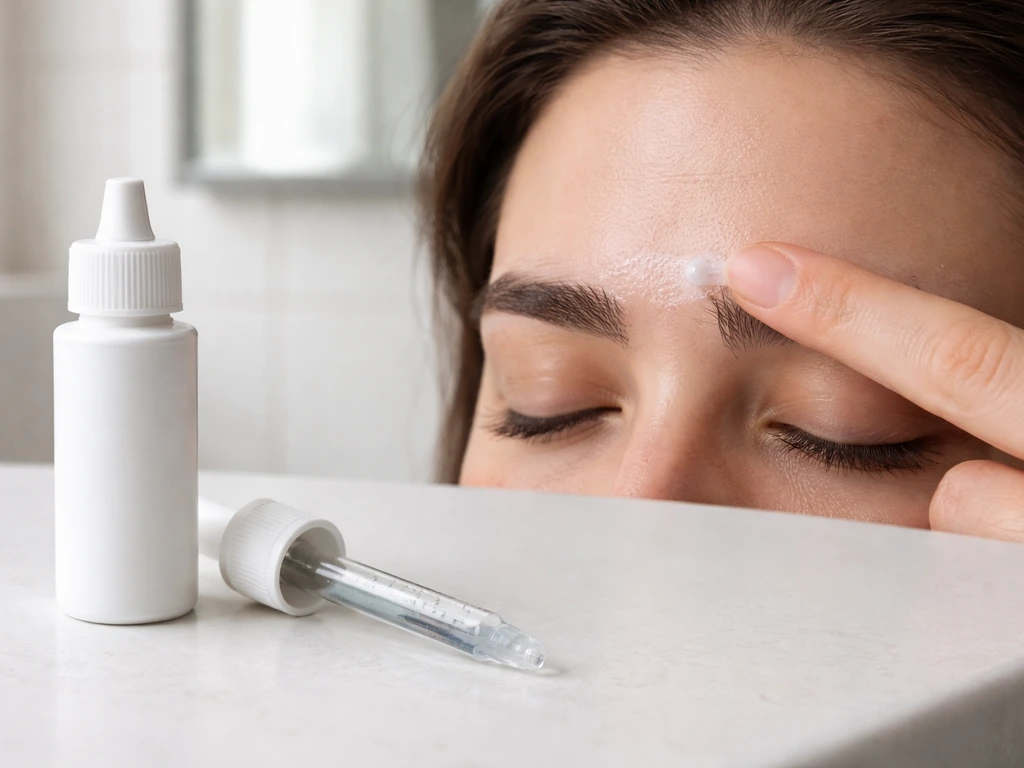
If you want to go beyond just letting things grow naturally, topical minoxidil 2% is the most evidence-supported approach for encouraging eyebrow hair growth. A randomized controlled trial applying 2% minoxidil lotion to eyebrows twice daily for 16 weeks found significant improvement in hair count and global photographic scores compared to vehicle control. The mechanism: minoxidil appears to push follicles out of the telogen (resting) phase and extend the anagen (active) phase, which can result in more hairs actively growing at once and slightly thicker-looking brows.
The catch: results typically don't appear for several months of consistent use, and the benefit goes away if you stop using it. This isn't a one-time treatment; it's an ongoing commitment. Apply a small amount carefully to the center-brow area, keeping it away from your eyes. If it gets into your eyes, rinse with large amounts of cool tap water. Some people are sensitive to propylene glycol, a common ingredient in minoxidil formulations, so patch test first. Stop and see a doctor if you experience any systemic symptoms like chest pain, rapid heartbeat, or faintness, though these are rare with small topical doses on the face.
Castor oil and rosemary oil: lower evidence, lower risk
Castor oil is the most popular DIY approach for eyebrow growth, and while there are no published studies specifically testing its effect on eyebrow growth, it's widely used and generally low-risk for most people. The main theoretical benefit is moisturizing and conditioning the brow hairs you do have, which may reduce breakage and improve appearance. That's a real but modest effect. Just know that castor oil can cause contact dermatitis in some people, so if you notice redness or irritation, stop using it.
Rosemary oil has better scalp hair evidence behind it, with one randomized trial finding it comparable to minoxidil 2% for androgenetic alopecia on the scalp. That's promising, but the scalp and eyebrow follicle environments are different, and there's no direct eyebrow study to point to. If you want to try it, apply diluted rosemary oil (a few drops in a carrier oil like jojoba) to the center brow area. The risk profile is lower than minoxidil, but so is the certainty of effect.
Realistic timelines: how fast can you expect to see results
Set your expectations here before you start, because this is where most people get discouraged. Eyebrow growth is inherently slow because of that 1:9 anagen-to-telogen ratio. In newborns, eyebrow growth develops gradually over time, so it helps to focus on safe, realistic expectations as hair patterns change Eyebrow growth is inherently slow. Even with minoxidil, results typically appear after several months of consistent use. Oils and natural approaches, if they do anything visible at all, will work even more gradually.
| Approach | Expected timeline to visible change | Evidence level | Key consideration |
|---|---|---|---|
| Stop removing center hair | 4–12 weeks to see natural baseline | Common sense / biology | Results depend entirely on your existing follicles |
| Topical minoxidil 2% (twice daily) | 3–4 months minimum | Randomized controlled trial (eyebrows) | Ongoing use required; stops working if you quit |
| Castor oil (nightly) | 3–6 months, modest effect at best | No eyebrow-specific studies | May improve hair condition; watch for skin irritation |
| Rosemary oil (diluted, daily) | 3–6 months, uncertain for brows | Scalp studies only | Lower risk than minoxidil; evidence gap for eyebrows |
The most important thing to remember: if you've been consistently removing center-brow hair for years and you stop, some of what you see growing in over the first few weeks may actually be pre-existing hairs finally cycling through. Give it at least 3 months before concluding your baseline has no center-brow potential at all.
Practical strategies to thicken center brows (and what to avoid)
What to actually do
- Stop all center-brow removal for at least 8 to 12 weeks to establish your natural baseline. This is the foundation everything else builds on.
- If you want to try minoxidil, use the 2% solution or foam applied sparingly to the center-brow area twice daily. Be precise and avoid the eyelid margin. Commit to at least 4 months before assessing results.
- If you prefer a lower-risk starting point, apply castor oil or diluted rosemary oil nightly using a clean spoolie or cotton swab. Keep it to the brow area and clean the surrounding skin in the morning.
- Take monthly photos in consistent lighting. Progress is slow enough that you won't notice it day to day; photos help you see it over weeks.
- Be patient. Three to four months is a realistic minimum timeline. Not three days, not three weeks.
What to avoid
- Don't trust any product claiming to grow a unibrow in days or weeks. No topical treatment rewrites follicle placement or overrides the biology of the hair cycle that quickly.
- Don't aggressively irritate the skin between your brows hoping to 'stimulate' growth. Skin trauma doesn't reliably activate hair follicles and can cause scarring that makes growth less likely.
- Don't apply undiluted essential oils directly to skin. Rosemary oil in particular needs to be diluted in a carrier oil to avoid irritation or sensitization.
- Don't apply minoxidil near your eyes or on broken skin. If it gets into your eyes, rinse immediately with cool water.
- Don't assume castor oil or any oil is automatically safe just because it's 'natural.' Oils can cause allergic contact dermatitis, even olive oil has been documented as a contact allergen in case reports.
- Don't stop and restart minoxidil repeatedly. The benefit requires consistent use, and stopping means the gains gradually reverse.
Where to go from here depending on your situation
If you already have a natural unibrow and you're trying to understand why: it's genetics and hormone activity, full stop. Your follicles were placed there developmentally and were activated (likely around puberty) by androgens. Understanding why eyebrows grow where they do connects back to the fascinating biology of how follicle positioning is programmed before birth.
If you want to encourage center-brow connection and you have some fine hair in that area: start by stopping removal for at least 3 months. If natural growth is disappointing, add a consistent minoxidil 2% routine and reassess at the 4-month mark. Keep expectations realistic. You're working with the follicles you have, not creating new ones.
If you have naturally sparse brows overall (not just in the center), the strategies for thickening the full brow are relevant here too. The biology of what makes eyebrows and eyelashes grow applies to both the tails of your brows and the center space, and understanding the full growth cycle helps you set smarter timelines and pick the right approach for your situation.
FAQ
If I stop tweezing or waxing, how long until I know whether I can actually grow a unibrow?
Not necessarily. If you stop removing center-brow hair, some visible hairs may appear from hairs that were already there but resting, you may also see uneven growth as follicles cycle. If you want to evaluate your true baseline, take photos in the same lighting every 2 weeks and wait at least 3 months before deciding you have “zero potential.”
Can minoxidil create new hair follicles between my brows if I have none there?
No. Minoxidil can increase active growth from existing eyebrow follicles, but it cannot reliably create new follicles in a skin area that never developed eyebrow follicles during development. If there is truly no center-brow follicle activity, treatments can improve fine hair but often will not create a full connection.
Why does the center-brow area look worse or patchy after starting minoxidil?
It can feel like it, but it is often normal shedding or cycling. Eyebrow follicles have a short growth window, so the pattern can look slower or patchier at first, then improve. Staying consistent for several months is usually more informative than judging after the first few weeks.
How do I use minoxidil safely on the eyebrows without irritating my eyes?
Be careful with skin sensitivity and placement. Patch test first for irritation, use a small amount, and apply only to the center-brow area. Avoid the inner corners and keep product away from the eye area, if it gets into your eyes rinse with large amounts of cool tap water.
If my center-brow hair is very fine, could I still thicken it, or is it stuck that way?
Yes, you can have hair breakage issues that mimic “no growth.” If the center hair is fine, repeated removal can make it look thinner even if follicles are still cycling. Switching from removal to gentle care, and giving it time to regrow, helps you distinguish shedding from actual follicle inactivity.
Is castor oil likely to give me results like minoxidil for a connected unibrow?
Castor oil is mostly a conditioning option, it may reduce breakage and improve the look of existing hair but it is unlikely to match minoxidil’s effect on hair count. If your goal is visible thickening or connection, consider using castor oil only as an add-on, not the main strategy.
What if I plucked the center of my brows for years, will it never come back fully?
Yes. Frequent aggressive plucking can cause follicle damage, which may permanently reduce regrowth in that spot. If you have a history of years of heavy tweezing or irritation bumps, expect a slower and possibly limited response compared with someone who removed hair more gently.
Why does a unibrow sometimes develop more in puberty, and does age change the odds?
It is possible, especially with people who are prone to androgen-related hair changes or already have fine center hair. Puberty-related androgen shifts can make a unibrow become more prominent, so timing matters. If you are a teen, focus on stopping removal and tracking changes rather than expecting fast results.
Can minoxidil make one side of my unibrow fill in faster than the other?
Yes. Even with treatment, eyebrows will often grow unevenly, one side can respond better if the follicle density differs. Take measurements or consistent photos, and expect that symmetry may lag behind the first signs of increased growth.
What happens if I stop minoxidil after my brows start to connect?
Yes, if you stop consistently using minoxidil after it starts helping, the increased growth often fades because follicles revert toward their prior cycling pattern. Think of it as maintenance if you like the result, and reassess after discontinuation if you choose to taper.
Next Article
Does Vitamin E Oil Help Eyebrows Grow? Safe Routine & Timeline
Find out if vitamin E oil helps eyebrow growth, plus a safe routine, timelines, and what works better.