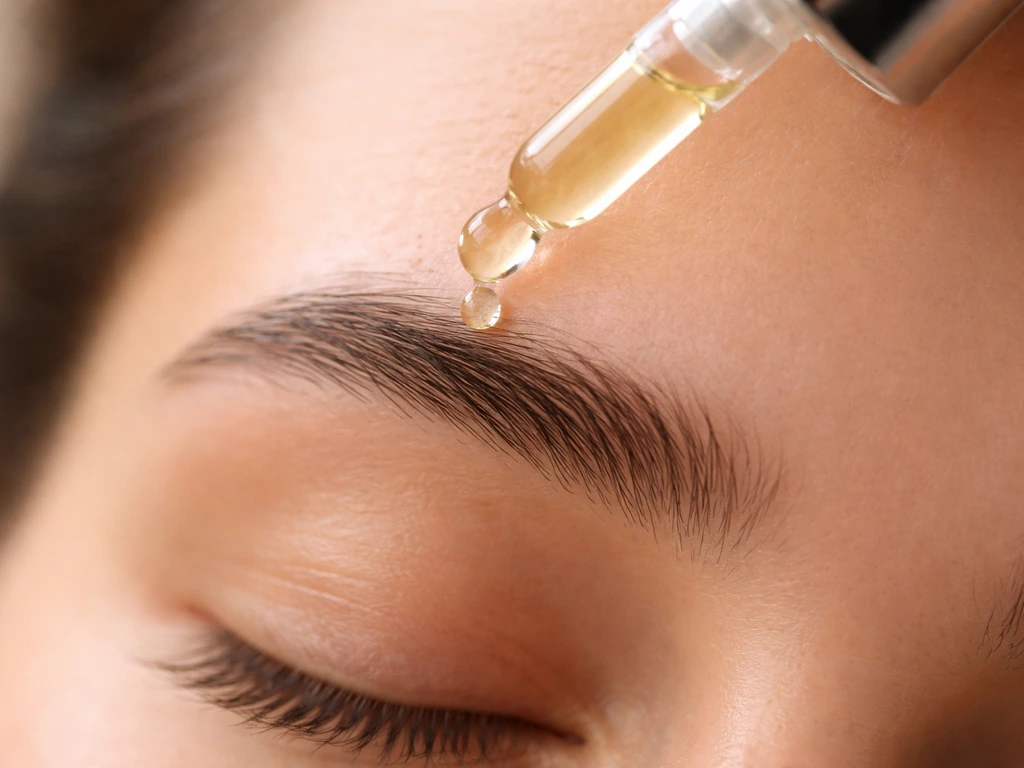
Eyebrows grow at roughly 0.14 to 0.16 mm per day. That works out to about 1 mm per week, or 4 to 5 mm per month. It sounds slow because it is slow, and understanding why will save you a lot of frustration when you're waiting on regrowth after shaving, waxing, or years of over-plucking.
How Fast Do Eyebrows Grow Back and Hair Grow Each Day
James Whitmore
20 Apr 2026
The actual numbers: growth rate and timelines
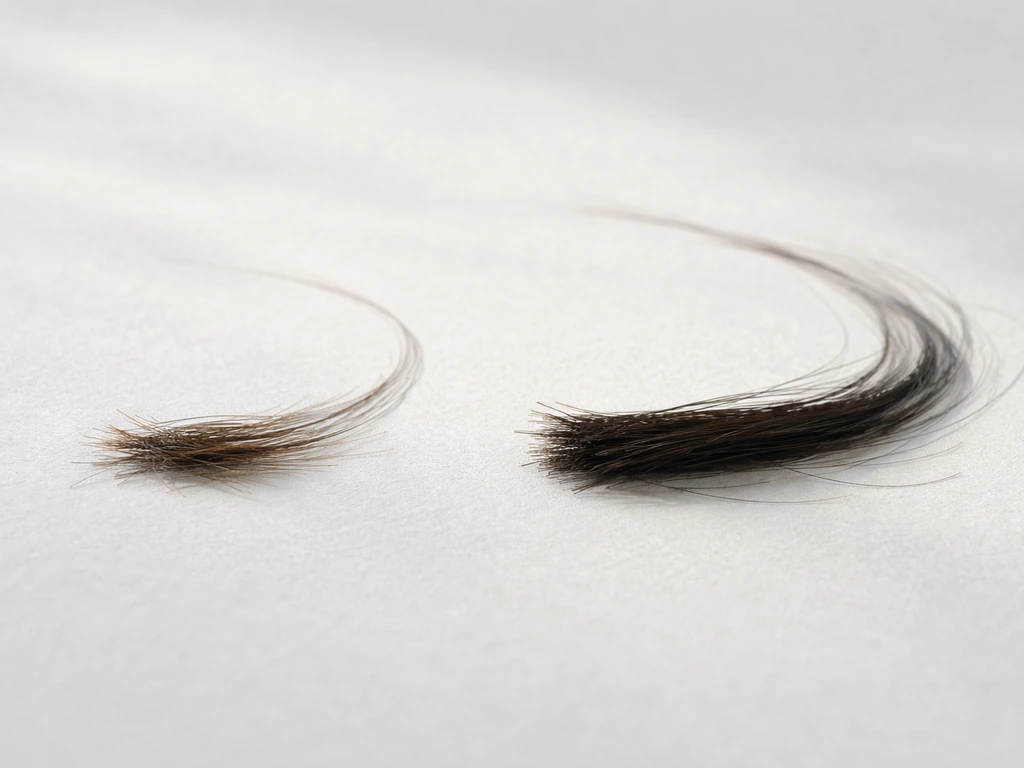
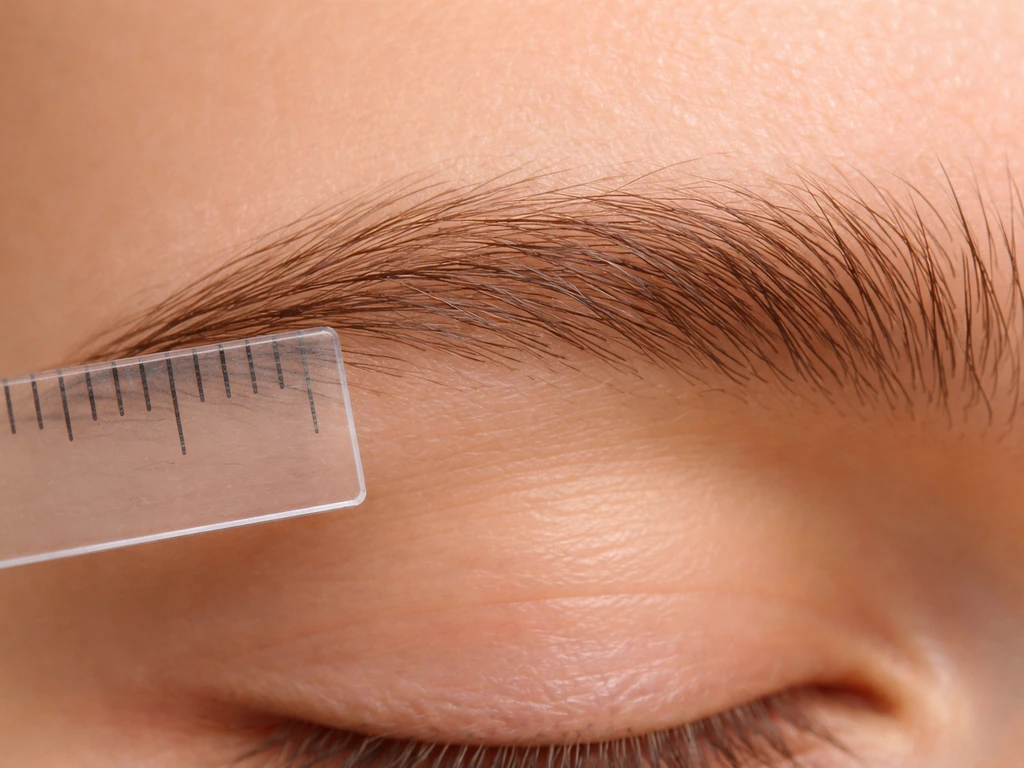
At 0.14 to 0.16 mm per day, eyebrow hair grows noticeably slower than scalp hair, which typically clocks in closer to 0.35 mm per day. Over the course of a month you're looking at roughly 4 to 5 mm of new growth per hair, which is enough to see some change but not enough to transform a sparse brow into a full one. Real, visible improvement in brow density usually takes 3 to 4 months at minimum, and in cases where follicles have been repeatedly damaged, it can take 6 months or longer. If you're expecting to see a transformation in a week, those numbers are the reason you'll be disappointed.
One important caveat: these are averages. Your individual rate depends on age, genetics, nutrition, hormones, and how much stress you've put on the follicles over time. Some people regrow brows quickly and consistently; others seem to grow at a frustratingly slower pace. That variation is real, and it's worth keeping in mind as you track your own progress rather than comparing to someone else's timeline.
How fast do eyebrows grow back after shaving, waxing, or over-plucking
If you shaved your brows completely and the follicles are undamaged, you can expect visible stubble within 2 to 3 weeks and a rough brow outline in about 6 to 8 weeks. A fuller, more normal-looking brow typically takes 3 to 4 months. Waxing follows a similar timeline because it removes the hair from the root without (usually) permanently damaging the follicle.
Over-plucking is a different story. The American Academy of Family Physicians notes that plucking during the anagen (active growth) phase can shorten that phase, and repetitive plucking over time may permanently damage the hair matrix, the part of the follicle responsible for producing new hair. This is why some people who plucked aggressively in the 90s and early 2000s are still dealing with sparse brows today. If your brows haven't filled back in after several months of not plucking, there's a real possibility that some follicles are permanently compromised rather than just dormant.
After waxing or threading, most people see initial regrowth within 2 to 4 weeks. The hairs that come back fastest are usually ones that were in earlier stages of their growth cycle at the time of removal. The patchier ones, where regrowth feels uneven, are often follicles that were interrupted mid-cycle and are taking longer to restart.
The growth cycle: why brows can't just keep growing
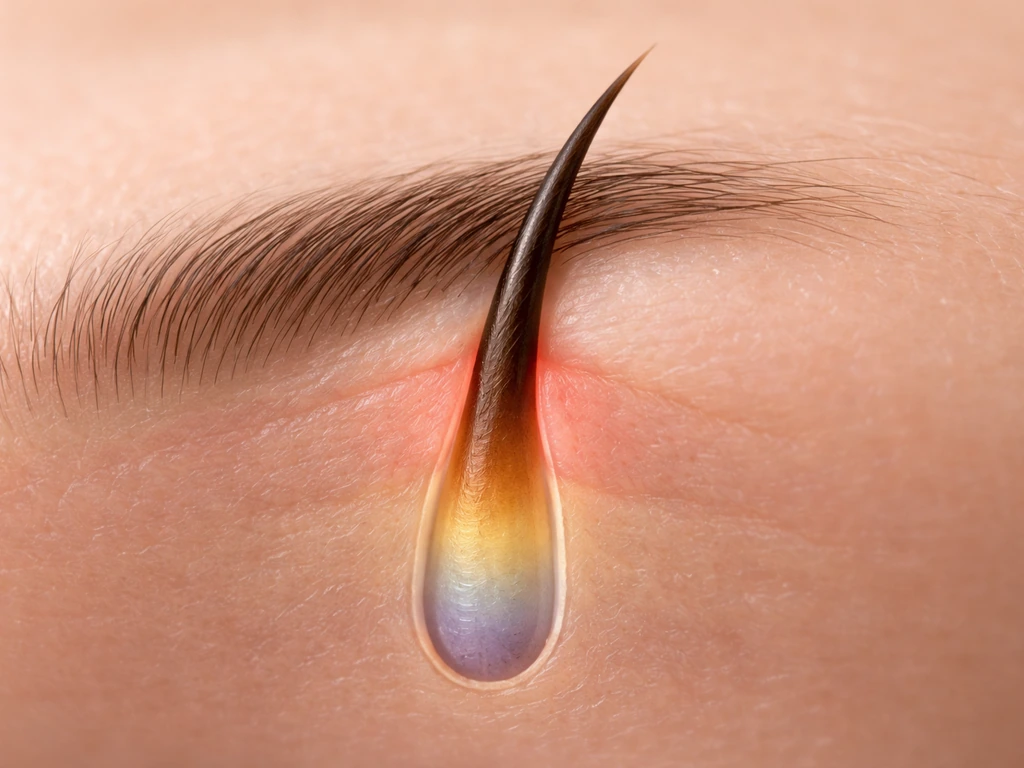
Every eyebrow hair follows a three-phase cycle: anagen (active growth), catagen (transition), and telogen (resting and shedding). The biology here directly explains why brows behave the way they do.
- Anagen (growth phase): roughly 2 to 3 months for eyebrow hair. This is when the follicle is actively producing new hair shaft and the hair is getting longer. Compare this to scalp hair, where anagen lasts 2 to 6 years, and you immediately understand why eyebrows have a length limit.
- Catagen (transition phase): about 2 to 3 weeks. Growth stops, the follicle shrinks, and the hair detaches from the blood supply.
- Telogen (resting phase): roughly 2 to 3 months, sometimes cited as up to 100 days. The old hair sits in the follicle as a 'club hair' before shedding, and a new anagen hair may begin forming underneath.
The critical insight here is the anagen-to-telogen ratio. Eyebrow follicles spend a disproportionately large amount of their time in telogen compared to scalp follicles, with ratios estimated around 1:9 in some references. That means at any given moment, the majority of your eyebrow follicles are resting rather than actively producing hair. This is exactly why eyebrows don't grow longer than a certain length (the short anagen window limits maximum possible length) and why regrowth after removal takes months rather than days. You're not just waiting for a hair to grow; you're often waiting for a follicle to complete its rest phase and re-enter anagen before it even starts.
How to actually measure your progress
At 0.14 to 0.16 mm per day, you cannot measure meaningful eyebrow growth with the naked eye on a day-to-day basis. Daily progress is essentially invisible. What you can track is weekly and monthly change, and the most reliable way to do that is with photographs, not a ruler.
Take a close-up photo of your brows in consistent lighting and from the same angle at baseline, then again at 4 weeks, 8 weeks, and 12 weeks. Clinical trials studying eyebrow regrowth do exactly this: standardized photographs and blinded expert evaluation at fixed intervals, typically 16 weeks apart, because that's the minimum window where statistically meaningful changes can be detected. If you're evaluating your brows every morning in a magnifying mirror under different lighting, you will drive yourself crazy and convince yourself nothing is working when it actually is.
What affects how fast your eyebrows grow
The 0.14 to 0.16 mm/day figure is an average, and several factors push you toward the faster or slower end of that range, or even below it entirely.
Age
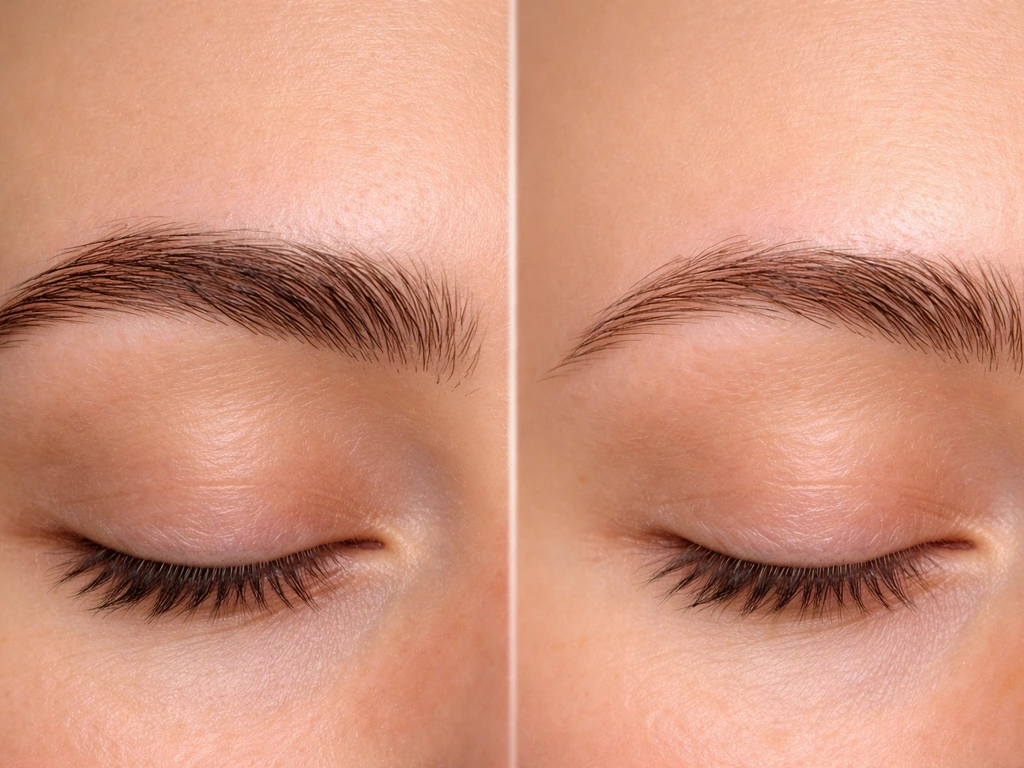
Hair follicle activity naturally slows with age. That slowdown can also explain why eyebrow hairs can appear to grow longer more gradually over time Hair follicle activity naturally slows with age.. Older adults generally experience slower regrowth and may notice brows that are sparser than they were in their 20s and 30s. Interestingly, some older adults notice certain eyebrow hairs grow longer and wiry instead, which is a separate hormonal phenomenon worth knowing about.
Genetics
If your parents had naturally sparse brows, you probably do too. Genetics determine your baseline follicle density, the thickness of individual hairs, and the length of your anagen phase. No product can fully override your genetic ceiling, though you can work closer to it with the right approach.
Nutrition and overall health
Hair growth requires adequate protein, iron, biotin, zinc, and vitamins D and B12, among others. A deficiency in any of these can push more follicles into telogen prematurely (telogen effluvium), leading to increased shedding and slower regrowth. If your diet has been poor, you've had a major illness, or you've experienced significant stress in the past few months, that can show up in your brows weeks to months later.
Hormones and thyroid function
Thyroid dysfunction is one of the more common medical causes of eyebrow thinning. Hypothyroidism in particular is associated with loss of the outer third of the brow, and research has shown that treating hypothyroidism can restore normal telogen-to-anagen ratios in affected follicles. If your brow thinning is accompanied by fatigue, cold sensitivity, or unexplained weight changes, it's worth getting your thyroid checked before assuming the problem is cosmetic.
Follicle damage from over-plucking or waxing
Repeated mechanical trauma to the follicle, especially plucking during the active growth phase, can shorten anagen duration and eventually cause permanent follicle damage. If you've been plucking or waxing the same spots for years, some of those follicles may simply no longer be capable of producing hair. This doesn't mean all hope is lost, but it does mean your regrowth ceiling is lower than someone who's never touched their brows.
What actually helps: honest breakdown of your options
There's a lot of noise around brow growth products, so here's a clear-eyed look at what the evidence actually supports.
| Option | Evidence Level | Realistic Timeline | Notes |
|---|---|---|---|
| Minoxidil 2% (topical, off-label) | Strongest — RCT data | 16 weeks for visible change | Applied twice daily; measurable improvement in hair count and diameter confirmed in clinical trials |
| Rosemary oil | Moderate — limited but promising | 12–16 weeks | Some evidence for scalp hair; patch-test first due to contact dermatitis risk |
| Castor oil | Weak — mostly anecdotal | Unknown | No clinical studies supporting direct growth; may condition existing hairs |
| Nutrition/supplementation | Moderate — if deficiency present | 2–4 months after correcting deficiency | Most effective when a genuine deficiency (iron, biotin, zinc, B12) is identified |
| Stopping over-plucking | Strong — removes the cause | 3–6+ months | Necessary baseline step; results depend on how much follicle damage already occurred |
Minoxidil
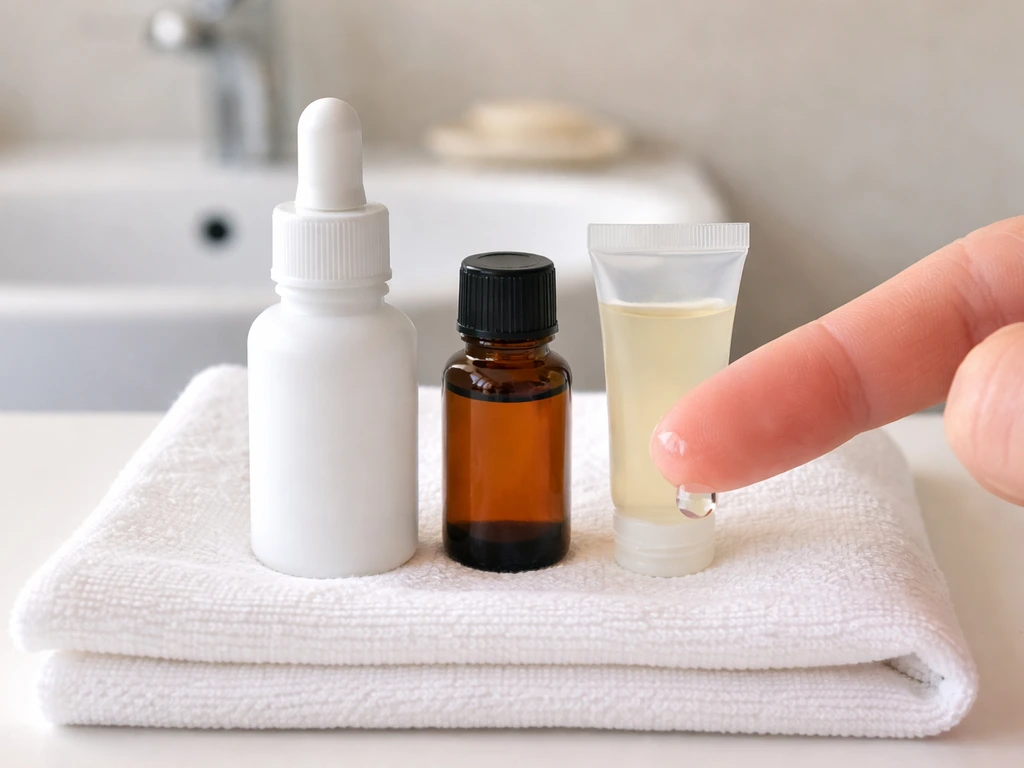
Topical minoxidil 2% is the most evidence-backed option for eyebrow regrowth. A randomized, double-masked, vehicle-controlled study found significant improvement versus placebo after 16 weeks of twice-daily application. A separate trial comparing minoxidil 2% to bimatoprost reported statistically significant changes in eyebrow hair diameter by the 16-week mark. It's used off-label for brows (it's FDA-approved for scalp hair loss), so talk to a dermatologist before starting. Use a small amount, applied precisely with a cotton swab, and keep it out of your eyes.
Rosemary oil
Rosemary oil has gained real traction as a scalp hair growth aid, with at least one study comparing it favorably to minoxidil 2% for scalp hair density after 6 months. Its application to eyebrows specifically is less studied, but the mechanism (improving circulation to follicles, potential DHT-blocking activity) is plausible. The main thing to know: rosemary extract can cause allergic contact dermatitis, with confirmed cases documented via patch testing. Dilute it in a carrier oil, do a patch test on your inner wrist before applying it to your brow area, and discontinue if you notice redness or irritation.
Castor oil
Castor oil is probably the most recommended home remedy for brow growth, and the honest answer is that the evidence is largely anecdotal. There are no clinical studies demonstrating that castor oil directly stimulates eyebrow follicle activity. That said, it's a thick, conditioning oil that may help protect existing hairs from breakage and improve the appearance of existing brows. It's not going to regrow permanently damaged follicles, but it's also low-risk and inexpensive, so if you want to try it, apply a small amount with a clean spoolie before bed. Just keep expectations realistic.
The most important step most people skip
Before adding any product, stop all plucking, waxing, and threading for at least 12 weeks. No serum or oil can compete with ongoing mechanical damage. This is the baseline that everything else builds on. It's also the hardest part for most people, because the awkward in-between phase is genuinely uncomfortable. Filling in with a brow pencil or powder while you wait is completely fine and won't interfere with growth.
When to see a dermatologist
Most cases of slow or patchy brow regrowth are cosmetic and respond to patience and the right routine. StatPearls notes that frontal fibrosing alopecia is a scarring alopecia that can involve eyebrow loss, and it emphasizes early detection and intervention because the scarring can be irreversible. But some patterns are worth getting checked out by a dermatologist, because the underlying cause matters for treatment.
- Bilateral, patchy loss in both brows simultaneously: this is a classic presentation of alopecia areata, an autoimmune condition where the immune system attacks hair follicles. It won't respond to castor oil or minoxidil the same way cosmetic thinning does.
- Progressive thinning that keeps getting worse despite months of not plucking: scarring alopecias like frontal fibrosing alopecia destroy follicles permanently over time, and early intervention matters.
- Loss concentrated at the outer third of the brows combined with other systemic symptoms: think thyroid dysfunction, as discussed above.
- No regrowth at all after 4 to 6 months of not disturbing the area: if follicles were capable of producing hair, you'd typically see at least some activity in this window.
- Redness, scaling, or itching around the brow area: inflammatory skin conditions like seborrheic dermatitis or psoriasis can interfere with follicle function and need separate treatment.
A dermatologist can do a trichoscopy (a dermoscopy of the scalp or brow area) to assess follicle health directly, run bloodwork to rule out nutritional and hormonal causes, and recommend prescription-strength options if over-the-counter approaches haven't worked. If you've been waiting 6 months and see no progress, that's a reasonable point to make the appointment.
Your practical plan from today
Here's how to put all of this into action. Week one: take a baseline photo in good lighting, stop all mechanical hair removal, and assess whether your diet and health are in order (if you suspect a nutritional gap, get bloodwork done). Weeks two through four: keep the brow area clean, consider adding a simple conditioning step like castor oil at night if you want to do something active, and resist the urge to pluck stray hairs.
Month two through four: this is when you'll start seeing meaningful change if your follicles are intact. If growth is coming in but slowly, consider adding rosemary oil (diluted, patch-tested) or speaking to a doctor about topical minoxidil. At the four-month mark: compare your photo to your baseline. If you see clear improvement, keep going.
If you see essentially no change, it's time to see a dermatologist rather than wait another four months wondering.
The biology is working in a fixed timeframe whether you're anxious about it or not. The best thing you can do is remove the obstacles (damage, nutritional deficits, ongoing plucking), give follicles the support they need, and measure progress at realistic intervals. Three to four months is not forever, but it is the actual timeline for meaningful change, and knowing that from the start makes the wait much easier to manage. If you are wondering why don’t my eyebrows grow, the key takeaway is that eyebrow follicles typically cycle slowly, so meaningful change takes months.
FAQ
How long should I wait before I consider my eyebrow regrowth “not working” after I stop plucking or waxing?
Use a decision point at about 4 months. If you have truly stopped mechanical removal and you compare standardized photos from baseline to the 16-week mark, you should see some change by then if follicles are mostly intact. If there is essentially no difference, it’s reasonable to book a dermatology visit rather than waiting another cycle blindly.
Why do some hairs come back unevenly, with patchy areas filling later?
Eyebrow follicles often get interrupted mid-cycle, so some areas restart anagen sooner while others stay in a resting phase longer. That’s why you might see “sprouts” first in one region and delayed regrowth in another, even if you used the same removal method across both sides.
Can I speed up eyebrow growth by cutting the hair shorter or trimming strays?
Trimming or shaping doesn’t accelerate the follicle’s growth rate, because growth depends on the hair follicle cycle, not the visible hair length. Trimming mainly improves how brows look while you wait, but it won’t change the timeline for new hair production.
Will using minoxidil on eyebrows make my eyebrows grow permanently?
Most people who respond continue to see benefit only while they keep using the product. If you stop, hair often gradually returns toward the pre-treatment pattern over subsequent months, because you are influencing the follicle cycle rather than permanently rebuilding damaged follicles.
Is it normal to get irritation or shedding when starting a brow growth product?
Mild redness, itching, or dry skin can happen, especially with leave-on actives. If you notice burning around the eyes, increasing flaking, or swelling, stop and get medical advice. With irritation present, your follicles may look worse temporarily, which can be mistaken for lack of growth.
Do diet supplements like biotin actually help if I am already eating well?
Supplements are most helpful when a deficiency exists. If your protein, iron, zinc, vitamin D, or B12 intake is already adequate, adding more may not noticeably change regrowth speed. If thinning is new or worsening, bloodwork is a better first step than guessing.
What eyebrow thinning patterns are more concerning than “normal slow regrowth”?
Progressive thinning at the outer third of the brow, sudden increases in shedding, or changes accompanied by fatigue or weight changes warrant evaluation sooner. A dermatologist can use a close examination (trichoscopy) to determine whether follicles are healthy and still capable of cycling.
If I stopped plucking, why do I still see sparse regrowth months later?
Repeated plucking can shorten the active growth phase (anagen) and over time permanently reduce follicle capacity in specific spots. Also, brows naturally spend much of their cycle in a resting state, so some delayed hairs can still emerge late, but true long-term non-response often points to follicle compromise.
Can my eyebrows grow at different rates on each side, and is that expected?
Yes. Even with the same routine, follicles can be at different stages of the cycle on each side, and past over-plucking or trauma may have been uneven. Comparing left and right using the same photo schedule helps you distinguish normal asymmetry from an actual problem.
How should I measure progress if daily changes are essentially invisible?
Stick to weekly or monthly tracking, using the same lighting, distance, and angle. Take photos at consistent intervals (for example, baseline, 4 weeks, 8 weeks, 12 to 16 weeks). A ruler or daily visual checks usually lead to anxiety and false conclusions because growth per day is too small to see clearly.
Next Article
Does Vitamin E Oil Help Eyebrows Grow? Safe Routine & Timeline
Find out if vitamin E oil helps eyebrow growth, plus a safe routine, timelines, and what works better.