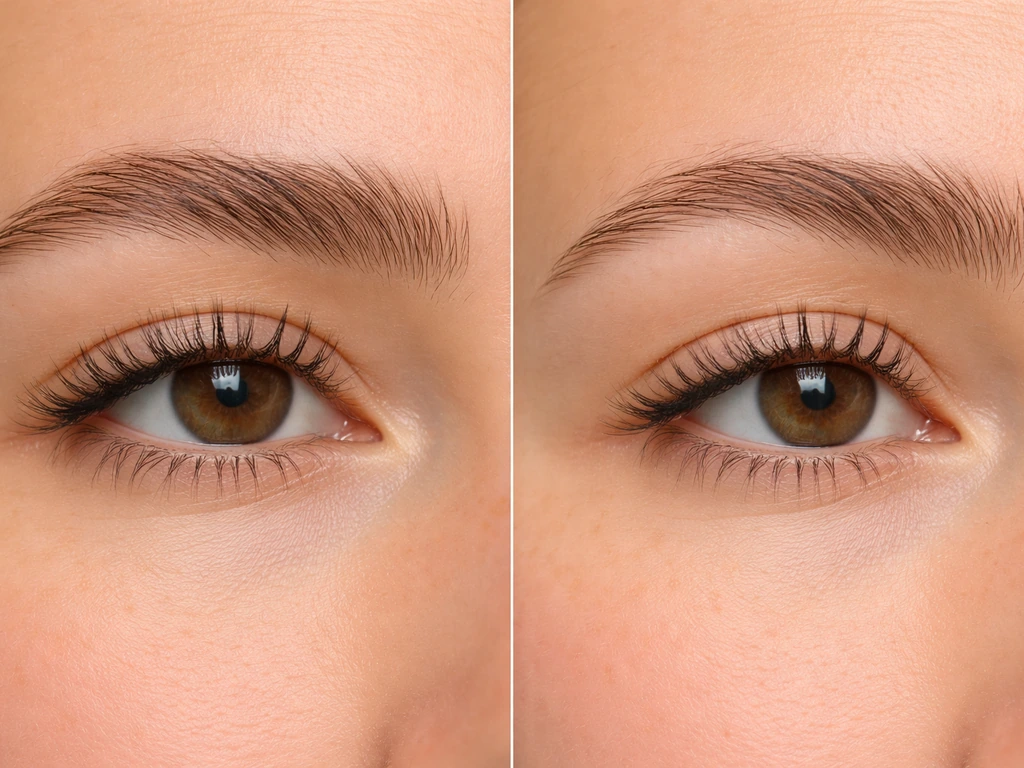
SEO Title: How to Grow Eyebrows in a Newborn: What Parents Actually Need to Know
How to Grow Eyebrows in Newborn: Safe Pediatric Guidance

James Whitmore
12 Aug 2026
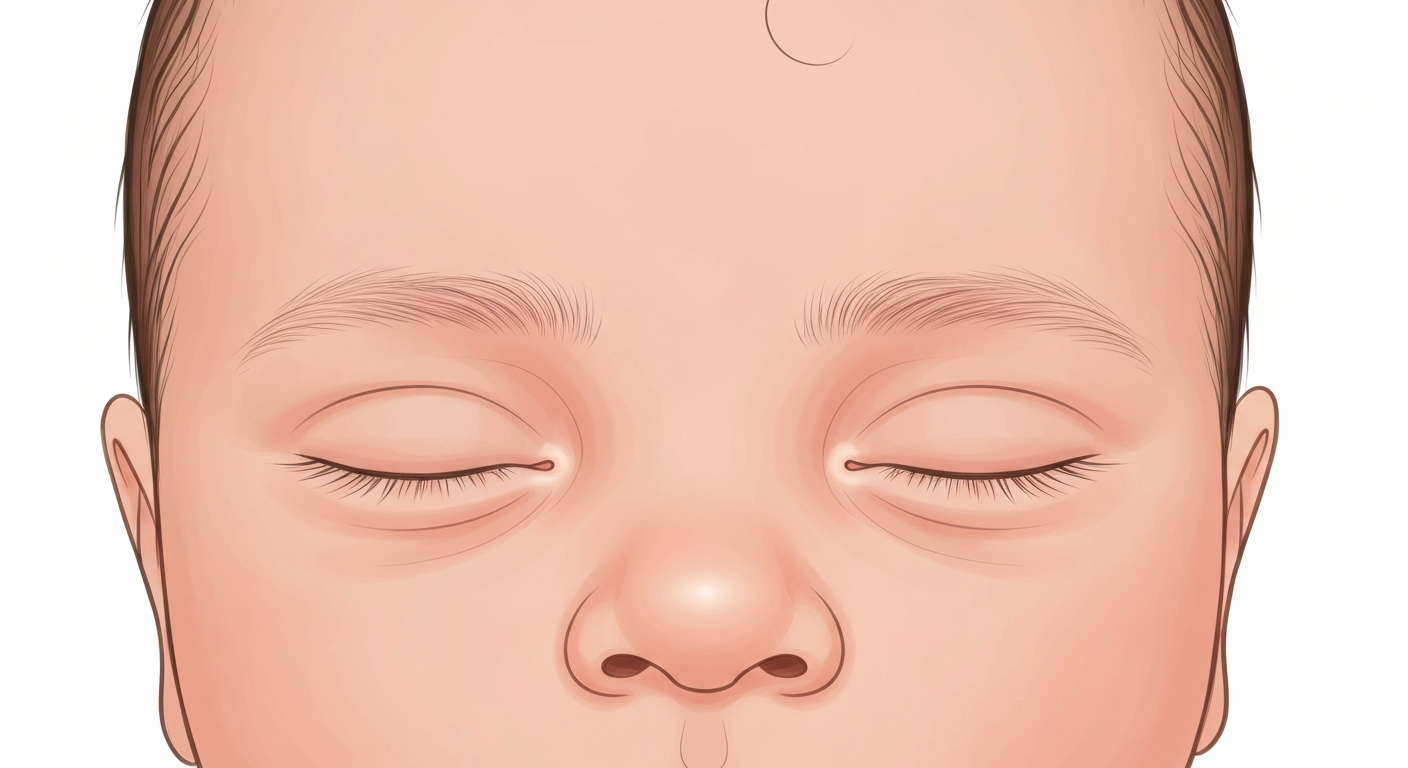
Meta Description: Most newborns grow eyebrows naturally within months. Learn what's normal, what's not, and which treatments are unsafe for infants.
If your newborn has sparse, patchy, or nearly invisible eyebrows, the honest answer is: wait, watch, and do nothing that isn't approved by your pediatrician. For the vast majority of babies, eyebrows fill in on their own during the first three to four months of life as the newborn hair cycle gets underway. There is no safe, proven topical treatment to speed this up in an infant, and several popular adult eyebrow remedies, including minoxidil, essential oils, and castor oil, are genuinely risky to use on newborn skin. The American Association of Poison Control Centers cautions that concentrated essential oils applied to skin can cause allergic contact dermatitis, chemical irritation, or systemic toxicity in infants and advises against topical or undiluted essential oil use and to contact Poison Control for exposures (Essential oils: Poisonous when misused, American Association of Poison Control Centers (Poison.org)) Essential oils: Poisonous when misused — American Association of Poison Control Centers (Poison.org). The most useful thing you can do right now is understand what normal development looks like, recognize the small number of signs that warrant a doctor visit, and resist the urge to apply anything to your baby's delicate face without medical guidance.
Quick Answer and Safety Summary
Sparse or thin eyebrows in a newborn are almost always a normal variation, not a problem that needs fixing. Most babies are born with terminal hair already present on their scalp, eyelashes, and brows, but pigmentation is light and density varies widely by genetics and gestational age. Premature infants may arrive with lanugo, the fine, unpigmented fetal hair, still covering their face and body; that sheds on its own. Eyebrow density typically increases noticeably by three to four months as the postnatal hair cycle takes over. You do not need to apply any oils, serums, or growth products to help this happen. In fact, doing so can cause contact dermatitis, chemical irritation, or worse around your baby's eyes. If eyebrows are completely absent at birth along with other physical findings such as absent teeth, unusual sweating patterns, or nail abnormalities, that warrants prompt medical evaluation for a congenital condition, not a home remedy.
The Bottom Line for Parents
Normal newborn eyebrow development takes time, not intervention. Keep the area clean and undisturbed, watch for the red flags listed further down in this article, and talk to your pediatrician if anything feels off. Do not apply adult brow growth products to an infant under any circumstances.
How Newborn Eyebrows Normally Develop
Eyebrow follicles are formed during fetal development, well before birth. By the time a baby arrives, the follicles are structurally in place, but the hairs they produce at first are often fine, lightly pigmented, and sparse-looking, especially if the baby is born with lighter coloring or arrived a few weeks early.
Premature newborns frequently still have lanugo, the soft, downy, unpigmented fetal hair that normally sheds in utero around 36 to 40 weeks. On a term baby lanugo is usually gone or almost gone; on a preterm baby it can cover the face, forehead, and brow area and gradually sheds over the first few weeks after birth. This is completely normal and is not a sign that eyebrow hair won't grow.
After birth, lanugo is replaced by vellus hair, and then by the slightly coarser terminal hairs that make up a baby's visible eyebrows. Research in pediatric dermatology shows that many infants go through a noticeable transition in hair type between three and four months of age, which is also when parents often notice brows looking fuller and more defined. Genetics plays a large role in exactly when this happens and how thick those brows ultimately appear, so comparing your baby's brows to another family's newborn is rarely useful.
Normal Timeline vs. Red Flags at a Glance
| Age or Observation | What's Normal | What Warrants Evaluation |
|---|---|---|
| Birth to 4 weeks | Light, sparse, or barely visible brows; lanugo on face in preterm infants | Completely absent brows with other physical anomalies (nail, dental, sweating) |
| 1 to 3 months | Gradual increase in pigmentation and density; some patchy areas | Brows present at birth but rapidly falling out; visible patchy loss on scalp too |
| 3 to 4 months | Noticeably fuller brows in most infants as postnatal hair cycle establishes | No visible brow development by 4 months combined with other developmental concerns |
| Any age | Variation between babies; genetics determines density and timing | Skin inflammation, redness, or scaling in the brow area; signs of systemic illness |
Common, Non-Urgent Reasons for Sparse or Patchy Brows
The most frequent explanation is simply genetics. If one or both parents have naturally fine or light brows, there is a good chance the baby will too, at least initially. Ethnicity and natural hair pigmentation also affect how visible the brows appear in those early weeks.
Lanugo shedding is another completely benign cause. As described above, preterm and some term babies shed their fetal hair over the first weeks of life, and the brow region can look patchy during this transition.
Newborn hair cycles are also genuinely different from adult cycles. Adult hair follows a well-established anagen (growth), catagen (transition), and telogen (resting) rhythm. Newborn hair cycles are still synchronizing after birth, which can create a temporary shed-and-regrow pattern that looks alarming but is not. The positional or friction-related hair thinning that commonly affects the back of a baby's scalp (from lying down) does not typically affect the brows, but it is a useful reminder that newborn hair loss patterns are almost always benign and temporary.
Rarer Medical Causes That Need Evaluation
A small number of newborns have absent or significantly sparse eyebrows because of an underlying medical condition. These cases are uncommon but important to catch early.
Ectodermal dysplasias are a group of congenital conditions affecting structures derived from the ectoderm, including hair, teeth, nails, and sweat glands. Hypohidrotic ectodermal dysplasia, for example, can present with sparse or absent eyebrows alongside reduced sweating, sparse scalp hair, and absent or abnormally shaped teeth. See Hidrotic Ectodermal Dysplasia 2 and related GeneReviews entries (NCBI Bookshelf) for clinical features and guidance on when genetic evaluation is recommended See Hidrotic Ectodermal Dysplasia 2 and related GeneReviews entries (NCBI Bookshelf) for clinical features and guidance on when genetic evaluation is recommended.. When eyebrow absence occurs alongside any of these other findings, a genetics referral is appropriate.
Alopecia areata, an autoimmune condition that causes nonscarring hair loss, can rarely present in newborns and infants under six months. Case reports document patchy or complete eyebrow and scalp hair loss in this age group. If a baby's eyebrows were visible at birth but are now falling out in patches, this is worth bringing to a pediatric dermatologist.
Congenital hypothyroidism is screened for routinely in U.S. newborns through newborn blood spot screening, typically collected 24 to 72 hours after birth. Thyroid hormone deficiency can contribute to diffuse hair thinning, among other systemic effects. In most cases this is caught early through standard screening, but delayed results or atypical presentations do occur. If you have concerns about hair thinning in combination with poor feeding, low muscle tone, or prolonged jaundice, do not wait for the next well visit.
Practical, Infant-Safe Care Steps You Can Take Now
The single most effective thing you can do is keep the brow area clean and leave it alone. Here is what that looks like in practice:
- Cleanse gently with plain water or a fragrance-free, mild baby cleanser during bath time. The American Academy of Pediatrics recommends sponge baths until the umbilical cord falls off, and gentle handling throughout.
- Do not rub or scratch the brow area, even if there is cradle cap or flaking skin nearby. Rubbing can traumatize follicles and cause irritation.
- Avoid pulling or picking at any flakey skin in the brow region. If cradle cap extends to the brows, ask your pediatrician for guidance rather than attempting to remove it yourself.
- Do not apply any oils, butters, or topical agents to the eyebrow area without explicit approval from your baby's doctor. This includes castor oil, coconut oil, olive oil, and all essential oils.
- Keep hair care products designed for older children or adults completely away from your newborn's face.
- Leave vernix caseosa, the white waxy coating present at birth, intact initially, per AAP guidance. It has a protective function and should not be aggressively wiped away.
Treatments to Avoid: What Is Harmful or Contraindicated in Infants
I want to be direct here because a quick internet search for 'how to grow eyebrows in newborn' will surface suggestions that range from ineffective to actively dangerous for a baby. These are the specific things you must not use on your infant's eyebrows:
- Topical minoxidil (Rogaine or any 2% or 5% solution, foam, or compounded formula): Minoxidil is not approved for use in infants. Product labeling explicitly warns against use in young children. Documented cases of hypertrichosis (excess hair growth in unintended areas) have been reported in infants exposed to topical minoxidil, and systemic absorption through infant skin is a genuine concern.
- Finasteride: An oral medication used in adults for hair loss. It has no role whatsoever in infant care and carries serious hormonal risks.
- Bimatoprost (Latisse): A prescription lash serum for adults. It has not been studied in infants, carries ophthalmic risks, and should never be used near a newborn's eyes.
- Essential oils (rosemary oil, peppermint oil, tea tree oil, lavender oil, and all others): These are among the most frequent causes of calls to poison control centers involving young children. Infants have more permeable skin and a higher body-surface-area-to-weight ratio than adults, making them far more vulnerable to dermal absorption and toxicity. Do not apply any essential oil to an infant's face.
- Castor oil and other plant-based oils marketed for brow growth: No quality clinical evidence supports their use for accelerating eyebrow growth in infants, and they can cause contact dermatitis or irritant reactions around the eyes.
- Microblading and eyebrow tattooing: These cosmetic procedures have no place in infant care. They are irreversible, carry infection risks, and are not performed on newborns.
- Chemical dyes or tints: Hair dye should never be applied to a newborn. Infant skin is highly reactive to chemical irritants.
- Adhesive brow products: Stick-on brows, adhesive fibers, or any product requiring skin adhesive should not be applied to newborn skin. They can cause skin trauma on removal and allergic reactions.
- Rubbing or massaging the brow area aggressively: Even without any product, repeatedly rubbing the brow region can damage emerging hair follicles and cause irritation or inflammation.
When to See Your Pediatrician or a Pediatric Dermatologist
Most parents reading this will find their baby is in the 'wait and watch' category. But there are specific signs that mean you should pick up the phone sooner rather than later.
Seek evaluation promptly if you notice any of the following:
- Eyebrows are completely absent at birth alongside other physical differences: unusual teeth, nail abnormalities, reduced or absent sweating, or distinctive facial features
- Eyebrows were visible at birth but are now visibly thinning or falling out in patches, especially if accompanied by patchy scalp hair loss
- Skin in the eyebrow area is red, inflamed, scaly, or crusted in a way that seems more than mild cradle cap
- Your baby has other signs of systemic illness: poor weight gain, low muscle tone, prolonged jaundice, feeding difficulty, or lethargy
- Newborn screening results have flagged a thyroid abnormality and you are awaiting follow-up
- You have a family history of alopecia areata, ectodermal dysplasia, or another hereditary hair condition
For most of these concerns, your first call should be to your pediatrician, who can triage whether a referral to a pediatric dermatologist, endocrinologist, or clinical geneticist is needed. Do not delay if complete brow absence is combined with other physical findings at birth. That combination warrants same-week evaluation, not a wait-and-see approach.
Tests and Referrals Your Doctor May Consider
If your pediatrician is concerned, here are the kinds of evaluations they might initiate. I find it helps parents to know what to expect so the process feels less overwhelming.
- Thyroid function tests (TSH and free T4): These check for congenital hypothyroidism or other thyroid dysfunction. Most U.S. newborns are already screened for this at birth, but targeted blood tests may be ordered if clinical signs are present.
- Pediatric dermatology referral: For suspected alopecia areata, ectodermal dysplasia, or other primary hair or skin conditions. A pediatric dermatologist can examine follicle patterns and may perform a scalp or brow biopsy in older infants if needed.
- Clinical genetics or dysmorphology referral: If absent or sparse brows occur alongside other congenital anomalies, a geneticist can evaluate for syndromic diagnoses using tools like OMIM and GeneReviews and may recommend genetic panel testing.
- Pediatric endocrinology referral: If thyroid or other hormonal abnormalities are suspected beyond what initial screening catches, an endocrinologist may manage ongoing care.
- Complete blood count and iron studies: Occasionally ordered to rule out nutritional deficiencies in infants who are not gaining weight appropriately.
A Brief Biology Lesson for Parents: How Eyebrow Follicles Form and Work
Understanding a bit of the biology makes the waiting easier. Eyebrow hair follicles begin forming during fetal development, driven by signals between the growing skin layers. By birth, every follicle your baby will ever have is already there. No new follicles form after birth. This means the question is never whether follicles exist, but whether they are actively producing visible hair and at what rate.
Each follicle cycles through a growth phase (anagen), a brief transition phase (catagen), and a resting phase (telogen) before producing a new hair. In newborns, these cycles are not yet synchronized in the same way they are in adults, which is why a baby's brows may look different week to week during the first months. Genetics determines follicle density, hair thickness, pigmentation, and cycle timing. Hormones, particularly thyroid hormone and androgens, also influence hair growth, which is why thyroid problems and certain endocrine disorders can affect hair even in very young infants.
The practical takeaway: you cannot add new follicles to your baby's brows, but the ones that are already there will produce visible hair on a genetically determined schedule. Patience is the only evidence-based strategy.
Related Questions Parents Often Ask
Why Do We Grow Eyebrows at All?
Eyebrows serve real functions beyond appearance. They channel sweat and rain away from the eyes to protect vision, and they are among the most expressive parts of the human face, playing a significant role in nonverbal communication and social signaling. Research suggests humans are uniquely reliant on eyebrow movement for recognizing faces and expressing emotion. From an evolutionary standpoint, we grow eyebrows because they protect our eyes and help us communicate. For a deeper look at the evolutionary and functional biology behind brow hair, there is more on this topic in the related article on why we grow eyebrows.
What Actually Makes Eyebrows and Eyelashes Grow?
Eyebrow and eyelash growth depends on the same basic machinery as all hair growth: follicle cycling driven by genetics, hormone signaling (thyroid hormone, androgens, growth factors), and adequate nutrition. Unlike scalp hair, eyebrow and eyelash hairs have a shorter anagen phase, which is why they stay at a relatively fixed length and do not grow long on their own. In infants, the hormonal environment shifts after birth as maternal hormones clear the system, which can temporarily affect hair cycling in the first weeks. There is a fuller breakdown of the specific biological drivers of brow and lash growth in the companion article on what makes eyebrows and eyelashes grow.
Does Everyone Grow a Unibrow?
Not exactly. Unibrow, or synophrys, refers to brow hair that grows continuously across the glabella, the bridge between the brows. It is a genetically determined trait, and whether a baby develops one depends entirely on the genes inherited from their parents. Some populations and family lines carry a higher prevalence of synophrys than others. In newborns you may notice what looks like a faint unibrow because pigmentation is low and the overall brow area looks diffuse; this often resolves as hair definition increases over the first few months. The related article on whether everyone grows a unibrow covers the genetics in more detail.
How Do Eyebrows Know Where to Grow?
This is genuinely fascinating biology. Hair follicles do not 'know' anything on their own. Their placement is determined during embryonic development by a precisely coordinated set of molecular signals, including proteins from the Wnt signaling pathway and bone morphogenetic proteins, that tell skin cells where to cluster into follicles and where not to. This patterning is established before birth and is why eyebrow follicles are confined to a specific band of the supraorbital ridge rather than spread randomly across the forehead. Once formed, follicles stay in place. That is why the location of eyebrows is consistent within a person, even as individual hairs shed and regrow. For a more detailed look at how follicle patterning works, the article on how eyebrows know where to grow covers the developmental biology behind it. For a deeper dive into the developmental biology behind follicle patterning, see our explainer on how do eyebrows know where to grow.
Recommended Images for Publication
If you are publishing this article, here are specific image types that add real value without misleading readers:
- Close-up photo of a newborn's face showing natural, sparse brow hair, ideally labeled with approximate age in weeks. Use stock images or obtain written parental consent for any real infant photos. Caption should note that sparse brows at this stage are normal.
- Side-by-side comparison: newborn brows at two to four weeks versus the same or a comparable infant at three to four months, showing the natural progression. This is the single most reassuring visual a worried parent can see.
- Simple follicle cycle diagram: a clean, labeled illustration showing anagen, catagen, and telogen phases with approximate durations for eyebrow hair specifically. Keep it minimal and parent-friendly, not a textbook diagram.
- Infographic version of the normal timeline vs. red flags table from this article, formatted for sharing.
- Photo of a pediatrician or pediatric dermatologist at a well-baby visit, to accompany the 'when to see your doctor' section. Ensure stock image licensing covers commercial publication.
- Consent guidance note: for any real infant photos, document parental consent in writing, store consent records securely, and do not identify infants by full name in published captions.
Further Reading and Internal Links
If you found this article because you are worried about your baby's brows, the good news is that you are almost certainly in the 'wait and watch' category. But if you are also someone who has questions about your own brow growth, this site covers a lot of related ground. Articles on ingredients like castor oil, rosemary oil, and minoxidil for adult eyebrow growth go into the evidence for and against each option in detail, including realistic timelines and how to use them safely on adult skin. There are also dedicated guides on eyebrow regrowth after shaving, waxing, and overplucking, which are the scenarios where the adult growth remedies actually have some evidence behind them. None of that adult content applies to infants, but it may be useful reading for the parent who has their own brow thinning concerns alongside worrying about their newborn's.
FAQ
What is the single, clear takeaway the article must give parents about newborn eyebrow growth and safety?
Most newborns’ eyebrows are sparse at birth and will fill in over weeks to months; parents should not use adult hair‑growth products on infants. Emphasize patience and pediatric safety first — avoid topical minoxidil, untested oils, topical steroids without specialist advice, and any home remedies applied to an infant’s face.
What evidence and trusted sources should be cited to support claims about normal newborn hair and eyebrow development?
Cite peer‑reviewed pediatric dermatology and physiology sources such as StatPearls (Physiology, Hair; Lanugo), pediatric dermatology reviews (hair‑cycle changes in infancy), AAP/HealthyChildren guidance on newborn skin care, neonatal screening and thyroid guidelines (ESPE/JCE M, ATA patient summaries), and NCBI GeneReviews/MedGen/OMIM for congenital findings. Use systematic reviews for treatment recommendations (pediatric alopecia reviews) and drug monographs (DailyMed) for contraindications like minoxidil.
What content elements must the article include to meet the brief’s requirements?
Include a natural SEO title and 160‑character meta description; clear headings and short paragraphs; bullet lists of common causes, infant‑safe care steps, and contraindicated approaches; a small table comparing normal timeline vs red flags; a short when‑to‑see‑doctor checklist; brief biology section (follicle formation, genetics, hormones); practical image guidance; and internal link suggestions to related adult eyebrow pages and ingredient guides.
What specific clinical facts about newborn eyebrow development should be explained and sourced?
Explain that fetal lanugo and vellus hair predominate at birth, that lanugo often sheds and is replaced by vellus/terminal hairs over the first weeks to months, and that hair texture and density change with hair‑cycle timing. Provide timelines (see table) and cite StatPearls and pediatric dermatology reviews that describe these normal transitions.
What common non‑urgent reasons for sparse newborn eyebrows need to be listed?
List genetics/family variation, normal lanugo-to-vellus shedding, normal neonatal hair‑cycle changes, and localized frictional thinning (positional alopecia). Cite pediatric prevalence studies and hair physiology reviews.
Which rarer medical causes must be mentioned and what sources support these?
Mention congenital syndromes (ectodermal dysplasias, congenital atrichia) and reference GeneReviews/MedGen/OMIM; alopecia areata (rare but documented in infants) with pediatric dermatology case series/reviews; and endocrine causes such as congenital hypothyroidism (cite ESPE/JCEM guidelines and newborn screening resources). Emphasize that these are uncommon and usually accompany other findings.
Next Article
What Makes Eyebrows and Eyelashes Grow: Timelines and Fixes
Learn why brows and lashes grow, cycle basics, timelines, and safe home fixes plus when to consider minoxidil.