Collagen can support the environment your eyebrow follicles live in, but it won't directly trigger new brow growth the way a follicle-stimulating ingredient like minoxidil or a growth peptide might. Oral collagen peptides improve skin hydration, elasticity, and dermal structure, which creates a healthier foundation for hair follicles. That's genuinely useful, but it's indirect. If you're dealing with sparse, overplucked, or thinning brows and hoping collagen is the missing piece, it can be part of the picture, just not the star of the show.
Does Collagen Help Eyebrows Grow? Evidence and How-To

James Whitmore
6 Jul 2026
How eyebrow hair actually grows (and why it's so slow)
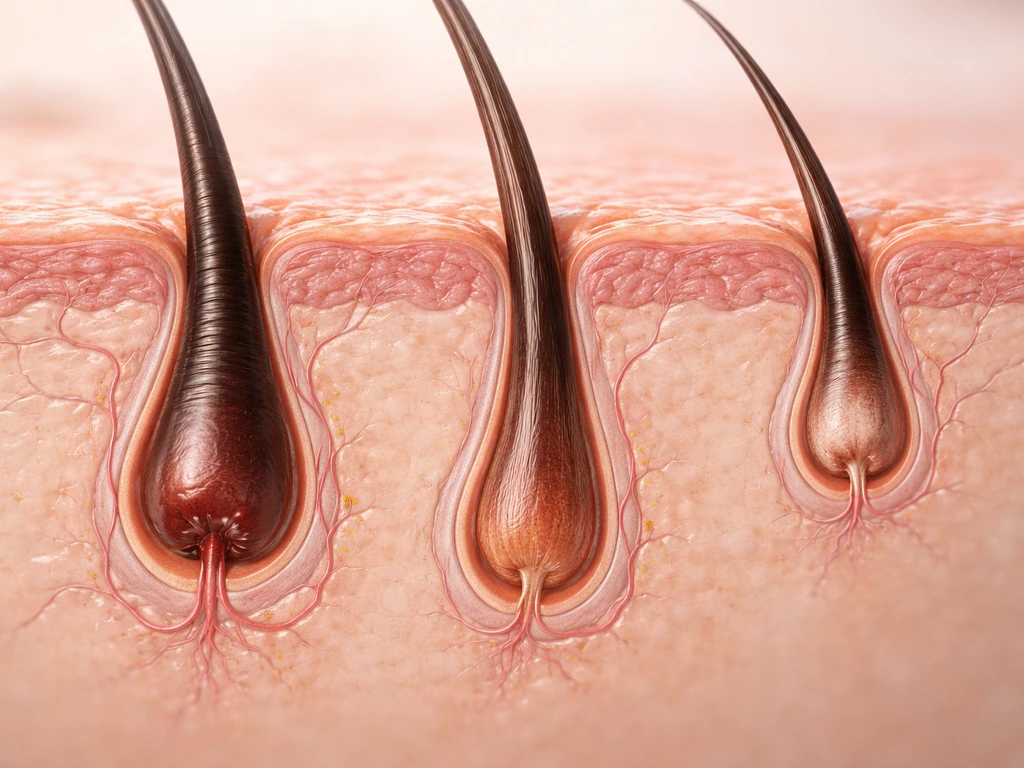
Every hair on your body goes through a cycle: anagen (active growth), catagen (transition), and telogen (resting/shedding). The big difference with eyebrows compared to scalp hair is how short their anagen phase is. Scalp hairs stay in active growth for 2 to 7 years, which is why your hair can grow long. Eyebrow hairs have an anagen phase of only about 2 to 3 months, followed by a catagen phase of 2 to 3 weeks, and then a telogen resting phase of around 2 to 3 months. That short growth window is the direct reason your brows never grow past a certain length and why the full eyebrow cycle from shed to regrowth takes roughly 3 to 4 months.
There's also a stark ratio difference. Scalp follicles spend the majority of their time in anagen. Eyebrow follicles have an anagen-to-telogen ratio closer to 1:9, meaning most of your brow hairs are resting at any given moment. Any intervention that wants to meaningfully thicken brows needs to either extend that anagen phase, improve follicle health so more hairs reach full thickness, or address whatever is shortening the cycle. Simply adding collagen to your diet doesn't directly do any of those things on its own.
What collagen actually is and what it does near a hair follicle
Collagen is the most abundant structural protein in your body. It forms the scaffolding of your skin, including the dermis where hair follicles are anchored. Type I and III collagen make up the bulk of this extracellular matrix. When you take an oral collagen supplement, you're typically taking hydrolyzed collagen, meaning it's been broken down into smaller peptides (dipeptides and tripeptides like Gly-Pro-Hyp and Pro-Hyp) that your gut can absorb.
Transport and hydrolysis mechanisms are reviewed in LC, MS/MS mechanistic work, which supports that intestinal peptide handling via transporters such as PEPT1 can allow di- and tripeptides to enter circulation hydrolyzed collagen, meaning it's been broken down into smaller peptides (dipeptides and tripeptides.
Research confirms these peptides do reach the bloodstream after ingestion, and from there they can stimulate fibroblasts in the dermis to produce more collagen and support skin structure.
Here's what collagen can plausibly do for your brow area: it can improve the overall quality of the skin and dermis that surrounds and supports each follicle. Healthier dermal tissue means better microcirculation, more structural support, and reduced inflammation. What it can't do is signal a resting follicle to wake up or lengthen the anagen phase. Hair follicles respond to hormonal signals, growth factors, and specific receptor activity. Collagen doesn't operate on those channels directly.
What the evidence actually says about collagen and hair

[A systematic review and meta-analysis of 26 randomized controlled trials found meaningful benefits from oral hydrolyzed collagen on skin hydration and elasticity](https://pmc. ncbi. nlm. nih.
gov/articles/PMC10180699/) over 2 to 24 weeks at doses of 2. 5 to 10 grams per day. A separate clinical trial combining hydrolyzed collagen with vitamin C reported improvements in scalp and hair condition alongside skin outcomes. There's also a study on telogen effluvium, a common stress-related hair shedding condition, showing that a nutritional protocol including hydrolyzed collagen plus vitamins and minerals improved the anagen-to-telogen ratio and hair density in participants.
That last one is the closest thing to direct hair-regrowth evidence involving collagen, but it's scalp hair, not brows, and collagen was part of a broader nutritional stack, not a standalone ingredient.
The honest summary: there are no published controlled trials specifically measuring eyebrow regrowth from collagen supplementation. The evidence that exists is for skin quality and, to a lesser extent, scalp hair in deficiency or shedding scenarios. Extrapolating that to eyebrow growth is plausible but not proven. If your brows are thin because your overall skin and nutritional status is poor, collagen may help. If your follicles are dormant or damaged for another reason, collagen alone isn't going to fix it.
Oral vs topical collagen: which one to use and how
This is where a lot of people get confused by marketing. Topical collagen serums or creams are widely available and heavily marketed for skin and brow concerns. The problem is that collagen molecules are large, and the stratum corneum, the outermost barrier layer of your skin, blocks most of them from penetrating deep enough to reach the dermis where follicles sit. A 2026 review specifically notes that penetration constraints limit the activity of topical collagen peptides.
Research on topical hydrolyzed collagen has shown benefits for surface hydration and superficial dermal measures, but whether it meaningfully reaches eyebrow follicle depth is a different question. Topical collagen can improve brow skin texture and moisture, which is not worthless, but don't expect it to regrow hairs.
Oral collagen is the better-supported route. The peptides are small enough to be absorbed intestinally, they do circulate systemically, and they do influence dermal collagen synthesis. Clinical trials have used hydrolyzed collagen in the range of 2.5 to 10 grams per day for 8 to 24 weeks, with tripeptide-focused products often used at around 3 grams per day for 4 to 12 weeks. If you want to try collagen for brow support, that's your range: 2.5 to 10 grams of hydrolyzed collagen daily, ideally taken consistently for at least 8 to 12 weeks before evaluating results. Adding vitamin C alongside it makes sense, since vitamin C is a required cofactor for collagen synthesis.
| Form | Penetration | Evidence level | Best use | Practical recommendation |
|---|---|---|---|---|
| Oral hydrolyzed collagen | Systemic via gut absorption | Moderate (skin/hair studies) | Dermal support, skin quality, nutritional deficiency | 2.5–10 g/day for 8–12+ weeks with vitamin C |
| Topical collagen serum | Surface/superficial only | Limited (dermal penetration constraints) | Skin hydration, texture around brows | OK as a moisturizing add-on, not a growth driver |
| Topical collagen cream | Surface/superficial only | Limited | Brow skin conditioning | Same as serum; use if skin is dry or irritated |
Realistic timelines and what results to expect
The eyebrow hair cycle runs about 3 to 4 months from start to finish. blank" rel="noopener noreferrer">Cleveland Clinic recommends giving brow regrowth efforts at least 4 months before concluding that something isn't working. If you're starting collagen supplementation today, you realistically shouldn't expect to see meaningful changes in brow density for 10 to 16 weeks minimum. If you want to know what helps eyebrows to grow, the key is choosing interventions that support the growth cycle and addressing the reason your brows are sparse. Skin-related benefits like improved texture around the brow area may show up sooner, within 8 to 12 weeks, since skin turnover is faster than follicle cycling.
Set the bar correctly from the start. Collagen is unlikely to visibly thicken brows that are sparse due to hormonal changes, scarring, or long-term overplucking damage. But if you’re specifically wondering whether honey helps eyebrows grow, the evidence for that is very limited compared with approaches that target follicle cycling and health Collagen is unlikely to visibly thicken brows.
What you might notice after 3 to 4 months of consistent supplementation is that existing hairs appear a bit stronger, skin in the brow area looks healthier, and if collagen was filling a nutritional gap, there may be slightly more even regrowth. Don't expect a dramatic transformation. If you photograph your brows now and compare at 12 and 16 weeks, you'll have an honest baseline to evaluate from instead of relying on memory.
Why your eyebrows might be sparse in the first place
Collagen won't help much if you haven't figured out why your brows are thin. There are quite a few different reasons, and they call for different solutions. Here are the most common ones to work through:
- Over-plucking or waxing: Repeated trauma to the follicle can cause scarring that permanently limits regrowth. This is especially true if you've been heavily plucking for years. Scarred follicles don't respond to supplements or serums.
- Contact dermatitis: Cosmetic products, brow tints, or even skincare applied near the brows can trigger inflammation that disrupts the follicle cycle. Cleveland Clinic lists this as a common cause of eyebrow hair loss. If your brow skin is red, flaky, or itchy, that's the first thing to address.
- Nutrient deficiency: Low iron, zinc, biotin, vitamin D, or protein can all slow hair growth and cause shedding. Collagen is actually relevant here as a protein source, and this is the scenario where it's most likely to help.
- Thyroid dysfunction: Hypothyroidism is a classic cause of thinning outer brows. No topical product fixes this. If brow thinning is recent and unexplained, get your thyroid checked.
- Stress and hormonal changes: High cortisol, menopause, postpartum shifts, and other hormonal disruptions can push follicles into telogen early. This is often temporary once the trigger resolves.
- Age-related follicle miniaturization: Follicles naturally produce finer, shorter hairs with age. Collagen can support the dermal environment but won't reverse age-related changes on its own.
- Medications: Some medications (including retinoids, anticoagulants, and others) can cause brow thinning as a side effect. This requires a conversation with a doctor, not a serum.
If you can identify which of these is your situation, you'll be able to pick a solution that actually matches the problem. Many people try multiple serums and supplements when the real issue is an undiagnosed contact allergy or low ferritin levels.
Collagen vs other options: what to actually prioritize
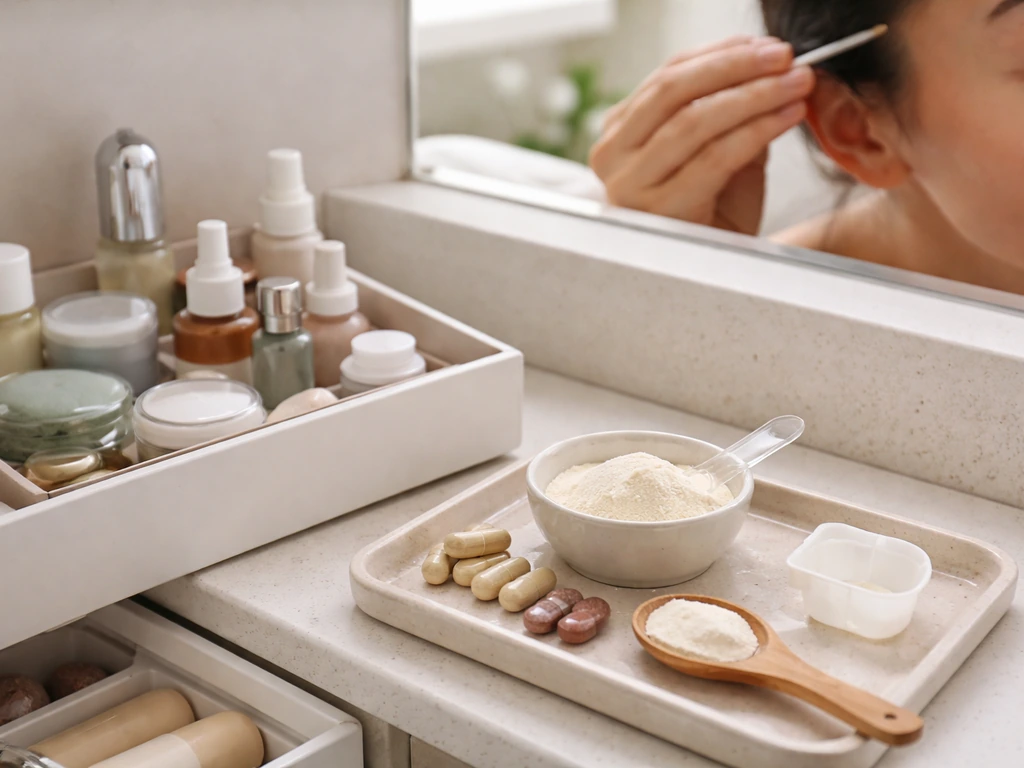
Collagen is a supportive ingredient, not a targeted brow-growth treatment. Massaging your eyebrows may improve comfort or circulation, but it does not directly make eyebrow hair grow faster. If you're serious about regrowing sparse brows, here's how the main options compare and where to put your effort:
| Ingredient/Treatment | Mechanism | Evidence for brows | Best for | Realistic expectation |
|---|---|---|---|---|
| Oral collagen (2.5–10 g/day) | Dermal support, ECM improvement | Indirect (skin/hair studies only) | Nutritional support, skin quality | Modest improvement over 3–4 months if diet is lacking |
| Minoxidil 2–5% (topical) | Extends anagen phase, improves follicle blood flow | Strongest for hair regrowth (off-label for brows) | Significant thinning, post-damage regrowth | Visible regrowth in 4–6 months; requires caution near eyes |
| Castor oil | Conditioning, possible anti-inflammatory | Anecdotal, no controlled brow trials | Keeping existing hairs healthy, mild cases | Modest; helps more with conditioning than true regrowth |
| Rosemary oil | Possible DHT inhibition, circulation | One scalp RCT vs minoxidil 2%; no brow-specific data | Mild thinning, maintenance | Gradual, comparable to mild minoxidil in scalp studies |
| Peptide serums (brow-specific) | Mimic growth factors, support follicle activity | Limited but some eyelash/brow serum trials | Sparse brows without scarring | Subtle over 2–3 months; better than plain conditioning |
| Nutritional correction (iron, zinc, protein) | Addresses root deficiency | Strong for deficiency-related loss | Shedding from poor diet or deficiency | Can be significant if deficiency is confirmed |
| Aloe vera / honey | Soothing, anti-inflammatory | Minimal for growth specifically | Irritated brow skin, contact dermatitis | Helpful as base care; not a growth driver |
If your brows are significantly thinning or you're trying to recover after heavy overplucking, minoxidil has the most robust mechanism and evidence, though it requires care near the eye area and some people experience contact dermatitis from its propylene glycol base. Rosemary oil is a gentler alternative worth trying for mild cases, particularly if you want to avoid minoxidil's side effects.
Tea tree oil is sometimes suggested for brow support, but the evidence that it helps eyebrows grow is limited compared with options like minoxidil or peptide-based serums. Castor oil remains a popular option and works well for keeping hairs conditioned, though don't expect it to wake up dormant follicles on its own. Peptide-based serums sit in a useful middle ground for people who want something more targeted than oils but aren't ready for minoxidil.
Collagen fits best as part of a nutrition-first approach or stacked with one of the more active topical options.
Practical routines by scenario
For maintenance and general thickening (brows are present but sparse): Start with a clean diet covering protein, iron, and zinc, add 5 grams of oral hydrolyzed collagen with vitamin C daily, apply castor oil or rosemary oil to brows 4 to 5 nights per week, and reassess at 12 weeks.
For recovery after overplucking or waxing: Give yourself at least one full cycle (3 to 4 months) without any plucking. Consider a peptide brow serum applied nightly. If you're not seeing progress by month 4, discuss low-dose topical minoxidil with a dermatologist. Collagen supplementation can support skin healing in the meantime.
For sensitive skin: Avoid fragranced oils directly on the brow follicles. Aloe vera gel can help calm inflammation around the area. Aloe vera may help soothe the brow area, but it has not been proven to directly stimulate eyebrow hair growth Aloe vera gel can help calm inflammation around the area.. Oral collagen is safe for sensitive skin and is a reasonable supportive measure. Patch-test any new topical thoroughly before applying near the brows.
Dietary habits and what you eat overall matter too, especially for people dealing with diet-related shedding. If you're wondering what to eat to grow eyebrows, start by prioritizing protein, iron, and zinc to support healthier follicle function what to actually eat overall. Getting enough protein, iron, and zinc from food has a direct impact on follicle health, and those connections are worth exploring alongside any supplement routine.
Safety, side effects, and when to get a professional involved
Oral collagen is generally well-tolerated. The most commonly reported side effects are mild digestive discomfort (bloating, fullness) especially at higher doses. People with allergies to fish, shellfish, or eggs should check the source of their collagen carefully, since marine and egg-shell membrane collagen are common in supplements. There's no strong evidence of risk during normal adult use, but if you're pregnant or breastfeeding, discuss any supplement with your doctor before starting, since most clinical trials exclude those populations and safety data is limited.
Supplement quality is a real concern. The FDA has flagged some collagen brands for labeling and quality issues. When choosing a product, look for brands that test for heavy metals and contaminants, carry third-party certifications (NSF, USP, or Informed Sport), and clearly state the collagen source and hydrolyzed peptide content. Checking whether a brand has any recent FDA warning letters is a quick quality screen.
For topical minoxidil, which some people add as a stronger intervention, the key safety point for brow use is proximity to the eyes. If it contacts your eyes, rinse thoroughly with cool water immediately and call a doctor if irritation persists. Minoxidil can also cause contact dermatitis, especially from propylene glycol in foam or liquid formulations. Always patch test and start with a lower concentration (2%) before considering 5%. It's contraindicated in pregnancy.
See a dermatologist if: your brow thinning is sudden or has no clear cause, you've lost the outer third of your brows (a classic thyroid sign), you have associated skin symptoms like scaling or redness in the brow area, you've given a consistent regimen a full 4 months with no response, or you're considering prescription treatments. Some causes of eyebrow loss, including scarring alopecias, require diagnosis and treatment that no supplement or serum can address. Getting the diagnosis right matters far more than picking the perfect ingredient.
FAQ
How long does it take for collagen to show any brow benefit?
Expect skin changes first, usually within 8 to 12 weeks. For any potential brow density or “stronger-looking” hairs, give it at least 10 to 16 weeks (ideally around 4 months) because eyebrow hair cycling is slow, and early changes are often subtle.
What dose of oral collagen works best for brow support?
In studies, oral hydrolyzed collagen is commonly used at 2.5 to 10 g per day. If you want a practical starting point, many people use 5 g daily, but consistency matters more than chasing higher doses.
Should I take collagen with vitamin C, and how much?
Vitamin C is a cofactor your body needs to build collagen. A common approach is adding vitamin C with your collagen (rather than taking collagen alone), but avoid megadoses, and if you have kidney stone history, talk with your clinician first.
Does topical collagen work for eyebrow regrowth?
Topical collagen often improves surface moisture and texture, but most collagen peptides are too large to reliably reach the depth of eyebrow follicles. If your goal is new hair growth, topical collagen is unlikely to be the main driver.
Can collagen help if my brows are thinning from overplucking or waxing?
It may support the skin around follicles and healing, but it will not reverse follicle damage on its own. The bigger step is stopping plucking/waxing long enough for a full 3 to 4 month cycle, then reassessing whether you need a follicle-targeted option.
If collagen is only indirect, how do I know whether it’s worth trying?
Consider collagen if you also have signs of low overall nutrition (low protein intake, iron or zinc deficiency risk) or you notice brow skin looks dry or inflamed. If the cause is hormonal imbalance, scarring, or an autoimmune issue, collagen alone is unlikely to be enough.
What collagen type should I look for in supplements?
Choose hydrolyzed collagen (collagen peptides). The label should specify the peptide form and the hydrolyzed peptide amount per serving. “Unhydrolyzed” or vague collagen blends may not provide the same bioavailable peptide profile.
Are there specific side effects to watch for when taking collagen?
The most common issue is mild digestive discomfort (bloating, fullness), especially at higher doses. If you feel persistent GI symptoms, reduce the dose, take it with food, or switch brands to see if you tolerate the formulation better.
Is collagen safe if I have allergies to fish, shellfish, or eggs?
Be careful with collagen source. Marine and egg-derived collagens are common, so check the ingredient list for the exact source and shared allergen risk. If you have severe allergies, consider asking a clinician before using collagen.
Can I use collagen if I’m pregnant or breastfeeding?
Safety data is limited because many clinical trials exclude pregnant or breastfeeding people. It’s best to discuss with your doctor before starting any supplement routine, especially if you plan to use it long term.
Does collagen interact with minoxidil or other brow serums?
Collagen is not known for significant interactions with topical minoxidil because it works through nutrition-related pathways. Still, if you’re using multiple products near the eye, watch for irritation from the skincare layers, and introduce one change at a time.
How should I measure progress so I do not over- or under-estimate results?
Take standardized photos in the same lighting and angle (front-facing and slightly angled) at baseline and again at 12 and 16 weeks. Also track whether the “new hairs” you see are actually within the brow line, since skin improvements can look like density changes.
What should I do if I do collagen for 4 months with no results?
First, re-check the cause. If thinning is sudden, patchy, or associated with scaling or redness, get evaluated rather than continuing indefinitely. If you still want a trial, consider switching to a follicle-targeted approach (for example, options with stronger growth evidence) with clinician guidance.
When should I see a dermatologist for eyebrow hair loss?
Get checked if thinning is sudden or unexplained, you have loss of the outer third of the brows, you notice thyroid-like symptoms, you develop persistent redness or scaling, you have scarring or smooth shiny patches, or you have not improved after a consistent 4-month regimen.
Next Article
Does Brushing Your Eyebrows Help Them Grow? What to Expect
Find out if brushing helps eyebrow growth, what affects regrowth, safe brushing tips, and smarter options for sparse bro