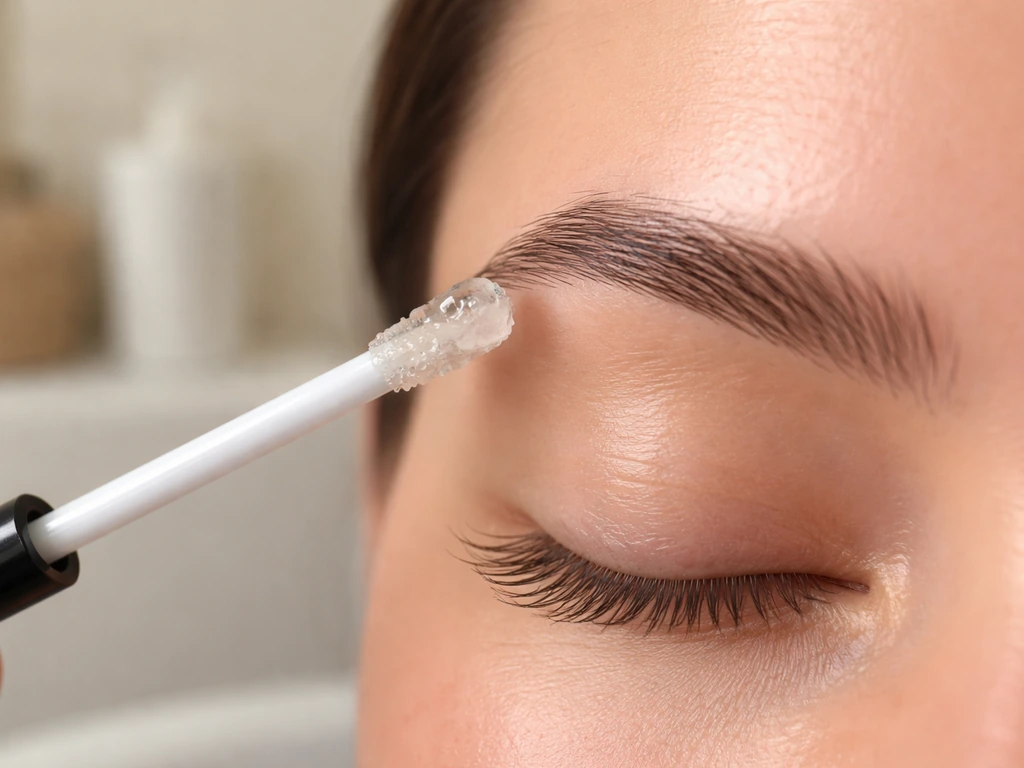
Vicks VapoRub is not proven to make your eyebrows grow. For more detail, see does vaporub make your eyebrows grow. There is no published clinical trial showing that applying it to your brow area produces new hair growth in humans. Some of its ingredients, especially menthol, show interesting results in animal studies and have measurable effects on skin blood flow, but that does not translate into a reliable, tested treatment for sparse or thinning eyebrows. If you have tried it and felt like your brows improved, there are plausible reasons that could happen, but there are also safer, better-supported options worth knowing about before you put a mentholated chest rub near your eyes.
Does Vicks Make Your Eyebrows Grow? Evidence, Safety & Alternatives

James Whitmore
22 Jul 2026
What's actually in Vicks VapoRub
Before deciding whether Vicks could do anything for your brows, it helps to know what you are actually putting on your skin. The active ingredients on the official label are camphor at 4.7%, menthol at 2.6%, and eucalyptus oil at 1.2%. The inactive ingredients include petrolatum (the ointment base), cedar leaf oil, nutmeg oil, thymol, turpentine oil, and added fragrance.
The petrolatum base is essentially the same occlusive emollient found in Vaseline and Aquaphor, which means part of what Vicks does to skin is simply trap moisture and reduce transepidermal water loss. The interesting part, at least from a hair-biology standpoint, is the terpene cocktail on top of that base. An ex vivo skin absorption study found that terpenes from VapoRub, including eucalyptol, menthol, camphor, and pinenes, do penetrate into the stratum corneum, epidermis, and dermis within a relatively short application window, with some evidence they can reach systemic circulation. So these compounds are not just sitting on the surface.
A closer look at the ingredients most relevant to hair growth
| Ingredient | Amount in Vicks | Potential relevance to hair | Quality of evidence |
|---|---|---|---|
| Menthol | 2.6% active (some SDS documents cite 5–10%) | TRPM8 agonist; increases cutaneous blood flow; promoted hair growth in mouse models | Animal/mechanistic only; no human RCT for eyebrows |
| Camphor | ~4.7–5.3% | Terpene; penetrates skin; no established hair-growth mechanism | No relevant human trial |
| Eucalyptus oil (eucalyptol) | 1.2% | Terpene; penetrates skin; limited preclinical interest | No human hair-growth trial |
| Petrolatum | Major base ingredient | Occlusive moisturizer; protects follicle environment; no direct growth stimulus | Well-established as emollient; not a growth agent |
| Thymol | Trace (inactive) | Mild antiseptic; no documented hair-growth role | No evidence |
| Turpentine oil | Trace (inactive) | Skin irritant at higher concentrations; counterirritant historically | No evidence for hair growth; irritation risk |
How eyebrow hair actually grows
Eyebrow hairs follow a three-phase cycle: anagen (active growth), catagen (transition), and telogen (resting and shedding). Unlike scalp hair, the anagen phase for eyebrows is short, typically around 2 to 3 months, which is why your brows do not keep growing indefinitely the way head hair does. The daily growth rate is slow, roughly 0.12 to 0.16 mm per day, meaning it takes many weeks before you notice any visible change in density or length.
For any topical ingredient to genuinely promote eyebrow regrowth, it would need to do one or more of the following: push resting follicles into anagen earlier, extend the anagen phase, increase the rate of cell division in the hair matrix, or improve blood supply to the dermal papilla (the cluster of cells that feeds the follicle). This is biologically plausible in theory, and it is why menthol's effect on skin blood flow gets researchers interested. But plausible mechanism does not equal proven clinical effect.
What the science actually shows, and what it doesn't
The most relevant animal data comes from a 2014 mouse study showing that topical peppermint oil (a rich source of menthol) at a 3% concentration produced strong anagen induction and outperformed minoxidil in that specific mouse model. A 2020 mouse study found L-menthol alone promoted hair growth and altered hair-growth gene expression. Mechanistic human microvascular studies confirm that menthol activates TRPM8 receptors in the skin, triggering dose-dependent vasodilation and increased cutaneous blood flow. More blood flow to a follicle could theoretically support faster or denser growth.
Here is where it gets complicated. In vitro studies using actual human hair follicles tell a different story. Some isolated follicle experiments show that TRP-channel agonists, the same class of compounds that includes menthol, can inhibit rather than stimulate hair growth depending on the receptor subtype and concentration. A notable 2011 study found that activating TRPV3 receptors inhibited human hair growth in culture. This means TRP-channel effects on follicles are highly context-dependent and not reliably pro-growth in human tissue.
Critically, there are no randomized controlled trials demonstrating that Vicks VapoRub alone causes clinically meaningful eyebrow or scalp hair regrowth in humans. A 2025 narrative review of VapoRub benefits and complications found no robust clinical evidence supporting hair regrowth claims. A 2025 narrative review ('There's the Rub: narrative review of benefits and complications associated with Vicks VapoRub use') found no robust clinical evidence supporting hair regrowth claims There's the Rub: narrative review of benefits and complications associated with Vicks VapoRub use — PMC (2025). Dermatologists quoted in consumer media outlets consistently describe Vicks as unproven for this purpose and flag the risk of skin irritation in the periorbital area. Most of the 'evidence' circulating online is anecdotal, uncontrolled, and subject to confounding factors like natural regrowth cycles, seasonal changes, and concurrent product use.
Safety risks you need to know before trying this
The eyebrow area is not the same as your chest or the soles of your feet. The skin around your eyes is thinner and more sensitive, and your eyes themselves are at real risk of exposure when you apply anything to that region. The Procter & Gamble Safety Data Sheet for Vicks VapoRub classifies it as an eye irritant under Category 2B (Eye Damage/Irritation). The official label explicitly states: avoid contact with eyes. Applying it to your brow hairs and skin millimeters from your eye creates a meaningful transfer risk, especially overnight.
Beyond eye exposure, contact dermatitis is a documented real-world risk. Case reports in dermatology literature describe VapoRub-associated contact dermatitis and, in at least one published case, chemical leukoderma (permanent or prolonged depigmentation of the skin) linked to VapoRub application. The fragrance blend and turpentine oil are the most likely culprits for sensitization reactions. If you already have reactive or eczema-prone skin, the brow area is not a good testing ground.
- Eye irritant: the product's own safety data sheet classifies it as Category 2B eye damage/irritation
- Contact dermatitis: fragrance, turpentine oil, and other terpenes can sensitize the skin
- Chemical leukoderma: rare but documented skin depigmentation in case reports
- Children under 2: the label explicitly says do not use; keep away from very young children entirely
- Damaged or broken skin: the label warns against applying to wounded or damaged skin
- Periorbital transfer: any ointment applied near the eye can migrate, especially during sleep
If you still want to try it: how to do it as safely as possible
I would honestly point you toward better options first (more on those below), but if you are determined to experiment, the least risky way to do it starts with a patch test on less sensitive skin. Do not start on your face.
- Patch test first: apply a small amount (pea-sized) to the inside of your forearm, cover lightly, and wait 48 hours. Check for redness, swelling, itching, or blistering. If any of those appear, stop.
- If no reaction, apply a very thin layer to the brow hairs and the skin directly beneath them using a clean cotton swab, not your fingers.
- Stay at least 5 mm away from your lash line. This matters. The closer you get to your eye, the higher the risk of transfer.
- Do not apply and then go to sleep face-down. Overnight migration into your eye is a real concern with any ointment in this area.
- Limit application to once daily in the evening. More is not better and only increases irritation and eye-exposure risk.
- Wash the area gently each morning with a mild, fragrance-free cleanser.
- Stop immediately if you notice redness, stinging, or any change in skin color.
Realistic timelines and what to actually expect
Even if Vicks had a genuine growth-stimulating effect (and again, that is not established), eyebrow hair biology sets the clock. Given a daily growth rate of roughly 0.12 to 0.16 mm per day, you would not see meaningful density changes in less than 6 to 8 weeks under the best circumstances, and full-cycle regrowth after overplucking or damage typically takes 3 to 4 months. Anyone claiming they saw dramatic results in two weeks is likely experiencing normal regrowth that was already underway, the moisturizing effect of the petrolatum base making existing hairs appear thicker, or confirmation bias. Genetics, age, and underlying health conditions also play a significant role in how quickly and densely your brows recover regardless of what you put on them.
Better-supported alternatives worth using instead
If your goal is actually denser, healthier eyebrows, here are the options that have more meaningful evidence or at least a safer profile for the periorbital area.
| Option | Evidence level | Pros | Cons | Best for |
|---|---|---|---|---|
| Topical minoxidil (2–5%) | Strongest: multiple RCTs for hair regrowth | Clinically proven to extend anagen and increase follicle size | Requires ongoing use; possible systemic absorption; not officially approved for brows | Significant thinning, alopecia, or medically sparse brows |
| Rosemary oil | Moderate: one RCT showed equivalence to 2% minoxidil for scalp regrowth | Natural, low irritation risk, accessible | Brow-specific data lacking; needs carrier oil; slow results | Mild to moderate thinning as a first natural attempt |
| Castor oil | Weak: no RCTs; widely used with anecdotal support | Very safe for periorbital area; moisturizes and conditions existing hairs | No proven follicle stimulation; can cause milia if overused | Conditioning sparse brows; improving appearance of existing hairs |
| Vaseline / Aquaphor / petroleum jelly | None for growth; strong for moisture barrier | Safe near eyes; protects and conditions; zero irritation risk for most | No growth mechanism; purely cosmetic conditioning effect | Dryness, brittleness, post-wax recovery |
| Bimatoprost (prescription) | Strong: FDA-approved for eyelash growth; off-label for brows | Most potent proven option | Prescription only; potential iris pigmentation change; cost | Medically thinning brows under dermatologist supervision |
My practical recommendation: start with castor oil or rosemary oil in a carrier if you want a low-risk natural option, and pair it with a good moisturizing base like plain petroleum jelly to protect the follicle environment overnight. If your brows are significantly sparse due to over-grooming, thyroid issues, or alopecia, that is a conversation to have with a dermatologist about minoxidil or bimatoprost rather than a home remedy. It is also worth noting that Vaseline, Aquaphor, and petroleum jelly have a very similar occlusive profile to the petrolatum base in Vicks, without the irritating terpenes and fragrance blend. If the theory is that Vicks works partly through moisture occlusion, those products give you that benefit with none of the added risk near your eyes.
When to stop and when to see a dermatologist
Stop using Vicks on your brows immediately if you notice any redness, persistent itching, swelling, skin peeling, or discoloration at the application site. Eye redness or irritation is also a clear stop signal. Contact dermatitis can escalate from mild to severe with repeated exposure, and sensitization means future reactions tend to be worse, not better.
See a dermatologist if your eyebrow thinning is sudden, if it is accompanied by thinning elsewhere (scalp, lashes, body hair), if you have a history of thyroid disease, alopecia areata, or lichen planopilaris, or if you have been diligently caring for your brows for four or more months with no visible improvement. Eyebrow loss can be a symptom of an underlying medical condition that home remedies will not address, and a dermatologist can check for that before you spend months on ineffective topical experiments. They can also prescribe bimatoprost or oversee minoxidil use with appropriate monitoring.
A practical daily routine to actually support eyebrow regrowth
Supporting regrowth is less about finding the magic ingredient and more about consistently protecting and nourishing the follicle environment over the weeks and months it takes for eyebrow hair to cycle through. Here is what a sensible routine looks like based on what the evidence actually supports.
- Morning: cleanse gently with a fragrance-free, non-stripping cleanser. Avoid scrubbing the brow area.
- Morning: apply a light, fragrance-free moisturizer to the periorbital skin to maintain the skin barrier.
- Evening: apply your chosen growth-support serum or oil (castor oil or a 5% rosemary oil blend in jojoba are reasonable starting points) with a clean spoolie or cotton swab directly onto the brow hairs.
- Seal with a thin layer of plain petrolatum or Aquaphor only if your skin tolerates occlusive products without clogging pores.
- Avoid over-grooming: resist tweezing stray hairs for at least 8 weeks if you are trying to rebuild density.
- Review progress at 8 weeks and again at 16 weeks. Photograph in the same lighting to make honest comparisons.
- If no improvement at 16 weeks, move to a dermatologist consultation rather than escalating to more aggressive DIY experiments.
Related guides on eyebrow growth and home remedies
If you are exploring home remedies in this category, Vicks is not the only product people try. Vaseline, Aquaphor, and plain petroleum jelly are all worth understanding individually, since they share the petrolatum base with Vicks but without the potentially irritating terpene and fragrance components. Carmex is another commonly searched option with a different ingredient profile. If you're wondering specifically whether Carmex can help grow eyebrows, evidence is lacking and it is not proven to stimulate new eyebrow hair growth can carmex help grow eyebrows. Kajal and lip balm also come up in this space. Each has its own risk-benefit picture near the delicate periorbital skin, and it is worth reading the specifics rather than assuming they all work the same way. There is a meaningful difference between an occlusive that conditions existing hairs and an ingredient that has any real mechanism for stimulating new growth, and getting clear on that distinction will save you a lot of wasted time and potential skin irritation. See the related guide “Does lip balm help eyebrows grow” for a focused look at that specific home remedy and its risks and evidence.
FAQ
Short answer: does Vicks VapoRub make your eyebrows grow?
No reliable clinical evidence shows Vicks VapoRub causes meaningful new eyebrow growth. Anecdotes exist, but controlled human data are lacking; any occasional improvement people report is likely temporary (hydration, inflammation‑driven shedding cycle changes, or cosmetic thickening) rather than true follicle regeneration.
What’s in Vicks that people think might affect hair growth?
Key active ingredients are camphor (~4–5%), menthol (~2–5%), and eucalyptus oil (~1%), plus inactive ingredients like petrolatum, cedar leaf, thymol, and turpentine oil. Menthol is a TRPM8 agonist that can increase skin blood flow; some terpenes in the ointment penetrate skin. These properties have motivated the idea it might stimulate follicles.
Is there scientific evidence that those ingredients increase eyebrow growth in humans?
No direct, high‑quality human trials show VapoRub alone promotes eyebrow regrowth. Preclinical mouse studies suggest menthol and peppermint oil can stimulate hair growth in animals; menthol also increases cutaneous blood flow in humans. But animal and mechanistic data don’t reliably translate to proven clinical benefit for human eyebrow regrowth.
What do dermatologists say about using Vicks for eyebrow regrowth?
Most dermatologists consider it unproven and caution against routine use. They note irritation, contact dermatitis, chemical leukoderma (depigmentation), and eye exposure risk with periorbital application. Experts advise evidence‑based options instead for true eyebrow loss.
Could Vicks cause harm when applied near the eyebrows or eyes?
Yes. VapoRub is an eye irritant and can cause redness, stinging, allergic contact dermatitis, and rare chemical leukoderma. Because the periorbital skin is thin and close to the eye, accidental eye contact is a significant risk. The product label warns 'avoid contact with eyes' and 'for external use only.'
If I still want to try Vicks on eyebrows, what’s a safe patch‑test and application protocol?
Patch test: apply a small pea‑size amount to an inconspicuous forearm area; cover for 24 hours or observe for 48 hours. If redness, itching, burning, blisters, or lightening occur, do not use. If tolerated, apply a thin smear to clean eyebrow skin once daily at night, avoiding eyelid margin and lashes, and wash off in the morning. Do not use on broken skin, near the inner eye, or on children under 2. Stop immediately with irritation, visual symptoms, or pigment change.
Next Article
Does Petroleum Jelly Help Eyebrows Grow? What to Know
Find out if petroleum jelly grows eyebrows or just protects them, plus safe use tips, timelines, and better alternatives