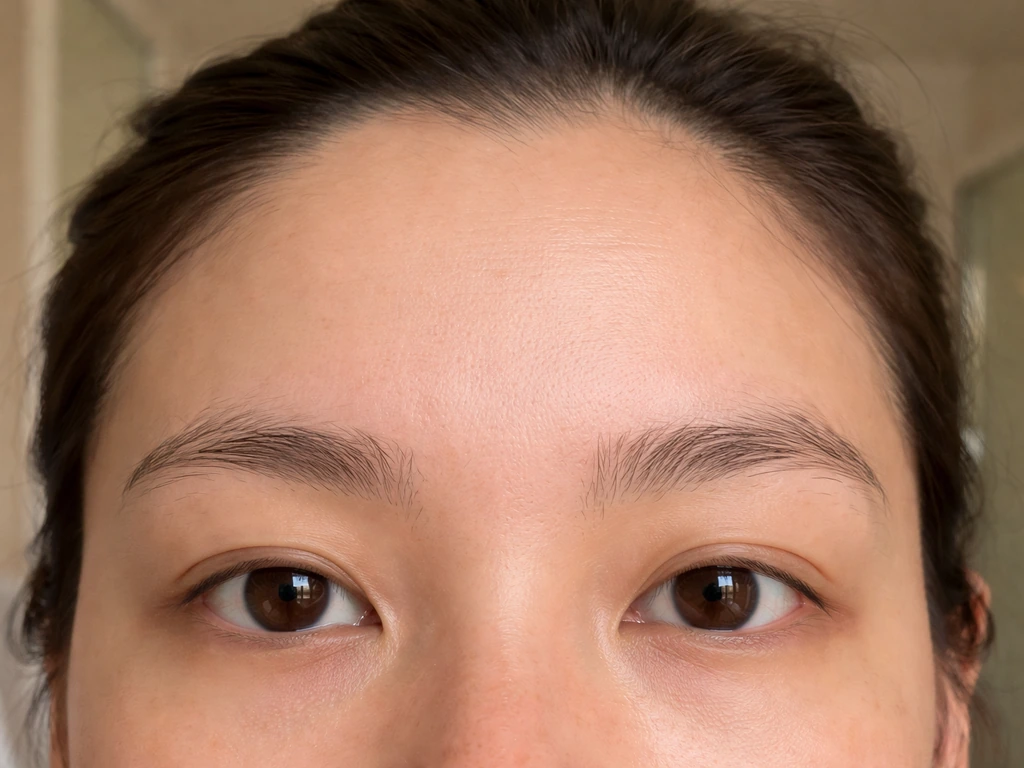
Bald spots in eyebrows can fill back in, but the timeline depends heavily on what caused them. If yours are from overplucking, waxing, or shaving, you can reasonably expect visible regrowth within 4 to 12 weeks and fuller density by 3 to 6 months, as long as the follicles are still alive. If the cause is medical (thyroid disease, iron deficiency, alopecia areata), regrowth is unlikely until you address the root problem. This guide walks you through how to figure out which situation you're in, what to do right now to support regrowth, and when to stop guessing and see a doctor.
How to Grow Bald Spots in Eyebrows: Plan, Timelines & Treatments
James Whitmore
9 Aug 2026
Who this guide is for and a quick plan of action
This guide is for anyone dealing with patchy, thin, or completely bare eyebrow sections, whether you overdid it with the tweezers in your teens, had a waxing incident, went through chemotherapy, or noticed your outer brows quietly disappearing over the past year. The approach you need depends on your specific situation, so I've structured this to help you self-diagnose your bald spot first, then follow the right path.
Here's a fast action plan to orient yourself before diving in:
- Stop all plucking, waxing, threading, and harsh makeup removal immediately — damage can't heal while it's ongoing.
- Identify the likely cause using the section below. Recent cosmetic damage is very different from a slowly expanding bare patch.
- Check the pattern: outer-third thinning, round patches, or diffuse patchiness each point to different causes.
- Start the basic at-home plan (gentle care, castor or rosemary oil, nutrition support) within this week.
- Give it a genuine 3 months before expecting to see significant change — eyebrow cycles are slow.
- If no improvement by 3 months, or if you have other symptoms (fatigue, weight changes, skin issues), get bloodwork done.
What's actually causing your bald spots
Eyebrow hair loss is medically called madarosis, and it has a long list of possible causes. The most common ones I see people dealing with fall into a few clear categories.
Overplucking and traction
This is the most common cause by far. Years of plucking, threading, or waxing repeatedly traumatizes the follicle, especially when hairs are pulled against the direction of growth. Early on, the follicle recovers. But chronic traction causes inflammation around the follicle base, and if that inflammation persists, it can lead to scarring that makes regrowth impossible. The key word is chronic: a few years of moderate plucking is usually reversible. Decades of aggressive daily tweezing, less so. If you stopped plucking and hairs simply never came back after 6 months, scarring is a real possibility worth evaluating.
Waxing, shaving, and cosmetic removal
Shaving removes the hair at the skin surface and doesn't disturb the follicle at all, regrowth is fast, typically within days to a couple of weeks. Waxing removes from the root, so you're waiting for that follicle to cycle back into anagen (the growth phase), which can take several weeks. Neither shaving nor occasional waxing, by itself, causes permanent damage unless done so repeatedly over years in a way that mimics chronic traction. If your bald spot is from a single waxing incident, you're almost certainly fine, just give it time.
Medical and dermatologic causes
These are the causes that don't resolve with patience and castor oil. Alopecia areata produces round, well-defined smooth patches and is an autoimmune condition where your immune system attacks hair follicles. Frontal fibrosing alopecia and lichen planopilaris are scarring alopecias that can affect the eyebrows and hairline, these cause permanent loss if not treated. Discoid lupus can scar follicles in a similar way. Thyroid disease, particularly hypothyroidism, classically causes thinning of the lateral (outer) third of the eyebrows, sometimes called the Hertoghe sign or Queen Anne sign, if your brows are disappearing at the tails, thyroid testing is the first thing to do. Iron deficiency is another commonly overlooked culprit in diffuse thinning. Chemotherapy typically causes eyebrow and eyelash shedding during treatment, with regrowth beginning within about 3 months after finishing, though some people experience prolonged sparseness.
The biology of eyebrow hair growth (and why it takes so long)
Eyebrow follicles cycle through the same three phases as scalp hair, anagen (growth), catagen (transition), and telogen (rest/shedding), but the timing is very different. Scalp hair spends roughly 85 to 90 percent of its life in the anagen phase, which lasts 2 to 6 years, allowing it to grow very long. Eyebrow anagen is dramatically shorter, typically around 3 to 4 months. This is why eyebrow hairs max out at a certain short length, and it's also why a larger fraction of your eyebrow follicles are resting at any given moment compared to your scalp.
What this means practically: even after you stop the damaging behavior, each follicle needs to complete its current phase and enter anagen before you'll see a new hair emerge. You won't see much for the first 4 to 8 weeks, then stubble-like growth starts appearing, and by the 3 to 6 month mark you should be seeing meaningful density change, if the follicles are intact. I can't stress enough: this is a months-long process, not weeks. If you expect results in 2 weeks, you'll give up too soon.
How to self-assess your bald spot before choosing a treatment
Not all bald spots respond to the same approach. Before you buy anything or start a protocol, spend a few minutes honestly evaluating yours.
- Shape and edges: A smooth, clearly defined round or oval patch with no visible hairs suggests alopecia areata rather than cosmetic damage. Gradual diffuse thinning throughout the brow often points to nutritional or hormonal causes. Irregular patchy loss following the areas you pluck most suggests traction.
- Surface texture: Gently feel the bare area. Healthy follicle-intact skin feels smooth and similar to surrounding skin. Shiny, slightly thickened, or fibrotic skin may indicate scarring — if you feel that, home treatments are unlikely to help.
- Duration: Bald spots from recent cosmetic damage (within the past year) are much more likely to recover than areas that have been bare for 5+ years. A long-dormant follicle may no longer be viable.
- Pattern: Outer-third thinning strongly suggests thyroid involvement. Bilateral symmetrical loss across the whole brow may suggest a systemic cause. Unilateral or asymmetric patchy loss could be alopecia areata.
- Associated symptoms: Fatigue, weight changes, cold intolerance, or brittle nails alongside brow loss? That's a strong reason to get bloodwork before spending money on serums.
- History of procedures: If you had microblading or tattooing over the area, and the ink covers follicles, regrowth may be uneven as hairs grow through pigmented skin — this is usually cosmetic, not a follicle problem.
If your assessment suggests scarring, a medical condition, or a pattern that doesn't match simple cosmetic damage, skip ahead to the section on when to see a dermatologist. Starting a topical oil routine on a scarred follicle wastes months you could spend getting actual treatment.
Your step-by-step at-home regrowth plan
This is the practical core of the guide. It's organized by daily and weekly actions, starting with behaviors to stop, because no amount of castor oil will help if you keep removing hairs or irritating the follicles.
Stop the damage first (non-negotiable)
- Stop all plucking, threading, waxing, and tweezing in the bald areas entirely. If you shape the non-bald parts of your brows, only remove the clearest stray hairs and leave everything else alone.
- Switch to a gentle, oil-based or micellar makeup remover. Rubbing at the brow area with a dry cotton pad or harsh remover physically stresses follicles and the surrounding skin.
- If you use tinted brow gels or pencils, apply them with light pressure. Heavy-handed application and scrubbing off brow makeup daily adds up over time.
- Avoid picking at any flaking or irritated skin in the brow zone — this disrupts the follicular environment.
- If you sleep on your face (especially on a rough pillowcase), consider a silk or satin pillowcase to reduce friction on your brows overnight.
Daily routine (morning and evening)
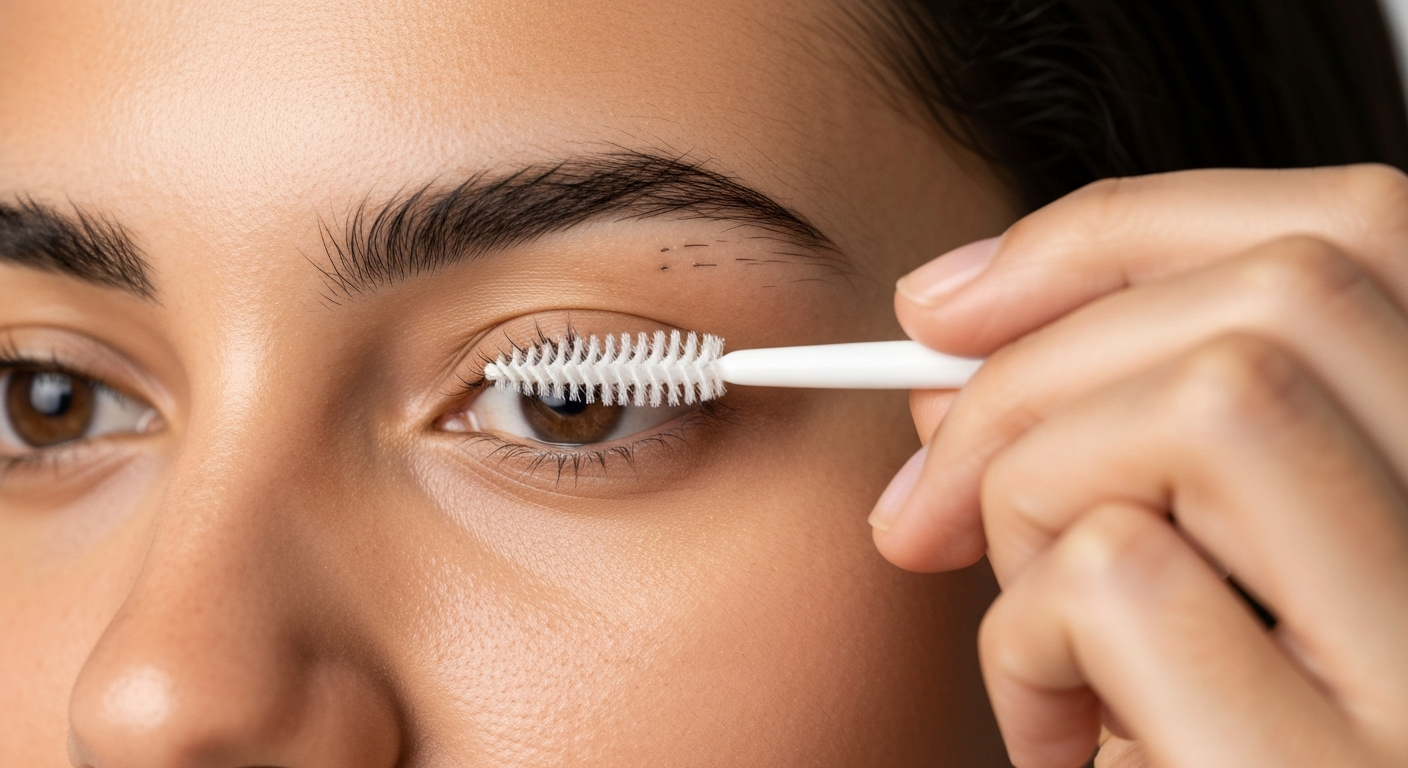
Morning: Cleanse your face gently without scrubbing the brow area. After drying, apply your chosen topical oil or serum to the bald spot using a clean spoolie or fingertip. Use a light hand, you don't need the oil sitting thick on the skin, just enough to coat the follicle openings. Fill in any visible gaps with brow makeup if desired, working with light, hair-like strokes rather than heavy product.
Evening: Remove all makeup gently, then cleanse. This is the better time for topical treatments since the skin is clean and you're not removing the product immediately. Apply your oil or serum and, if you're doing brow massage, do it now for 2 to 3 minutes before bed. Leave the product on overnight.
Weekly actions
- Once or twice a week: do a slightly more thorough brow massage using a dedicated technique (covered in the massage section below).
- Monthly: photograph your brows in consistent lighting to track progress. Progress in the first few months is subtle and easy to miss if you're comparing day to day.
- Every 4 weeks: reassess whether the bare area is changing. New fine vellus hairs appearing is a good sign. No change at all after 8 weeks is worth noting.
- At the 3-month mark: do a full honest evaluation. If you've been consistent and see no improvement, it's time to consider whether a stronger intervention (minoxidil, medical consultation) is appropriate.
Natural topical options: castor oil, rosemary oil, and what the evidence actually says
I want to be genuinely honest here, because a lot of content on this topic overpromises. Natural oils are not miracle treatments. They support a healthy follicular environment and may help if your follicles are intact and just dormant, but they won't regrow hair over scarred tissue, and their clinical evidence base is limited. For a practical, step-by-step routine focused on oils, massage, and safe at-home measures, see our guide on how to grow brows naturally.
Castor oil
Castor oil is the most popular recommendation for eyebrow regrowth, and I've used it myself. The evidence backing it is mostly anecdotal and from small exploratory studies rather than rigorous clinical trials. What it does offer: it's a thick, occlusive oil rich in ricinoleic acid, which has anti-inflammatory properties. It coats the hair shaft to reduce breakage and keeps the periorbital skin moisturized, which is a reasonable supportive environment for follicles. The problem is it can cause contact dermatitis in some people, and it absolutely must not get into your eyes, undiluted castor oil on the eyelid margin is a recipe for irritation. My recommendation: apply a tiny amount to a clean spoolie or fingertip, brush it onto the brow hairs themselves, and keep it on the brow ridge, not the lid. Do a patch test on your inner arm first. Cold-pressed, hexane-free castor oil is the version most commonly used for cosmetic purposes.
Rosemary oil
Rosemary oil has better clinical backing than castor oil for hair growth, though the evidence is for the scalp, not for eyebrows specifically. A 2015 randomized trial (Panahi et al.) found that rosemary oil applied to the scalp produced results comparable to 2% minoxidil for male androgenetic hair loss over 6 months. See blank" rel="noopener noreferrer">Rosemary oil vs minoxidil 2% for androgenetic alopecia: randomized comparative trial (Panahi 2015) - PubMed for the trial details. Extrapolating that to eyebrow bald spots is a logical leap that hasn't been directly proven. More importantly, rosemary is an essential oil that can irritate mucous membranes and the eyes. See WHO Monographs on Selected Medicinal Plants (advisory: avoid mucosa/eye contact) for guidance that essential oils, including rosemary, can irritate mucous membranes and eyes and should not contact mucosa or eyelids. It must never be applied undiluted, and it should never go near the eyelid margin or inner brow. If using it on your brows, dilute it to about 2 to 3 drops in a teaspoon of carrier oil (jojoba or sweet almond work well), apply only to the brow area with careful technique, and patch test first. If you notice any stinging, redness, or irritation around your eyes, stop immediately.
Other carrier oils worth considering
Jojoba oil closely mimics the skin's sebum and is well-tolerated by most skin types as a carrier or standalone moisturizer for the brow area. Argan oil is lightweight and less likely to clog pores if you're prone to milia or comedones around your brows. Coconut oil is popular but can be comedogenic for some people. None of these have direct clinical evidence for eyebrow regrowth, they function primarily as supportive, moisturizing agents.
| Oil | Evidence for Hair Growth | Brow-Specific Safety Note | How to Use |
|---|---|---|---|
| Castor oil | Weak (mostly anecdotal) | Do not apply to eyelid margin; patch test first | Tiny amount on spoolie, brush onto brow hairs only |
| Rosemary oil | Moderate for scalp AGA (not brow-specific) | Must be diluted; avoid near eyes; can cause irritation | 2–3 drops in 1 tsp carrier oil; avoid inner brow/lid |
| Jojoba oil | Very limited | Well-tolerated; low irritation risk | Use as carrier oil or standalone moisturizer on brow |
| Argan oil | Very limited | Lightweight; good for sensitive or acne-prone skin | Apply with fingertip or spoolie, light amount |
| Coconut oil | Very limited | Potentially comedogenic; skip if prone to milia | Use sparingly if tolerated |
If you're looking for a more targeted formula with multiple evidence-informed ingredients combined, a dedicated eyebrow growth serum may be worth exploring. For user experiences and ingredient breakdowns, see rapid grow eyebrow serum reviews (a9c9a34e-53a4-48c4-9a7a-8ae193003b3f). The best serums combine peptides, biotin, and botanicals in concentrations and pH ranges appropriate for periorbital skin, more on how to evaluate those options can be found in our dedicated guide on the best serum to grow eyebrows.
Brow massage and microneedling: what helps and what to be careful about
Eyebrow massage technique
Scalp massage has good supporting evidence for hair density, a 2016 study found that 4 minutes of daily scalp massage over 24 weeks increased hair thickness. The mechanism is thought to involve increased blood flow to the follicle and mechanical stimulation of dermal papilla cells. There are no large randomized trials specifically on eyebrow massage, but the physiological reasoning is sound and the risk is essentially zero if done correctly. Use the pads of your index and middle fingers, not your nails. Apply light to moderate pressure in small circular motions across the brow and the skin just below it. Two to three minutes per session, once or twice daily, is sufficient. You don't need a gadget for this, clean fingers work fine. The goal is to increase local circulation, not to scrub the skin.
Microneedling basics for brows
Microneedling has reproducible evidence for scalp hair regrowth, particularly when combined with topical agents, and there are small case series showing benefit in alopecia areata affecting the brows. The mechanism is micro-injury-induced wound healing, which releases growth factors and stimulates follicular activity. For the scalp, 0.5 to 1.5 mm needle depths are commonly used. For the periorbital area, you go significantly smaller, 0.25 to 0.5 mm is the generally cited range for delicate facial and near-eye skin. Going deeper than this near the eye area is not something to do at home.
My honest take: eyebrow-specific randomized data are scarce, and most uses in this area are off-label or based on case reports. If you want to try at-home microneedling on your brows, a 0.25 mm dermaroller used once every 1 to 2 weeks over the brow body (not the eyelid, not the inner corner) is the most conservative approach. Roll in one direction, lift, then roll in a perpendicular direction, do not roll back and forth. Use a clean, single-use or properly sanitized device every time. Replace rollers frequently because dull needles tear rather than pierce cleanly. Most importantly: never microneedle over active acne, irritated skin, or any inflammatory skin condition, and keep the device well away from the eye itself. If you want results beyond what a 0.25 mm roller can offer, this is genuinely a case where a dermatologist or aesthetician who does periorbital work is the safer path.
- Needle depth for home brow use: 0.25 mm maximum
- Frequency: once every 1 to 2 weeks at most
- Technique: unidirectional rolling or stamp, not back-and-forth
- Hygiene: sanitize device in 70% isopropyl alcohol before and after; replace roller head every 4 to 6 uses
- After rolling: apply your topical (castor oil, serum) while channels are open for better absorption
- Avoid: active skin conditions, any area with infection or inflammation, the eyelid, inner corner of the eye
- Caution: redness and mild sensitivity for 24 hours is normal; persistent irritation, swelling, or any eye symptoms — stop and see a doctor
Nutrition and supplements that actually matter for brow regrowth
This section is one of the most practical things you can do, and it's also one of the most misrepresented. Hair growth is protein synthesis, your body cannot produce a hair fiber without adequate protein, iron, vitamins, and minerals. Deficiencies in any of these will slow or stop regrowth regardless of what you put on your skin. But supplements only help if you're actually deficient. Overdosing on biotin when your biotin levels are normal does nothing extra for your brows, and there's a specific risk with excessive biotin: it can interfere with thyroid and cardiac lab tests, causing falsely abnormal results.
What to test before supplementing
If you're experiencing unexplained brow thinning, especially without an obvious cosmetic cause, the most useful panel to ask for includes: serum ferritin (iron stores), TSH and free T4 (thyroid), a complete blood count, and vitamin D. Some dermatologists also check zinc levels. Getting these done takes the guesswork out of supplementation and may uncover the actual cause of your bald spots.
Iron and ferritin
Iron deficiency is one of the most commonly missed contributors to eyebrow and scalp hair thinning, even when you're not technically anemic. Many dermatology groups use a ferritin target of at least 30 to 50 ng/mL for hair regrowth optimization, with some clinicians targeting 50 ng/mL or higher. A "normal" lab range often starts at 12 ng/mL, which is technically not deficient but suboptimal for hair follicle function. If your ferritin is under 50 ng/mL and you have brow thinning, talking to your doctor about iron supplementation is worth doing. Don't self-supplement at high doses without testing, excess iron is harmful.
Vitamin D
Vitamin D receptors are present in hair follicles and low vitamin D is associated with various forms of alopecia. Deficiency is extremely common, particularly in people who work indoors or live at northern latitudes. If your level is low (under 30 ng/mL is widely considered deficient), supplementation is straightforward and low-risk. A typical corrective dose is 1,000 to 2,000 IU daily, though your doctor may recommend more based on your baseline level.
Protein
Hair is made of keratin, a protein. Chronic low protein intake, common in restrictive diets, will cause diffuse shedding across brows and scalp. If you're consistently eating under 0.8 g of protein per kilogram of body weight, increasing dietary protein (eggs, meat, legumes, dairy) is one of the simplest supportive steps you can take. No supplement replaces this.
Biotin, zinc, and omega-3s
Biotin is heavily marketed for hair growth, but clinical evidence supporting supplementation in people without an actual biotin deficiency (which is rare) is very weak. That said, true biotin deficiency does cause hair thinning and loss, so if you eat a very restricted diet or have certain gut absorption issues, it's worth checking. Zinc deficiency is associated with hair loss including eyebrow thinning, it's easily testable and correctable. Omega-3 fatty acids (from oily fish, flaxseed, or fish oil supplements) have some supportive evidence for reducing hair shedding and improving hair density, and they're generally safe to add to your routine even without testing.
| Nutrient | Why It Matters for Brows | Test Before Supplementing? | General Guidance |
|---|---|---|---|
| Iron (ferritin) | Deficiency causes diffuse hair/brow thinning even without anemia | Yes — get serum ferritin | Target ≥50 ng/mL; supplement under medical guidance |
| Vitamin D | Follicle function; low levels linked to alopecia | Yes — get serum 25-OH vitamin D | 1,000–2,000 IU/day if deficient is typical starting point |
| Protein | Hair is keratin; inadequate intake halts growth | No — assess dietary intake | Aim for ≥0.8 g per kg body weight daily |
| Biotin | Deficiency causes hair loss; excess is common and unhelpful | Test if restricted diet or absorption issues | Only supplement if genuinely deficient; avoid megadoses |
| Zinc | Deficiency associated with hair thinning | Yes if suspected deficiency | Correct deficiency under guidance; don't over-supplement |
| Omega-3s | Some evidence for reduced shedding and improved density | No | Fish oil 1,000–2,000 mg/day is generally safe |
Evidence-backed medical options: minoxidil, PRP, and prescriptions
When natural approaches aren't enough, there are medical interventions with actual clinical evidence behind them, and eyebrow use specifically, not just scalp.
Topical minoxidil for eyebrows
This is the strongest over-the-counter option with direct eyebrow evidence. A randomized, double-blind, split-face study published in the Journal of Dermatology in 2014 (Lee et al.) found that 2% minoxidil lotion applied to one eyebrow produced significantly more improvement in hair count and diameter than placebo after 16 weeks. This is genuinely meaningful, it's not a scalp study being extrapolated. The caveat is that minoxidil near the eye requires careful technique. Common side effects include eyelid dermatitis, periorbital hypertrichosis (unwanted hair growth in nearby areas), and occasional ocular irritation if the product migrates into the eye. Use the 2% concentration rather than 5%, apply with a cotton swab or fingertip to the brow body only, let it dry completely before bed, and avoid contact with the eyelid itself. If you experience eye irritation, redness, or vision changes, stop and consult a doctor.
Prescription treatments
For alopecia areata specifically, there are now FDA-approved JAK inhibitors (baricitinib, ritlecitinib) that can produce significant eyebrow regrowth in people with moderate-to-severe alopecia areata, ritlecitinib in particular showed meaningful eyebrow recovery in clinical trials. Corticosteroid injections into the brow area (intralesional triamcinolone) are another established treatment for alopecia areata patches and can be done in a dermatology office. For scarring alopecias like frontal fibrosing alopecia, prompt treatment to arrest progression is more important than trying to regrow already-lost hair, this requires dermatologic management. If you suspect any of these conditions, home remedies are not the right primary treatment.
Platelet-rich plasma (PRP)
PRP involves drawing your own blood, spinning it to concentrate the growth-factor-rich plasma, and injecting it into the treatment area. It's used in some clinics for eyebrow hypotrichosis and scarring alopecia, with small case series reporting benefit. Randomized eyebrow-specific evidence is limited, clinical trials are ongoing (including NCT04018859 registered on ClinicalTrials.gov evaluating PRP specifically for eyebrow hypotrichosis) but results are not yet definitive. Protocols typically involve multiple sessions every 4 to 6 weeks. If you're considering PRP, choose a provider with specific experience in periorbital PRP, not just a provider who does it for scalp or joints.
How to choose brow growth serums and products without being misled
The eyebrow serum market is full of inflated claims and underdosed formulas. Here's how to evaluate a product quickly before spending money on it.
- Look for peptides (especially copper peptides or biomimetic peptides) and biotin as active ingredients — these have at least supporting in vitro or small clinical evidence for follicle stimulation.
- Prostaglandin analogs (like isopropyl cloprostenate, found in some lash serums) have genuine evidence for hair growth but also carry risks including iris pigmentation change and periorbital fat loss — these deserve careful research before use.
- Avoid products making claims like 'grows brows in 7 days' or showing dramatic before/afters without citations — eyebrow biology simply doesn't allow for that timeline.
- Check that the formula is ophthalmic-safe or specifically formulated for the periorbital area, not a repurposed scalp serum.
- A serum with mostly fragrance, silicones, and fillers with a single drop of an active ingredient at trace concentration is unlikely to do much — look for active ingredients appearing in the first half of the ingredient list.
- Patch test any new serum on the inner arm for 48 hours before applying near your eye area.
If you want deeper guidance on specific products and what ingredients are worth your money, the best product to grow brows guide breaks down the top options across different budgets and brow concerns.
Camouflage options while you wait for regrowth
Regrowth takes months. For step-by-step styling and grooming tips to create fuller, fluffy brows while you wait for regrowth, see our guide on how to grow fluffy brows. In the meantime, you don't have to go out with bare patches, but how you camouflage matters because some methods can interfere with regrowth.
Makeup approaches
Brow pencils with fine tips allow you to draw individual hair-like strokes over bare spots convincingly. Powder-based products give a softer, more diffuse fill. Tinted brow gels can thicken and darken existing hairs. The key rule for bald spots specifically: use light pressure, choose a formula that removes easily without scrubbing, and always remove thoroughly at the end of the day without pulling at the skin. I use a cotton pad soaked in micellar water held against the brow for 10 to 15 seconds before gently wiping, this dissolves the product rather than requiring friction.
Microblading vs. tattooing
Microblading deposits semi-permanent pigment into the upper dermis using a hand tool, creating realistic hair-stroke illusions. It typically lasts 1 to 2 years before fading. It's a reasonable option for stable bald spots, but not a good idea if you're actively trying to regrow hair, because the procedure itself causes microtrauma that can affect follicles, and pigment placed over bare areas may look patchy as natural hairs grow back in. Traditional tattooing (cosmetic or machine tattooing) is permanent and even less forgiving of natural regrowth. My recommendation: exhaust the regrowth options first, give it at least 6 months, and only consider semi-permanent pigmentation if you've decided the hair is not coming back on its own.
When to stop troubleshooting at home and see a doctor
Most cosmetically-caused bald spots respond to the at-home protocol above. But there are clear situations where self-treatment is the wrong path, and waiting on it costs you time or causes progression of a treatable condition.
- No visible improvement after 3 to 4 months of consistent home treatment — time to rule out an underlying cause.
- The bald area is expanding, not just staying static.
- You have perfectly smooth, round patches with no obvious cosmetic cause — this is the classic presentation of alopecia areata.
- You're losing the outer third of your brows (Hertoghe sign) — get a TSH and free T4 drawn.
- The bald skin looks or feels different: shiny, scarred, slightly raised, or bound down — possible scarring alopecia.
- Brow loss accompanied by other symptoms: fatigue, weight changes, cold or heat intolerance, hair loss elsewhere, skin or nail changes.
- You've had more than a year of complete bare patches with no regrowth at all after stopping the causative behavior.
- Any brow area that was previously treated with radiation.
- You want to use prescription minoxidil concentrations above 2%, JAK inhibitors, or are considering PRP — all of these warrant medical supervision.
A dermatologist, ideally one with interest in hair loss (trichology), can perform a dermoscopy of the bald area, do a scalp or brow biopsy if scarring is suspected, and order targeted bloodwork. This is not an expensive or invasive process, one consultation can save you years of using the wrong products. For people with specifically sparse rather than patchy brows, the approaches to how to grow sparse eyebrows overlap significantly with this guide but emphasize longer-term density building rather than acute spot recovery.
Realistic expectations: a timeline summary
I want to close with honest numbers, because the most common mistake I see is people abandoning good routines too early because they expected faster results.
| Cause | First Signs of Regrowth | Meaningful Density | Full Recovery Possible? |
|---|---|---|---|
| Single shaving incident | 1–2 weeks | 4–6 weeks | Yes, very likely |
| Single waxing incident | 3–6 weeks | 2–3 months | Yes, very likely |
| Years of moderate overplucking | 4–8 weeks after stopping | 3–6 months | Usually yes, may be partial |
| Decades of aggressive plucking | Variable; may be limited | 6–12+ months if at all | Possibly partial; scarring may limit |
| Post-chemotherapy | ~3 months after chemo ends | 6–12 months | Usually yes; minority have ongoing sparseness |
| Alopecia areata (treated) | Varies with treatment | 3–6 months with treatment | Possible with appropriate treatment |
| Thyroid/iron deficiency (corrected) | 2–4 months after levels normalize | 4–8 months | Usually yes once levels stabilized |
| Scarring alopecia | Unlikely from home care | Unlikely without specialist treatment | Limited; depends on stage and treatment |
The common thread: nothing happens overnight, and the earlier you catch the problem and stop the causative behavior, the better your outcome. If you're at the beginning of this journey, try not to be discouraged by the slow pace of the first 4 to 6 weeks. Keep the routine consistent, document your progress with photos, address any nutritional gaps, and reassess at 3 months with clear eyes. Most people with non-scarring, non-medical bald spots do see meaningful improvement, it just requires patience that doesn't come naturally when you're staring at a bare patch in the mirror every morning.
FAQ
What causes bald spots (patchy hair loss) in eyebrows?
Common causes include chronic over‑plucking, waxing or shaving (traction/traumatic alopecia), trichotillomania (hair‑pulling), inflammatory/scarring conditions (e.g., frontal fibrosing alopecia, lichen planopilaris, discoid lupus), alopecia areata, contact dermatitis or allergic reactions, infections, thyroid disease (classically thinning of the outer third), iron deficiency and other nutritional deficits, systemic illness (including chemotherapy), and age‑related changes. Pattern and onset (sudden vs gradual, one vs both brows) help narrow causes; scarring, skin changes, or complete absence of hair suggest potential follicle destruction and may be irreversible.
How fast do eyebrow hairs normally grow and what are realistic timelines for regrowth?
Eyebrow follicles have a much shorter anagen (growth) phase than scalp hair — commonly a few months — so visible regrowth is faster than scalp but still measured in weeks to months. After acute removal (plucking/waxing) expect some fine regrowth by 4–12 weeks and more noticeable filling over ~3–6 months. If follicles are healthy, many people see major improvement by 3–6 months; full normalization can take longer. If follicles are damaged/scarred, regrowth may be poor or absent.
What immediate behavior changes help eyebrow regrowth?
Stop any pulling, plucking, waxing or shaving and avoid tight brow shaping. Use gentle makeup removal to avoid rubbing the brow area; avoid harsh chemical peels, aggressive exfoliation, or friction over the brows. Protect the periorbital skin from irritants and check cosmetics for allergy. Reduce traction (tight hairstyles, headbands) and minimize topical irritants or fragranced products near the brows.
What at‑home, mostly natural options have some supportive rationale?
Gentle massage of the brow area (1–2 minutes daily) may increase local circulation and is low risk. Castor oil is widely used anecdotally; clinical evidence is limited and it can irritate — dilute and avoid the eyelid margin. Rosemary essential oil showed benefit versus 2% minoxidil in one scalp study but periorbital use risks irritation; dilute and avoid eye contact. Maintain balanced nutrition (adequate protein, iron/ferritin, vitamin D, B vitamins) as deficiency correction can support regrowth. These approaches are reasonable adjuncts but not proven miracle cures.
How should I use castor oil or rosemary oil safely around eyebrows?
Do a small patch test on the forearm 48 hours before use. For castor oil use a thin film applied to brow hairs and skin, avoiding the eyelid margin and direct eye contact; wipe off if irritation occurs. For rosemary or other essential oils, never use undiluted near the eye — dilute 0.5–1% in a carrier oil and keep application limited to the brow skin/hairs away from the lid. Stop if redness, stinging or watery eyes occur and seek care for severe reactions.
What about microneedling for eyebrow regrowth — is it safe and effective?
Microneedling shows evidence for scalp hair stimulation and some case reports for eyebrows. Near the eye, safety is key: use very short needle depths (commonly 0.25–0.5 mm for periorbital skin) and ideally have a trained clinician perform or supervise treatment. Home devices raise risks of infection, skin damage or ocular injury. Microneedling often works best combined with topical therapies; eyebrow‑specific randomized data are limited, so expect variable results.
Next Article
How to Grow Sparse Eyebrows: Natural Methods and Minoxidil Tips
Step-by-step natural eyebrow regrowth plan plus safe minoxidil tips for patchy, sparse brows and realistic timelines.