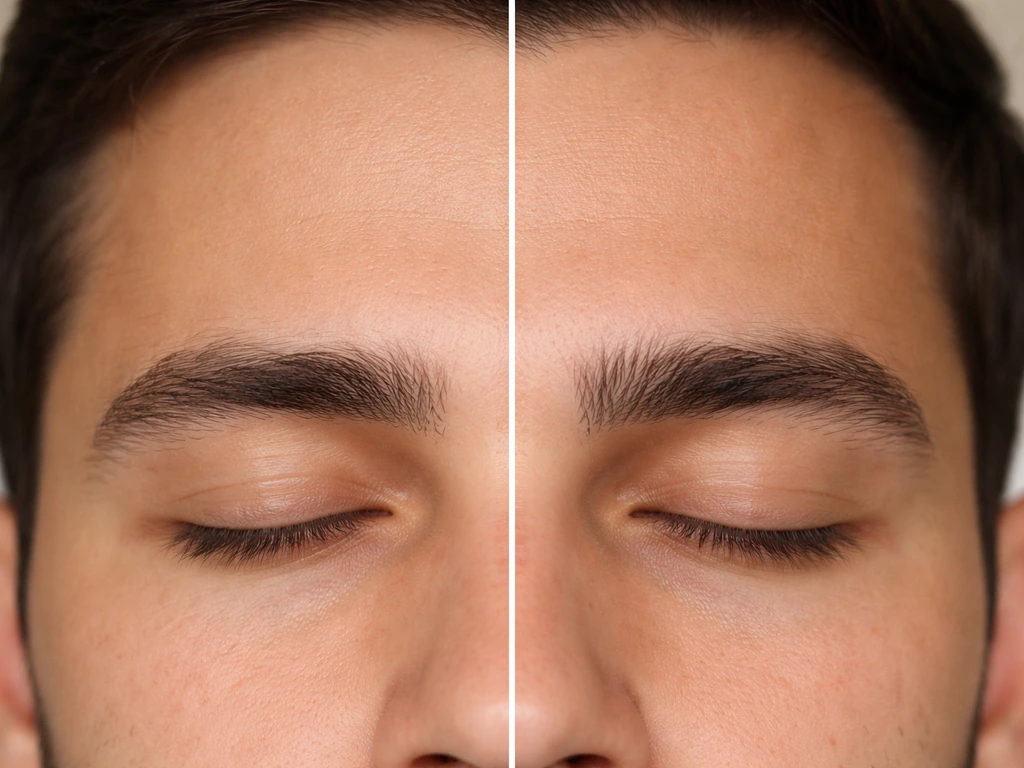
The honest Reddit consensus matches the science: stop plucking, be patient for 4 to 6 months, and use a growth-supporting routine in the meantime. Castor oil and rosemary oil are the most popular home remedies, minoxidil 2% is the strongest over-the-counter option with actual clinical backing, and none of them work quickly. If you want thicker or longer brows, the single biggest thing you can do today is get out of their way and let the growth cycle do its job. If you want to grow a unibrow, the key is the same patience and follicle-first approach, while avoiding plucking in the center.
How to Grow Eyebrows Reddit Guide: Thicker and Fuller
James Whitmore
4 Jun 2026
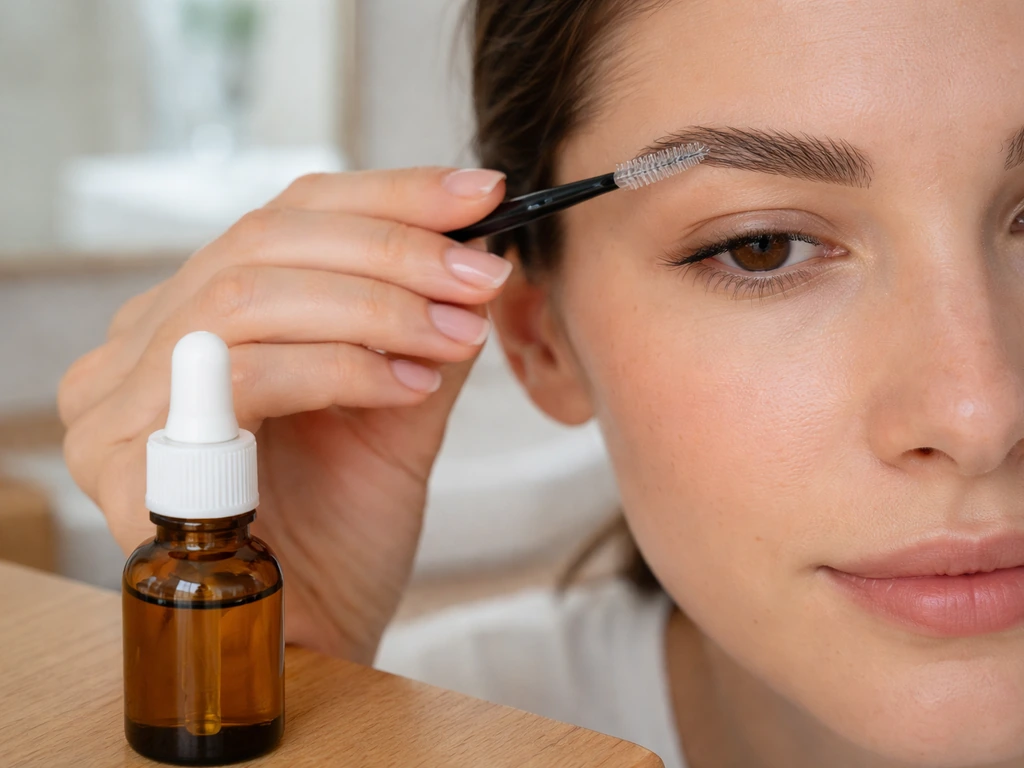
What "grow thicker" and "grow out" actually mean (and why it's not instant)
When people say they want thicker brows, they usually mean one of two different things: they want more individual hairs filling in sparse patches (density), or they want each hair to reach a longer length so the brow looks fuller and more defined. Both goals are real, but they have different causes and slightly different solutions.
Eyebrow hair follows the same three-phase cycle as every other body hair: anagen (active growth), catagen (transition, which wraps up in just a few days), and telogen (rest, where the follicle sits dormant with no shaft growth). Eyebrow hairs have a shorter anagen phase than scalp hair, which is why brow hairs stop growing at a certain length instead of growing indefinitely. Scalp hair grows roughly 1 cm per month; eyebrow growth is slower and more limited in duration.
Over-plucking, waxing, threading, or shaving doesn't change the underlying follicle's growth rate. Shaving in particular has no effect on how fast or thick the hair regrows. What repeated trauma over time can do is weaken or scar follicles so they produce thinner, patchier hairs, or in severe cases stop producing hairs at all. That's why someone who has over-plucked for years may see slower or incomplete regrowth compared to someone who shaved their brows once for a costume.
Genetics also sets a ceiling. If your brows have always been naturally sparse, no product will give you the brows of someone genetically predisposed to thick growth. What products and routines can realistically do is help you reach your personal ceiling faster and maintain the density you do have.
Reset your eyebrow routine: stop the damage first
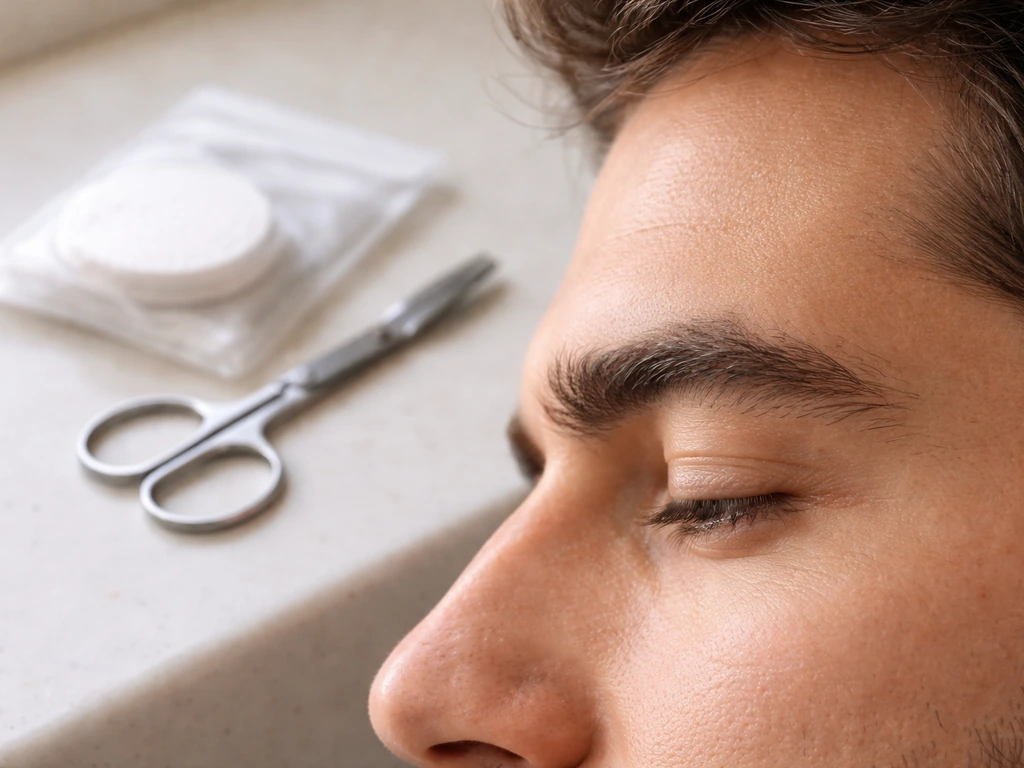
Before you add a single serum or oil, the most important step is stopping whatever was thinning your brows in the first place. For guys wondering how to grow thicker eyebrows, the key is to stop the damage first and then support growth for months, not days how to grow thicker eyebrows for guys. This sounds obvious but is genuinely hard for people who have a daily plucking or waxing habit. Put the tweezers somewhere inconvenient, and commit to a strict no-pluck rule for at least 12 weeks.
While you're waiting for growth, the only grooming you should do is trimming. If a hair gets long enough to look chaotic, use small brow scissors to trim just the tip, not to pull it out. One Reddit user doing a regrowth experiment described their whole maintenance strategy as "only trimming length" while letting new hairs come in, and that's exactly right. Grooming with a spoolie brush daily also helps train hairs upward and forward so even sparse brows look more defined as they fill in.
The skin under your brows matters too. Dry, flaky, or inflamed skin around the brow area can interfere with healthy follicle function. Keep the area clean and lightly moisturized. If you notice scaling or persistent irritation around your brows (the kind that comes and goes and gets worse in cold weather), that could be seborrheic dermatitis, and that needs to be addressed separately before your growth routine will work well.
Grooming habits to protect regrowth
- Stop all plucking, waxing, and threading for a minimum of 12 weeks
- Use small scissors to trim only extreme length, never remove hairs
- Brush brows upward with a clean spoolie morning and night
- Remove eye makeup gently to avoid mechanical hair loss from rubbing
- Avoid heavy makeup directly on brow hairs during regrowth phases
- Keep the brow area moisturized but not congested with thick product
Castor oil, rosemary oil, and minoxidil: what actually works
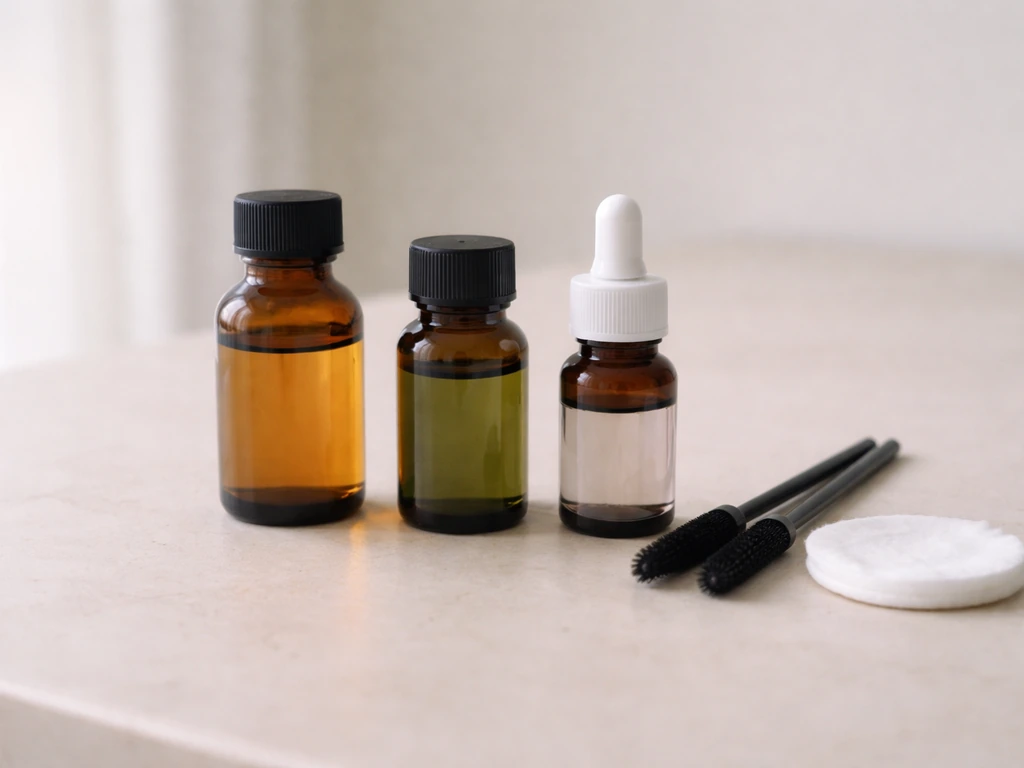
This is where most Reddit threads go deep, and the honest answer is that the evidence varies a lot by ingredient. Here's a breakdown of the three most discussed options, what the evidence says, and how to use each one safely.
Castor oil
Castor oil is probably the most popular eyebrow remedy on Reddit and in beauty communities generally. It's cheap, widely available, and has a long anecdotal history. The honest assessment: there are no rigorous clinical trials proving castor oil regrows eyebrow hair. What it does well is condition and coat existing hairs so they look thicker and break less, which can improve brow appearance without actually adding new hairs.
Some people swear by it for regrowth; others report no change; one Reddit commenter noted it caused dermatitis and additional hair loss for them. If you want to try it, apply a small amount with a clean spoolie or cotton swab to brow hairs before bed, and wash it off in the morning. Patch test on your inner arm first. If you develop irritation, redness, or notice more hairs falling out, stop immediately.
Castor oil is unlikely to be a game-changer for sparse tail areas or for people with real follicle damage, but it's low-risk for most people.
Rosemary oil
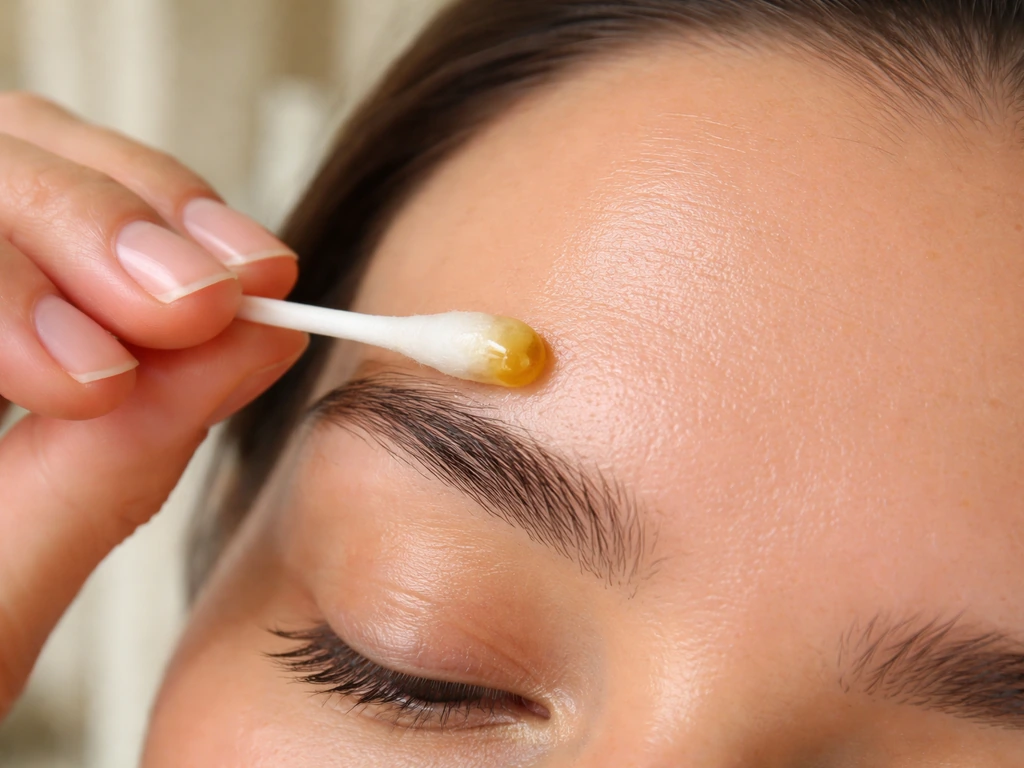
Rosemary oil has gained more credibility than castor oil in recent years. [A randomized comparative trial tested rosemary oil against 2% minoxidil for androgenetic hair loss over 6 months and found both groups improved similarly in hair count by the end, though the minoxidil group had more scalp itching. ](https://skinmedjournal. com/wp-content/uploads/2018/11/skinmedv13i1.
pdf) That trial was for scalp hair loss, not specifically eyebrows, so it's worth keeping that in mind. Still, it's one of the more compelling pieces of evidence for a natural ingredient. To use it, dilute a few drops of rosemary essential oil in a carrier oil (like jojoba or fractionated coconut oil) at roughly a 2% concentration (about 12 drops per ounce of carrier), apply to brows nightly with a spoolie, and leave overnight.
Never apply undiluted essential oil directly to skin. Patch test first. Give it at least 12 to 16 weeks before deciding whether it's working.
Minoxidil 2% (and the 5% question)
Minoxidil is the ingredient with the strongest clinical backing for eyebrow regrowth. A randomized, double-blind, placebo-controlled split-face trial specifically tested 2% minoxidil on eyebrow hypotrichosis and found significant improvement in a global photographic score versus placebo after 16 weeks of twice-daily application. That's real evidence, not anecdote. Off-label use of topical minoxidil for eyebrow enhancement is also documented in dermatology literature, typically at 2% concentration for facial areas.
The safety caveats for minoxidil on eyebrows are important and should not be skimmed. Topical minoxidil contains alcohol and propylene glycol, and because facial skin is thinner and more permeable than scalp skin, systemic absorption is a real possibility. Case reports exist of cardiovascular side effects including hypotension and syncope from topical minoxidil, even when used as directed.
For eyebrow use, apply a tiny amount (one or two drops maximum) with a cotton swab directly to the brow area only, once or twice daily. Do not apply to irritated, broken, or sunburned skin, as this increases absorption. Wash your hands immediately after. If you have pets, especially cats, be very cautious: cats are extremely sensitive to minoxidil and can develop serious toxicosis by grooming contaminated skin.
Keep your pet away from treated areas until the product is fully dry or washed off. [If you stop using minoxidil, hair loss will resume within a few months](https://www. mayoclinic. org/drugs-supplements/minoxidil-topical-route/side-effects/drg-20068750?
p=1), so this is an ongoing commitment, not a cure.
| Ingredient | Evidence Level | Best Use Case | Application | Main Risks |
|---|---|---|---|---|
| Castor oil | Anecdotal only | Conditioning existing hairs, mild improvement | Nightly with spoolie, wash off in AM | Contact dermatitis, folliculitis in some users |
| Rosemary oil (diluted) | One comparative trial (scalp) | Supporting growth, low-risk addition | Nightly diluted in carrier oil | Skin irritation if undiluted or over-applied |
| Minoxidil 2% | Randomized controlled trials | True regrowth of sparse brows, follicle stimulation | 1-2 drops to brow area once or twice daily | Systemic absorption, must continue use, pet safety risk |
If you want a simple starting point: try the no-pluck rule plus nightly diluted rosemary oil for 3 months. If you see no improvement and want to go further, consider adding minoxidil 2% and talk to a dermatologist first if you have any cardiovascular history or skin conditions.
Realistic timelines: when to expect what
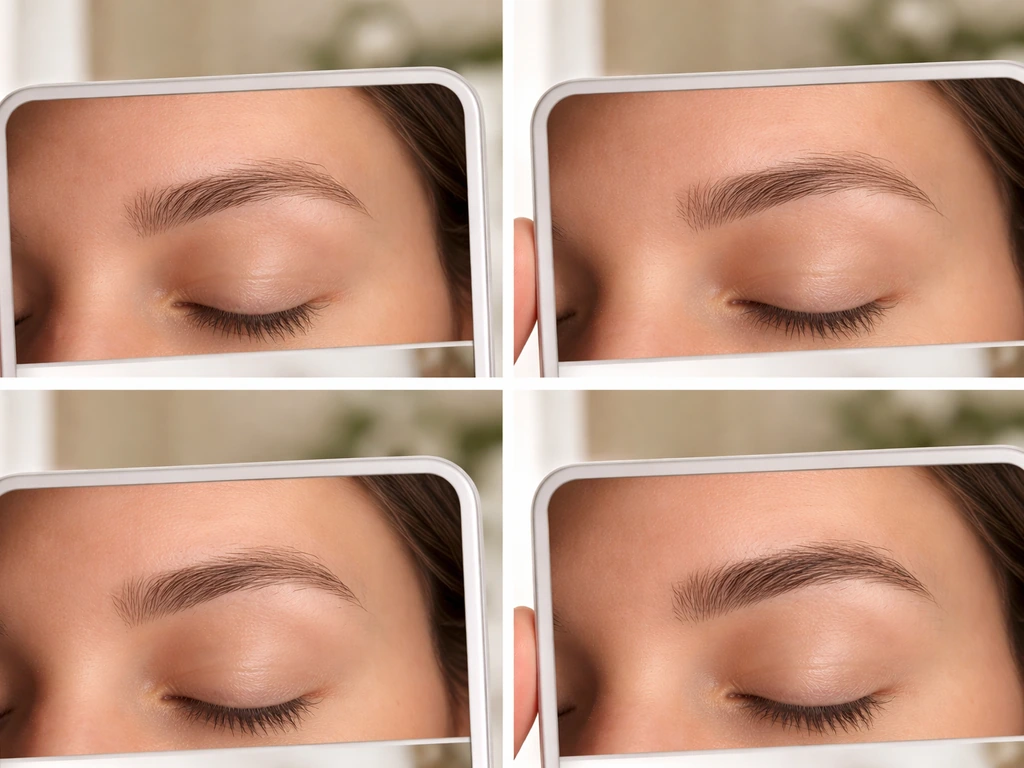
This is the part most people don't want to hear but genuinely need to understand. Eyebrow regrowth is slow. Reddit threads consistently report the same expectation: plan for 4 full months, and sometimes up to 6 months, to see the complete result of a regrowth cycle after over-plucking. That aligns with the biology. Each follicle works on its own schedule, so you won't see a uniform wave of new hairs all at once. You'll see patchy, uneven progress for months before things start to look cohesive.
| Timeframe | What to Expect |
|---|---|
| Weeks 1-4 | Possibly some short stubble from follicles that were in early telogen; most areas look the same |
| Weeks 4-8 | Noticeable baby hairs in areas that were sparse; uneven texture is normal |
| Weeks 8-12 | More hairs reaching visible length; brows may look messier before they look better |
| Months 3-4 | Clearer picture of your natural regrowth; most follicles have cycled through |
| Months 4-6 | Full regrowth picture for most people; persistent sparse spots may be permanent follicle damage or a medical issue |
For thickness specifically: if you're trying to make existing brows look denser rather than recovering from shaving them off, the timeline is the same. You're waiting for follicles that were in telogen to re-enter anagen. Products like minoxidil can shorten or improve that process, but even with minoxidil the clinical trial results were assessed at 16 weeks. There is no honest 2-week solution.
Common problems and how to troubleshoot them
Irritation or itching
Mild itching during early regrowth is normal, the same way a beard itch is normal. But persistent redness, flaking, or irritation that doesn't resolve on its own usually points to a product reaction or an underlying skin condition. If you're using castor oil and notice increased flaking or a rash, stop the oil first and see if it clears up.
Minoxidil contains alcohol that can be drying and irritating on thin facial skin; if irritation is significant, reduce to once-daily application or discontinue. Seborrheic dermatitis around the brows is common and can be mistaken for simple dryness. It typically shows up as yellowish or white flaking with some redness and tends to flare in patches.
Treatment options include antifungal products like ketoconazole 2% or mild topical hydrocortisone for redness and scaling, though you'd want to confirm the diagnosis with a dermatologist rather than self-treating long-term with steroids.
Uneven or patchy growth
Uneven growth is almost universal in the early months and doesn't mean something is wrong. Different follicles are at different cycle stages, so you'll naturally see some areas filling in faster than others. The tail of the brow is often the last area to fill in and the slowest to respond to topical products. One Reddit thread specifically noted that castor oil seems least effective in the sparse tail area, which matches the reality that the outer brow tends to have fewer follicles and those follicles may have sustained more damage from years of plucking. Keep going, and assess at the 4-to-6-month mark before concluding a specific area is a permanent gap.
No improvement after weeks of effort
If you've genuinely stopped all plucking and waxing for 10 to 12 weeks and see no new growth at all, not even baby hairs, that warrants attention. Some causes: you may have follicle damage from years of aggressive plucking; you may have an underlying condition like alopecia areata or a thyroid issue affecting hair growth; or there could be a nutritional deficiency (iron, zinc, biotin, and protein are all commonly linked to hair thinning).
A blood panel from your doctor can rule out the medical causes quickly. One note on biotin: it's widely marketed for hair growth, but actual deficiency is rare, and supplementing above your needs has no proven additional benefit. Fix nutrition gaps that actually exist rather than loading up on supplements arbitrarily.
When to see a dermatologist
Most people regrowing brows after over-plucking or waxing don't need a dermatologist. But there are clear situations where professional evaluation matters.
- Patchy brow loss that appeared suddenly rather than from gradual over-plucking, especially if it's bilateral and roughly symmetrical
- Brow loss accompanied by eyelash loss, which is a classic pattern of alopecia areata
- Persistent scaling, crusting, or sores in the brow area that don't respond to gentle skincare
- Complete absence of regrowth after 4 to 6 months of a consistent no-damage routine
- Hair loss occurring in other areas simultaneously (brows, lashes, scalp, body)
- Any personal or family history of thyroid disease, autoimmune conditions, or hormonal disorders
Alopecia areata affecting eyebrows typically presents as bilateral patchy loss with a distinct pattern that looks different from the gradual thinning of over-plucking. If you see smooth, circular patches of brow loss that appeared quickly, that's a dermatologist visit, not a castor oil situation. Cleveland Clinic emphasizes early evaluation and treatment for alopecia areata because earlier intervention generally produces better regrowth outcomes. A board-certified dermatologist can also prescribe stronger options like topical bimatoprost (studied in randomized trials for eyebrow hypotrichosis) or corticosteroid injections for autoimmune-related loss.
How to keep your brows full once they've grown back
Maintenance is where most people fall back into old habits. Once your brows have filled in, the goal shifts from maximum restraint to smart grooming. Pluck only the clearest stray hairs well outside your brow shape, and do it infrequently, maybe once every 2 to 3 weeks rather than daily. Leave any hair that could plausibly be part of your brow shape alone. If you used minoxidil to support regrowth, be aware that stopping it means some of those gains will reverse over the following months, so factor that into your long-term plan.
Nutrition and stress are the most underrated long-term factors. Chronic stress, crash dieting, and deficiencies in iron, protein, or zinc can push hair follicles into a resting phase. If you went through a stressful period or a major diet change and noticed brow thinning 2 to 4 months later, that timeline is consistent with telogen effluvium, where follicles shift phases in response to systemic stress. Stabilizing those factors does more for long-term brow health than any topical product.
For people interested in keeping brows full naturally long-term, a nightly rosemary oil application is low-risk enough to continue indefinitely. It's not going to cause the dependency issues that minoxidil creates, and the evidence, while limited, is more promising than most other botanical options. Combined with smart grooming and good general health, it's a reasonable maintenance habit.
One last thing worth mentioning: if your goals go beyond standard brow regrowth, such as growing a fuller appearance across the bridge of the nose or adjusting the specific direction and proximity of your brows, those are related but distinct concerns with their own approaches. If you specifically want to grow your eyebrows closer together, focus on minimizing any additional thinning, then use careful trimming and grooming so the bridge area can look fuller over time how to grow your eyebrows closer together. This guide focuses on how to grow brow ridge specifically through the same follicle and grooming principles that drive regrowth elsewhere on the brow growing a fuller appearance across the bridge of the nose. The same biology applies, but the grooming and styling strategy differs depending on which direction you're trying to extend your natural brow shape.
FAQ
If I stop plucking, will shaving or trimming “reset” my eyebrow growth?
No. Trimming only affects length and appearance, it does not change follicle growth rate. Shaving also does not make brows come back thicker or faster, it just makes the regrowth look harsher as stubble. If you want the best chance at regrowth, keep grooming minimal (trim only obvious snags) and focus on the no-pluck rule for the full 4 to 6 months.
How long should I wait before I switch products, especially if the brows look the same?
Judge changes on a 12 to 16 week window minimum, because follicles cycle unevenly. With rosemary oil, give it 12 to 16 weeks. With minoxidil, the landmark eyebrow results were assessed around 16 weeks. If you see zero baby hairs or any change after about 4 months of true no-pluck behavior, that is the point to reassess causes (damage, skin condition, or an underlying issue).
Does minoxidil make eyebrows permanent, or do they keep growing after I stop?
Stopping minoxidil typically leads to loss of some gains over the following months. It does not “lock in” new follicle growth permanently, it supports the cycle while you use it. If you start, plan your timeline as an ongoing commitment, not a one-time course.
Is it safe to use rosemary oil every night, or can it cause skin problems?
It can irritate skin if it is not properly diluted or if you have sensitive facial skin. Always dilute to about a 2% concentration, patch test first, and stop if you develop redness, burning, worsening flaking, or increased shedding. If irritation keeps coming back, switch to a gentler routine (less frequent application) or stop entirely rather than pushing through.
Why do my brows itch or flake during regrowth, and when is it not “normal”?
Mild itch during early regrowth can happen, but persistent redness, scaling, or irritation that keeps worsening usually means either a product reaction or an underlying skin issue like seborrheic dermatitis. If flaking becomes more intense or spreads around the brow, consider addressing the skin condition first instead of adding more oils or increasing frequency.
What if I have patchy eyebrow loss that started suddenly, not slow thinning?
Sudden, smooth, round or oval patches can point to alopecia areata rather than over-plucking. In that case, waiting months for a home oil routine often delays effective treatment. A dermatologist can confirm the pattern and may use therapies like topical medications or injections depending on severity.
Can I use biotin or supplements to speed up eyebrow regrowth?
Only if you are actually deficient. Biotin deficiency is uncommon, and taking extra above your needs has not reliably shown added regrowth benefit. If brow thinning follows stress, a crash diet, or illness, prioritize fixing real gaps (especially iron, protein, and zinc) with a clinician-guided approach if possible.
How do I know whether my brows are sparse because of damage versus genetics?
A practical clue is whether you used to have thicker growth when you were younger, or whether the gaps have been consistent for years. Over-plucking often causes thinner regrowth at the specific area you traumatized (commonly tails). Genetics sets a ceiling across the whole brow pattern. If you suspect damage, the no-pluck period still matters, but you should expect slower, less complete changes.
What’s the safest way to apply minoxidil to eyebrows if I have sensitive skin?
Use a tiny amount applied directly to the brow area only, typically once or twice daily, and avoid applying to irritated, broken, or sunburned skin because absorption is higher. If you get significant dryness or irritation, reduce frequency (for example, once daily) or stop. Wash hands right after application and avoid getting product near the eyes.
My cat licks my face or sleeps near me, should I avoid minoxidil?
Be extra cautious. Cats are highly sensitive to minoxidil and can develop serious toxicity if they ingest or groom contaminated residue. Keep pets away from treated areas until the product is fully dry, wash your hands thoroughly, and avoid letting cats access pillows or towels you used after application.
Can I train my brows with grooming to look fuller while they grow?
Yes. Using a spoolie to groom upward and forward can make brows look more defined as new hairs come in, especially when density is still low. Just avoid traction that pulls hairs out, and keep trimming limited to removing obvious overlong tips rather than plucking or aggressive shaping.
When should I stop trying home remedies and see a dermatologist?
If you have no new baby hairs after about 4 months of strict no-plucking, if you notice sudden patchy loss, if you have persistent redness and flaking despite stopping irritants, or if you have cardiovascular history and are considering minoxidil. A clinician can check for autoimmune causes, skin conditions, and systemic contributors (sometimes with labs like thyroid or iron-related testing).
If I want my brows to grow closer together, do I treat it differently than normal regrowth?
The biology is the same, but grooming matters more because bridge-area definition depends on both limiting additional thinning and styling what you already have. Avoid plucking along the natural boundary, trim carefully (do not over-clear the bridge), and let the regrowth timeline play out before making shape changes that remove potential hairs.
Next Article
How to Grow Thicker Eyebrows for Guys: Steps, Timelines, Minoxidil
Step-by-step plan to grow thicker eyebrows for guys: timelines, home care, and safe minoxidil use plus when to see a doc