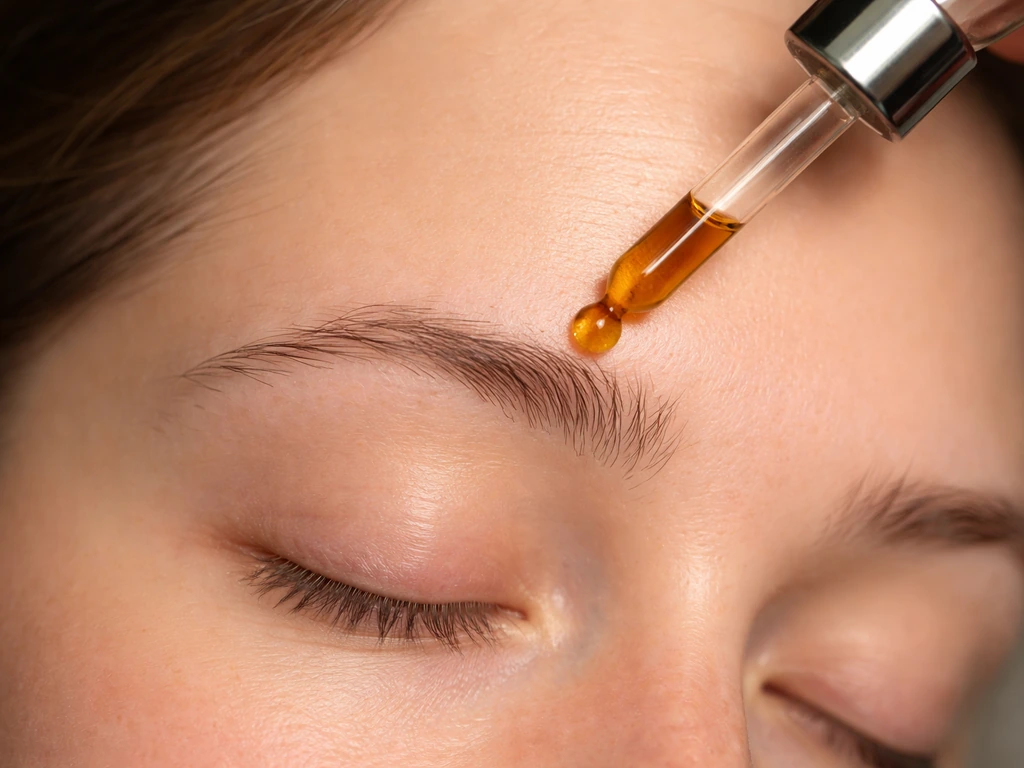
Hair growth oils can support eyebrow growth in some situations, but they won't restore significantly thinned brows the way a prescription treatment can. The oils with the most credible biology behind them, mainly castor oil and rosemary oil, may gently nudge follicles that are dormant or recovering from damage. But none of them have robust randomized controlled trial (RCT) evidence specifically for eyebrows, and most of their benefits are more about conditioning and creating a healthier skin environment than directly flipping follicles into a growth phase. If your brows are sparse from overplucking or recent waxing, certain oils are a reasonable first step. If you're dealing with a medical cause like alopecia areata or hypothyroidism, you need to address that before any oil will help.
Can Hair Growth Oil Grow Eyebrows? Evidence-Based Guide

Can hair growth or beard oils actually make eyebrows grow? The honest verdict
The truthful answer is: possibly, modestly, and not for everyone. The word 'growth oil' is partly a marketing category and partly a real one. Oils like rosemary and castor do have some biological mechanisms that could theoretically affect hair follicles. But 'theoretically affect' and 'clinically proven to regrow eyebrows' are very different claims, and right now no topical oil clears that second bar for eyebrow-specific evidence.
Beard oils and hair growth blends sold commercially are mostly carrier oils with added essential oils and fragrance. They keep existing hairs conditioned and skin moisturized, which isn't nothing, but they aren't making new follicles appear. If you're hoping a $30 beard oil will give you thick, defined brows after years of over-tweezing, you'll likely be disappointed. If you're using one as a consistent, low-risk daily habit while your brows recover from a wax or minor thinning, you may see some benefit. The key is setting realistic expectations and picking the right oil for the actual job.
Eyebrow growth basics: follicles, growth cycles, and brow density
Eyebrow hairs follow the same basic growth cycle as scalp hair, with three phases: anagen (active growth), catagen (transition), and telogen (resting/shedding). The big difference is timing. Scalp hair stays in anagen for two to six years, which is why it can grow so long. Eyebrow hair has an anagen phase of roughly six to twelve weeks, with some sources citing around ten weeks as a typical estimate. This short active growth window means eyebrow hairs reach a genetically set length, shed, and restart the cycle much faster than scalp hair.
Brow density, meaning how many hairs you actually have, is primarily determined by the number of follicles you were born with, your genetics, your hormonal environment, and whether follicles have been damaged or closed off. You cannot create new follicles from scratch with a topical oil. What you can do is support follicles that are suppressed, damaged, or recovering, and help existing hairs look thicker and healthier. Medical causes of thinning, including alopecia areata, frontal fibrosing alopecia, hypothyroidism, iron deficiency, and aggressive traction from chronic overplucking, need targeted treatment. According to clinical reviews, if scarring or an autoimmune process is involved, a dermatologist needs to assess you before any topical remedy will make meaningful progress.
How topical oils might affect eyebrow follicles: the plausible mechanisms
There are four plausible ways that topical oils could influence follicles, even if none of them guarantees results. First, occlusion and hydration: oils create a barrier over the skin that reduces transepidermal water loss, keeping the follicle environment more hydrated and reducing the low-grade inflammation that chronic dryness can cause. Second, anti-inflammatory and antioxidant activity: certain essential oils used in growth blends, like rosemary, have documented antioxidant compounds such as carnosic acid and ursolic acid that reduce scalp oxidative stress in preclinical studies. Third, possible microcirculation effects: some oils and their constituents are thought to mildly increase local blood flow, which could improve the delivery of nutrients to follicles, though this is mostly extrapolated from preclinical work. Fourth, penetration-enhancement: carrier oils like jojoba can improve how well other active ingredients penetrate the stratum corneum, meaning they may be more useful as vehicles for actives than as actives themselves.
There's also a more specific, and genuinely interesting, mechanistic angle around castor oil. Its principal fatty acid, ricinoleic acid, has been shown in preclinical research to interact with prostaglandin synthesis pathways. Separately, a 2012 study by Garza and colleagues identified prostaglandin D2 (PGD2) as a significant inhibitor of hair follicle activity in male pattern baldness, with elevated levels found in bald scalp tissue. If ricinoleic acid can influence prostaglandin signalling in the follicle environment, there's a theoretical mechanism for a mild growth effect. But, and this is important, 'theoretical mechanism' has not been translated into an eyebrow-specific human trial. It's a plausible hypothesis, not a proven pathway.
What the overall evidence says: honest science, not hype
Multiple systematic reviews of natural and topical remedies for hair loss consistently reach the same conclusion: most botanical oils have weak or insufficient clinical evidence that they stimulate new follicle activity. The review literature on castor oil, jojoba, argan, and similar carrier oils finds that proven benefits are mostly cosmetic: improved hair appearance, shine, and moisture. Not follicle activation. Rosemary oil stands out as the only botanical with an actual randomized controlled trial on hair loss, but that trial was on androgenetic alopecia of the scalp, and even that has caveats. Systematic reviews and meta-analyses of natural topical treatments for androgenetic alopecia identify rosemary oil as one of the few botanicals with randomized controlled trial evidence on scalp hair, while noting the trials vary in size and quality and cautioning against extrapolating scalp results to facial or eyebrow hair. Reviewers consistently caution against extrapolating those scalp findings to facial or eyebrow hair, because the follicle biology, cycle lengths, and hormonal sensitivity differ substantially.
For eyebrows specifically, the two treatments with genuine RCT-level evidence are bimatoprost (a prostaglandin analogue, brand name Latisse) and topical minoxidil. Bimatoprost has split-face randomized trials showing improved hair density and thickness in people with eyebrow hypotrichosis. Topical minoxidil 2% has a randomized double-blind placebo-controlled split-face trial demonstrating statistically significant eyebrow improvement, with effects typically measured from 12 to 16 weeks onward. These are prescription-adjacent options (bimatoprost requires a prescription; minoxidil 2% is OTC in many countries) and they carry their own risks and application requirements. But when you're comparing evidence quality, the gap between these and carrier oils is large.
Castor oil and eyebrows: what's claimed, what's evidenced, and what to expect
Castor oil is the most widely recommended oil for eyebrow growth in online beauty content, and I've tried it myself, applying a thin coat to my brows every night for about three months. The experience: my existing brow hairs did look thicker and healthier, probably from the heavy emollient effect. Whether new hairs actually sprouted is harder to verify without a controlled comparison, but anecdotally the tails of my brows (which were sparse) did seem slightly fuller by week ten or twelve.
The scientific reality is more nuanced. There are no randomized controlled trials testing castor oil alone on eyebrows. The evidence base is preclinical studies, small pilot work, animal models, and large amounts of anecdote. The prostaglandin mechanism mentioned above is real but unproven at the eyebrow level. What castor oil does reliably do is condition hair heavily (its high ricinoleic acid content makes it one of the thicker carrier oils), reduce brittleness, and improve the hydration of the follicular skin environment. For brows recovering from waxing, threading, or minor thinning, those conditioning effects are genuinely useful. For brows with permanent follicle damage or an underlying medical cause, castor oil alone won't be enough.
Realistic timeline with castor oil: give it at least 12 weeks of nightly application before assessing. The eyebrow growth cycle means any new hair initiated by the oil needs 6 to 12 weeks of anagen just to become visible. Most people who see results report noticing them between weeks 8 and 16. Don't expect dramatic transformation; expect modest improvement in fullness and hair quality.
Rosemary oil: the strongest botanical case, with important caveats
Rosemary oil has the best clinical backing of any botanical for hair loss, even if that backing is more limited than it's often portrayed. The 2015 trial by Panahi and colleagues compared rosemary oil to 2% minoxidil in androgenetic alopecia patients over 6 months and found hair count improvements that were statistically comparable between groups. Both groups improved significantly from baseline. This was a scalp alopecia trial on around 100 participants, not an eyebrow study, but it's real human RCT evidence, which castor oil doesn't have.
The proposed mechanisms for rosemary include inhibition of 5-alpha reductase (the enzyme that converts testosterone to DHT, a driver of follicle miniaturization), antioxidant protection via carnosic acid, and possible mild circulation effects from 1,8-cineole. Multiple systematic reviews on natural treatments for androgenetic alopecia identify rosemary as the standout botanical. But those same reviews explicitly caution that the results may not transfer to non-scalp hair, including eyebrows, because eyebrow follicles aren't particularly sensitive to DHT the same way frontal scalp follicles are. Still, the anti-inflammatory and antioxidant mechanisms could plausibly benefit any follicle under oxidative or inflammatory stress.
Safety note: rosemary essential oil is potent and should never be applied undiluted to the skin or near the eyes. Always dilute to around 2 to 3 drops per teaspoon of carrier oil before applying to brows, and keep it clear of the eyelid margin and eyes. Patch test before use, especially if you have sensitive skin or a history of essential oil reactions. Avoid during pregnancy, as rosemary essential oil is contraindicated. For a deeper look at rosemary oil specifically for brows, this is covered in more detail in its own dedicated article on this site. For a focused discussion on whether rosemary oil can grow eyebrows, see our article does rosemary oil grow eyebrows. For a concise comparison of options and to help pick the best oil to grow eyebrows, see our dedicated guide on choosing and using eyebrow growth oils.
Jojoba oil and shea butter: great conditioners, modest growth candidates
Jojoba is often marketed as a hair growth oil, but its real strengths are different. It's technically a liquid wax, not an oil, and its molecular structure closely resembles human sebum, making it an excellent emollient that spreads easily and doesn't feel greasy. Research shows jojoba localizes well in the stratum corneum and has some penetration-enhancing properties for other actives. In other words, it may help rosemary oil or other actives absorb better into follicular tissue. On its own, there's no high-quality clinical evidence that jojoba stimulates eyebrow or scalp follicle growth. It's a good carrier, an excellent conditioner, and a solid base for a DIY brow serum. For a focused discussion on whether jojoba oil can help eyebrow growth, see the article does jojoba oil grow eyebrows.
Shea butter sits even further from the 'growth' end of the spectrum. It's a rich emollient and occlusive agent that dramatically improves skin hydration and barrier integrity. Clinical and review literature support these barrier effects clearly. What it doesn't do is activate follicles. If your brow skin is dry, flaky, or irritated (which can suppress healthy hair cycling), shea butter's barrier repair benefits are real and useful. Think of it as creating a better environment for growth rather than causing growth directly. You can explore whether shea butter specifically helps with brow thickness in the dedicated article on this site. See the dedicated article 'Can shea butter grow eyebrows' for a focused review of the evidence and practical usage tips.
Wild Growth Oil and commercial growth blends: what's actually inside
Wild Growth Hair Oil and similar commercial multi-oil blends typically combine several carrier oils (olive, castor, jojoba, coconut, pumpkin seed oil are common) with essential oils and sometimes herbal extracts. The marketing suggests accelerated growth, but the product pages are company materials, not independent clinical studies. Pumpkin seed oil does have some preliminary evidence for scalp hair (related to 5-alpha reductase activity in a small trial), and castor and jojoba bring their carrier and conditioning properties. But the combined formulation hasn't been tested in an eyebrow-specific RCT.
These blends can be useful on brows for their combined conditioning and potential mild follicle-supporting effects, especially if they contain rosemary and castor oil as key ingredients. The honest framing: you're getting the sum of the individual ingredients' modest effects, not a supercharged growth formula. One practical concern with commercial blends is fragrance and ingredient complexity. More ingredients means more potential for contact dermatitis, especially near the eyes. Patch testing is essential. If you have eczema, periocular sensitivity, or a history of reactions to fragrance, proceed cautiously or stick to simpler single-oil approaches. A full breakdown of Wild Growth Oil on eyebrows, including the specific ingredient list and realistic outcomes, is covered in a separate article on this site.
How each oil stacks up: a side-by-side comparison
| Oil or Ingredient | Evidence for Eyebrow Growth | Primary Documented Benefit | Best Use Case | Key Risk |
|---|---|---|---|---|
| Castor oil | Preclinical + anecdotal; no eyebrow RCT | Heavy conditioning, barrier support | Sparse brows from waxing or mild thinning | Eye irritation if it gets in eyes; comedogenic for some skin types |
| Rosemary oil | Scalp RCT (not eyebrow-specific); strongest botanical evidence | Antioxidant, possible 5-AR inhibition, circulation | Hormonal or stress-related brow thinning; use diluted | Must be diluted; avoid during pregnancy; eye irritant |
| Jojoba oil | No growth RCT; good penetration-enhancement data | Emollient carrier, improves absorption of actives | Base for DIY brow serum with active ingredients | Very low; mild allergy possible |
| Shea butter | No follicle-growth evidence | Skin barrier repair and hydration | Dry, irritated brow skin; improving follicle environment | Can feel heavy; possible comedogenicity |
| Wild Growth Oil / commercial blends | Marketing claims; no independent eyebrow RCT | Combined conditioning effects of carrier oils | General brow maintenance; best if castor/rosemary are main ingredients | Higher allergen risk from complex formulas; fragrance sensitivity |
| Beard oils | No clinical eyebrow evidence | Hair conditioning and skin hydration | Softening existing brow hairs; not growth-specific | Fragrance; ingredient complexity near eyes |
When to consider medical options instead
If you've been consistent with an oil for 16 weeks and seen no change, or if your brow thinning was sudden, asymmetric, patchy, or accompanied by other symptoms like fatigue, hair loss elsewhere, or skin changes, it's time to see a dermatologist rather than trying another oil. Medical causes of eyebrow thinning, including alopecia areata, frontal fibrosing alopecia, hypothyroidism, iron deficiency anaemia, and chronic telogen effluvium, will not respond meaningfully to carrier oils. These need diagnosis and targeted treatment.
Topical minoxidil is the most accessible medically backed option. A randomized double-blind placebo-controlled split-face trial found that 2% minoxidil lotion applied to brows produced statistically significant improvements versus placebo from 12 to 16 weeks onward. It's used off-label for eyebrows in dermatology practice. The main cautions are avoiding ocular exposure (apply carefully, use a cotton bud, keep it on the brow bone, not the eyelid), and monitoring for contact dermatitis and any systemic absorption effects, particularly in people with cardiovascular conditions.
Bimatoprost (Latisse) has the most rigorous evidence specifically for eyebrow hypotrichosis, with randomized controlled trials showing increased hair density, thickness, and darkness. It requires a prescription in most countries. Known side effects include skin darkening at the application site (periocular hyperpigmentation) and, with eyelash use, potential changes to iris pigmentation (the eyebrow application route has a different risk profile but should still be used under medical guidance). Both minoxidil and bimatoprost are appropriate to discuss with a dermatologist when oils haven't worked and the cause of thinning has been assessed.
How to use oils on your brows safely and effectively
Practical application matters as much as ingredient choice. Here's how I'd approach a consistent, safe brow oil routine:
- Patch test first: apply a small amount of your chosen oil to the inner forearm or behind the ear. Wait 24 to 48 hours before applying near your eyes. This matters especially with multi-ingredient blends and essential-oil-containing products.
- Clean brows before applying: remove any makeup, sunscreen, or product buildup. Oil applied over product residue won't penetrate as well and may trap bacteria against follicles.
- Use a clean, dedicated applicator: a clean mascara wand, a small soft brush, or a cotton bud works well. Avoid dipping your fingers directly into a shared jar repeatedly to reduce contamination.
- Apply a very thin layer: more is not better. A thin film on the brow area is enough. Heavy application just sits on top of the skin and increases the chance of oil migrating into the eyes.
- Apply in the direction of hair growth: light strokes from inner to outer brow. This also helps you avoid disturbing fragile recovering hairs.
- Time your application: nighttime is ideal. Oils can feel heavy during the day, and night application means no makeup on top, better skin contact, and the benefit of the natural overnight skin repair cycle.
- Be consistent: at minimum five nights per week for at least 12 weeks before evaluating results. Sporadic use won't give you an accurate read of the oil's potential.
- Keep oil away from the eyelid margin and the eye itself: if oil migrates into the eye, it can cause temporary blurring and irritation. Work on the brow bone, not the lid.
A simple DIY brow growth serum
A basic blend that combines the strongest botanical evidence with low-risk carriers: use one teaspoon of castor oil as your base, add one teaspoon of jojoba oil to thin the texture slightly, and add two to three drops of rosemary essential oil. Mix well, store in a small dark glass bottle, and apply nightly. This gives you castor oil's conditioning and possible prostaglandin effects, rosemary's antioxidant and potential 5-alpha reductase activity, and jojoba's penetration-enhancement for the rosemary. Don't exceed three drops of rosemary per teaspoon of carrier (that's approximately a 1% dilution, conservative for facial skin and near the eyes). Shake before use.
Realistic timelines and what to expect
The eyebrow growth cycle is short relative to scalp hair, but that doesn't mean results are fast. A newly activated follicle still needs 6 to 12 weeks in anagen before the hair becomes long enough to see. If an oil is doing anything useful at the follicle level, the visible payoff is 8 to 16 weeks away at the earliest. Most people who report success with oil-based brow routines describe it as a gradual, subtle process: brows that look slightly fuller in photos compared to three months ago, not a dramatic overnight change.
If you've shaved or waxed recently, the timeline is more predictable. Follicles were never damaged, just in telogen or early anagen from the disruption. Expect visible regrowth at four to eight weeks, and a fuller look closer to 12 to 16 weeks. Oils may support that process but aren't the driving force. The follicles were going to regrow anyway; oils just optimize the environment.
For brows thinned by years of overplucking, some follicles may have been physically damaged by repeated trauma and won't respond to any topical treatment. Others will still be viable. Realistic outcome: partial improvement, not complete restoration. Give it four months before switching strategies or escalating to medical options.
Safety warnings and when not to use growth oils on brows
- Pregnancy: avoid rosemary essential oil entirely. Many essential oils used in growth blends are contraindicated during pregnancy. Stick to plain carrier oils (jojoba, castor) if you want to use something during pregnancy, and consult your provider.
- Known nut or seed allergies: castor, jojoba, shea, and pumpkin seed are all plant-derived. If you have a known tree nut or seed allergy, check ingredient lists carefully and patch test, even if you've used similar products before.
- Periocular eczema or seborrheic dermatitis: oils can worsen seborrheic dermatitis in some people by feeding the Malassezia yeast that drives it. If you have flaky, itchy brow skin, address that condition first before adding oil.
- Contact lens wearers: be careful with nighttime application. If oil migrates to your eyes before lens removal in the morning, it can cloud lenses and irritate eyes.
- Active skin infections or open wounds: don't apply oil over any active skin infection, open sore, or post-procedure skin (e.g., after microblading healing). Wait until the skin has fully healed.
- Skin conditions like rosacea or perioral dermatitis: some carrier oils are comedogenic or may aggravate these conditions. Jojoba is generally well tolerated; heavy oils like castor may be problematic on reactive skin types.
Choosing the right product: what to look for
If you're buying a commercial growth oil rather than making your own, look for a short, recognizable ingredient list. The best products lead with castor oil or rosemary oil (not just as trace amounts at the bottom of the INCI list), use jojoba or a light carrier as the base, and don't rely heavily on fragrance or coloring agents. Products labeled 'for eyebrows' specifically may have been formulated with lower irritation potential, but that label alone isn't a quality signal. Read the actual ingredients.
Avoid products that make extremely specific claims like 'regrows 100% of lost brow hairs' or claim FDA approval for eyebrow growth (no topical oil product holds that approval; Latisse is approved for eyelashes, not brows, and requires a prescription). Those claims are red flags. Choose products that describe conditioning and supporting growth honestly rather than promising clinical-level results from a blend of carrier oils.
When to see a dermatologist
See a dermatologist if: your brow thinning is patchy or asymmetric; it came on suddenly without an obvious cause like waxing or shaving; it's accompanied by inflammation, scaling, or scarring at the brow line; you're also losing hair elsewhere (scalp, lashes, body hair); or you have any systemic symptoms like fatigue, weight changes, or cold intolerance that could point to thyroid dysfunction. Clinical reviews on eyebrow and eyelash alopecia recommend trichoscopy (dermoscopy of the follicle), clinical history, and targeted labs or biopsy when a scarring or autoimmune cause is suspected. Getting the diagnosis right first is what makes any treatment, oil or pharmaceutical, actually effective.
FAQ
Short answer: can hair- or beard-growth oils grow eyebrows?
Verdict: oils can help the skin and existing brow hairs look healthier and may create a better environment for hair, but high‑quality clinical evidence that common hair or beard oils (castor, jojoba, shea, commercial "wild growth" blends or typical beard oils) reliably cause new, clinically meaningful eyebrow regrowth is lacking. A few botanical ingredients (notably rosemary) have RCT evidence for scalp hair, and prescription agents (minoxidil, bimatoprost) have trial data for eyebrow enhancement. Expect modest cosmetic improvements from oils; true regrowth depends on the underlying cause and may require medical therapy.
How do eyebrows grow (basic biology) and why does that matter for treatments?
Eyebrow follicles have a much shorter anagen (growth) phase than scalp follicles—typically measured in weeks rather than years—so visible changes can appear faster if a stimulus works. Follicle activity is regulated by local hormones, prostaglandins, immune signals and blood supply. If follicles are destroyed (scarring) or cause is autoimmune/inflammatory (alopecia areata, frontal fibrosing alopecia), topical oils alone are unlikely to restore permanent hair. Oils may influence the follicle indirectly (improve skin hydration, alter prostaglandin signalling poorly supported by clinical data, or improve penetration of other actives) but they do not reliably convert non‑functioning or completely miniaturized follicles into terminal hairs.
What realistic mechanisms could let an oil help eyebrow growth?
Plausible, mostly indirect mechanisms: 1) skin hydration/occlusion that improves the follicular environment and reduces breakage; 2) anti‑inflammatory or antioxidant activity from certain botanical constituents that could protect follicles; 3) modulation of local prostaglandin pathways (theoretical, based on preclinical data); 4) improved scalp/brow circulation or penetration enhancement for co‑applied actives. These mechanisms are supported mainly by preclinical or cosmetic data, not definitive human eyebrow RCTs.
Castor oil: does it work for eyebrows? What is the evidence and realistic claim?
Evidence: no robust RCT proving castor oil alone regrows eyebrows. Mechanistic lab data suggest ricinoleic acid can affect prostaglandin release and inflammation, and many anecdotal reports exist. Strength of evidence: weak (preclinical, formulation, anecdote). Realistic expectation: may condition hairs, reduce breakage, and improve appearance; possible small benefit for follicle environment but not reliably proven to trigger new eyebrow growth.
Rosemary oil: can it stimulate eyebrow regrowth?
Evidence: rosemary oil has RCT evidence showing benefit for scalp androgenetic alopecia comparable to 2% minoxidil in one 6‑month scalp trial. However, that was on scalp hair, not eyebrows. Strength of evidence for eyebrows: limited/indirect. Realistic expectation: could plausibly help eyebrow follicles through improved microcirculation or anti‑inflammatory effects, but eyebrow‑specific clinical proof is missing. If trying, use appropriately diluted essential oil to avoid irritation.
Jojoba oil and shea butter: any follicle‑stimulating action?
Evidence: both are proven emollients and barrier moisturizers; jojoba can act as a good carrier and may enhance penetration of other actives. Strength of evidence for stimulating new hair growth: insufficient. Realistic outcome: improved skin/hair condition, less breakage, and better cosmetic fullness, but no reliable data they cause new eyebrow follicles to activate.
Can Wild Growth Oil Grow Eyebrows? Safe Guide and Results
Does Wild Growth oil grow eyebrows? Learn how to use it safely, what results to expect, and better proven options.