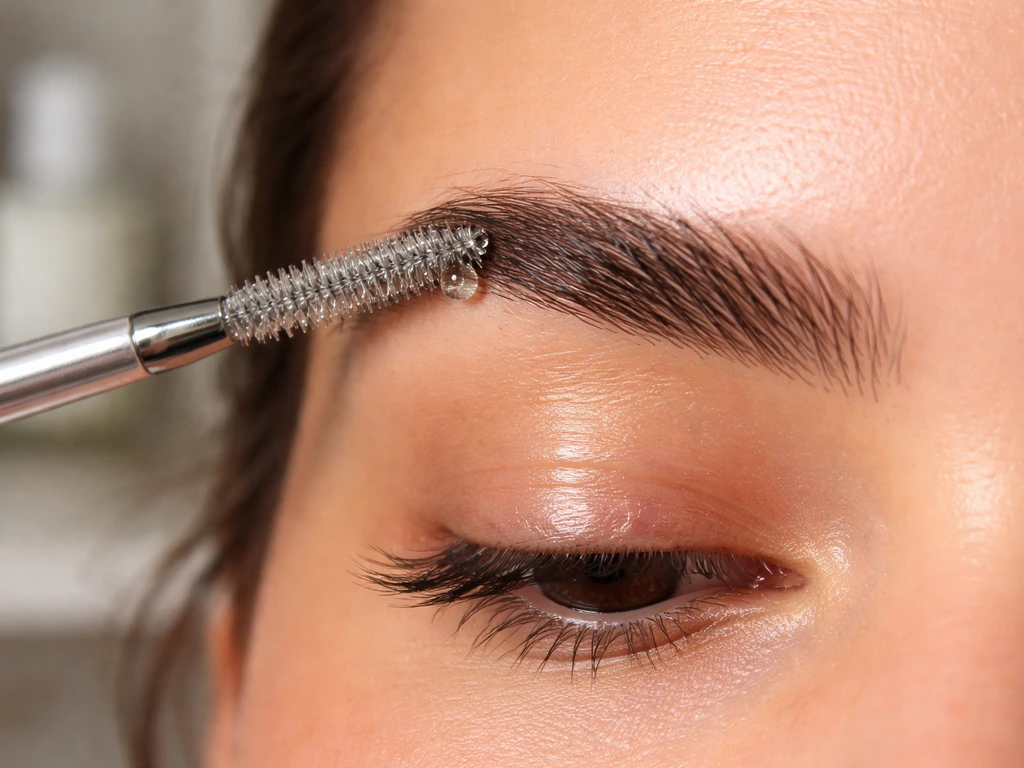
Jojoba oil won't directly grow new eyebrow hairs, but it can genuinely improve the condition of the brows you already have, and that matters more than it sounds. Minimizing dryness and irritation can support brow appearance, but if you are wondering whether can wild growth oil grow eyebrows, the evidence is limited. It works as a conditioning emollient, not a follicle stimulator. It can reduce dryness and irritation around the brow area, help protect existing hairs from breakage, and make sparse brows look healthier and more defined. If your brows are thin because of breakage, inflammation, or over-handling, jojoba can help. If you're missing follicles entirely or dealing with a growth disorder, you'll need something stronger.
Does Jojoba Oil Grow Eyebrows? What to Expect and How

James Whitmore
22 Jun 2026
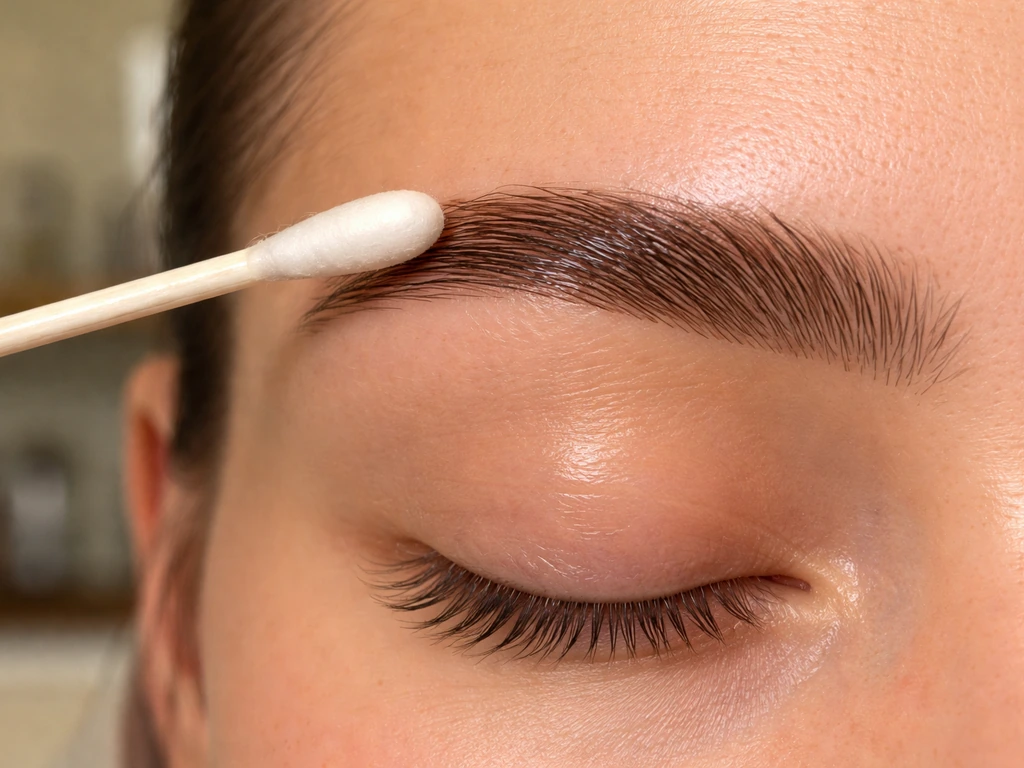
What jojoba oil can actually do for brows (and what it can't)
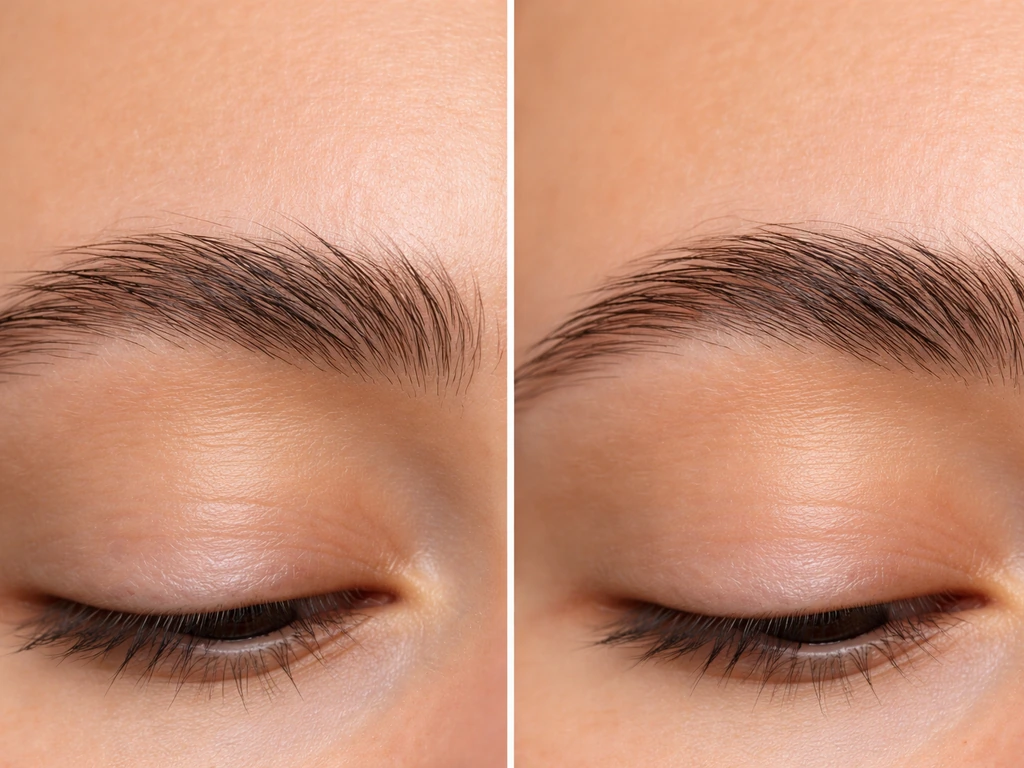
There's a real distinction between conditioning brow hairs and stimulating follicle growth, and jojoba oil sits firmly in the conditioning camp. No robust clinical trial has shown that jojoba oil directly triggers new follicle activity or pushes hairs from the resting (telogen) phase into active growth (anagen). That's not a knock on jojoba specifically; most plant oils can't do that. True follicle-level stimulation requires ingredients that interact with follicle biology at a deeper level.
What jojoba does have going for it: documented anti-inflammatory and antimicrobial properties backed by preclinical research, plus a well-established role as a skin-barrier emollient that reduces transepidermal water loss (TEWL). Preclinical research and reviews report anti-inflammatory and antimicrobial activity for jojoba seed oil, which may help explain reduced irritation rather than guaranteed eyebrow regrowth documented anti-inflammatory and antimicrobial properties. In plain terms, it soothes the skin around the brow, keeps the area from drying out, and may reduce low-grade inflammation that causes existing hairs to shed prematurely or break. That's a meaningful benefit if irritation or dryness is part of your problem.
There are also case reports of allergic contact dermatitis linked to jojoba, so it's not universally gentle. The takeaway: jojoba is a solid supportive ingredient for brow health, not a growth drug. If your goal is full regrowth from sparse or patchy brows, you'll want to pair it with or replace it with something with stronger evidence.
How eyebrow hair actually grows (and where jojoba fits in)
Eyebrow hairs go through the same three-phase cycle as scalp hair: anagen (active growth), catagen (regression), and telogen (resting). The key difference is that eyebrow hairs spend much less time in anagen than scalp hairs, which is why brows stay relatively short and why regrowth after damage takes time and patience. If you are wondering can shea butter grow eyebrows, remember that evidence for brow hair growth oils varies and results depend a lot on the cause of thinning regrowth after damage takes time and patience. Follicle stem cells sitting in a specific niche at the base of each follicle are what drive the cycle forward. For real regrowth to happen, something has to stimulate those stem cells to shift the follicle back into anagen.
Jojoba oil doesn't reach that depth or interact with follicle stem cells in a way that's been demonstrated to restart the growth cycle. What it can do is keep the skin environment healthier. Chronic inflammation, dryness, and skin irritation around follicles can disrupt the cycle and contribute to shedding and breakage. By reducing surface inflammation and maintaining the skin barrier, jojoba creates a better environment for follicles that are already capable of producing hair. Think of it as optimizing conditions rather than flipping a growth switch.
How to use jojoba oil on your brows step by step
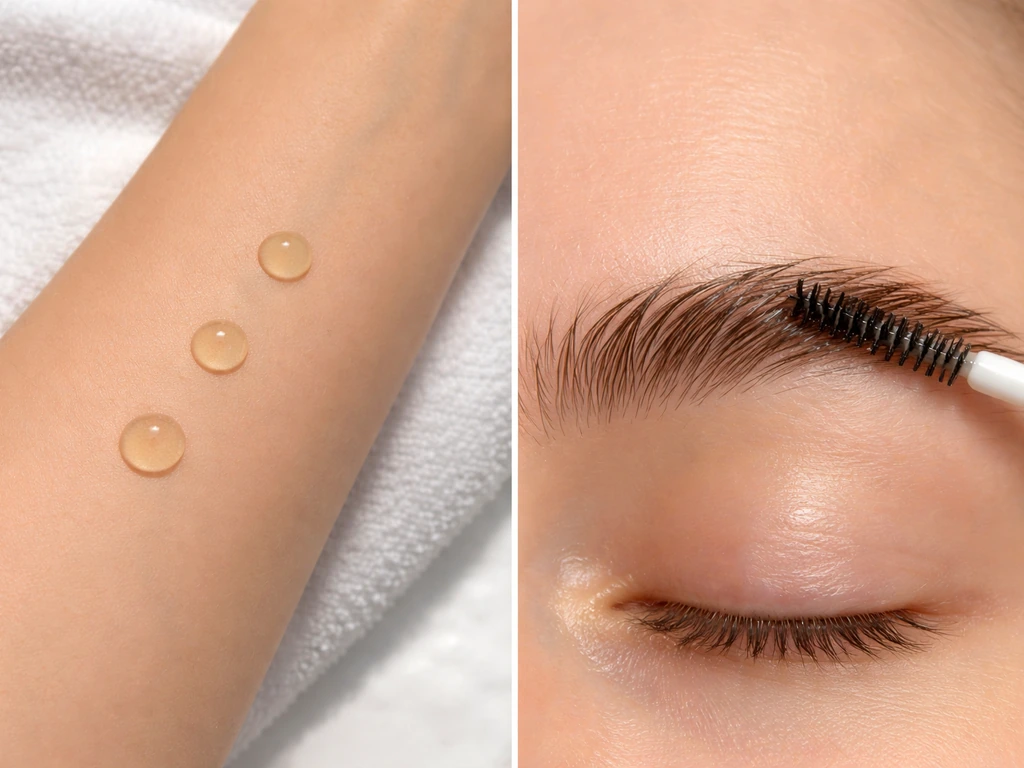
The routine is simple but a few details matter, especially because you're applying something close to your eyes. Here's how to do it safely and effectively.
- Patch test first. Before applying jojoba anywhere near your brows or eye area, test it on the inside of your wrist or elbow for 24 to 48 hours. Jojoba is generally well-tolerated, but contact dermatitis cases exist. If you see redness, itching, or swelling, stop and don't use it on your face.
- Choose 100% pure cold-pressed jojoba oil. Skip products that blend jojoba with fragrance, essential oils, or other potential irritants. Near the eye area, simpler is safer.
- Wash your face and dry your brows completely. Applying oil to clean, dry skin ensures better absorption and reduces the risk of trapping bacteria.
- Use a very small amount. Dip a clean spoolie brush, a cotton swab, or a clean fingertip into the oil and apply just enough to lightly coat the brow hairs and the skin underneath. A single drop is usually enough for both brows.
- Brush through in the direction of hair growth. This distributes the oil evenly and avoids product buildup at the roots.
- Apply at night. A nighttime routine reduces the chance of the oil migrating into your eyes during the day and lets it work while your skin is in repair mode.
- Keep it away from your tear film. Avoid applying too close to the lash line or inner corner of the eye. If oil gets into your eye, flush gently with cool water.
- Do this once daily or every other day. There's no evidence that multiple applications per day speed up results, and overuse can clog follicles or cause milia on sensitive skin.
- Give it at least 8 to 12 weeks before assessing results. Conditioning benefits may show up sooner (softer, less brittle brow hairs, less flaking), but anything resembling growth takes a full follicle cycle or more.
Realistic results and timelines to expect
Conditioning improvements (hairs look shinier, less dry, less prone to breakage) can start to show within a few weeks. Actual visible regrowth, if it happens at all with jojoba, requires enough time for follicles to complete a cycle, which is a slower process in brows than on the scalp. Realistically, give it 3 to 4 months of consistent use before drawing conclusions about growth. Even with prescription-grade treatments like bimatoprost, the clinical trials ran for around 7 months to measure meaningful eyebrow improvement.
If your brows are thin because of over-tweezing or waxing and the follicles are still intact, you may see gradual filling over 3 to 6 months with or without jojoba oil, since the follicles were just suppressed and not destroyed. In that case, jojoba is a useful supportive tool while nature does most of the work. If your brows are genuinely sparse because of hormonal changes, alopecia, or years of damage, jojoba alone is unlikely to produce dramatic results, and you'll want to consider stronger options.
Stronger alternatives when jojoba isn't enough
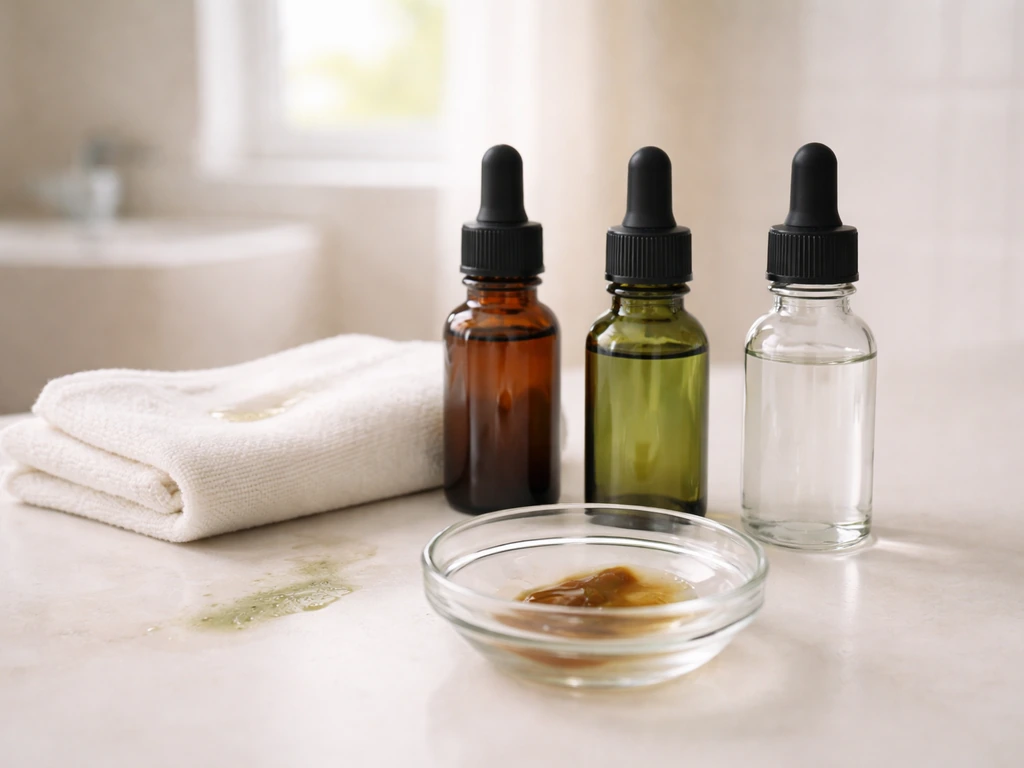
If you've been consistent with jojoba for 2 to 3 months and aren't seeing progress, it's worth knowing what the evidence says about other options. Here's a realistic comparison.
| Ingredient | Evidence level | Mechanism | Best for | Key caveat |
|---|---|---|---|---|
| Jojoba oil | Low (no controlled growth trials) | Emollient, anti-inflammatory, barrier support | Conditioning, dryness, mild irritation reduction | Not a follicle stimulator; may cause allergic contact dermatitis |
| Castor oil | Low (no robust clinical trials for brows) | Emollient, may coat and thicken hair shaft | Improving appearance and texture of existing brows | No clinical proof of follicle-level regrowth; can be comedogenic |
| Rosemary oil | Moderate (scalp RCT comparable to minoxidil 2%) | Possible circulation/anti-inflammatory effects at follicle level | Scalp hair loss; being explored for brows | Scalp evidence doesn't automatically transfer to brows; needs dilution |
| Minoxidil (2% or 5%) | High (FDA-approved for scalp; off-label for brows) | Extends anagen phase, increases follicle size | True growth stimulation for thinning or patchy brows | Off-label for brows; can cause unwanted facial hair growth; see a doctor |
| Bimatoprost 0.03% | High (RCT specifically for eyebrow hypotrichosis) | Prostaglandin analog that extends anagen and increases hair density | Clinically diagnosed eyebrow hypotrichosis | Prescription only; potential side effects include skin darkening and eye irritation |
Castor oil is frequently mentioned alongside jojoba for brows and is worth trying if you want to stay in the natural-oil category. It tends to be thicker and may do a better job of coating and protecting brow hairs. But like jojoba, there are no controlled clinical trials proving it stimulates eyebrow follicles. Rosemary oil has the most interesting emerging evidence in the oil category because of its scalp trial data showing results comparable to minoxidil 2%, though that evidence is specifically for scalp androgenetic alopecia, not brows. Rosemary oil may help some people with eyebrow thinning, but the evidence is still limited and it is not proven to restart eyebrow follicle growth like a true medical treatment.
If you've tried natural oils for 3 to 4 months without progress and your brows are significantly thinning rather than just recovering from over-grooming, minoxidil is the most evidence-backed over-the-counter option available without a prescription. A dermatologist can also evaluate whether bimatoprost or another prescription treatment makes sense for your situation.
Troubleshooting, safety, and when to get professional help
Signs jojoba isn't agreeing with your skin
Stop using jojoba oil immediately if you notice redness, swelling, itching, or a rash around the brow area or eyelids. Eyelid skin is some of the thinnest on the body and is particularly prone to contact dermatitis, including from substances transferred via fingers or product migration. Eyebrow and eyelid skin can be susceptible to contact dermatitis from substances that get transferred to the eyelids or tear film, so keep products out of the eye area and wash hands thoroughly contact dermatitis from substances transferred to the eyelids. Even if a product has been fine elsewhere on your body, the eye area can react differently. If a rash develops, see a dermatologist, who can confirm whether it's contact dermatitis and rule out other causes.
Patch testing protocol
Apply a small amount of jojoba oil to the inside of your forearm and leave it on for 24 to 48 hours without washing it off. Check for any redness, itching, bumps, or swelling. If there's no reaction, you're likely in the clear to use it on your brows, though starting with a test application at the outer edge of one brow for a few days before going full routine is still smart.
When to see a dermatologist or doctor
- Your brow loss is sudden, patchy, or accompanied by other hair loss on the scalp or body (possible alopecia areata or thyroid issue)
- You have persistent flaking, scaling, or redness at the brow area that doesn't improve (possible seborrheic dermatitis or blepharitis)
- You've been using oils or serums consistently for 4 to 6 months with zero improvement
- You're experiencing brow loss alongside other symptoms like fatigue, weight changes, or dry skin (possible hormonal imbalance)
- You want to try minoxidil or bimatoprost and want proper guidance on dosing and side effects for off-label brow use
Jojoba oil is a low-risk starting point for people who want to care for their brows naturally, and it's genuinely useful as a conditioning step in a broader brow routine. Just go in with clear expectations: you're nourishing what you have, not regrowing from scratch. If that's not enough for your situation, the stronger options in the table above are the honest next step. If you want the best oil to grow eyebrows, start by comparing jojoba with the more evidence-backed treatments discussed earlier in the guide bigger results may require stronger options.
FAQ
If I apply jojoba oil daily, will it regrow eyebrows that are completely missing?
Usually no. Even if jojoba improves dryness and irritation, it is not a follicle stimulator, so it will not create a true “new hair” regrowth cycle from bare skin. If you are seeing improvement, it is more likely healthier, less breakable existing hairs or faster recovery after damage.
Can jojoba help if my eyebrows are thinner because I over-tweezed or waxed?
Patchy regrowth after over-tweezing can be slow, but jojoba may still help by reducing irritation that worsens shedding and breakage. In practice, focus on restoring the skin barrier, and give it 3 to 6 months to judge changes, because eyebrow anagen is shorter than scalp.
What kind of results should I expect first, conditioning changes or actual thickness?
Yes, if your issue is irritation-driven shedding or breakage, you may notice less redness, less flaking, and softer-looking brows before you see any density change. If nothing improves after 2 to 3 months, it suggests jojoba conditioning alone is not addressing the cause.
Is it safe to combine jojoba oil with my current skincare or brow products?
Do a short patch test first, then keep the amount small and avoid the lash line. If you regularly wear makeup or use other actives (like retinoids or exfoliating acids) near your brows, pause jojoba until your skin settles, since irritation can mimic “growth failure.”
What signs mean jojoba oil is not working for me (and I should stop)?
Jojoba is oily and can trigger contact dermatitis in some people, especially around the eyelids where skin is thin and product migration is common. Stop and get evaluated if you develop persistent itching, swelling, weeping, or a spreading rash.
I reacted on my skin patch test, but my eyes feel fine. Should I still try it on my brows?
If you get redness or bumps on your forearm but not around your brows, you can still be at risk near the eyes because the area reacts differently. The safest approach is to avoid use altogether if you had any reaction during the patch test, or switch to a hypoallergenic, fragrance-free brow-safe alternative.
Could jojoba make my eyebrows look fuller even if it is not truly regrowing hair?
Sometimes. If your eyebrows look “sparser” because hairs are brittle and breaking, conditioning can make them look fuller by reducing snap-off. However, it will not replace lost follicles, so dramatic density changes are less likely if the thinning is due to hormonal causes or alopecia.
What if my eyebrow thinning started after irritation, dandruff, or a skin condition?
Yes. If thinning started after an infection, chronic dandruff, or persistent irritation, treating that underlying condition can matter more than the oil itself. In those cases, consider dermatology evaluation, because inflammation can keep hairs from holding and can prolong shedding.
How long should I try jojoba before deciding it is not enough?
A useful rule is to keep expectations tied to time and cause: if you are conditioning-dryness related, you might see benefits in weeks. For density changes, give it 3 to 4 months, and if there is no visible improvement after 2 to 3 months, reassess whether you need an evidence-backed option like minoxidil or a prescription route.
When should I stop using jojoba and consider switching to minoxidil or prescription options?
It depends on the goal. For “growth,” jojoba is generally not strong enough. For recovering from damage and maintaining brow health, it can be a helpful supportive step, but if thinning is significant and persistent, stronger therapies usually offer better odds.
Next Article
Does Rosemary Oil Grow Eyebrows? What to Expect and How to Use It
Yes it may help appearance by improving follicle conditions and reducing breakage, with safe diluted routine and realist