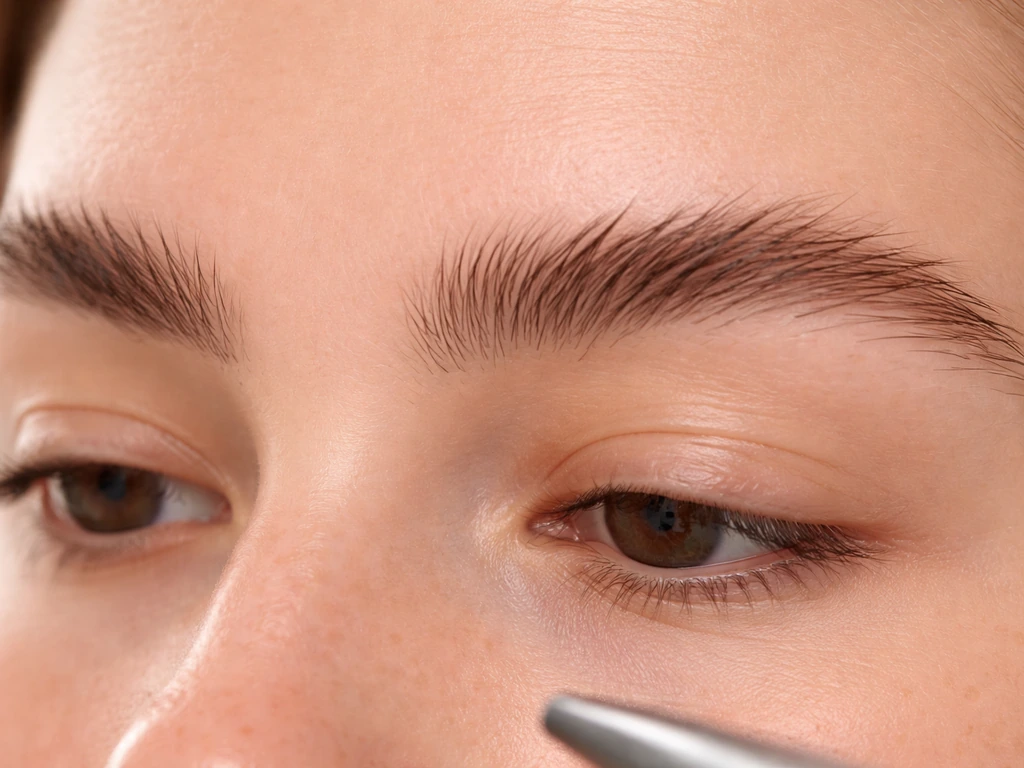
You can train your eyebrows to lie in a better direction, but you can't reprogram the follicles themselves. The angle your hairs grow out of the skin is set by how those follicles are oriented underneath, and no amount of brushing changes that permanently. What you can do, starting today, is consistently guide the hairs as they grow so they fall into a better position over time, support faster and fuller growth so you have more hairs to work with, and stop the habits that are actively making things worse. That combination, done patiently over 3 to 6 months, produces real visible improvement for most people.
How to Train Eyebrows to Grow in the Right Direction

James Whitmore
23 May 2026
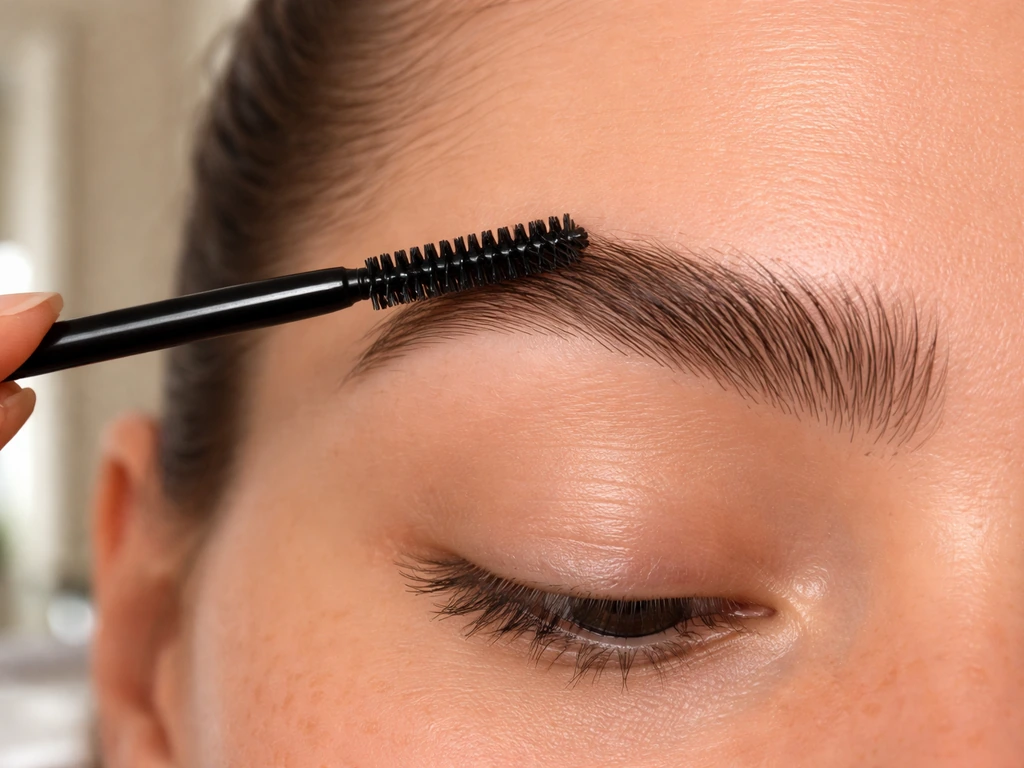
Can you actually train eyebrow hair to grow the right direction?
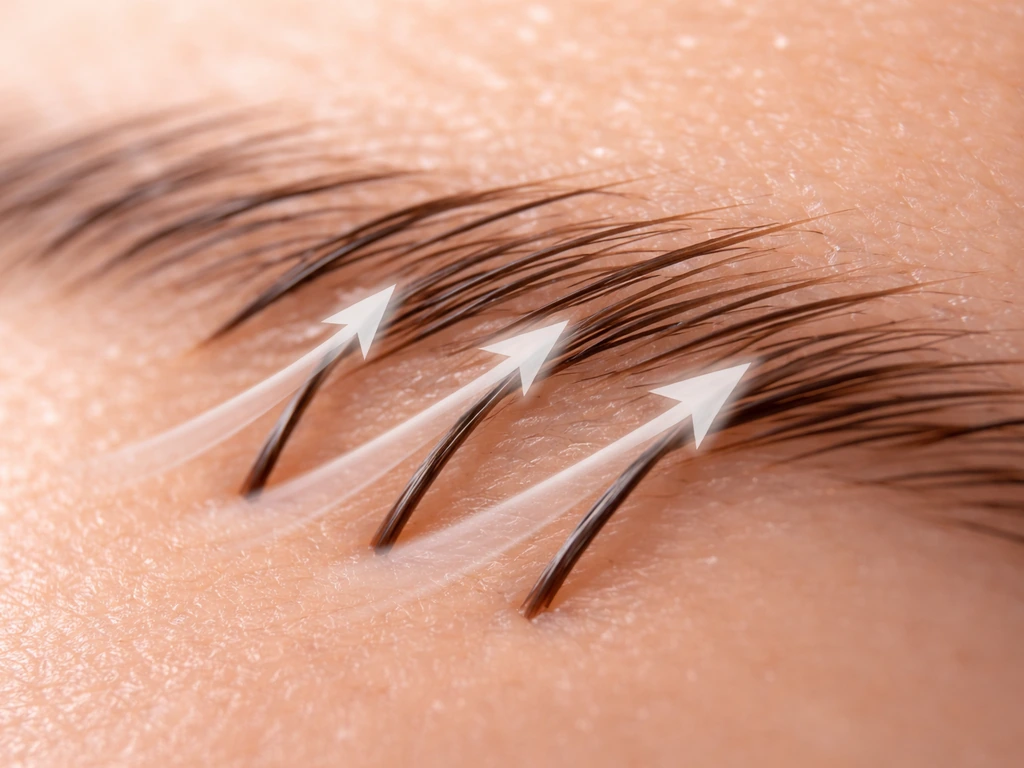
The honest answer is: partly. Hair direction comes from the angle at which each follicle is embedded in your skin. Think of the follicle as a pipe buried at a slight tilt. Whatever angle that pipe sits at, that's the direction the hair grows out. That angle is genetic and structural, not something a spoolie or a gel can permanently alter. People who have eyebrow hairs that grow upward, outward, or in competing directions often have a cowlick-type follicle pattern in their brows, where the follicles are embedded at angles that make hairs fan out or stand up rather than lie flat and sweep in one direction.
Where grooming and training genuinely help is in redirecting how the hair shaft lies on the skin's surface. If you consistently brush a hair in a certain direction while it's growing out, especially if you lock it in place with a setting product, the hair will tend to lay that way more easily over time. It's similar to how sleeping on your side every night can train your hair to part a certain way. You're not changing the follicle's angle, but you're conditioning the hair's default resting position. The effect is real but it takes weeks to months of consistency, not days.
If your brows grow in genuinely different directions on each side, or your hairs seem to go upward no matter what you do, that's usually a structural follicle pattern rather than a grooming problem. Those topics have their own nuances worth exploring separately.
Why brows grow the way they do
Eyebrow hairs grow at an average of about 0.14 to 0.16 mm per day, which works out to roughly 4 to 5 mm a month. Each hair goes through a growth cycle with three phases: anagen (active growth), catagen (transition), and telogen (resting/shedding). Unlike scalp hair, eyebrow hairs have a relatively short anagen phase, which is why brow hairs stay short without trimming and why regrowing a full brow after damage takes several months rather than weeks.
The direction each hair grows is baked in at the follicle level. Follicles are embedded in the dermis at a specific angle and pattern, and in the brows, they're typically arranged in overlapping zones: hairs near the nose arch upward, hairs in the middle arch and sweep outward, and hairs at the tail sweep downward. If your brows are growing upward specifically, a key reason is often how the follicles are angled in your skin.
When that patterning is disrupted by genetics, trauma, scarring, or years of aggressive plucking, hairs can grow in disorganized or counterproductive directions. That's the cowlick phenomenon showing up in brow hair, and while you can work around it with good grooming, you generally can't surgically fix it without a cosmetic procedure like eyebrow transplantation.
Your day-to-day training routine
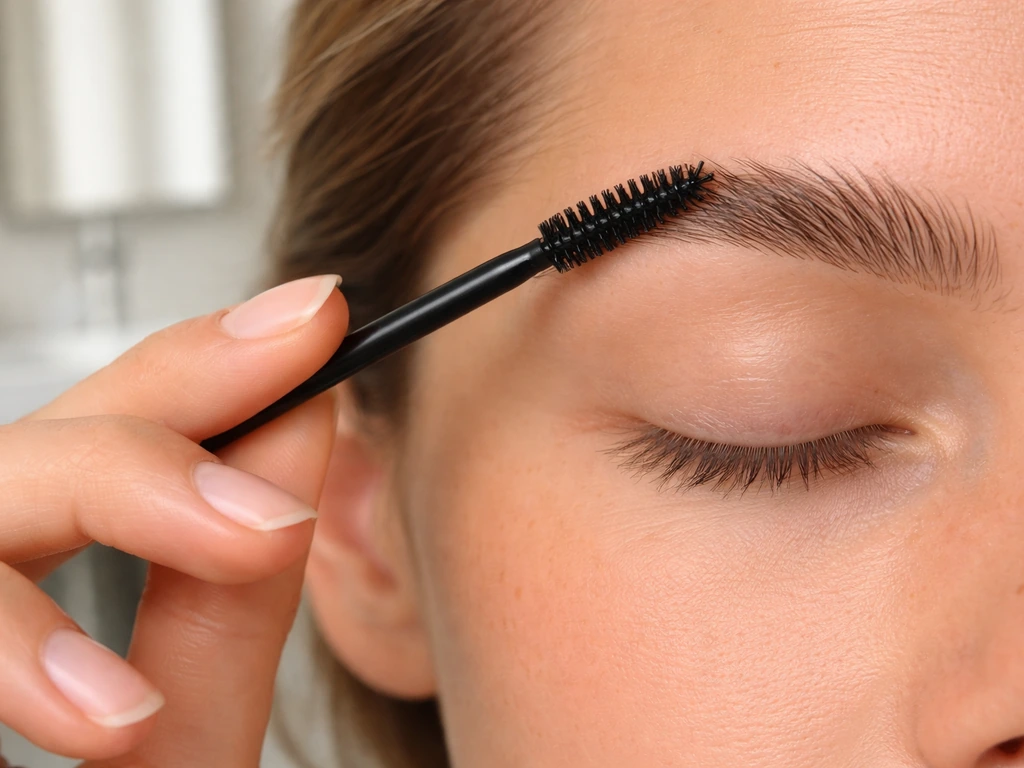
This is where actual change happens, and it's simpler than most people expect. The key is doing it every single day without skipping, because inconsistency is the biggest reason training doesn't work.
Morning: brush and set
- Start with a clean, dry face. Oils and leftover skincare products on the brow area will make hairs slip out of position faster.
- Use a clean spoolie brush and brush all hairs firmly upward and slightly outward toward the tail. Use short, deliberate strokes, not a single swipe. You want to lift and separate each hair.
- Immediately lock them in place with a clear brow gel or a setting wax. A firm-hold clear gel (like a dedicated brow-setting gel or even a tiny amount of a hard-hold hair wax on your fingertip) holds the direction you just brushed. Don't skip this step: brushing without setting is largely wasted effort.
- Let it dry fully before touching the area. Even 60 seconds of leaving it alone matters.
Evening: oil massage and re-brush
- Cleanse the brow area gently to remove the day's product, makeup, and sebum buildup.
- Apply your growth oil of choice (more on this below) using your fingertip or the spoolie itself, and massage it into the brow skin in small circular motions for about 30 seconds per brow. This stimulates circulation in the follicle area, not just coats the hairs.
- Brush the hairs into your desired direction again with a clean or lightly oiled spoolie. You want the hairs sleeping in the right direction overnight.
- Leave the oil on overnight. It doesn't need to be washed off before bed.
The reason the evening routine matters as much as the morning one is that hairs are slightly more pliable when they've been softened by oil and warmth. Overnight conditioning, done consistently, gradually encourages the hair shaft to default to the direction you keep placing it. Think of it like gently bending a piece of wire the same way every day: eventually it holds the curve.
Grooming rules that protect your progress
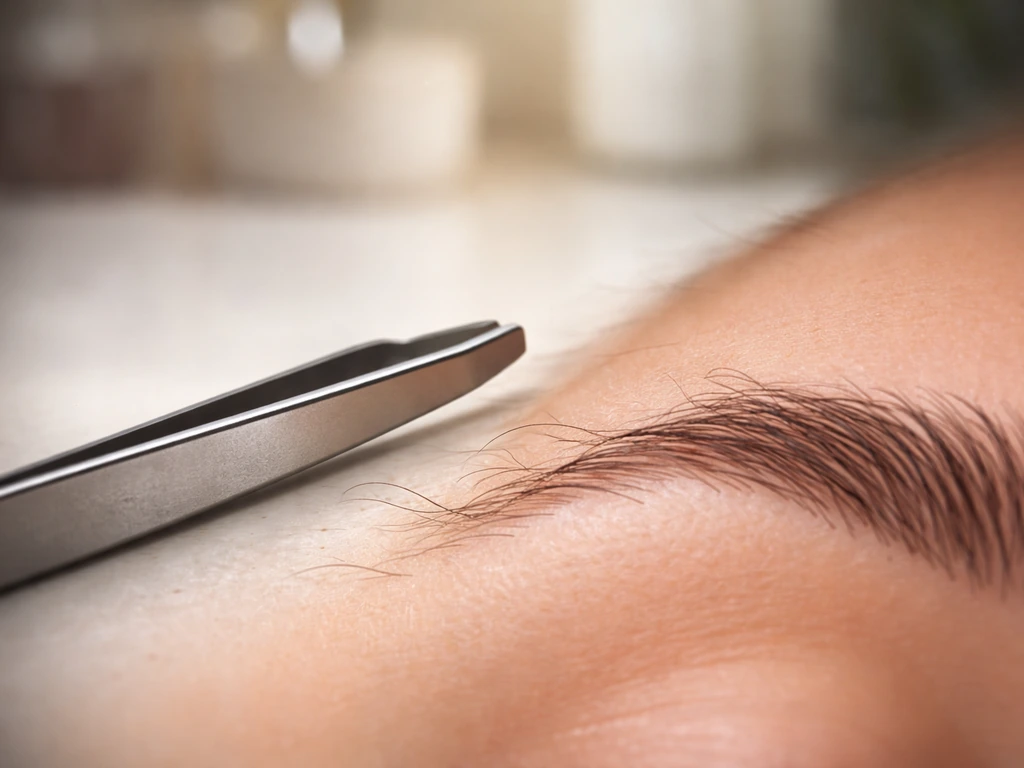
The fastest way to undo months of training is to keep damaging the follicles you're trying to work with. Here's what to stop or cut back on significantly.
Stop over-tweezing
Plucking every day, even just to get a stray hair or two, is one of the most damaging things you can do to brow follicles. According to dermatologists, repeated daily plucking can cause follicle damage and scarring over time, meaning the hair either stops growing back entirely or grows back in a different, often worse, direction. If you're in a training phase, resist the urge to tweeze anything except hairs that are clearly outside your intended shape. Give new hairs room to grow in and prove themselves.
Be strategic about shaping methods
If you need to shape during a grow-out phase, shaving doesn't damage the follicle the way pulling from the root does, and regrowth tends to come back faster. Shaving your eyebrows is generally considered not to damage the hair follicle, and regrowth may be faster than with waxing or plucking shaving doesn't damage the follicle the way pulling from the root does. Threading, when done by a skilled specialist, is a precise option that removes hair cleanly, but a less experienced practitioner can cause skin irritation and pull hair incorrectly, which adds to follicle stress. Waxing pulls hairs from the root repeatedly and should be minimized during a training phase when you're trying to protect every follicle you have.
Don't trim too aggressively
Trimming the tips of long hairs is fine and actually helps hairs lie flatter. But cutting hairs too short defeats the purpose of training: you need some length for the gel and brushing to work. Aim to trim only the hairs that stick out beyond your shape, not every hair that's growing upward.
Oils and serums: what actually helps growth

Growth support won't change your follicle angles, but it does give you more hairs, fuller hairs, and hairs that are less brittle and easier to train. These are the options worth considering, with honest expectations for each.
| Option | What it does | Realistic expectation | How to use |
|---|---|---|---|
| Castor oil | Coats and conditions the hair shaft, may support follicle circulation | Reduces breakage, improves appearance of thickness; doesn't dramatically increase growth rate | Apply nightly to brows with a spoolie, massage in for 30 seconds |
| Rosemary oil (diluted) | Research suggests it can stimulate hair follicles similarly to minoxidil in scalp studies | Modest but real improvement in density over 3+ months; needs carrier oil (jojoba or coconut) | 2-3 drops in 1 tsp carrier oil, apply nightly, massage in |
| Peptide-based brow serums | Some peptides (like biotin peptides or growth-factor mimics) support hair shaft protein production | Can improve thickness and reduce shedding; varies widely by product quality | Apply to brow skin morning or night per product instructions |
| Biotin (oral supplement) | B-vitamin involved in keratin production | Only helps if you're genuinely deficient; most people aren't, so effect is minor | If supplementing, standard dose is 2,500–5,000 mcg daily; don't expect dramatic results |
Castor oil gets a lot of hype, and it is genuinely useful as a conditioning agent that reduces breakage and keeps hairs more pliable. But it's not a growth miracle. Rosemary oil has more interesting science behind it for actual follicle stimulation, especially in scalp studies, and it's worth pairing with a carrier oil in your evening routine. Neither will restructure a cowlick or fix a scarred follicle, but both support the kind of healthy, dense brow growth that makes training more effective.
Minoxidil and medical options: when to consider them
Minoxidil for eyebrows is an off-label use, meaning it hasn't received specific FDA approval for brow application, but it has been studied in randomized controlled trials for eyebrow hypotrichosis (sparse brows). Research comparing topical minoxidil 2% against placebo and against bimatoprost (a prescription prostaglandin analog also used for lashes) shows real efficacy for increasing eyebrow density and thickness. This isn't a fringe approach; it's being studied in peer-reviewed clinical trials.
If your brows are genuinely sparse rather than just growing in an awkward direction, minoxidil 2% solution applied once daily to the brow area is worth a conversation with a dermatologist. The typical application is a small amount (often a single drop or the applicator tip) swept across the brow skin, not the hair shafts. Key things to know: it takes at least 3 to 4 months to see meaningful results, you need to keep using it to maintain gains (growth can reverse when you stop), and possible side effects include skin irritation, unwanted facial hair growth if the product migrates, and in rare cases systemic effects like a drop in blood pressure. Don't use it on broken or inflamed skin, and if you're pregnant or have cardiovascular concerns, check with a doctor first.
Bimatoprost (brand name Latisse, primarily used for lashes) has also been studied for eyebrows in the same comparative trials and shows efficacy, but it typically requires a prescription and carries its own side effect profile including potential pigment changes in the skin and iris. For most people who aren't dealing with significant medical hair loss, starting with rosemary oil and a good serum routine is a reasonable first step before moving to prescription territory.
What to expect and when to reassess
Here's a realistic timeline so you don't give up too early or keep going with something that isn't working.
| Timeframe | What you might notice | What to do |
|---|---|---|
| Weeks 1–2 | Not much visible change; hairs are the same length | Stick to the daily brush-and-set routine without exception; this is the foundation phase |
| Weeks 3–6 | Hairs start holding their brushed direction a bit more easily; gel works better | Continue routine; resist tweezing; start noting which areas look fuller vs still sparse |
| Months 2–3 | New hairs entering from telogen phase; slight improvement in density if using oils or serums | Reassess which hairs are still stubbornly growing in the wrong direction; consider whether scarring or follicle damage may be the issue |
| Months 3–6 | Noticeable improvement in direction, density, and overall shape for most people | This is the real assessment window; if there's been little change, consult a dermatologist about minoxidil or other options |
| 6+ months | Maximum natural improvement from training and topical support | If significant sparse or misdirected patches persist, discuss microblading, eyebrow transplantation, or prescription treatments |
The most common reason training doesn't work is follicle damage from years of over-plucking or repeated trauma. If you've been aggressively shaping your brows for years and certain patches simply won't fill in or grow in any particular direction, scarring at the follicle level may be the cause. At that point, topical growth products have limited ability to help because the follicle itself is compromised. A dermatologist can assess whether the follicles are still viable or if something like microblading (for filling in appearance) or a brow transplant (for actual hair regrowth in a new direction) would make more sense.
The other common obstacle is impatience. The eyebrow hair cycle means some of your hairs are in the resting phase right now and simply won't respond to anything until they re-enter the growth phase. That's normal, not a sign that your routine isn't working. Commit to a full 12 to 16 weeks before making any judgment about whether your approach needs to change. Most people who feel like "nothing is working" after two weeks haven't actually given the biology enough time to catch up.
If you're in a grow-out phase while training, the challenge of managing the in-between look is real, and using brow pencils, pomades, or tinted gels to fill and define your shape while new hairs establish themselves makes the process much more tolerable. If you are trying to grow out eyebrows without looking bad, the in-between stage is usually the hardest part, so focus on gentle styling that follows the direction your hairs already want to go in-between look. Think of the current state as a construction zone: temporary and worth the wait.
FAQ
What should I do if only a few eyebrow hairs grow the wrong way, but most are fine?
If only a few hairs fight your intended direction, treat them as “outliers.” Leave the rest alone, then redirect only the longer, more visible hairs with daily brushing plus a light setting gel. Avoid plucking them because pulling repeatedly can damage nearby follicles and make future direction worse.
Can brow gel or pomade speed up eyebrow training, or can it make things worse?
Yes, brow gel can help you train the hair shaft, but use a light hold. Heavy formulas can make hairs clump and you may end up styling against their natural lay, which creates friction. Also, don’t keep re-brushing all day, you want one direction at application time, then minimal disturbance.
How short is too short to trim if I’m trying to train my brows to grow in the right direction?
A general rule is to aim for enough length to guide, not so much that hairs tangle. Trim only the hairs that clearly stick beyond your target shape, then wait before re-trimming. Cutting too short reduces the amount of hair your gel can “grab,” so training becomes harder and the in-between stage lasts longer.
Why did my brow direction change suddenly after I started training?
If you see a sudden change after irritation, waxing/threading, or aggressive plucking, the most likely cause is follicle stress or temporary shedding, not the follicle permanently reorienting. Give it time, reduce trauma, and consider a dermatologist check if a patch stays thin for more than a few months.
Will eyebrow training still work if my brows have a cowlick pattern?
Yes, training works even if your brows feel “cowlicky,” but expect more uneven results at first. Focus on redirecting at the tail and middle differently (use lighter touch near upward areas), and be consistent for 3 to 6 months. If the hairs stay permanently counter to your goal, that pattern is likely structural and may need cosmetic options.
How often should I brush and style, and should I do it more when I’m using oils or growth products?
For most people, daily brushing and styling is enough. If you’re using growth support products, don’t stack too many actives at once on the same night, because irritation can increase shedding and make direction look worse. Keep to one “growth/conditioning” routine plus grooming.
What’s the best way to handle the awkward in-between stage while my brows are growing and being trained?
If you’re going through the grow-out phase, use makeup to manage the awkward length and keep the direction consistent. Tinted gels or pomades work better than heavy pencil for day-to-day because they don’t require frequent erasing. Also, remove gently at night so you don’t add friction while hairs are still establishing.
What if my brows are sparse and not just growing in the wrong direction, will training alone help?
If your brows are sparse rather than just misdirected, follicle-support options may matter more than training alone. Consider discussing eyebrow hypotrichosis with a dermatologist, especially if you also notice thinning over time. Training can help the hairs you have, but it won’t create density if follicles aren’t producing well.
What safety tips should I follow if I decide to try minoxidil for eyebrow growth?
If you’re using minoxidil off-label, stop using it on inflamed or broken skin and don’t apply it more than directed, because that increases irritation and the risk of product migrating. Apply to the brow skin area as instructed and wash hands right after. If you get redness, swelling, or new unwanted facial hair, contact a clinician promptly.
When should I stop experimenting at home and see a dermatologist?
Look for persistent thinning that doesn’t improve after about 12 to 16 weeks of a stable routine, or clear patchiness that appeared after scarring or repeated over-plucking. A dermatologist can assess follicle viability and discuss whether options like microblading for appearance or transplantation for true regrowth make more sense.
What are the most common mistakes that make eyebrow training fail, even when I’m being consistent?
If your training direction looks worse after you start, the first thing to check is whether you’re inadvertently pulling hairs (through daily tweezing, aggressive removal, or rough brushing). Also review whether you’re trimming too aggressively or applying too much product that stiffens and forces clumps. Then give it at least a full cycle window, because some hairs are temporarily in a rest phase.
Next Article
Why Do My Eyebrows Grow in Different Directions?
Learn why eyebrow hairs grow different directions, what’s normal, and how to groom, regrow, and when to see a dermatolog