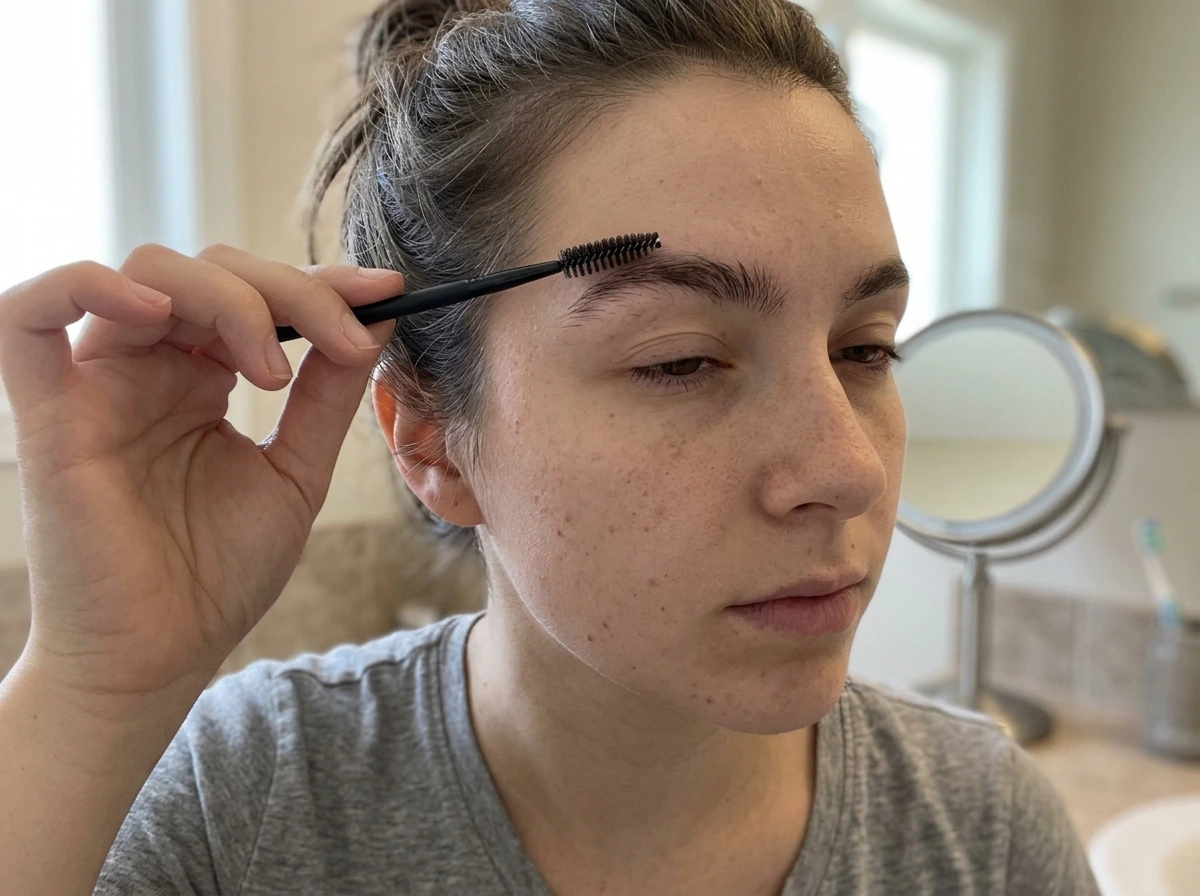
After an eyebrow transplant, you're not going to see full results for a while, and that's completely normal. The honest answer is that transplanted eyebrow hairs <span>start to visibly grow around months 3–4</span>, density picks up noticeably between months 6–8, and the final mature result usually shows up around month 12., density picks up noticeably between months 6–8, and the final mature result usually shows up around month 12. The in-between stretch involves shedding, patience, and a lot of "is this normal?" moments. This guide walks you through exactly what to expect at each stage, what you can do to protect your grafts, and how to tell the difference between normal healing and something worth calling your clinic about.
How Long Does Eyebrow Transplant Take to Grow? Timeline
James Whitmore
24 Mar 2026
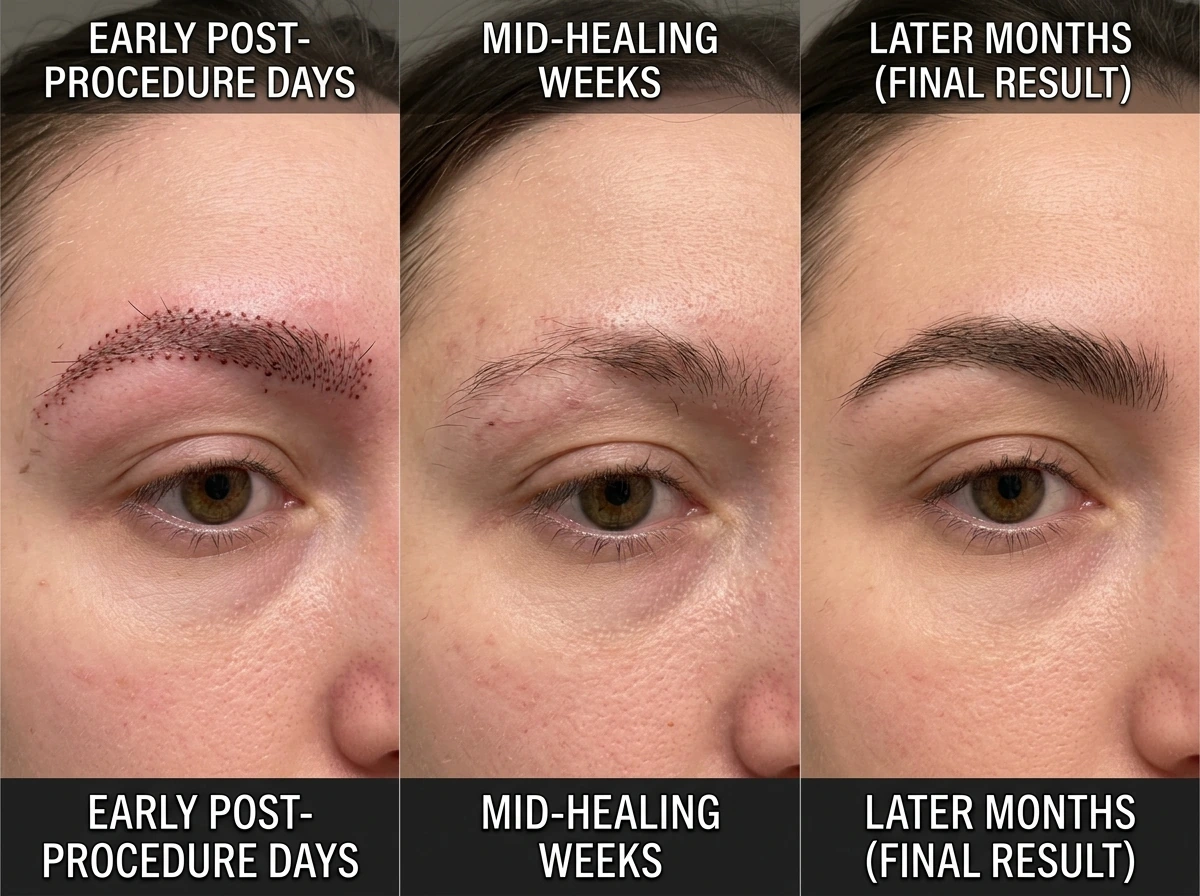
The eyebrow transplant growth timeline, week by week and month by month
Here's the stage-by-stage breakdown of what actually happens after an eyebrow transplant. These timeframes are based on clinical data and what most patients experience, though individual variation is real and worth understanding.
| Timeframe | What's Happening | What You'll See |
|---|---|---|
| Days 1–3 | Grafts are settling; swelling peaks | Puffiness around brows and eyes, some redness |
| Days 4–10 | Scabs and crusts form over graft sites | Small crusts at each follicle; itching is common |
| Week 2 | Most scabs shed naturally | Pink healing skin underneath; brows may look fuller temporarily |
| Weeks 2–4 | Transplanted hairs shed (shock loss) | Hairs fall out — this is expected and not a sign of failure |
| Months 1–3 | Follicles are dormant and regenerating | Little visible growth; brows may look sparse |
| Months 3–4 | New hairs begin breaking through the skin | Approx. 50–60% of grafts start producing visible hair |
| Months 4–6 | Hair shafts lengthen; density increases | Brows start to look noticeably fuller |
| Months 6–8 | Most grafts have completed regrowth | Significant density visible; near-final appearance |
| Months 9–12 | Hair texture and direction mature | Final result; full density plateau typically reached by month 12 |
The most important milestone to remember: around 50–60% of your grafts begin growing at the 3–4 month mark, and complete regrowth across all grafts typically wraps up by months 6–8. Eyebrow hair cycles complete in around four months, which is why brows can show a shorter timeline than scalp hair blank" rel="noopener noreferrer">around 50–60% of your grafts begin growing at the 3–4 month mark. That said, the final look, including how the hairs sit, their direction, and texture, continues to refine through month 12.
What happens right after the procedure
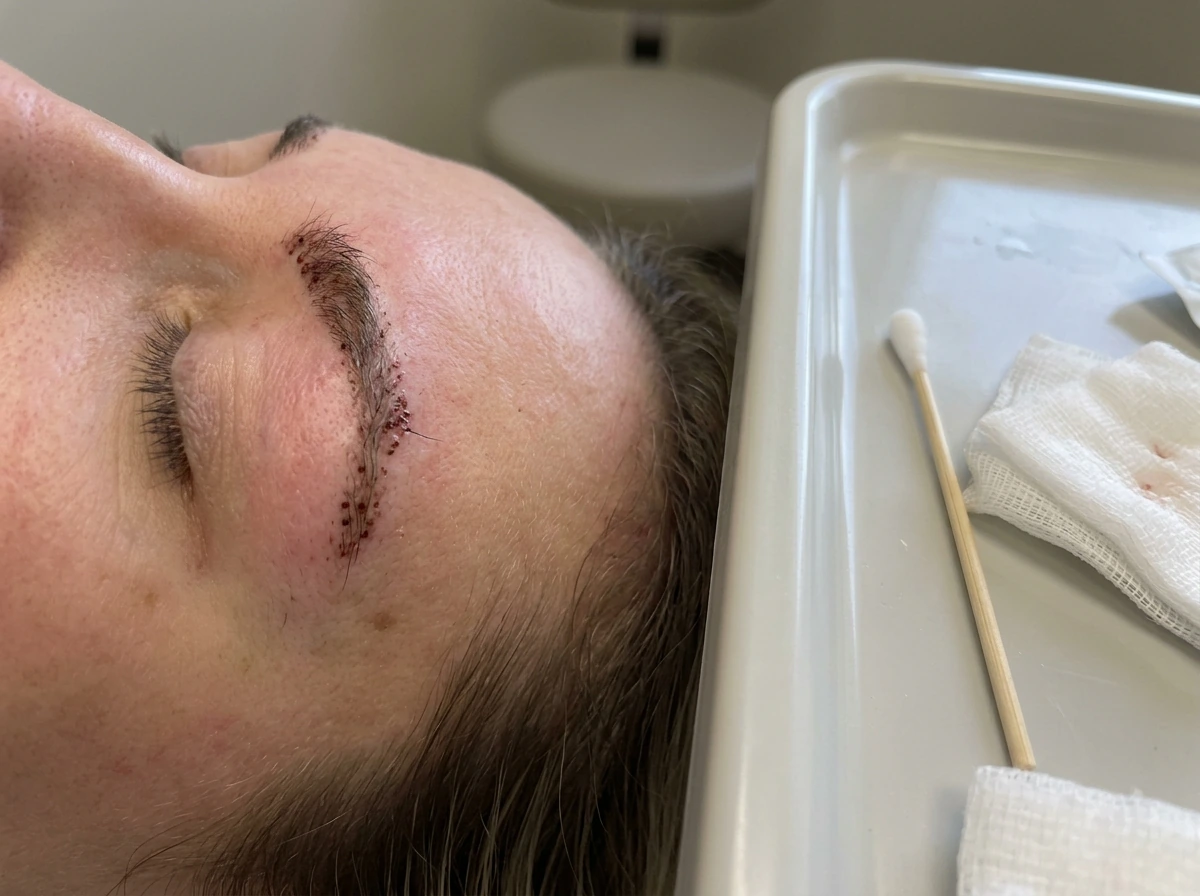
The first week after an eyebrow transplant looks more dramatic than it actually is. Swelling is normal and typically peaks a few days after surgery before subsiding within about a week. It can extend around the eyes and forehead, which can feel alarming, but it's just your body's response to the procedure.
Scabbing starts almost immediately. Each transplanted follicle develops a small crust at the insertion point, and these scabs typically loosen and fall off naturally around days 7–10. By the end of the second week, most patients have shed the bulk of their scabs, leaving behind pink, healing skin. Do not pick them, pulling a scab off early can dislodge a graft that hasn't yet anchored properly. If scabs persist past 10–14 days or you're seeing pain, significant redness, swelling that's getting worse, or any discharge, contact your clinic right away to rule out infection.
Then comes the phase that catches almost everyone off guard: the transplanted hairs fall out. This shedding typically starts around week 2 and continues through week 4. It's called shock loss and it's completely normal. The hair shafts drop, but the follicles are still alive underneath. They enter a dormant phase before restarting the growth cycle, similar to the telogen (resting) phase of the natural hair cycle, which can last up to around 100 days. This is why the regrowth gap between shedding and visible new growth feels so long.
Why growth speed and density vary so much between patients
Two people can have the same procedure with the same surgeon and end up with noticeably different timelines. That's not a flaw in the process, it's just biology. Several factors genuinely affect how fast and how densely your transplanted brows grow in.
- Graft survival rate: Not all grafts make it. A 5–10% loss rate is considered normal, but this affects final density.
- Transplant technique: FUE (follicular unit extraction) is currently the preferred method for eyebrow restoration because it causes minimal trauma to the donor area, heals faster, and has lower downtime compared to strip-based methods.
- Follicle health at the donor site: Grafts taken from areas with strong, healthy follicles perform better. If your donor hair (typically from the scalp) is thinning or damaged, graft quality suffers.
- Age and hormonal status: Younger patients and those with stable hormone levels tend to see more consistent regrowth. Hormonal shifts (thyroid issues, post-pregnancy, menopause) can slow things down.
- Health conditions and medications: Autoimmune conditions, nutritional deficiencies, and certain medications affect follicle behavior. Smoking specifically reduces blood flow and graft survival.
- Aftercare adherence: Patients who follow post-op instructions closely — especially in the first two weeks — tend to have better outcomes.
- Scar tissue: If you have existing scarring in the brow area (from previous procedures or injury), graft placement is more complex and regrowth can be irregular or misdirected.
Misdirection, where transplanted hairs grow at the wrong angle, and irregular or wavy growth are real possibilities, especially in areas with underlying scar tissue. A skilled surgeon will counsel you on this before the procedure. If you weren't warned about it and you're seeing it now, it's worth bringing up at your follow-up, especially if you’re trying to figure out how long to grow out eyebrows to reshape.
What helps (and what hurts) graft survival and regrowth
Things that protect your grafts
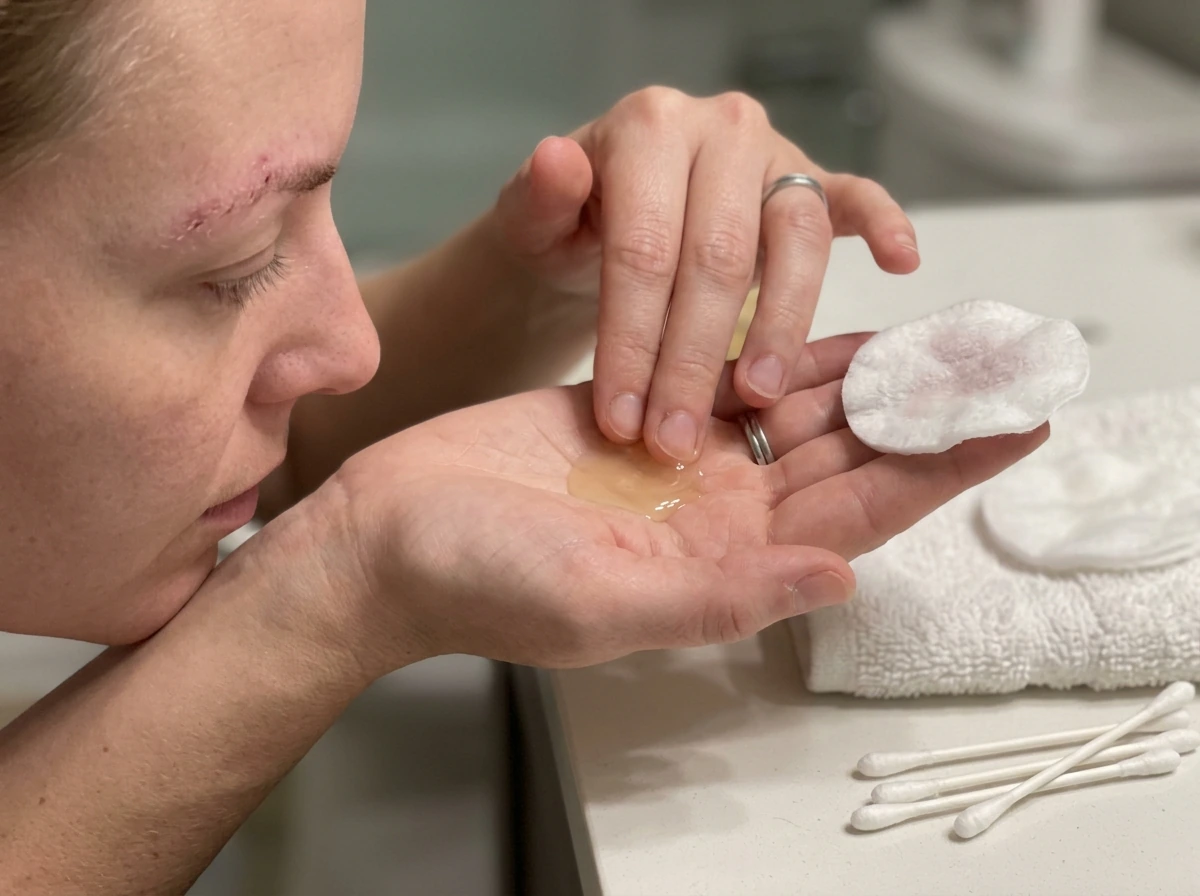
- Gentle washing: Most clinics recommend washing morning and night for the first 7 days with a gentle cleanser. Let water run softly over the area — don't aim shower pressure directly at the grafts.
- Keeping the area moisturized: Use any prescribed ointment until it's gone, typically around 10 days or more, to prevent the scabs from drying out and pulling prematurely.
- Sleep position: Sleep on your back for the first few days with your head slightly elevated. Friction against a pillow can dislodge early grafts.
- Sun protection: Protect the brow area from sun exposure for at least 30 days using a hat. UV exposure after any surgical procedure can negatively affect healing and results.
- Avoiding strenuous activity: Skip intense exercise for the first few weeks. Bending over and raising your heart rate significantly can increase swelling and risk of trauma to the graft sites.
Things that can hurt your results
- Swimming too soon: Chlorinated pool water is off-limits for at least 7–10 days post-surgery; ocean or lake swimming should wait at least 14 days. Both can introduce bacteria and disrupt healing.
- Heat exposure: Saunas, steam rooms, and high heat can increase swelling and stress the grafts early on.
- Picking at scabs: This one can't be overstated — removing scabs manually is one of the fastest ways to lose a graft.
- Smoking: It constricts blood vessels and reduces oxygen delivery to healing tissue, which directly impacts graft survival.
- Touching the brow area unnecessarily: In the first two weeks especially, keep your hands away unless you're following a prescribed washing routine.
- Hair dye or chemical treatments: These should be avoided until the area is fully healed — your clinic will give you a specific timeline, but expect to wait at least several weeks.
Normal signs vs. signs worth contacting your clinic about
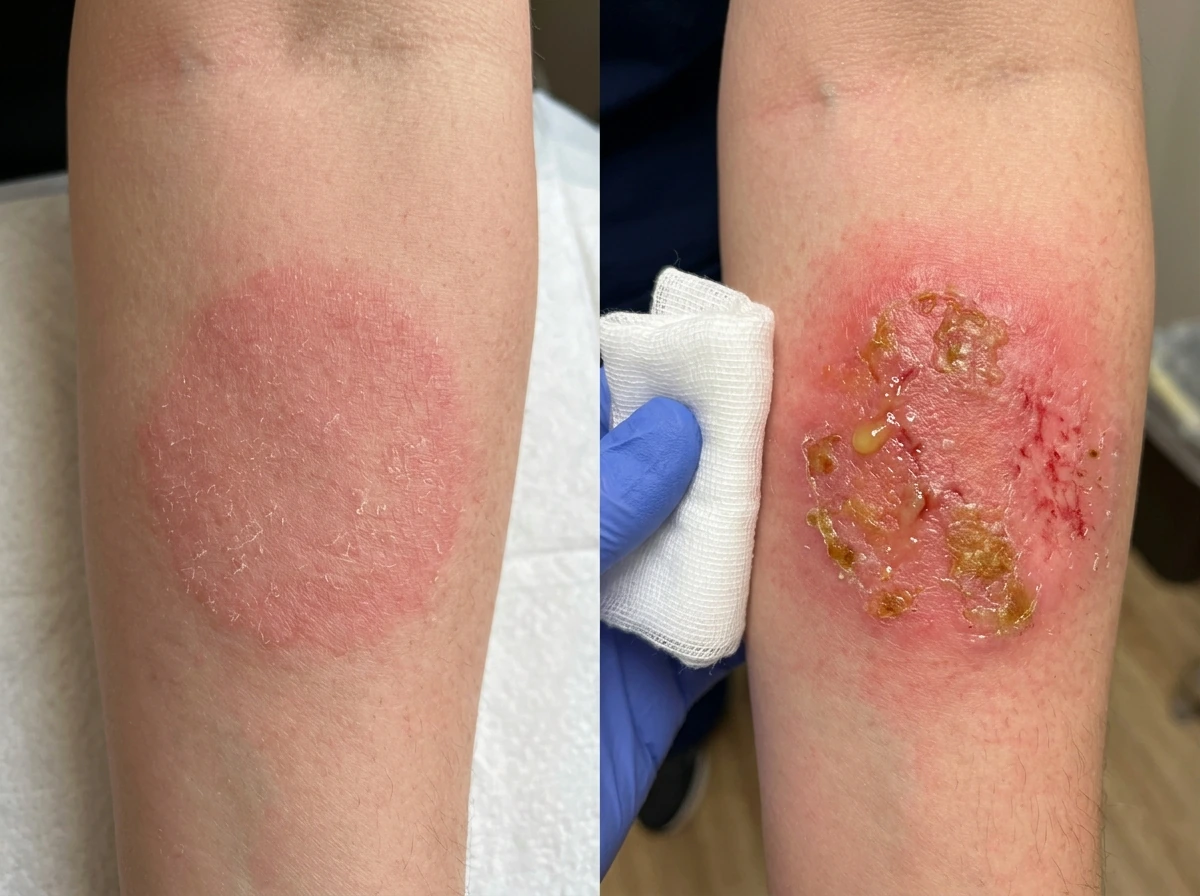
It's easy to spiral into worry during the months when nothing seems to be happening. Here's a practical breakdown of what's expected versus what actually needs attention.
| What You're Seeing | Normal or Not? | What to Do |
|---|---|---|
| Swelling in days 1–5 | Normal | Keep head elevated, follow aftercare instructions |
| Scabs forming over each follicle | Normal | Don't pick; let them fall off naturally |
| Scabs that haven't shed by day 14+ | Worth checking | Contact your clinic if accompanied by pain or discharge |
| Transplanted hairs falling out at weeks 2–4 | Normal (shock loss) | No action needed; follicles are still alive |
| No visible growth at month 2 | Normal | Dormant phase; new growth won't appear yet |
| New hairs coming in at odd angles | Often normal, especially over scar tissue | Mention at your next follow-up; can sometimes be addressed |
| Uneven density at month 4 | Normal — growth is staggered | Continue monitoring; density fills in through month 8 |
| Significant patchiness still at month 9+ | Worth discussing | Book a clinic review; secondary touch-up may be an option |
| Redness, swelling, or discharge worsening after week 1 | Red flag | Contact your surgeon promptly — possible infection |
| Pain that increases rather than fades after days 3–5 | Red flag | Contact your clinic immediately |
The most common source of unnecessary panic is shock loss. Watching your newly transplanted hairs fall out in weeks 2–4 feels like failure, but it's the expected behavior of transplanted follicles resetting their growth cycle. If you're unsure at any point, photos are your best tool, more on that below.
How eyebrow transplant timelines compare to non-transplant regrowth options
If you've been reading up on brow regrowth in general, whether after over-tweezing, <threading> or years of sparse growth, you know the natural regrowth timeline is already measured in months, not weeks. For context, standard eyebrow regrowth after shaving or waxing takes roughly 4–6 months for full recovery, depending on how aggressively the follicles were disturbed. Transplant regrowth follows a longer but ultimately more permanent arc.
Topical treatments like castor oil and rosemary oil are popular in the brow regrowth space, and they can support a healthier follicular environment, but their impact on density is modest and slow. They work best for people with mildly thinning brows who still have functioning follicles to stimulate, they can't create follicles that aren't there. Minoxidil 2% is a step up from those options: a randomized, double-blind study showed it's effective and safe for eyebrow hypotrichosis. Some people use it as a standalone treatment for sparse brows, and in some cases it's used as a complementary treatment after transplant, but always under medical guidance, since timing matters after a procedure.
The fundamental difference is this: transplant results are permanent once the grafts survive and mature, while topical treatments require ongoing use to maintain any benefit. If you stop using minoxidil, for example, the growth it stimulated can gradually reverse. Transplants involve a harder recovery, a longer timeline to final results, and higher upfront cost, but for people with significant follicle loss, they're the only option that addresses the root cause. If you're on the fence about whether to transplant or try other options first, that's a conversation worth having with a hair restoration specialist who can assess your specific follicle situation.
When to follow up with your clinic and how to track your progress
Most clinics schedule follow-ups at around 1 month, 3 months, and 6 months after the procedure, and many will want to check in again at the 12-month mark. Some case series follow patients every 2 months for up to 4 years to monitor long-term outcomes and address any misdirection or density issues that emerge. Don't wait for a scheduled appointment if something feels wrong.
How to track your progress at home
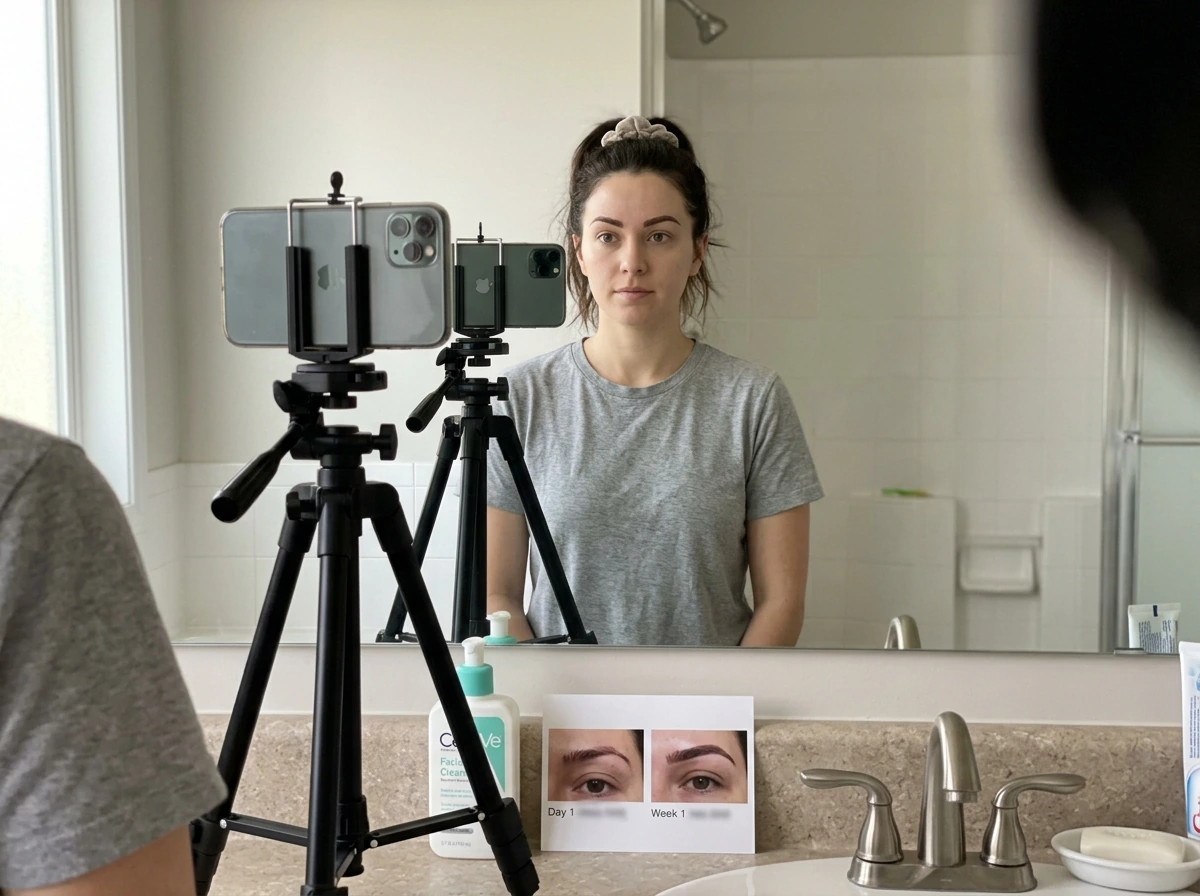
- Take baseline photos the day after your procedure (once initial swelling allows), using the same lighting and angle each time.
- Photograph your brows every 2 weeks for the first 3 months, then monthly after that.
- Use natural light and shoot straight-on as well as from a slight angle to capture hair direction.
- Keep a simple log noting what you're noticing: shedding, first new hairs, density changes, any areas that seem patchy.
- Bring your photo log to every clinic appointment — it gives your surgeon much more useful information than memory alone.
Questions to ask your clinic
- What's the earliest you'd expect to see new growth with my specific graft count and donor quality?
- At what point would you consider my results below expected, and what would the next step be?
- Are there any supplements or topicals you recommend to support graft health during recovery?
- When can I resume threading, tinting, or brow makeup?
- If I see patchy growth at month 6 or 9, how do you approach touch-up procedures?
- What are the signs of misdirected growth, and can that be corrected if it happens?
If you're approaching month 9 and you're still seeing significant patchiness or minimal growth in areas that should have filled in, that's the time to have a frank conversation with your surgeon about whether a touch-up procedure makes sense. Don't wait until month 12 to raise concerns if something looks off earlier, earlier input gives your clinic more options to help.
The bottom line: eyebrow transplant results are a slow build, and the 12-month mark is really when you can fully evaluate what you've got. The first 8 months especially require patience and trust in the process, but tracking your progress actively, protecting your grafts carefully, and staying in regular contact with your clinic gives you the best shot at getting to that final result looking as full and natural as possible.
FAQ
If eyebrow transplant hairs start growing at 3 to 4 months, when should I expect noticeable brow shape change?
Visible shape improvement usually lags behind initial growth. Even if hairs begin emerging around months 3 to 4, the brows often look thin at first, with the most noticeable contour change typically happening around months 6 to 8 when density increases. If there is absolutely no change by month 6, discuss it with your clinic rather than waiting until month 12.
What does “normal shedding” look like, and when is it a red flag?
Shock loss commonly starts around week 2 and can continue through week 4, with hairs shedding from the skin surface. It is concerning if shedding is paired with worsening pain, spreading redness, heat, swelling that increases instead of decreases, or any pus or foul-smelling discharge. Those symptoms should trigger a same-day call to your clinic.
Should I trim or pluck regrowing eyebrow hairs to make them look better?
Avoid plucking or trimming in the early months, especially before you are past the shedding phase and into steady growth (often around months 4 to 6). Trimming can be okay once hairs are stable and length is sufficient, but plucking is a common mistake that can remove developing follicles, increasing gaps or patchiness.
Can I use brow makeup or tint while the transplant is healing?
Generally, it is safer to delay heavy cosmetics and tinting until scabs have fully resolved and the skin is no longer actively healing, often after the first 1 to 2 weeks. If you do use products earlier, keep them gentle and non-irritating, and stop if burning or redness occurs. For tinting, ask your clinic for timing because dyes can be more problematic on fresh graft sites.
How long does it take for the transplanted hairs to match my natural texture and direction?
Maturation is not only about visible density, it is also about how hairs lie. Even after growth begins, direction, curl pattern, and how the hairs blend into your existing brow can keep refining through month 12. If hairs seem wildly misdirected, bring photos to your 3- to 6-month follow-up so the team can assess whether a later correction is realistic.
Is month 12 the final result, or can I still see improvements after that?
Month 12 is when most people can evaluate the mature pattern, but minor refinement can continue afterward, mainly in how thick and naturally blended the brows look. If you are considering touch-up work, clinics often prefer decision points after the main maturation window, commonly around month 9 to 12, depending on how stable the growth is.
How does the timeline change if my donor area is limited or I had fewer grafts?
If you received a smaller number of grafts, the timeline for new hair growth still follows the same cycle, but the perceived fullness will improve more slowly because there is less total hair to build density from. In that case, the brows may still look patchy beyond month 8 even with good graft survival, so your clinic may set different expectations and discuss whether extra sessions are needed.
What should I do if one spot is growing but another spot stays thin past month 6 to 8?
Partial patchiness after month 6 can happen, but it is the right time to get a targeted assessment. Take consistent photos in the same lighting and angle, and ask the surgeon to review whether the issue is delayed density, misdirection, or a graft survival concern. Touch-up timing is more flexible earlier, so do not wait until month 12 if there is a clearly underperforming area.
Does minoxidil change how long it takes eyebrow transplant hairs to grow?
Minoxidil can potentially support growth in some people, but it does not usually replace the transplant timeline for graft survival and cycling. Timing matters, and it is best used only under medical guidance, since starting too early or too late relative to healing can complicate interpretation of results. Your clinic can advise whether it is appropriate for your case and when to start.
Can I speed up growth with oils, vitamins, or massage?
You can support a healthier environment, but most topical regrowth aids have modest effects on density and cannot accelerate the transplant growth cycle dramatically. Also, avoid vigorous massage on or near graft sites, especially in the early weeks, because it can irritate healing tissue. Focus on the clinic’s aftercare plan first, then discuss any supplements or products you want to add.
Next Article
How Long Does It Take Eyebrows to Grow Back? Timelines
Eyebrow regrowth timeline by cause, week by week, plus what affects speed and how to support thicker faster growth safel