Tea tree oil is not a proven eyebrow growth booster. If you are wondering whether brushing your eyebrows helps them grow, the evidence is limited and brushing alone is unlikely to force thicker growth Tea tree oil is not a proven eyebrow growth booster. .
Does Tea Tree Oil Help Eyebrows Grow? Evidence and How To Use

James Whitmore
9 Jul 2026
It has real antimicrobial and anti-inflammatory properties, and keeping the follicle environment healthy does matter for hair growth, but there is no clinical evidence that tea tree oil directly stimulates eyebrow follicles or speeds up regrowth. Where it might help is in a narrow scenario: if clogged follicles, fungal flaking, or scalp-like dandruff on your brows are the thing holding growth back, tea tree oil can clear that up and let follicles do their job.
For most people with sparse or slow-growing brows, though, it is not your best first move. Castor oil, rosemary oil, and in stubborn cases minoxidil have stronger evidence behind them.
How eyebrow hair growth really works
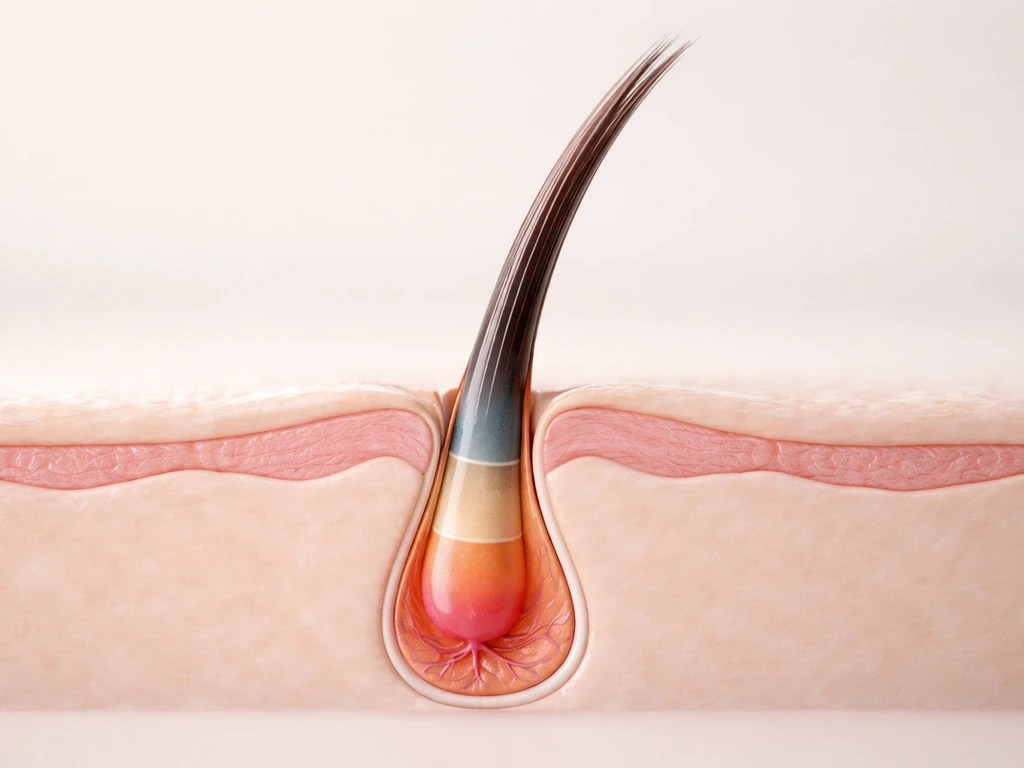
Every eyebrow hair goes through a three-phase cycle: anagen (active growth), catagen (transition), and telogen (resting and eventual shedding). In humans, hair follicles cycle through distinct phases including active growth (anagen), transition (catagen), and resting or shedding-related stages (telogen/exogen) [anagen, catagen, and telogen phases](https://pubmed. ncbi. nlm.
nih. gov/29797264/). That same type of question also comes up with honey, so it helps to separate what supports the hair cycle from what is mostly hype does honey help eyebrows grow. For eyebrows specifically, the anagen phase lasts only about 2 to 3 months, which is why brow hairs stay short compared to scalp hair.
After that, there is a brief catagen phase of 2 to 3 weeks, then a telogen phase of another 2 to 3 months before the follicle resets and grows a new hair.
What this means practically: if you over-plucked, shaved, or waxed your brows, you are looking at a full cycle of roughly 4 to 6 months before you can realistically judge whether regrowth has happened. Anything that disrupts the cycle, including inflammation around the follicle, nutritional deficiencies, or underlying conditions like alopecia areata, can push more follicles into telogen and slow visible growth. The American Academy of Dermatology notes that alopecia areata can cause [hair loss](https://www. aad.
org/public/diseases/hair-loss/causes/fall-out) anywhere on the body where hair grows, including eyebrows. This is why follicle health, not just topical application of oils, is the foundation of anything you try. If you want to focus on what helps eyebrows to grow more reliably, the biggest wins usually come from supporting follicle health and using options with better evidence.
The follicle itself sits in the dermis and is fed by blood vessels at its base. Growth-promoting ingredients work either by improving circulation to the follicle, reducing inflammation that disrupts the cycle, or directly signaling the follicle to stay in anagen longer. Keeping the skin around the follicle clean and free of buildup also matters, because clogged or inflamed follicle openings can prevent healthy cycling.
Does tea tree oil help eyebrows grow? Evidence and likely results
There is no direct clinical study showing that tea tree oil grows eyebrow hair. That does not mean it is completely useless, but the mechanism is indirect at best. Tea tree oil (from Melaleuca alternifolia) is well-established as an antimicrobial and anti-inflammatory agent. It can reduce the kind of low-grade inflammation and microbial buildup around follicles that might impair the growth cycle. Inflammation is a real disruptor of the hair cycle, so anything that genuinely reduces it could help the follicle stay in anagen.
The most plausible scenario where tea tree oil could help your brows: you have flaky, dandruff-like skin on your brows (seborrheic dermatitis is common there), and that inflammation and buildup is stressing follicles. Tea tree oil's antifungal properties can address that directly. Studies on scalp dandruff have shown 5% tea tree oil shampoo reduces Malassezia fungus and associated scaling, and something similar could benefit brow skin in the same condition.
For people with healthy brow skin who are just dealing with sparse growth from overplucking, genetics, or aging, tea tree oil is unlikely to make a noticeable difference. It does not contain the kinds of compounds that push follicles into anagen or prolong the growth phase the way rosemary oil or minoxidil do. If you are specifically looking for what to eat to grow eyebrows, focus on nutrients that support hair follicles and reduce inflammation rosemary oil or minoxidil. Think of it more as a follicle-environment cleanser than a growth stimulator.
Tea tree oil safety for eyebrows
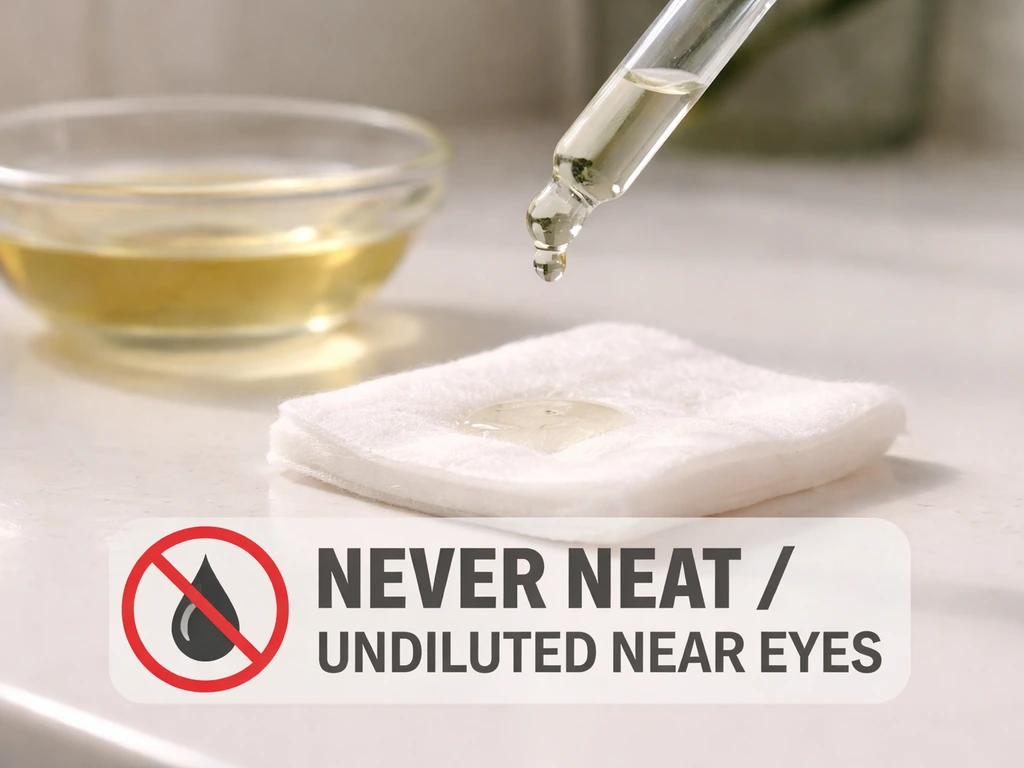
This is the section you really need to read before trying it. Tea tree oil is one of the more commonly irritating essential oils, and the skin around your eyes is some of the thinnest, most sensitive skin on your face. Irritant contact dermatitis in the periorbital area (around the eye and brow) is a real and documented risk from products applied near the eyes. If you get tea tree oil in your eyes, it will cause significant irritation and potentially damage the cornea.
Never apply undiluted (neat) tea tree oil to your brows or anywhere near your eyes. It must always be diluted in a carrier oil. A safe dilution for facial skin is 1%, which means 1 drop of tea tree oil per teaspoon (5 mL) of carrier oil. Some people go up to 2%, but for the brow area I would not exceed 1% given the proximity to your eyes.
Before applying it to your brow area, do a patch test on the inside of your forearm. Apply a small amount of your diluted mixture, cover it with a bandage, and wait 24 to 48 hours. Look for redness, itching, burning, or any raised skin. If you react on your arm, do not use it on your face. Even if your arm is fine, apply to your brow area carefully and stay well clear of the lash line. If you feel any burning, stinging, or see redness around the application site, wash it off immediately with mild soap and water and discontinue use.
- Always dilute to 1% or lower: 1 drop tea tree oil per teaspoon of carrier oil
- Do a 24 to 48 hour patch test on your inner arm before using on your face
- Apply only to the brow hair and skin, not the lash line or eyelid
- Avoid contact with eyes entirely; if it gets in your eyes, flush immediately with water
- Do not use on broken, sunburned, or actively irritated skin
- Stop immediately if you notice redness, burning, itching, or flaking
A practical routine: how to use tea tree oil for brow growth step by step
If your situation fits the use case (flaky brow skin, possible seborrheic dermatitis, or you want to use tea tree oil as part of a carrier-oil routine), here is how to do it properly.
- Mix your dilution: Add 1 drop of 100% pure tea tree oil to 1 teaspoon of a carrier oil like castor oil, jojoba oil, or sweet almond oil. Castor oil is a smart carrier choice here because it has its own reputation for conditioning brow hairs and may support the follicle environment.
- Cleanse your brow area: Use a gentle cleanser to remove makeup, sunscreen, and any product residue. Pat dry. You want the skin clean so the oil can contact the follicle opening.
- Do the patch test first: On your first use, apply a small amount to the inside of your forearm and wait 24 to 48 hours before proceeding to your brows.
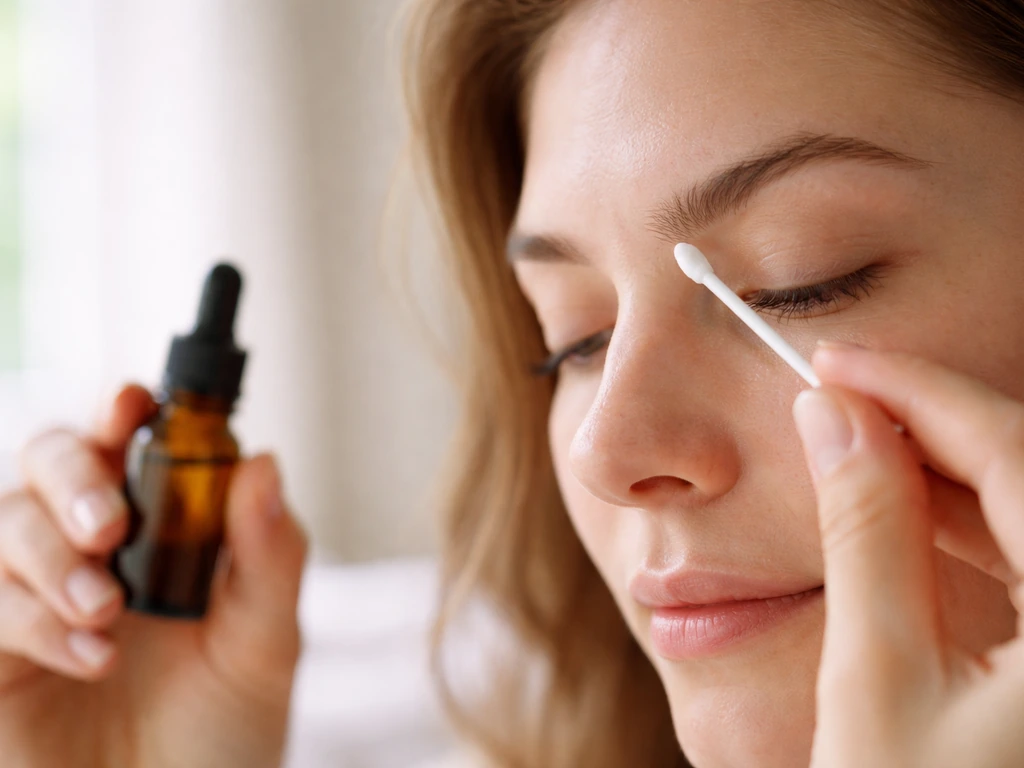
- Apply at night: Use a clean spoolie brush, cotton swab, or clean fingertip to apply a small amount of the diluted mixture to each brow. Work with the direction of hair growth. Less is more.
- Stay above the brow bone: Keep the application on the brow arch and tail, well away from the eyelid and lash line.
- Leave it overnight: There is no need to rinse it off. The carrier oil will absorb and condition the skin and hair overnight.
- Repeat 3 to 4 times per week: Daily application is not necessary and increases the chance of irritation. Every other day or a few times a week is enough.
- Reassess after 8 weeks: If your brow skin looks healthier and flaking has reduced, the routine is working for its intended purpose. For growth itself, allow a full hair cycle (4 to 6 months) before drawing conclusions.
Better bets: alternatives with stronger evidence
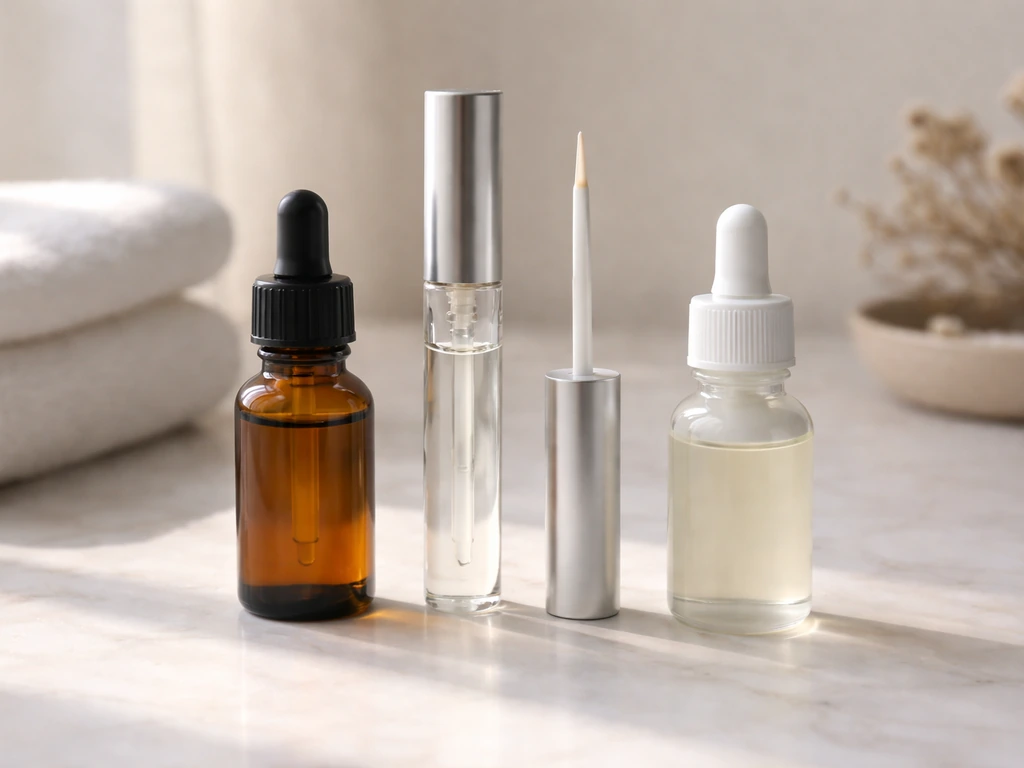
If your primary goal is eyebrow growth rather than treating flaky brow skin, these options have meaningfully stronger evidence and are worth considering either instead of or alongside tea tree oil. Many people also wonder, does collagen help eyebrows grow, but the evidence for eyebrow hair growth specifically is limited.
| Option | Evidence | Best for | How to use | Realistic timeline |
|---|---|---|---|---|
| Castor oil | Widely used, contains ricinoleic acid that may support follicle health; limited direct clinical trials but strong anecdotal record | General sparse brows, over-plucked brows, conditioning | Apply nightly with a spoolie, no dilution needed | 3 to 6 months |
| Rosemary oil | A 2015 trial showed rosemary oil comparable to 2% minoxidil for scalp hair growth; anti-inflammatory and circulation-boosting | Sparse brows, slow regrowth after damage | Dilute to 2 to 3% in carrier oil, apply nightly | 3 to 6 months |
| Minoxidil (2 to 5%) | The strongest OTC evidence; FDA-approved for scalp, used off-label for brows with documented results in alopecia cases | Persistent sparse brows, suspected alopecia, when natural remedies have failed | Small amount applied to brows once daily; see a dermatologist before starting | 4 to 6 months |
| Tea tree oil | Indirect evidence via antimicrobial and anti-inflammatory effects; no direct brow growth trials | Flaky brow skin, seborrheic dermatitis affecting brow area | Dilute to 1% in carrier oil, apply 3 to 4 times per week | 8 to 12 weeks to see skin improvement |
Rosemary oil is probably the most underrated option here. If you want a natural approach with actual follicle-stimulating evidence behind it, rosemary is a better starting point than tea tree for most people. Castor oil is worth adding as a carrier because it conditions the existing hairs, making brows look fuller even while you wait for new growth.
If you have tried natural approaches consistently for 4 to 6 months without results, that is when a conversation about minoxidil makes sense. Other natural ingredients like aloe vera and honey (which sometimes come up in this space) have their own potential benefits, particularly for soothing the skin and creating a supportive environment for follicles.
If you are wondering, does aloe vera help eyebrows grow, aloe vera is mainly known for soothing the skin rather than directly forcing new hair growth.
Realistic timelines: what to expect week by week
One of the most frustrating things about eyebrow regrowth is the timeline. Because the anagen phase for brows is only 2 to 3 months, you cannot expect to see meaningful new hair growth in two or three weeks regardless of what you apply. Massaging may help the skin feel better temporarily, but it is not proven to extend the eyebrow hair growth phase or make brows grow significantly. Here is an honest breakdown of what to look for.
- Weeks 1 to 4: No visible new growth yet. This is normal. What you might notice is improved skin texture if your brow area was flaky or irritated. If using tea tree oil specifically, any dandruff-like flaking around the brows should start to reduce.
- Weeks 4 to 8: Some people notice very fine, light vellus hairs starting to appear, especially along the tail or inner corners. Do not mistake these for full regrowth; they are early signs the follicle is cycling.
- Months 2 to 4: This is when real pigmented growth becomes visible. Hairs that were in telogen should now be transitioning back into anagen. You may notice patchy or uneven growth; that is completely normal because not all follicles cycle in sync.
- Months 4 to 6: The most meaningful assessment window. If a consistent routine has been followed, this is when you can realistically compare before and after and decide whether to continue or change your approach.
- Beyond 6 months: If you have seen zero change after 6 months of consistent application, the problem may be beyond what topical remedies can address.
One practical tip: take a close-up photo of your brows in the same lighting on day one, then again at the 8-week and 16-week marks. It is very hard to notice gradual change in the mirror every day, but photos side by side tell a clearer story. Track which side you started on and which products you used and when, so you can actually interpret the results.
When to stop and see a dermatologist
There are situations where no oil or home remedy is the right answer, and pushing forward without professional input can actually make things worse. Here is when to stop and get a proper assessment.
- You develop redness, burning, itching, or swelling in the brow area after applying tea tree oil: this is a sign of irritant or allergic contact dermatitis. Periocular dermatitis is a documented risk from products used near the eyes. Stop immediately, wash the area, and see a dermatologist if symptoms persist beyond 48 hours.
- You notice patchy brow hair loss that was not caused by plucking or waxing: unexplained patchy loss is one of the hallmark presentations of alopecia areata, which can affect eyebrows. This is an autoimmune condition that requires medical treatment, not oils.
- Your brows have been sparse for more than a year with no change despite consistent topical use: this timeline suggests a structural or systemic issue, possibly thyroid dysfunction, nutritional deficiency, or follicle damage from scarring.
- You have persistent flaking, crusting, or redness on the brow area that does not resolve: this may be seborrheic dermatitis or another form of dermatitis that needs a prescription-strength treatment rather than over-the-counter remedies.
- You are considering minoxidil: while available over the counter, it is worth a dermatologist visit first to confirm whether your brow loss pattern is likely to respond to it.
A dermatologist can do a proper scalp or brow dermoscopy, check for signs of alopecia areata, rule out thyroid or hormonal causes, and if appropriate prescribe treatments like topical bimatoprost, intralesional corticosteroid injections, or prescription-strength minoxidil that home remedies simply cannot replicate. Seeking professional input early when something seems off is always a smarter move than experimenting for another six months and finding out you were delaying real treatment.
FAQ
Can I use tea tree oil if my brows are sensitive or I have eczema?
Be extra cautious, because tea tree oil is more likely to trigger irritation than most carriers. If you have a history of eczema, contact dermatitis, or rosacea, consider skipping it or using it only as part of a very low dilution (around 1%) and patch-test for a full 48 hours before any brow-area application.
What dilution should I use, and is there a safer way to apply it near the eye area?
Use no higher than about 1% for brows (1 drop tea tree oil per teaspoon, 5 mL, carrier). Apply with a clean cotton swab or a tiny brush away from the lash line, and avoid getting it on the eyelid margin. A common mistake is treating it like a face toner and spreading it too close to the eye.
How often should I apply tea tree oil to my brows?
If you are using it, start conservatively (for example, a few times per week rather than daily) and stop if you notice burning, stinging, or redness. Since any benefit is likely indirect (reducing inflammation or flaking), there is no reason to escalate frequency quickly.
If I do not see results in a month, should I assume it is working or not working?
For brows, visible change usually takes longer than most people expect because the growth cycle includes a resting phase. As a practical rule, evaluate at about 8 to 16 weeks with the same lighting and routine, not after 2 to 4 weeks.
Will tea tree oil regrow brows if I over-plucked years ago?
Possibly, but not reliably. Long-term over-plucking can damage or permanently reduce active follicles. Tea tree oil would only be expected to help if an ongoing issue like inflammation, flaking, or a follicle-affecting condition is still present.
Can tea tree oil help with eyebrow dandruff or seborrheic dermatitis on the brows?
That is one of the more plausible reasons to try it. If you have flaking, greasy scale, or redness around the brow, tea tree oil’s antifungal and anti-inflammatory effects may reduce the problem skin, which can indirectly support healthier cycling.
What symptoms mean I should stop using tea tree oil right away?
Stop immediately if you get burning, increased tearing, eyelid swelling, worsening redness, itching that spreads beyond the application area, or any eye discomfort. Wash off with mild soap and water and discontinue use, because periorbital skin irritation can escalate quickly.
Is it safe to mix tea tree oil with castor oil or other oils?
Mixing with a carrier oil can make it safer, but the key is the final dilution strength. Also ensure the carrier oil is clean and you are not using additional irritants (like strong exfoliants) at the same time near the eye area.
Could tea tree oil interfere with other eyebrow treatments like minoxidil or bimatoprost?
It can, indirectly, if it causes irritation, because inflamed skin can worsen how treatments feel and look. If you are using minoxidil or other active eyebrow products, introduce tea tree oil cautiously (or avoid it) and separate applications by time while you assess for irritation.
What is the biggest reason tea tree oil does not seem to work for eyebrow growth?
The most common issue is expecting it to act like a follicle growth signal. For most people, it does not have evidence for directly extending the growth phase, so it may only help when the real limiter is inflammation, flaking, or a microbial overgrowth on the brow skin.
When should I see a dermatologist instead of continuing tea tree oil?
Seek evaluation sooner if you have patchy hair loss, sudden thinning, itching or burning that keeps recurring, scaling that will not improve, or signs that go beyond typical over-plucking. A dermatologist can check for alopecia areata, hormonal or thyroid-related causes, and offer targeted options like prescription therapies when appropriate.
Next Article
Does Collagen Help Eyebrows Grow? Evidence and How-To
Does collagen help eyebrows grow? Learn hair-cycle biology, evidence, timelines, safe use, and better regrowth options.