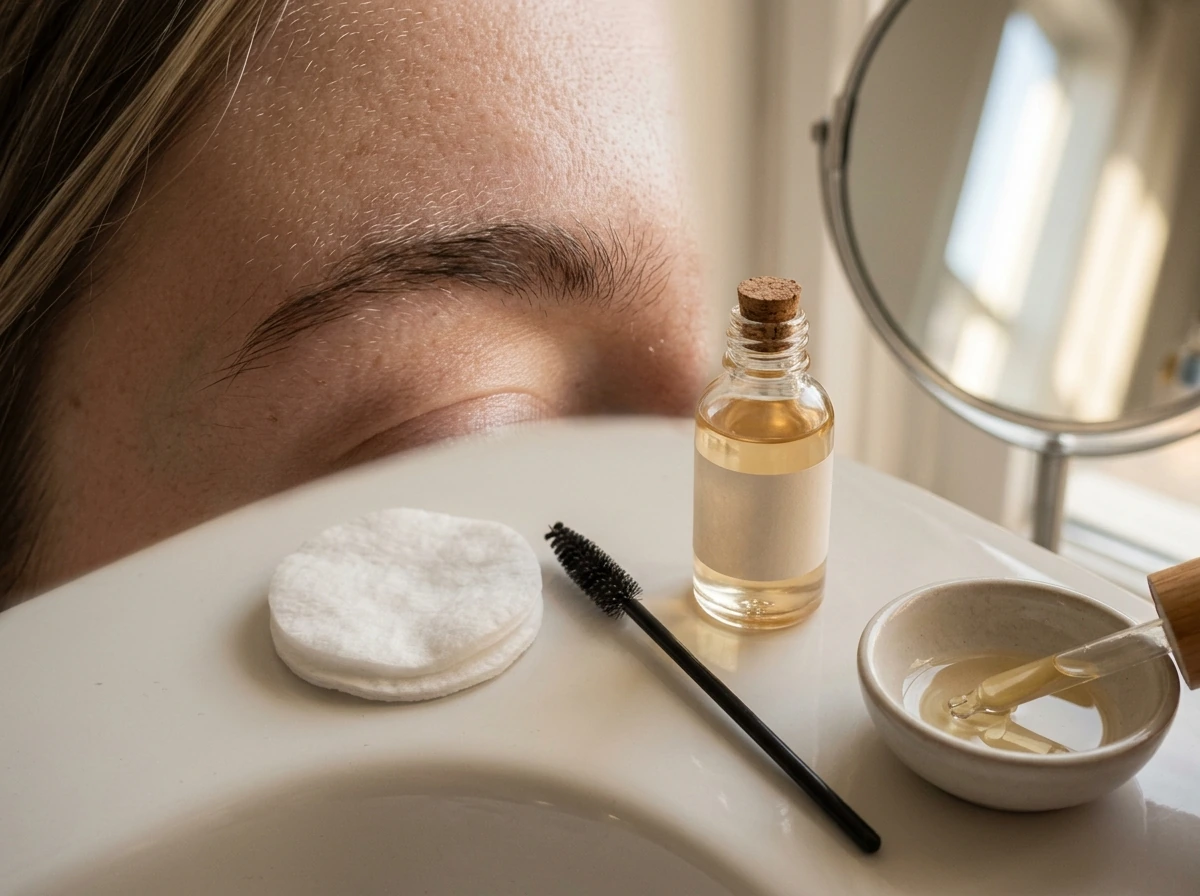
You can grow eyebrow hair back, and in most cases you can start making real progress today. The catch is that eyebrow regrowth is genuinely slow, and the things that actually work are pretty undramatic: stop the damage, feed the follicles, apply the right topicals consistently, and give it a full 3 to 4 months before drawing conclusions.
How to Grow Eyebrow Hair: Step-by-Step Regrowth Guide

James Whitmore
24 Mar 2026
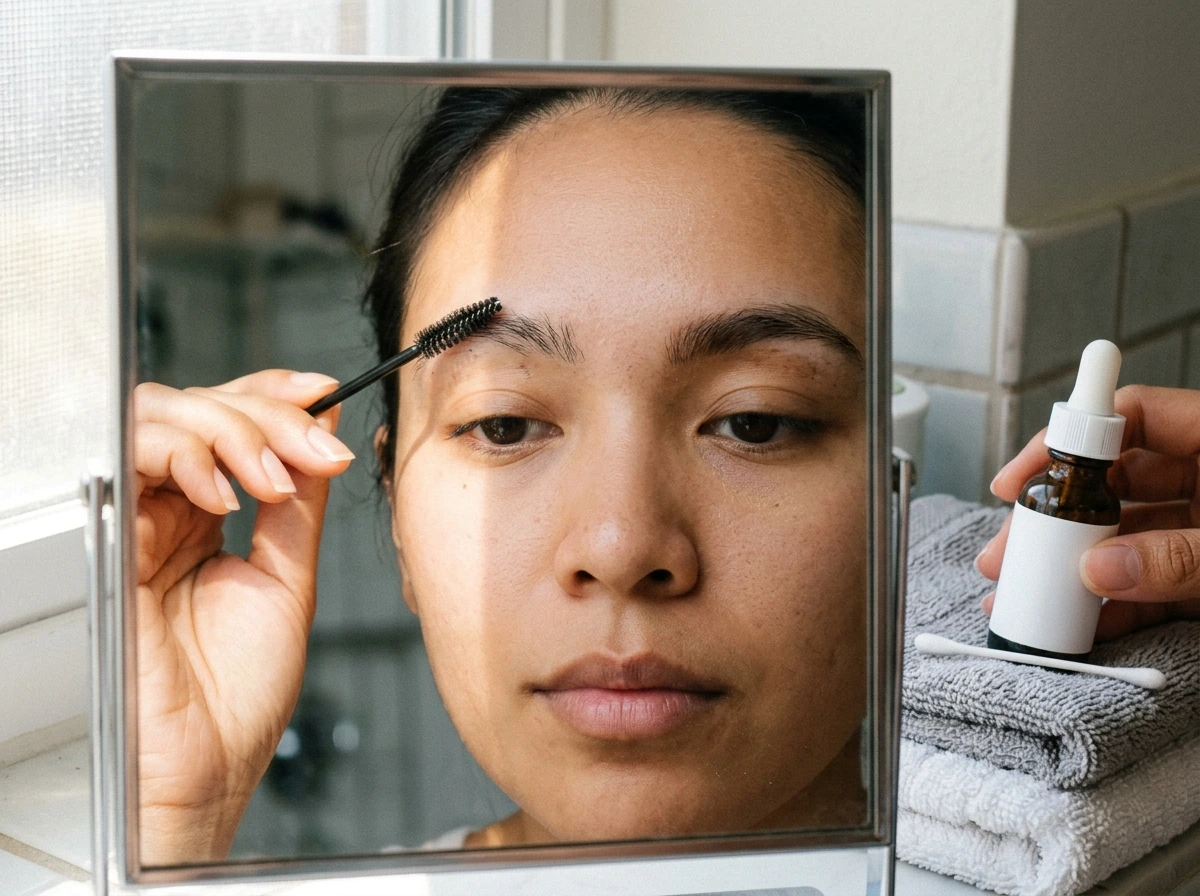
If you want the exact step-by-step, see how to grow eyebrows thicker at home as a related plan you can start today. That timeline is not a guess. It maps directly to how long the eyebrow hair growth cycle takes. If you're looking for a shortcut that delivers full brows in two weeks, that product does not exist.
But if you're willing to be patient and methodical, real improvement is absolutely possible.
Why eyebrow hair thins or stops growing
Eyebrow hairs go through the same three-phase growth cycle as all body hair: anagen (active growth), catagen (transition), and telogen (rest and shedding). The key difference between brow hair and scalp hair is that the anagen phase for eyebrows is much shorter, which is why eyebrow hairs stay short instead of growing to shoulder length. The full cycle runs roughly 3 to 4 months, and each follicle cycles independently, so you always have hairs at different stages at the same time.
Brows thin or stop growing for a handful of distinct reasons. The most common one is physical: repeated plucking, waxing, or threading over years can damage follicles enough that they no longer reliably produce new hairs. Other common causes include nutritional deficiencies (especially iron, biotin, and zinc), hormonal shifts like thyroid dysfunction or changes related to pregnancy and menopause, chronic stress, certain medications, and skin conditions like alopecia areata.
Cleveland Clinic Journal of Medicine notes that hypothyroidism can cause hair changes through telogen effluvium and can involve eyebrow and eyelash thinning as part of thyroid-related hair loss thyroid dysfunction. Age also plays a role.
Follicle density naturally decreases over time, and the outer third of the brow (closest to your temples) is often the first place this shows up.
Understanding your cause matters because the solution changes depending on it. Brows that are sparse due to years of overplucking respond well to topicals and patience. Brows that are thinning due to a thyroid imbalance or alopecia areata need a medical conversation first, not just castor oil. More on that in the troubleshooting section below.
How long regrowth actually takes
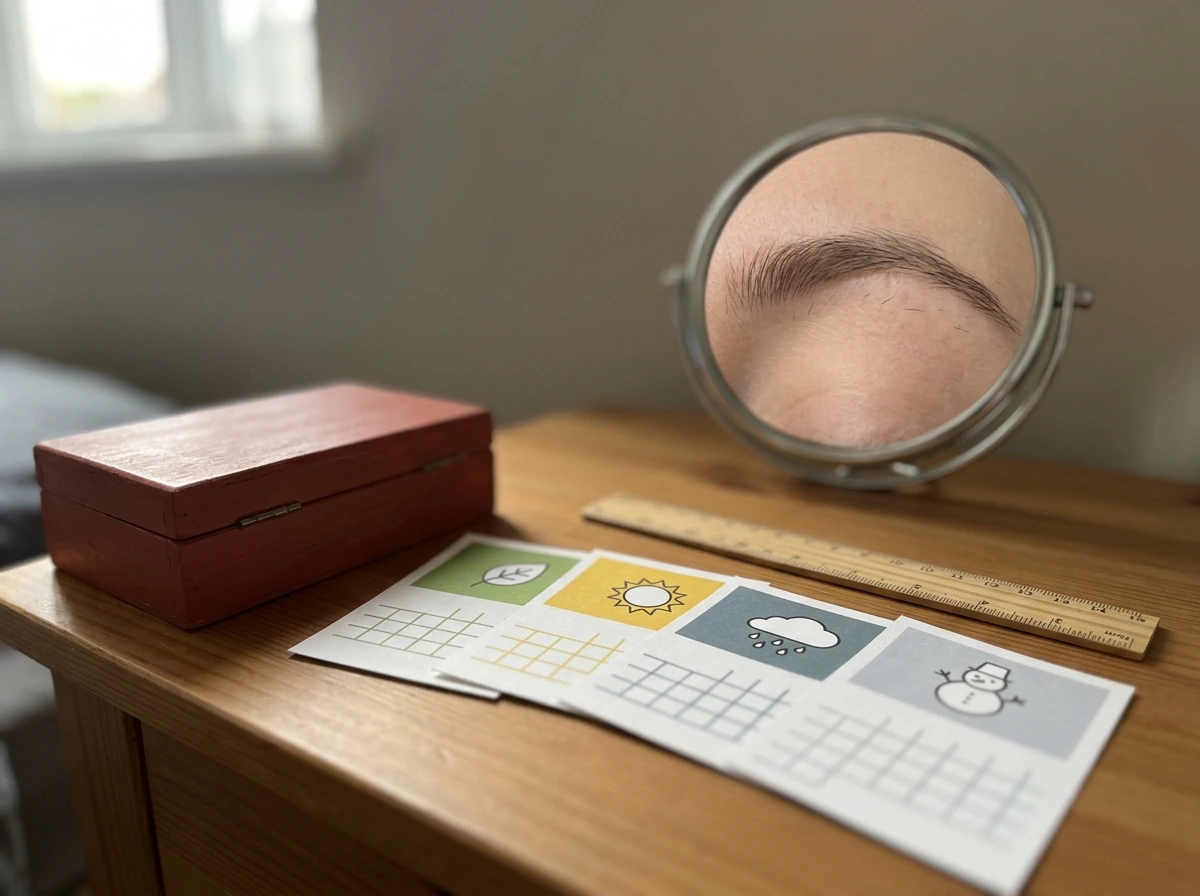
Here's the honest timeline: if you stop all waxing, plucking, and threading today, most people see meaningful regrowth within 4 months. A Cleveland Clinic dermatologist specifically points to the 3 to 4 month window as the timeframe tied to the eyebrow growth cycle, and Healthline-cited research found that most study participants returned to normal brow density within 4 months, though one case with lighter, sparser brows took closer to 6 months.
What to expect in each phase: in the first 4 to 6 weeks you'll notice short, fine hairs starting to come in, often patchy and uneven. Between weeks 6 and 12, growth becomes more visible but the hairs are still in their early anagen phase, so they look thin and wispy. By month 3 to 4 the hairs start to thicken and the overall shape begins to fill in. If you're using topicals like minoxidil or rosemary oil, you're looking at the same window. There is no topical that bypasses the hair cycle.
If your brows were damaged by years of overplucking rather than recent waxing, the timeline can stretch. Repeated trauma to follicles can shorten or stall the anagen phase, meaning some follicles produce shorter or thinner hairs even after they recover. In those cases, 6 months is a more realistic benchmark, and some follicles that have been repeatedly damaged may not produce the same thickness they once did. That's the honest version.
A starting-today routine to stop damage and help brows grow
Before any serum or oil matters, you need to stop doing the things that are blocking regrowth. This sounds obvious but people routinely keep tweezing 'just the strays' and wonder why their brows aren't filling in. Here's the practical routine to start right now.
Step 1: Put the tweezers down completely
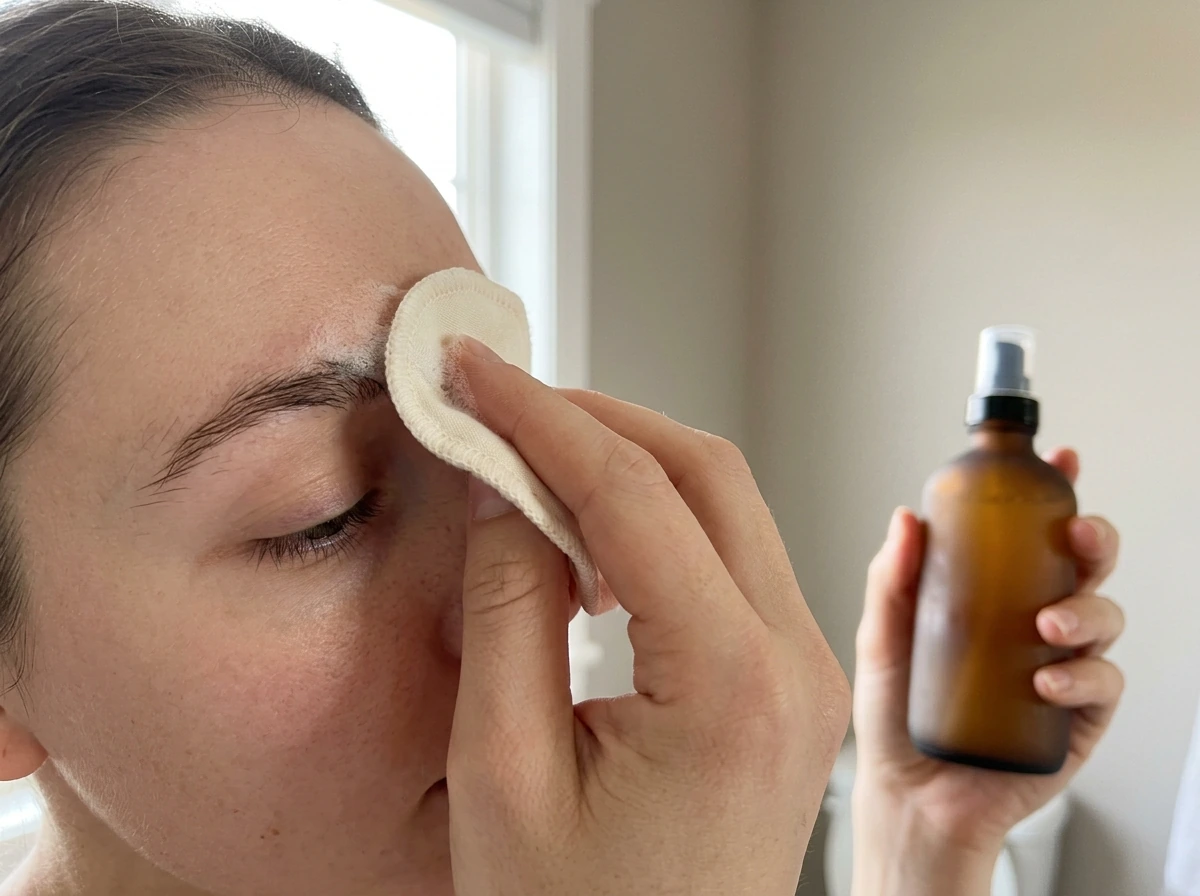
Commit to a full 3 to 4 month no-pluck period. I know it's frustrating to let the shape go, but every hair you pull out is a follicle you're resetting to day one. If stray hairs genuinely bother you, use a small grooming scissors to trim rather than pulling from the root. Cutting does not disturb the follicle.
Step 2: Be gentle with the skin around your brows
Aggressive exfoliation, rough cleansing, and picking at skin in the brow area can all disrupt follicles near the surface. Use a gentle, non-stripping cleanser on your face. If you use retinol or strong exfoliants in your skincare routine, apply them carefully around the brow area rather than directly over it, especially when you're also using a growth topical.
Step 3: Check your nutrition
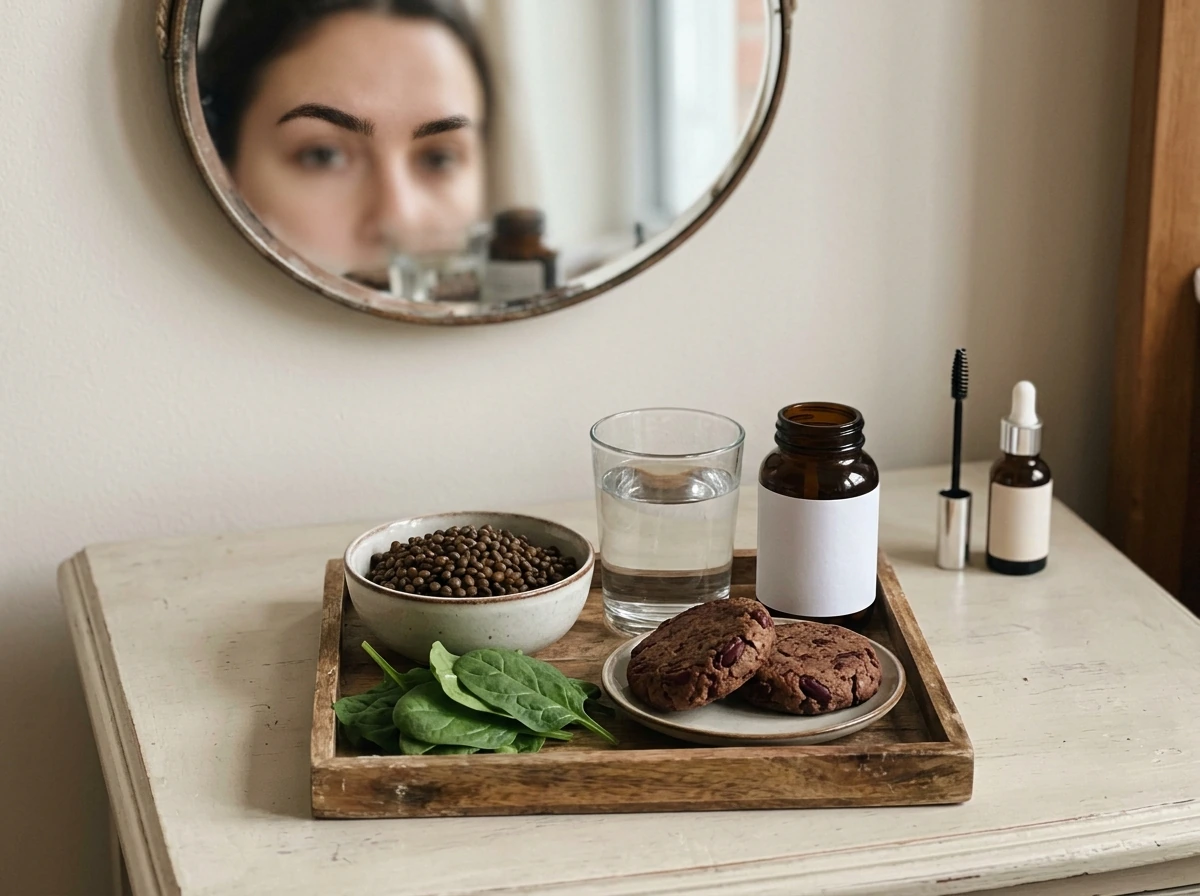
Hair follicles are metabolically active tissue and they need fuel. Iron deficiency is one of the most commonly overlooked contributors to hair thinning, including brow thinning, especially in women. Zinc, biotin, and protein are also important. If your diet has been restricted or inconsistent, getting a basic blood panel (ferritin, thyroid, zinc) is worth more than any serum. Supplements can help if you have a genuine deficiency, but if your levels are normal, extra biotin is unlikely to move the needle much.
Step 4: Add a targeted topical (morning or evening)
Once you've addressed the basics, pick one growth-supporting topical and apply it consistently. Options are covered in detail below, but the core principle is: one product, applied nightly (or twice daily for minoxidil), to clean skin, every day for at least 3 months. Inconsistent application is the number one reason topicals don't work.
Minoxidil for eyebrows: what it is and when to use it
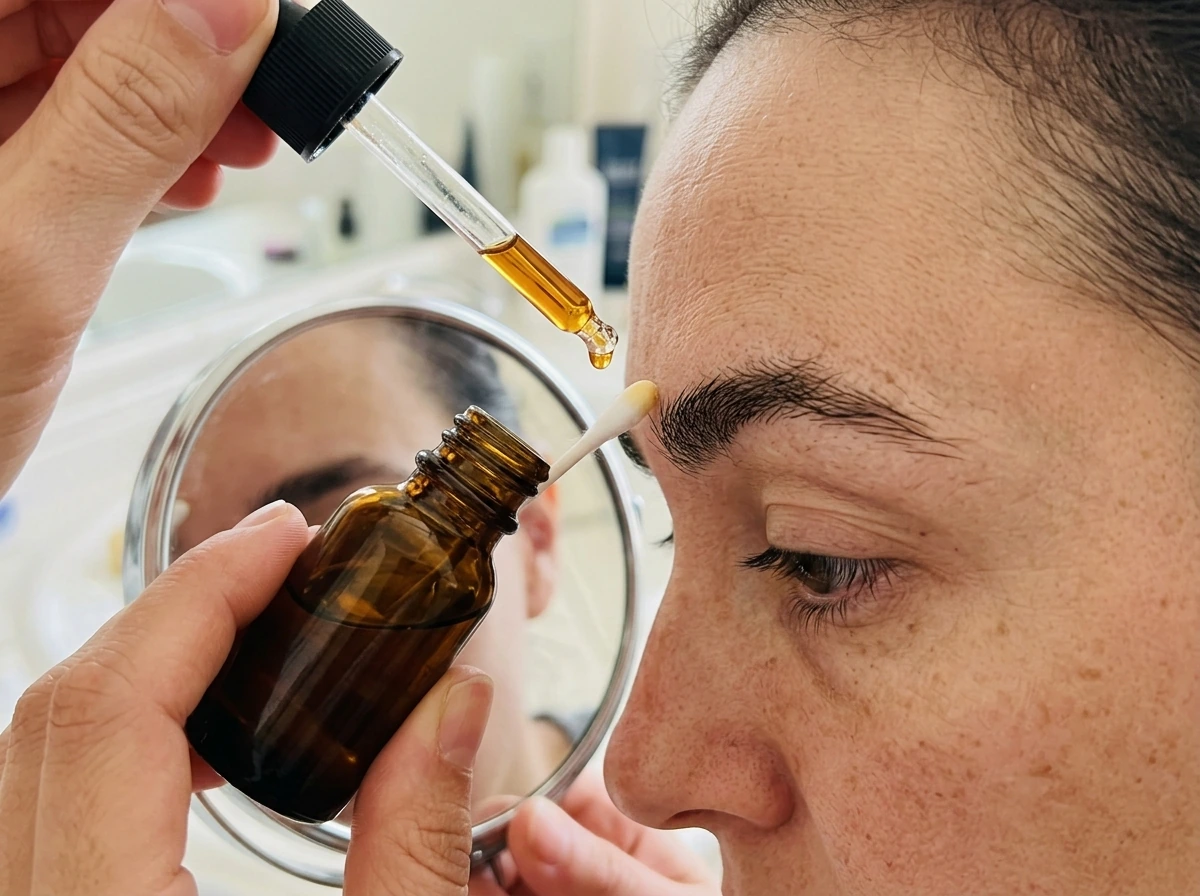
Minoxidil is the most evidence-backed topical option for hair growth currently available without a prescription. Originally developed for scalp hair loss, it works by prolonging the anagen (growth) phase of the hair cycle and increasing blood flow to follicles. It's FDA-approved for scalp use, and off-label use on eyebrows is increasingly common and supported by several small studies showing improved density and thickness.
For eyebrows, the typical approach is to use a 2% to 5% minoxidil solution (not foam, which is harder to apply precisely) and apply a small amount with a cotton swab or the dropper to the brow area once or twice daily. The 2% concentration is generally the better starting point for facial hair since the skin on the brow ridge can be more sensitive than the scalp, and lower concentrations still produce results while reducing the risk of irritation.
A few important practical notes. Minoxidil can cause skin irritation, especially in the early weeks. Avoid getting it in or around your eyes. If you use it twice daily, morning application should be fully dry before you apply makeup. Some people experience initial shedding in the first few weeks, which is normal and reflects follicles cycling into a new growth phase. You need to use it consistently for at least 3 to 4 months to see results, and if you stop, hair that grew as a result of minoxidil can revert. That's the real tradeoff with minoxidil versus home remedies.
Minoxidil is most appropriate for people with persistent sparse brows that haven't responded to natural methods over several months, or for people dealing with brow thinning related to age or long-term follicle damage. If your brows are just growing back after recent waxing, you probably don't need minoxidil. If you've been patiently waiting for 6 months with no improvement, it's worth considering. Pregnant or breastfeeding people should avoid it.
Home remedies that may actually help
There are two home remedy ingredients that have enough evidence or biological rationale to be worth trying: castor oil and rosemary oil. Everything else (coconut oil, olive oil, aloe vera, onion juice) is mostly anecdotal. That doesn't mean they're harmful, but if you have limited patience and want to direct effort where it's most likely to pay off, start with these two.
Castor oil
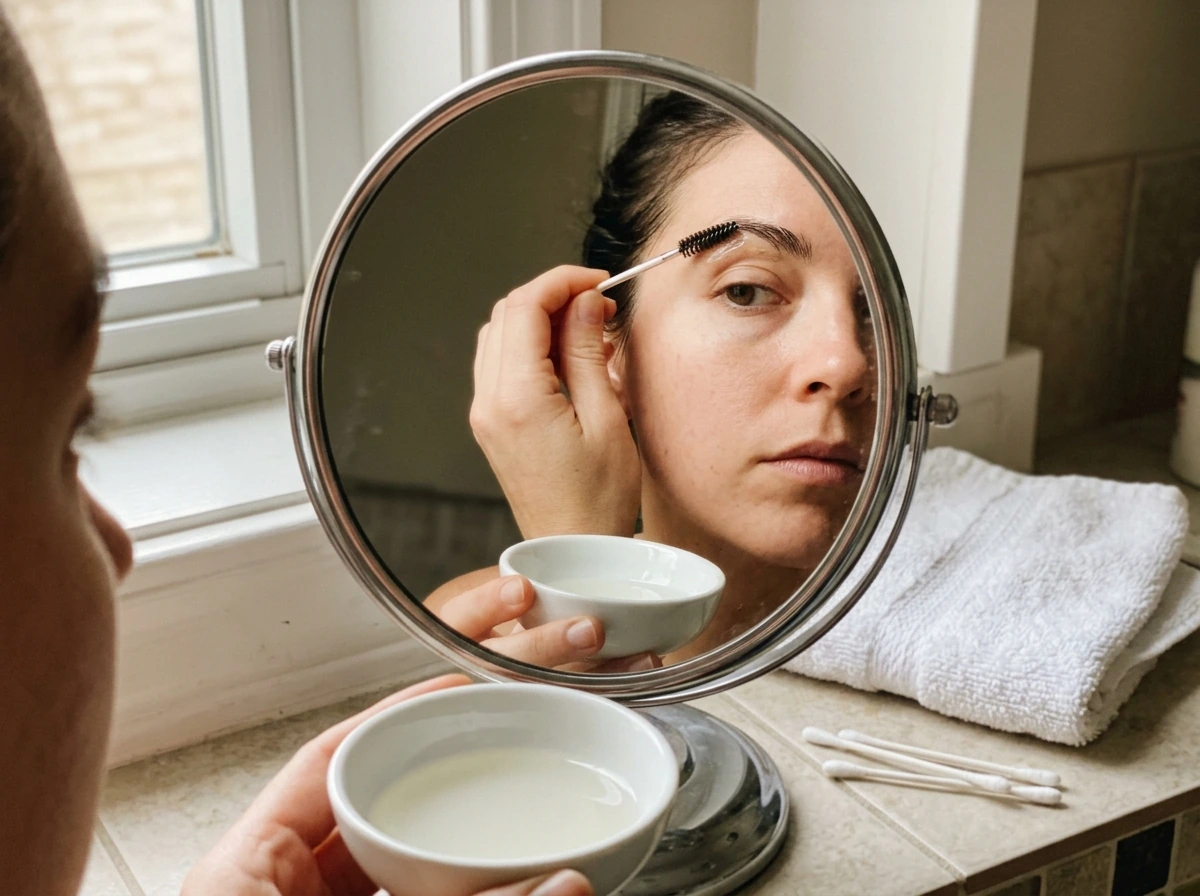
Castor oil is the most talked-about brow remedy, and while the evidence is mostly anecdotal rather than from controlled trials, there's a reasonable biological mechanism: it contains ricinoleic acid, which has anti-inflammatory properties and may help support a healthy follicle environment. It also acts as a humectant, keeping the skin around brow follicles moisturized, and some people notice it helps condition existing brow hairs so they look fuller and break less.
How to use it: apply a small amount (a drop or two) to clean brows using a clean spoolie or cotton swab every night before bed. Massage it gently into the skin, not just the hairs. Leave it on overnight and rinse in the morning. Do a patch test first on your inner wrist, especially if you have sensitive skin. Some people react to castor oil, and applying it near your eyes makes that reaction more uncomfortable. Give it 2 to 3 months of nightly use before assessing results. If you see irritation, redness, or breakouts in the brow area, stop.
Rosemary oil
Rosemary oil has better research behind it than castor oil, particularly for scalp hair. A 2015 study found that rosemary oil performed comparably to 2% minoxidil for hair regrowth over six months, with less scalp itching. Direct evidence for brow use is limited, but the mechanism (improving circulation and potentially inhibiting DHT at the follicle level) applies to facial hair follicles too.
How to use it: rosemary oil is potent and should always be diluted before applying to skin. Mix 2 to 3 drops of rosemary essential oil into a carrier oil, either castor oil or jojoba oil, before applying to brows. Apply nightly with a spoolie or cotton swab. Do not apply undiluted essential oil directly to skin near your eyes. As with castor oil, patch test first and allow 2 to 3 months before judging effectiveness.
| Option | Evidence Level | How to Apply | Timeline | Best For | Key Caution |
|---|---|---|---|---|---|
| Castor oil | Anecdotal, some biological rationale | 1-2 drops on spoolie, nightly on clean brows | 2-3 months | General conditioning, mild sparseness | Patch test; can cause irritation or breakouts |
| Rosemary oil (diluted) | Moderate (scalp data; limited brow-specific) | 2-3 drops in carrier oil, nightly | 2-3 months | Stimulating sluggish follicles | Must dilute; never apply neat near eyes |
| Minoxidil 2-5% solution | Strong (off-label but evidence-backed) | Cotton swab application once or twice daily | 3-4 months | Persistent sparse or thinning brows | Avoid eye contact; don't use if pregnant |
Growing hair between your eyebrows and filling patchy areas
When people search for how to grow hair between the eyebrows, they usually mean one of two things: either they want a fuller, more connected brow shape, or they're dealing with a genuinely patchy area, possibly from overplucking the arch or inner corner. Both are worth addressing specifically because the approach is slightly different.
For people who want to grow in the inner brow area to create a more connected shape: this is mostly a patience and grooming strategy. The inner corners of the brow often get over-tweezed in pursuit of a 'clean' look, and follicles in that area can take longer to recover if they've been plucked repeatedly. Apply your chosen topical (castor oil, rosemary oil, or minoxidil) directly to that area each night, and genuinely stop plucking it. What often looks like 'no hair growing there' is actually short new hairs being plucked as soon as they appear.
For patchy areas in the middle or outer brow: patches can result from trauma, alopecia areata, or follicle scarring. If the patch appeared suddenly and is well-defined with smooth skin, that's more likely alopecia areata than mechanical damage, and it warrants a dermatologist visit rather than a home remedy approach. If the patchiness is uneven and diffuse, related to overplucking or years of waxing, topicals applied directly and consistently to those spots can help. Use a clean spoolie to apply the oil or solution specifically to the sparse zones each night.
In the meantime, a good brow pencil or powder can help you fill patchy areas and maintain the illusion of fuller brows while you wait for regrowth. This isn't giving up. It's practical, and it takes the psychological pressure off so you're not checking the mirror every day for progress.
When your brows aren't responding: troubleshooting and when to see a doctor
If you've been consistent for 3 to 4 months and nothing is changing, don't just add more products. Stop and think about why. The most common reasons regrowth stalls are: an underlying nutritional deficiency that hasn't been addressed (especially iron or thyroid hormones), continued low-level mechanical damage (even occasional tweezing counts), product irritation that's actually inflaming the follicle area and preventing growth, or a medical condition that's actively driving hair loss.
According to clinical guidance, the pattern and onset of hair loss can help identify the cause. Abrupt, sudden brow thinning that started quickly is more likely related to a systemic trigger like a nutritional crash, illness, or major stress event (a type of telogen effluvium). Gradual, progressive thinning is more consistent with age-related changes, alopecia areata, or scarring alopecias. If you notice any skin changes in the brow area, like redness, scaling, or skin that looks shiny or scarred, those are signs of possible tissue damage or inflammation that need professional evaluation.
See a dermatologist if: your brows are thinning alongside scalp hair loss; you have a smooth, clearly defined bald patch in the brow; you're seeing skin changes or scarring; your brows haven't responded to 4 to 6 months of consistent care; or you have other symptoms that suggest a systemic issue (fatigue, weight changes, skin changes).
A dermatologist can prescribe stronger topicals, investigate underlying causes with bloodwork, or discuss options like bimatoprost (the active ingredient in some prescription lash and brow serums) if appropriate. A NIH/PMC review on eyebrow hypotrichosis discusses evaluation and management of the condition and references prior evidence for therapies including [bimatoprost](https://pmc. ncbi. nlm.
nih. gov/articles/PMC5826207/). If you are trying to figure out how to grow eyebrows thicker at home and still are not seeing changes after months of consistent care, ask your dermatologist about bimatoprost prescription options like the ones mentioned here.
Hormonal causes, like thyroid dysfunction, are particularly common in women over 40 experiencing outer brow thinning. If that description fits you and you haven't had your thyroid checked recently, that's the most useful thing you can do before spending another three months applying oil. Treating the root cause will do more than any topical.
Putting it all together: your realistic next steps
The honest summary: growing eyebrow hair takes 3 to 4 months minimum, and the foundation is stopping the damage before adding anything. If your brows are sparse from overplucking or waxing, stop all mechanical removal today, apply castor oil or diluted rosemary oil nightly, check your nutrition, and give it a full 3 months. If you're not seeing progress by month 4 or 5, add minoxidil 2% solution or see a dermatologist to rule out an underlying cause.
If your brows have been thinning gradually over years rather than from recent grooming, consider getting bloodwork done as your first step rather than your last. And if you're dealing with specific patchy areas or want to grow in a more connected brow shape, the same topicals apply, just targeted directly to those zones. how to grow back eyebrow. how can i grow thicker eyebrows.
how to grow eyebrows thicker at home
The people who get the best results are the ones who stop expecting a product to do all the work, stay consistent over several months, and actually address whatever was causing the thinning in the first place. That's not the exciting answer, but it's the one that works.
FAQ
How long do I really need to wait before I can tell whether my brow regrowth is working?
If you stop pulling and start a topical plan today, you can still get uneven coverage because each follicle is at a different point in its cycle. A practical way to track progress is to take standardized photos every 2 to 3 weeks (same lighting, same distance) and compare patch edges, not individual hairs. If nothing changes in the overall density by month 4 to 5, that is the point to reassess rather than switch products every few weeks.
Can I trim my eyebrows while I’m trying to grow them back?
Yes, you can trim without resetting the follicle, just avoid plucking. Use small grooming scissors to shorten hairs that are longer, or brush and trim only the visible length. Tweezing, waxing, and threading even occasionally can re-injure follicles, especially in the inner corner and outer third.
What should I do if my minoxidil or oils irritate my brow skin?
If irritation is the blocker, more product often makes it worse. Try using your growth topical every other night for 1 to 2 weeks, confirm it is applied to clean, dry skin, and keep it away from the lash line and directly into the eye area. If you get persistent redness, burning, or swelling, stop and switch to a gentler option like castor oil (or pause entirely) and consider a dermatologist if it does not settle quickly.
Is it okay to use makeup and brow products while growing eyebrow hair?
You can wear makeup, but it matters when you apply it. With minoxidil, make sure the morning or evening application has fully dried before eyeliner, brow gels, or brow pencil, and remove makeup gently at night (no aggressive rubbing). If your makeup remover is harsh or stings around the brow, it may be counteracting regrowth.
Should I apply growth products to the whole brow or only the sparse areas?
Yes, but the “effective” direction is different for each product. Minoxidil tends to be more about consistent application to the skin and hair-bearing area once or twice daily, while oils (castor or diluted rosemary) are mainly supportive conditioning. If you are trying to optimize results, apply to the sparse zones with a clean cotton swab or spoolie, do not just swipe over the densest parts, and keep dosing consistent every night.
If I start using minoxidil, what happens if I stop after I see improvement?
If you stop minoxidil, any new hairs it helped maintain can eventually shed and return toward baseline. Consider minoxidil only after you have stopped mechanical damage and given the plan time, usually at least 3 to 4 months. If you later decide to stop, tapering may be gentler on your skin, but you should expect density may decline over time.
How do I know whether my patchy brows are from overplucking versus something like alopecia areata?
For most people, “patchy” has different causes. A sudden, smooth, sharply bordered bald patch is more suspicious for alopecia areata and needs medical evaluation. Uneven patchiness over years or around areas you frequently overplucked is more likely mechanical trauma and may respond to topicals and strict no-pluck consistency.
What are the most common reasons eyebrow regrowth stalls even when I’m being consistent?
If you want a targeted next step when progress stalls, focus on the two biggest variables: ongoing mechanical damage and internal drivers. Make sure you have a true no-pluck period, avoid irritant skincare on the brow area, and consider labs if you have risk factors like heavy menstrual bleeding, restrictive diets, pregnancy or postpartum changes, symptoms of thyroid issues, or gradual thinning. Ask your clinician about ferritin, thyroid markers, zinc, and any other tests they deem appropriate.
Is rosemary oil safe to use directly on eyebrows?
Avoid undiluted rosemary essential oil near the eyes, and do not apply it straight to the skin. Dilute it in a carrier oil (like castor or jojoba), do a patch test first, and stop if you see irritation. Also remember that essential oils can trigger contact dermatitis, so “natural” does not mean “safe for everyone,” especially on facial skin.
What eyebrow regrowth options are safer during pregnancy or breastfeeding?
If you are pregnant or breastfeeding, skip minoxidil. For other options, stick to conservative, low-irritation routines (like gentle grooming and castor oil if it suits your skin) and discuss any active treatment with your clinician. If you have a sudden bald patch or other symptoms, seek medical advice rather than trying to self-treat.
Next Article
How to Make Eyebrow Hair Grow Back Faster Naturally
Step-by-step natural plan to regrow eyebrows faster, fix thinning, apply oils or minoxidil, and set realistic timelines