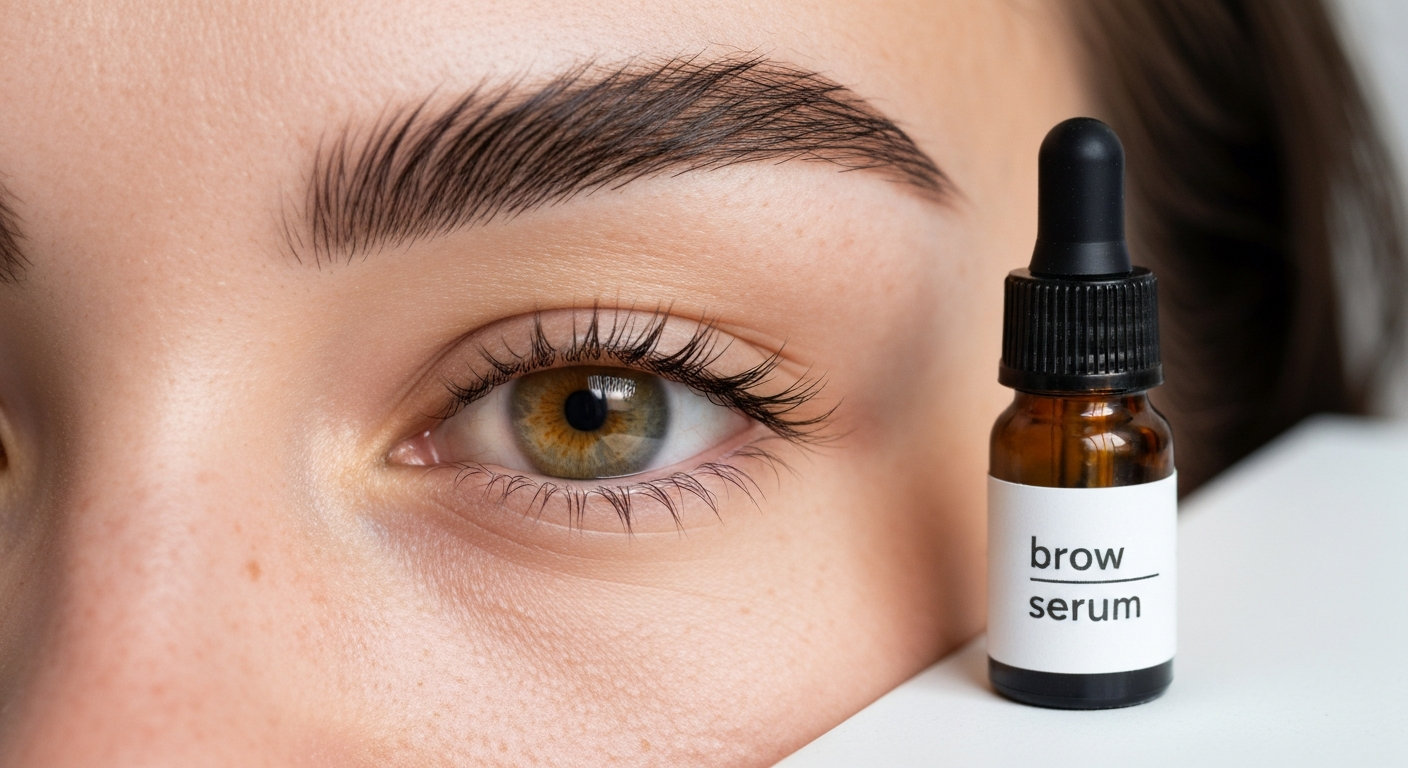
Shea butter will not directly grow new eyebrow hairs, but it can meaningfully improve the condition of the brows you already have. It moisturizes the skin underneath, reduces hair-shaft breakage, and creates a better environment around follicles, none of which is the same as stimulating a dormant follicle into producing a new hair. If you are asking 'does shea butter grow eyebrows' or 'does shea butter help eyebrows grow,' the honest answer is: it helps maintain and protect existing hairs, and for people losing brows to dryness, mechanical damage, or over-plucking, that protection can look a lot like growth over time.
Can Shea Butter Grow Eyebrows? Evidence, Uses & Tips
James Whitmore
6 Aug 2026
What shea butter actually does for your brows
Shea butter (Vitellaria paradoxa, also labeled Butyrospermum parkii) is about 85–90% triglycerides, with oleic acid typically making up 35–60% of the fatty-acid profile and stearic acid contributing 20–50%. The remaining 5–10% is an unsaponifiable fraction packed with tocopherols (vitamin E), carotenoids (provitamin A), triterpene alcohols, phytosterols, and phenolic compounds. That unsaponifiable fraction is where most of the skin-care action happens.
When you apply shea butter to the brow area, a few things happen at once. The fatty acids act as an occlusive layer that traps moisture in both the skin and the hair shaft, reducing transepidermal water loss. Shea butter's occlusive/emollient action matches this mechanism: it locks moisture into the hair shaft and cuticle and can reduce combing friction and breakage, which explains why brows may appear fuller without new follicle growth ScienceDirect's overview of hair-shaft mechanics and the role of lipids/emollients states that lipids form an occlusive film that reduces transepidermal water loss and lowers combing friction, protecting the hair shaft.. Linoleic acid specifically supports ceramide synthesis and helps maintain the epidermal barrier around the follicle opening. Vitamin E and the phenolic compounds deliver antioxidant and mild anti-inflammatory effects that can calm irritated skin, the kind of irritation that often follows waxing or threading. The net result is a smoother hair cuticle, less friction, less mechanical breakage, and softer skin at the brow line.
What shea butter cannot do is trigger anagen, the active growth phase of the hair cycle. It contains no compounds with clinically demonstrated follicle-stimulating activity. It does not increase blood flow to the dermal papilla the way minoxidil does, and it has no prostaglandin-analog activity like bimatoprost. Think of it as a very good conditioner for the hairs you have rather than a fertilizer for hairs you do not.
What the science actually says
There are no randomized controlled trials (RCTs) testing shea butter as a hair-growth agent in humans, not for scalp hair, and certainly not for eyebrows. The published clinical literature on eyebrow regrowth focuses almost entirely on minoxidil (a 2% minoxidil lotion demonstrated significantly greater eyebrow density versus placebo in a double-blind split-face RCT) and prostaglandin analogs like bimatoprost 0.03%, which has multiple clinical trials showing statistically significant increases in eyebrow density and thickness.
Broader reviews of plant-based hair oils tell a similar story. A 2022 systematic review in the Journal of Drugs in Dermatology found that coconut oil has decent evidence for reducing hair-shaft breakage but that popular oils, including castor oil, lack strong RCT support for generating new follicular growth. Shea butter sits in the same category: legitimate skin-conditioning and shaft-protective benefits, but no clinical evidence of follicle stimulation. Dermatologists generally support using emollient-rich products to protect fragile or sparse brows, but they are careful not to position any plant butter as a growth treatment.
One nuance worth flagging: refining matters. Studies comparing crude and refined shea butter consistently show that the refining process strips out significant amounts of tocopherols, phenolics, and carotenoids, the compounds most tied to antioxidant and anti-inflammatory activity. If you want the full profile, look for unrefined, cold-pressed shea butter.
Who is most likely to see real results
Shea butter tends to deliver the most visible improvement for people whose sparse or patchy brows are driven by physical and environmental damage rather than underlying follicle issues. The classic cases I have seen work well include:
- Over-plucked or over-waxed brows: repeated mechanical trauma dries the skin, inflames follicle openings, and causes individual hairs to break before they reach full length. Shea's occlusive and anti-inflammatory properties directly address all three problems.
- Dry or dehydrated skin types: when the brow skin is chronically dry, the sebaceous glands around follicles produce less natural oil, leaving hairs brittle. Regular shea application compensates for that deficit.
- Shaved brows growing back in: eyebrow hairs have an anagen phase of roughly 4–10 weeks, meaning a shaved brow can see meaningful regrowth within 6–12 weeks — shea butter helps the returning hairs emerge without breakage and keeps the skin comfortable during that period.
- Brows damaged by harsh cosmetics or frequent makeup removal: the skin at the brow line is thin and irritation-prone; shea's barrier repair properties reduce ongoing damage.
- People with eczema or psoriasis around the brow area: the anti-inflammatory unsaponifiable fraction can soothe the skin condition that is indirectly suppressing hair growth.
Who is unlikely to see growth benefits
If your brow thinning has a biological cause rather than a mechanical or environmental one, shea butter is not going to close that gap, and it is worth being upfront about that.
- Genetic or hereditary sparse brows: if your brows have always been thin and the follicles simply produce fewer or finer hairs, a conditioning oil cannot change follicle density.
- Androgenetic alopecia affecting the brow area: hormone-driven miniaturization of follicles requires treatments that address the androgenic pathway — minoxidil or, in some cases, prescription options.
- Autoimmune hair loss (alopecia areata): when the immune system attacks hair follicles, even the best emollient does nothing to address the root cause; this requires dermatologist-supervised treatment.
- Thyroid-related brow loss: particularly the classic loss of the outer third of the eyebrow associated with hypothyroidism — treating the thyroid condition is the only path to recovery here.
- Scarring from injury or burns: if the follicle itself has been destroyed, no topical product can regenerate it.
If you are uncertain which category you fall into, and your brows have been thinning steadily for more than three to four months without an obvious external cause, it is worth booking a visit with a dermatologist before spending money on home remedies.
How to apply shea butter to your brows
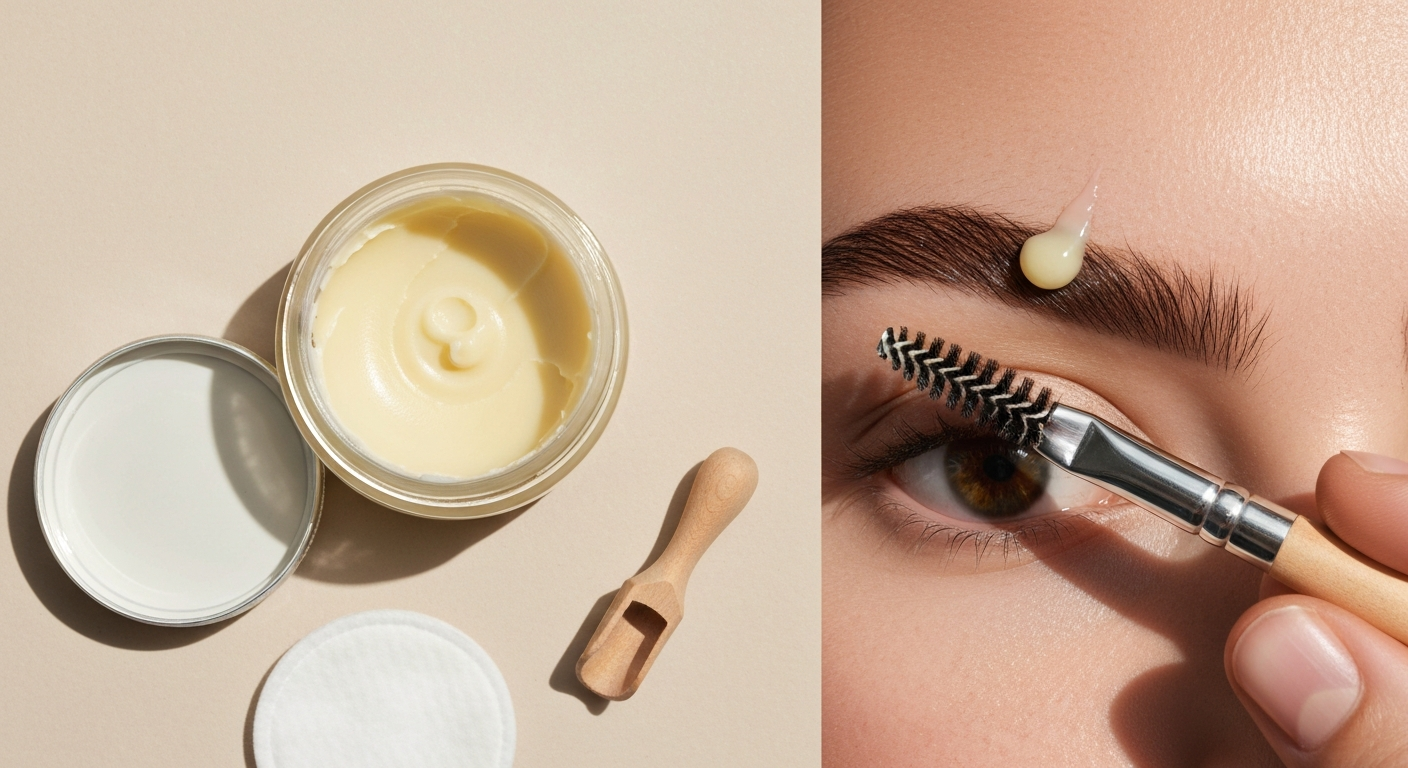
The brow area is small and has thin skin, so application technique matters more here than on the scalp or body. Less is genuinely more, a pea-sized amount of shea butter is enough for both brows.
- Cleanse first: remove all makeup from the brow area with a gentle micellar water or oil cleanser. Applying shea over cosmetic residue can clog follicle openings.
- Soften the shea butter: raw unrefined shea is solid at room temperature (melting point around 32–38°C). Scoop a pea-sized portion onto your fingertip and press it between your index finger and thumb for 15–20 seconds until it melts to a clear, spreadable oil. Do not microwave it — heat degrades the unsaponifiable fraction.
- Apply with a clean spoolie or fingertip: a clean spoolie brush lets you work the melted butter through individual hairs and into the skin without overloading any one area. Alternatively, use a cotton swab to dot it precisely along the brow line and blend with your fingertip.
- Massage gently: use light circular movements for 30–60 seconds on each brow. This helps the butter penetrate the skin and provides mild circulatory stimulation — a modest bonus.
- Leave it on overnight: shea is thick enough to stay put and work as a longer-contact treatment. Apply as the last step in your evening skincare routine.
- Wipe away any excess in the morning: a light damp cloth or cotton pad is all you need. No harsh cleansing required unless you notice residue.
- Frequency: every night for the first four weeks, then every other night for maintenance. If you have oily skin or small bumps (milia) appear, dial back to three times per week.
DIY blends that combine shea butter with proven oils
Shea butter works well as a base in simple blends because its solid texture allows you to suspend other oils in a stable, easy-to-apply balm. Here are three practical recipes. All recipes make enough for roughly 2–4 weeks of nightly use when stored in a small 10 mL tin or glass jar.
Blend 1: Shea and castor (moisture and coating)
Mix 1 teaspoon (approximately 4–5 g) of unrefined shea butter with 5 drops (approximately 0.25 mL) of cold-pressed castor oil. Warm the shea between your fingers, add the castor oil, and mix until uniform. Castor oil is high in ricinoleic acid and is one of the most popular brow-conditioning oils for good reason, it coats the shaft, reduces breakage, and gives brows a fuller, darker appearance. This blend is slightly heavier, so it works best for dry skin types or very coarse brow hairs.
Blend 2: Shea and jojoba (light, skin-balancing)
Mix 1 teaspoon of unrefined shea butter with 8 drops (approximately 0.4 mL) of cold-pressed jojoba oil. Jojoba is technically a wax ester that closely mimics the skin's natural sebum, making it an excellent choice for people with oily or combination skin who find pure shea butter too heavy. This lighter blend is also easier to apply precisely with a spoolie. Jojoba's iodine-rich composition supports the epidermal barrier without leaving the heavy occlusive film that some people find uncomfortable.
Blend 3: Shea, jojoba, and rosemary essential oil (conditioning with potential follicle support)
Mix 1 teaspoon of unrefined shea butter with 6 drops of jojoba oil and no more than 1 drop of rosemary essential oil (Rosmarinus officinalis). That gives you a dilution of approximately 0.5% for the essential oil, which is within the safe topical range for facial skin. Rosemary has more supporting evidence for hair growth than shea butter does, a 2015 RCT compared rosemary oil to 2% minoxidil for scalp hair and found comparable results after six months, though it has not been tested in an eyebrow-specific trial. If you’re specifically asking whether rosemary oil can make eyebrows grow, see does rosemary oil grow eyebrows for a focused review of the evidence. Keep essential oil concentration at or below 1% on facial skin; higher concentrations risk irritation and sensitization. Do not use rosemary essential oil undiluted. Always patch test this blend on the inner arm for 24 hours before applying to your face.
How to soften shea for blending
Raw unrefined shea is sold in firm chunks or a semi-solid block. To soften it for blending without heat damage, place your small jar or tin near (not on) a warm surface, a heating pad set to low, or just a sunny windowsill for 10–15 minutes. Alternatively, the double-boiler method works well: place a small container of shea over a bowl of hot (not boiling) water and stir until just melted. Add your other oils once the shea reaches a clear liquid state, mix well, then allow to cool and solidify. Avoid microwaving, which creates hot spots and degrades heat-sensitive tocopherols.
Choosing the right shea butter: what to look for
Because refining strips out the bioactive unsaponifiable compounds most valuable for skin health, unrefined, cold-pressed, or raw shea butter is the better choice for brow use. Here is a quick checklist for reading labels and product pages:
- Label says 'unrefined' or 'raw': refined or ultra-refined shea has lower tocopherol and phenolic content.
- Color is ivory to pale yellow, not bright white: white shea has almost always been bleached and processed.
- Scent is mild and nutty: unrefined shea has a distinct, slightly smoky or nutty odor. No scent usually means heavily refined.
- Single ingredient on the INCI list: Butyrospermum Parkii (Shea) Butter only. Avoid products with added fragrances, parabens, or mineral oil if you want a clean base for DIY blending.
- No solvent-extracted: look for cold-pressed or expeller-pressed on the label — hexane extraction can leave trace solvent residues.
- Certificate of Analysis (CoA) available from the brand: responsible brands will provide fatty-acid composition and contaminant testing on request.
Well-regarded options that consistently appear in ingredient-focused communities include Shea Moisture 100% Extra-Virgin Coconut Oil (plain shea version), Sky Organics Unrefined Shea Butter, Better Shea Butter Organic Unrefined, Leven Rose Raw Shea Butter, and Now Solutions Organic Shea Butter. All five are widely available, sold as single-ingredient unrefined products, and have accessible pricing for the amount you actually use on brows (a 200 g tub will last months given the tiny amounts needed per application).
How shea butter compares to other popular brow treatments
If you are weighing shea butter against other options you have seen mentioned, from castor oil and rosemary oil to minoxidil, it helps to see them side by side. Here is a realistic comparison based on the current evidence:
| Treatment | Evidence level | Mechanism | Best for | Limitations |
|---|---|---|---|---|
| Shea butter | Low (no RCTs for hair growth) | Barrier repair, shaft conditioning, anti-inflammatory | Damage-related breakage, dry skin, brow maintenance | No direct follicle stimulation; will not regrow hairs from dead follicles |
| Castor oil | Low (no strong RCTs for growth) | Shaft coating, ricinoleic acid may have mild anti-inflammatory effects | Brow coating, fuller appearance, mechanical breakage | No clinical trial evidence for follicle activation; viscous and can clog pores for some |
| Rosemary oil | Moderate (one scalp RCT vs minoxidil; no brow-specific RCT) | Possible follicle circulation/anti-DHT effects | Scalp hair loss with androgen involvement; worth trialing for brows | Requires careful dilution; irritation risk if undiluted; brow evidence is indirect |
| Jojoba oil | Low (no hair-growth RCTs) | Sebum-mimicking wax ester, skin barrier support | Sensitive or combination skin types; light base for blends | No follicle-stimulating evidence; primarily a conditioning agent |
| Multi-oil hair growth blends (e.g., Wild Growth Oil) | Very low (manufacturer claims, no independent RCTs) | Blend of carrier oils similar to shea/jojoba/castor | General hair conditioning | No controlled trials; ingredient transparency varies; not formulated for brow use |
| Topical minoxidil 2–5% | High (multiple RCTs including brow-specific trial) | Potassium channel opener, prolongs anagen, increases follicle size | Androgenetic alopecia, documented follicle miniaturization | Systemic absorption risk; must be used continuously; prescription in some countries |
| Bimatoprost 0.03% | High (multiple RCTs for brow/lash hypotrichosis) | Prostaglandin analog extends anagen phase | Clinically diagnosed brow hypotrichosis | Prescription only; potential pigmentation changes; not for general cosmetic use without medical supervision |
The practical takeaway from this comparison: shea butter and the carrier oils (castor, jojoba, rosemary) operate in a completely different league from minoxidil and bimatoprost in terms of clinical evidence. That does not make them useless, it means they serve a different purpose. Use natural oils and butters to protect and condition; use clinically proven treatments when you need to actually stimulate growth. Products marketed for brow thickening, such as Wild Growth Oil, are popular additions to conditioning routines but should be evaluated on the same evidence scale, helpful for coating and reducing breakage, not proven to stimulate dormant follicles. For many people, a combination approach (shea or castor oil for daily maintenance, rosemary oil as an active add-in, and a dermatologist conversation about minoxidil if things do not progress after three to four months) is the most rational path forward. For more detail, read our guide on whether hair growth oil can grow eyebrows can hair growth oil grow eyebrows. For more on selecting effective oils and evidence behind them, see best oil to grow eyebrows.
Realistic timelines: what to expect and when
Eyebrow hairs have a significantly shorter anagen (growth) phase than scalp hair, typically around 4–10 weeks versus the scalp's 2–7 years. That means a fully shaved brow can theoretically see most of its original hairs return within 6–12 weeks, assuming the follicles are healthy and intact. After waxing or threading, expect a similar timeline, though repeated trauma over years can extend that because follicles need recovery time.
If you start using shea butter or a shea-based blend after mechanical damage, here is a realistic timeline:
| Timeframe | What you can realistically expect |
|---|---|
| Week 1–2 | Skin irritation and dryness around the brow area reduces; existing hairs look slightly smoother and less brittle |
| Week 3–4 | Visibly less hair fallout when brushing; fine hairs that were breaking before may reach their full length |
| Week 6–8 | If follicles were intact, new hairs from the next anagen cycle should be emerging; brows may appear fuller at this stage |
| Month 3–4 | A meaningful assessment point — if brows look noticeably fuller, shea is doing its conditioning job and follicles were healthy; if not, a different cause is likely at play |
| Month 4+ | If little to no improvement, book a dermatologist appointment to rule out androgenetic alopecia, thyroid issues, or other systemic causes before continuing with natural remedies alone |
I want to be direct here: if you are three months in and your brows have not moved, keep applying shea butter but do not wait another three months before seeking professional input. Natural remedies are worth trying first, but they should not become a reason to delay getting actual answers.
Safety, allergy testing, and who should be careful
Shea butter has a strong general safety record, the Cosmetic Ingredient Review (CIR) considers it safe for topical use, and it is one of the most widely used cosmetic ingredients globally. That said, a small number of people do react to it. Shea comes from the same plant family (Sapotaceae) as some other botanical ingredients, and patch-test series have recorded low but nonzero rates of positive reactions. People with nut allergies, latex sensitivity, or known reactions to other botanical butters should be cautious.
Before applying any new product to the brow area, especially a DIY blend, do a 24-hour patch test on the inner arm or behind the ear. Apply a small amount, cover with a bandage, and check at 24 and 48 hours. If you see redness, swelling, itching, or small blisters, do not proceed with brow application.
- Acne-prone or oily skin around the brows: shea has a comedogenic rating of 0–2 (low to moderate), but heavy overnight application can cause milia (small white bumps) in some people. Start with every-other-night application and a very thin layer.
- Do not apply inside the eye or on the eyelid margin — this article is specifically about eyebrows, but the distinction matters especially if you are also thinking about lash treatment.
- Rosemary essential oil in DIY blends must stay at or below 1% dilution on facial skin. Do not use undiluted essential oils near the eye area.
- Pregnant women should consult their doctor before using essential-oil-containing blends, including the rosemary recipe above.
- If you develop persistent redness, scaling, or hair loss after starting any new topical product, stop use and see a dermatologist.
Next steps: building a plan that actually works
Here is how I would approach this practically, depending on your situation. If your brows are thinning from recent physical damage (waxing, over-plucking, shaving), start with a nightly application of unrefined shea butter, plain or in the castor-oil blend above, for 8–12 weeks. Be consistent and patient. The improvement during this phase is often more about protecting the hairs coming back in than stimulating new ones.
If your brows are generally sparse but not getting worse, shea butter as a maintenance and conditioning step makes sense indefinitely. Add rosemary oil to the blend once you are confident your skin tolerates plain shea, and reassess every couple of months. For anyone whose brow thinning is progressing or appears to have an underlying cause, a dermatologist visit should happen before month four, not after a year of trying oils. Medical options like minoxidil have real, documented evidence, and there is no benefit in delaying them if natural approaches are not working.
Shea butter is not a magic regrowth solution, but in the right situation it is genuinely useful, safe, inexpensive, and easy to combine with more active treatments. Use it for what it actually does, condition, protect, and reduce breakage, and you will get honest results from it.
FAQ
Title and meta description (search-optimized)
Title: Can Shea Butter Grow Eyebrows? Evidence-Based Guide to Brow Recovery Meta description (≤160 chars): Can shea butter help eyebrows grow? Learn what science says, safe application steps, DIY mixes, product picks, timelines, and when to see a dermatologist.
Quick answer: Can shea butter grow eyebrows (does shea butter help eyebrows grow)?
Short answer: No strong clinical evidence shows shea butter directly stimulates new eyebrow‑follicle growth. It can improve skin and hair shaft condition—reducing breakage and improving the appearance of fuller brows—but it’s not a proven hair‑growth agent like topical minoxidil or prostaglandin analogs (bimatoprost). (See evidence: MDPI review; PubMed minoxidil study.)
Why people think shea butter might help brows — what in shea butter could support eyebrow health?
Shea butter composition and plausible benefits: - Main components: triglyceride fats (high in oleic and stearic acids) plus an unsaponifiable fraction (tocopherols/vitamin E, carotenoids/provitamin A, triterpenes, phytosterols). [Sources: compositional studies, MDPI, PMC] - Occlusive and emollient action: forms a protective layer that locks in moisture, reduces transepidermal water loss and smooths the hair cuticle—this reduces breakage and makes hairs look healthier and thicker. - Anti‑inflammatory and antioxidant constituents (unsaponifiables) may support scalp/skin barrier health around follicles—good skin can help existing hairs survive. Important limit: these are barrier/conditioning effects and do not equal direct stimulation of follicle anagen (growth) or creation of new follicles. (See mechanistic dermatology reviews.)
What does the evidence say? (studies and expert context)
Evidence summary: - No randomized controlled trials show pure shea butter produces new eyebrow growth in humans. Shea is documented as a cosmetic/conditioning ingredient but not a follicle‑stimulating drug. (MDPI review; searches show no RCTs.) - Clinical RCTs for eyebrow regrowth focus on pharmacologic agents (minoxidil, bimatoprost) and show measurable increases in density/diameter. (PubMed minoxidil study; bimatoprost reviews.) - Plant/seed oils commonly used in hair care (coconut, castor, jojoba, argan) have varying evidence—most show benefits for hair shaft protection, not reliably for new growth. (Journal of Drugs in Dermatology review.) Bottom line: Shea butter can help improve existing brow hair condition and skin health but is not a proven treatment to trigger new follicle growth or reliably speed regrowth after shaving/waxing.
How shea butter might help eyebrow appearance (mechanism in plain language)
Practical mechanisms: - Moisturizes skin and coats hairs so hairs break less and look fuller. - Helps restore the skin barrier around follicles, reducing irritation that can cause hair loss. - Antioxidants and anti‑inflammatory nutrients may reduce local inflammation that can damage hairs. These actions improve appearance and hair retention, not follicle activation. (Dermatology and lipid literature.)
Step‑by‑step application guide for using shea butter on brows
How to use shea butter safely and effectively: 1) Choose product (see selection criteria below). 2) Patch test: apply a pea‑size amount behind the ear or inner forearm for 48 hours—watch for redness/itching. 3) Cleanse brows: remove makeup/oil with gentle cleanser. 4) Warm a small amount (rice‑grain to pea size) between fingertips until soft/liquid. 5) Apply: gently stroke through brows following hair direction; focus on hair shafts and the skin beneath. 6) Frequency: once daily at night or every other night. If skin tolerates, morning use is optional but can feel heavy. 7) Combine with massage: 1–2 minutes of gentle circular massage can help product distribution and local circulation (no vigorous rubbing). 8) Monitor: expect cosmetic improvement (smoother shafts, less frizz) within 2–6 weeks; any irritation—stop and patch test alternatives. Notes: Do not apply too much (can clog pores); avoid getting into eyes.
Next Article
Can Hair Growth Oil Grow Eyebrows? Evidence-Based Guide
Do hair or beard oils grow eyebrows? Evidence-based verdict, safe ingredient guide, realistic timelines.