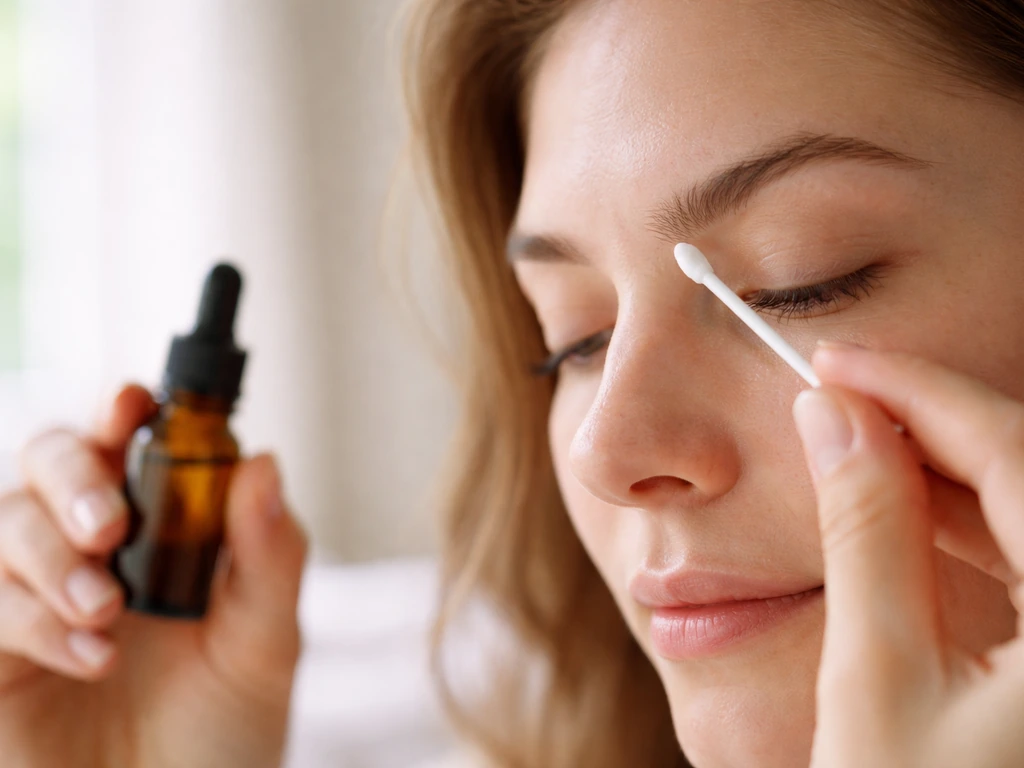
Massaging your eyebrows can modestly support hair growth, but it will not regrow brows on its own. The honest answer is that regular massage improves local blood circulation and may stimulate follicle-level mechanical signaling, but there are no randomized controlled trials specifically proving eyebrow massage increases hair count or density. What the science does support is that massage works best as an adjunct: pair it with a proven topical and some patience, and you have a genuinely useful daily habit. Expect a realistic timeline of 3 to 4 months before you see meaningful change, not 3 weeks.
Does Massaging Your Eyebrows Make Them Grow? Science, Evidence-Based Guide
James Whitmore
15 Jul 2026
How eyebrow hair actually grows
Every eyebrow hair follows a cycle: anagen (active growth), catagen (transition), and telogen (rest/shedding). The key difference between eyebrow follicles and scalp follicles is that the anagen phase for eyebrows is much shorter, typically 4 to 12 weeks compared to 2 to 6 years on your scalp. That is why eyebrow hairs never grow past a certain length on their own, and it is also why the window of time a follicle is actively responding to stimulatory therapies is shorter. The proportion of eyebrow hairs in telogen at any given moment is also higher, which means a larger share of your follicles are simply resting and not actively producing a shaft.
Growth rate is governed by several factors: genetics sets the baseline density and arch shape you were born with; hormonal changes (particularly thyroid function, estrogen, and androgens) can accelerate or halt growth; age naturally reduces follicle activity; and local skin health, including circulation and inflammation, plays a supporting role. All of these factors determine the ceiling for what any home remedy or massage routine can realistically achieve.
Why brows go sparse in the first place
Understanding why your brows are thin matters because the cause determines what will actually help. Over-plucking and waxing are the most common culprits for people in their 20s and 30s. Repeated trauma to the follicle over years can cause scarring at the follicle base, which means some follicles stop producing hairs entirely. If you have been aggressively plucking the same hairs for a decade, some of that thinning may be permanent, and no massage routine will reverse follicle scarring.
Aging is the second most common cause. After your mid-30s, hair follicles across the body gradually miniaturize, and the outer third of the eyebrow (closest to the temples) is often the first to thin. This is partly hormonal and partly a natural reduction in follicle cycling activity. Medical causes are less common but worth knowing: hypothyroidism, alopecia areata, frontal fibrosing alopecia, nutritional deficiencies (iron, biotin, zinc), and certain medications (including retinoids and chemotherapy agents) can all cause eyebrow hair loss. If your brows are thinning rapidly, symmetrically across the outer third, or accompanied by other symptoms like fatigue or skin changes, see a dermatologist before assuming a DIY fix will work.
What research actually says about massage and hair growth
The mechanistic case for massage is genuinely plausible, even if the human clinical evidence is thinner than you might hope. A 24-week controlled scalp massage study in human volunteers found that standardized massage increased hair shaft thickness in the treated area. Importantly, hair count did not significantly increase compared to control, but the shaft-thickness finding is meaningful because it points to a real biological effect: mechanical stretching forces on dermal papilla cells appear to trigger mechanotransduction signaling. In vitro data from the same research group showed changes in cell morphology and gene expression consistent with follicle stimulation.
Broader mechanobiology reviews support this: mechanical stimulation can activate Wnt/beta-catenin pathways, upregulate IGF-1, HGF, and VEGF signaling, all of which are involved in follicle cycling. Microneedling, which is a more aggressive form of mechanical stimulation, has multiple clinical trials behind it for scalp alopecia, and it activates some of the same pathways. Manual massage is gentler and less studied, but it is operating on the same general principle. Separate research on scalp blood flow shows that massage does measurably increase local perfusion, though increased blood flow alone has not been consistently tied to hair-count gains in high-quality trials.
The honest summary: no randomized controlled trials have specifically tested manual eyebrow massage for eyebrow regrowth. Clinical reviews of eyebrow alopecia describe medical and surgical options without listing massage as an established therapy. The mechanotransduction rationale is real and worth acting on, but massage marketing has outpaced the human data. Treat it as a low-risk, zero-cost adjunct that is worth doing consistently, not as a standalone regrowth solution.
How to massage your eyebrows: a practical routine
The goal of an eyebrow massage is gentle, consistent mechanical stimulation of the skin and underlying tissue directly above and around the follicle. You are not trying to scrub the skin or apply deep-tissue pressure. The technique is closer to a deliberate, mindful stroke than a vigorous rub.
Step-by-step technique
- Cleanse your face first so you are not massaging debris or makeup residue into the follicles.
- Apply a small amount of carrier oil (castor oil, jojoba, or rosemary oil diluted in a carrier) to your fingertips. A rice-grain amount per brow is plenty.
- Using the pad of your index finger or middle finger, start at the inner corner of the brow (closest to the nose) and apply light to moderate pressure in small circular motions, about 1 cm in diameter.
- Work outward along the brow line toward the tail end, spending about 5 to 10 seconds on each small section.
- After one pass, switch to short upward strokes from below the brow arch to simulate the direction of hair growth and encourage blood flow toward the follicles.
- Finish with gentle pinching along the brow bone: use your thumb and index finger to lightly pinch and release the skin along the entire brow, which adds a different type of mechanical stimulus.
- Total duration: 2 to 3 minutes per brow, or about 5 minutes total. Do not exceed this; more is not better and over-manipulation can irritate the skin.
Pressure, direction, and tools
Use light to moderate pressure, firm enough to feel the tissue move slightly under your finger but not so hard that you are pulling the skin. Direction matters: move along the natural growth direction (outward and slightly upward) to avoid disrupting hairs in their follicles. Avoid aggressive pulling or counter-direction strokes. As for tools, your fingertips are genuinely the best option for the eyebrow area because you can feel what you are doing and modulate pressure instantly. Small silicone facial massage tools can also work, but avoid anything with sharp teeth or bristles near the orbital area. Spoolie brushes (discussed more below) serve a different but complementary purpose.
Frequency and realistic expectations
Once daily is the right target, ideally at night before bed after cleansing. This fits naturally with applying a topical serum or oil. Consistency over weeks matters more than intensity in any single session. Give the routine at least 8 to 12 weeks before evaluating results, keeping in mind that eyebrow anagen cycles are 4 to 12 weeks long, so you need at least one or two full cycles to see if follicles are responding. If you have not noticed any improvement in density or thickness after 3 to 4 months, massage alone is not going to be your answer, and it is time to add a stronger topical or see a clinician.
Combining massage with topicals: layering and timing
Massage creates a mild temporary increase in local blood flow and skin permeability, which means applying a topical immediately after massaging is a logical sequence. The mechanical stimulation may modestly enhance absorption of whatever you apply next, though this has not been formally tested for eyebrow products specifically. The practical protocol is: massage first, apply topical second, let it absorb before going to bed.
If you are using minoxidil, apply it after massaging and allow it to dry fully before touching the area again. If you are using an essential oil like rosemary diluted in jojoba, you can use it as the massage medium itself. Do not layer multiple actives at the same time, for example minoxidil and a heavily occlusive oil simultaneously, as occlusion can increase systemic absorption of minoxidil and raise the risk of side effects. Keep your routine simple: one active at a time, applied after massage, in the evening.
One important safety note for periocular use: the eyebrow area sits very close to the eyes. Whatever you apply during your massage routine must be chosen carefully. Avoid getting any product directly into the eye. If you are using minoxidil near the brows, use a targeted applicator (a cotton swab or the smallest dropper tip possible) rather than spreading it broadly with your fingertips post-massage. Topical minoxidil product labeling lists local adverse effects (application-site irritation, dermatitis, unwanted facial hypertrichosis) and notes rare ocular events reported in case reports, so periocular use should be undertaken cautiously and preferably under clinician supervision (DailyMed: MENS ROGAINE MINOXIDIL - Product Label, highlights/adverse effects) DailyMed: MENS ROGAINE MINOXIDIL - Product Label (highlights/adverse effects). Bimatoprost (a prescription prostaglandin analog) carries labeled warnings about periocular pigmentation changes, eyelid changes, and ocular irritation, and should only be used under a dermatologist or ophthalmologist's supervision.
Topicals and home remedies: what the evidence says
Here is a realistic breakdown of the options most people ask about. Evidence levels range from randomized controlled trial data to preclinical or anecdotal only. This is not meant to discourage you from trying low-risk options, but it should calibrate your expectations. If you’re curious whether honey helps eyebrows grow, see does honey help eyebrows grow. If you’re wondering does tea tree oil help eyebrows grow, there’s no strong clinical evidence it promotes regrowth, diluted tea tree oil may reduce local inflammation or treat folliculitis, but it should be used cautiously near the eyes and is unlikely to drive meaningful eyebrow regrowth on its own.
| Treatment | Evidence Level | Mechanism | Precautions |
|---|---|---|---|
| Minoxidil 2% topical | Strongest: double-blind RCT for eyebrow hypotrichosis | Prolongs anagen phase, increases follicle size | Off-label for brows; avoid getting in eyes; can cause local irritation or unwanted facial hair; use under clinician guidance |
| Bimatoprost (Rx) | Strong: RCTs for eyebrow and eyelash hypotrichosis | Prostaglandin analog extends anagen phase | Prescription only; risks include periocular pigmentation, eyelid changes, ocular irritation; clinician supervision required |
| Rosemary oil | Moderate: one RCT for scalp AGA (comparable to 2% minoxidil over months); no eyebrow-specific RCTs | May inhibit DHT locally, improve circulation | Must be diluted in carrier oil (1–2%); patch-test first; keep away from eyes |
| Castor oil | Weak: no published human RCTs for eyebrow growth; anecdotal only | Possible emollient and anti-inflammatory effect; ricinoleic acid may have minor follicle-conditioning properties | Generally safe; may cause contact dermatitis in some; does not regrow permanently damaged follicles |
| Aloe vera | Weak: limited in vitro and animal data; no eyebrow-specific RCTs | Contains aloenin and other compounds with possible anti-inflammatory and moisturizing effects | Safe topically for most people; use pure gel without additives near the eye area |
| Tea tree oil | Very weak for growth: some evidence as an antimicrobial/anti-inflammatory; no hair-growth RCTs | May reduce follicle-blocking inflammation or dandruff near brows | Must be diluted; undiluted tea tree oil is an irritant and should never be used near eyes |
| Honey | Very weak: some wound-healing and anti-inflammatory data; no eyebrow-growth RCTs | Humectant and antimicrobial; may support skin barrier health around follicles | Safe for most; risk of pore clogging if not rinsed thoroughly; avoid if bee-product allergic |
Of all the options above, topical minoxidil has the strongest direct evidence for eyebrow regrowth in humans. A double-blind, placebo-controlled split-face trial found 2% minoxidil lotion significantly improved eyebrow density compared to placebo, and formal RCTs have been registered and published for this indication. It is still technically off-label for eyebrows, so speaking to a dermatologist before starting is the right move, especially given how close the application site is to your eyes. Rosemary oil is a reasonable and lower-risk starting point for people who want to avoid pharmaceuticals: one randomized comparative trial for scalp androgenetic alopecia found it performed comparably to 2% minoxidil after several months of use, though that finding is for the scalp, not the brows specifically. A randomized comparative trial (Panahi et al., 2015) found rosemary oil lotion achieved results comparable to 2% minoxidil for scalp androgenetic alopecia after several months of use blank" rel="noopener noreferrer">Rosemary oil vs minoxidil 2% for the treatment of androgenetic alopecia: a randomized comparative trial (Panahi et al., 2015). Castor oil, aloe vera, tea tree oil, and honey all lack controlled human evidence for eyebrow growth, but they are low-risk, and some (particularly aloe and castor oil) may improve the condition of existing hairs and the skin around follicles.
Grooming habits that help (and hurt) regrowth
Brushing as a complement to massage
Daily brushing with a clean spoolie is the grooming equivalent of massage: it provides mild mechanical stimulation, distributes any oil or serum you have applied across the hairs and skin, and encourages hairs to grow in a consistent direction. For a quick FAQ, does brushing your eyebrows help them grow? The short answer: brushing can modestly help by stimulating follicles and distributing serums, but it won't regrow brows on its own. It also gives you a daily visual inventory of your progress, which is useful for tracking whether new hairs are appearing in sparse areas. Brush gently in the natural growth direction (outward from center, slightly upward) using light strokes. Thirty seconds of brushing per brow once daily is enough. Vigorous scrubbing with a stiff brush can physically break fragile new hairs, so stay gentle.
Shaping during the regrowth phase
If your goal is to regrow denser brows, you need to step back from the tweezers during the active regrowth phase. The temptation to clean up strays is real, but every hair you remove is a follicle that is not contributing to your density right now. Commit to at least 8 to 12 weeks of minimal shaping: remove only hairs that fall clearly outside your brow zone, and do not touch the main body of the brow. If regrowth looks patchy or uneven in the interim, a brow pencil or powder in your natural hair color is your best cosmetic bridge. When you do return to shaping, waxing is harder on the follicle than threading or precise tweezing, so threading is the better long-term choice for people prone to over-removal.
Habits that actively work against you
- Sleeping on your face pressing on the brow area can create low-grade repeated trauma; a silk pillowcase reduces friction.
- Rubbing your eyes and brows habitually (from allergies or habit) creates chronic low-level follicle stress.
- Using strong exfoliants or retinoids directly on the brow skin without buffering can over-sensitize the area and cause shedding.
- Skipping makeup removal at night leaves residue sitting on follicle openings overnight, which can cause low-grade inflammation.
- Aggressive eyebrow threading or waxing at short intervals does not allow follicles to complete a full growth cycle.
Nutrition and supplements worth knowing about
What you eat affects eyebrow growth in the same way it affects all hair growth. For guidance on specific foods and nutrients that support brow health, see our guide on what to eat to grow eyebrows. If you’re wondering does collagen help eyebrows grow, current evidence is limited, collagen supplements may support overall hair health but haven’t been proven to increase eyebrow density. Deficiencies in iron, zinc, biotin, and vitamin D are documented contributors to diffuse hair thinning across the body, including brows. Before spending money on supplements, it is worth getting a basic blood panel (ferritin, TSH, zinc, vitamin D) to see if you are actually deficient rather than guessing. Supplementing nutrients you are not deficient in does not accelerate growth above your natural baseline. If your diet is varied and your bloodwork is normal, a high-quality biotin supplement is unlikely to make a dramatic difference, though it is low-risk. Adequate protein intake (hair is made of keratin, a protein) is genuinely important: if you are under-eating or very low-protein, that will show up in hair quality before most other signs.
Realistic timelines and when to see a doctor
Here is a practical expectations roadmap based on the biology and available evidence.
| Stage | Timeframe | What to Expect | Best Approach |
|---|---|---|---|
| Post-waxing or post-shaving regrowth (healthy follicles) | 4–8 weeks for visible regrowth | Hairs return if follicles are intact; full density restoration takes longer | Massage daily, minimize shaping, consider castor or rosemary oil |
| Post over-plucking recovery (repeated trauma, some follicle damage) | 3–6 months for partial regrowth; some areas may not fully recover | Patchy regrowth is common; areas of repeated trauma may be permanently sparse | Massage + rosemary or minoxidil; realistic expectation-setting; brow fill in the interim |
| Age-related thinning | Slow progression; improvement takes 4–6 months with treatment | Outer-third thinning is most common; may plateau without medical treatment | Dermatologist evaluation; minoxidil; consider thyroid/hormonal screening |
| Medical cause (alopecia areata, FFA, thyroid, etc.) | Variable; depends on underlying condition and treatment | Regrowth possible with condition management; scarring alopecia may be irreversible | Dermatologist required; massage is adjunct only; treat the underlying cause first |
See a dermatologist if your brow loss is rapid, involves the outer third symmetrically, comes with scalp hair loss, or has not responded to 3 to 4 months of consistent topical and massage routine. Frontal fibrosing alopecia in particular can cause permanent loss of the hairline and eyebrows and requires early medical intervention to halt progression. Low-dose oral minoxidil has shown promise for eyebrow coverage in patients with frontal fibrosing alopecia in prospective studies, so medical options exist even for complex cases.
Building a routine that actually holds together
The most effective approach is layered and consistent rather than complicated. Start with what you can commit to every night: cleanse, massage for 5 minutes using a carrier oil (rosemary diluted in jojoba is a good starting point), brush gently with a clean spoolie, and leave it alone. For more detail on what helps eyebrows to grow, see our guide on what helps eyebrows to grow. Do this for 8 weeks before adding or changing anything. If you want to add a stronger topical after that initial period, introduce minoxidil under dermatologist guidance, applied after your massage, and give it another full 3 to 4 months before evaluating. Parallel to all of this, protect your existing hairs by avoiding over-shaping, reducing physical friction on the area, and making sure your diet covers the nutritional basics.
Massage will not replace a proven topical, and no topical will overcome scarred follicles or an untreated medical cause. But for the most common scenario, which is brows that have been over-shaped and under-nurtured for years, a daily massage-plus-topical routine is a genuinely reasonable and evidence-informed place to start. Manage your timeline expectations: this is a 3 to 4 month project at minimum, not a 3 week one.
FAQ
Bottom line: does massaging your eyebrows make them grow?
Short answer: possibly a little, but not reliably or dramatically. Gentle massage has a plausible biological rationale (mechanical stimulation can alter follicle signaling and increase local blood flow), and small scalp studies show increased hair thickness after standardized massage. However, there are no randomized controlled trials testing manual eyebrow massage specifically. Massage can be used as a low‑risk adjunct to proven treatments (like topical minoxidil or prostaglandin analogs) but should not be expected to replace evidence‑based medical therapies for significant thinning. (Evidence level: mechanistic/preclinical + indirect human data; direct eyebrow RCTs absent.)
How do eyebrow hairs grow and what limits their regrowth potential?
Eyebrow follicles have a distinct hair-cycle biology from scalp follicles: their anagen (growth) phase is short (commonly ~4–12 weeks), so eyebrow hairs never reach the length of scalp hair. Growth depends on follicle health, stem cell signaling, hormones, blood supply, age, genetics, and local skin/fat tissue. Damage to follicles (over‑plucking, scarring, some inflammatory/autoimmune conditions) can permanently reduce regrowth. Because the anagen window is short, any stimulatory therapy will show changes faster but has a smaller ceiling for hair length and density than scalp treatments. (Evidence level: dermatology reviews and clinical summaries.)
What is the evidence that massage helps hair (and how does that translate to eyebrows)?
Evidence is limited and indirect. A controlled 24‑week human study of standardized scalp massage reported increased hair shaft thickness in the treated area but no clear change in hair count; mechanistic lab data show mechanical stretch can affect dermal papilla cells and growth signaling. Reviews in mechanobiology support that mechanical stimulation can activate follicular pathways (Wnt/β‑catenin, IGF‑1, VEGF), but human clinical data specifically for eyebrow massage are lacking. In short: mechanistic plausibility + some scalp data, but no direct eyebrow RCTs. (Evidence level: mechanistic/preclinical + one controlled scalp study; no eyebrow trials.)
How might massage help eyebrow follicles (plausible mechanisms)?
Plausible mechanisms include transiently increased local blood flow (improved nutrient/oxygen delivery), mechanotransduction (stretching/deformation of cells in follicle/dermis that can upregulate growth pathways), enhanced topical product penetration if combined with oils/serums, and reduced localized tension or microinflammation. These mechanisms are supported by preclinical studies and some scalp measurements of blood flow but are not proven to produce consistent clinically meaningful eyebrow regrowth on their own. (Evidence level: preclinical/mechanistic + indirect physiologic studies.)
Safe, step‑by‑step eyebrow massage routine (technique, duration, frequency, tools)
Recommended gentle routine: 1) Clean hands and face. 2) Apply a small amount of light, non‑comedogenic oil or serum (optional) to reduce friction (eg. fractionated coconut, jojoba) or your prescribed topical. 3) Using your index and middle finger pads, place them at the inner brow and apply gentle pressure; do circular motions outward over the brow for 1 minute. 4) Repeat gentle stroking motions along the brow line (from inner to outer) for 1 minute. 5) Use light pinching/tapping along the brow for 30–60 seconds if comfortable. 6) Finish with gentle brushing with a clean spoolie to shape and distribute product. Total time: 3–5 minutes per session. Frequency: once daily or 4–5 times per week. Tools: fingers are fine; if using a device (roller, vibrating tool), choose a smooth, clean device and avoid aggressive pressure. Stop if you feel pain, stroking is preferable to aggressive rolling. (Evidence level: expert‑opinion/practical safe practice; no standardized eyebrow RCT protocol.)
How to combine massage with topical products and home remedies
Massage can be paired with topical, evidence‑backed treatments and common home remedies, but evidence varies: - Minoxidil 2%: supported by randomized controlled trials for eyebrow hypotrichosis—can be applied carefully to brows; massage afterward may help distribution but use under clinician guidance due to risk of irritation/unwanted hair growth. (Evidence level: RCT.) - Bimatoprost (prostaglandin analog): RCT evidence for eyebrow improvement exists; follow ophthalmic safety instructions and use under medical supervision. (Evidence level: RCT.) - Castor oil, rosemary, aloe vera, honey, tea tree: limited or no high‑quality eyebrow data. Rosemary has some scalp RCT data; castor oil lacks robust clinical trials for brows. These may be used as low‑risk adjuncts but should not replace proven therapies. - Microneedling devices: evidence exists for scalp microneedling but this is mechanistically different from gentle massage and should only be done with proper technique or by a professional. (Evidence levels: varied—RCTs for minoxidil and bimatoprost; lower quality/absent evidence for many botanicals.)
Next Article
Does Tea Tree Oil Help Eyebrows Grow? Evidence and How To Use
Does tea tree oil grow eyebrows? Get evidence, risks, safe dilution routine, timelines, and better alternatives for full