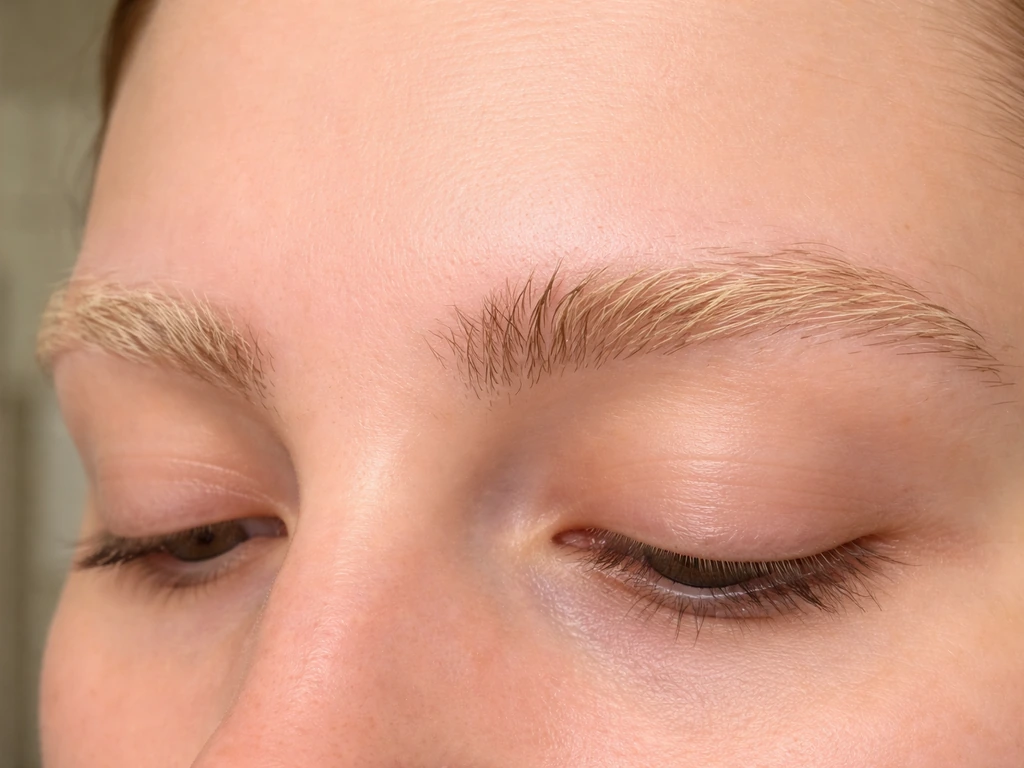
Yes, a unibrow almost always grows back after shaving, plucking, waxing, or trimming, because those methods leave the follicles intact. The hair simply resumes its existing growth cycle. How quickly it returns and whether it returns at all depends entirely on how the hair was removed and whether the follicle itself was damaged. For most people who have been tweezing that strip of hair between their brows, the gap fills back in within a few weeks to a few months. Permanent loss is only a real concern with electrolysis, laser treatments, deep burns, or severe scarring.
Does Unibrow Grow Back? Timelines, Causes, and Treatments
James Whitmore
17 Jul 2026
How eyebrow hair actually grows
Every eyebrow hair goes through three phases: anagen (active growth), catagen (transition), and telogen (resting and shedding). For eyebrows, the anagen phase lasts roughly 2 to 3 months, which is dramatically shorter than scalp hair's 2 to 8 year growth phase. That short active phase is why eyebrow hairs stay relatively short and why the full cycle from new growth to shed takes only about 3 to 4 months (roughly 10 to 16 weeks, depending on the individual). It also means that at any given time, a sizable portion of your brow hairs are in the resting phase rather than actively growing, which can make regrowth feel slower than expected.
Several factors influence how well hair regrows after removal: age (follicle productivity tends to decline after your 30s and 40s), genetics (hair density and growth rate are largely inherited), skin health (chronic inflammation, scarring, or nutritional deficiencies slow regrowth), and the specific removal method used. Two people who shave their unibrow on the same day can see noticeably different timelines six weeks later, and that is completely normal.
If you stop removing the hair: how long until a unibrow returns
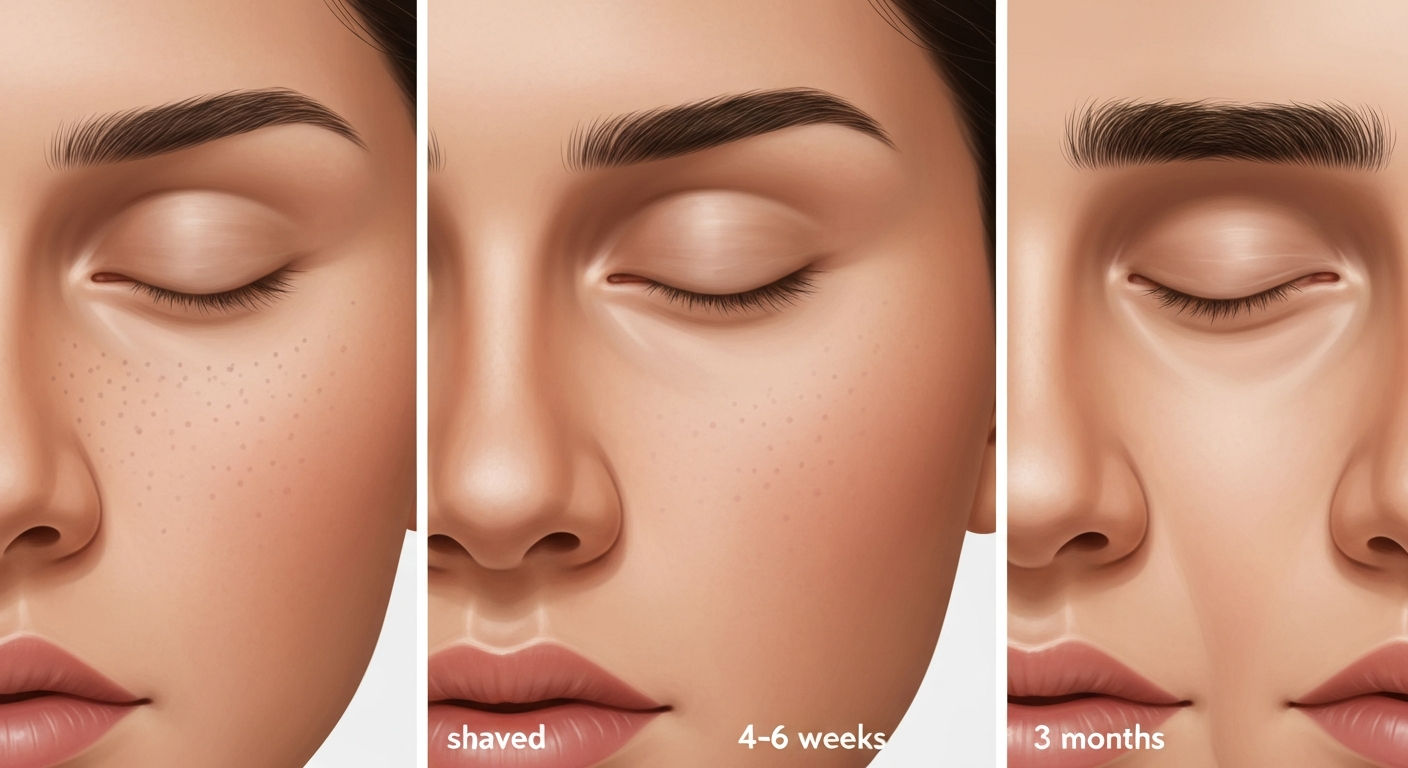
If you have been shaving or waxing the space between your brows and you simply stop, you can expect stubble to appear within days to two weeks and fuller regrowth to develop over the following two to three months. The full picture, including density and texture matching the rest of your brows, typically takes one complete hair cycle, so budget 3 to 4 months. This is the same timeline that applies when regrowing any part of the eyebrow, whether you shaved the outer corners, the inner brow, or the entire arch.
One thing that surprises people is that the initial regrowth can look patchy for weeks before it fills in. That is because not all follicles are in the same phase at the same time. Stay patient through the awkward 4 to 6 week stage; it nearly always looks better by month three.
Regrowth timelines by removal method
The single biggest factor in how fast a unibrow grows back is whether the hair was cut at the surface or removed from the root. Here is a practical breakdown of what to expect from each method.
| Removal Method | Follicle Affected? | Visible Stubble | Full Regrowth | Permanent Risk? |
|---|---|---|---|---|
| Shaving / trimming | No | Days to 2 weeks | 4–8 weeks | None |
| Plucking / tweezing | Temporarily | 3–4 weeks | 3–4 months | Very low (rare with repeated aggressive plucking) |
| Waxing | Temporarily | 3–6 weeks | 3–4 months | Very low |
| Threading | Temporarily | 3–6 weeks | 3–4 months | Very low |
| Cutting with scissors | No | Days to 2 weeks | 4–8 weeks | None |
| Electrolysis | Yes (destruction intended) | Minimal to none | Often permanent | High (the only FDA-recognized permanent removal method) |
| Laser / IPL | Partial reduction | Months to years | Variable; some regrowth common | Moderate (FDA-cleared for permanent reduction, not guaranteed permanent removal) |
Shaving is the most misunderstood method. It does not change the follicle, the root, or the growth rate. The hair that grows back may briefly feel coarser because the blunt cut edge is more noticeable against skin, but the actual strand is not thicker or darker than before. That is one of the most persistent myths in brow care. For a direct answer and practical advice on that specific question, see the guide if you cut your eyebrows will they grow back.
Surface cuts versus follicle damage: what actually decides regrowth
A razor, scissors, or trimmer works at the skin's surface. The follicle, which sits in the dermis several millimeters below the surface, is completely untouched. Hair regrowth is essentially guaranteed after surface cutting, and the timeline is weeks, not months.
Root-level removal methods (plucking, waxing, threading) physically pull the hair shaft out of the follicle. The follicle goes into a brief shock and then restarts its cycle. Histological studies confirm that mechanical epilation causes temporary inflammation but does not reliably destroy the hair matrix, which is the part of the follicle responsible for generating new hair. So regrowth does happen; it just takes longer because the follicle needs to restart from the beginning of its cycle.
Follicle destruction is a different story. Electrolysis uses a needle and electrical current to heat or chemically damage the hair matrix directly. When performed correctly by a trained professional, it can destroy the follicle permanently. That is why electrolysis is the only modality the FDA recognizes as achieving permanent hair removal, as opposed to lasers, which are cleared for permanent hair reduction. The distinction matters: laser treatments can substantially reduce hair counts over months and years, but individual follicles often survive and can produce regrowth, especially in lighter or finer hair.
Special cases: burns, singeing, scarring, and eyebrow slits
Burns are one of the few situations where non-cosmetic eyebrow loss can become permanent. Superficial singeing (like a brief encounter with a flame) damages the hair shaft above the skin but usually leaves the follicle intact. See our article Do singed eyebrows grow back for more detail on outcomes after singeing and when to seek care. In that case, regrowth is expected and typically follows the normal 3 to 4 month cycle. Deep thermal injury that damages the dermis is a different matter: clinical case series document that full-thickness burns destroy follicles and cause scar tissue that physically prevents regrowth. If the burned area healed with smooth, tight scar tissue and hair has not returned within four to six months, that is a sign the follicles may no longer be viable, and a dermatologist or reconstructive specialist should evaluate the area. For more on depth, healing timelines, and likelihood of regrowth after thermal injury, see do burnt eyebrows grow back.
Eyebrow slits (deliberate cuts or shaved line gaps in the brow) are functionally the same as surface cuts or shallow incisions. Because they do not go deep enough to destroy follicles, the hair grows back. Many people report regretting a slit after a few weeks when the hair starts to return and the line looks uneven. If you want a slit to stay crisp, it requires regular maintenance. If you want it gone, just wait it out for a couple of months.
Strong chemical agents are another risk that is easy to overlook. Products used in brow lamination, for example, contain thioglycolate compounds, and published case reports and reviews have documented chemical burns and follicular injury when these are used at high concentrations or left on too long. Patchy or even permanent loss has been reported in misuse cases. If you notice persistent hair loss after a chemical treatment, treat it with the same urgency as a burn and see a dermatologist rather than waiting it out.
Bleaching and dyeing: what changes and what does not
Bleaching and dyeing the hair between your brows does not affect whether it grows back. If you wonder "if you dye your eyebrows does it grow out": yes, dye only alters the existing hair shaft, and new growth will come in your natural color. For a focused answer, see our guide titled Do bleached eyebrows grow back which specifically addresses whether bleaching affects follicle recovery. These processes alter the color of the hair shaft, not the follicle. The new growth will come in as your natural color regardless of what was applied to the existing strands. Where bleaching can become a problem is if the product causes contact dermatitis or a scalp-level chemical burn from repeated or prolonged application. Healthy follicles are not at risk from a standard, correctly timed bleach application. The hair appearance changes; the actual growth timeline does not.
Evidence-based ways to encourage faster, healthier regrowth
Minoxidil: the strongest evidence
If you want to speed up or thicken regrowth, topical minoxidil is the only ingredient with actual randomized controlled trial data specifically for eyebrows. Multiple split-face RCTs have shown that 1% to 3% topical minoxidil applied to the brow area increased hair count and thickness versus placebo over 12 to 16 weeks. It is used off-label for eyebrow hypotrichosis in dermatology, and the results are meaningful rather than marginal.
That said, the safety notes here are important. Applying minoxidil near the eyes carries risks that do not apply to using it on the scalp. There are rare case reports linking periocular minoxidil use to ocular events including central serous chorioretinopathy, and local side effects like irritation and contact dermatitis occur in a minority of users. A systematic safety analysis via the FDA's FAERS database confirms that most adverse events from topical minoxidil are local (contact dermatitis, hypertrichosis in adjacent areas), but the ocular proximity makes eyebrow use a situation where I would strongly recommend consulting a dermatologist before starting rather than just picking up a bottle and trying it yourself.
Rosemary oil: promising but limited evidence for brows
Rosemary oil has a small RCT showing modest benefit in scalp androgenetic alopecia, which gives it more scientific credibility than most oils. A systematic review titled "Topical minoxidil & natural alternatives systematic review (PMC)" summarizes limited RCT evidence supporting rosemary oil for scalp androgenetic alopecia but notes the lack of trials specific to eyebrow regrowth. However, there are no high-quality trials specifically testing rosemary oil on eyebrows. Extrapolating from scalp studies to brows is not proven. That said, it is low risk, inexpensive, and some people do report improvement with consistent use. If you try it, apply a small amount to the brow area nightly and give it at least two full hair cycles (six to eight months) before drawing conclusions.
Castor oil: popular, but the evidence is weak
Castor oil is probably the most talked-about brow remedy on the internet, but a systematic review of oils for hair in skin-of-color patients concluded that the clinical proof for castor oil promoting new follicle regrowth is weak and largely anecdotal. It will not hurt you to use it, and it may help with hair conditioning and manageability, but if your goal is actually regrowing lost follicles or speeding up a stalled cycle, do not rely on castor oil as your primary strategy.
Scalp massage and nutrition
Gentle daily massage of the brow area increases local circulation and may support follicle health, though direct evidence for brow-specific massage is limited. Nutritional deficiencies, particularly in biotin, iron, zinc, and protein, are well-documented contributors to diffuse hair loss across the body. If your diet is poor or you are in a period of high stress, addressing those basics is worth more than any topical product. A standard blood panel from your GP can identify deficiencies that might be slowing regrowth.
Summary of regrowth strategies
| Approach | Evidence Level | Realistic Expectation | Key Caution |
|---|---|---|---|
| Topical minoxidil 1%–3% | Strong (multiple RCTs) | Increased hair count in 12–16 weeks | Consult dermatologist; avoid eye contact; rare ocular risk |
| Rosemary oil | Moderate for scalp; limited for brows | Modest improvement over 6+ months | Low risk; do not expect dramatic results |
| Castor oil | Weak (anecdotal) | Conditioning benefit; unproven for regrowth | Not harmful; just not proven |
| Scalp massage | Indirect evidence | May support circulation and follicle health | Use light pressure around brows |
| Nutritional support | Strong for deficiency-related loss | Corrects underlying cause if deficient | Blood test first; avoid over-supplementing |
When regrowth may be permanent and what your medical options are
If hair has not returned within four to six months after a non-destructive removal method, that is a signal worth investigating. Persistent absence of regrowth can indicate follicle damage from scarring, an underlying medical condition (thyroid dysfunction, alopecia areata, nutritional deficiency), or simply over-manipulation over many years. Decades of aggressive plucking can, in rare cases, lead to follicle fibrosis and reduced regrowth, particularly along the tail of the brow.
A board-certified dermatologist can evaluate whether follicles are still present and active using dermoscopy, and can diagnose any underlying condition contributing to loss. Treatment options at that level include platelet-rich plasma (PRP) injections, which have early positive evidence for alopecia areata and general hair loss but are still being studied specifically for brow restoration. For truly permanent loss from scarring or burns, eyebrow transplant surgery (follicular unit extraction from the scalp relocated to the brow) is an established reconstructive option. Microblading is an alternative that provides immediate cosmetic results but does not restore actual hair; it requires touch-ups every one to two years and carries infection risk if not performed in a sterile setting.
Safety signals: when to stop home treatments and see a professional
Most home regrowth strategies are safe for the majority of people, but there are specific situations where you should stop and get a professional evaluation rather than continuing to experiment.
- No visible regrowth four to six months after stopping removal, particularly if the skin over the brow area looks smooth, shiny, or scarred
- Redness, persistent itching, or peeling after starting any topical product, including minoxidil, castor oil, or rosemary oil, suggesting contact dermatitis
- Any visual disturbance, eye discomfort, or changes in vision after applying minoxidil near the brow area — stop immediately and see a doctor
- Sudden patchy loss not related to removal (could indicate alopecia areata or a systemic condition)
- Blistering, crusting, or skin color change in the brow area after a chemical treatment or burn — this needs dermatological assessment, not a wait-and-see approach
- Hair loss occurring alongside other symptoms like fatigue, hair loss elsewhere on the body, or changes in skin or nails, which can indicate a nutritional or hormonal issue
Your decision checklist: restoring or avoiding a unibrow
Whether you are trying to grow a unibrow back or prevent one from returning, the steps below give you a clear framework based on your specific situation.
- Identify how the hair was removed: surface cut (shaving, trimming, slits) or root removal (plucking, waxing, threading) or follicle-destructive (electrolysis, laser). This sets your realistic timeline.
- If you want regrowth: simply stop removing the hair and wait one full hair cycle (3–4 months) before deciding whether intervention is needed.
- If regrowth seems slow at 6–8 weeks: assess nutrition, stress, and sleep first. A blood test for iron, thyroid, and vitamin D is a smart starting point.
- If you want to accelerate regrowth after the basics are covered: consider topical minoxidil only after consulting a dermatologist, given the proximity to the eyes.
- If you want to prevent regrowth: repeated waxing or threading over years is the gentlest approach to discouraging hair over time. For a more permanent solution, consult a licensed professional for electrolysis or laser — and understand the distinction between permanent removal and permanent reduction.
- If no hair has returned after 4–6 months: book a dermatologist appointment. Do not spend more money on serums and oils; get a diagnosis first.
- If you have had a burn, chemical injury, or significant scarring: skip home remedies and go straight to a dermatologist or reconstructive specialist.
Related topics worth exploring
The biology and timelines discussed here apply broadly to eyebrow regrowth in general, not just the unibrow area. If you want a deeper dive into specific situations, there are dedicated pages covering whether eyebrows grow back after different kinds of removal and damage, including shaving, cutting, bleaching, and dyeing. Questions about eyebrow slits growing back follow essentially the same logic as this article: surface cuts leave follicles intact, and the hair returns. Burns and singeing have their own nuances depending on depth, and those are covered in detail in dedicated articles on burned and singed eyebrow regrowth. If you are considering targeted products, dedicated guides on brow serums and using minoxidil specifically for brows go deeper into ingredient selection, concentration, and application techniques. For severe or permanent loss, an eyebrow transplant overview explains what the procedure involves, realistic outcomes, and how it compares to microblading.
A note for pet owners
If you are here because your dog's eyebrow markings seem thinner or have changed after an injury or skin condition, the information in this article does not apply to canine hair follicle biology. Dogs have different coat growth cycles, and eyebrow-area hair loss in dogs can indicate mange, fungal infection, or an allergic reaction that requires veterinary diagnosis. Please see a veterinarian rather than applying any of the human-focused treatments discussed here.
FAQ
Does a unibrow grow back after removal?
Usually yes — if hair was removed without destroying the follicle. Eyebrow follicles have a short growth cycle, so hairs removed by shaving, plucking, waxing, threading or cutting commonly regrow over weeks to a few months. Permanent loss only occurs when follicles are destroyed (deep thermal/chemical injury, full‑thickness scarring, or some follicle‑destructive procedures).
How long does it take for a unibrow to regrow?
Timelines vary by removal method and individual biology. Typical ranges: shaving/cutting — stubble visible in days to 2–4 weeks and fuller return over 6–12 weeks; plucking/waxing/threading (epilation) — initial regrowth often in several weeks but expect 4–8 weeks for noticeable density and up to ~10–16 weeks for a full eyebrow cycle; permanent‑destructive methods — may not regrow at all. Your natural eyebrow hair cycle commonly completes in roughly 10–16 weeks, which sets realistic expectations.
Does shaving make eyebrow hair (a unibrow) grow back thicker or darker?
No. Shaving only cuts the hair shaft at the skin surface and does not change the follicle. Regrown hair may feel coarser temporarily because the blunt tip of cut hair is more noticeable, but thickness and pigment are determined by the follicle and biology, not by shaving.
Which removal methods delay regrowth the longest?
Methods that remove the hair from the root (plucking, waxing, threading) delay visible return longer than surface cutting because the follicle needs time to re‑enter the growth phase. Electrolysis and some thermal/galvanic methods that destroy the hair matrix can produce permanent removal when correctly performed. Laser/IPL reduces hair long‑term but is labeled for permanent hair reduction, not guaranteed total permanent removal.
Can eyebrow slits, cuts, burns or chemical treatments cause permanent loss between the brows?
Yes — deep cuts that scar, full‑thickness burns, or chemical injuries that damage the follicular unit can permanently destroy follicles and cause lasting hair loss. Misused strong chemical agents (e.g., concentrated reducing/alkaline products) have case reports of follicle injury. Superficial surface cuts or singeing typically do not cause permanent loss.
Do oils like castor or rosemary reliably regrow a unibrow?
Evidence is weak or anecdotal. High‑quality trials do not support castor oil as a reliably effective treatment for creating new follicles. Some natural agents (rosemary) have limited supportive data for scalp hair, but that evidence does not directly prove eyebrow regrowth. Oils are low‑risk for many people but may cause irritation or allergic reactions.
Next Article
Do Bleached Eyebrows Grow Back How Long It Takes
Do bleached eyebrows grow back? Get realistic regrowth timelines, causes of slow growth, and aftercare steps to help.