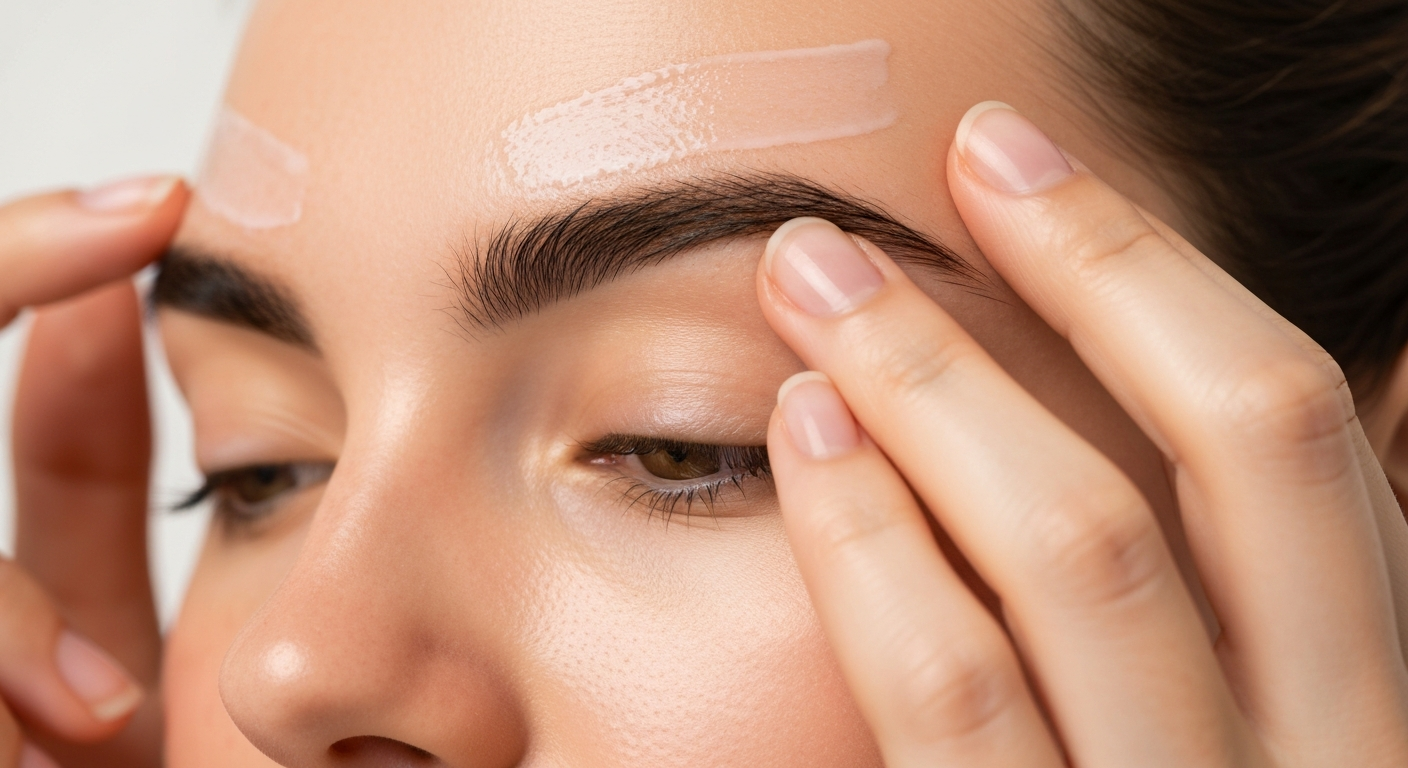
Honey will not directly stimulate eyebrow hair follicles to grow new hairs. There is no clinical trial as of mid-2026 showing that topical honey increases eyebrow density or thickness. What honey can do is support a healthy skin environment around the brow: its antibacterial, anti-inflammatory, and wound-healing properties may help calm irritated or over-treated skin, which indirectly removes a barrier to normal regrowth. If your brows are sparse because of underlying follicle damage, scarring, or a medical condition, honey will not fix that. But as a gentle, low-risk addition to your routine, particularly after aggressive waxing or plucking, it is worth understanding exactly what it does and does not do.
Does Honey Help Eyebrows Grow? Evidence-Based Guide
James Whitmore
19 Jul 2026
How eyebrow hair actually grows
Eyebrow hairs cycle through three phases: anagen (active growth), catagen (transition), and telogen (resting/shedding). What makes eyebrows different from scalp hair is that the anagen phase is remarkably short, typically around 6 to 10 weeks compared to years on the scalp. That short window is why eyebrow hairs never grow more than a couple of centimeters and why any intervention, whether it is a serum, oil, or lifestyle change, needs months to produce visible results. After the anagen phase ends, the hair enters a 2 to 3 week catagen phase and then a telogen phase of roughly 2 to 3 months before a new hair replaces it.
Follicle health is the real gating factor. The follicle is a tiny organ embedded in the dermis, and its function depends on blood supply (delivering nutrients and oxygen), hormonal signaling, and a lack of chronic inflammation. When a follicle is healthy and intact, regrowth is just a matter of time and patience. When the follicle is damaged by repeated trauma, scarring, or disease, regrowth may be partial or absent regardless of what you apply topically.
Realistically, if your brows were over-plucked or recently shaved and the follicles are intact, you should expect visible regrowth within 3 to 4 months. Full brow density restoration can take 6 months or longer. This is not pessimism; it is just the math of the hair cycle. Managing that timeline expectation is one of the most useful things I can share, because most people give up on a routine at 4 weeks and assume it is not working.
Why brows get thin in the first place
Knowing why your brows are sparse matters because it changes what will actually help. The most common cause I hear about is years of over-plucking or regular waxing, which repeatedly traumatizes the follicle. Most follicles recover, but after years of repeated damage some stop producing terminal hairs permanently. Shaving the brow, by contrast, does not damage the follicle at all since the blade only cuts the hair shaft, so regrowth after shaving is usually the most straightforward scenario.
- Over-plucking and waxing: repeated trauma can eventually scar or permanently disable follicles after many years
- Shaving: the follicle is untouched, so full regrowth is expected within the normal hair cycle timeline
- Aging: androgenic and hormonal shifts reduce hair density from the outer third of the brow inward over decades
- Thyroid disorders (both hypo- and hyperthyroidism): thinning of the lateral brow is a classic clinical sign; treating the underlying thyroid issue often restores some density
- Alopecia areata: an autoimmune condition that can cause patchy brow loss and requires dermatological treatment, not home remedies
- Nutritional deficiencies: low iron, biotin, zinc, or protein can impair all hair growth including eyebrows
- Medications: some chemotherapy drugs, retinoids, anticoagulants, and beta-blockers list hair thinning as a side effect
If you have lateral brow thinning that has progressed over time with no history of aggressive plucking, it is worth ruling out a thyroid issue or other systemic cause before investing energy in topical remedies. No amount of honey or castor oil will address a hormonal or autoimmune root cause.
What the science actually says about honey and eyebrow growth
I want to be direct here: there is no published randomized clinical trial specifically testing honey for eyebrow hair growth as of July 2026. That does not mean honey is useless on the skin, but it does mean any claim that honey 'grows brows' is extrapolation, not evidence.
What honey genuinely does to skin
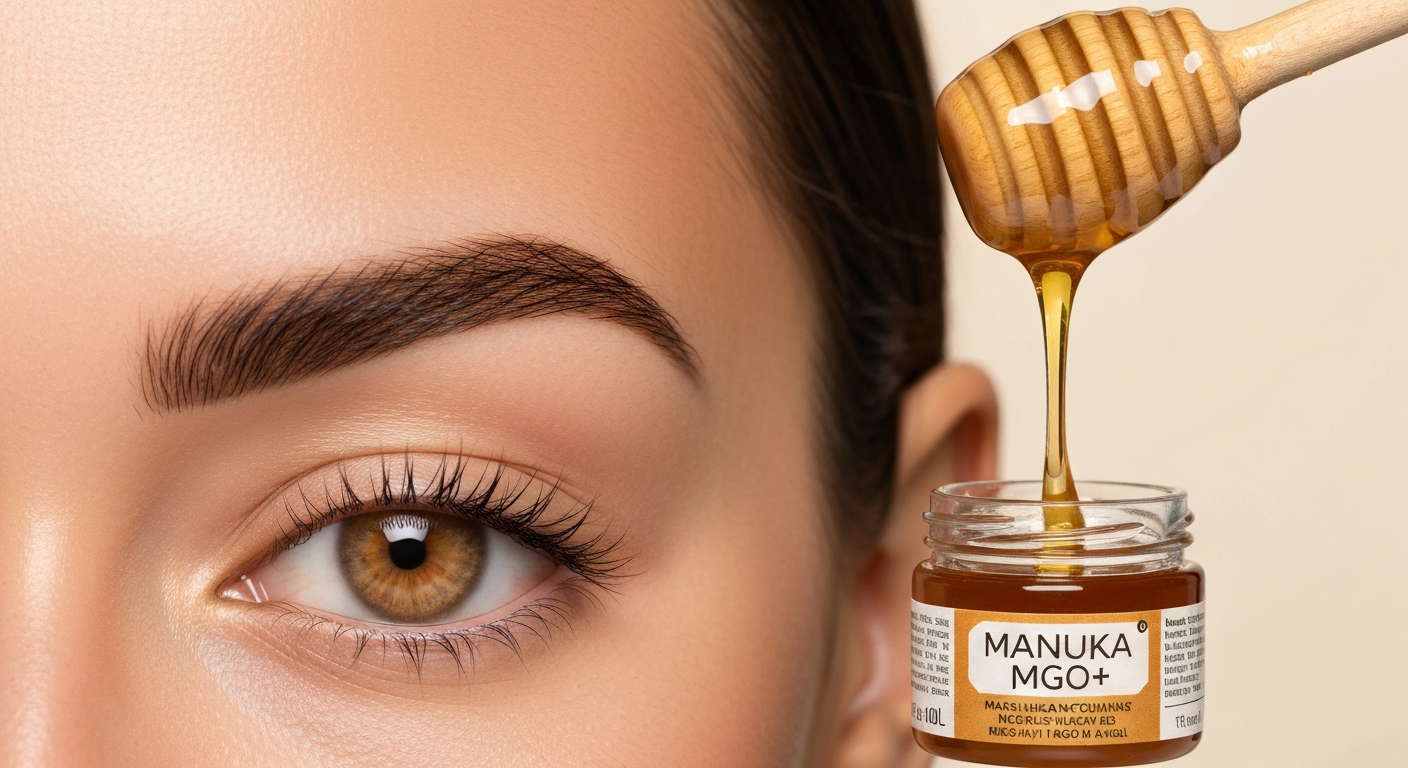
Honey's dermatologic benefits are real and reasonably well documented. Its antibacterial activity comes from several overlapping mechanisms: enzymatically produced hydrogen peroxide (via glucose oxidase), low pH, high osmolarity that draws water out of bacterial cells, antimicrobial peptides like defensin-1, and phenolic antioxidants. Manuka honey adds methylglyoxal (MGO), a potent non-peroxide antibacterial compound, which is why Manuka is the version used in regulated wound-care products. Systematic reviews confirm honey's value for wound healing, ulcers, and burns. There is also a small 1999 randomized trial showing that crude honey applied weekly improved seborrheic dermatitis of the scalp and reduced associated hair shedding, though that study was small and old, and it tested a skin condition, not follicle stimulation.
The gap between wound healing and hair growth
Supporting skin healing and directly triggering follicle proliferation are two different things. The evidence trail for honey stops at the skin barrier. There is no credible mechanistic or clinical evidence that honey activates dermal papilla cells, extends the anagen phase, or increases hair shaft diameter in eyebrows. If your follicles are dormant due to scarring, aging, or a medical condition, applying honey will not wake them up.
Where the indirect logic is more plausible: chronic low-grade inflammation around the follicle can interfere with the normal hair cycle. If honey's anti-inflammatory and antibacterial properties reduce that localized irritation, such as after aggressive waxing or plucking that left the skin inflamed, it could create a slightly better environment for the follicles that are still functional to complete their cycle normally. That is a reasonable hypothesis, but it is not the same as honey being a growth stimulator.
How to use honey on your brows safely
If you want to try honey on your brow area, using it correctly and cautiously matters. Raw honey is the most bioactive form because heat processing degrades glucose oxidase and reduces antimicrobial potency. Manuka honey with a certified MGO rating (at least MGO 100+, though higher is used clinically) is the most studied option. Standard store-bought processed honey has lower antimicrobial activity but is not harmful.
- Patch test first: apply a small amount to the inner forearm and wait 24 hours. Propolis-containing or raw honey products can cause allergic contact dermatitis in some people, and reactions on the brow area (near the eyes) are not something to discover without prior testing.
- Use raw or Manuka honey, not processed table honey, if you want any potential skin benefit beyond moisturization.
- Apply a thin layer directly to the brow area using a clean fingertip or cotton swab. Avoid getting honey into the eyes.
- Leave it on for 15 to 20 minutes, then rinse thoroughly with lukewarm water.
- Frequency: 2 to 3 times per week is a reasonable starting point. Daily application is not necessary and increases the risk of skin irritation.
- Duration: give any topical routine at least 8 to 12 weeks before deciding whether it is helping your skin condition. For actual hair regrowth, expect to evaluate at the 3 to 4 month mark.
- Do not use honey if you have a known bee or propolis allergy. Do not apply to broken, actively infected, or severely inflamed skin without medical guidance.
One practical note on dilution: some people mix honey with a carrier like warm water or aloe vera gel to make it easier to apply to the brow area without the viscosity pulling at hairs. This is fine, and dilution actually increases hydrogen peroxide generation up to an optimum level, so a slightly thinned application is not less effective for antibacterial purposes.
When honey might actually help your brows (and when it definitely won't)
Situations where honey is a reasonable choice
- Post-waxing or post-threading skin irritation: honey's anti-inflammatory and antibacterial properties can soothe redness and reduce infection risk in freshly treated skin
- Mild folliculitis around the brow: small inflamed bumps from ingrown hairs or bacterial involvement may respond to honey's antimicrobial action
- Dry, flaky brow skin that is interfering with normal follicle function: honey is a humectant and can improve local skin hydration
- As part of a broader skin-health routine when you want a gentle, low-risk option alongside more evidence-backed approaches
Situations where honey will not help
- Stimulating completely dormant or scarred follicles: honey has no mechanism for this
- Alopecia areata or other autoimmune brow loss: these require medical treatment
- Thyroid-related thinning: treating the brow skin does nothing for the systemic hormonal issue
- Replacing a clinically proven treatment like minoxidil or bimatoprost when those are indicated
- Accelerating regrowth on a timeline faster than the hair cycle allows—nothing can make follicles skip phases
How honey compares to other at-home and clinical options
Most people asking about honey are also curious about or already using other remedies. Here is an honest comparison of the options that come up most frequently, including how strong the evidence is, how safe each one is, and what kind of timeline you are realistically looking at. Castor oil and rosemary oil are among the most popular botanical approaches; aloe vera and tea tree oil are also widely used but for somewhat different reasons. For serious or medically driven brow thinning, blank" rel="noopener noreferrer">minoxidil and bimatoprost have actual randomized trial data behind them.
| Remedy | Evidence for brow/hair growth | Primary mechanism | Safety notes | Realistic timeline |
|---|---|---|---|---|
| Honey (raw/Manuka) | No direct RCT for eyebrows; indirect skin-health benefits documented | Antibacterial, anti-inflammatory, wound healing | Patch test required; allergy risk from propolis; avoid eyes | Skin improvement in weeks; no proven hair growth acceleration |
| Castor oil | Anecdotal and observational; no eyebrow-specific RCTs; narrative reviews rate evidence as low-quality | Ricinoleic acid may have mild anti-inflammatory action; conditioning effect on hair shaft | Generally safe; heavy oil, use sparingly to avoid clogging follicles | Possible conditioning benefit in 4–8 weeks; regrowth timeline unchanged |
| Rosemary oil | RCT shows scalp-hair improvement comparable to 2% minoxidil at 6 months; no eyebrow-specific trial | Improves scalp microcirculation; anti-inflammatory; cannot be directly extrapolated to brows | Dilute in carrier oil; can irritate undiluted; avoid direct eye contact | 6 months for scalp hair; eyebrow outcome unknown |
| Aloe vera | No eyebrow RCTs; soothing/moisturizing properties documented; some anti-inflammatory compounds | Mucopolysaccharides support wound healing; cooling and anti-inflammatory | Very safe; rare contact allergy possible | Skin comfort in days; no proven effect on follicle cycling |
| Tea tree oil | No hair growth RCT; known antibacterial/antifungal for seborrheic dermatitis (dandruff) | Antimicrobial; reduces Malassezia yeast on scalp/skin | Must be diluted (2–5% in carrier); toxic if ingested; irritating near eyes | Skin condition improvement in weeks; not a hair growth stimulator |
| Minoxidil 2% | RCT evidence for eyebrow hypotrichosis; measurable density/diameter increases | Vasodilator; prolongs anagen phase; mechanism not fully elucidated | Can cause skin irritation; systemic absorption minimal at 2%; not for pregnancy | 4–6 months for visible results in trials |
| Bimatoprost 0.03% | Large multicenter RCTs show significant brow fullness improvement vs. vehicle | Prostaglandin analog; extends anagen phase and increases follicle size | Eye irritation risk; possible iris/skin pigmentation change; prescription required | 6–7 months in clinical trials |
| Collagen supplements | Limited direct brow evidence; some RCTs show skin elasticity and nail improvement; hair data mixed | Provides amino acid precursors; supports dermal matrix around follicles | Generally safe; quality varies between products | 3–6 months to assess impact on hair/skin quality |
| Biotin/nutritional support | Effective only if deficiency is present; supplementing above baseline shows minimal added benefit | Co-factor in keratin synthesis; deficiency causes hair loss | Safe at recommended doses; high doses can interfere with lab tests | Improvement within 3–6 months if deficiency was the cause |
The honest takeaway from that comparison: if brow regrowth is your primary goal and you want evidence behind it, minoxidil 2% and bimatoprost 0.03% are the only options with randomized clinical trial data specific to eyebrows. Everything else, including honey, castor oil, and rosemary oil, is working with indirect evidence, mechanistic reasoning, or extrapolation from scalp hair or skin studies. If you’re wondering whether tea tree oil helps brows, the evidence does not support it as a direct growth stimulant, tea tree oil may reduce local inflammation or treat follicular dermatitis when used cautiously, but it hasn’t been shown to increase eyebrow hair production does tea tree oil help eyebrows grow. For whether massaging your eyebrows can stimulate growth, see does massaging your eyebrows make them grow. That does not make them useless, but it does mean you should layer them on top of good fundamentals rather than expect them to do the heavy lifting.
Nutrition and supplements that support brow growth
Topical remedies only matter if the follicle has the raw materials it needs internally. For guidance on what to eat to grow eyebrows, consult the nutrition section. Hair growth is metabolically demanding, and deficiencies in key nutrients slow it down noticeably. The nutrients that show up most consistently in the hair loss literature are protein (hair is essentially keratin, a structural protein), iron (low ferritin is a common and under-diagnosed driver of diffuse hair thinning), biotin (though deficiency is rare in people eating varied diets), and zinc. Collagen supplements supply glycine and proline, which are building blocks for the proteins in hair follicle connective tissue, and a growing body of evidence supports their benefit for skin quality even if the direct brow-hair data is still developing.
- Protein: aim for 0.8 g per kg of body weight as a minimum; hair growth is often one of the first things to suffer when protein intake is chronically low
- Iron: get ferritin levels checked before supplementing; target ferritin above 40–70 ng/mL for optimal hair cycling in many practitioners' experience
- Biotin: only supplement if you have a confirmed deficiency or a condition that impairs biotin absorption; high-dose biotin (above 5,000 mcg) can interfere with thyroid and cardiac lab results
- Zinc: low zinc is linked to hair loss; food sources include pumpkin seeds, beef, and legumes; supplementing at high doses long-term can deplete copper
- Collagen peptides: 10–15 g daily is the dose used in most skin and nail RCTs; evidence for hair is promising but not definitive yet
A practical brow-growth plan you can start this week
Rather than chasing a single magic ingredient, a layered approach works better. Here is how I would structure it, starting with the fundamentals and adding targeted treatments as needed. For a concise overview of what helps eyebrows to grow, see this detailed guide on what helps eyebrows to grow.
- Stop the damage first: put down the tweezers for at least 12 weeks. You cannot assess regrowth if you are still removing hairs faster than they grow. Shaping with a razor along the lower edge only, if needed for grooming, is less damaging than plucking.
- Support internally: check your diet for protein, iron, and zinc. If you have signs of diffuse hair thinning elsewhere, get a blood panel (ferritin, thyroid panel, CBC) before spending money on topical products.
- Weeks 1–4 (skin prep and soothing): if your skin is irritated post-waxing or inflamed, honey 2–3 times a week for 15–20 minutes is a reasonable, gentle option here. Add a gentle brow massage (1–2 minutes) to improve local circulation.
- Weeks 4–12 (topical routine): introduce castor oil or rosemary oil (diluted to 2–3% in jojoba or argan carrier oil) applied nightly to the brow area with a clean spoolie brush. Brushing the hairs gently while applying also helps orient the follicle opening.
- Month 3 assessment: photograph your brows in consistent lighting. Look for baby hairs (vellus hairs converting to terminal hairs) in previously bare spots. If you see progress, continue for another 3 months. If there is no change and you have been consistent, consider consulting a dermatologist about minoxidil 2% or bimatoprost.
- Month 4–6 (medical options if needed): minoxidil 2% applied twice daily to the brow has RCT support. Bimatoprost 0.03% applied once daily has even stronger trial data. Both require a prescription conversation and commitment of 6+ months.
- Ongoing maintenance: once you reach your target density, a maintenance routine (nightly oil, good nutrition, avoiding unnecessary plucking) is usually sufficient to hold results.
Expected milestones
| Timeframe | What to expect |
|---|---|
| Weeks 1–2 | Skin irritation from waxing/plucking subsides; no visible hair changes yet |
| Weeks 3–6 | Tiny vellus hairs may become visible in areas that were plucked (not yet terminal hairs) |
| Month 2–3 | Early terminal hairs emerging; brows look slightly fuller but not complete |
| Month 3–4 | Noticeable density improvement if follicles are intact; this is the earliest realistic 'success' checkpoint |
| Month 5–6 | Full assessment milestone; consistent topical treatments (including medical options) should show measurable results by now |
| Month 6+ | Ongoing improvement possible; some follicles cycle slowly and may not produce a new hair until the second or third cycle |
Red flags that mean it is time to see a dermatologist
Home remedies are a perfectly reasonable first step for most people, but there are situations where continuing to self-treat delays the actual solution. Watch for these signals.
- Patchy, asymmetric brow loss that appeared suddenly: could be alopecia areata, which needs a diagnosis and targeted treatment
- Lateral brow thinning that has progressed gradually over years, especially combined with fatigue, cold sensitivity, or weight changes: get a thyroid panel
- Allergic reaction to a topical product including honey: redness, swelling, itching, or pustules at the application site mean stop and consult a doctor before trying again
- No visible improvement after 6 consistent months of a reasonable topical routine: time for a professional assessment of follicle viability
- Scarring or permanent-looking bare patches after trauma: a dermatologist can assess whether platelet-rich plasma (PRP) or other interventions are appropriate
- Brow loss accompanied by lash loss or scalp hair loss: broader work-up is warranted
Honey for brows: the do's and don'ts
| Do | Don't |
|---|---|
| Patch test before applying honey to the brow area | Apply honey without patch testing if you have known bee, pollen, or propolis sensitivities |
| Use raw or Manuka honey for the most bioactive benefit | Use processed table honey and expect medicinal results |
| Apply as a 15–20 minute mask, then rinse thoroughly | Leave honey on overnight near the eyes—it is viscous and can migrate |
| Combine honey with a broader, evidence-based brow routine | Use honey as your sole strategy for regrowing significantly thinned brows |
| Dilute with a few drops of warm water or aloe vera if viscosity is a problem | Apply undiluted honey to broken or actively infected skin without medical guidance |
| Keep realistic expectations: skin health support, not follicle stimulation | Expect to see new hair growth attributed specifically to honey |
The bottom line on honey and eyebrow growth
Honey is a genuinely useful ingredient for skin health, and its antibacterial and anti-inflammatory properties are well documented. Applied to the brow area after waxing, threading, or in the context of mild skin irritation, it can support a healthier local environment for follicles to do what they would do anyway. What it cannot do is stimulate dormant follicles, accelerate the hair cycle, or replace interventions that have actual clinical trial evidence. If your brows are your priority, the evidence-backed path runs through good nutrition, stopping the damage, consistent topical support with the better-studied botanicals (rosemary oil shows promise even if extrapolated from scalp data), and a dermatologist conversation if things do not improve. Honey fits comfortably as a gentle, low-risk addition to that plan, especially in the early soothing and skin-health phase. Just go in with eyes open about what it realistically does. For related guidance on grooming habits and whether actions like brushing can actually promote brow growth, see does brushing your eyebrows help them grow.
FAQ
Does honey help eyebrows grow?
Short answer: No strong clinical evidence currently shows that topical honey directly stimulates eyebrow hair regrowth. Honey has proven antibacterial, anti‑inflammatory and wound‑healing effects (useful for skin health), but no high‑quality randomized trials test honey specifically for eyebrow follicle stimulation (PubMed search through 2026 found none). Honey may support a healthy skin environment that indirectly helps existing follicles, but don’t expect reliable regrowth like you can get from medically studied agents such as minoxidil or bimatoprost.
How do eyebrow hairs grow (biology and realistic timeline)?
Eyebrow follicles have a short anagen (growth) phase—typically ~6–10 weeks—followed by short catagen and telogen phases. Because of that short growth window eyebrow hairs naturally remain short and respond more slowly to interventions than scalp hair. Expect any effective treatment to need at least 2–4 months to show early changes and 4–7 months for clearer results. Clinical trials for eyebrow medications usually report primary outcomes around 4–7 months.
What is the science behind honey and why people think it could help?
Mechanisms: honey has antibacterial/anti‑inflammatory activity (enzymatically produced H2O2, low pH, antimicrobial peptides, phenolics, and MGO in Manuka honey) and supports wound healing in some clinical contexts. These properties can improve skin health and reduce local inflammation or infection that might impair a follicle. However, reviews and trials show honey helps wounds and certain dermatologic conditions, not that it stimulates hair‑follicle proliferation or increases terminal hair count in humans. Evidence gap: no direct eyebrow‑growth RCTs exist.
If I want to try honey on my brows, how should I apply it and is there a safe method?
If you try honey: use a medical/sterile honey product (e.g., gamma‑irradiated medical honey) or thoroughly clean commercial honey; do a patch test on inner forearm for 48 hours to check allergy. Apply a thin layer to eyebrow skin (not inside the eye), leave 10–30 minutes, then rinse gently. Do this 2–3 times weekly. Avoid raw honey on broken skin without medical advice (risk of contaminants) and avoid getting it in the eye. Stop if irritation, redness, pustules or swelling occur.
Are there allergy or safety concerns with honey on the face?
Yes. Topical hive products can cause allergic contact dermatitis, pustular reactions, or irritant responses—especially products containing propolis or additives. Medical‑grade honeys are sterilized to reduce microbial risk, but product variability exists. Honey also can be contaminated with spores (relevant for ingestion in infants) and should be used cautiously topically; patch testing is recommended if you have a history of plant/bee allergies or sensitive skin.
How does honey compare with other home remedies (aloe vera, castor oil, rosemary oil, tea tree oil, brushing/massaging)?
Evidence summary: - Aloe vera: some anti‑inflammatory/wound healing data but no strong eyebrow‑specific hair‑growth trials. - Castor oil: Popular and anecdotal reports exist; human clinical evidence is limited/low quality. - Rosemary oil: RCT evidence supports scalp hair benefits over months (vs 2% minoxidil) but not tested for eyebrows. - Tea tree oil: Antimicrobial/antifungal; can reduce scalp inflammation but can irritate skin and is not proven to promote hair growth. - Brushing/massaging: Mechanical stimulation can improve circulation and may help follicle health; evidence is modest but low risk. Overall: honey is similar to other home remedies—may improve skin environment but lacks reliable proof of stimulating eyebrow follicle proliferation. For proven eyebrow growth, minoxidil and bimatoprost have randomized trial support.
Next Article
Does Massaging Your Eyebrows Make Them Grow? Science, Evidence-Based Guide
Does massaging eyebrows make them grow? Science-backed answers, a safe massage routine, topicals, timelines, next steps.